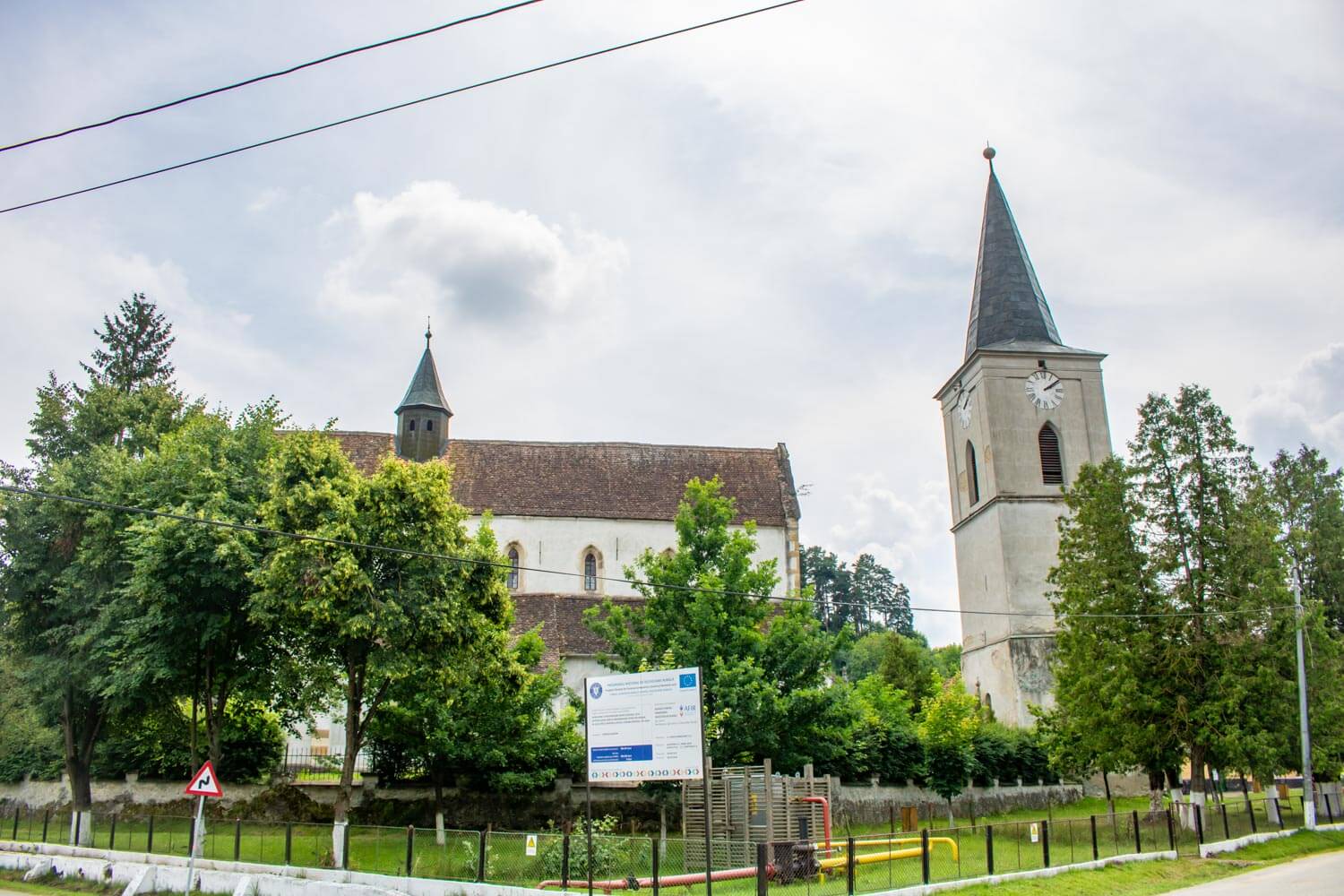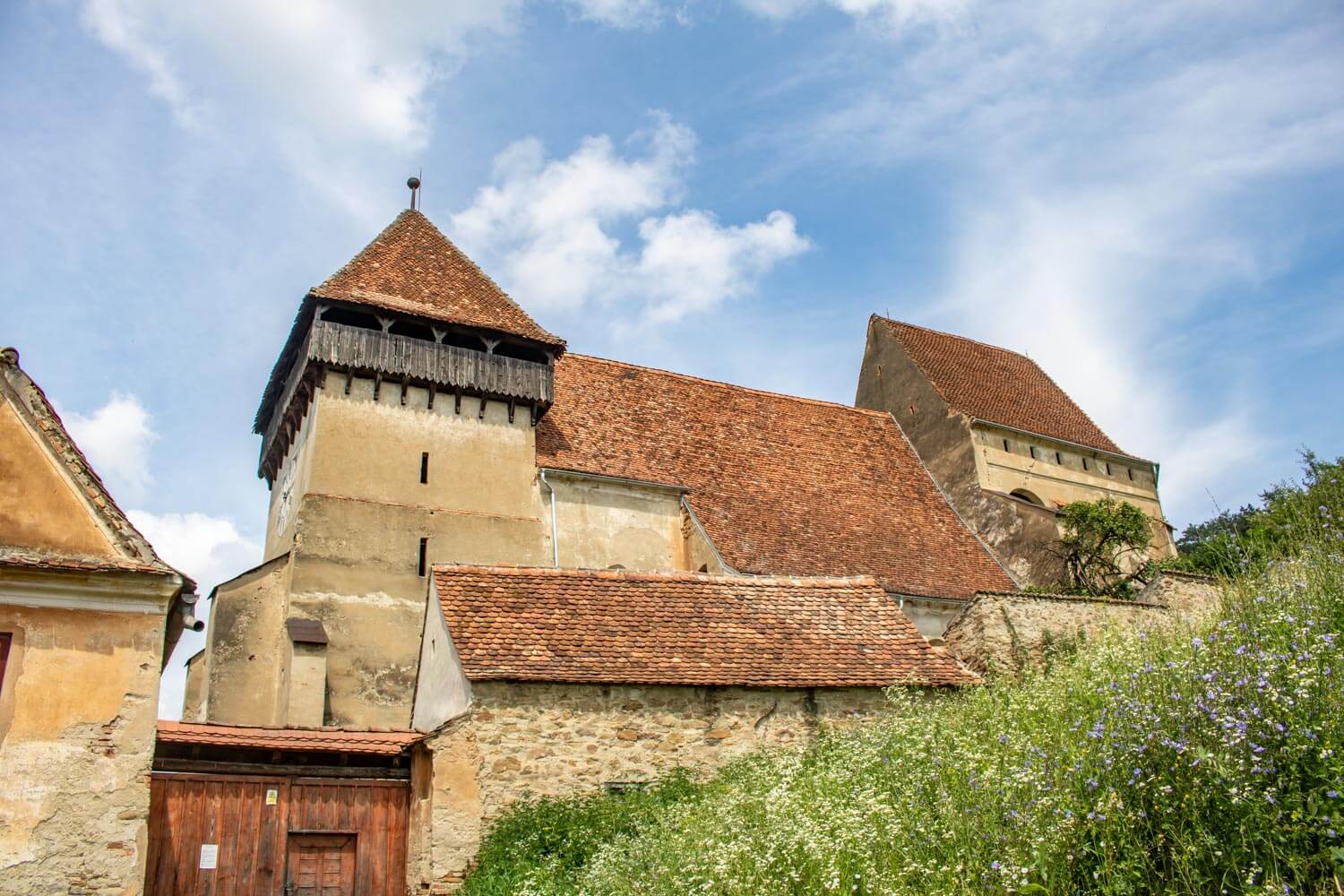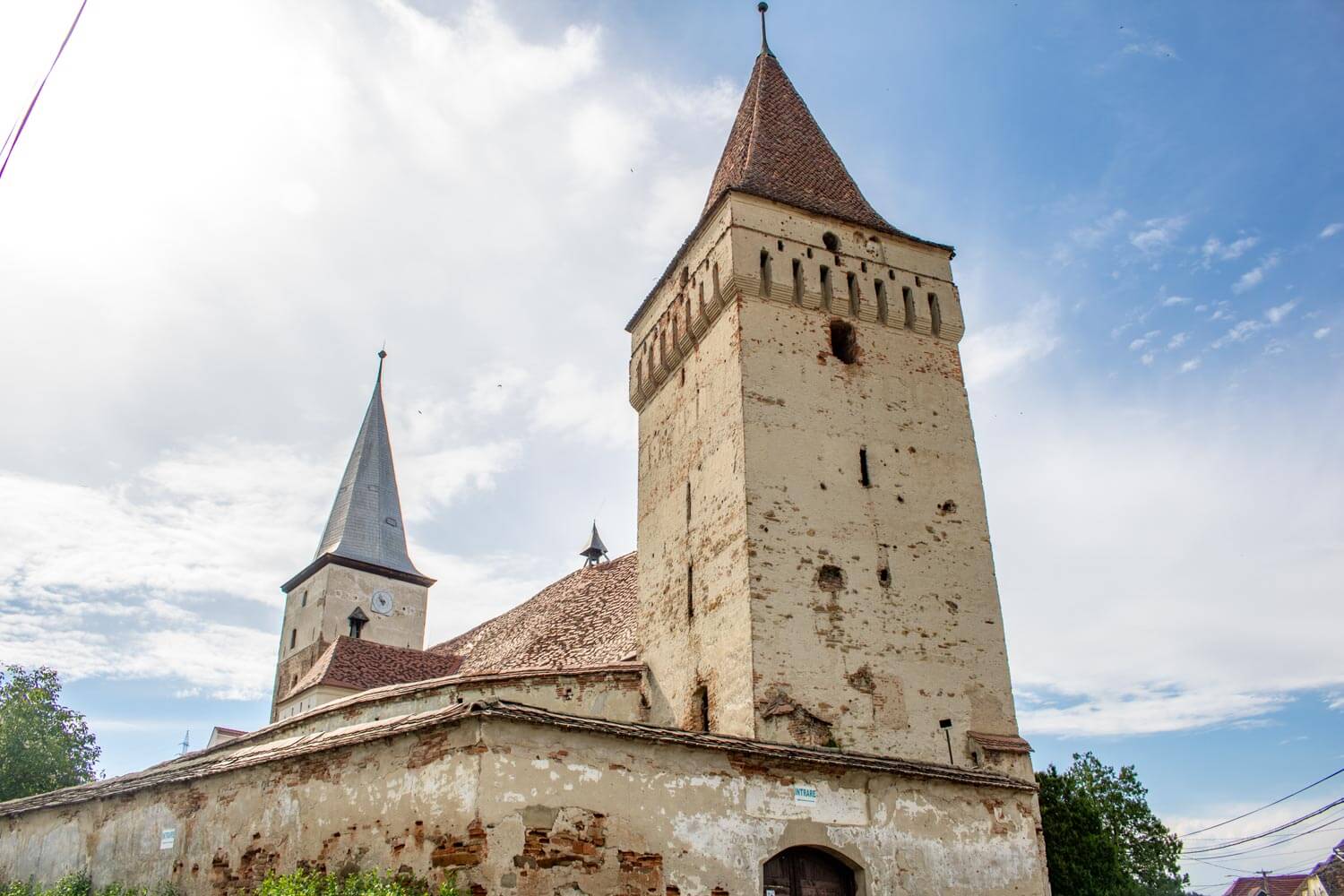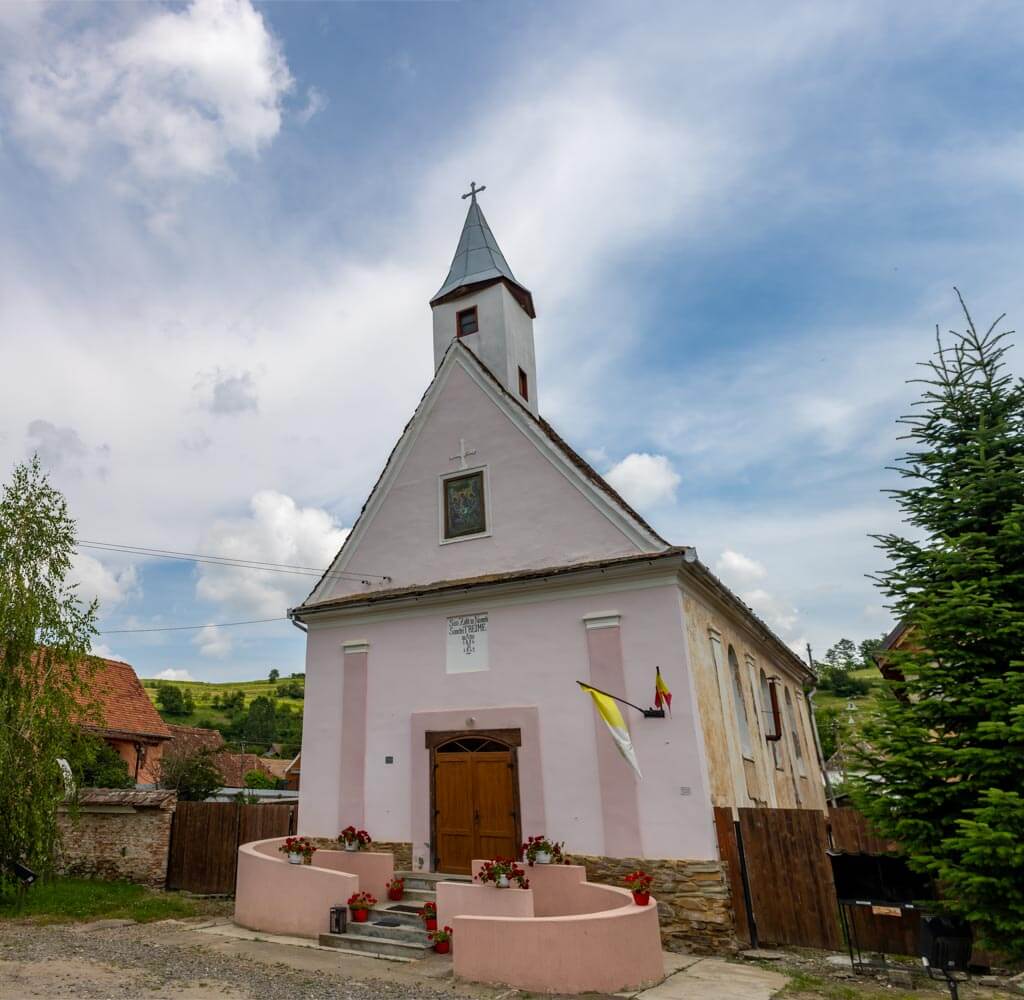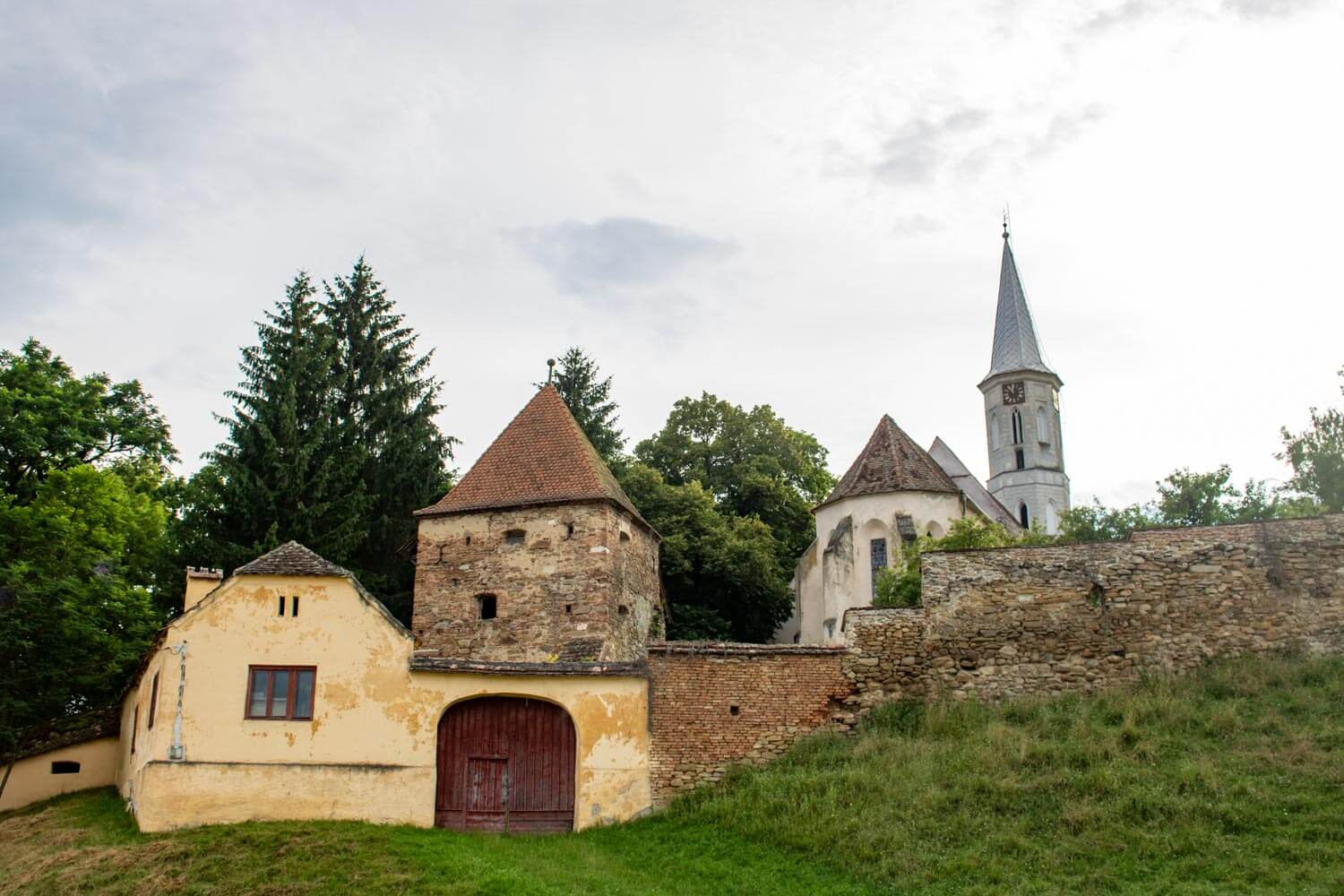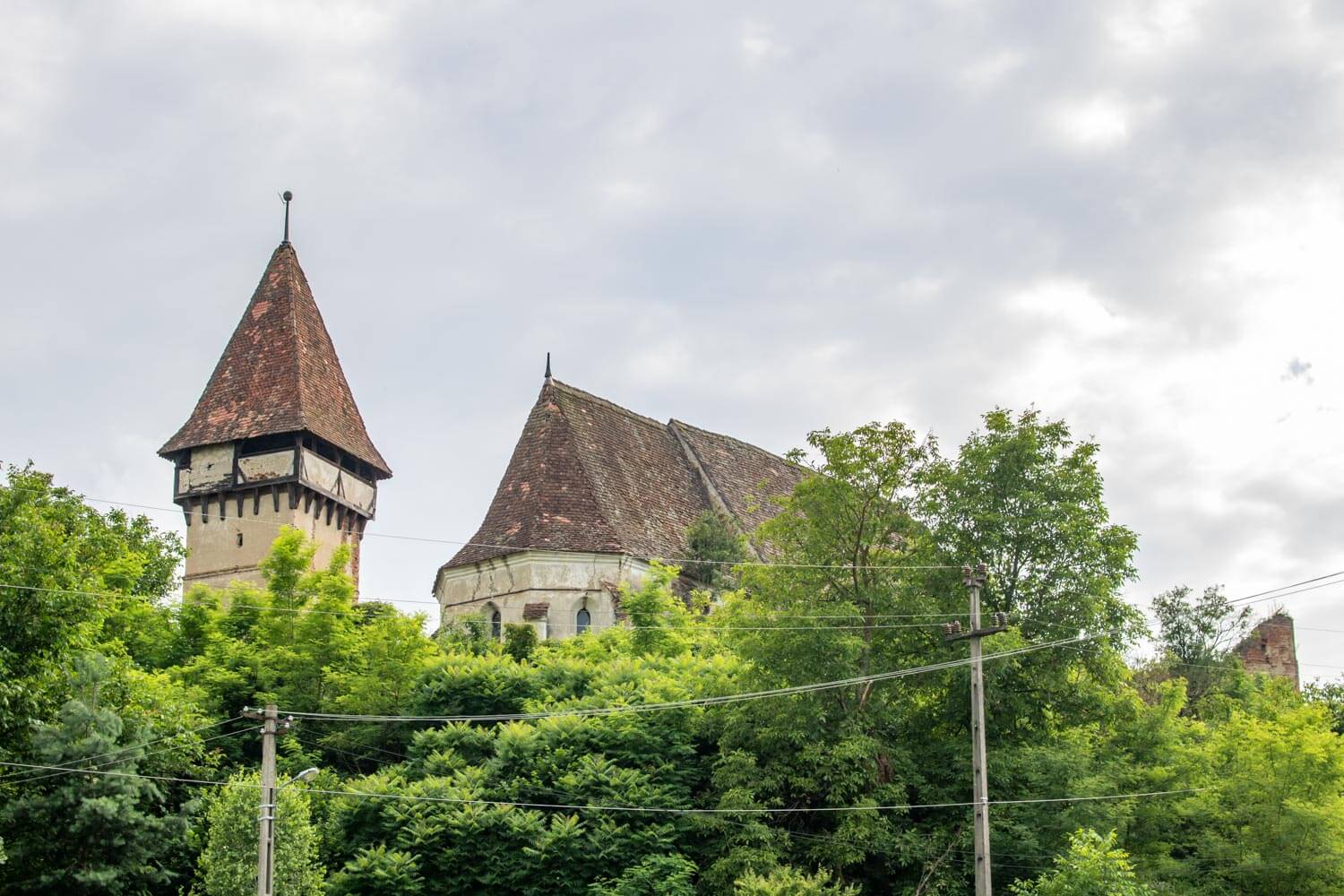
The Fortified Church of Pelișor (Biserica Fortificată din Pelișor) is a historic Lutheran church and fortified enclosure in the village of Pelișor, part of Bârghiș commune in Sibiu County. At its center stands a small 15th-century Gothic hall church without a tower, surrounded by defenses that were later strengthened into a surprisingly substantial village fortress.
The church was built during the 15th century and has survived with relatively few major alterations. Its simple single-nave plan is supported by buttresses, while the choir ends in a five-sided apse. The most significant later change came in the 19th century, when the nave received a new flat ceiling decorated with stucco.
Around 1500, the church was enclosed by a polygonal defensive wall with four towers. Only the gate tower survives substantially intact, but it remains the dominant feature of the complex, rising above the entrance with a defensive gallery and traces of several protective systems, including firing slits and embrasures. The gateway was originally protected by both a heavy gate and a portcullis.
The western side required particularly strong protection because the terrain rises toward the hill behind the church. In 1600 a second defensive wall and outer bailey were added there, creating a double line of fortification. Parts of this western wall still exceed 10 meters in height and preserve multiple rows of firing openings, making the surviving defenses appear much more imposing than the modest church they were built to protect.
Inside, the main focus is the white-and-gold Neoclassical altar from 1832. The church once also contained a late Baroque organ built by Johannes Prause in 1796, but the instrument was moved to the Lutheran Church of Bucharest after restoration. Among the surviving bells, the oldest dates from 1512, providing another direct link with the period when the church was being fortified.
Pelișor was first recorded in the 14th century and remained a relatively small Saxon settlement, with only around fifty families documented at the beginning of the 16th century. That makes the scale of the surviving gate tower and western defenses particularly striking, showing how even a small rural community invested heavily in protecting its church and village core.