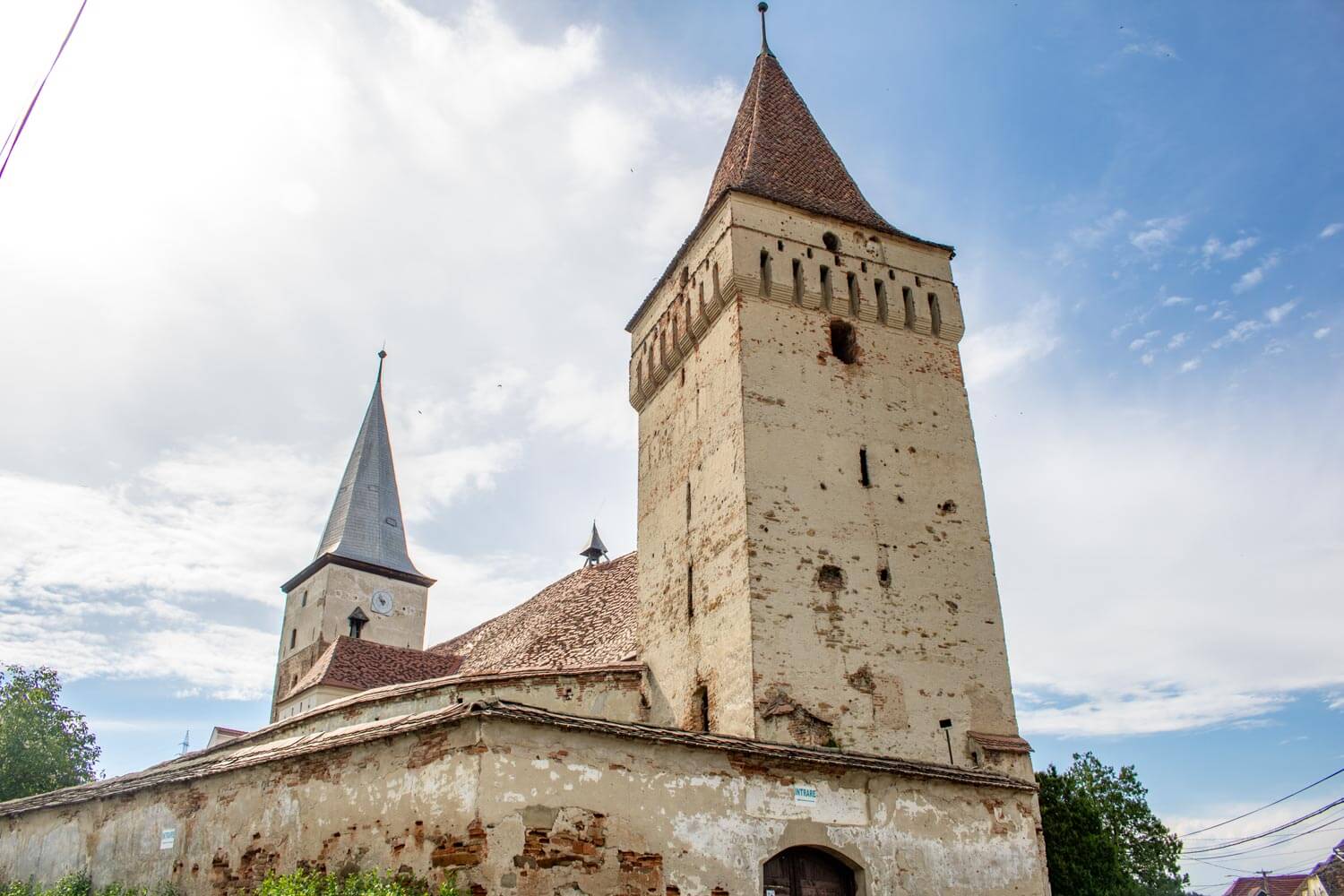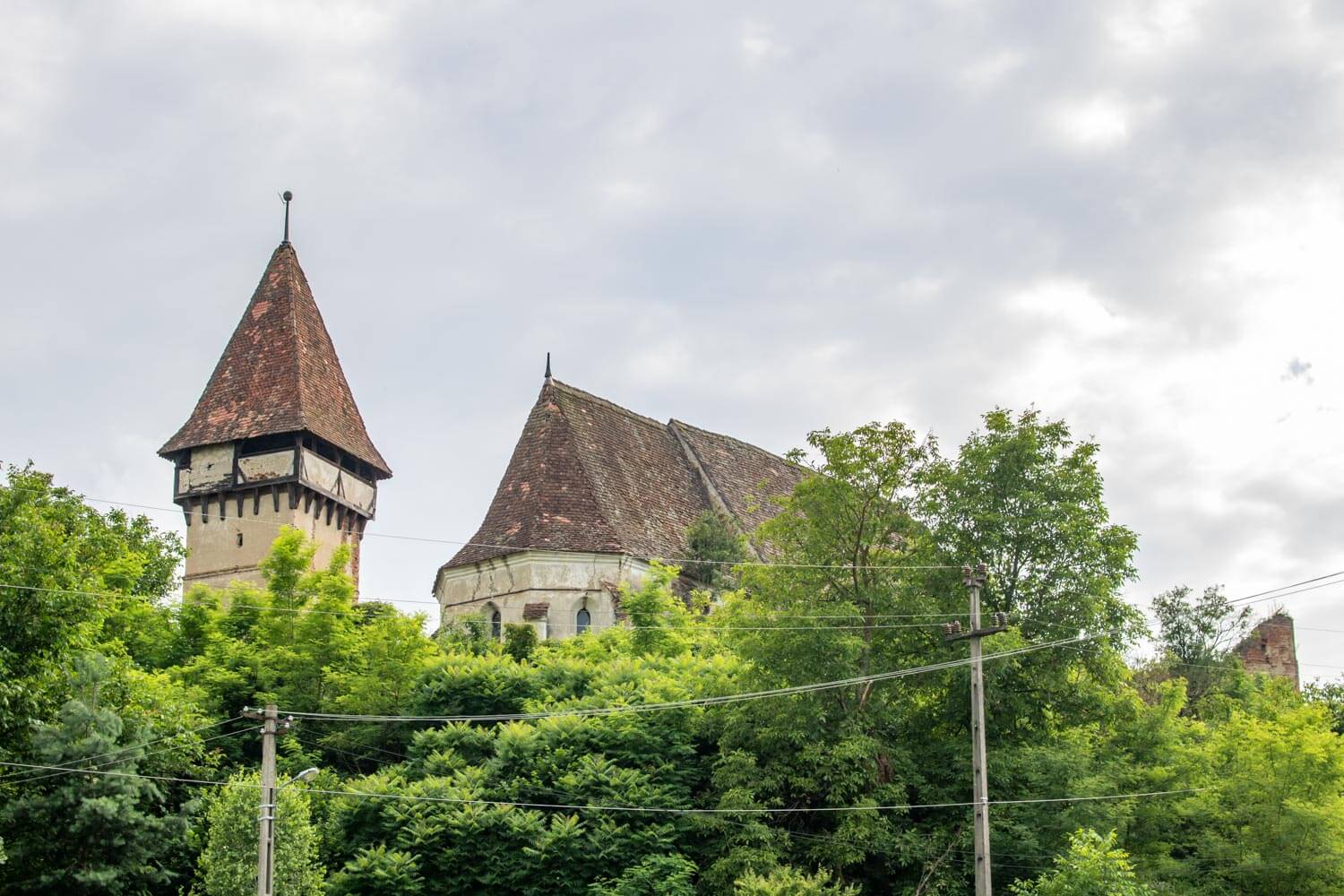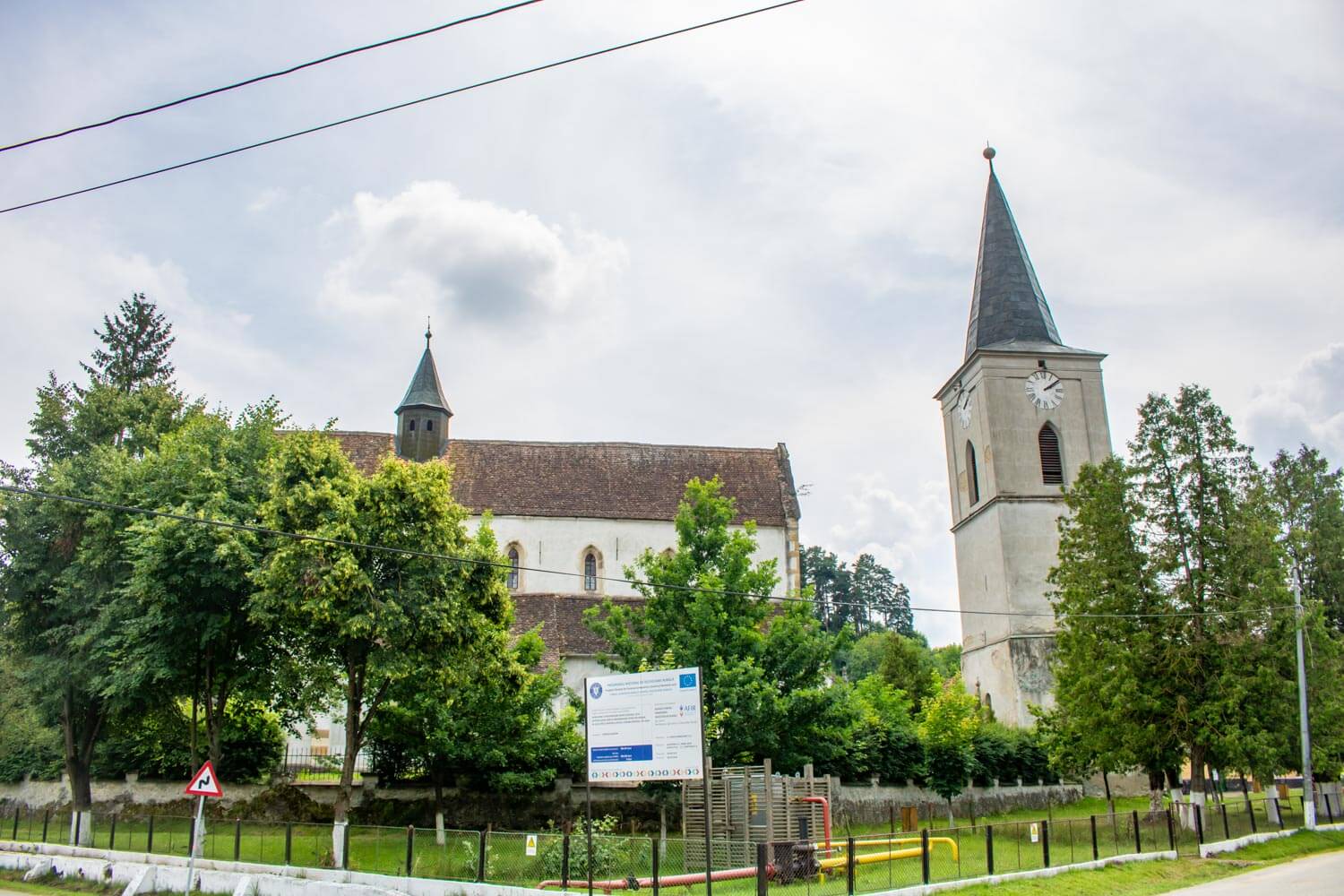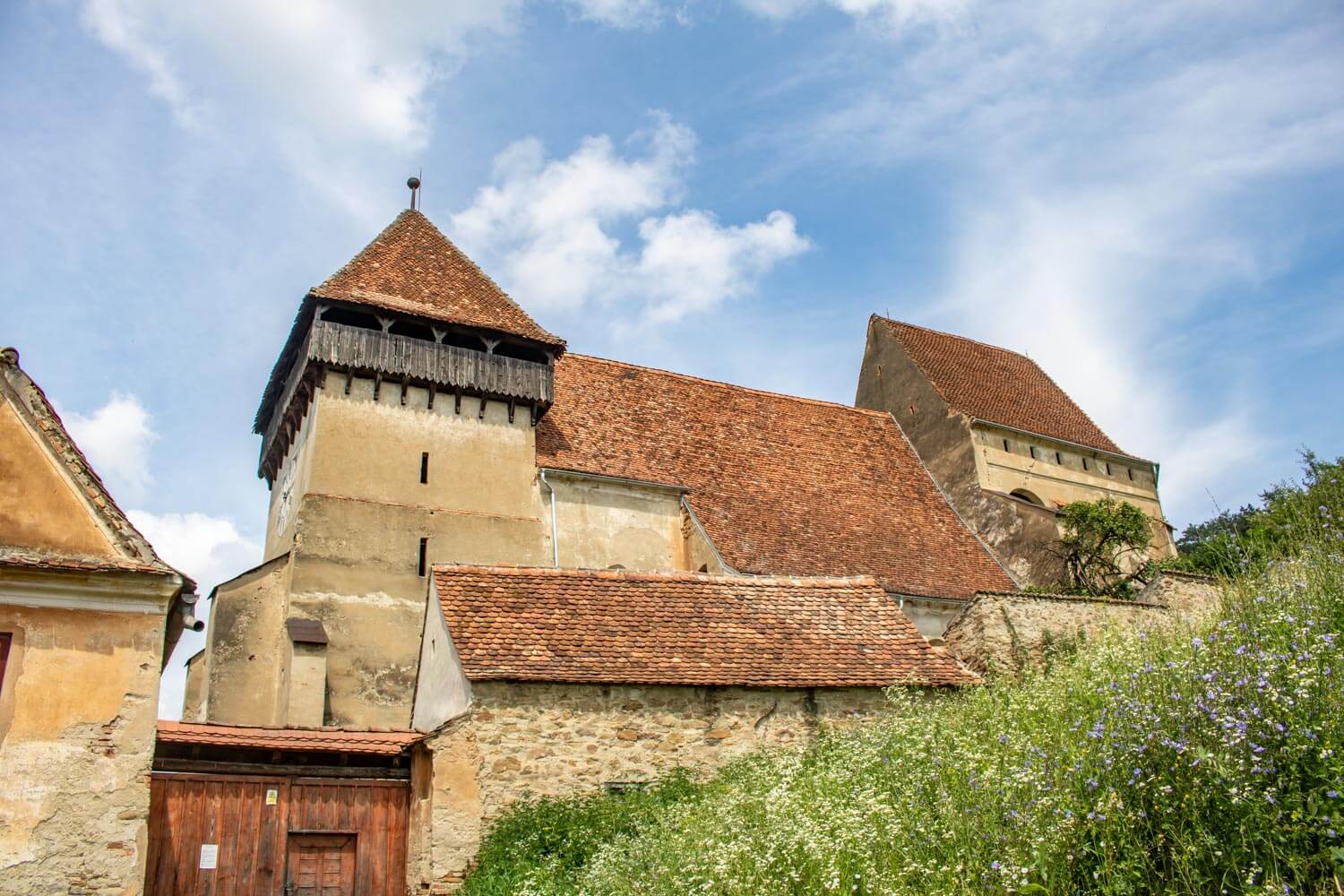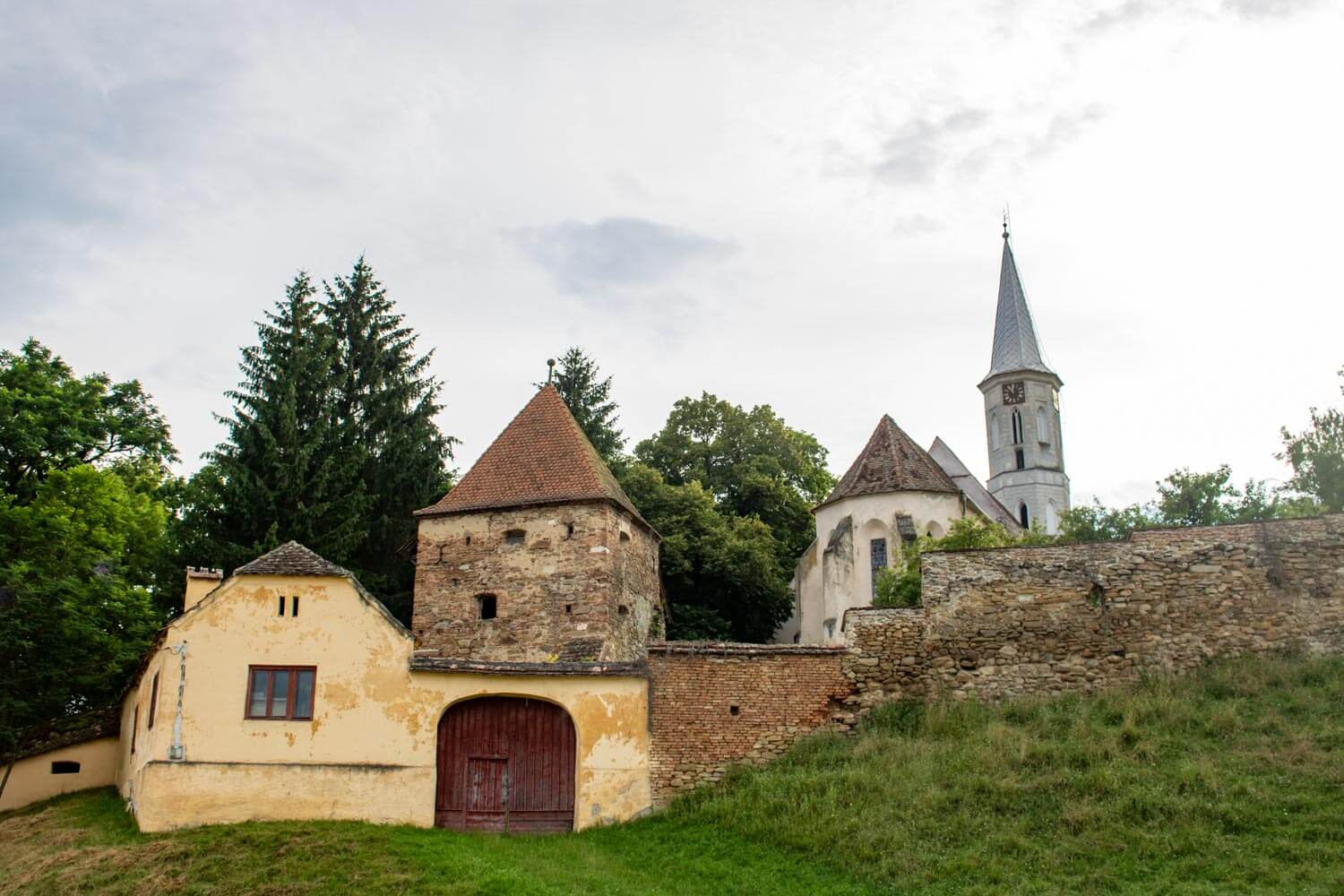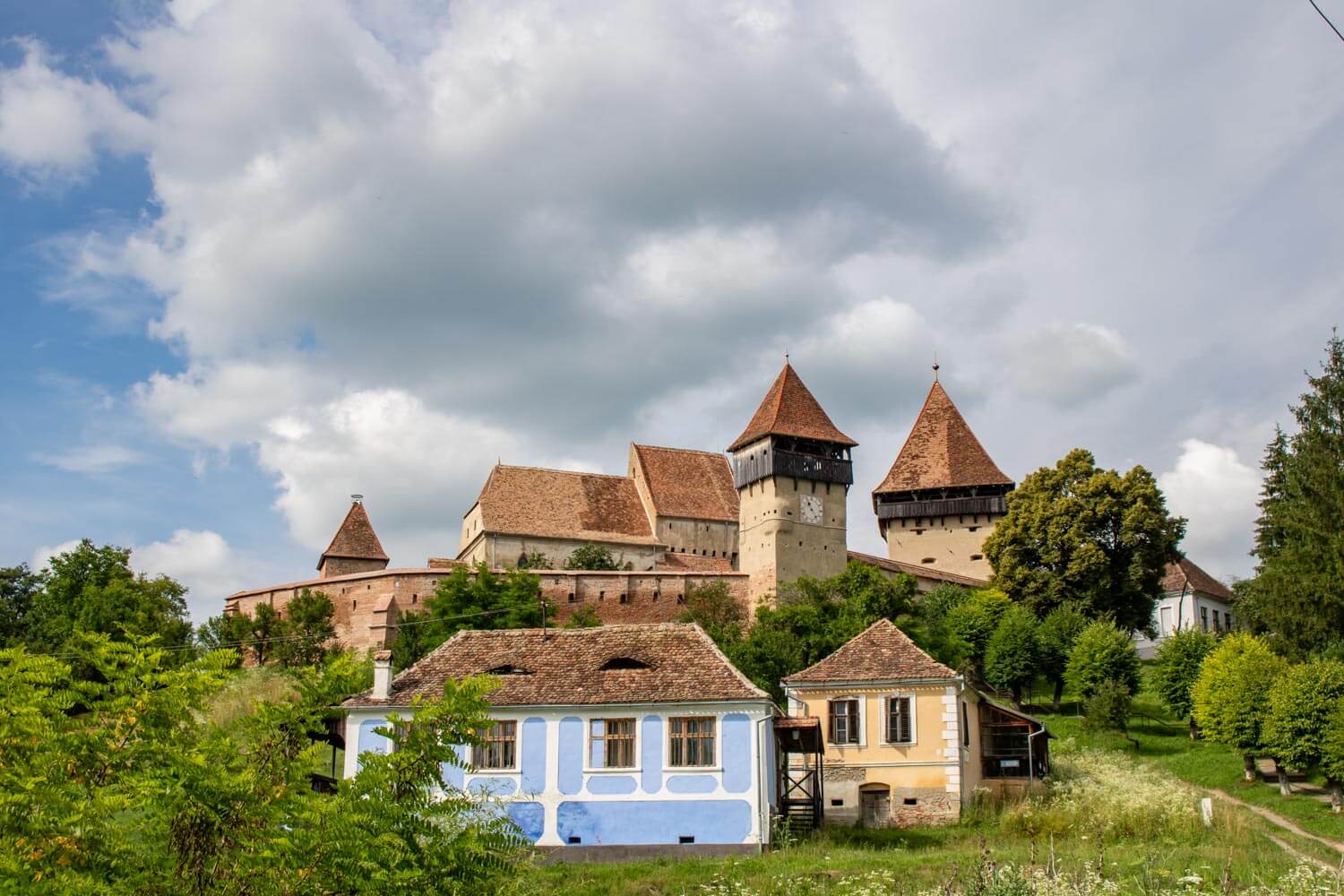
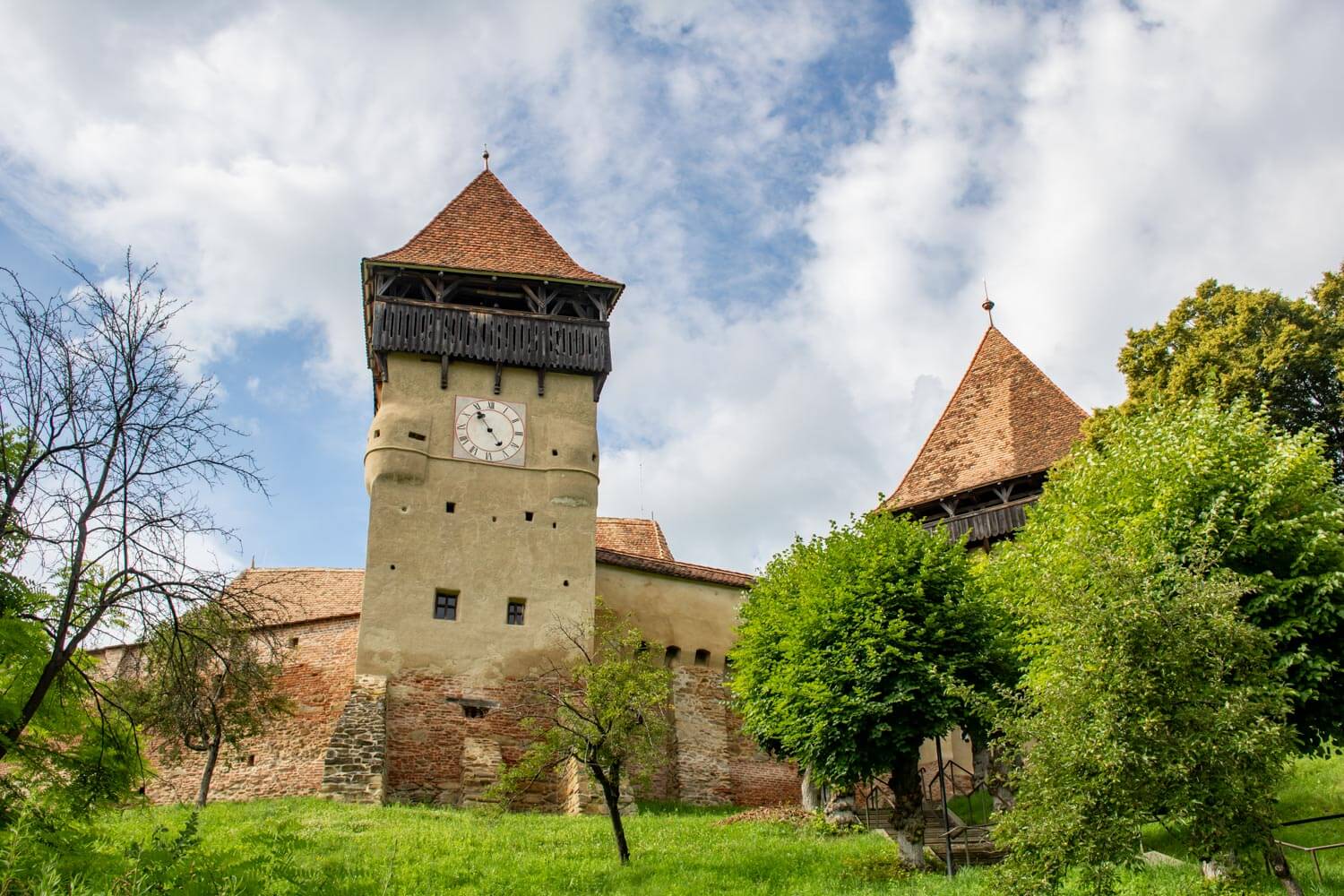
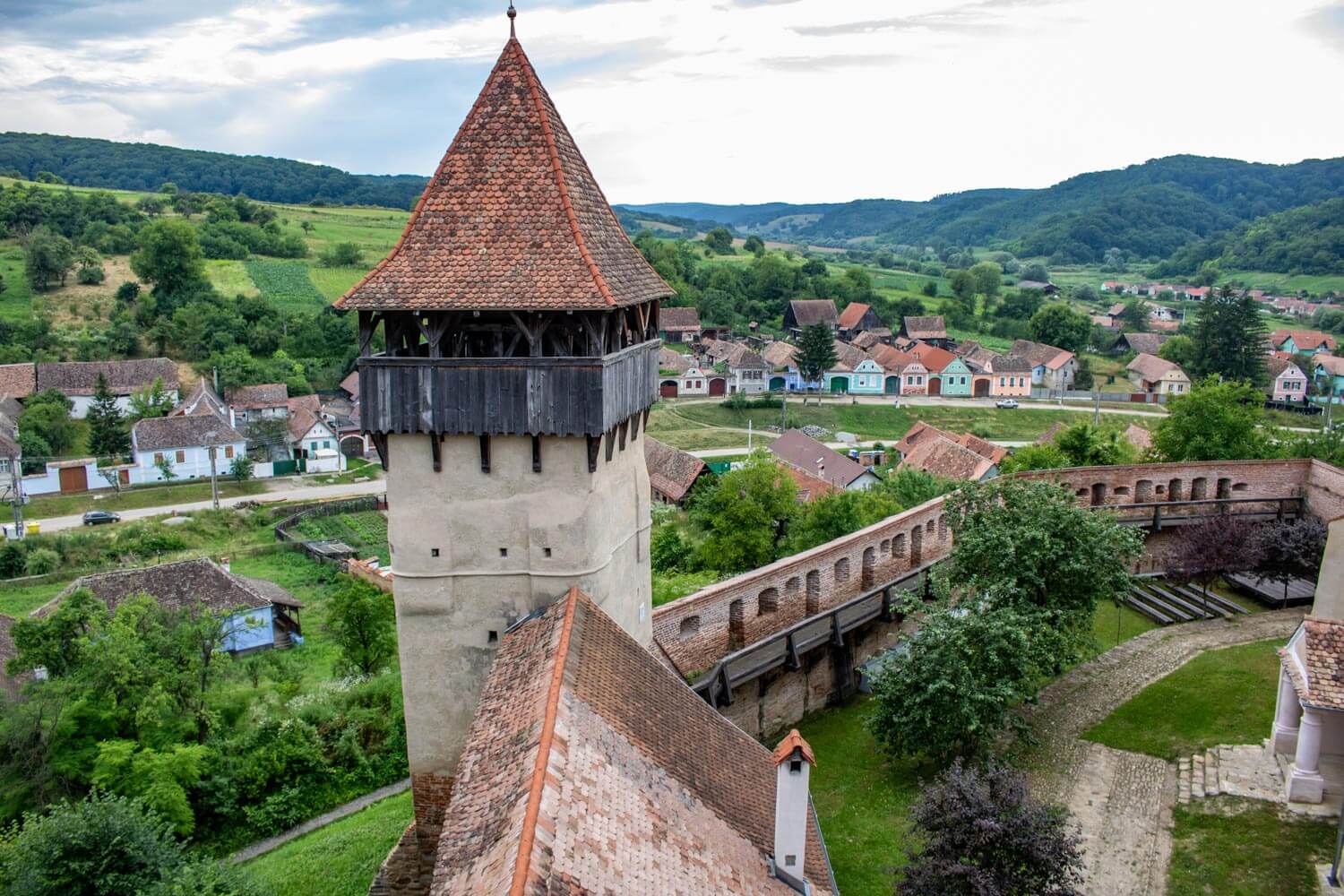
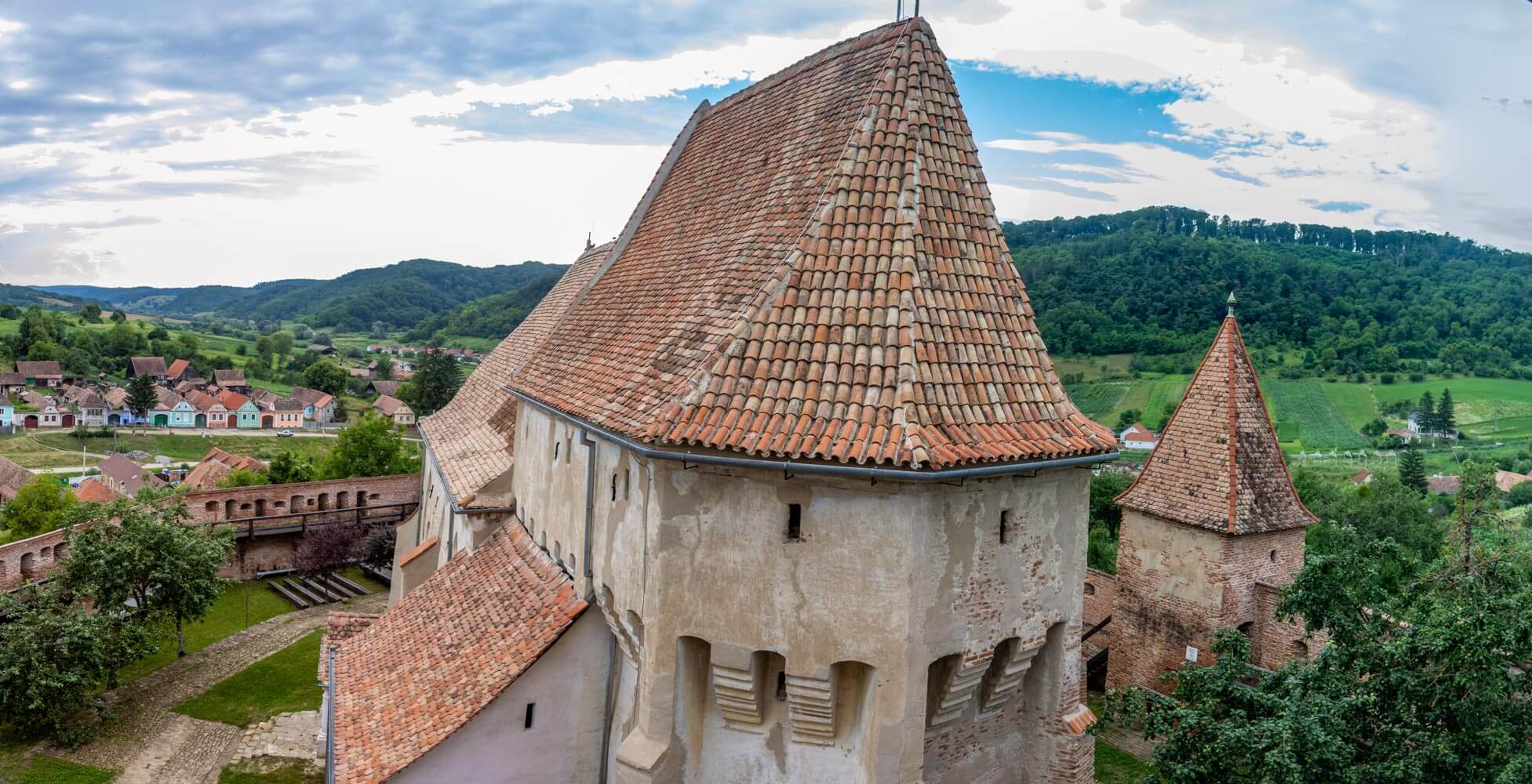
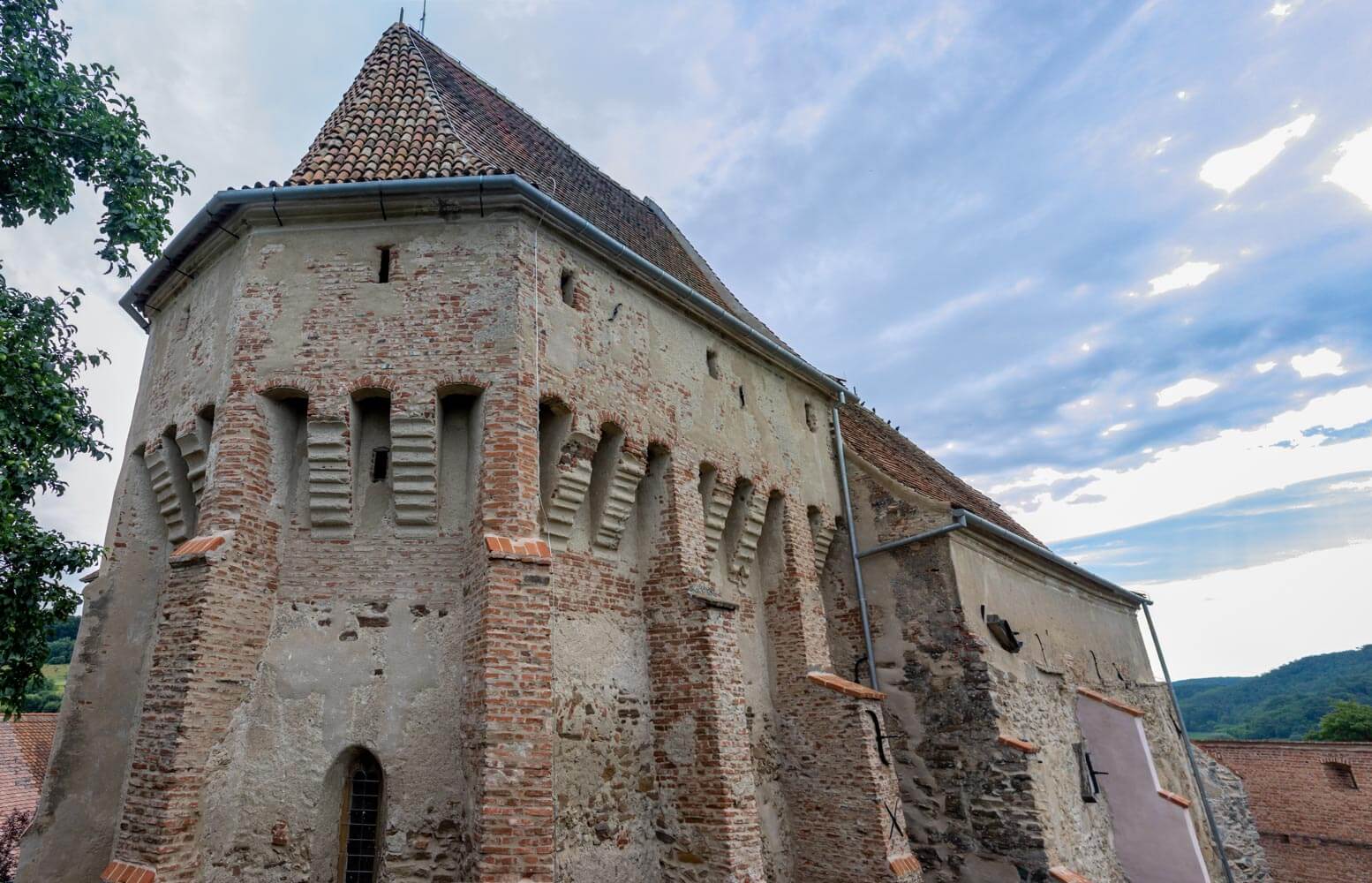
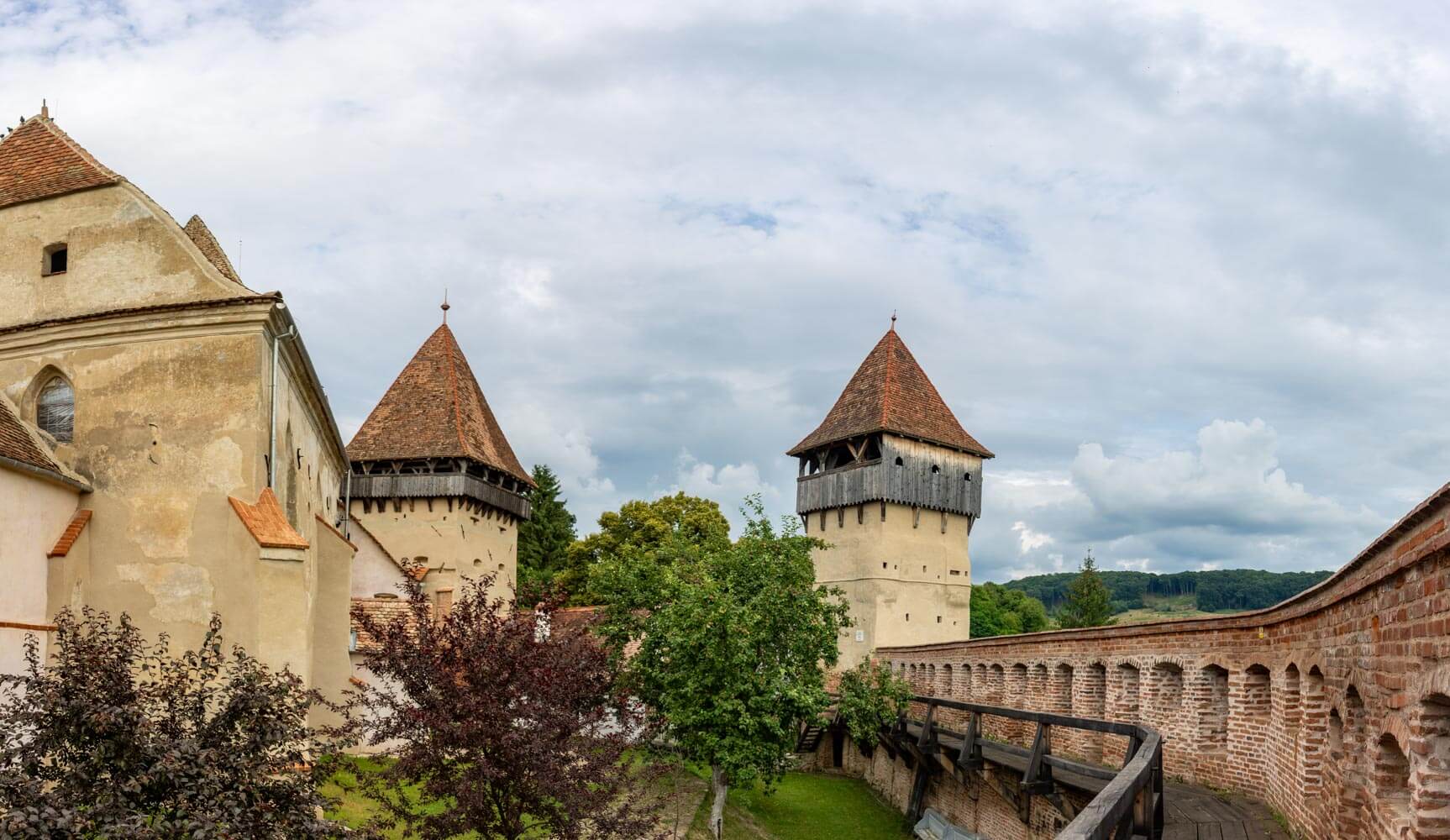
The Fortified Church of Alma Vii (Biserica Fortificată din Alma Vii) is a historic Lutheran church and fortified enclosure standing on a hill above the village of Alma Vii in Sibiu County. Built in the 14th century and strengthened two centuries later, the complex still preserves a compact defensive ring with four towers surrounding the church.
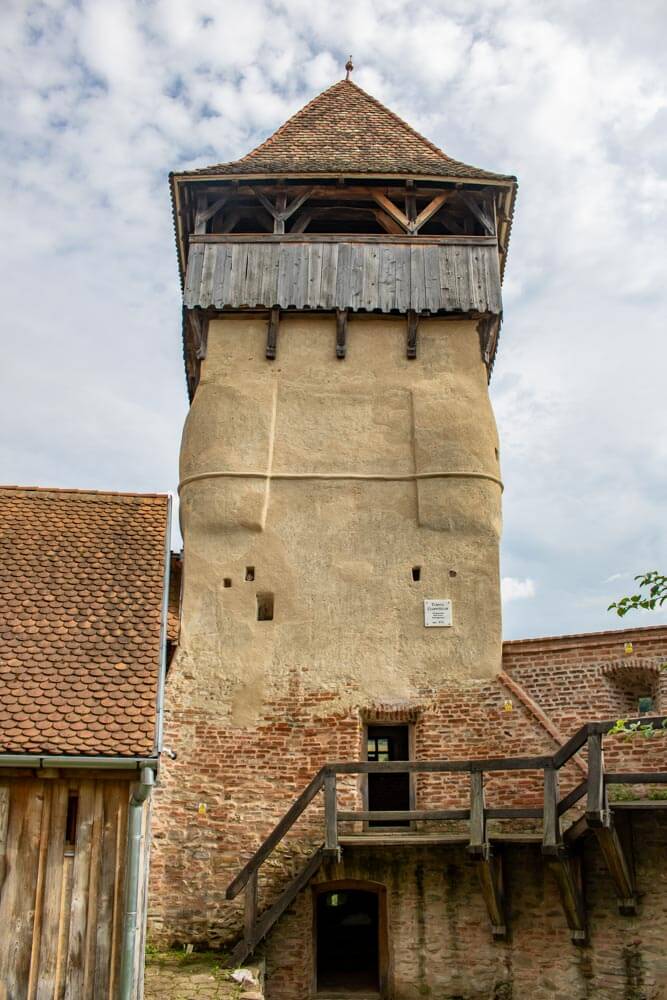
The church was originally Gothic and later adapted for defense as attacks became a growing threat to the Transylvanian Saxon communities of the region. In the early 16th century, the choir was raised and fortified with firing openings, allowing the church building itself to form part of the defensive system rather than relying only on the surrounding walls. The eastern gate tower was also heavily strengthened and still preserves traces of the mechanism for a former portcullis.
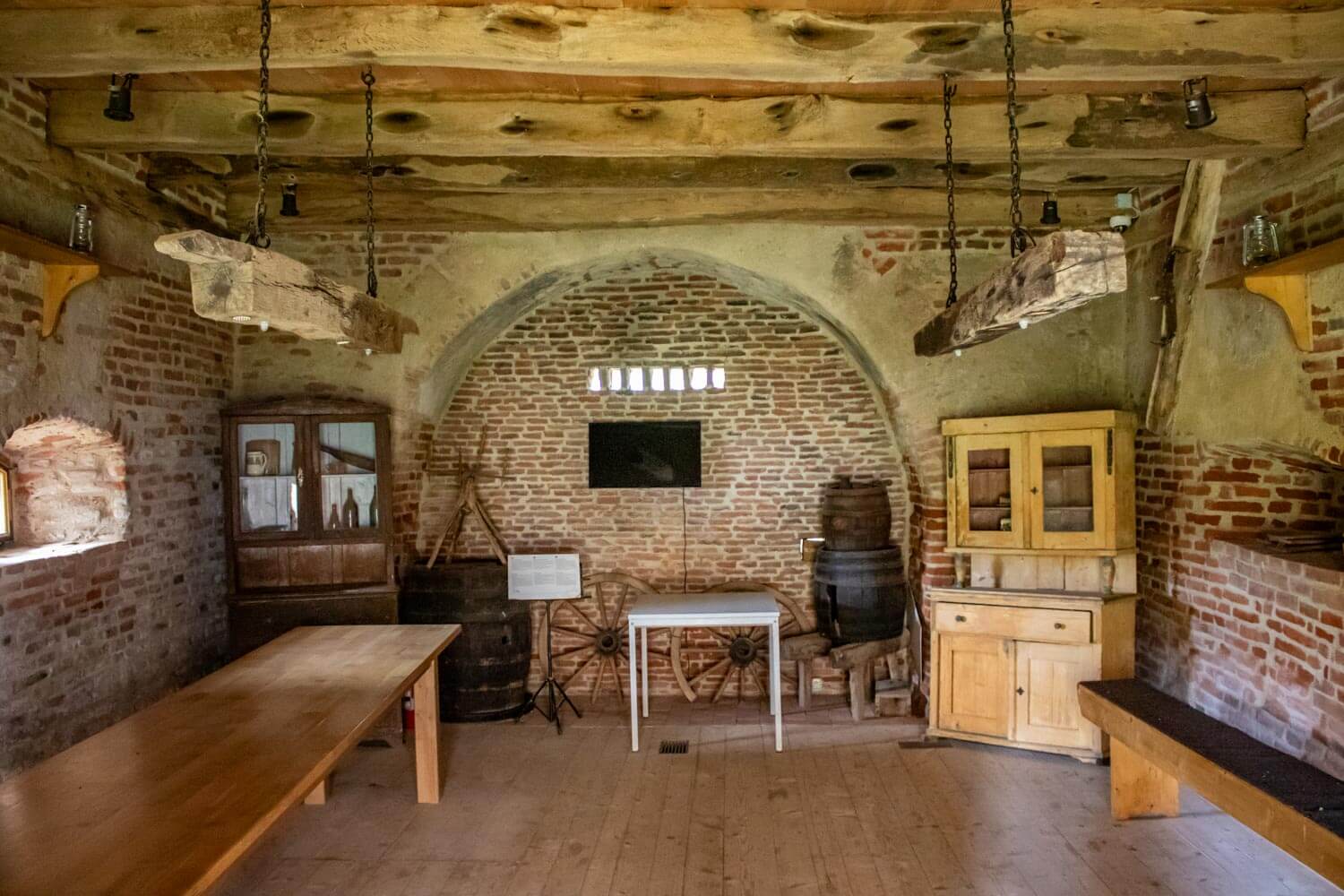
Four defensive towers stand around the enclosure, positioned toward the four cardinal directions. Their survival gives Alma Vii a particularly complete appearance, with the church, gate tower and surrounding walls still reading clearly as a single fortified complex rather than as isolated remnants of a larger system.
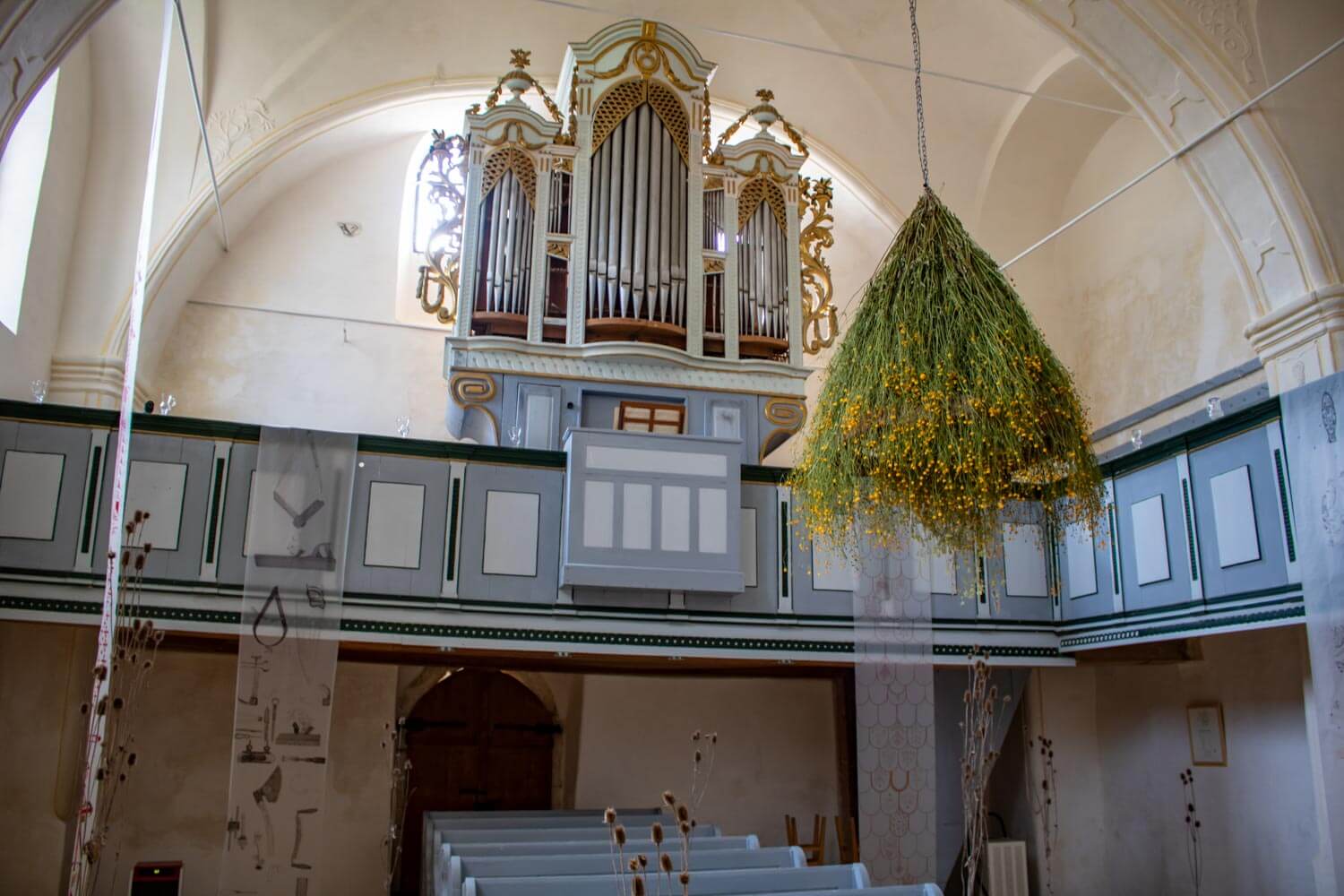
The interior changed considerably during the 19th century, when the earlier Gothic ribbed vault was removed and galleries were added along the northern and western sides. These later alterations reflect the continued use of the church long after its military role had disappeared, while the medieval walls and towers outside preserve the much older defensive character of the site.
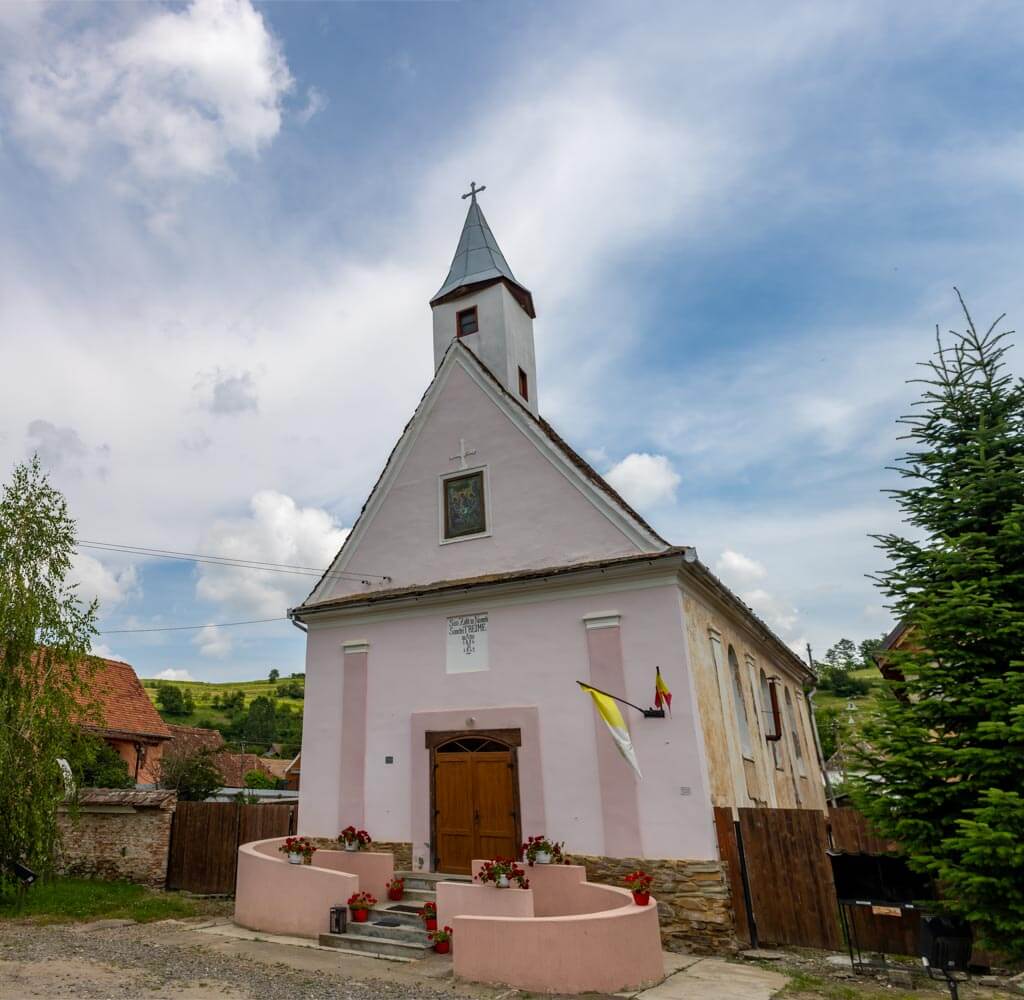
Alma Vii itself has retained much of its traditional village structure, with wide streets, colorful Saxon houses and former wine-growing landscapes surrounding the church hill. Conservation projects have helped restore both the fortified church and parts of the historic village, making the ensemble one of the clearest surviving examples of a small Transylvanian Saxon settlement organized around its church fortress.