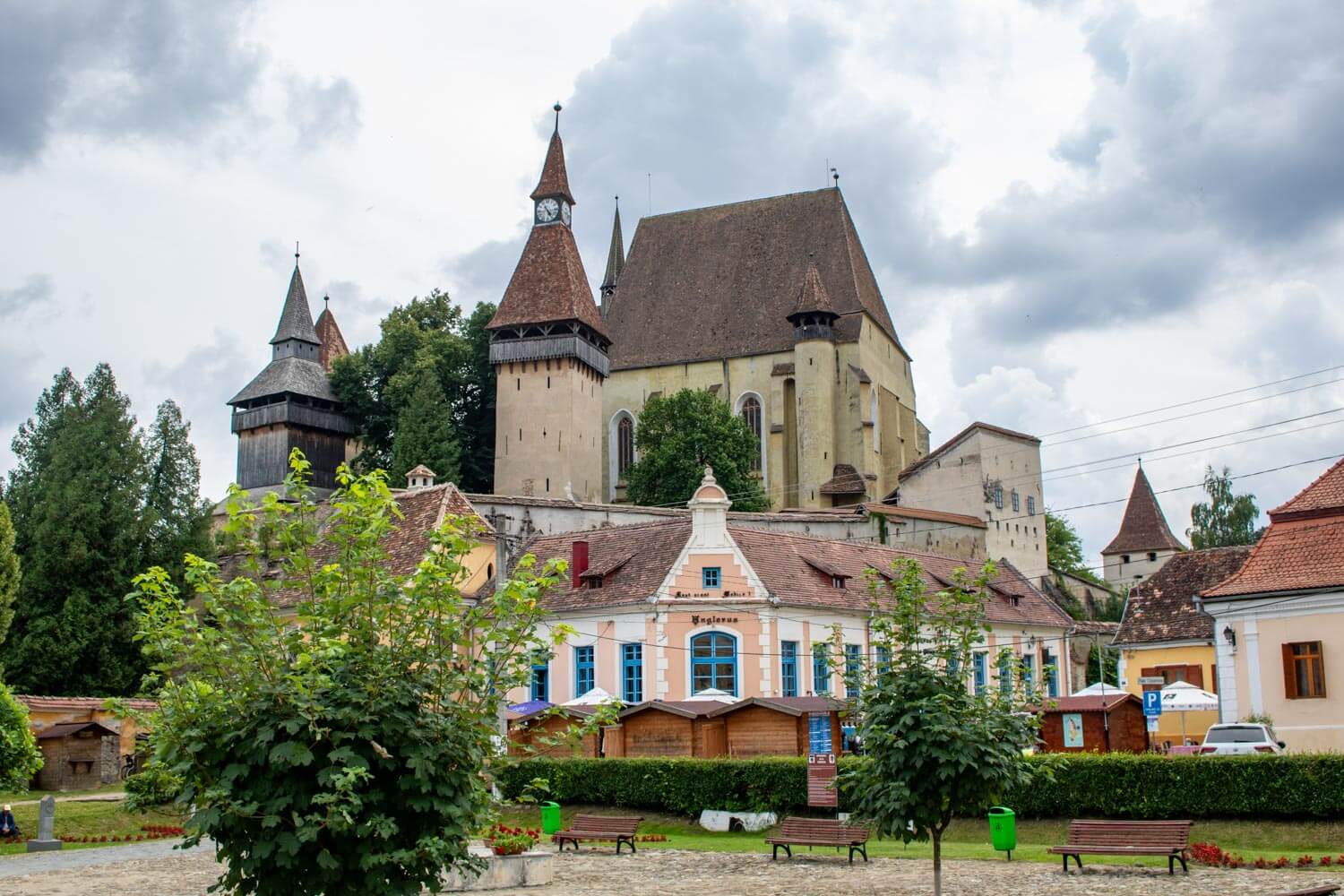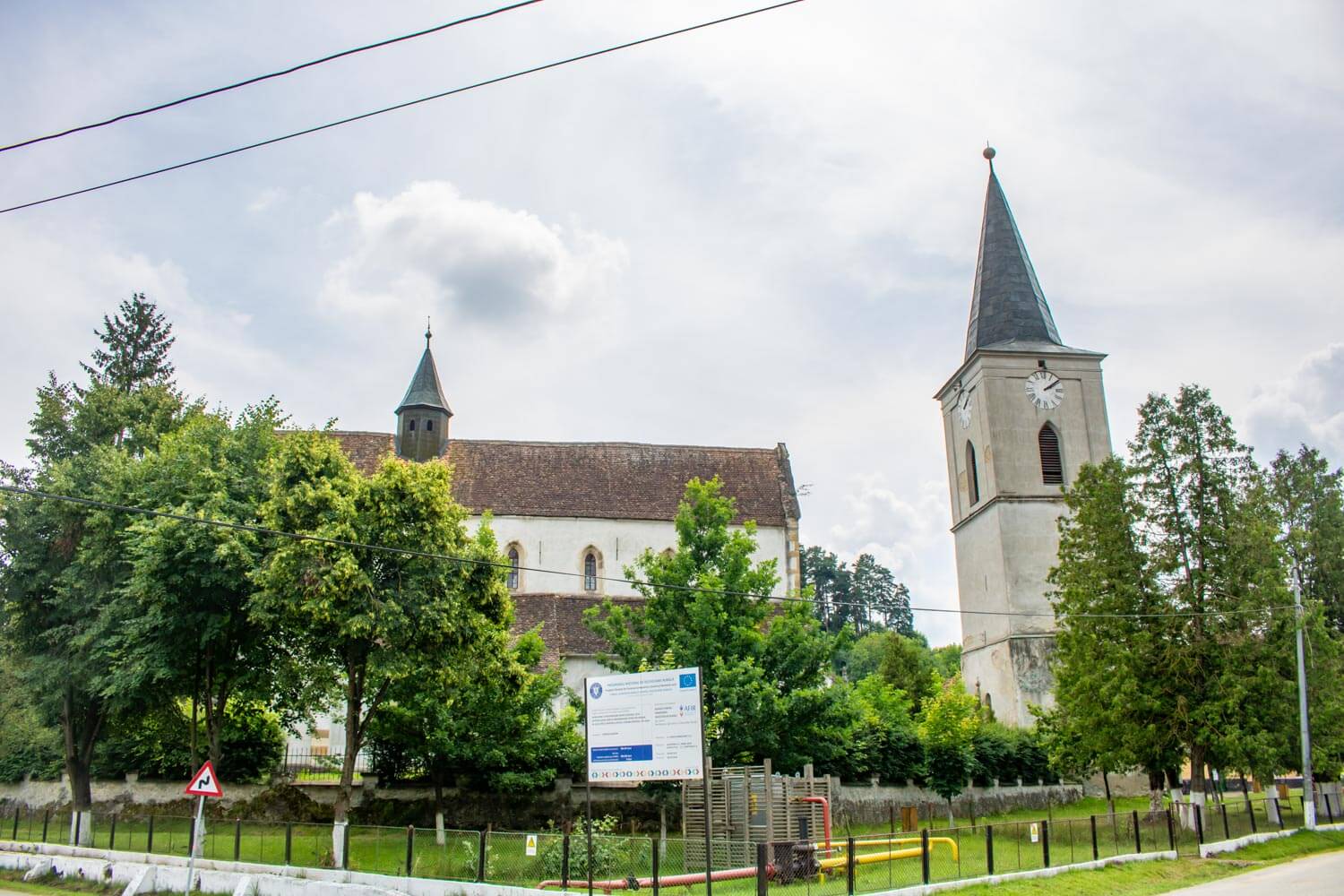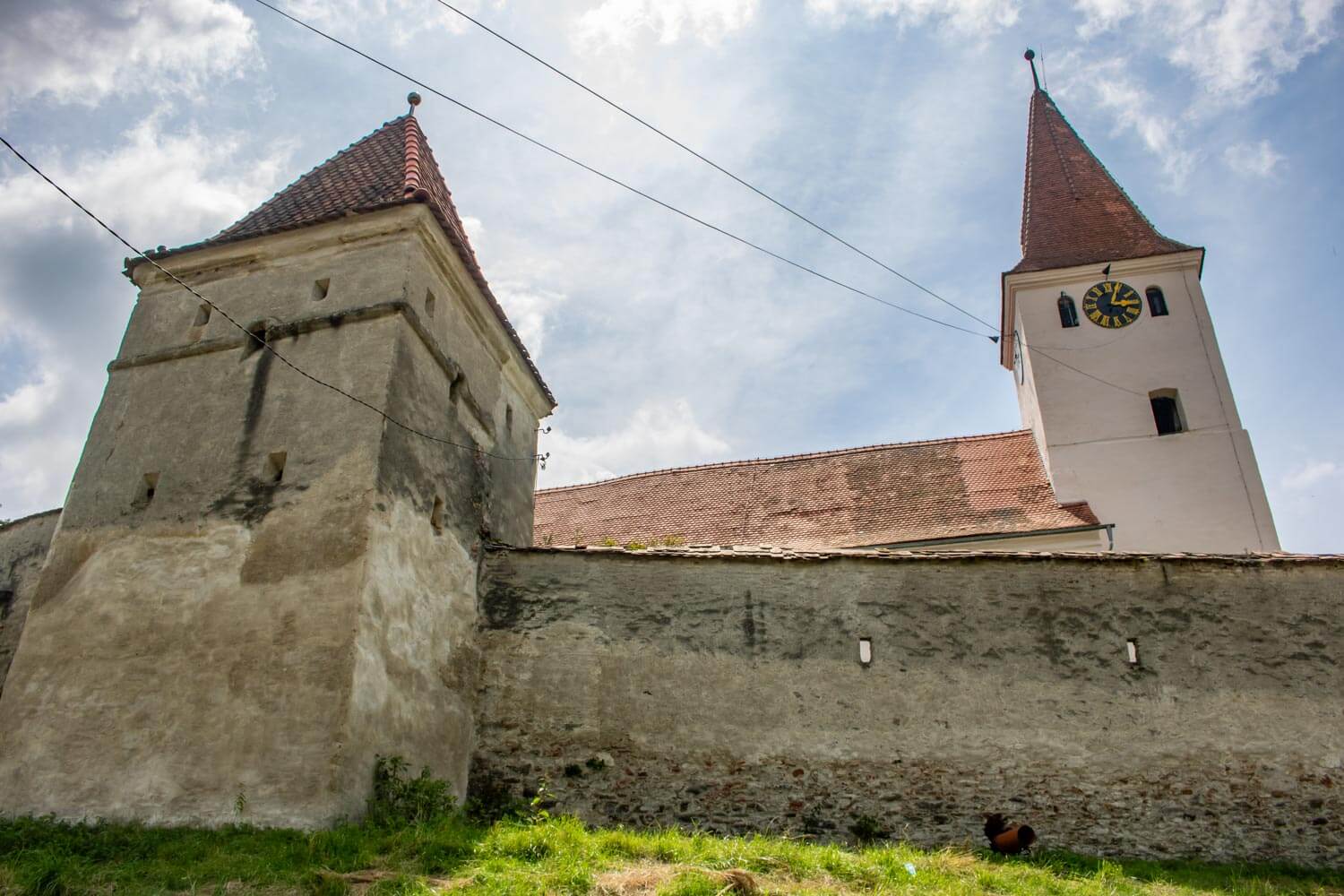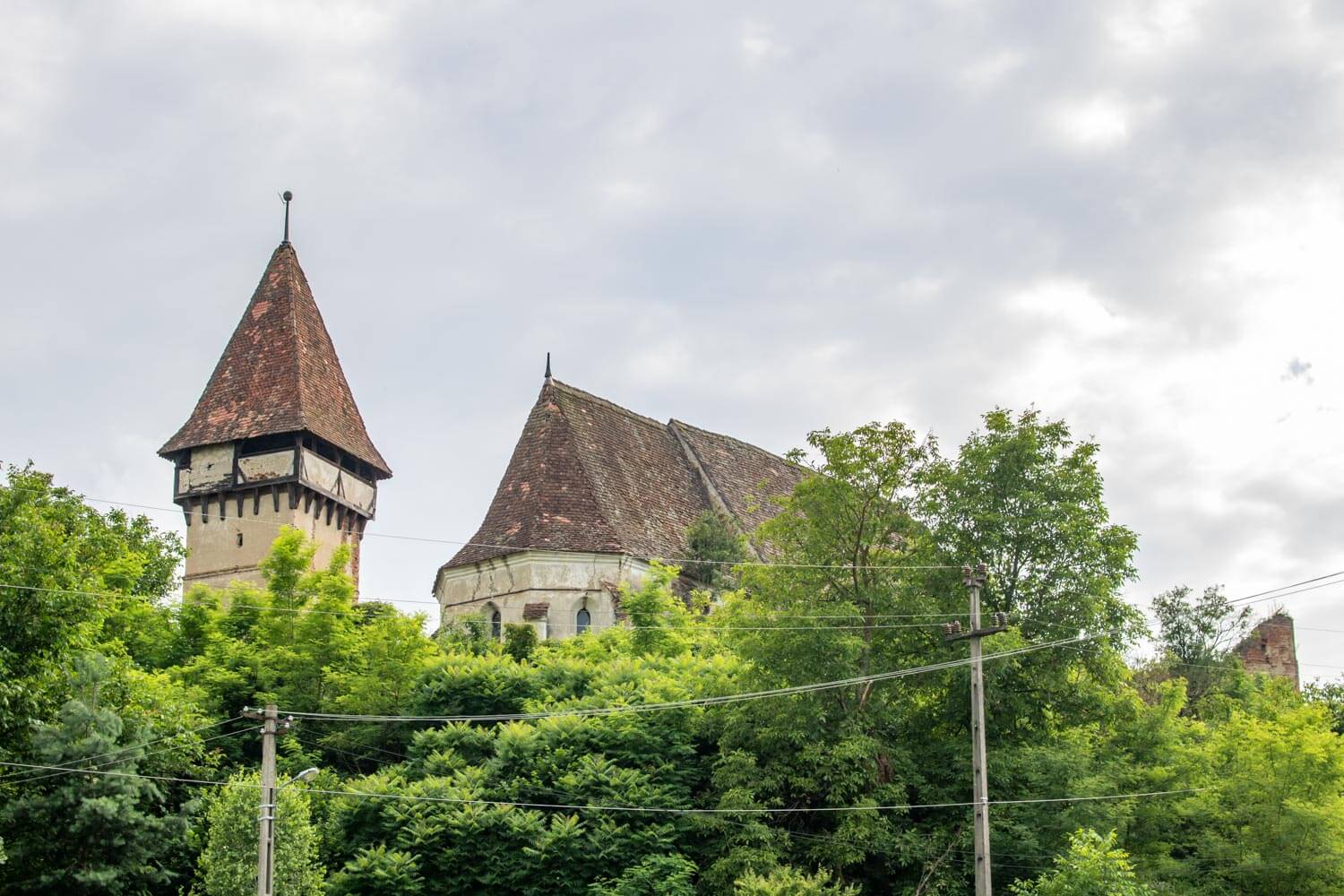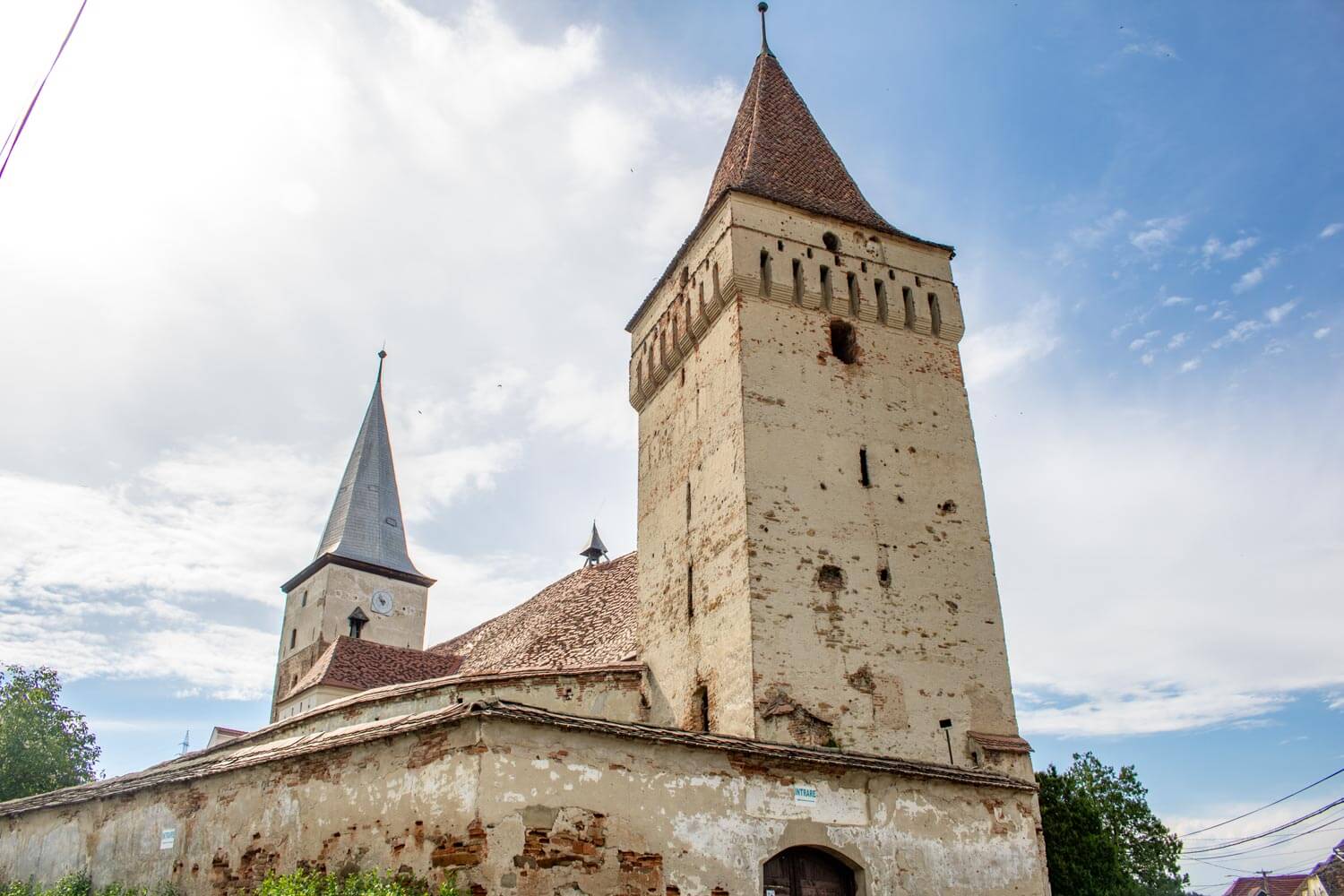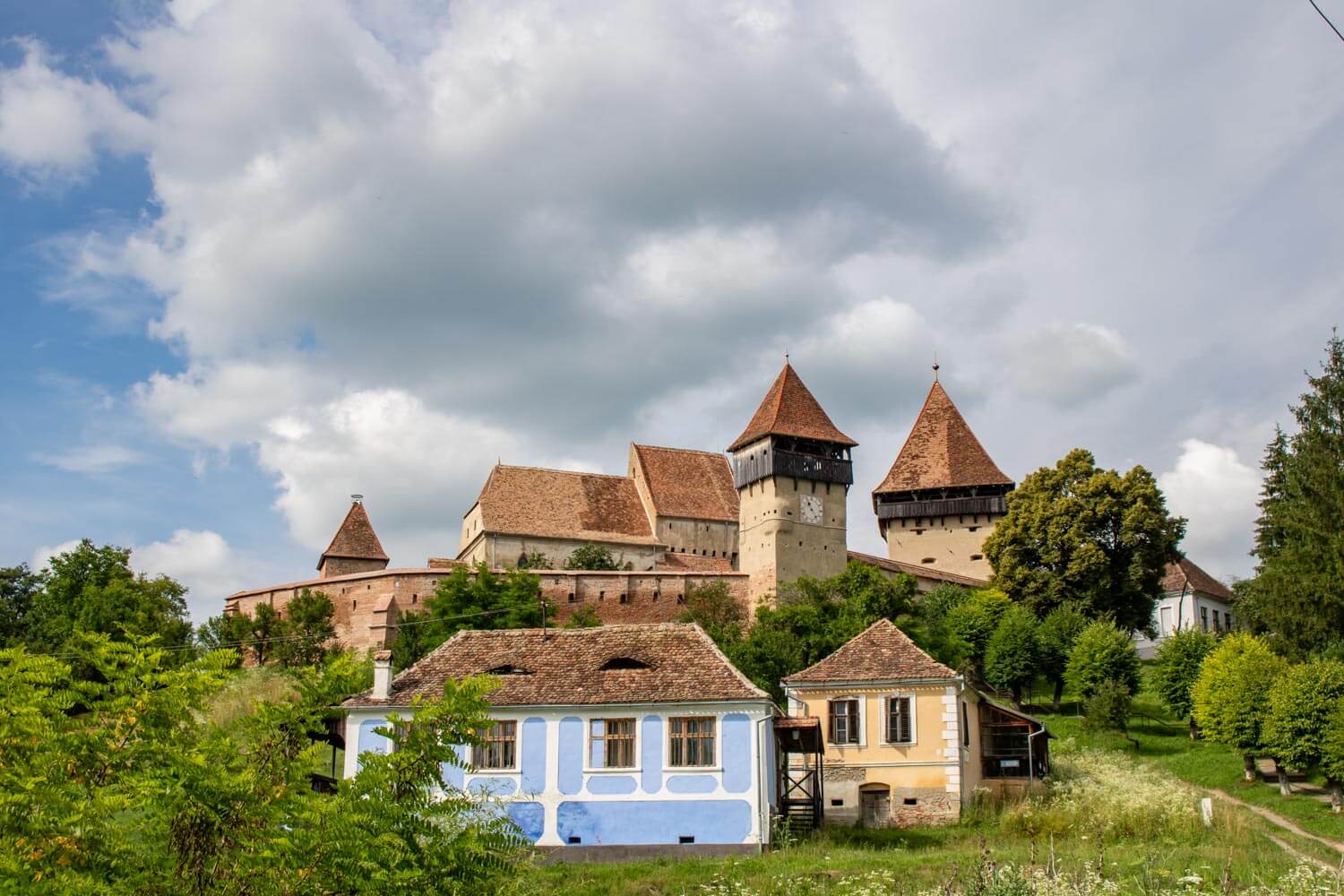
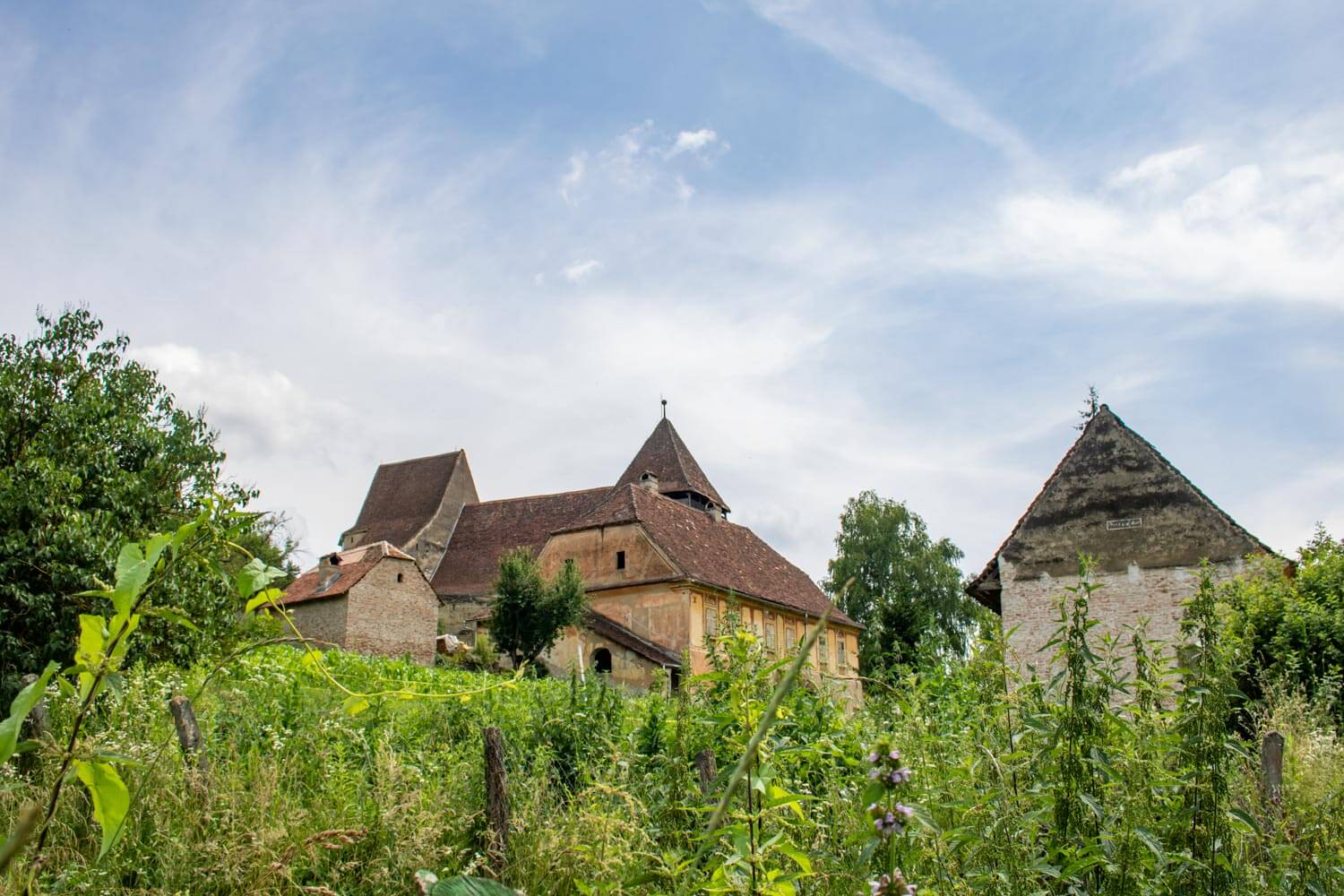
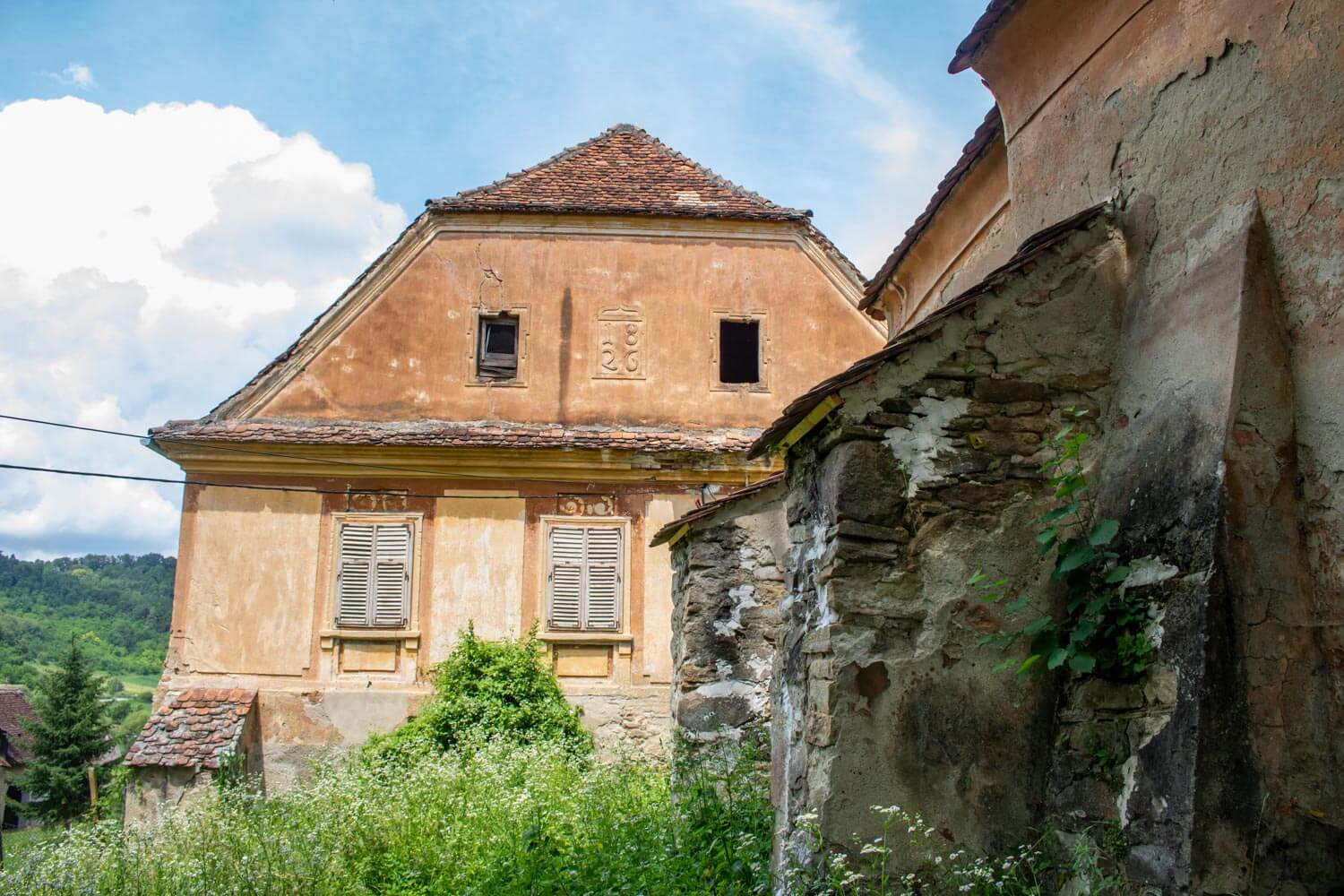
The Fortified Church of Copșa Mare (Biserica Fortificată din Copșa Mare) is a historic Lutheran church standing on a hill above the village of Copșa Mare, part of Biertan commune in Sibiu County. The complex developed around an early Gothic basilica and is especially distinctive for the way its architecture follows the slope of the hillside, giving the church an unusually dramatic silhouette when seen from the village below.
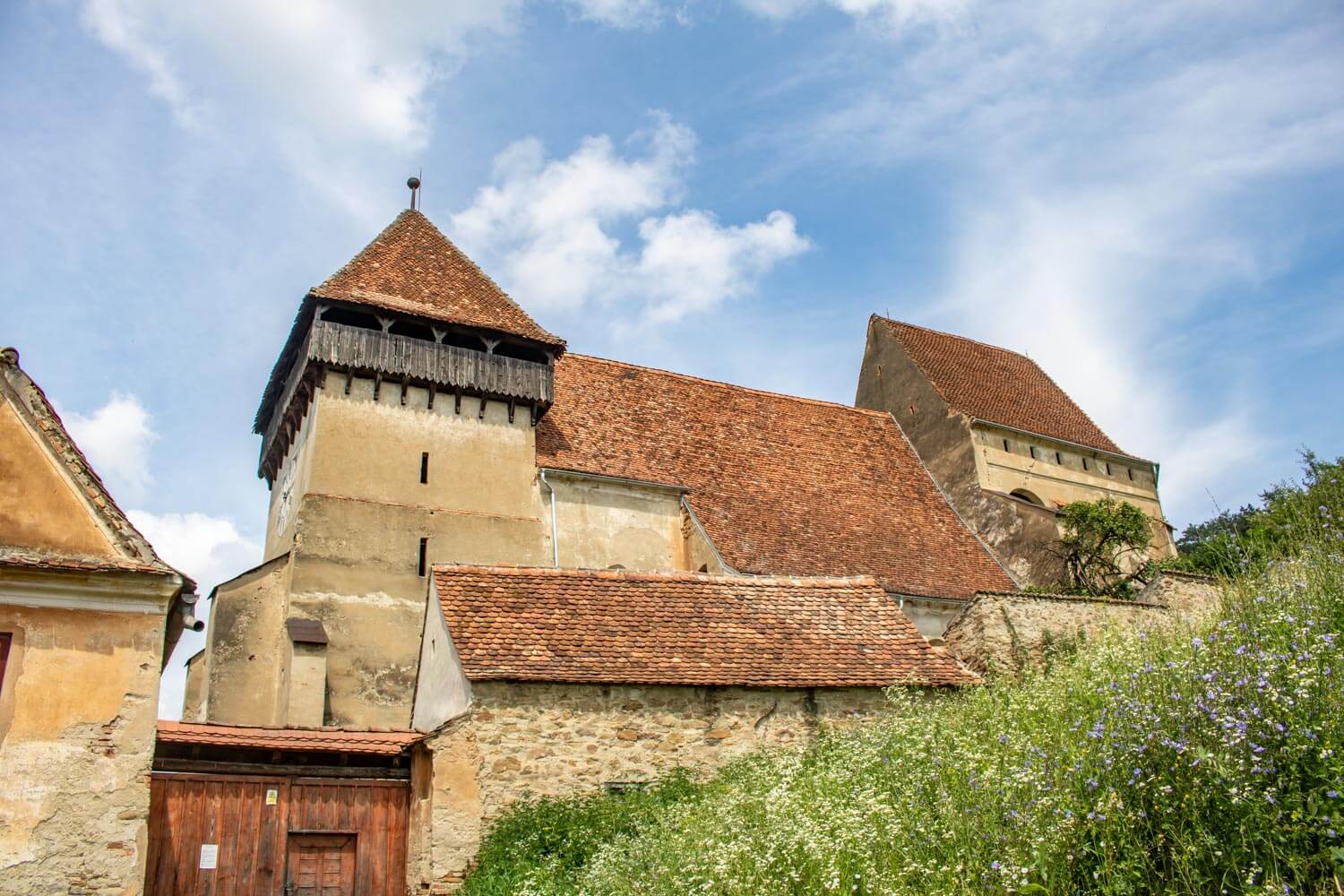
Copșa Mare was first recorded in 1283 and grew rapidly during the 14th century through agriculture and wine growing. As the Saxon community prospered, it built a substantial Gothic church on the eastern hill above the settlement. The building was later fortified around 1510, when the original choir was replaced by a much taller polygonal chancel reinforced with a defensive upper level. Rising almost 11 meters and positioned against the slope, this eastern section became one of the strongest parts of the complex.
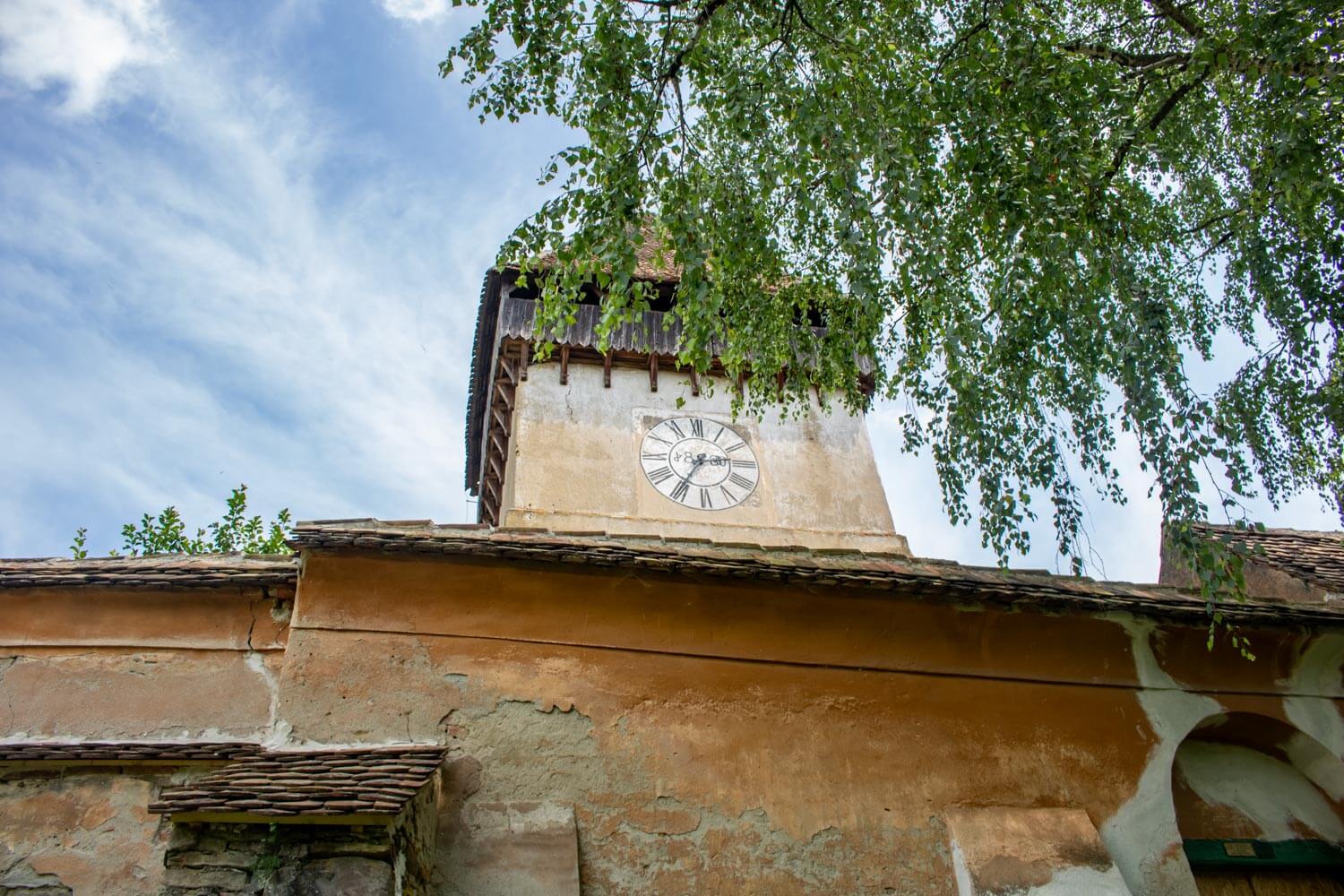
The bell tower was also adapted for defense with a wooden fighting gallery, while a surrounding wall protected the churchyard. Inside, the raised position of the choir is immediately noticeable: visitors climb several steps from the nave into the sanctuary, reflecting the way the entire church was adjusted to the uneven terrain. The choir still preserves its late Gothic stellar vault and finely carved window tracery.
A two-story sacristy was added on the northern side in 1519, with a small chapel on its upper level. Its Renaissance portal is one of the more refined architectural details in the complex. The nave, however, was substantially rebuilt in 1795 in the Baroque style, giving the interior a very different character from the fortified Gothic choir. A Neoclassical altar was added later.
The result is a church where the different phases remain unusually easy to read: the fortified eastern choir rises heavily above the hillside, the tower retains its defensive character, and the Baroque nave introduces a later, more domestic interior scale. Together with its elevated position above the village, this makes Copșa Mare one of the clearest examples of how a Saxon fortified church could be shaped as much by its terrain as by military needs.