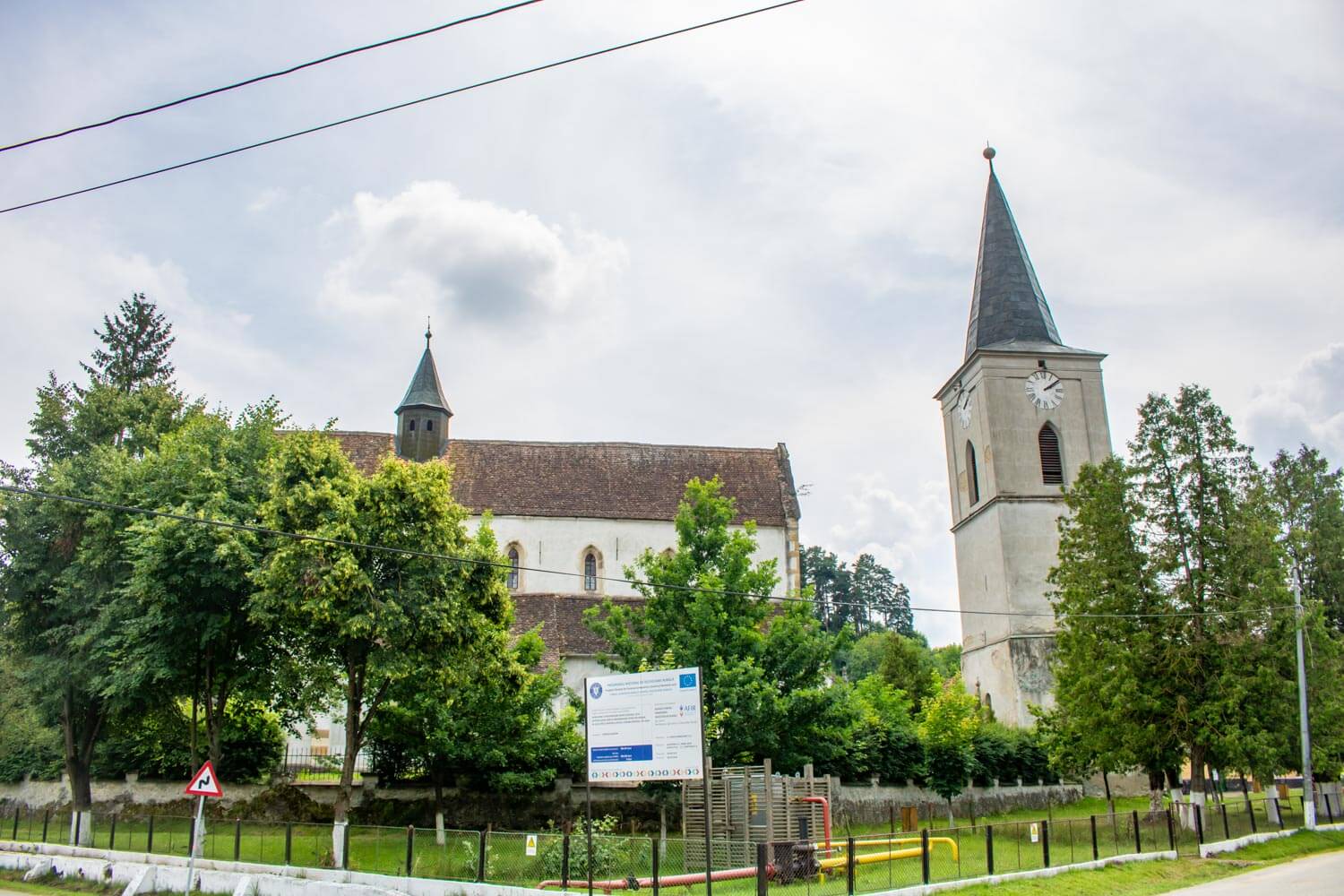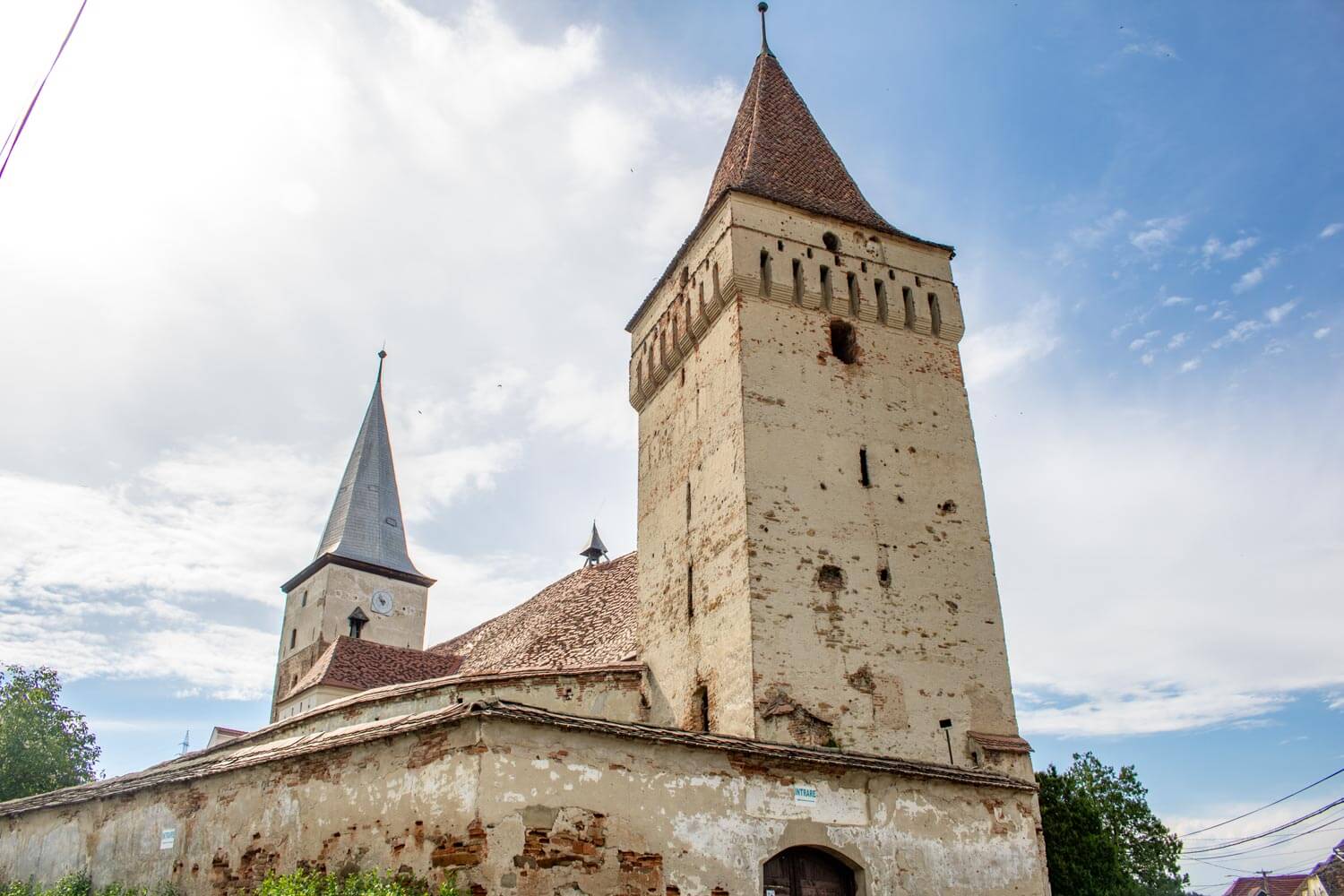
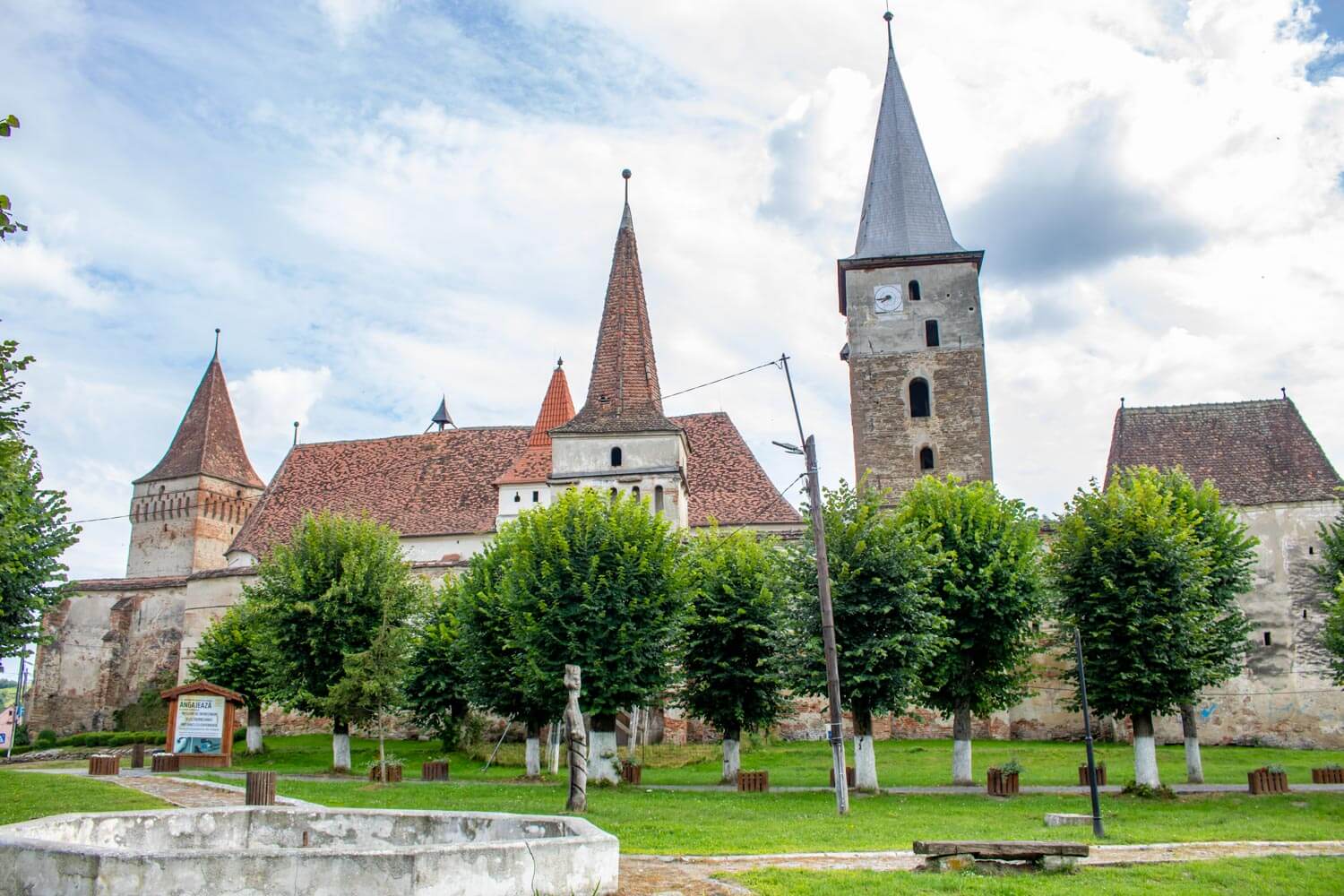
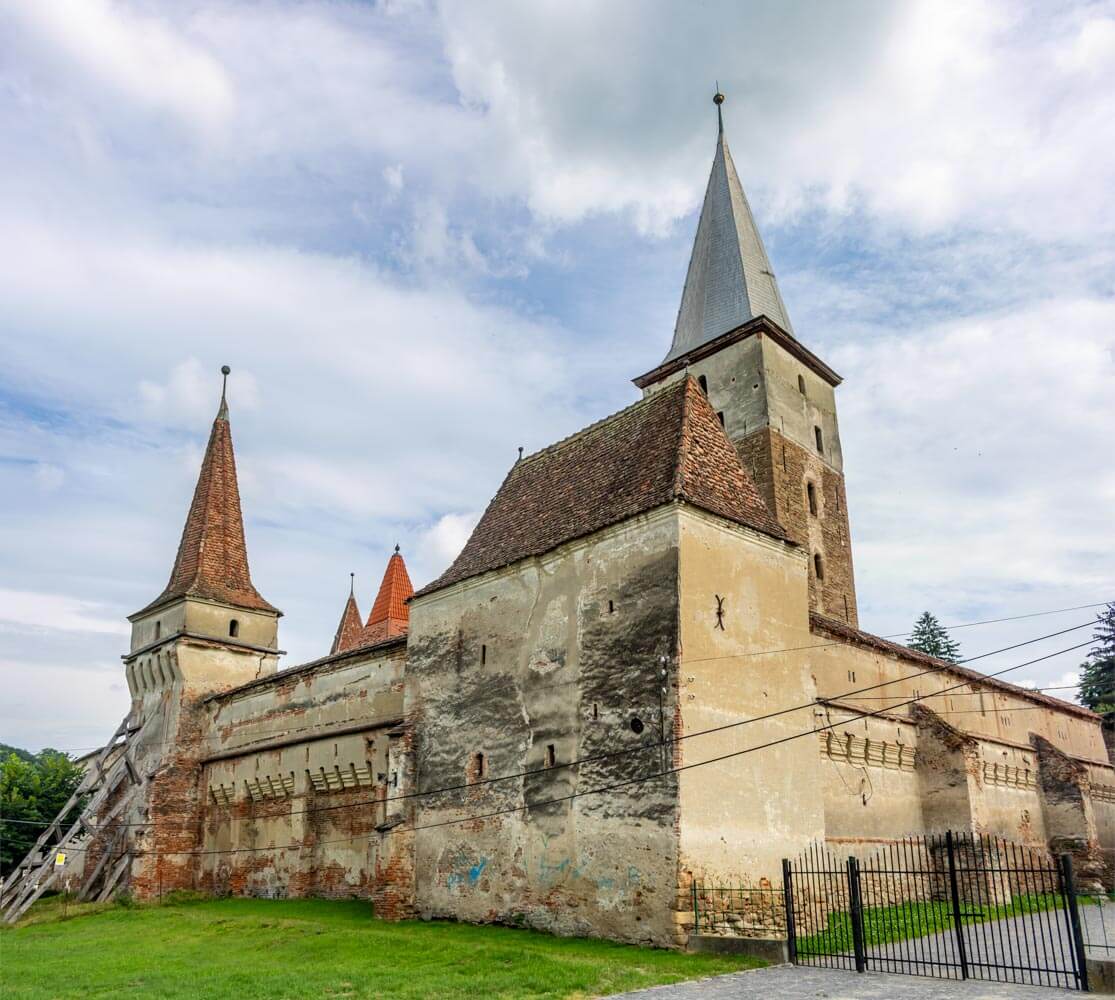
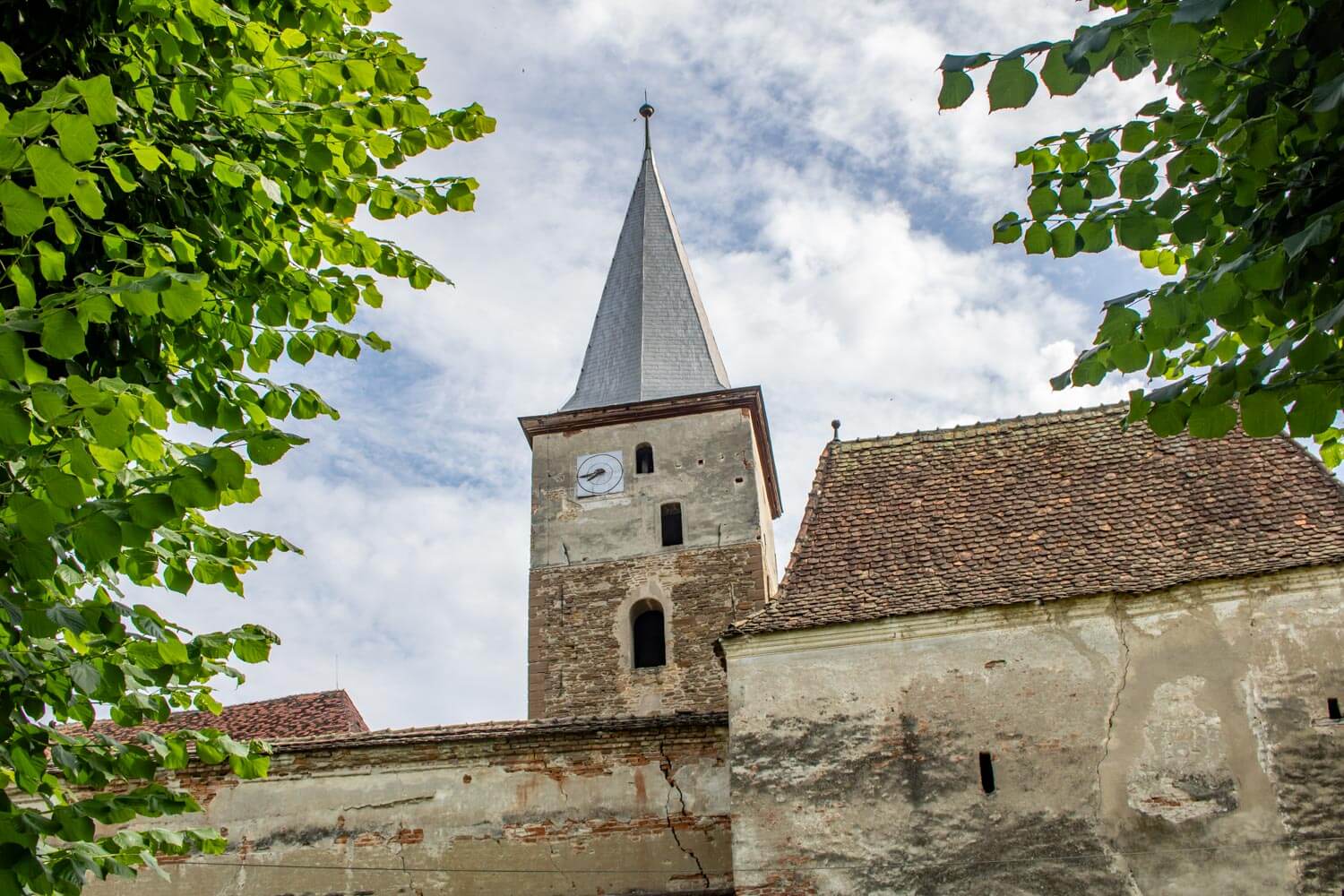
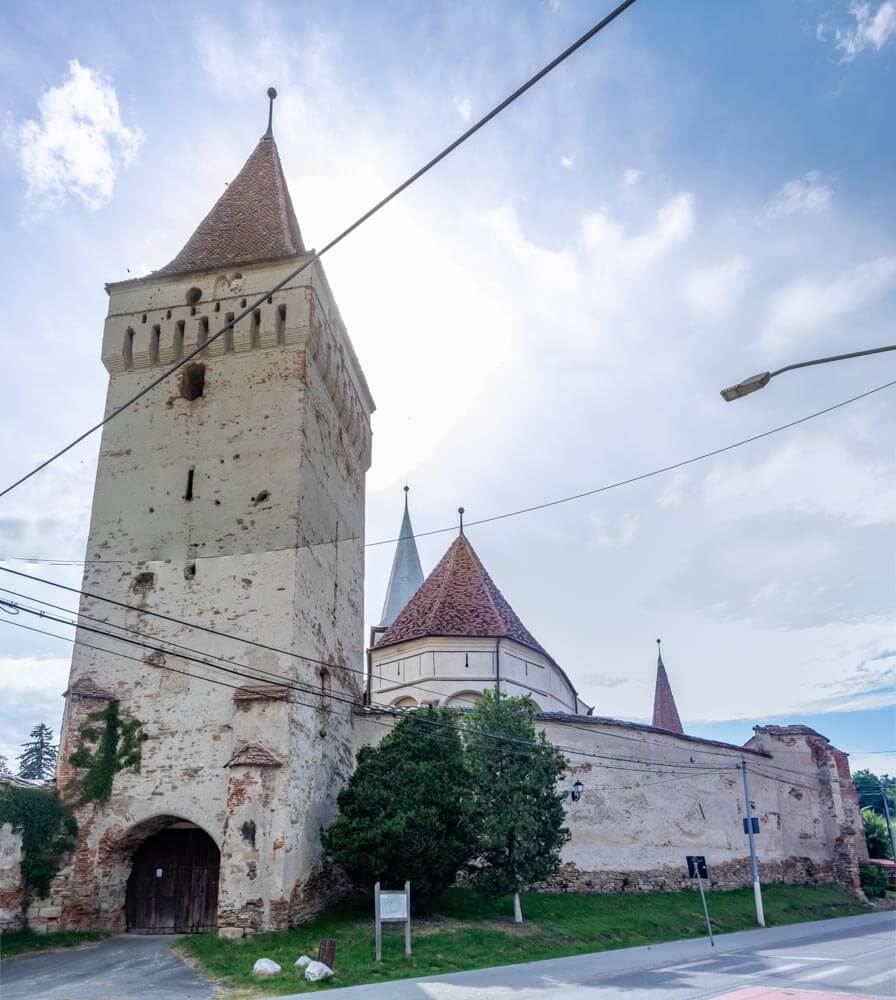
The Fortified Church of Moșna (Biserica Fortificată din Moșna) is a large historic Lutheran church and fortified enclosure in the village of Moșna, southeast of Mediaș. The present church was built mainly in the late 15th and early 16th centuries, replacing an older medieval church and creating one of the most imposing Gothic hall churches in the Târnava region.
Moșna had grown into a prosperous Saxon market settlement by the late Middle Ages, and that prosperity is reflected in the scale and quality of the church. Around 1485, master mason Andreas Lapicida led a major rebuilding campaign that transformed the earlier structure into the spacious Late Gothic hall church seen today. Construction continued into the early 16th century, when the elaborate net vaulting was completed above the nave and choir.
The interior is especially notable for its stone carving. Slender pillars rise into the Gothic vaults, while the sacristy portal is framed by an elaborately carved keel arch and a sculpted figure of Christ. Nearby, the tall Gothic tabernacle reaches roughly 10 meters and is decorated with finely worked stone sculpture. Later furnishings add further layers to the interior, including a richly decorated Baroque pulpit from 1703.
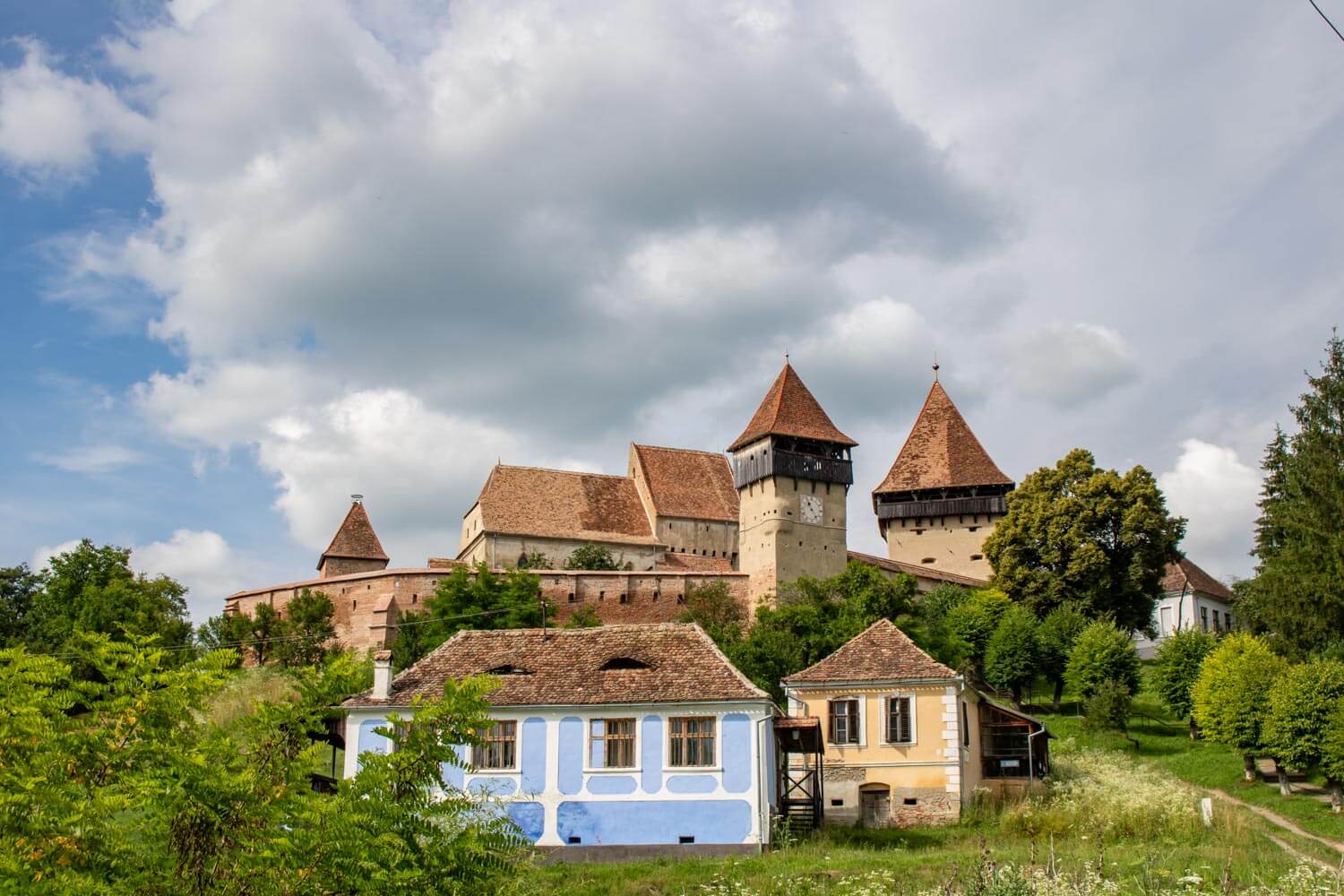
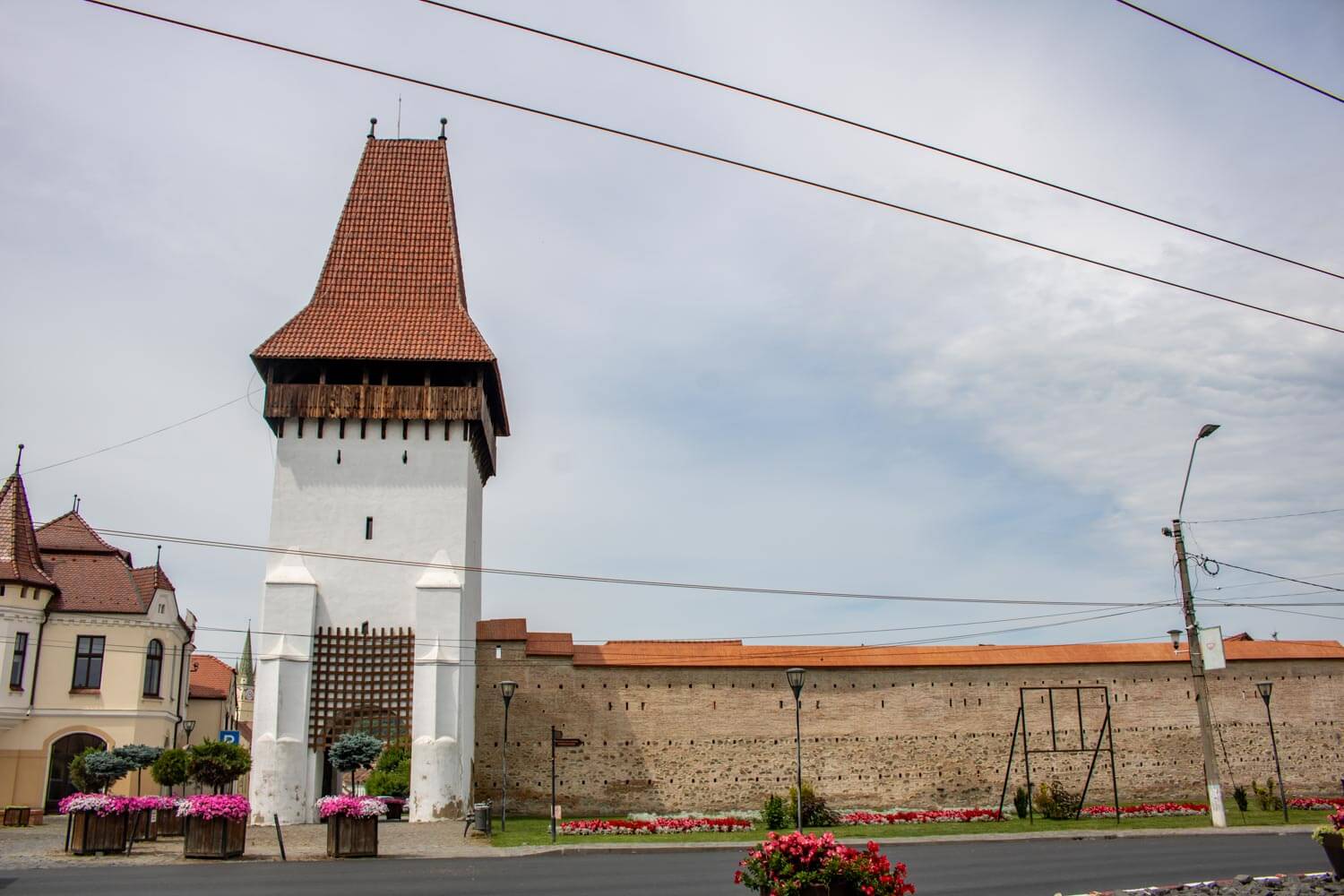
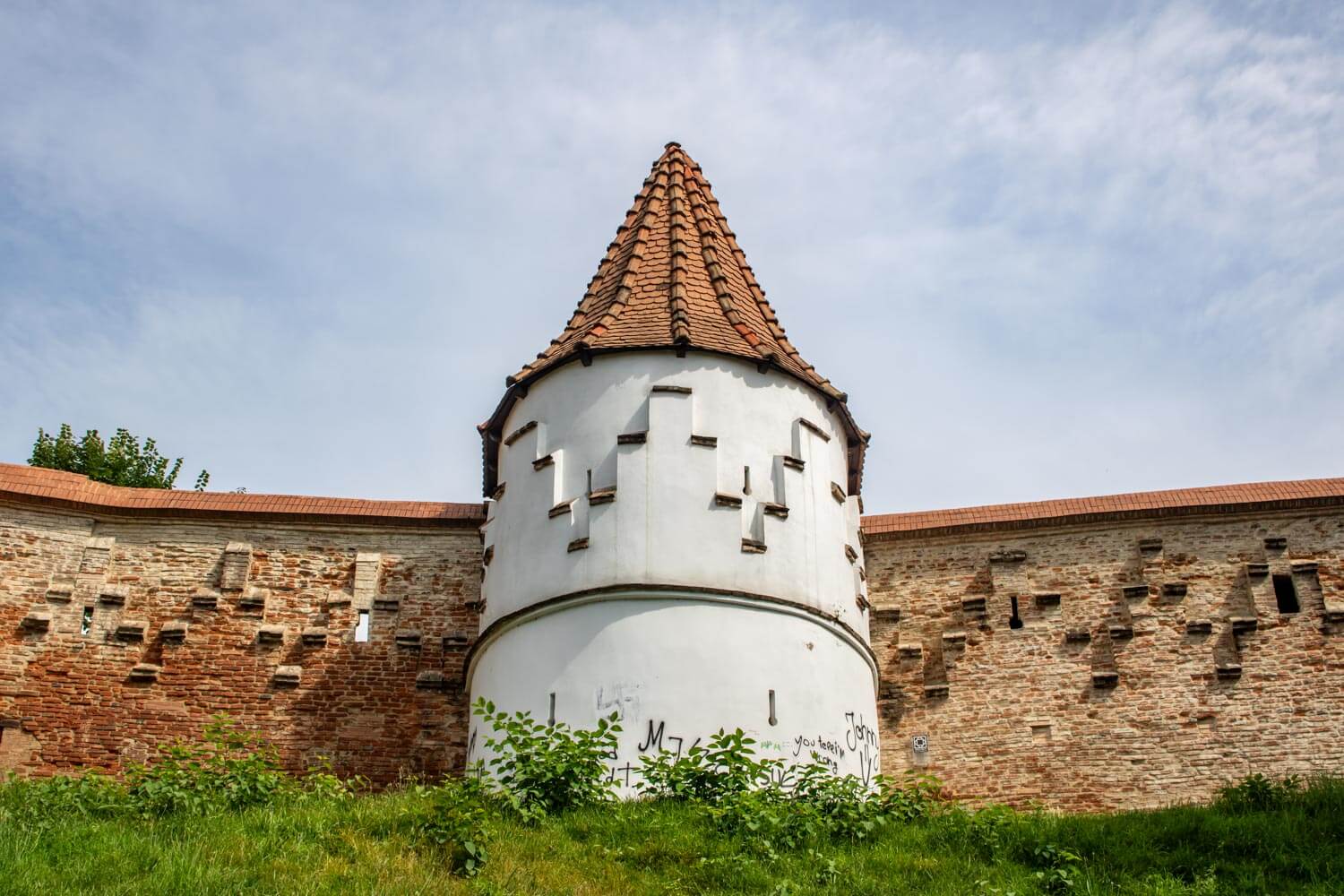
As the church was rebuilt, the surrounding complex was also strengthened for defense. The church received a fortified upper level above the choir, while the entrances were protected by towers. A high curtain wall surrounded the enclosure, reinforced by defensive towers, bastions and an eastern gate tower, with an outer defensive passage on the southern side. Storage rooms and other protected spaces were incorporated into the complex so the churchyard could serve as a refuge during periods of danger.
Parts of an earlier chapel survive within the northeastern section of the enclosure, while other sections of the fortifications preserve firing openings, defensive galleries and traces of the different construction phases. Together with the scale of the church itself, these surviving structures show why Moșna developed into one of the most substantial fortified church complexes in the region.
The church also preserves the memory of Stephan Ludwig Roth, the 19th-century Saxon pastor, teacher and political reformer who lived and worked in Moșna. His presence adds another layer to a site already shaped by centuries of religious, civic and defensive life.