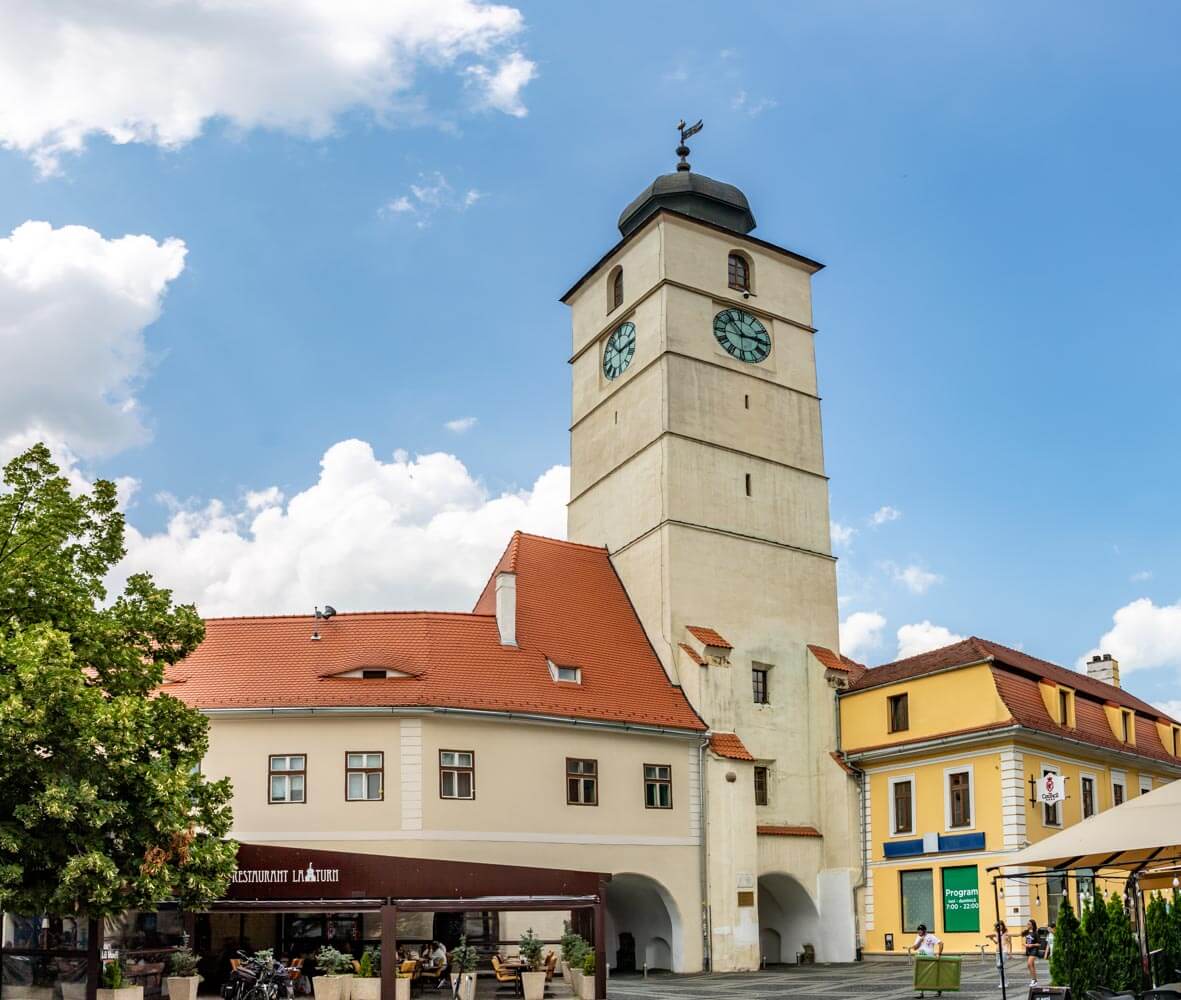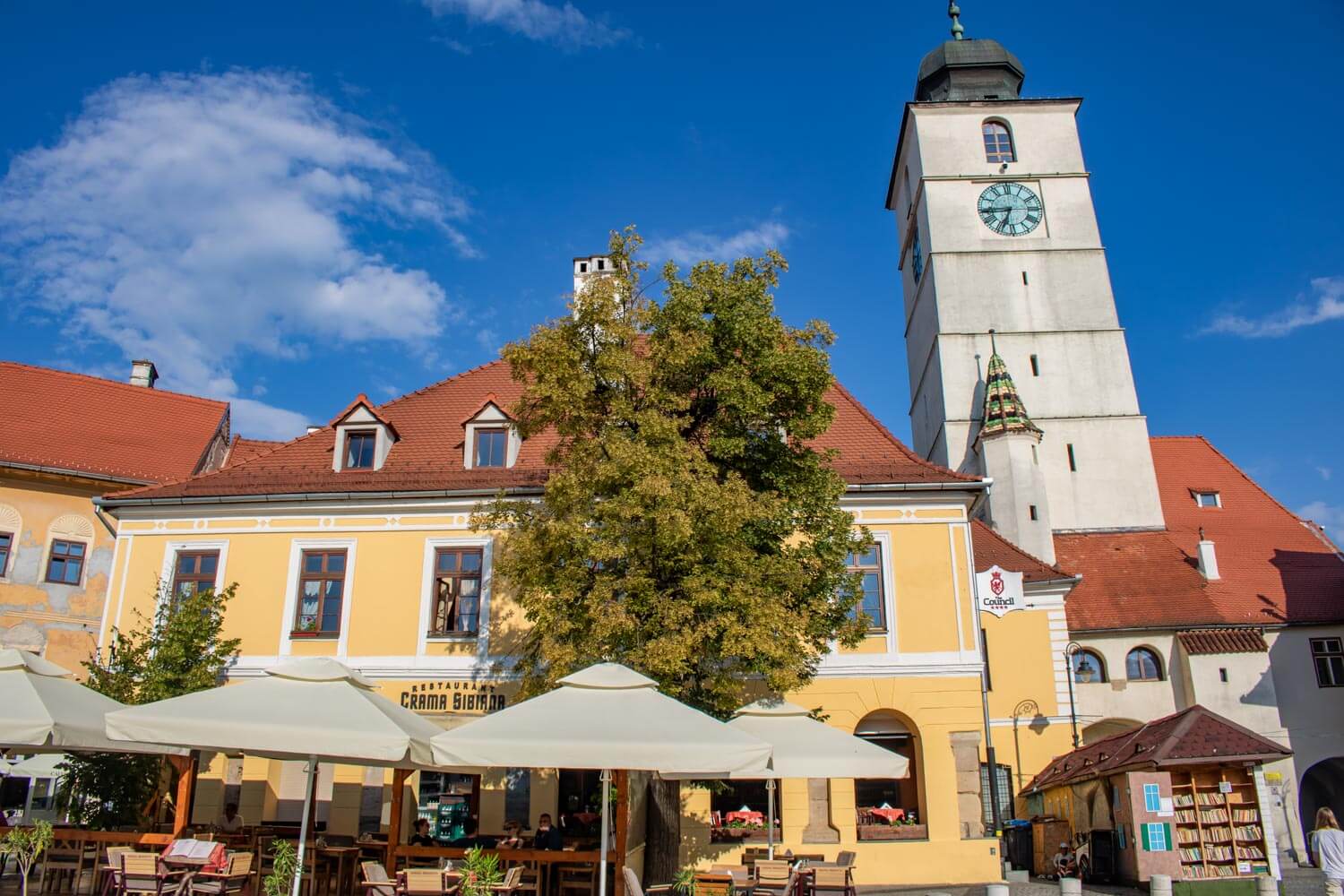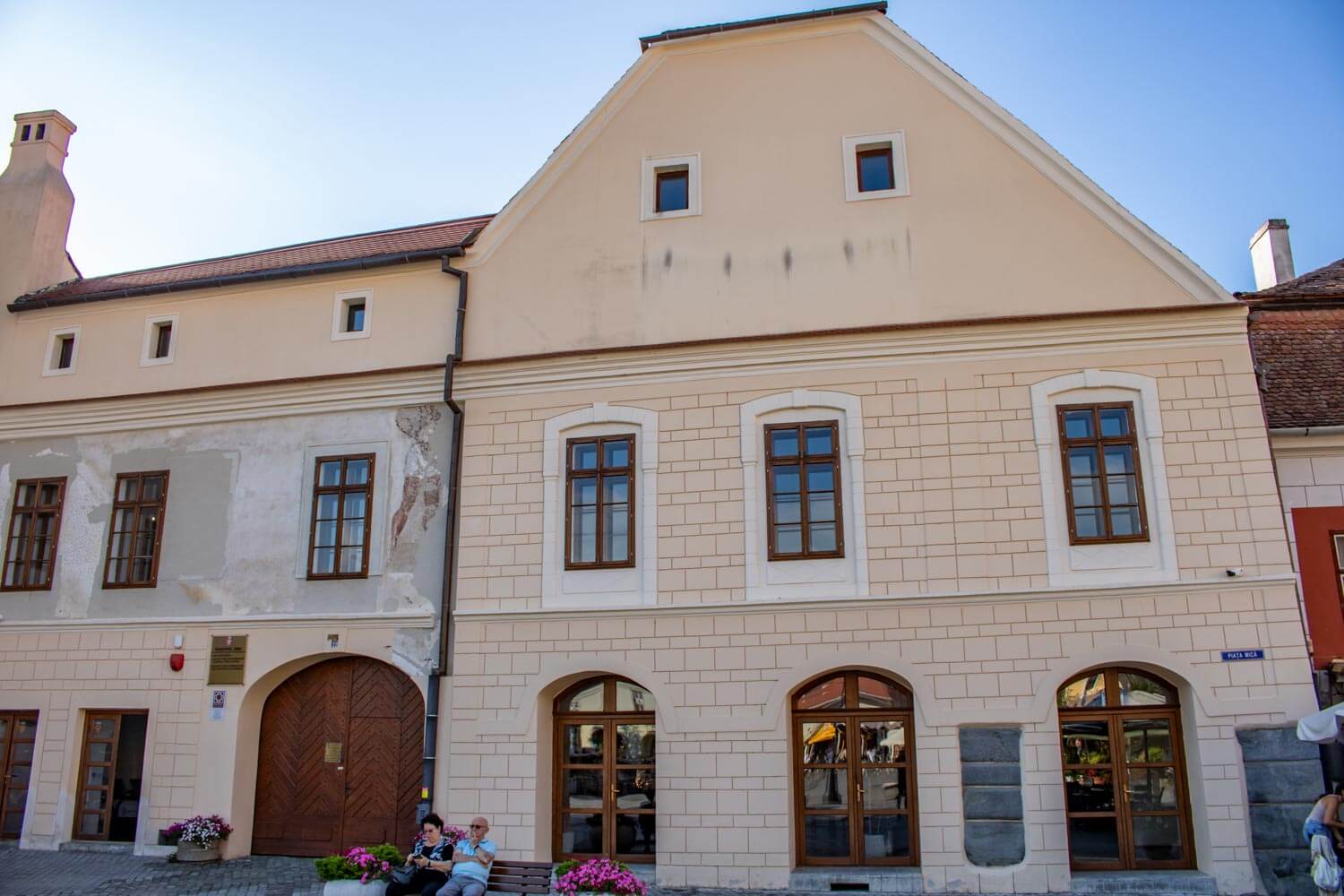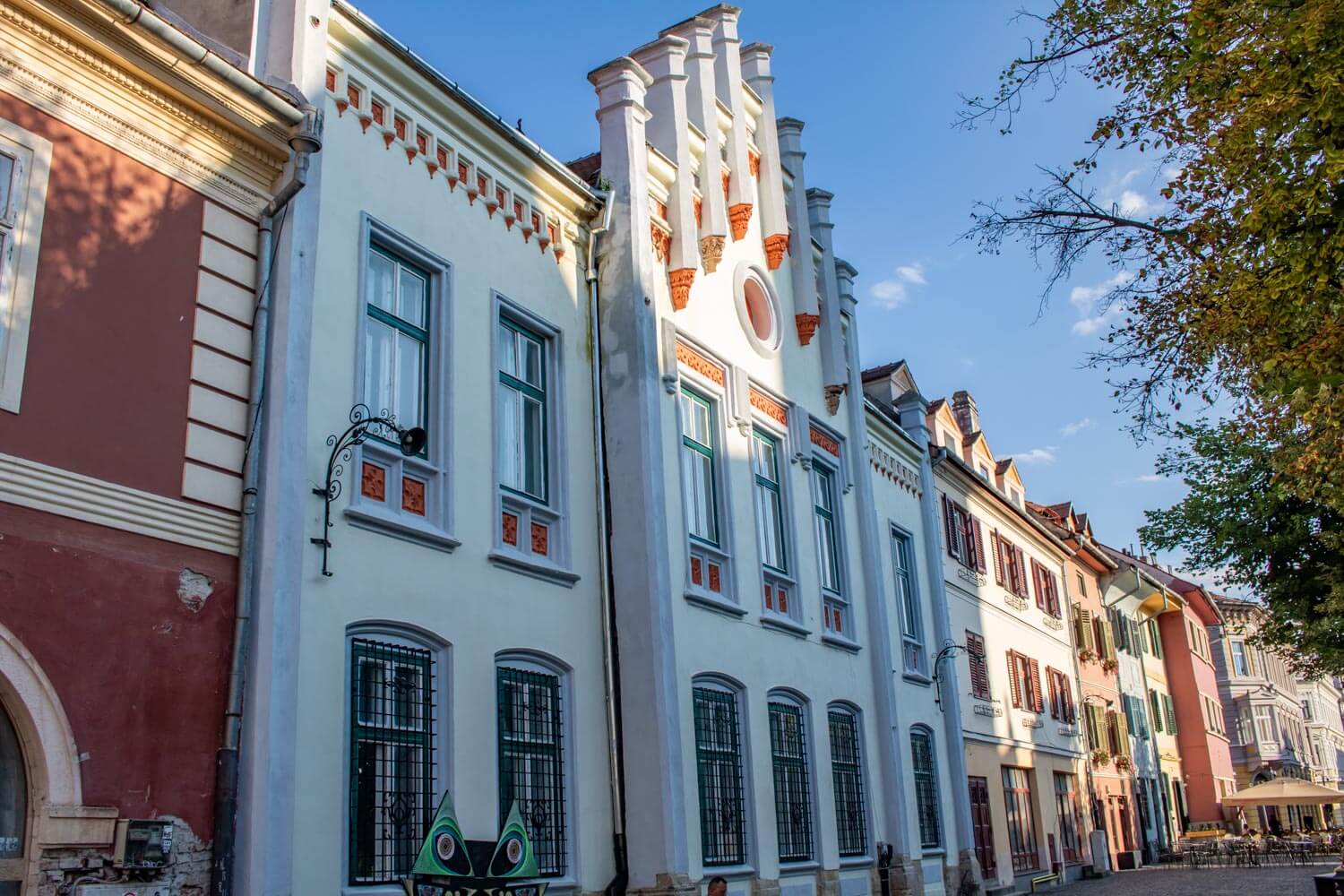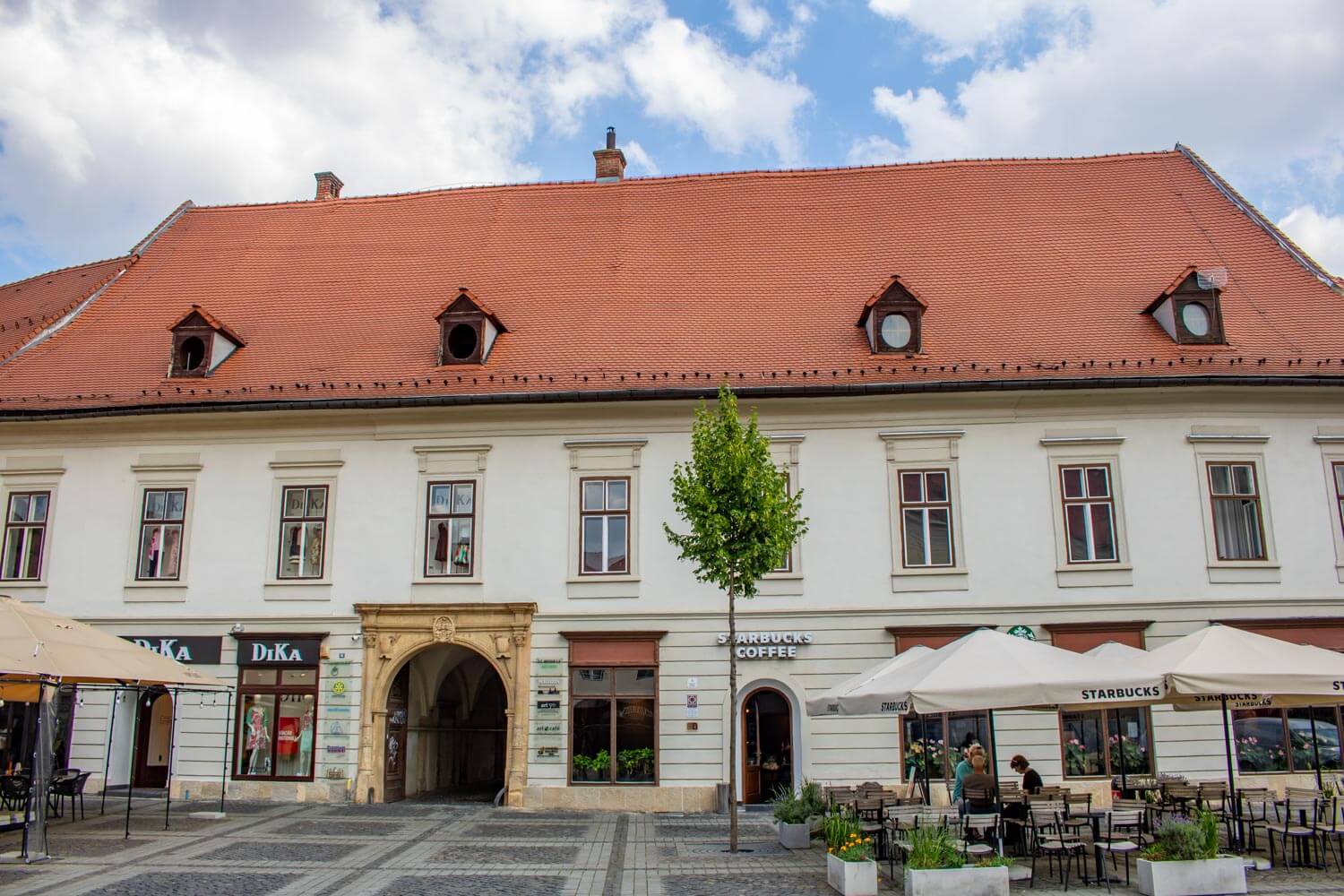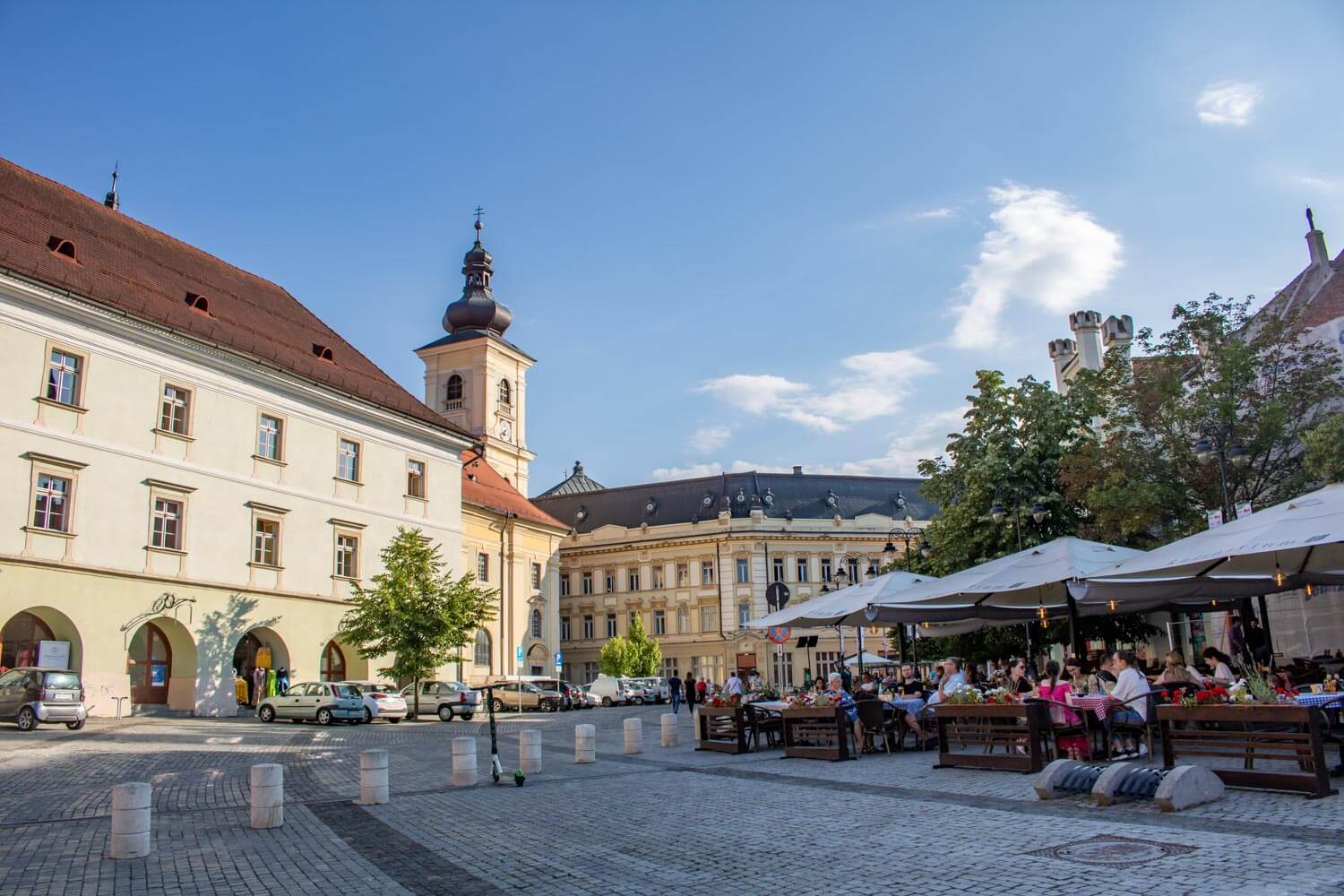
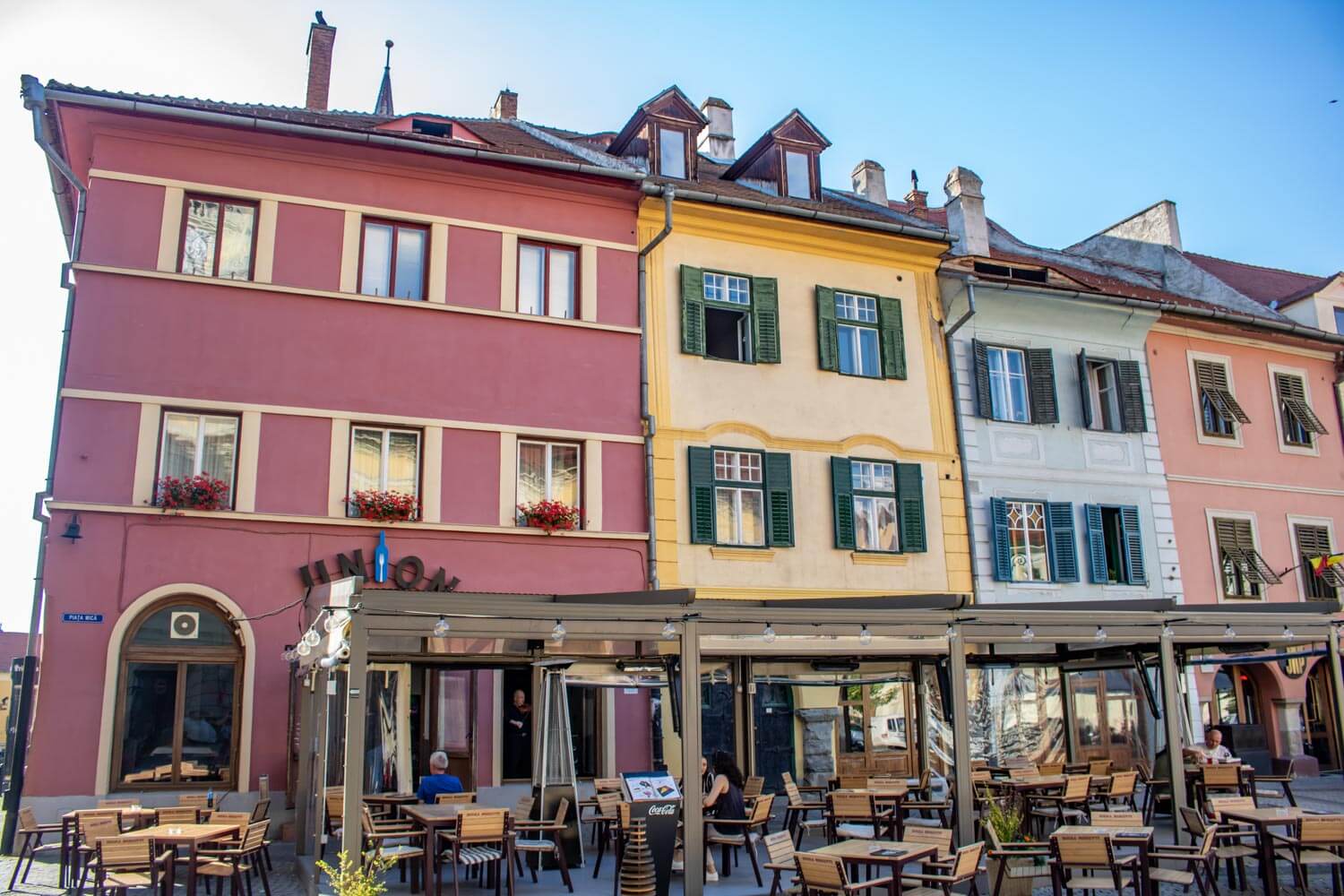
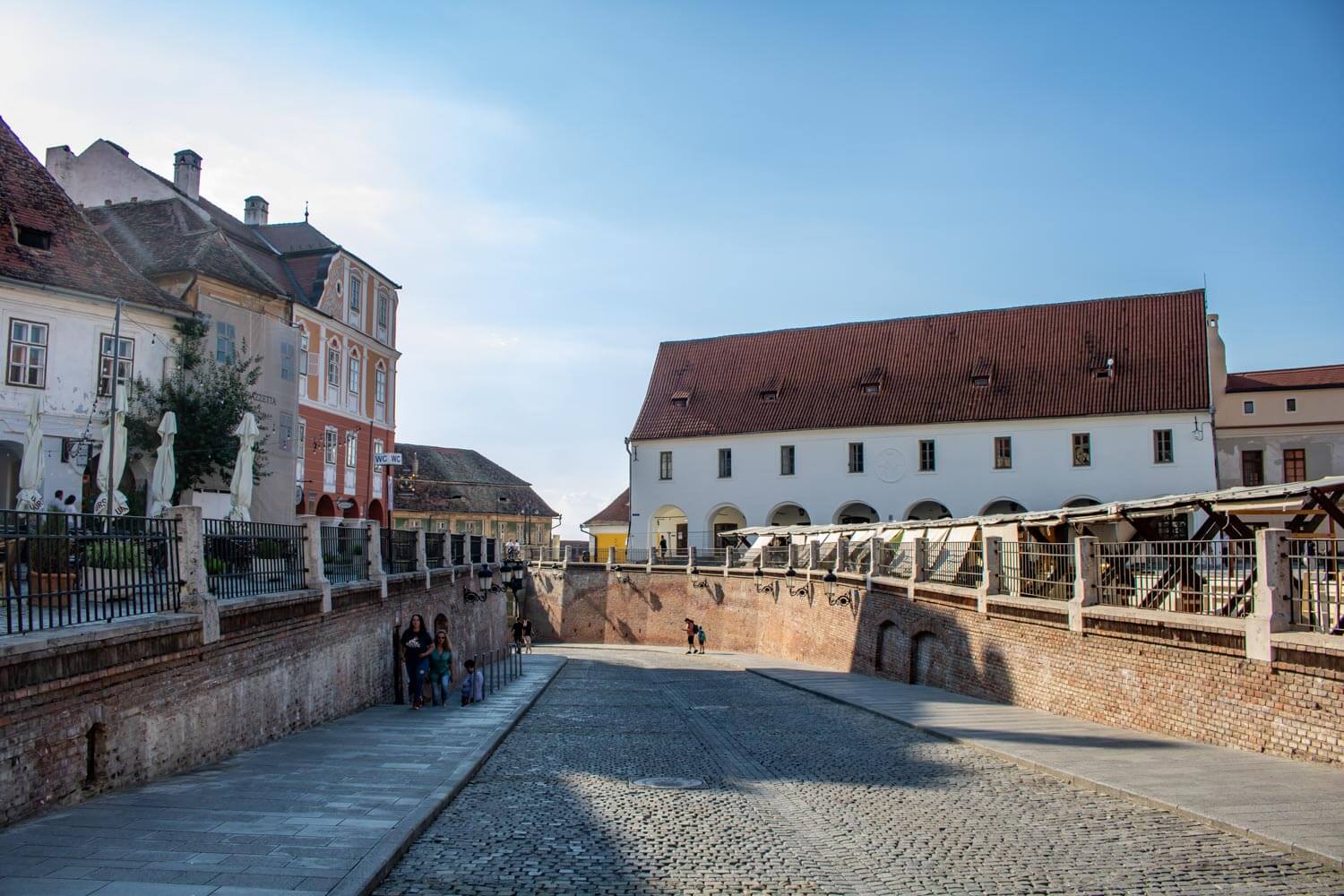
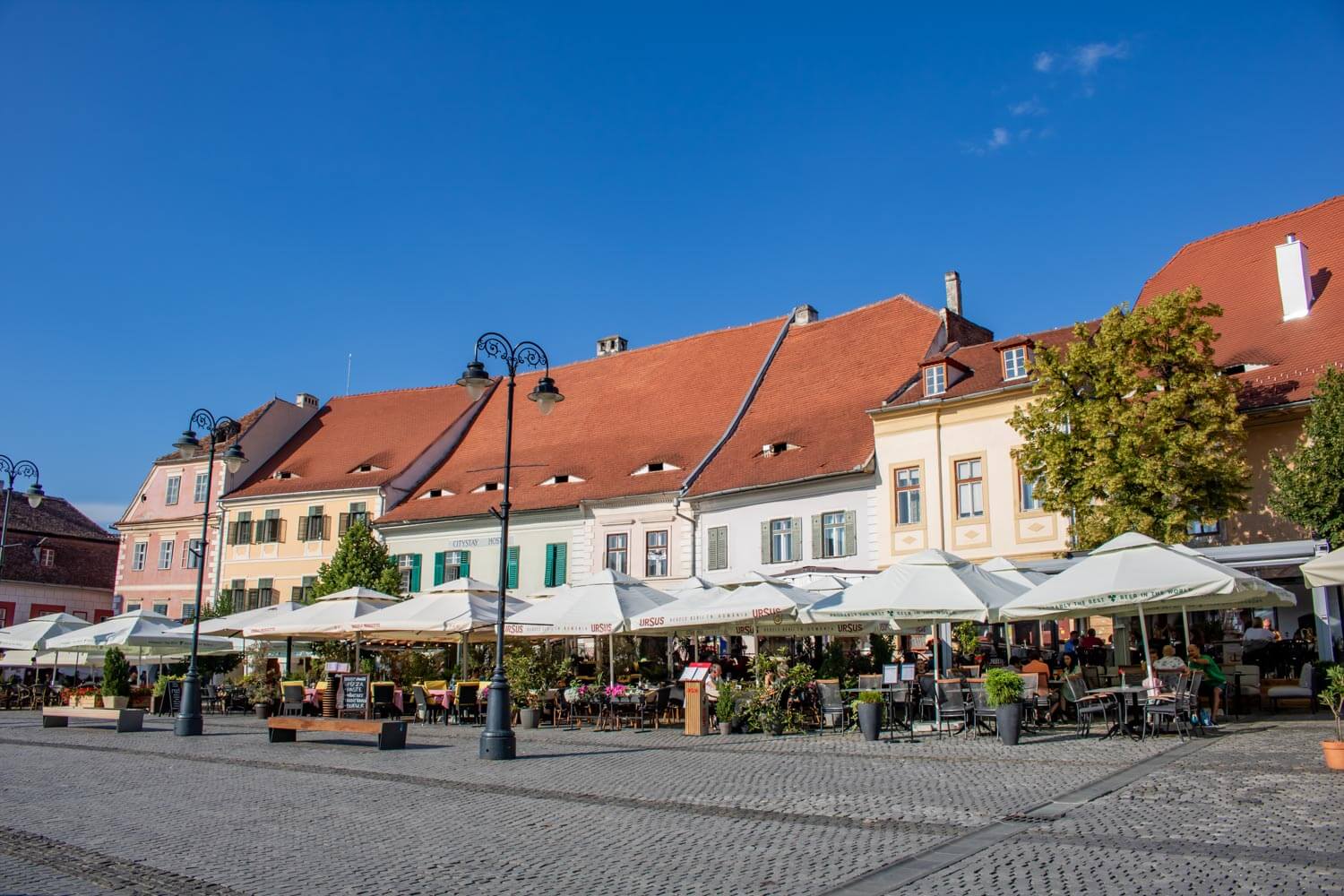
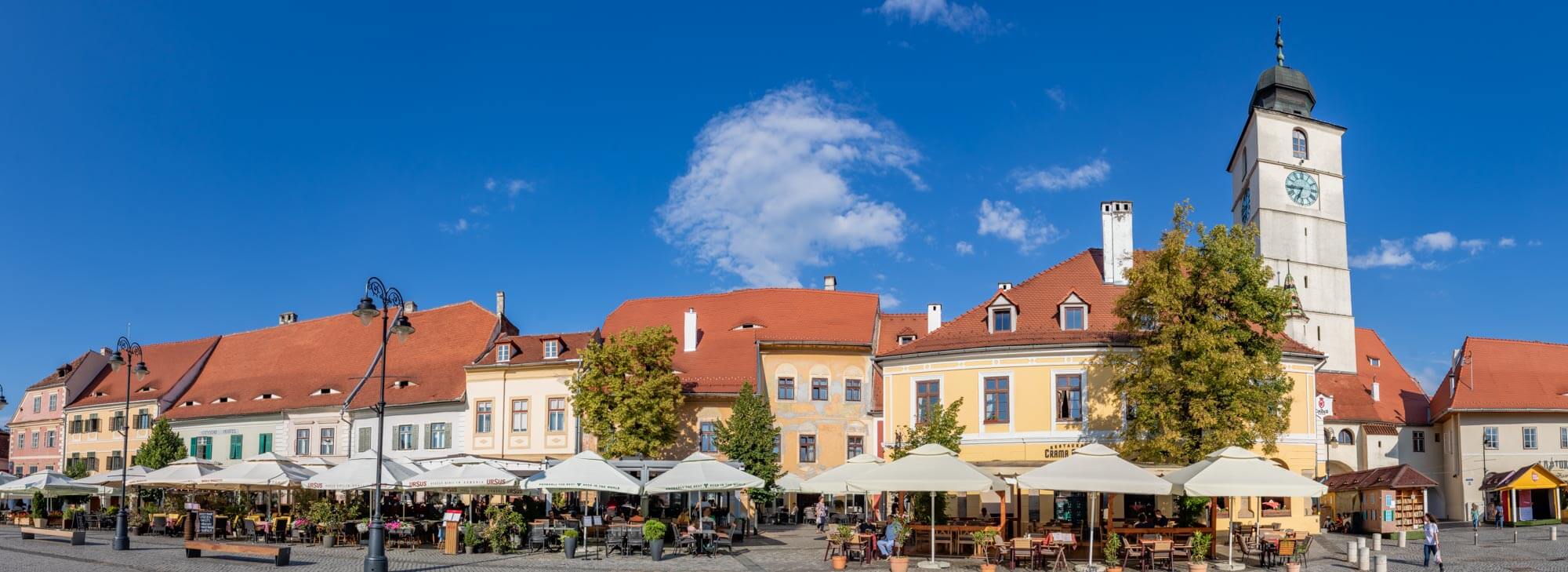
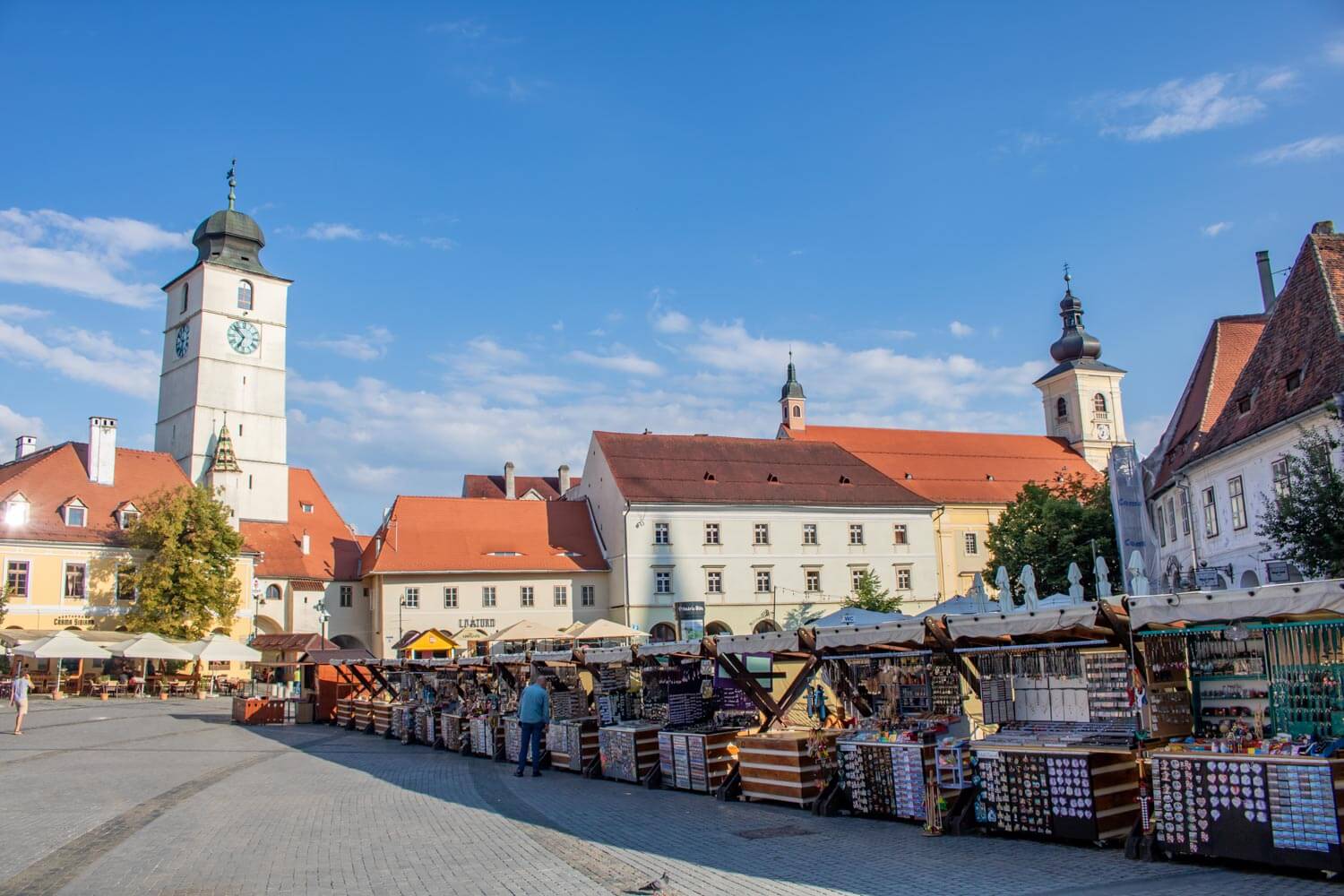
Small Square (Piața Mică) is one of the main historic squares of Sibiu, set between the Large Square and Albert Huet Square in the Upper Town. Its curved layout follows the line of the city’s early fortifications, while the houses around it preserve the arcaded ground floors that once served the craftsmen and merchants who gave the square much of its character.
The square developed along Sibiu’s second fortified enclosure, with its northern and eastern sides following the semicircular course of the medieval walls. As the city expanded, houses and workshops were built against and over these defenses, while the older first enclosure shaped the concave row of buildings separating the Small Square from Huet Square. Fragments of both fortification lines still survive inside several of the properties around the square.
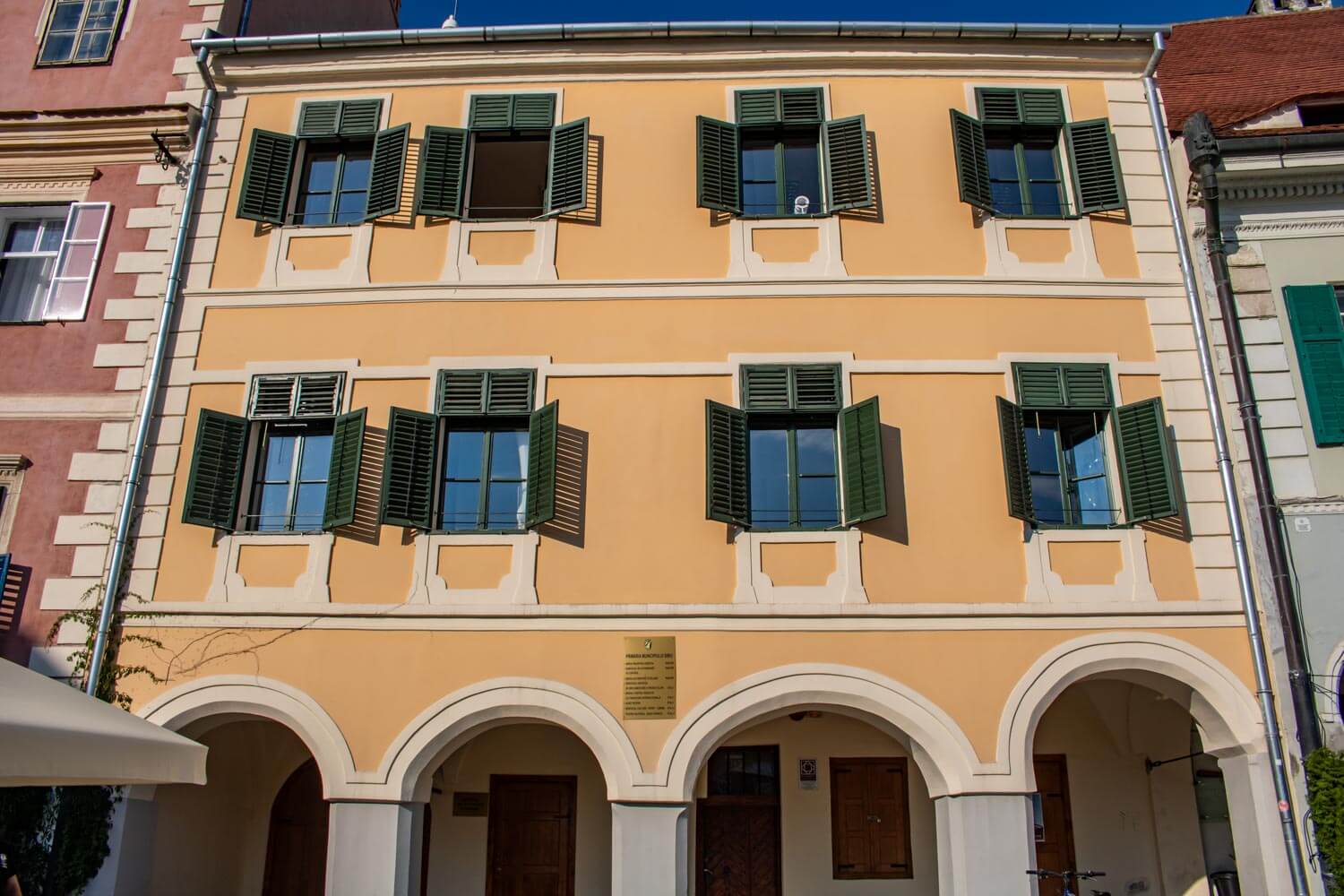
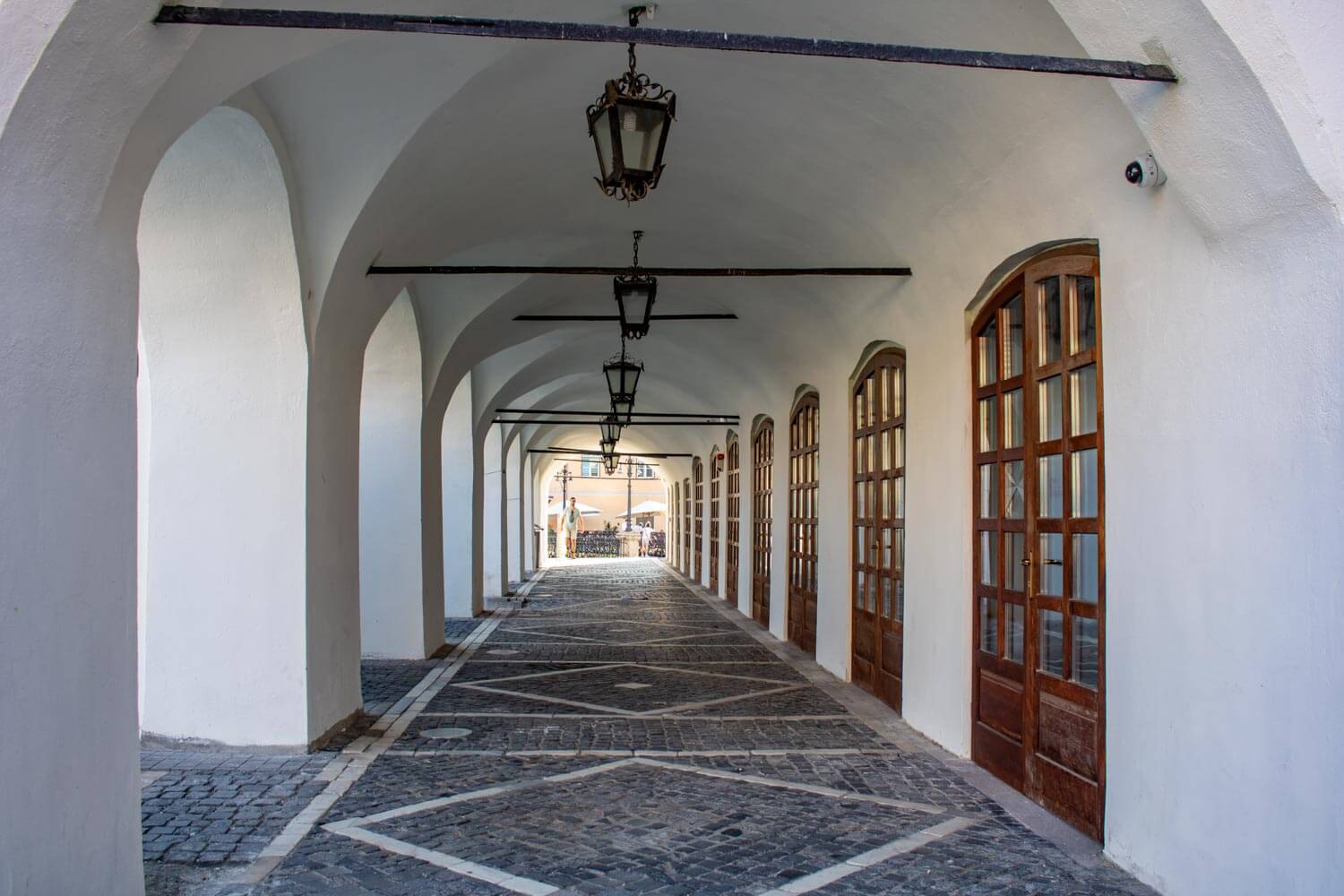
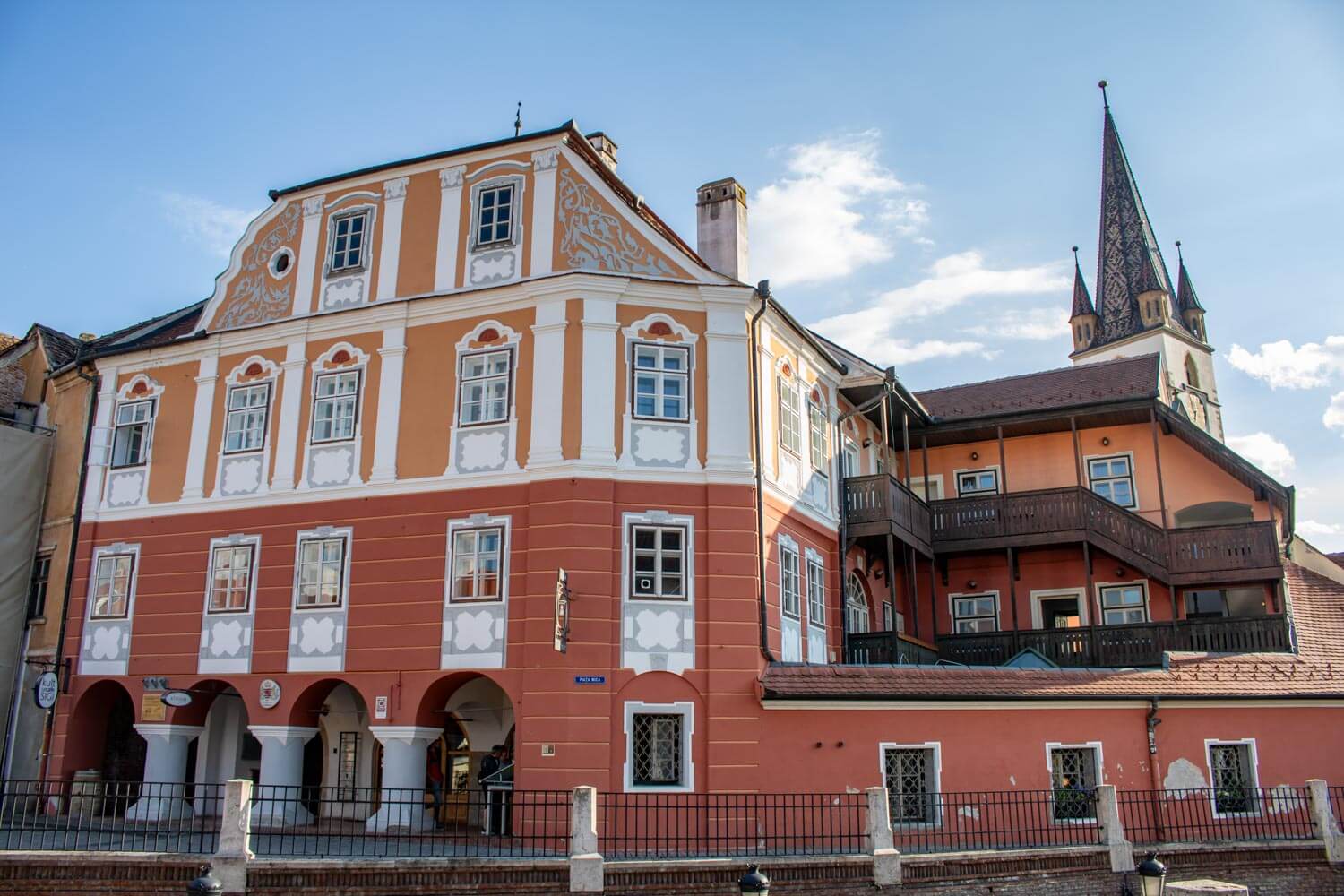
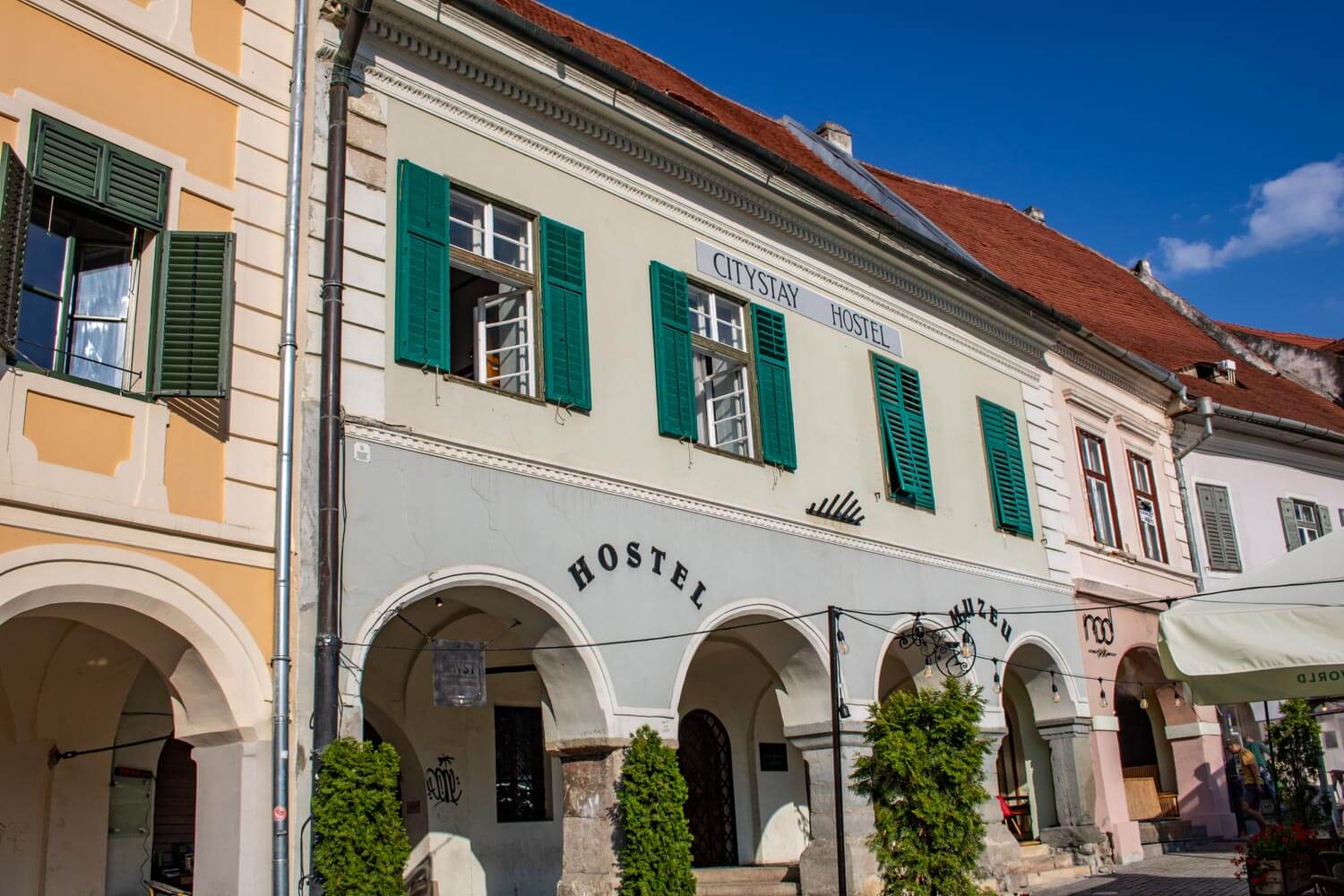
Trade became the defining activity here. Unlike many of the grander houses around the Large Square, buildings on the Small Square commonly opened toward the street through vaulted loggias with broad semicircular arches. Craftsmen worked and displayed their goods in these covered spaces, creating a continuous commercial frontage around much of the square. Goldsmiths, butchers, pharmacists, printers and other trades occupied the surrounding buildings over the centuries, while some of the arcades were later enclosed as shops before being reopened during modern restorations.
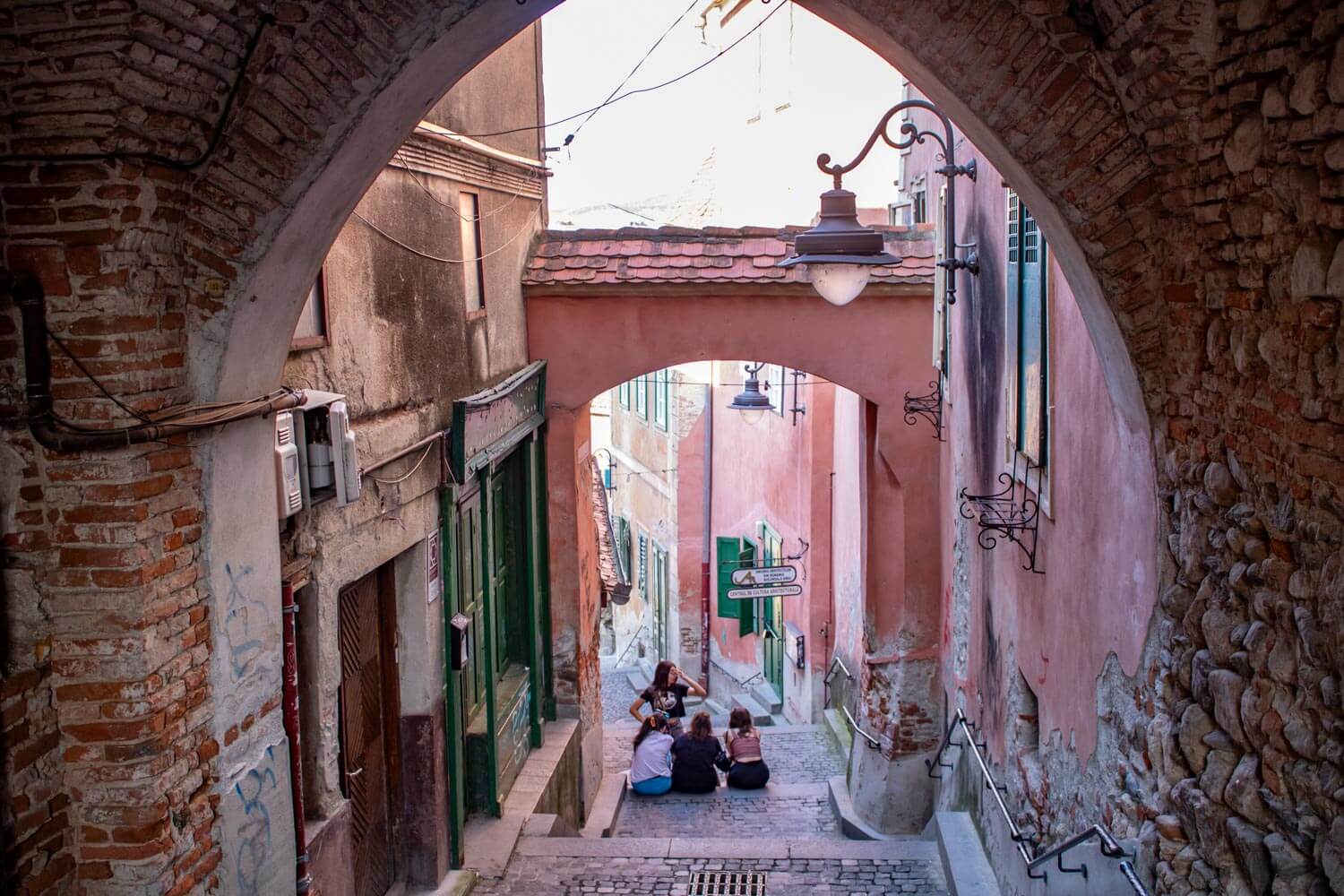
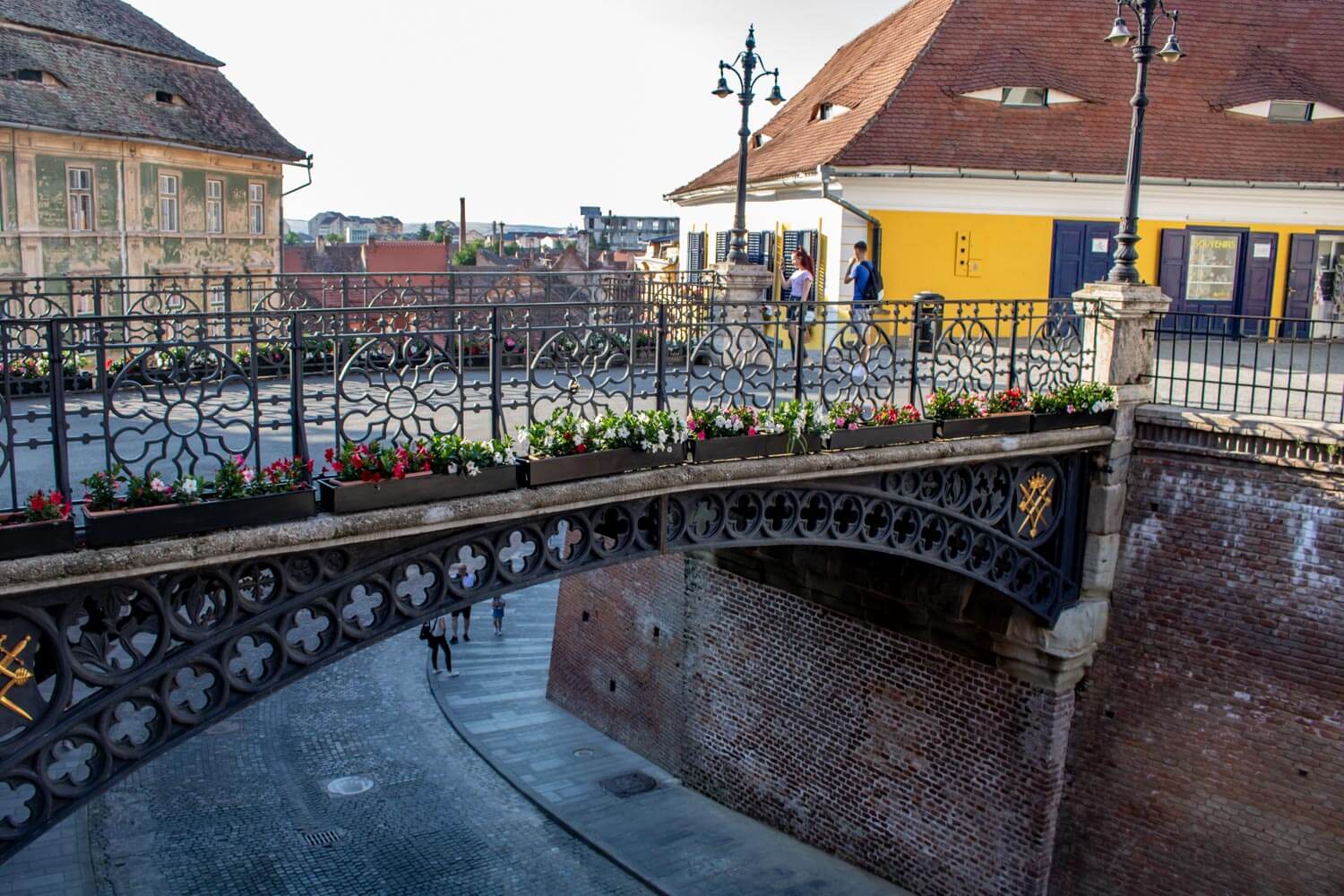
Ocnei Street cuts through the square and descends toward the Lower Town beneath the Bridge of Lies, dividing the space into two distinct sections. The bridge replaced an older row of buildings and passages and has become the most recognizable landmark on this side of the square, while the Council Tower provides the main connection with the Large Square. Other passages lead toward Avram Iancu Street and Huet Square, preserving the dense network of routes that developed through the medieval center.
The buildings around the square range mainly from the 14th to the 16th centuries, although most were altered repeatedly afterward. Their steep roofs, eye-shaped dormers and arcaded ground floors create a more intimate and irregular setting than the Large Square nearby. Historic buildings such as the House of Arts, Luxembourg House, Hermes House, the Goldsmiths’ Guild House and the former First Town Hall reflect the different commercial, civic and cultural roles that accumulated around the square.
The Small Square is now one of the busiest pedestrian spaces in the historic center, with restaurant and café terraces extending beneath and in front of the old arcades. The Bridge of Lies and Council Tower draw much of the foot traffic, but the square itself is worth exploring for its passages, uneven building lines and surviving medieval details, which reveal how closely commerce, housing and the city’s fortifications once developed together.