The Bridge of Lies (Podul Minciunilor) is a cast-iron pedestrian bridge in Piața Mică in the historic center of Sibiu, spanning the passage between the Upper and Lower towns.
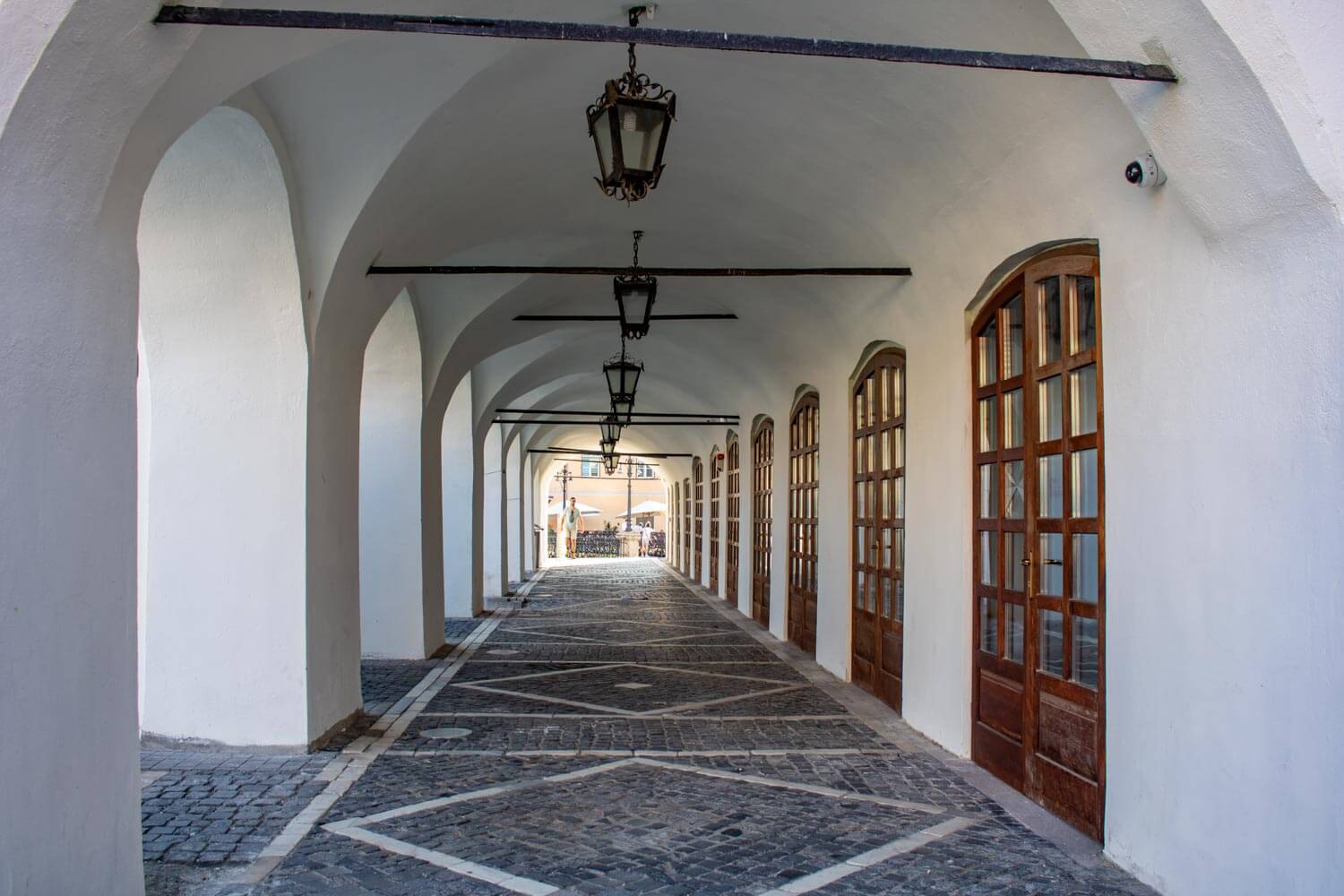
The bridge was built in 1859 after a major reshaping of this side of Piața Mică. Until the middle of the 19th century, a dense group of buildings stood here above a vaulted passage that descended toward the Lower Town. That passage had originally formed part of a gateway through Sibiu’s second fortified enclosure, so the route beneath the bridge preserves a much older connection through the medieval defenses. The buildings above it were demolished in 1851, after which a temporary wooden bridge was installed before the present iron structure was completed.
The present bridge consists of four flattened cast-iron arches decorated with openwork quatrefoils and circular motifs beneath the walkway. It was manufactured at the Friedrichshütte foundry and carries the year 1859 in its metalwork, together with the Saxon coat of arms on the opposite side. When it was installed, the use of cast iron for such a structure was still relatively unusual, and it is generally described as the first cast-iron bridge built on the territory of present-day Romania.
Its name has inspired several legends, most famously that the bridge will shake or collapse beneath anyone who tells a lie while standing on it. Other stories connect it with dishonest merchants, unfaithful lovers or young women who lied about their virtue. These tales have become part of the bridge’s identity, even though its historical importance lies just as much in the survival of the old route between the two levels of the city.
Today pedestrians cross directly between the two sides of Piața Mică while Ocnei Street passes through the vaulted opening below. From the bridge, the change in level between the Upper and Lower towns is particularly easy to see, and the passage underneath still follows the route of the former medieval gateway through the second fortification enclosure.