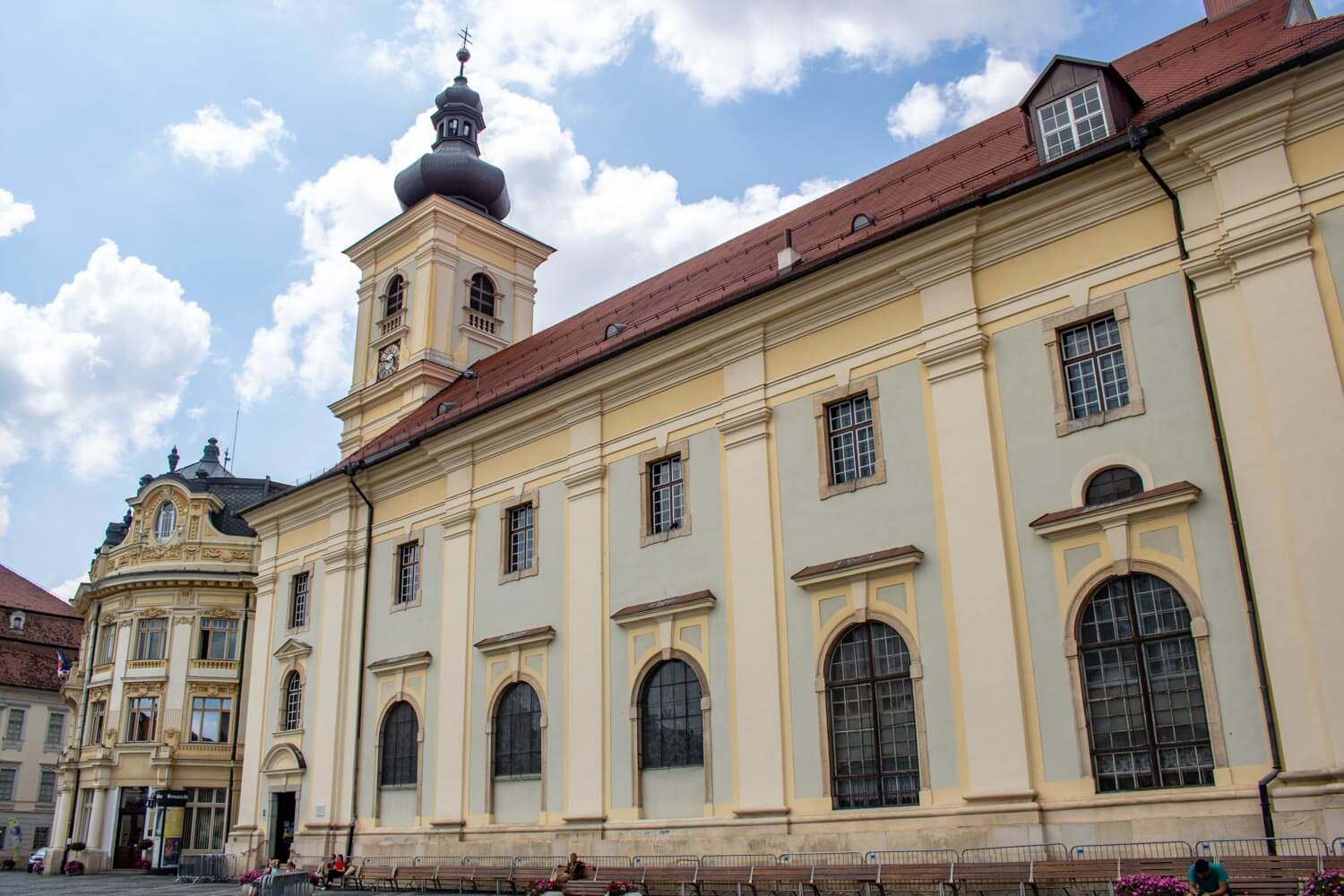
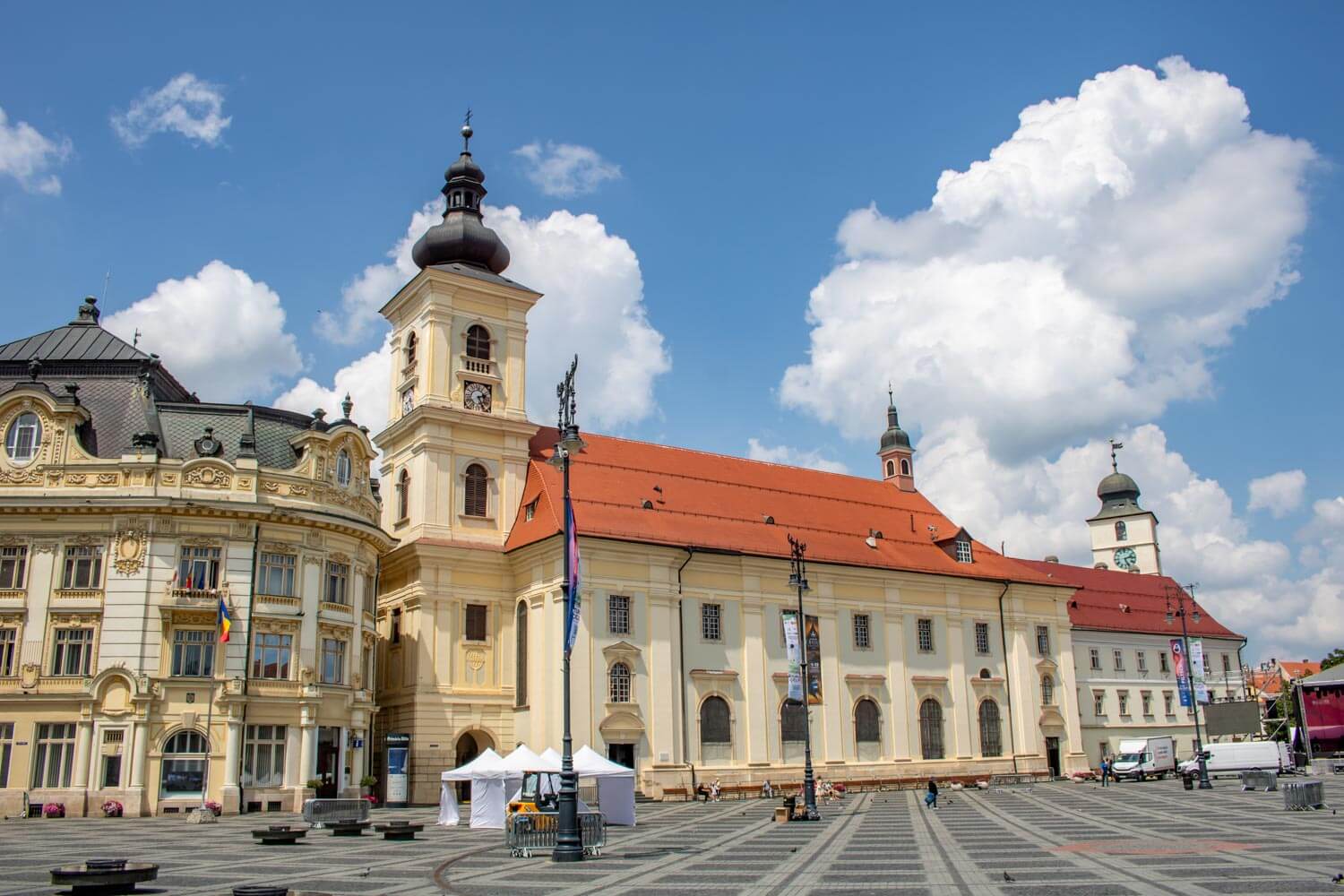
Holy Trinity Roman Catholic Church (Biserica Romano-Catolică Sfânta Treime), also known as the Jesuit Church, is an 18th-century Baroque church on the Large Square in the historic center of Sibiu. Built between 1726 and 1733, it marked the return of an established Catholic presence to a city in which the medieval churches had become Protestant during the Reformation.
Catholic worship had largely disappeared from Sibiu after the city adopted the Reformation in the 16th century, but the political situation changed when Transylvania came under Habsburg rule at the end of the 17th century. Austrian troops and officials brought Catholic clergy with them, and services were initially held in the Tailors’ Hall on the Large Square. The Jesuits were entrusted with the growing Catholic community in 1708, and after years of negotiation with the Protestant city authorities, construction of a permanent church began in 1726. Bishop Gregor von Sorger of Transylvania consecrated the completed church on September 13, 1733.
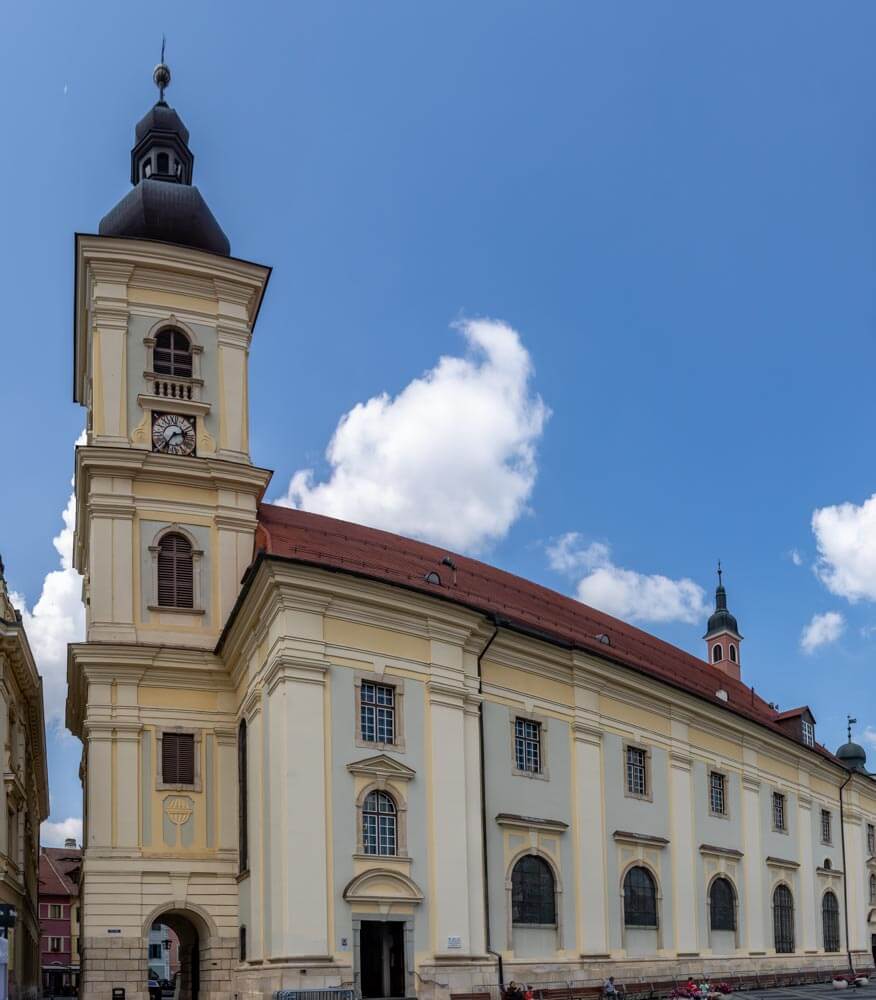
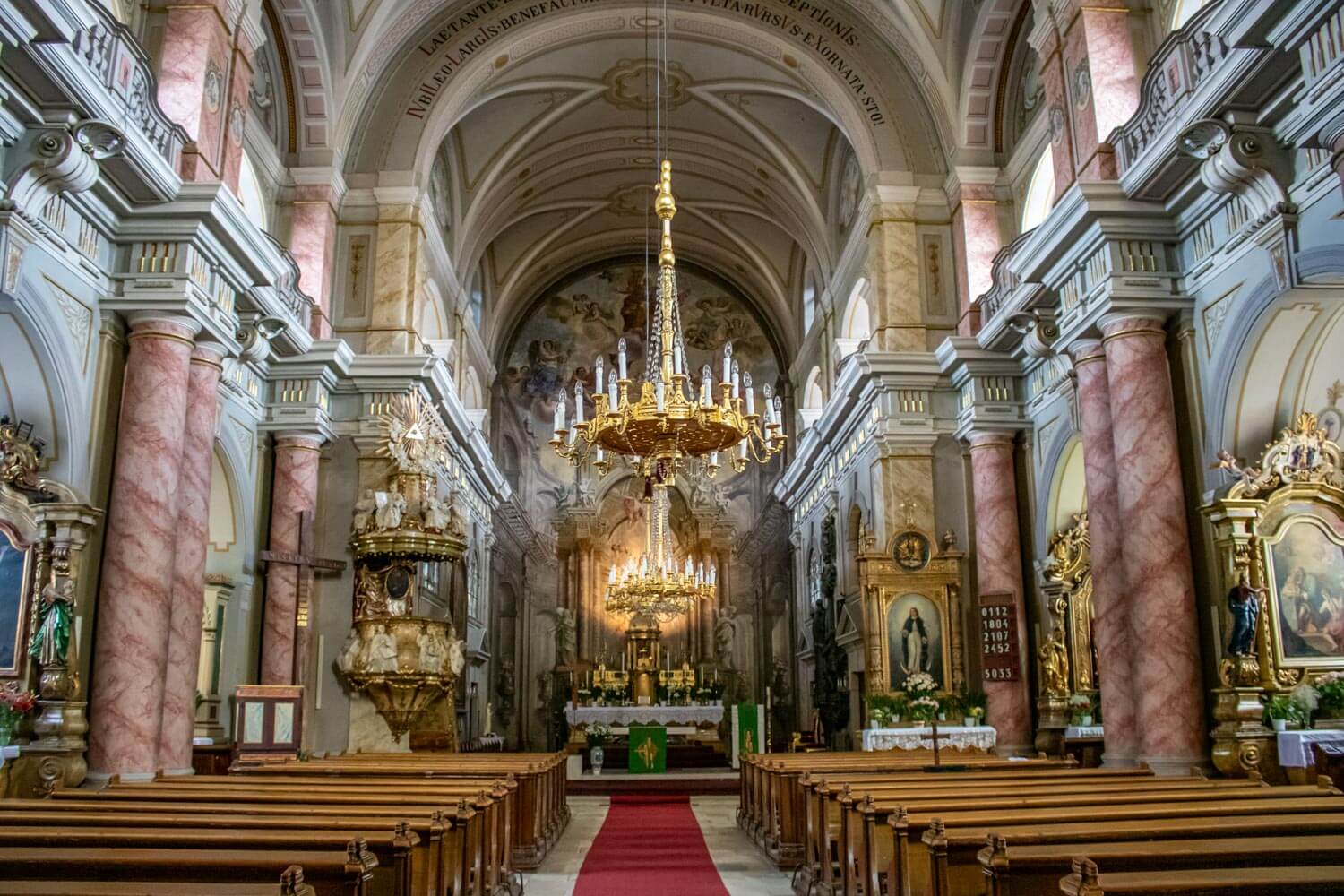
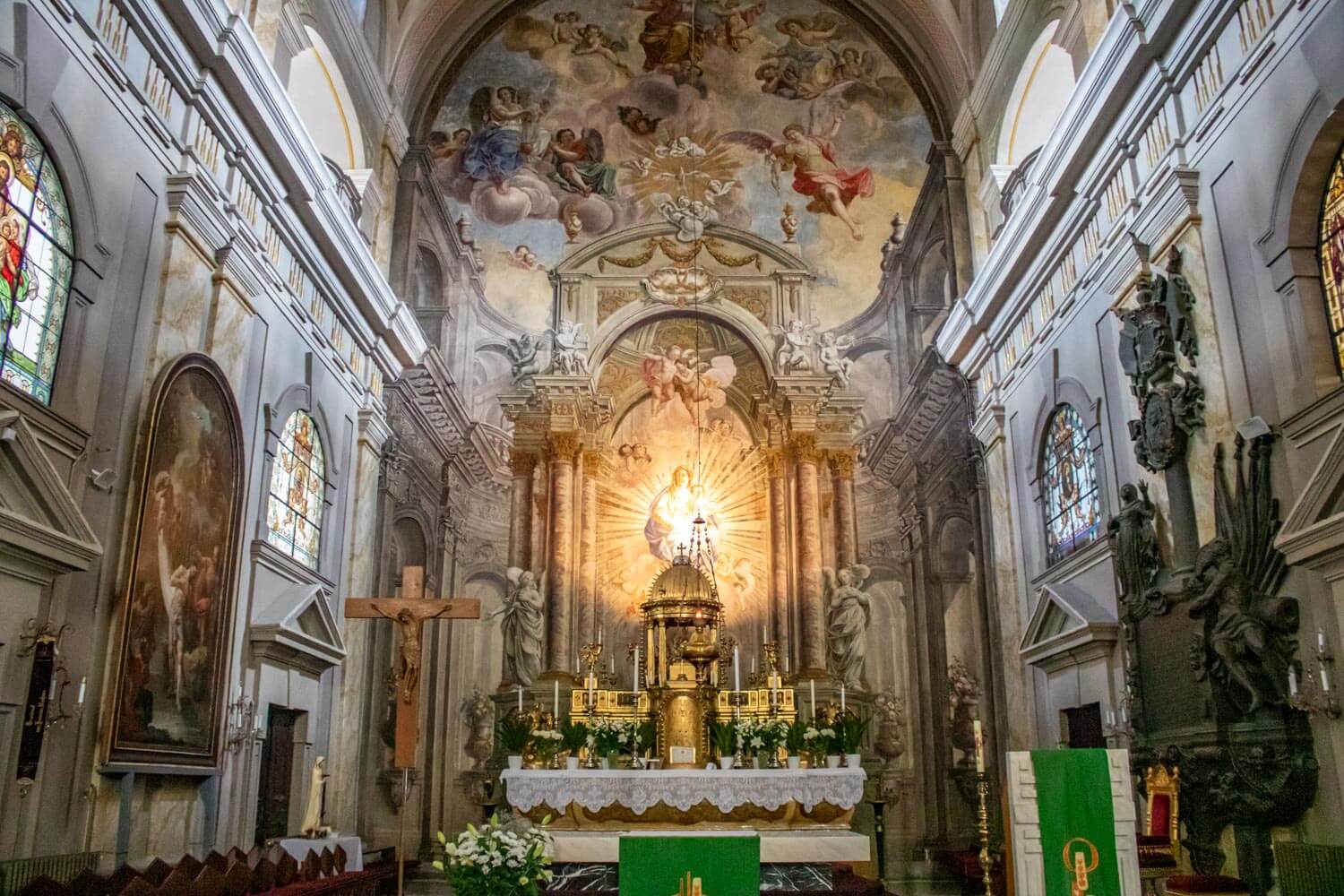
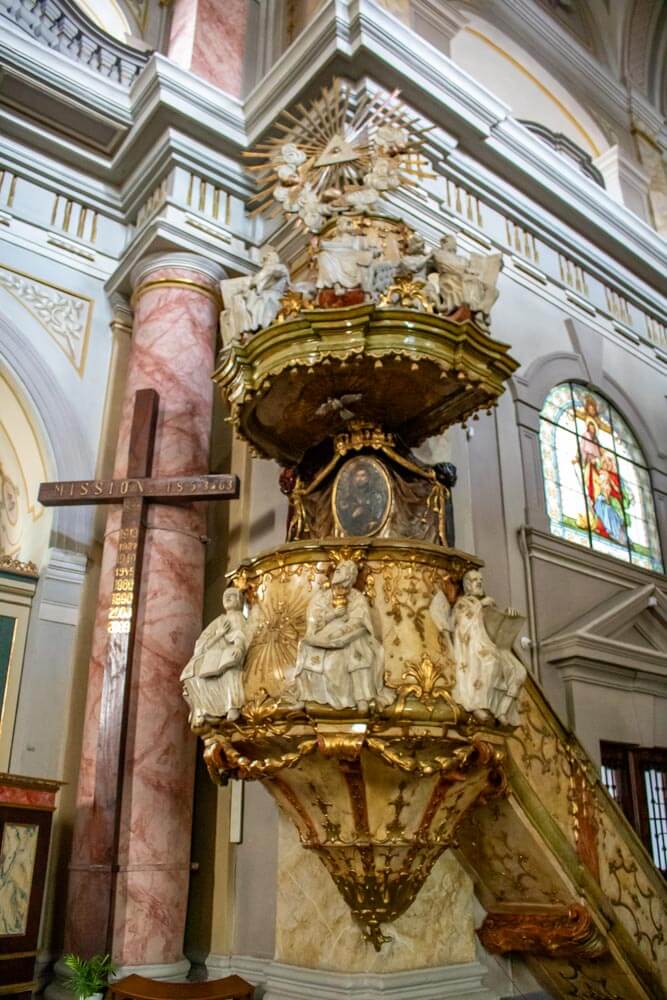
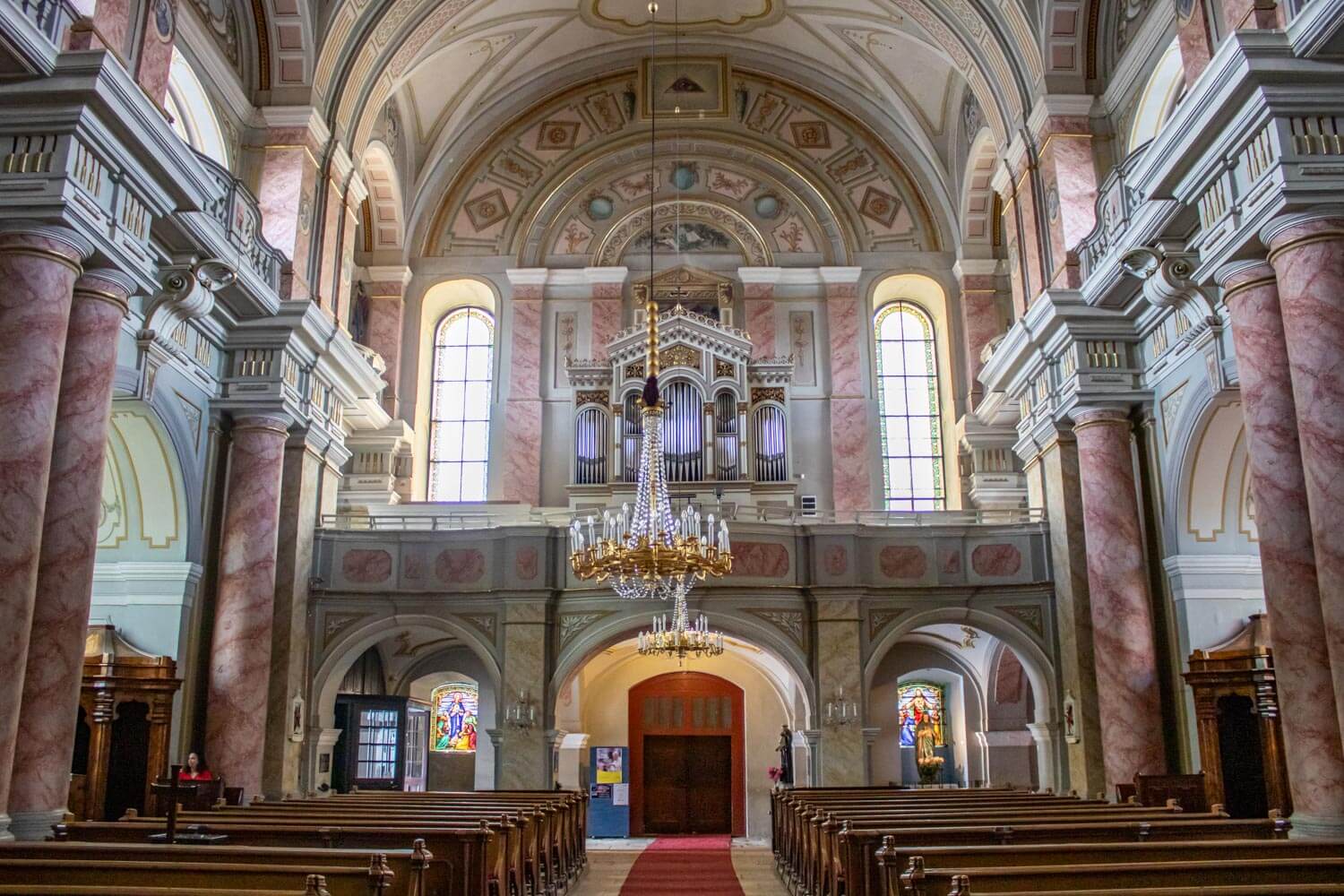
The church was built in the early Viennese Baroque style, with a deliberately restrained exterior facing the square and a much richer interior. Its long rectangular nave is lined with side altars separated by paired columns, while the Baroque confessionals survive from the Jesuit period. The high altar is dominated by Anton Steinwald’s 1777 painting of the Virgin and Child, regarded as one of the most important surviving Baroque artworks in Sibiu. The only side altar that still retains its original 1733 painting is dedicated to Saint Joseph.
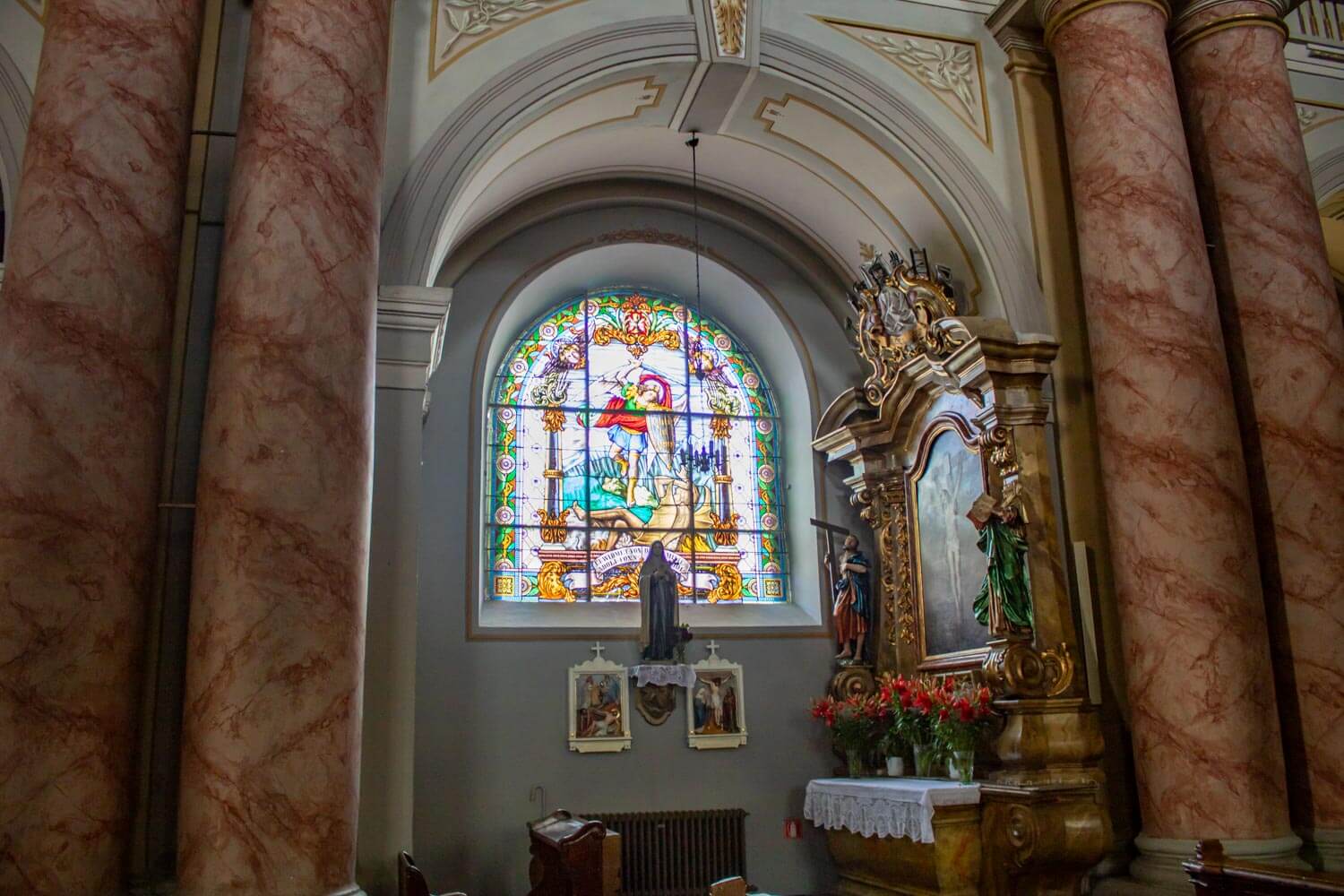
Much of the decoration visitors see today was added during the 19th and early 20th centuries. A Karl Hesse organ from Vienna was installed in 1860, followed in 1901 by six stained-glass windows made in Budapest. Ludwig Kandler painted the nave in 1904, adding another layer to an interior that had developed gradually since the Jesuit period. On the south side of the sanctuary stands the elaborate 1748 funerary monument of Count Otto Ferdinand Traun of Abensberg, the former military commander of Transylvania, with his portrait, coat of arms and allegorical figures representing Victory, Faith, Hope and Compassion.
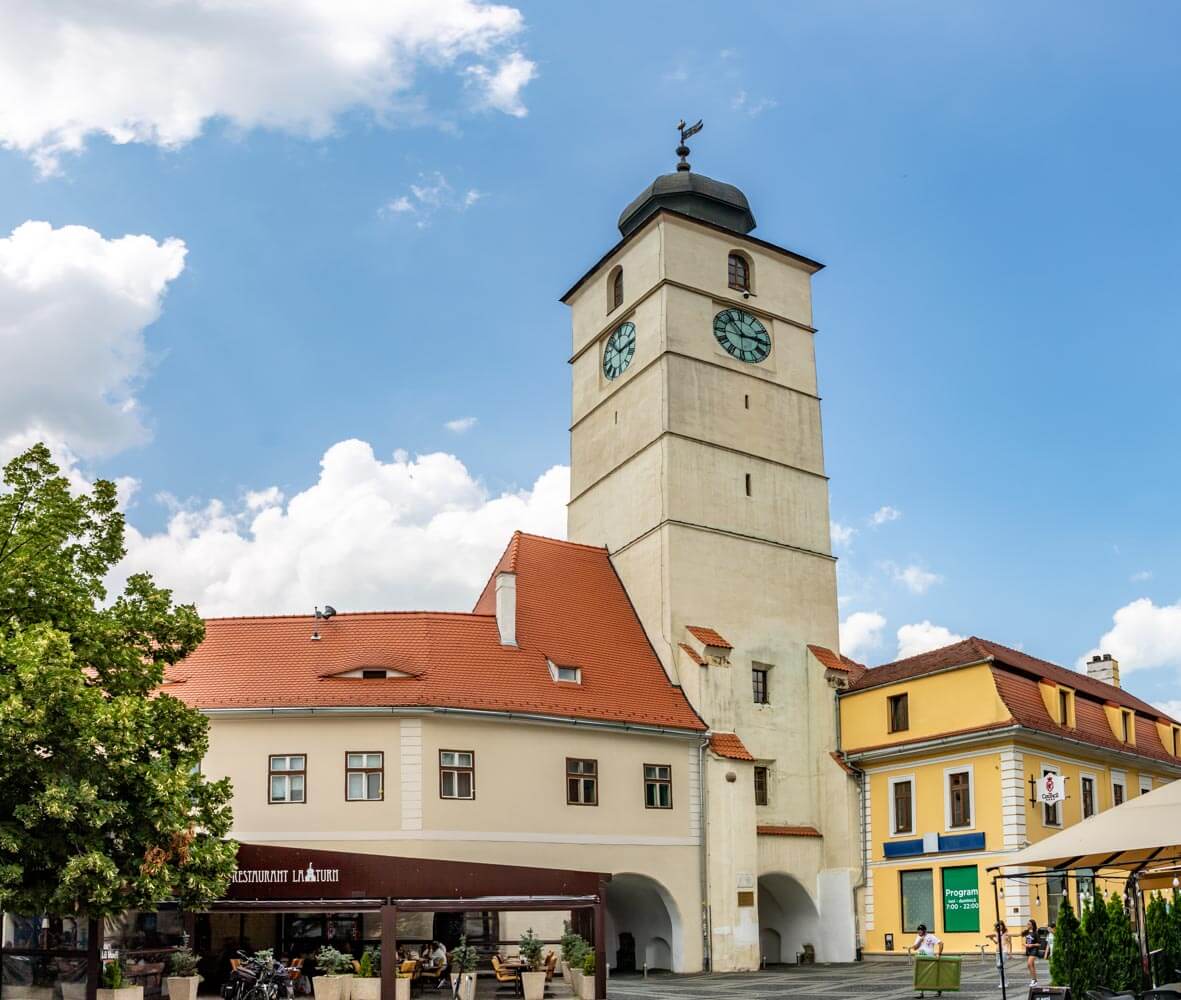
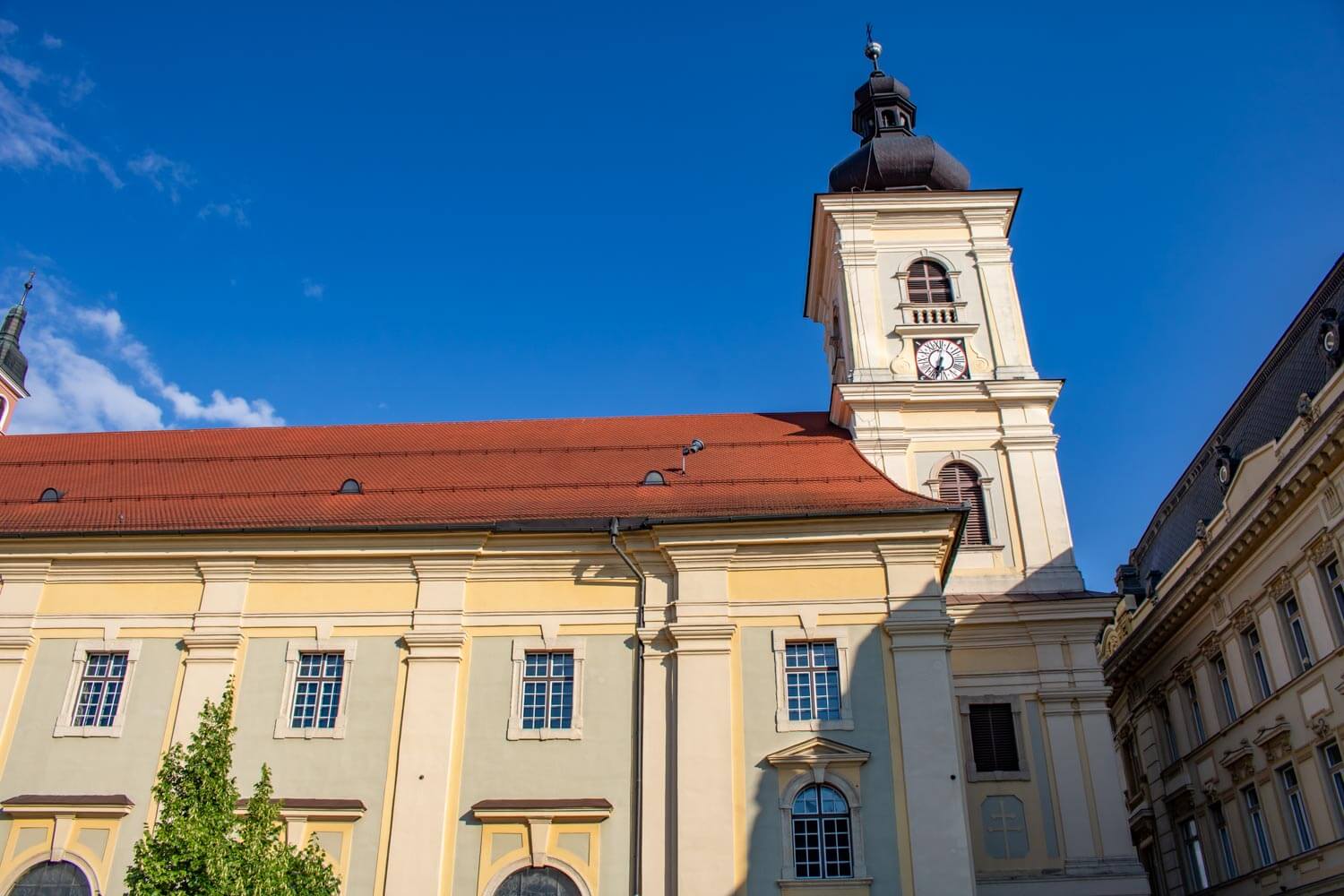
The 47-meter tower was completed separately in 1738 and stands beside the nave rather than directly above it. Its ground level forms an arched passage between the Large and Small Squares, making the church part of one of the main pedestrian routes through the historic center. The clock facing both squares was installed in 1838.
Another piece of the church’s history survives in the courtyard of the adjoining parish house. The Baroque statue of Saint John of Nepomuk originally stood prominently on the Large Square from 1734, but was removed after World War II. It was later restored and placed in the parish courtyard, where it remains part of the church complex.