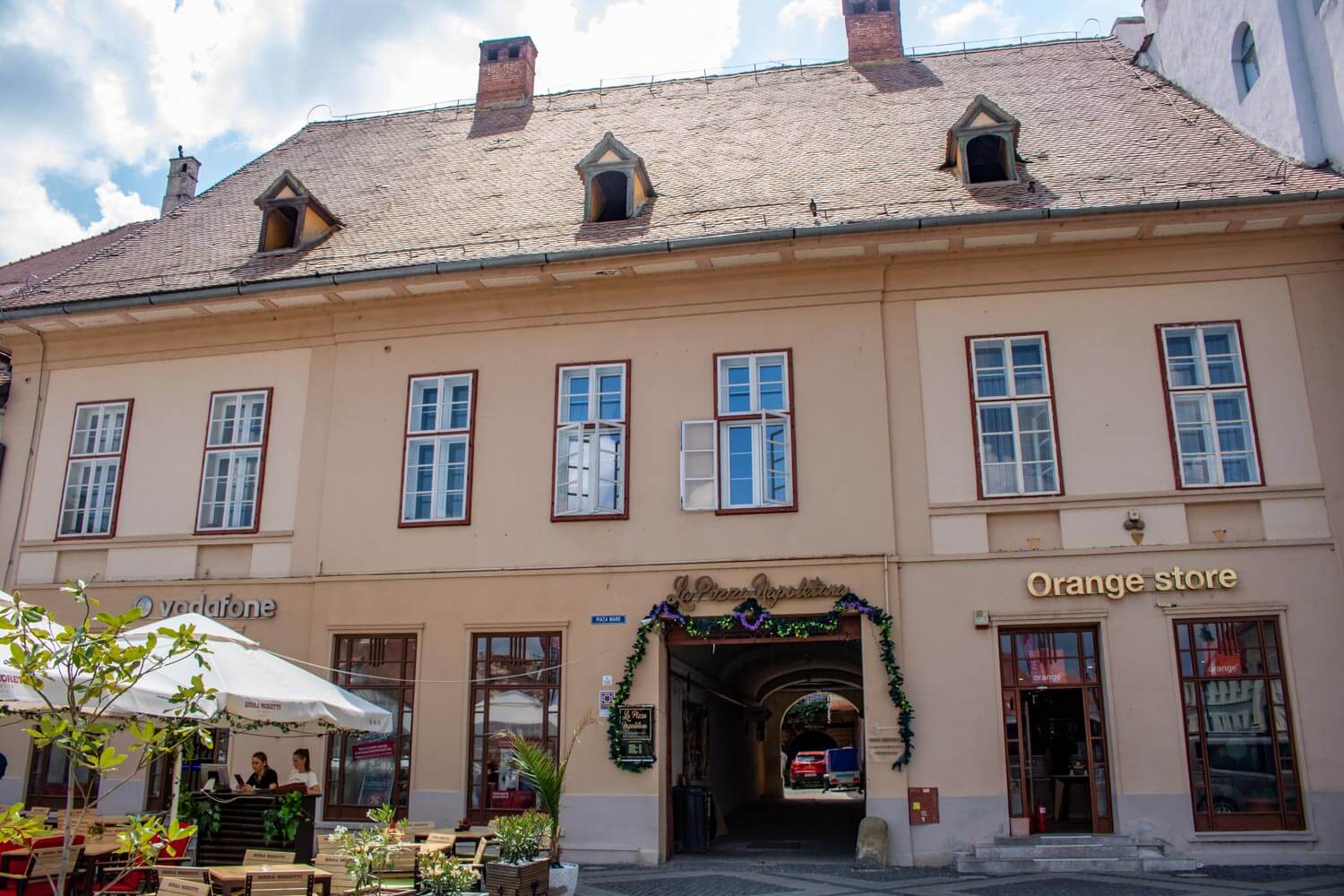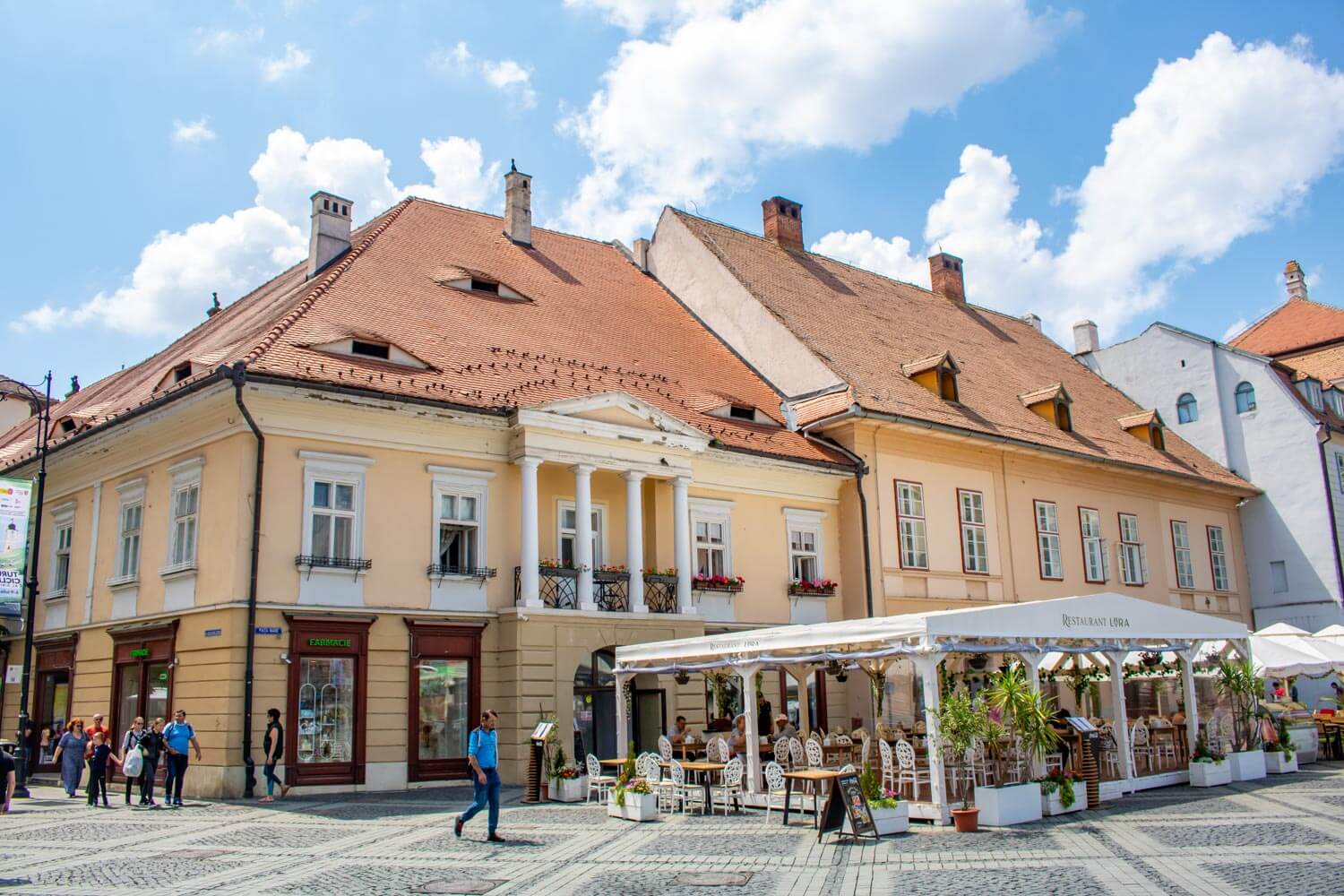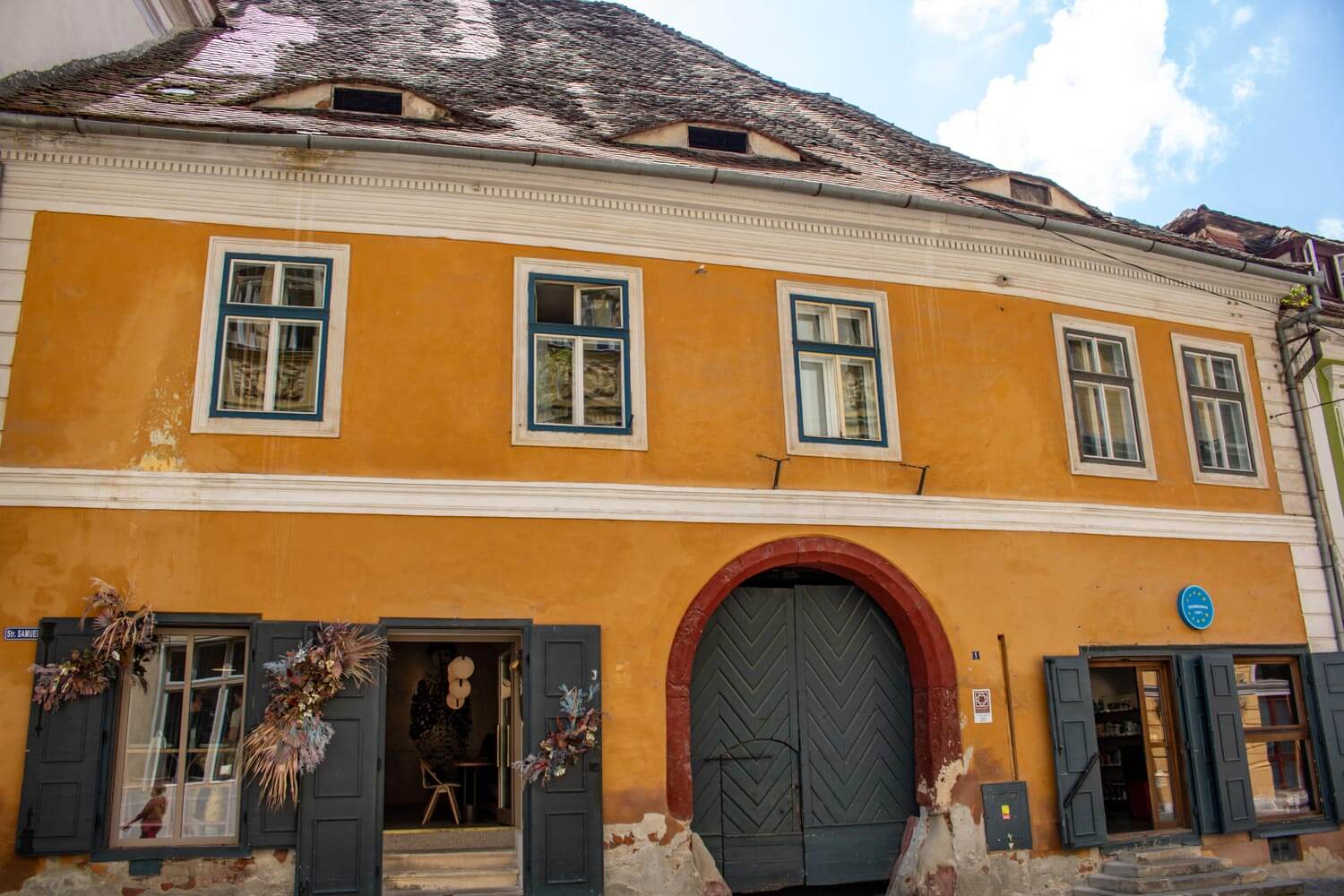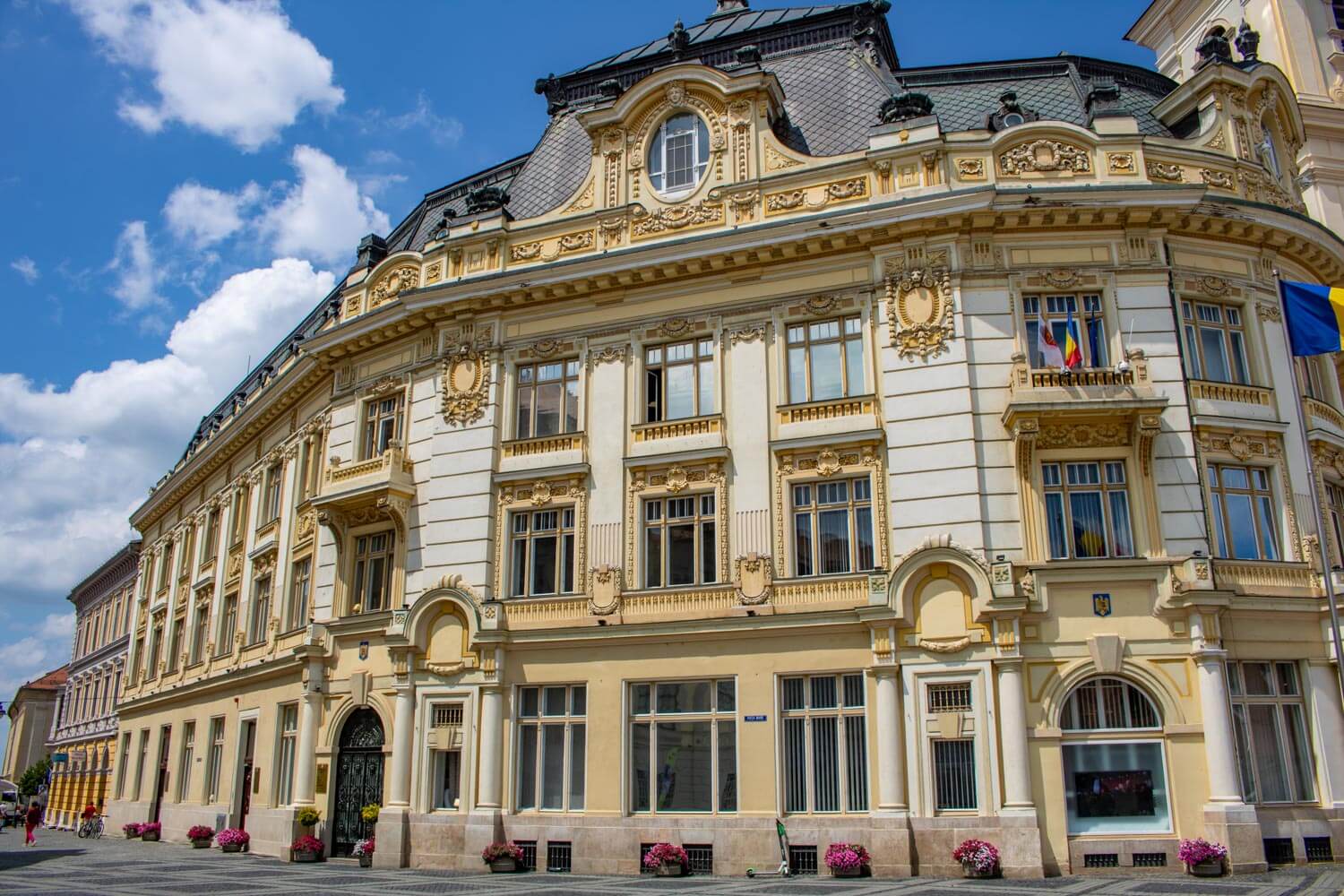
The National Art Gallery (Galeria de Artă Națională) is the Romanian and Transylvanian art collection of the Brukenthal National Museum, housed in the Blue House beside Brukenthal Palace on the Large Square in Sibiu. Although the gallery occupies a separate historic building, visitors enter it from the second floor of Brukenthal Palace and both collections are included on the same ticket.
History And Architecture Of The Blue House
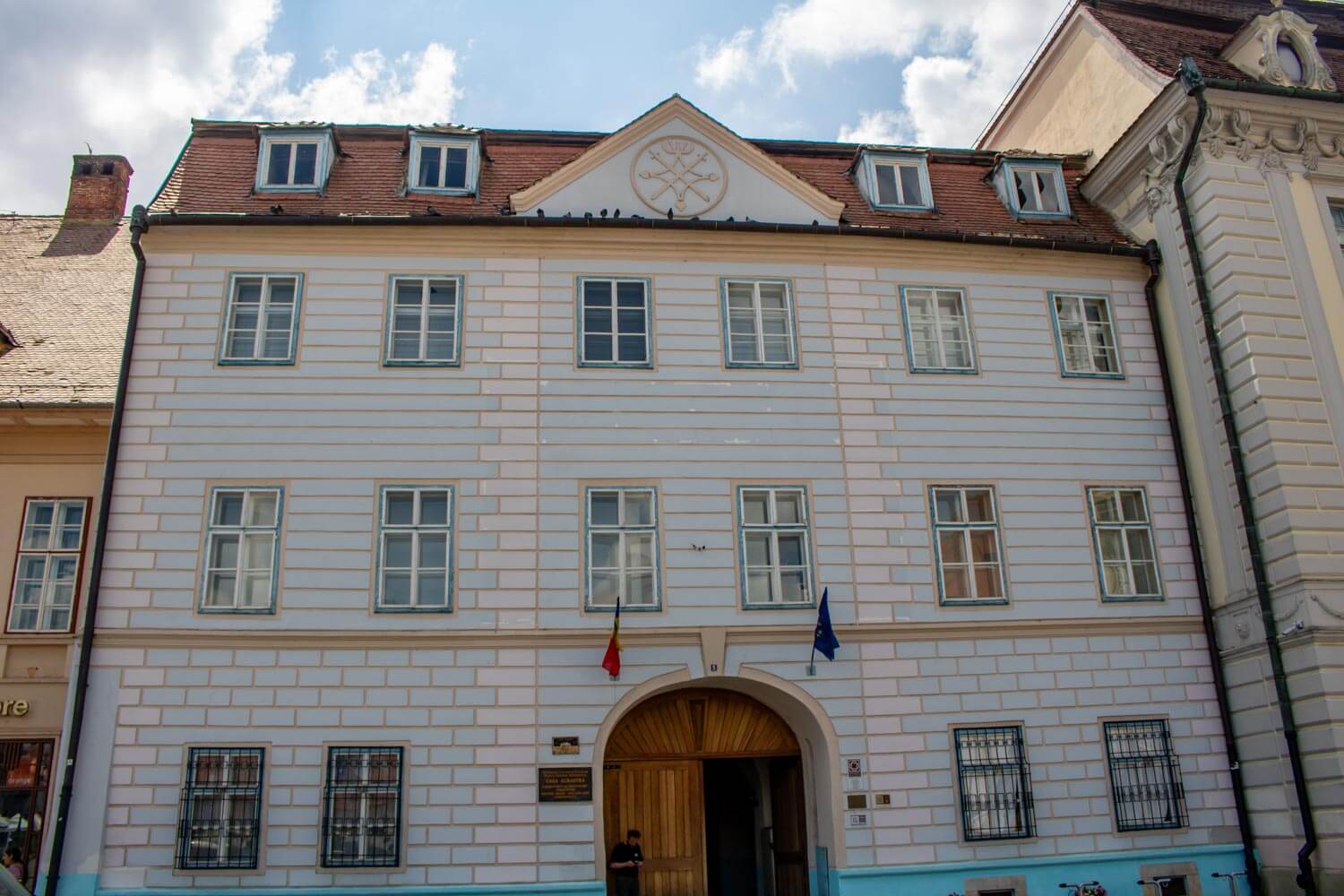
The Blue House (Casa Albastră) stands immediately beside Brukenthal Palace and developed from a much older building whose surviving fabric dates back to the late 15th and early 16th centuries. Its present appearance, however, is largely the result of 18th- and early-19th-century rebuilding, when the property was enlarged and reshaped into the broad Late Baroque house seen today.
A major phase began after Baron Lambert von Möringer acquired the house in 1734. During the following decades, parts of the property were rebuilt and expanded, including the rear wing, where a hall was adapted for theatrical performances between 1769 and 1783. The city bought the house from Möringer’s heirs in 1810, and in 1819 another floor was added, giving the building much of its present height and form.
The façade facing the Large Square is arranged across six bays beneath a mansard roof, with horizontal rustication and a triangular attic displaying the coat of arms of Sibiu. Older elements were incorporated into the later rebuilding rather than disappearing completely, including Renaissance stonework in the entrance passage and parts of the earlier structure behind the façade.
Once it became municipal property, the Blue House was used for a succession of public and cultural purposes, including education, scientific organizations and later heritage work. Over time, that role brought it increasingly into the orbit of the Brukenthal Museum, until the building became home to the National Art Gallery as well as museum offices, restoration spaces and temporary exhibitions.
Museum Collection
The National Art Gallery presents Romanian and Transylvanian art from the medieval period through the first half of the 20th century. Rather than displaying paintings as an isolated sequence, the galleries combine them with sculpture, furniture, decorative arts, clothing, jewelry, photography and graphic works to show how artistic styles developed within the wider cultural life of Transylvania and Romania.
The route begins with medieval and early modern religious art from Transylvania before moving through Baroque, Neoclassical, Academic and Biedermeier works of the 18th and 19th centuries. From there, the collection follows the rise of modern Romanian painting, including works by Nicolae Grigorescu, Ioan Andreescu and Ștefan Luchian, before continuing into the early 20th century with artists such as Nicolae Tonitza, Hans Mattis-Teutsch, Hermann Maxy, Iosif Iser and Oscar Han.
The Transylvanian collection is one of the gallery’s strongest sections, bringing together works produced within the region’s Romanian, Saxon and Hungarian cultural environment. Other displays explore subjects such as ASTRA and the development of early photography, expanding the visit beyond painting and giving more context to the cultural world in which the artworks were created.