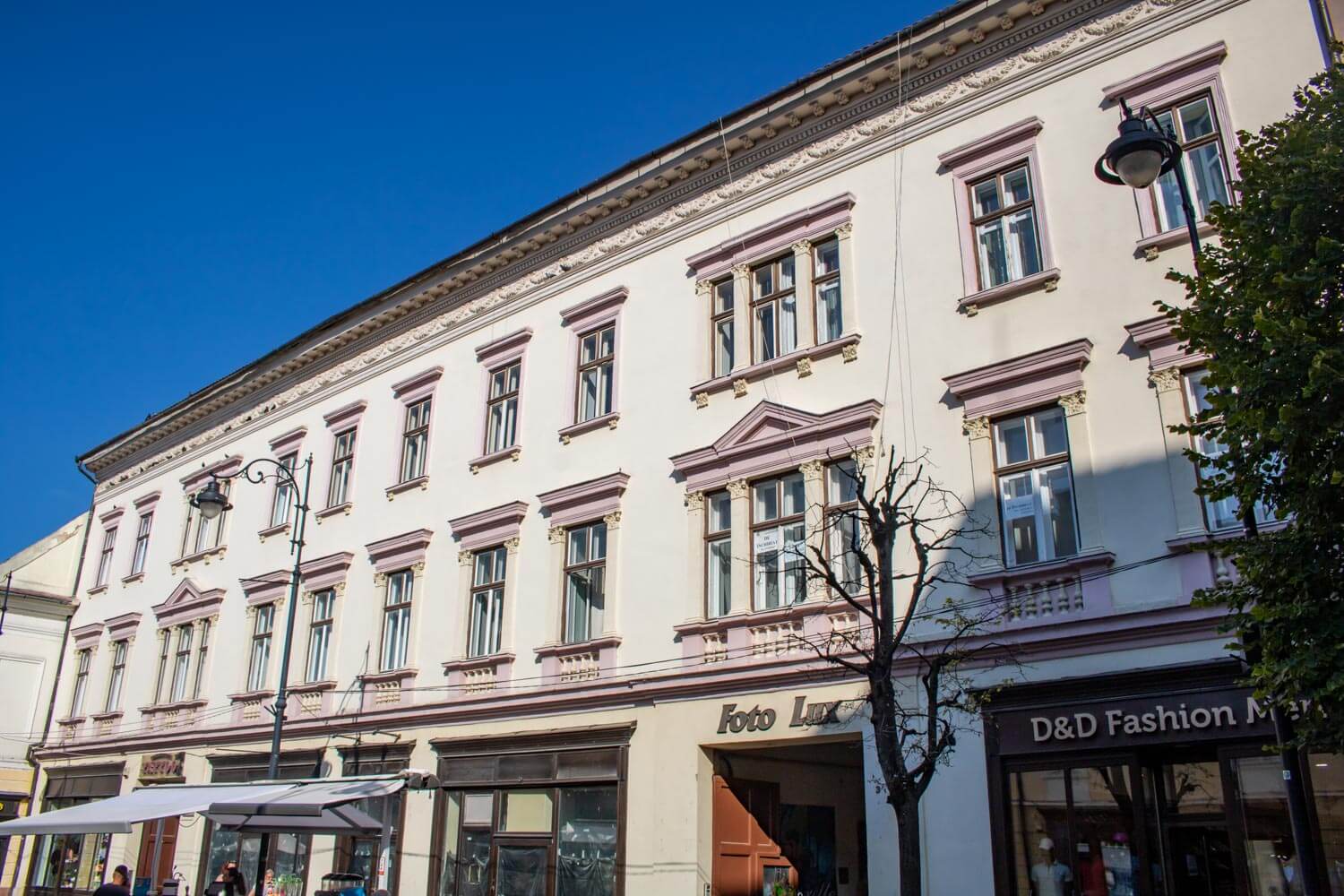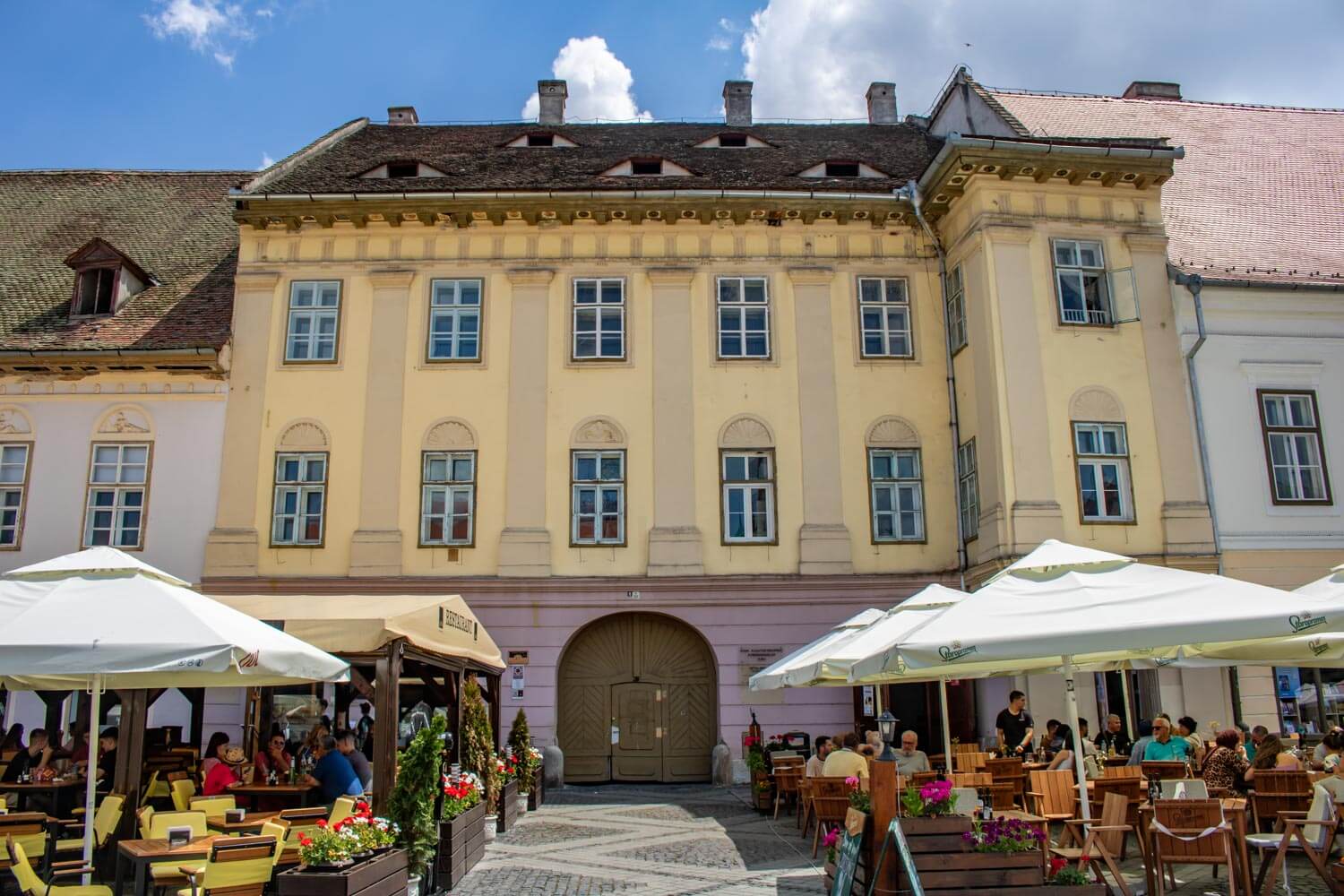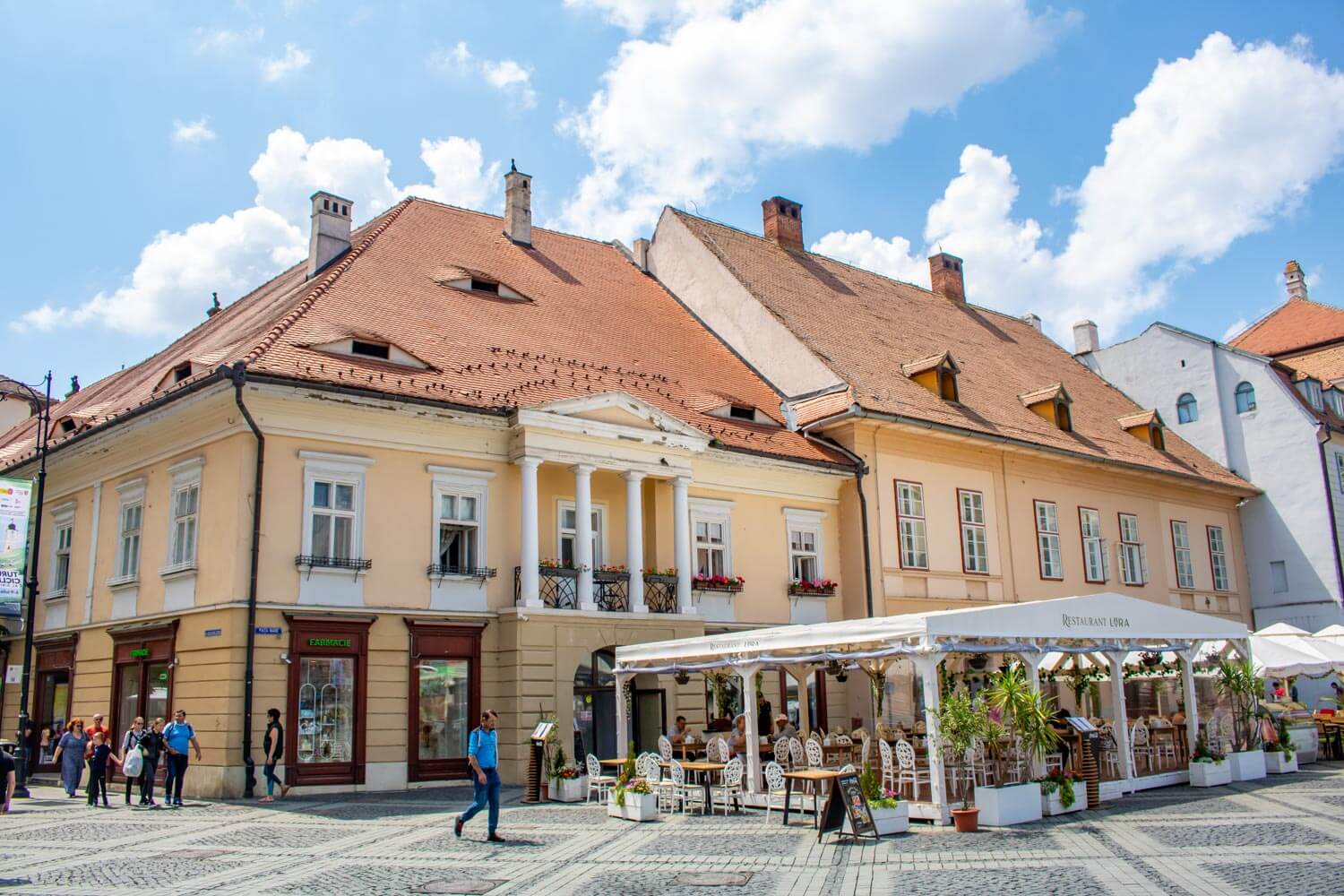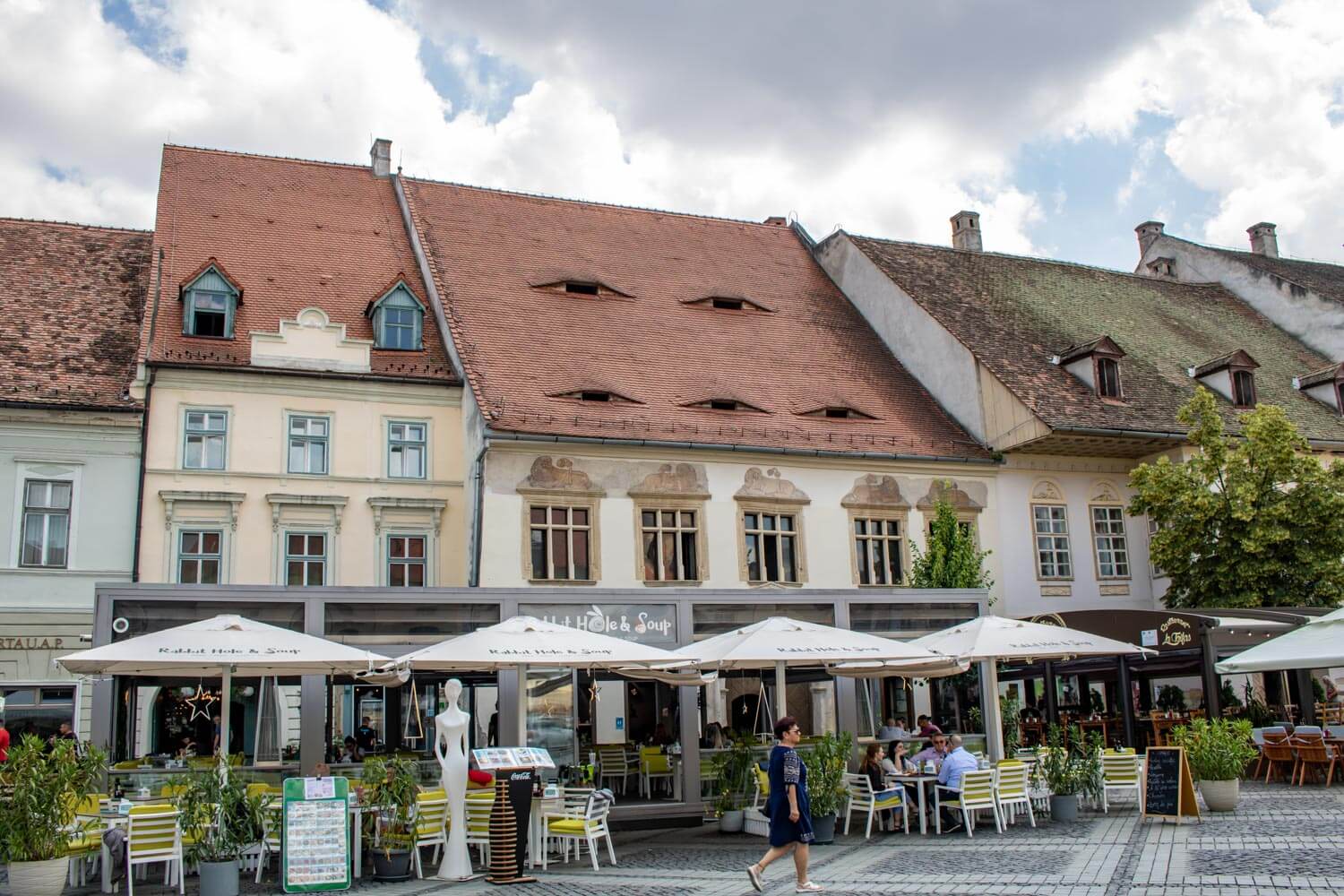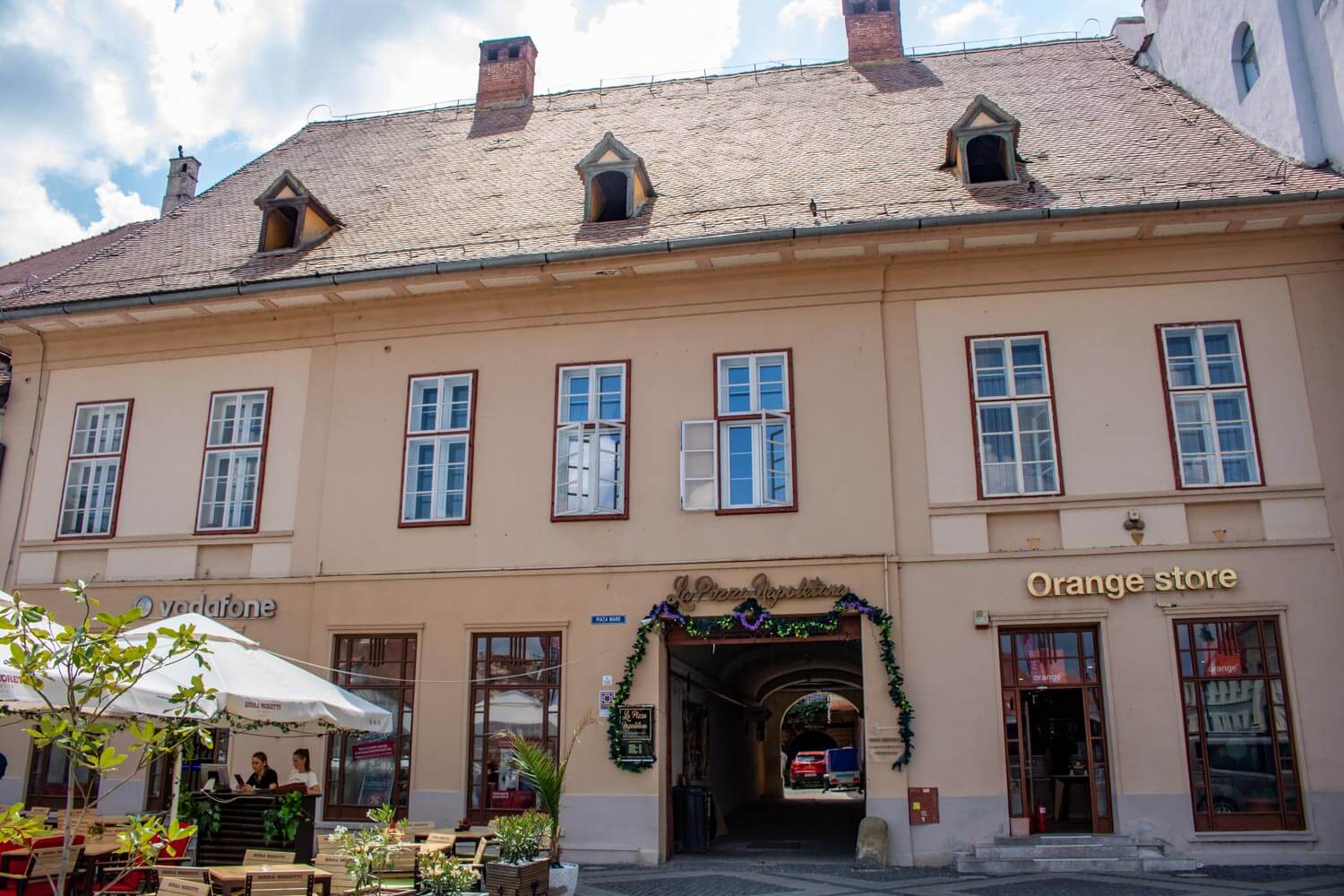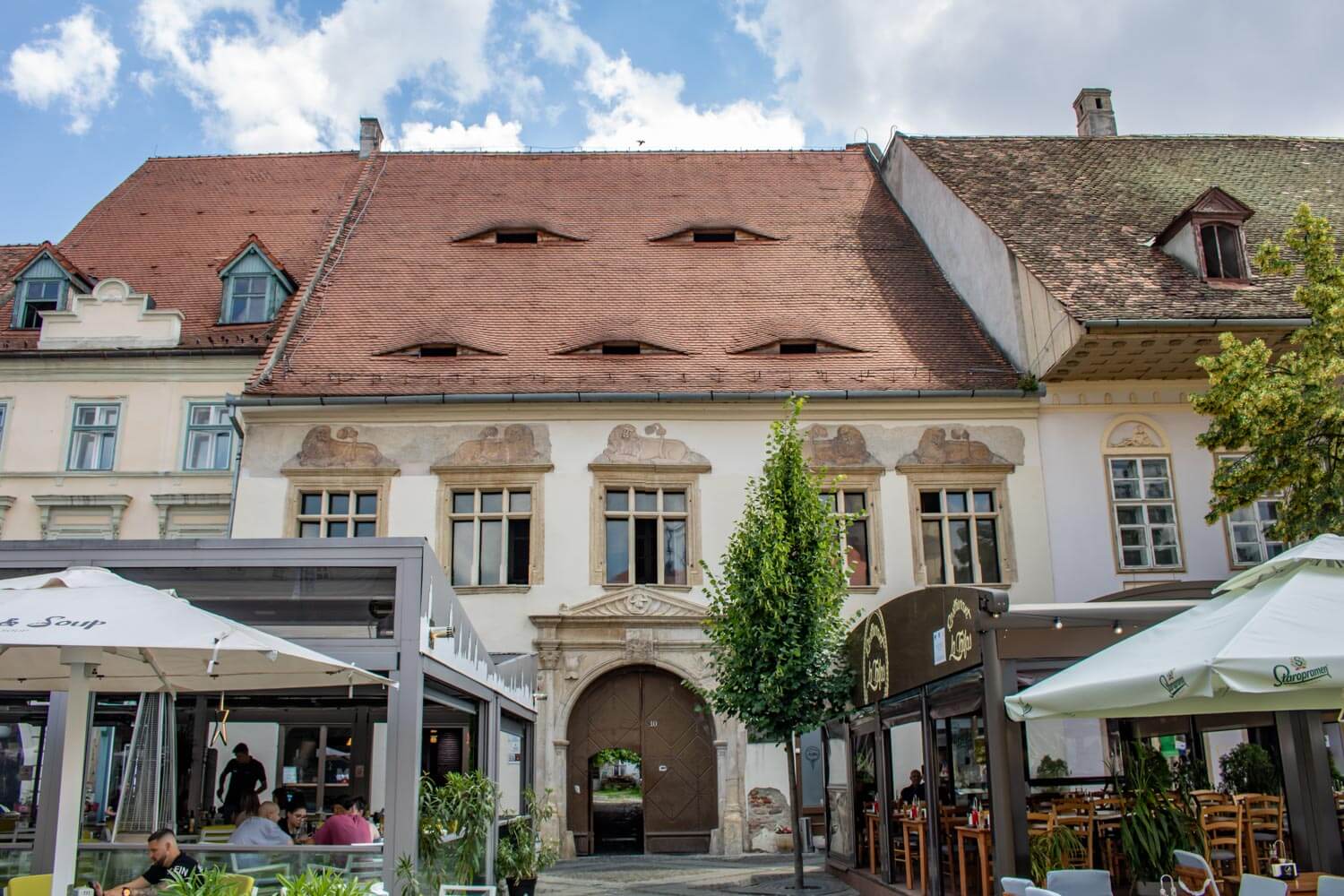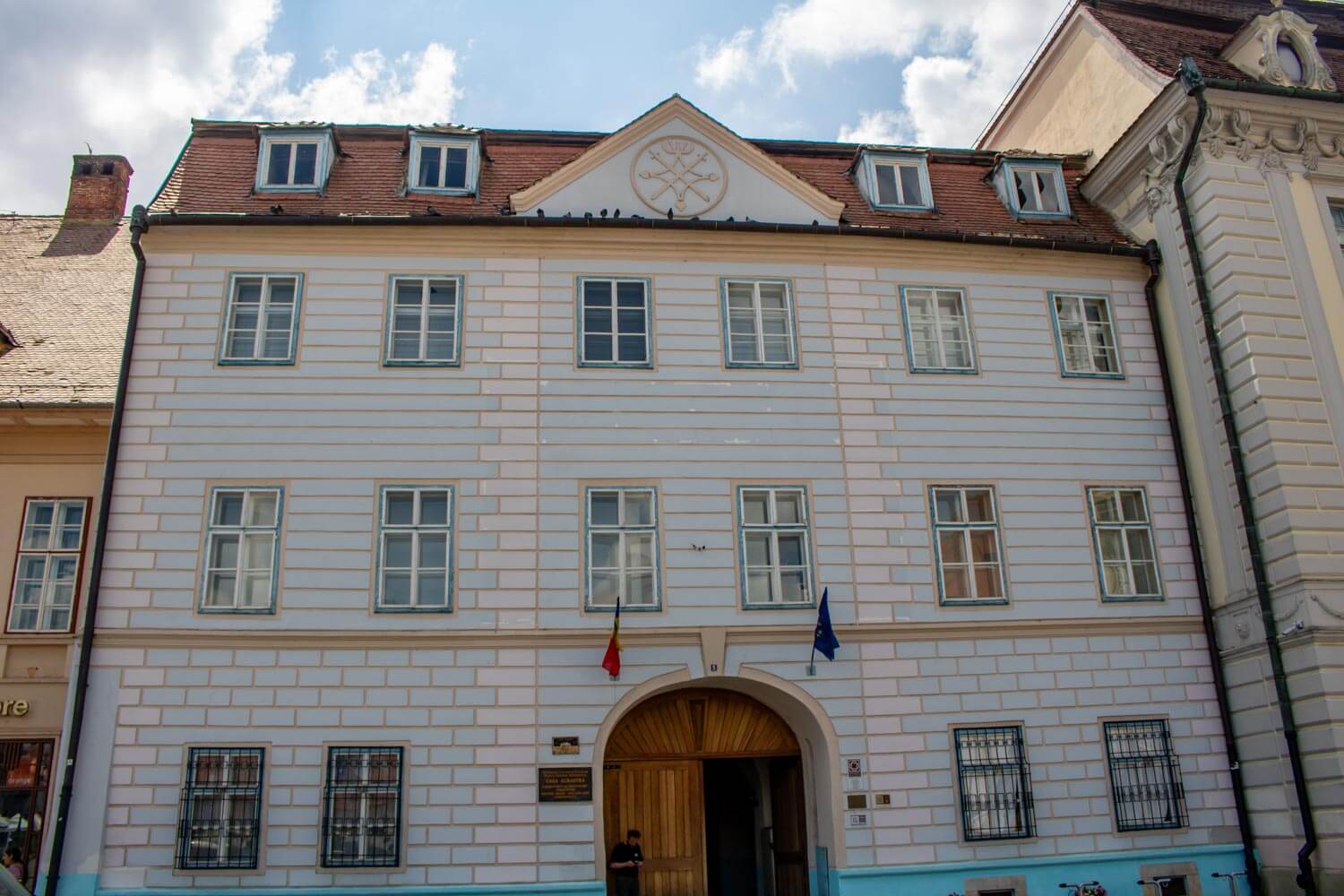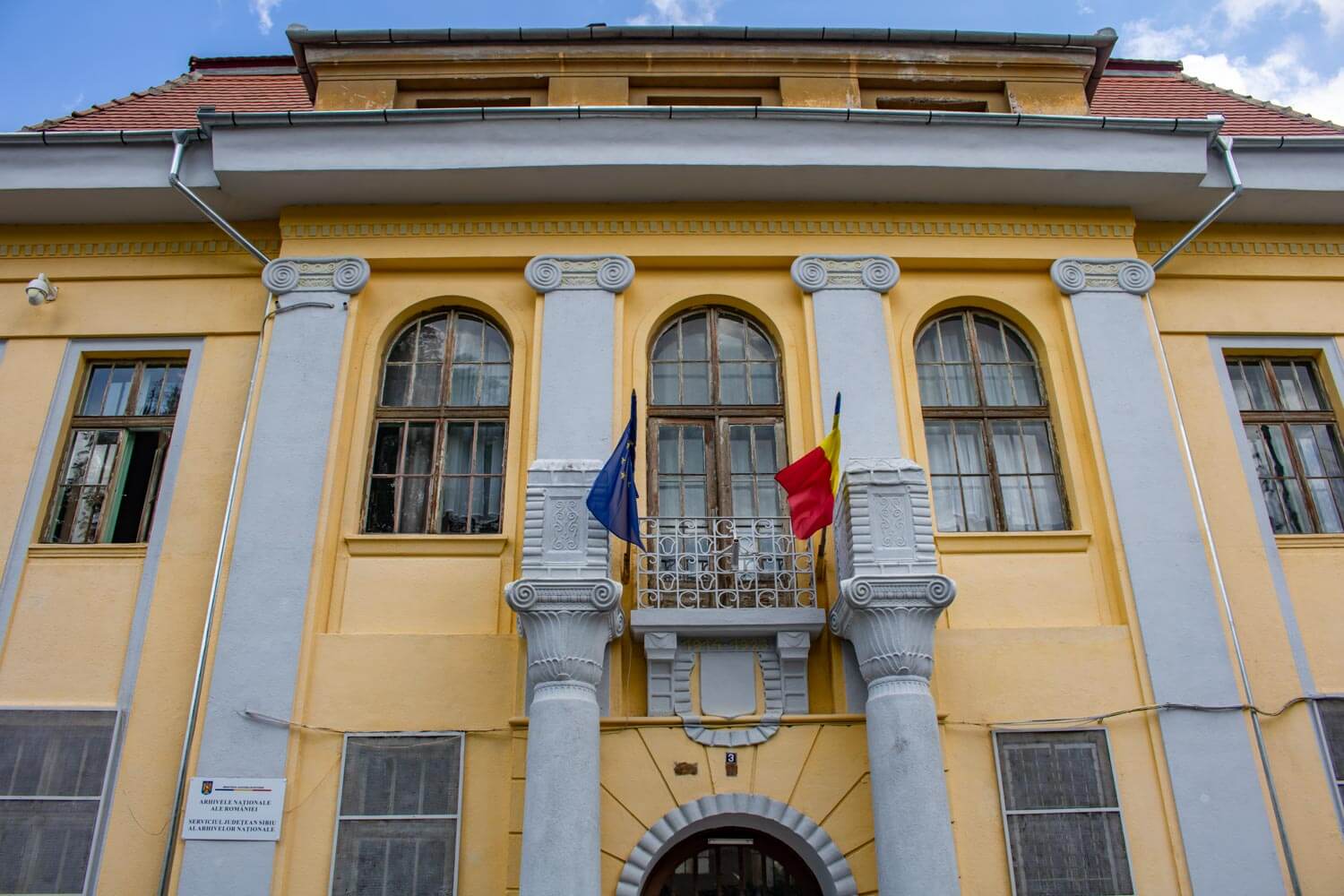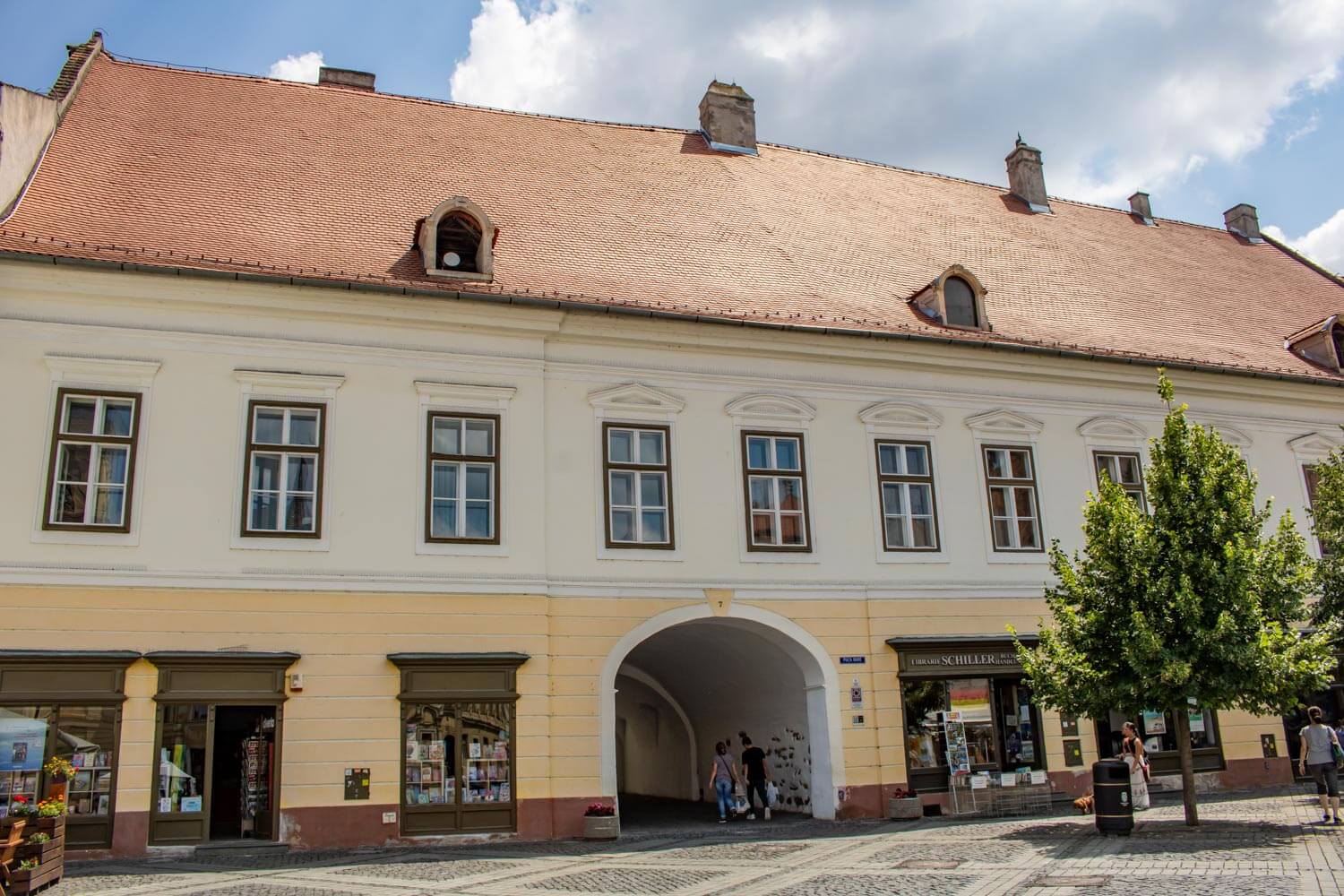
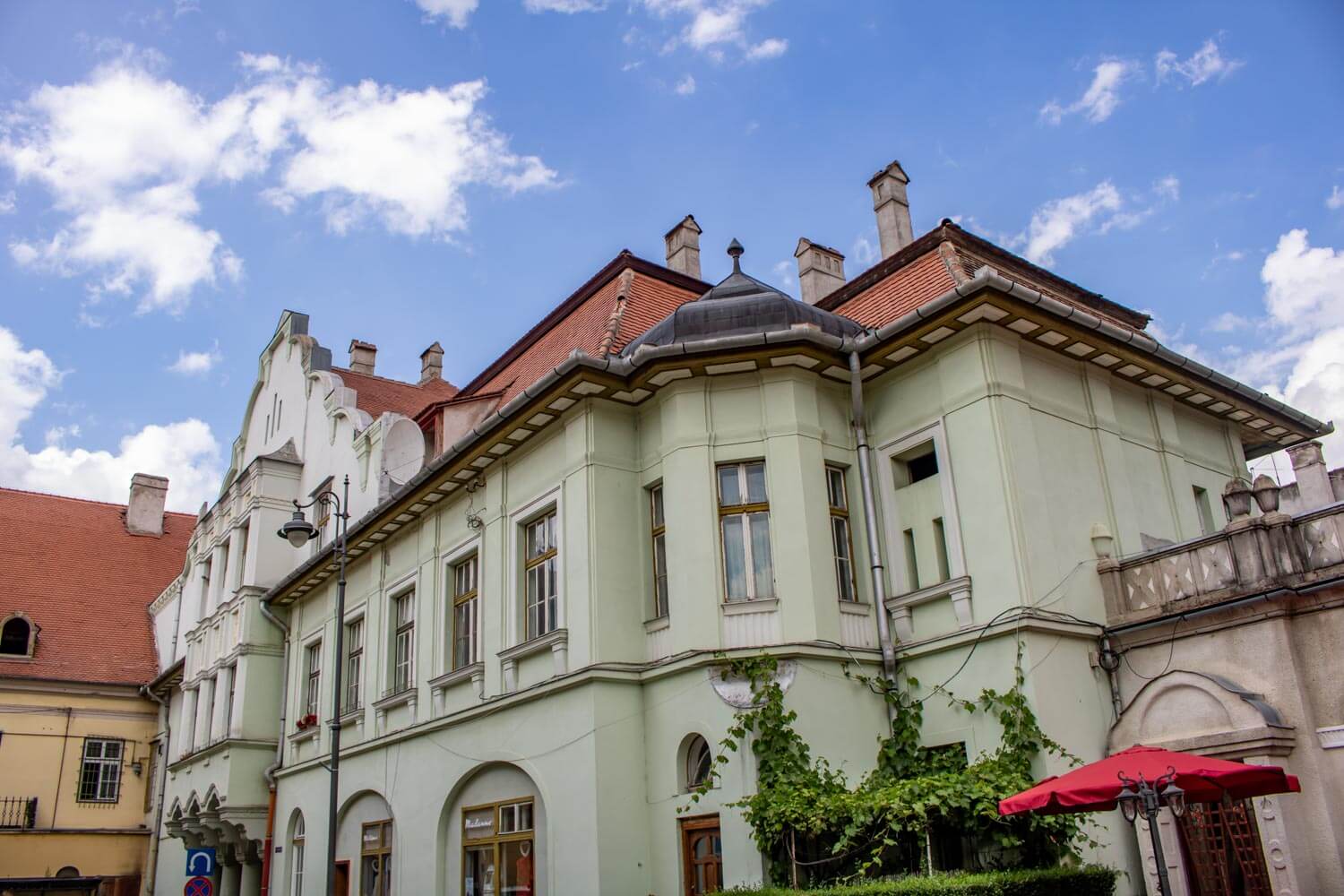
The General’s House (Casa Generalului) is a historic building on the Large Square in the center of Sibiu, formed from two older medieval houses that were gradually joined together. Its present name comes from the period between 1784 and 1904, when it served as the residence and headquarters of the commanding general of the Austrian troops in Transylvania.
The two houses already stood here in the 15th century and passed through the hands of several prominent Sibiu families and officials. Around 1475 both were owned by Paul Remser, also known as Horwath, a landowner and two-time mayor of Sibiu. During the following century the right-hand property belonged for a time to royal judge Albert Huet, while the left-hand house was later owned by mayor Martin Weiss. In 1598, the city bought part of the latter property and opened a narrow passage through it toward the area behind the square.
The building took on its defining role after the city acquired the property in 1779 and enlarged the passage in 1784 while adapting the two houses for the Austrian military command. For the next 120 years, the commanding general of the troops in Transylvania was based here, alongside other provincial institutions during periods when Sibiu served as the administrative capital of Transylvania. The passage became known in German as the Generalloch, or “General’s Hole,” while the building itself became the General’s House.
Much of the façade seen today dates from the beginning of the 20th century, when the military use ended and parts of the ground floor were converted for shops. Behind the frontage, older elements remain, including a 15th-century barrel-vaulted cellar and the passage leading through toward Strada Arhivelor. The upper façade is divided into thirteen bays, while tall stone dormers with volutes rise from the roof and continue around the side above the passage.
Commercial and public uses quickly filled the building after 1900. The Transylvanian Carpathian Society opened Sibiu’s first tourist information office here in 1902, followed by a railway ticket office, fashion shops, a jewelry store, a piano business and later a branch of the Central Bank for Industry and Commerce. These new uses changed the ground floor, but the long military chapter remains the reason the building is still known as the General’s House.