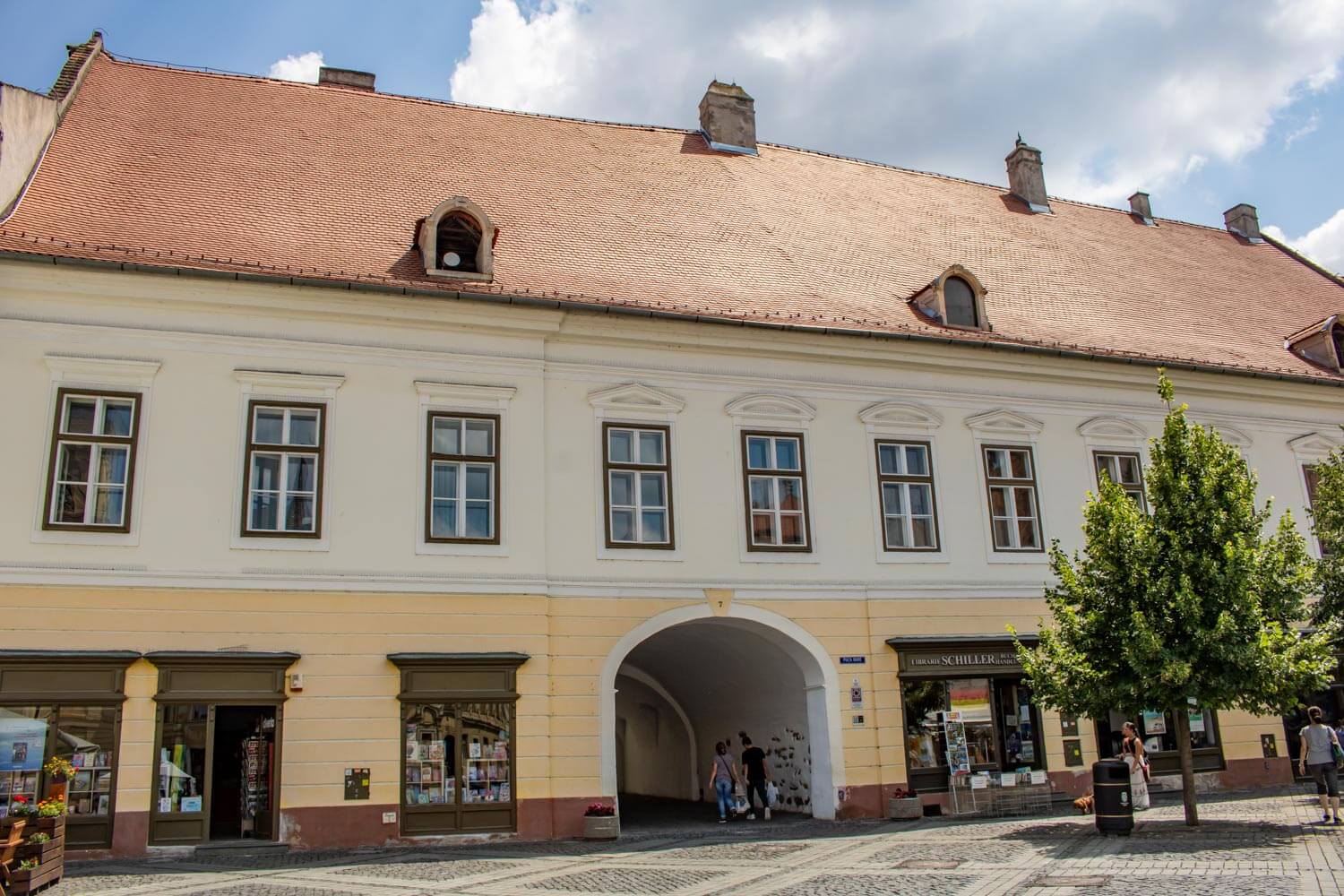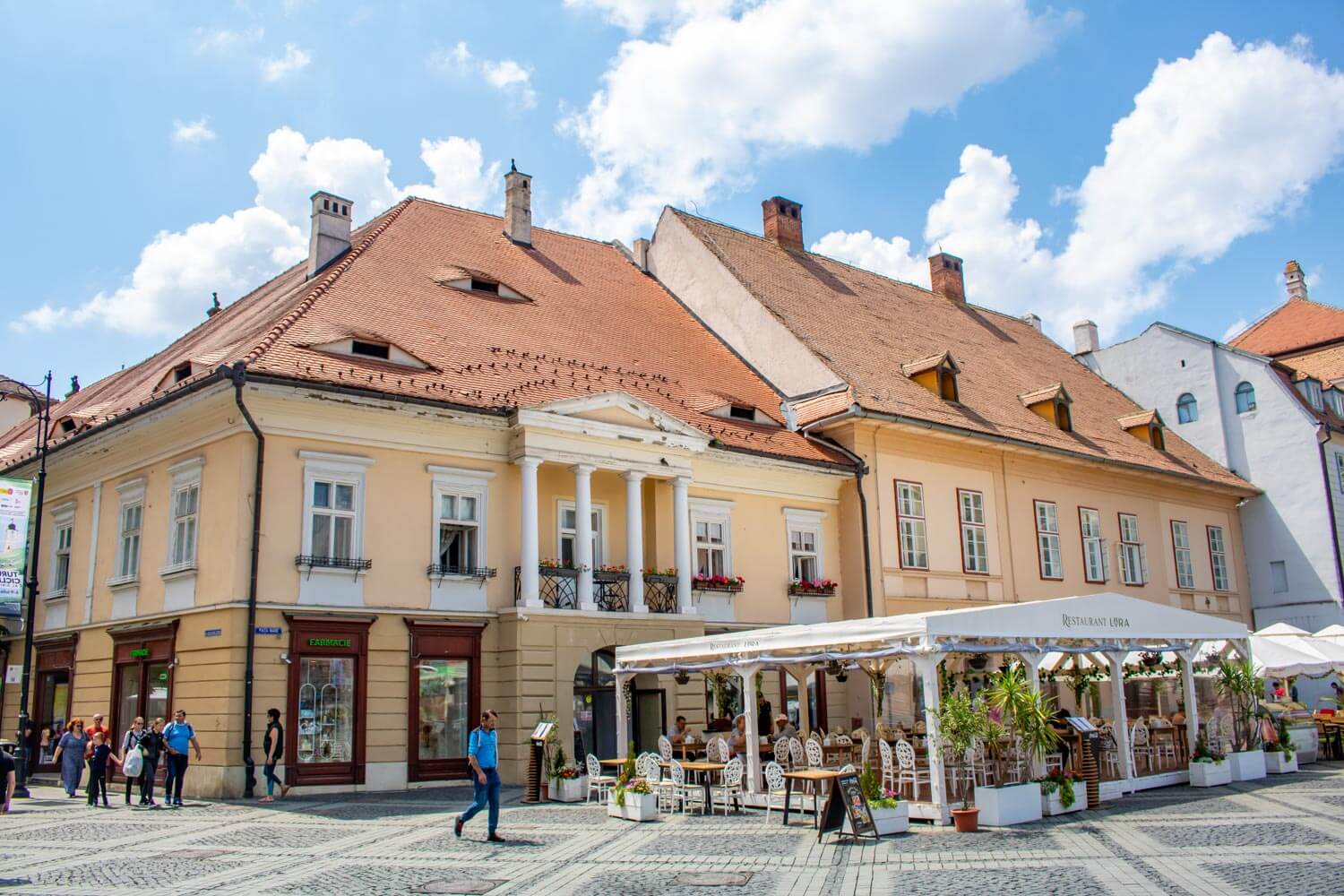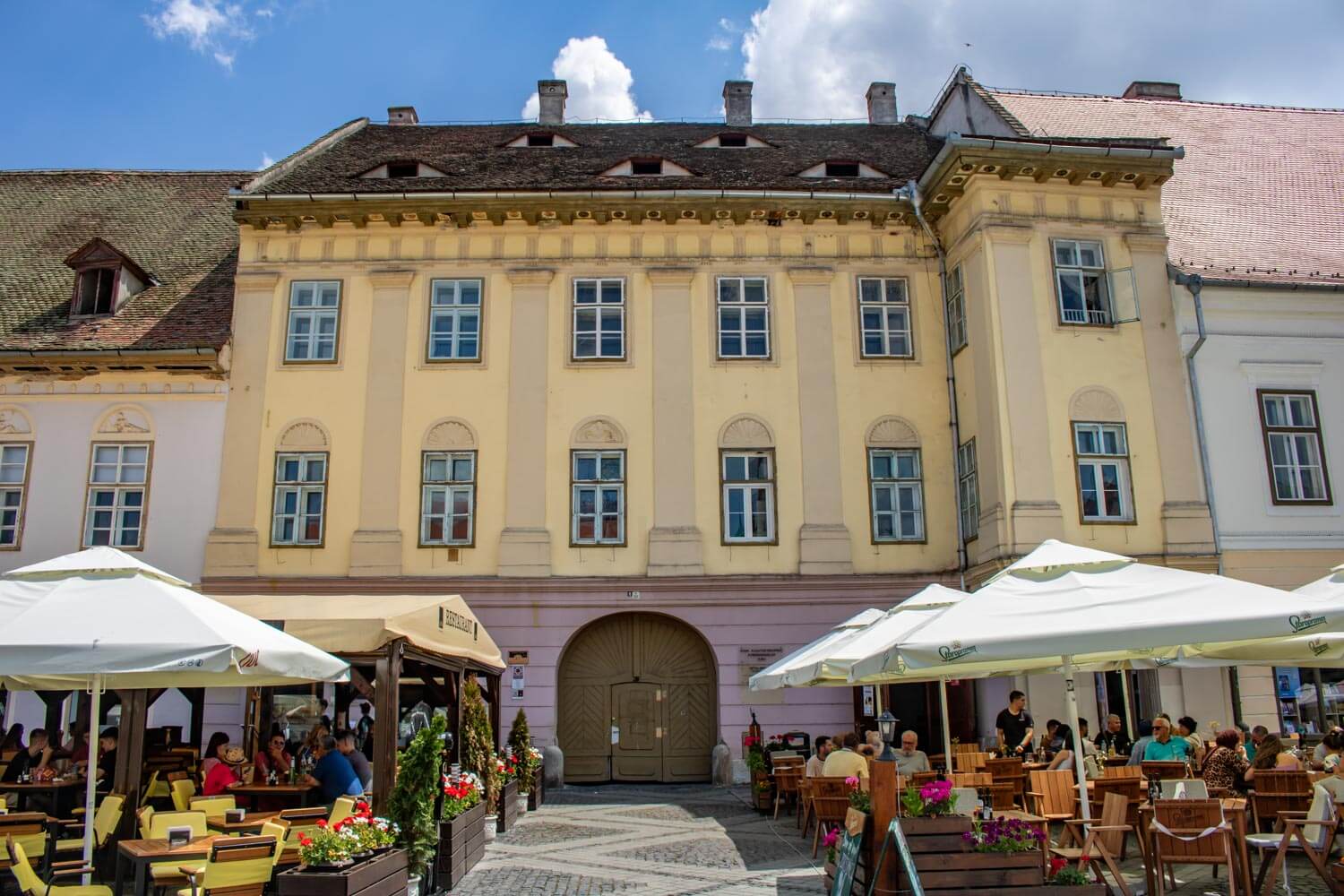
The Hecht House (Casa Hecht) is a historic townhouse on the Large Square in the center of Sibiu, with medieval origins dating back to the 15th century and a largely Classical façade added in 1821. Its name comes from the Hecht family, who owned the house for more than a century after future mayor Georg Hecht bought it in 1472.
Before the Hechts arrived, the property belonged to Cristophorus Italicus of Florence, an administrator of Sibiu’s mining and minting chamber, and a document from 1456 already records a mint operating at this address. Georg Hecht later became one of the city’s leading officials, while his son Johann played an important role in introducing the ideas of the Lutheran Reformation to Sibiu. Some of the first religious services in the city influenced by Luther’s teachings were held inside the house.
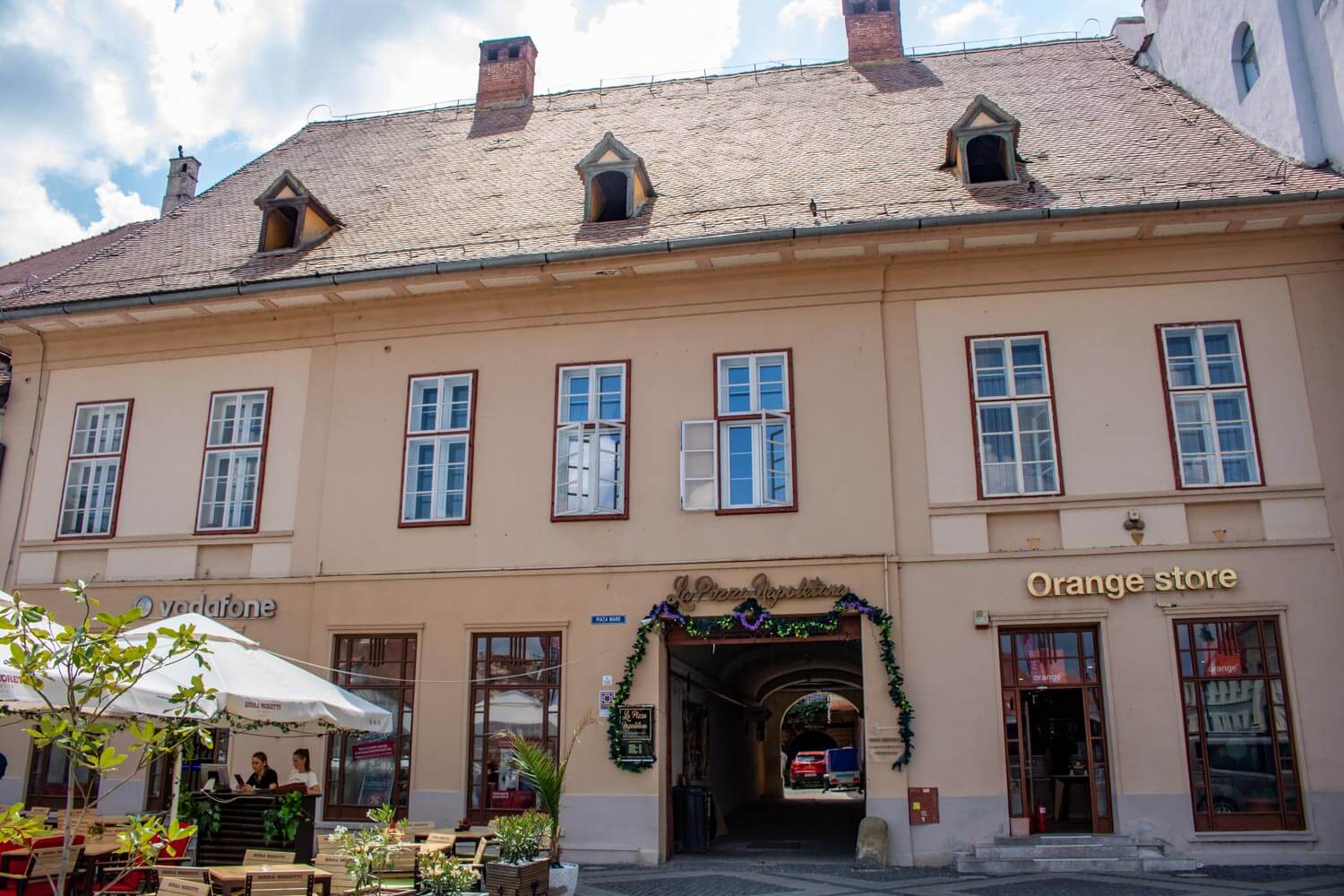
The Hecht family retained the property until the end of the 16th century, after which it passed to mayor Johann Waida and remained with his descendants for more than two hundred years. A Renaissance stone frame preserved beside the entrance passage once carried Waida’s painted coat of arms, while other medieval details survive deeper inside the building, including a Gothic doorway with crossed mouldings and vaulted rooms.
A major transformation came in 1821, when the Saxon University bought the house and converted it into the administrative headquarters of the autonomous Saxon territory in Transylvania. District engineer Andreas Adam redesigned the building for its new role, giving the façade its present Classical character with pilasters, Doric capitals and a regular arrangement of windows. Administrative offices occupied the ground and upper floors, while the first floor also contained the official residence of the Saxon administrator.
Commercial uses continued alongside these institutional functions. J. F. Schneider opened a porcelain and dry-goods shop on the ground floor in 1855, later continued by Johann Weindel, while the Red Cross also maintained offices in the building toward the end of the 19th century. The shop spaces remained in use into the 20th century, when they were later occupied by a folk-art store.