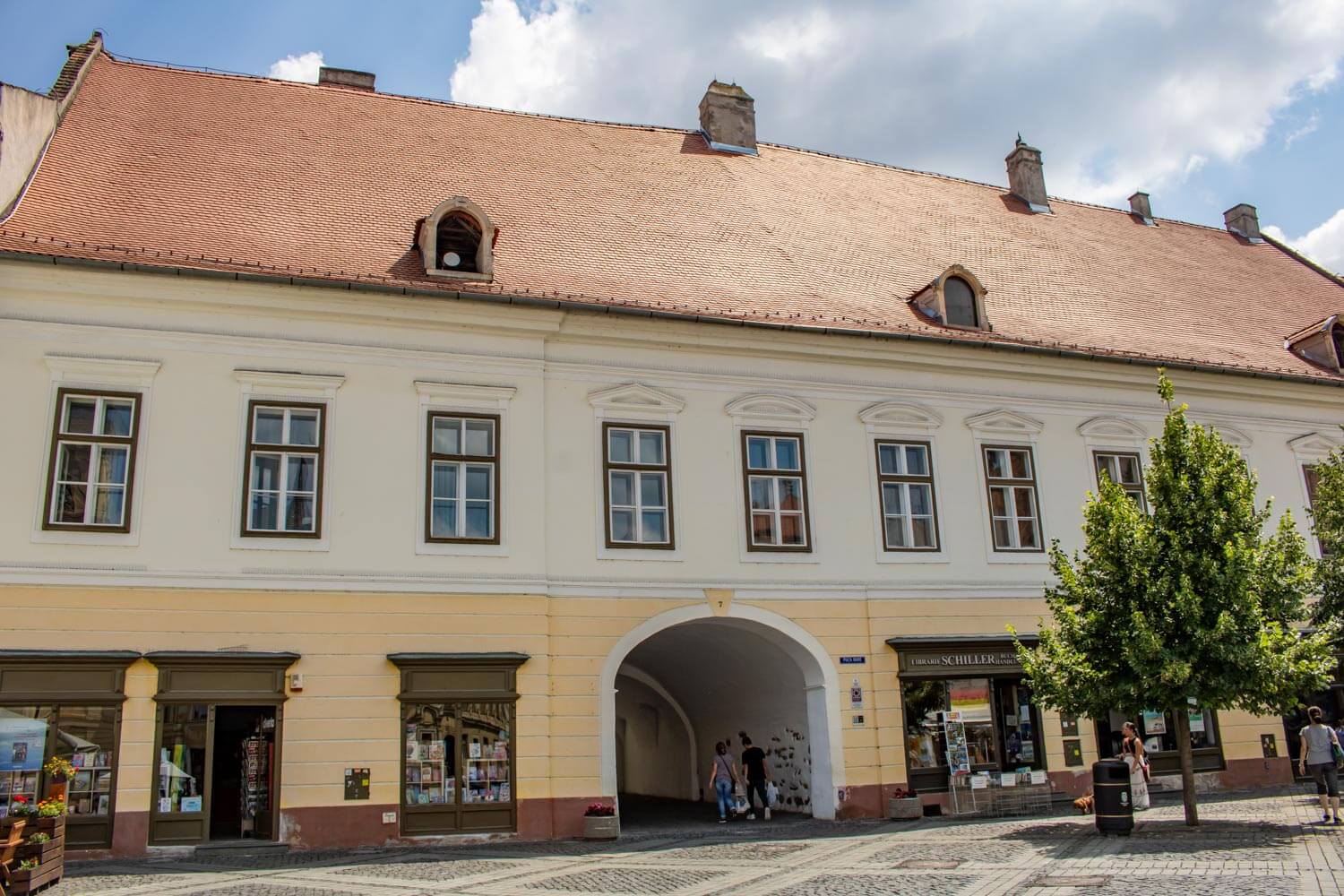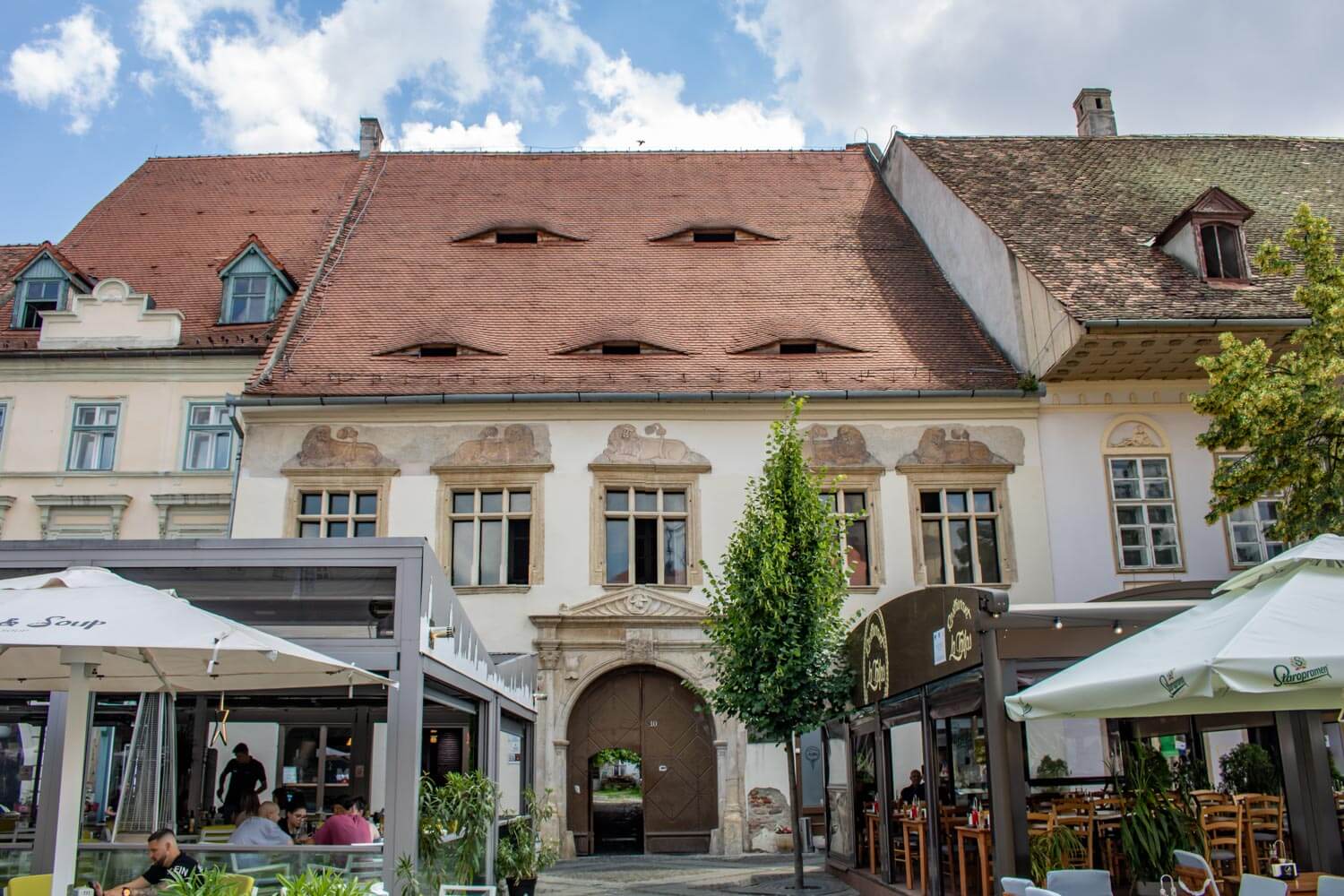
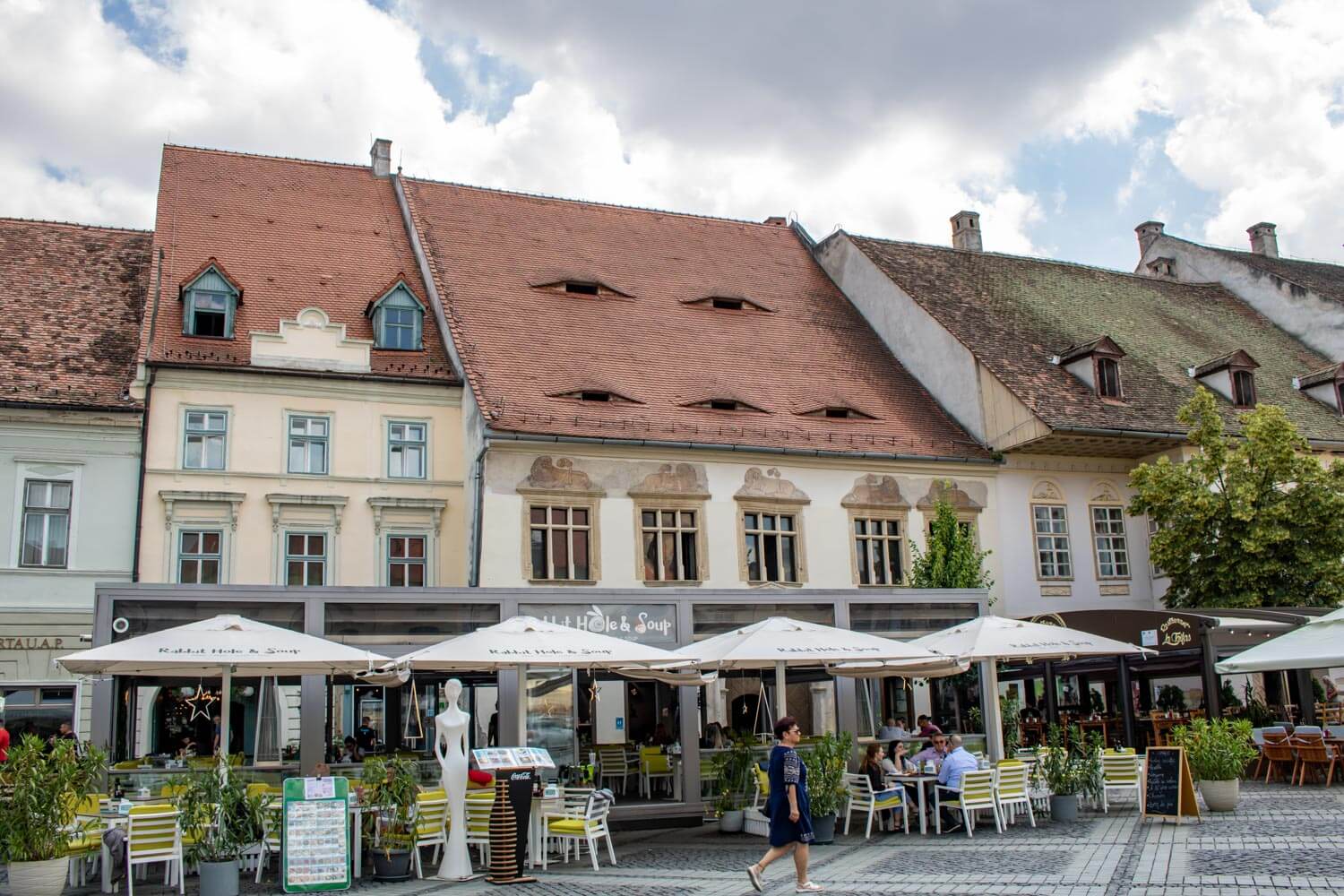
The Haller House (Casa Haller) is a historic townhouse on the Large Square in Sibiu, combining a late-medieval residence with some of the city’s best-preserved Renaissance details. The house was already standing by the late 15th century, but it took on much of its present character after Petrus Haller bought the property in 1537.
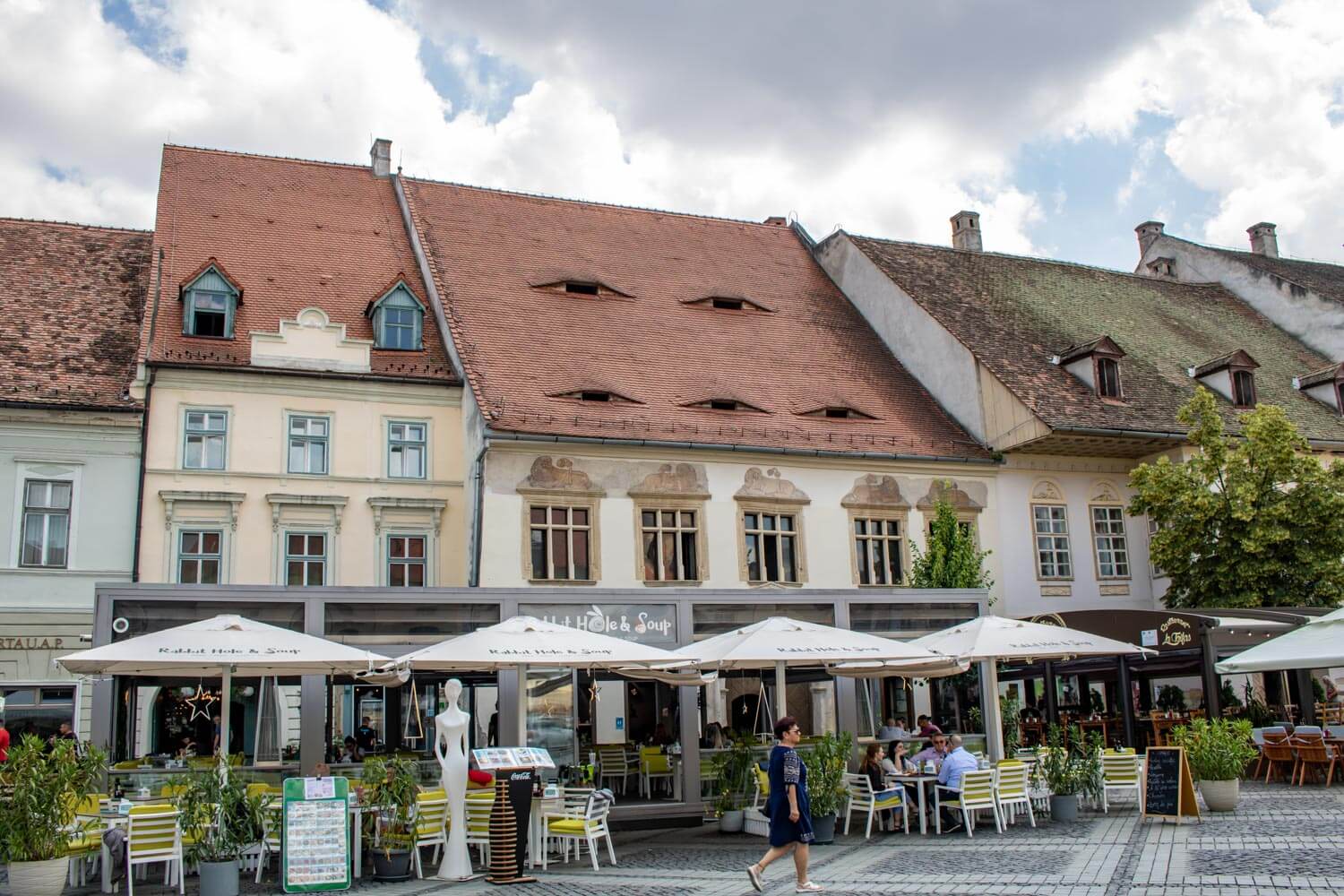
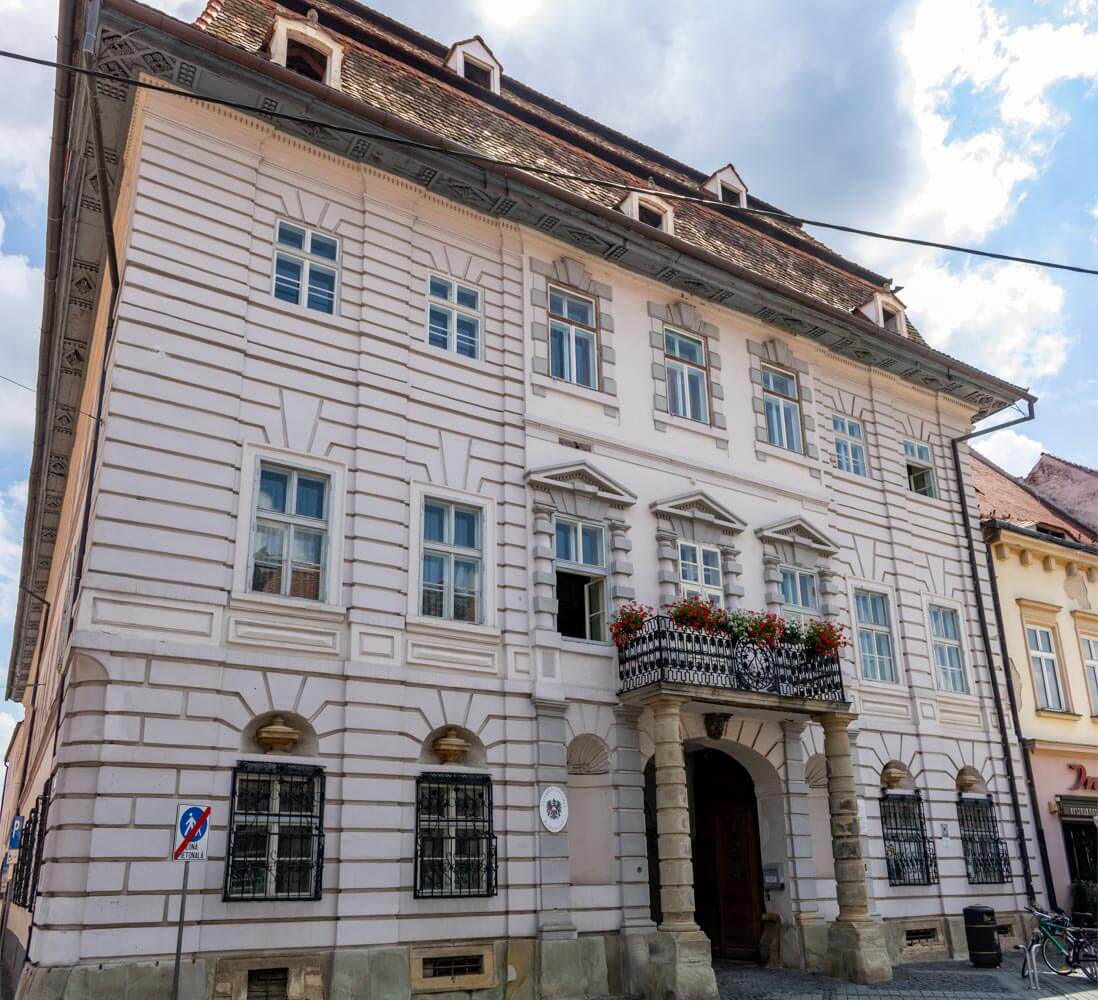
Haller came from a prominent merchant family with roots in Nuremberg and reshaped the older Gothic house into a more fashionable Renaissance residence. The most striking result is the stone entrance portal facing the square, framed by attached columns with Corinthian capitals and decorated with reliefs, Haller’s coat of arms and the date 1537. Above it is a small portrait medallion, while traces of painted lions discovered above the upper windows during restoration add another unusual decorative element to the façade.
The medieval character of the property becomes clearer behind the street frontage. Vaulted ground-floor rooms and Gothic stone doorways survive from the earlier house, while the courtyard contains a tall two-story dwelling tower dating from the 15th century. Once reached by a spiral staircase, the tower has steep gables and Gothic window frames, and some sources suggest that part of it may also have served as a private chapel. An older Gothic gable remains visible from the courtyard as another reminder of the building that existed before the Renaissance remodeling.
The Haller family kept the house for more than three centuries, until Antonie Haller sold it in 1882. Soon afterward pharmacist August Teutsch moved the Lion Pharmacy (La Leu) here from the neighboring house, beginning a new chapter that lasted well into the 20th century. The pharmacy continued under later owners, survived nationalization, and remained in operation until 2011.
Other ground-floor spaces were used by shops throughout the 19th and 20th centuries, including porcelain, fashion and textile businesses. Despite these changing commercial uses, the house has preserved the combination of Gothic structure and Renaissance decoration that makes it one of the most distinctive historic residences on the Large Square.