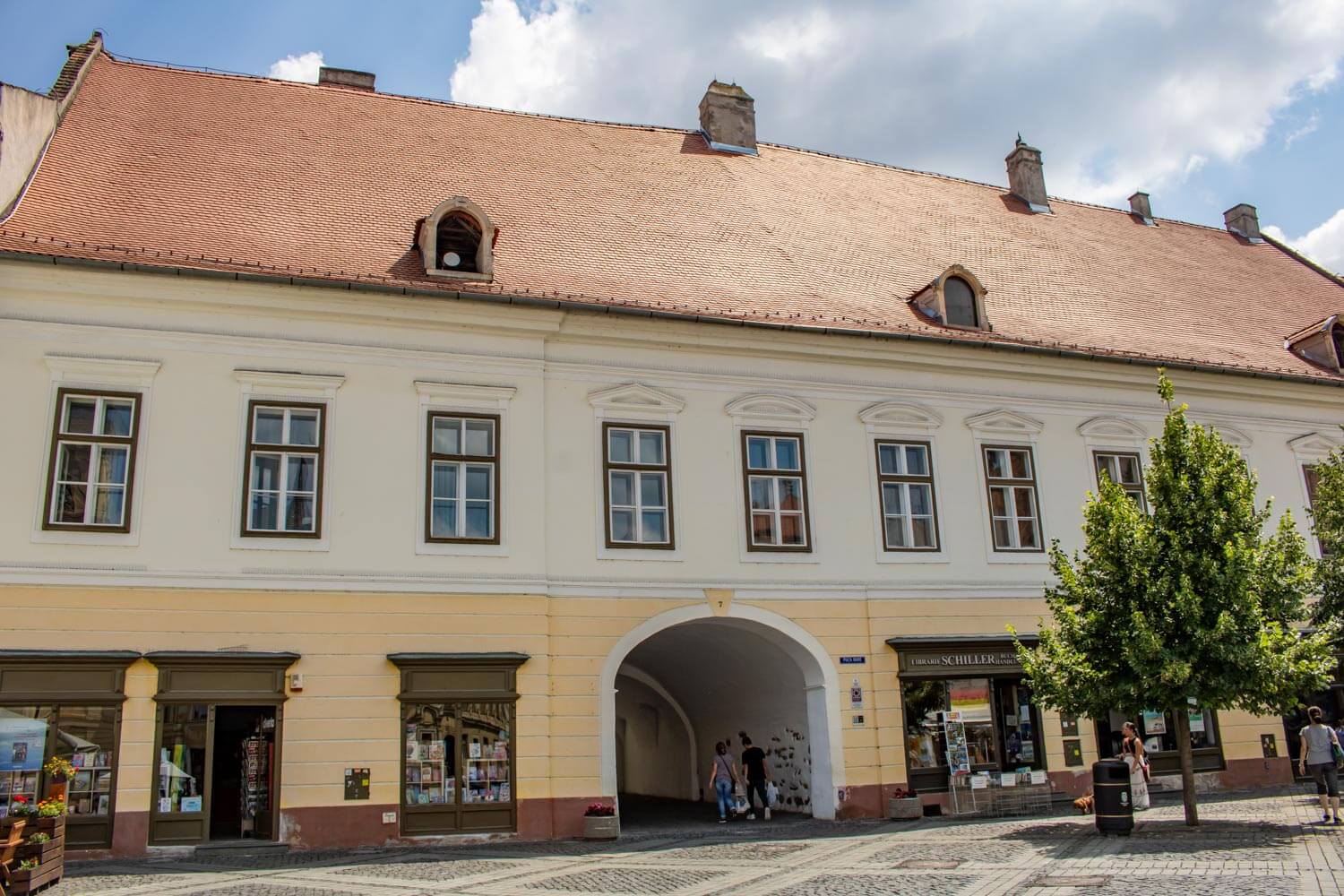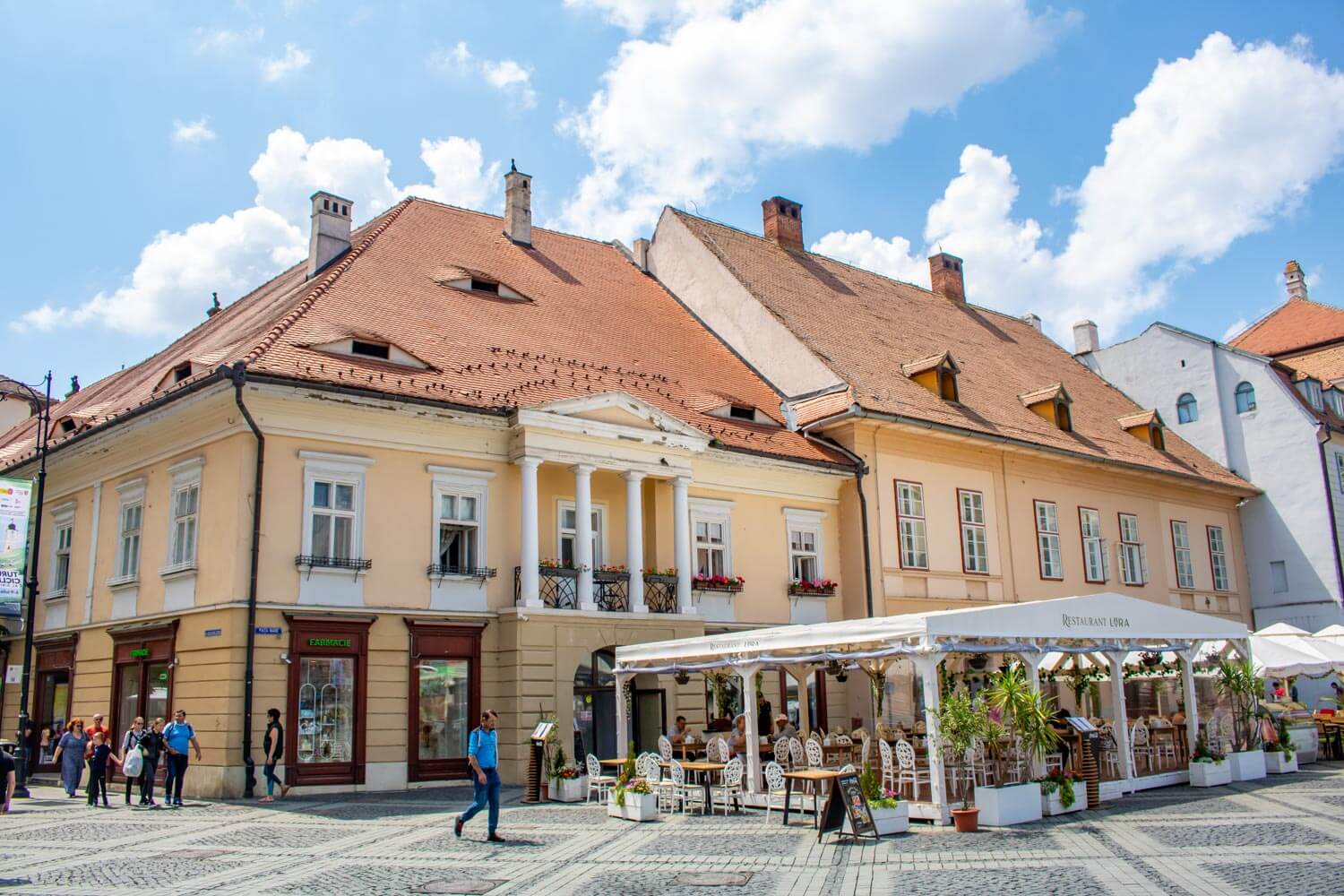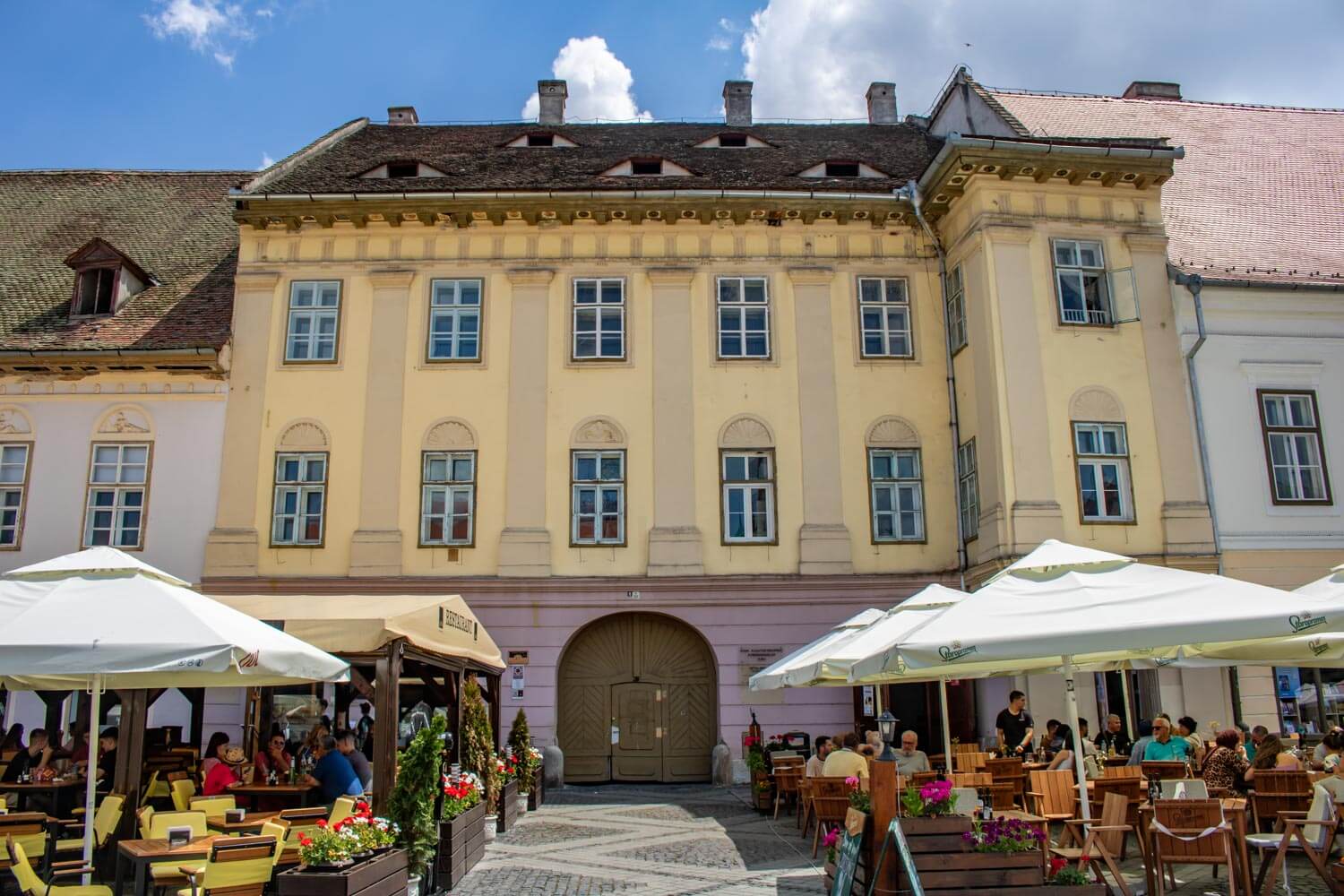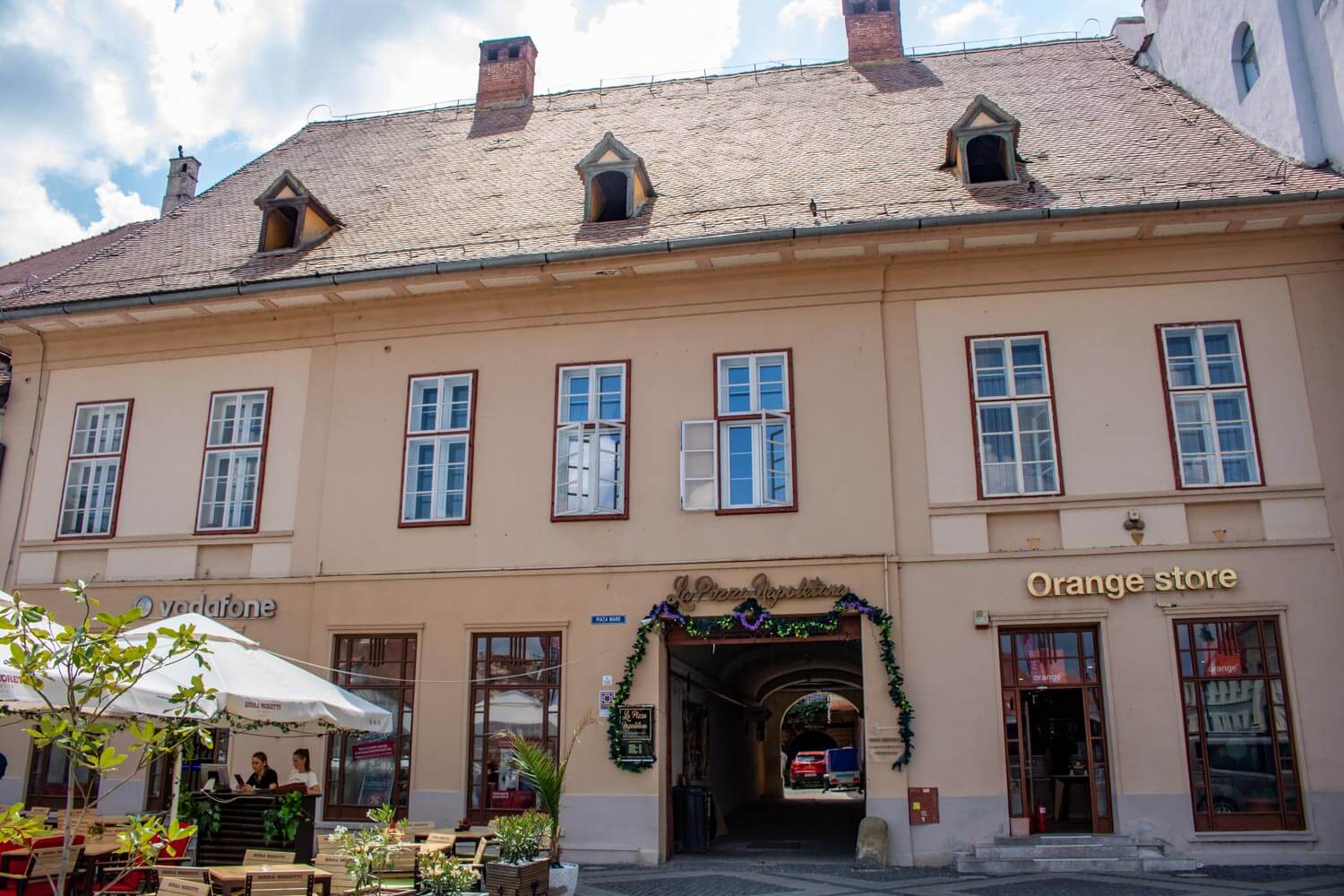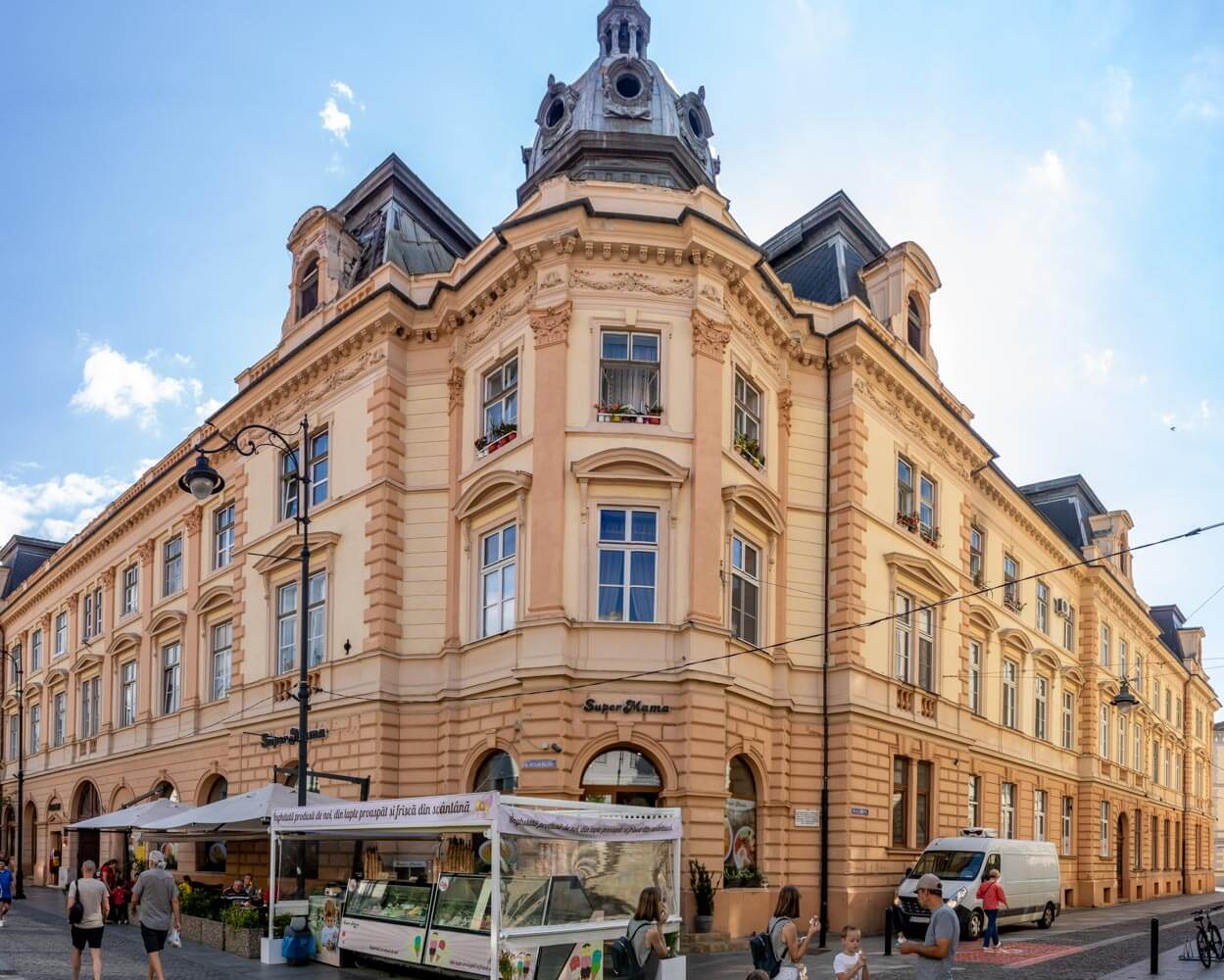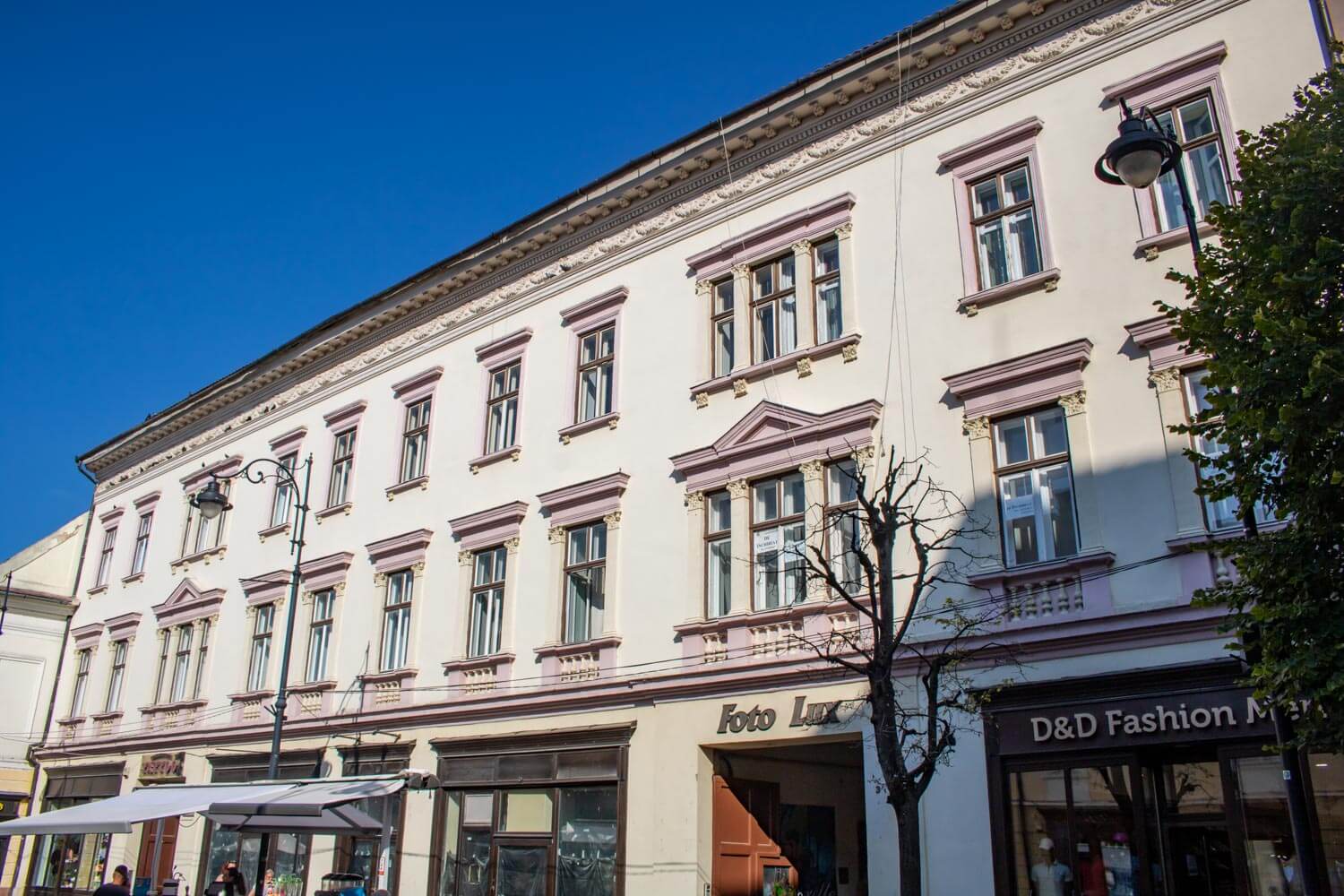
The Transilvania Palace (Palatul Transilvania) is a late-19th-century commercial and administrative building at the northern end of Nicolae Bălcescu Street in the historic center of Sibiu. Built on the site of three older houses, it became the headquarters of the Transilvania insurance institution, founded in Sibiu in 1868 and one of the most important financial enterprises of its kind in Transylvania.
Before the present palace was erected, one of the houses on the site had an important place in Romanian cultural history as the first headquarters of Ioan Slavici’s newspaper Tribuna between 1884 and 1889. George Coșbuc worked for the newspaper here during the final years of that period, a connection now recalled by a commemorative plaque on the building. The older structures were subsequently replaced by the much larger palace, which provided offices for Transilvania on the first floor while combining institutional space with shops and other commercial premises.
The new building filled a prominent corner of the historic center with an eclectic façade extending across eleven window bays and rising through a ground floor and two upper stories. Horizontal rustication emphasizes the lower level, while the first-floor windows are accompanied by balustraded parapets and the upper façade is finished with garland decoration beneath the cornice. Two entrance passages lead into the property, where additional wings form a pair of internal courtyards.
Different businesses occupied the ground floor from the beginning, reflecting Nicolae Bălcescu Street’s growing importance as Sibiu’s principal commercial street. Among the longest-lived were Julius Wermescher’s textile and carpet shop and Fritz Connerth’s women’s hat business, while other premises were used at various times by watchmakers, clothing retailers, a delicatessen and a perfumery. During the interwar period the Julius Meinl delicatessen also moved here from another address farther along the street.
Other parts of the building developed quite different uses, including the rear wing at no. 3, where photographer Emil Fischer established his studio in 1900. By the mid-1930s the palace also housed the Sibiu branch of the Central Bank for Industry and Commerce, while its cellar was converted into an air-raid shelter in 1941 as World War II reached Romania.