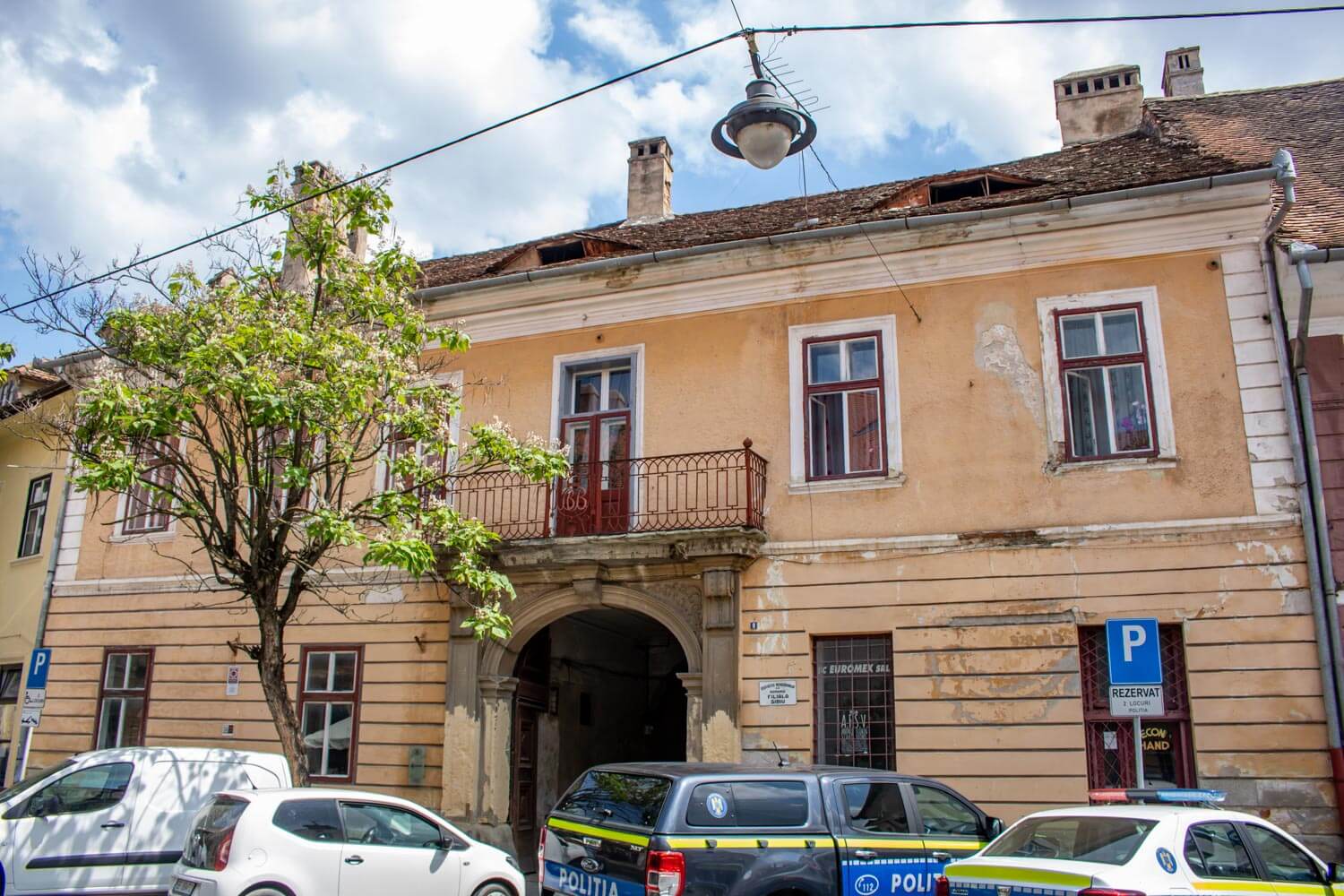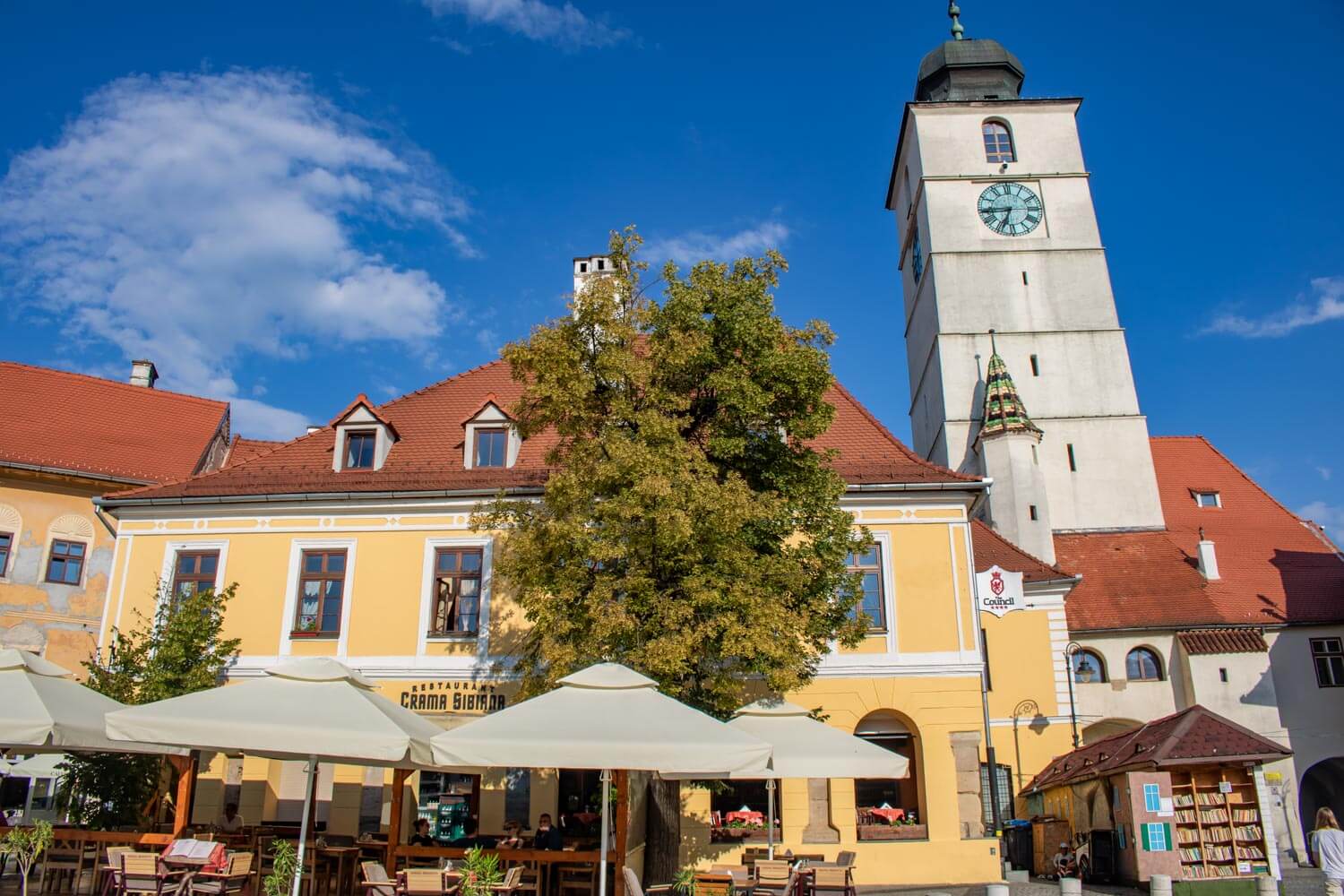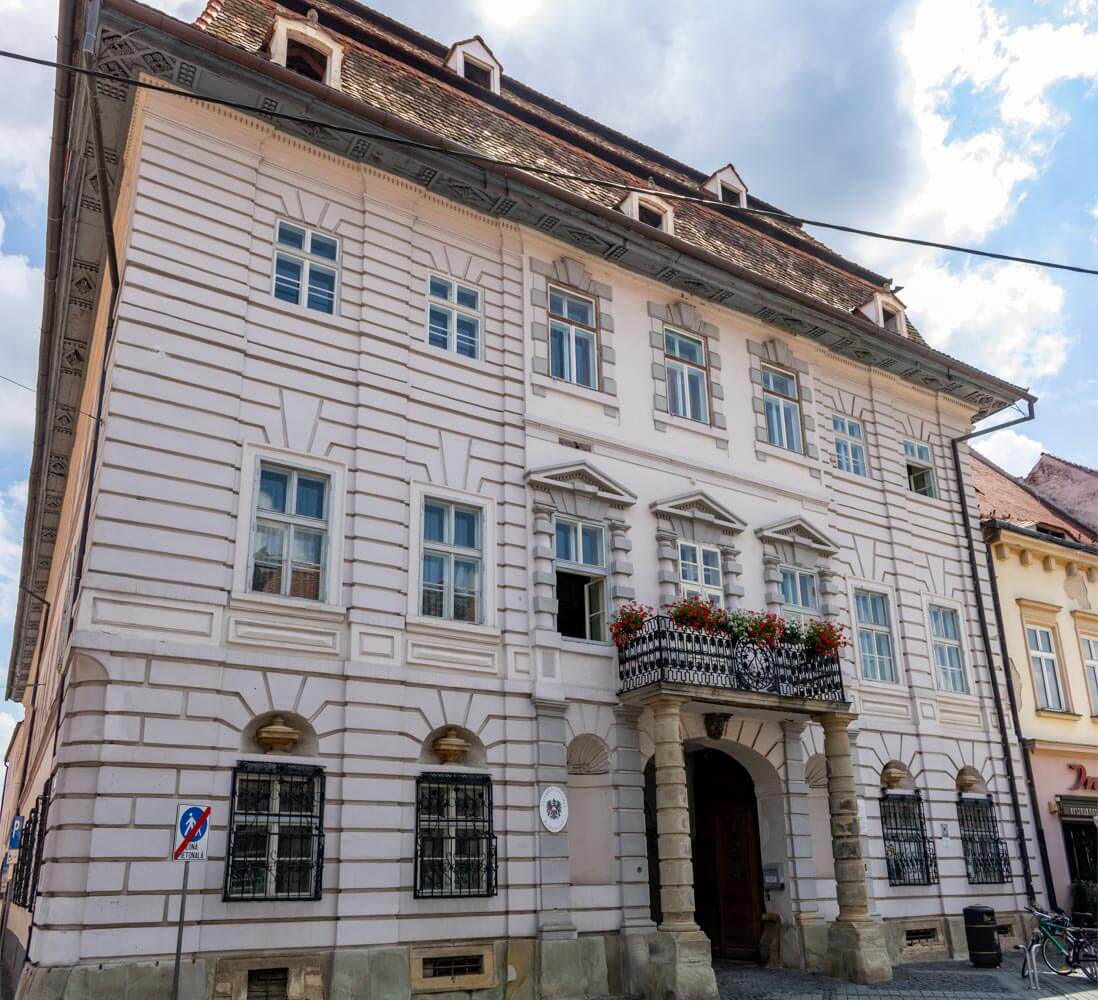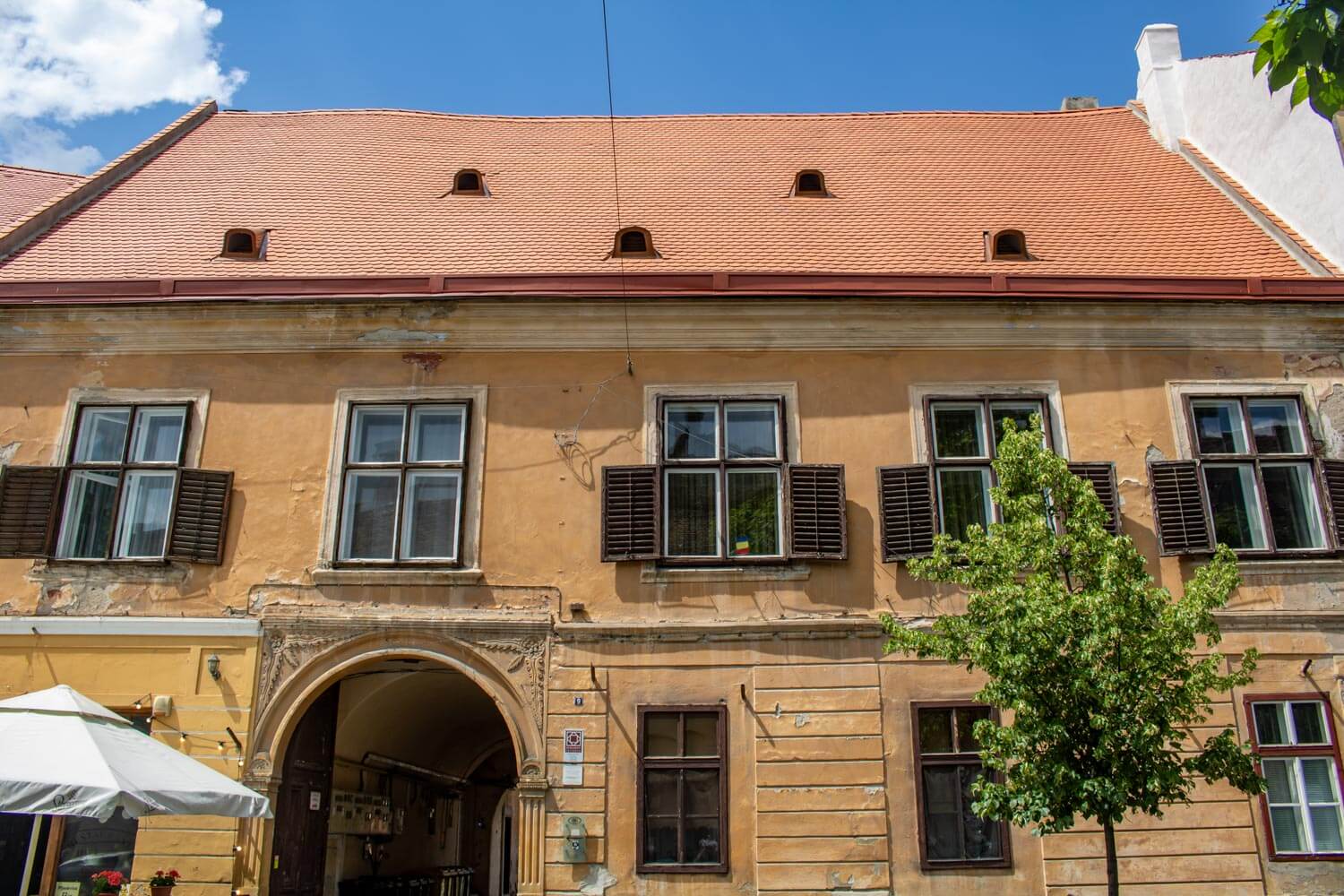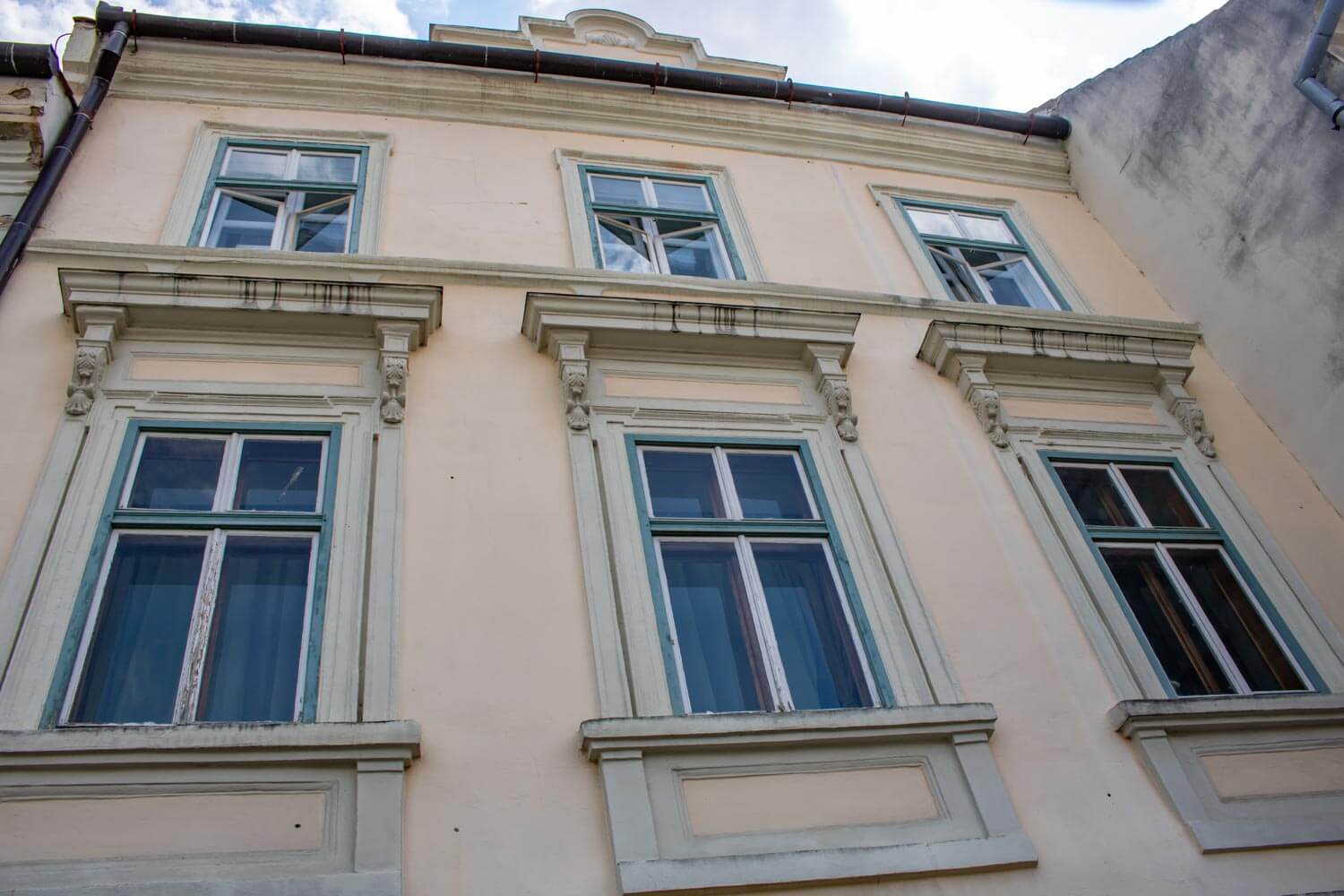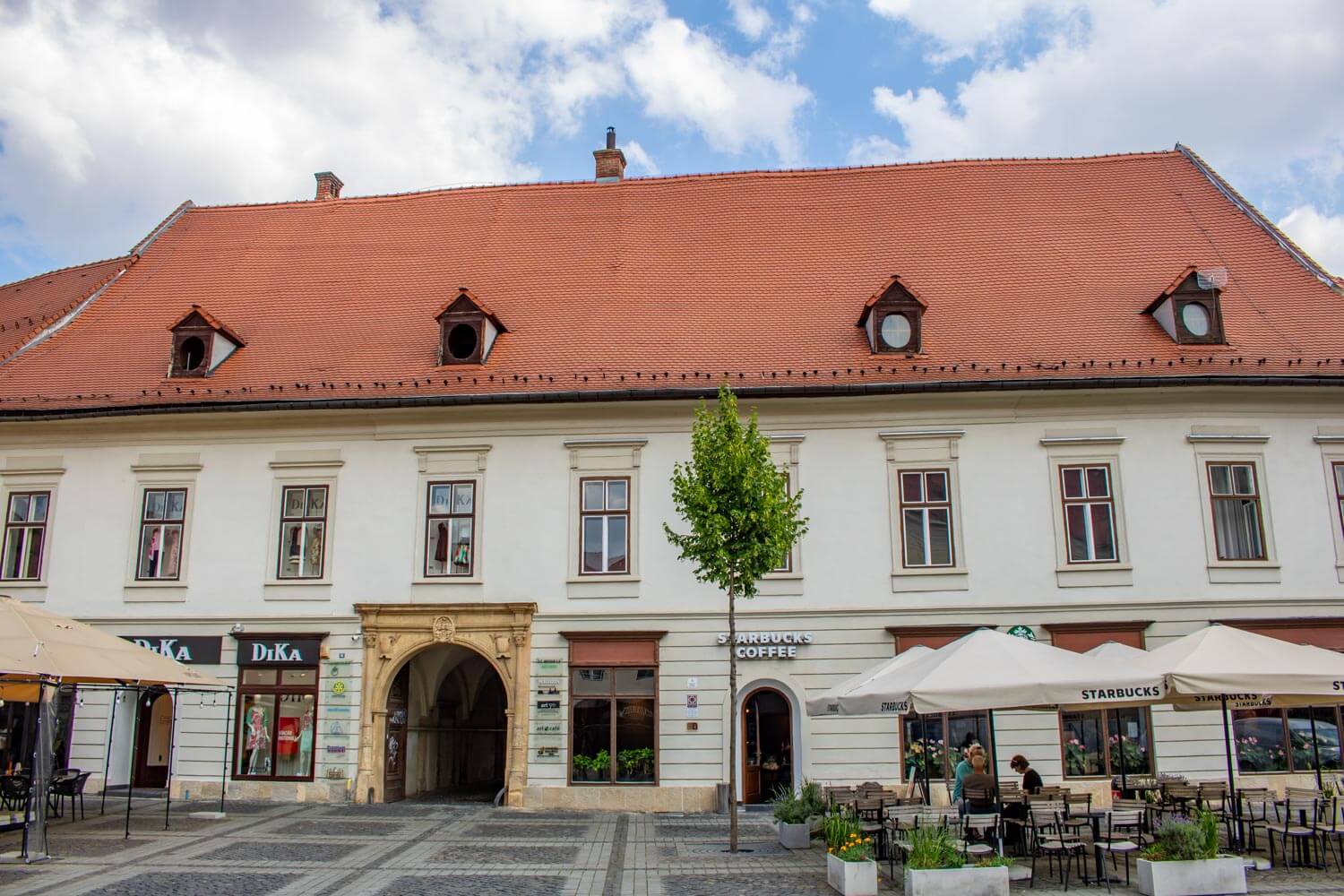
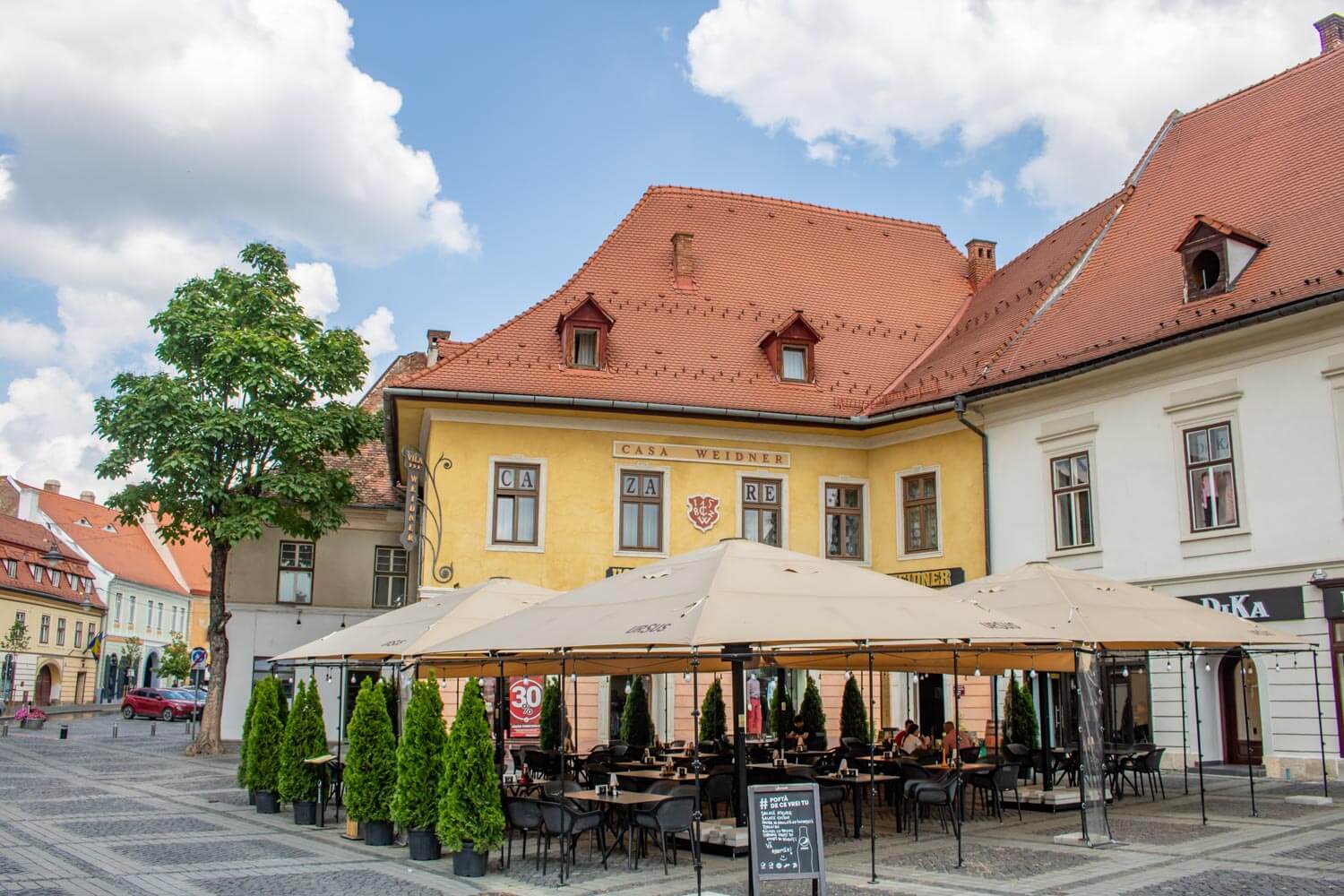
The Weidner-Reussner-Czekelius House (Casa Weidner-Reussner-Czekelius) is a historic townhouse on the Large Square in Sibiu, formed from several older buildings that developed separately before being joined into the present property. Its surviving architecture spans the 15th to 18th centuries, with later alterations in the 20th century.
The right-hand part of the house belonged to the Weidner family before passing to senator Johann Reussner Jr., while another section entered the ownership of the Czekelius family in the late 15th century. Their different phases are still visible in the decorative stonework. A carved doorway dated 1582 bears the initials associated with the Weidner family, while the main portal carries the coat of arms of Johann Reussner Jr., the date 1652 and the monogram of sculptor Elias Nicolai.
By the 19th century, the property still consisted of two separately numbered buildings, but these were later joined by additional construction and now form a single large house with two interior courtyards. The unified façade hides that more complicated history, while the rooms behind it preserve a mixture of cross vaults, barrel vaults, Baroque ceilings and other features from different periods.
One of the most intriguing discoveries came in 1902, when fragments of a late-16th-century wall painting depicting scenes from the Trojan War were uncovered in an upstairs ceremonial room. Although only fragments survived, they reveal the level of decoration once found inside the house and add an unusual classical theme to its Renaissance-era interiors.
Commercial use became increasingly important during the 19th century. J. B. Misselbacher opened one of Sibiu’s largest shops on the ground floor in 1865, and the retail spaces later expanded across much of the frontage. After World War II, major alterations created a continuous row of shop windows, and the ground floor operated as part of Sibiu’s state-run department store.