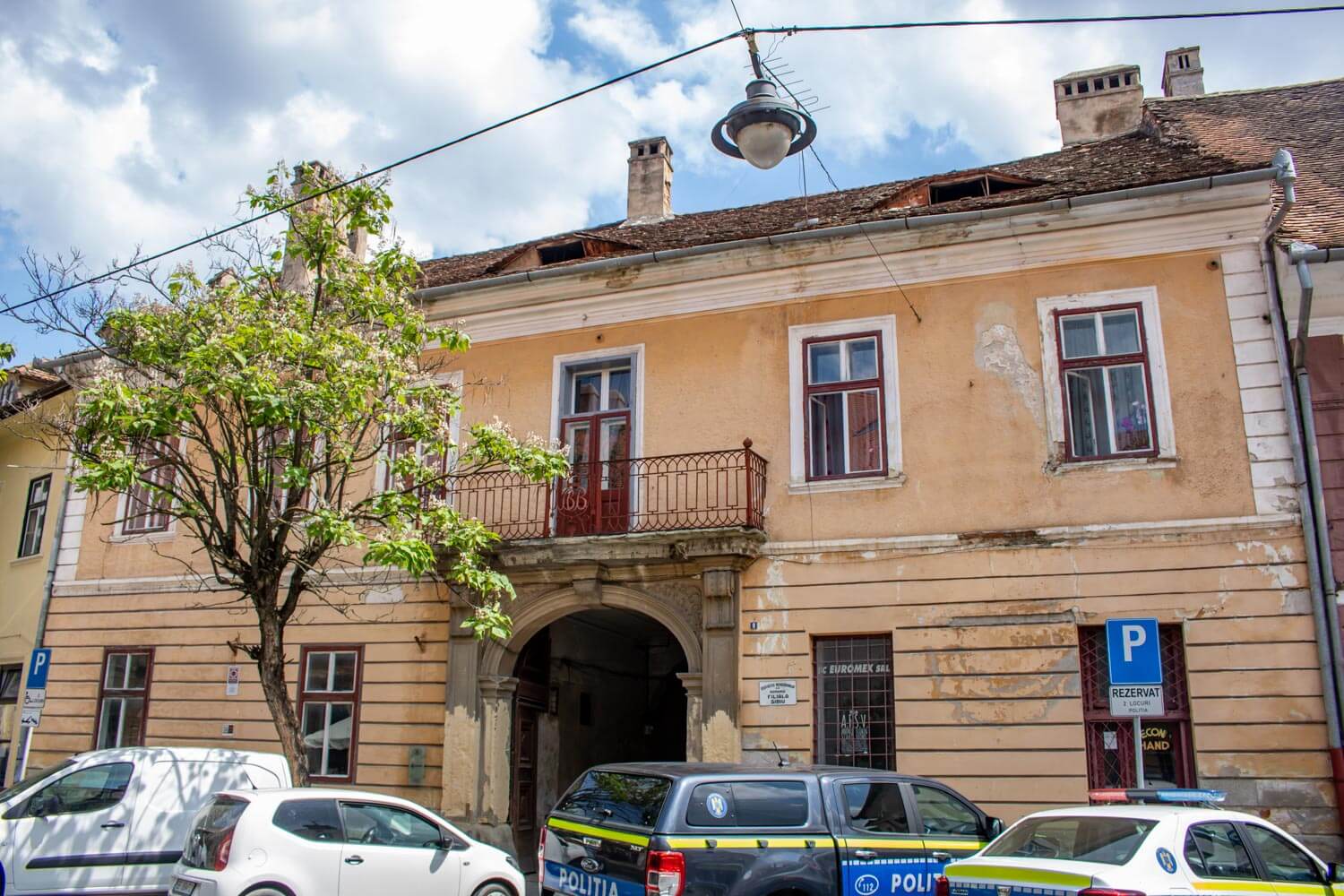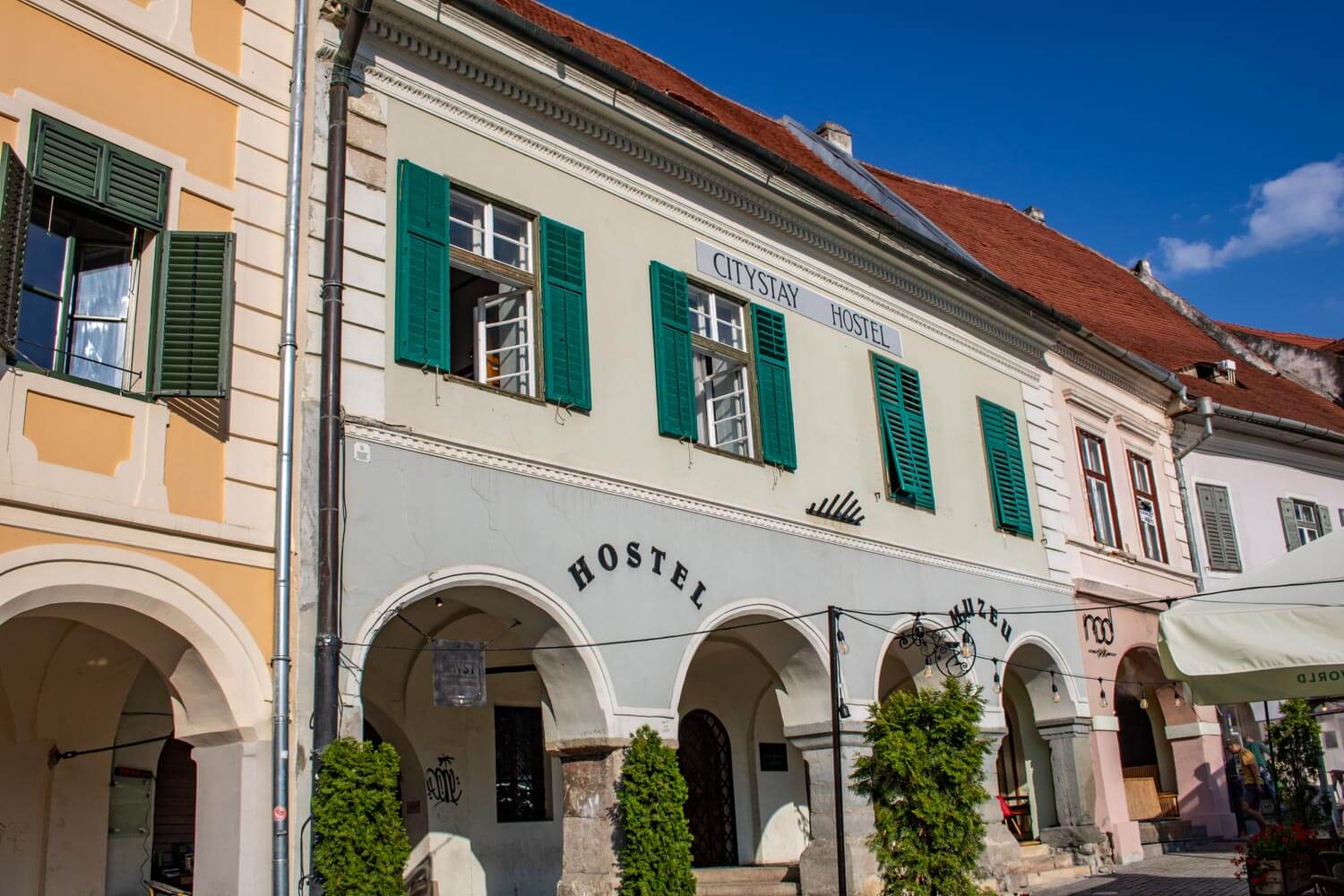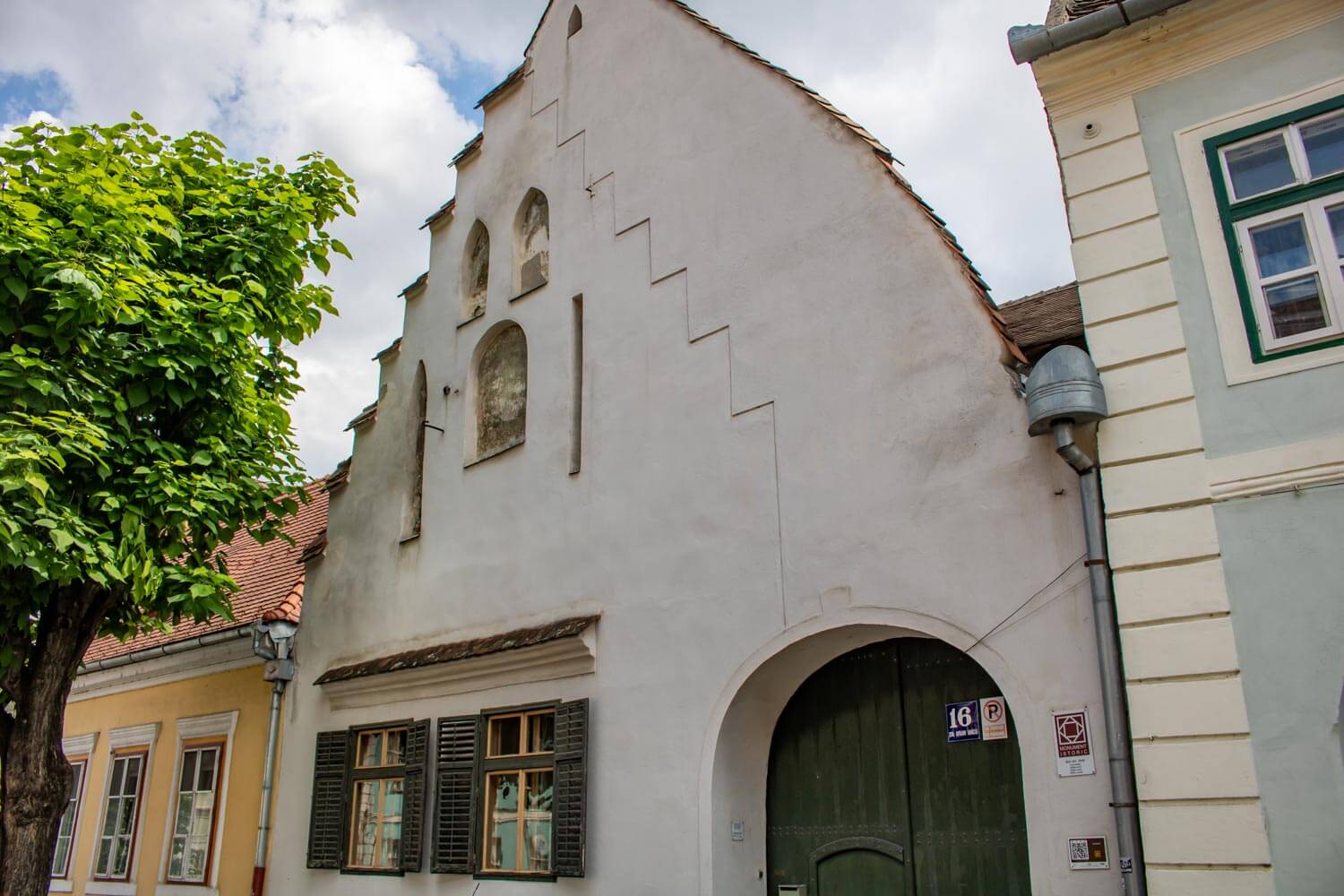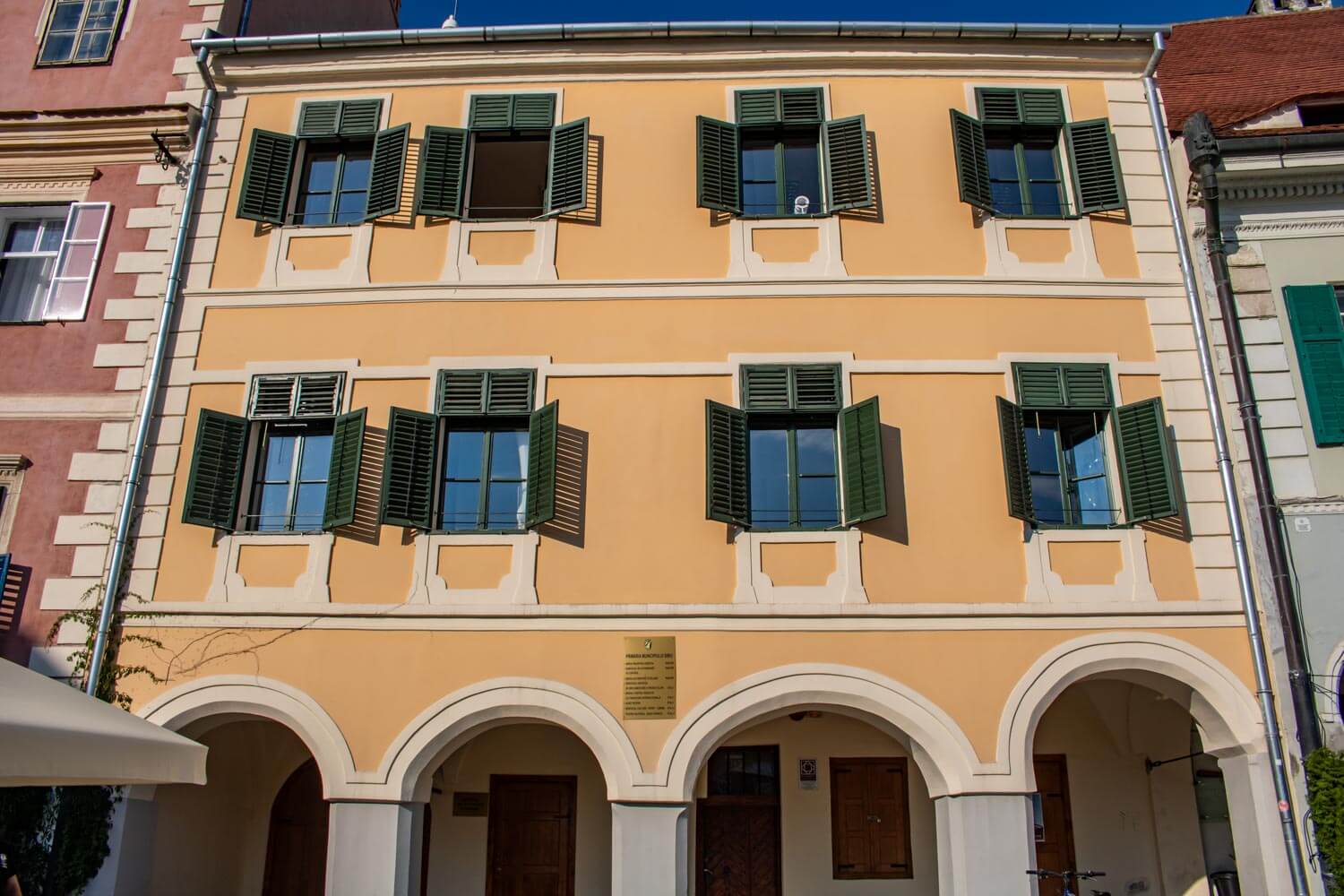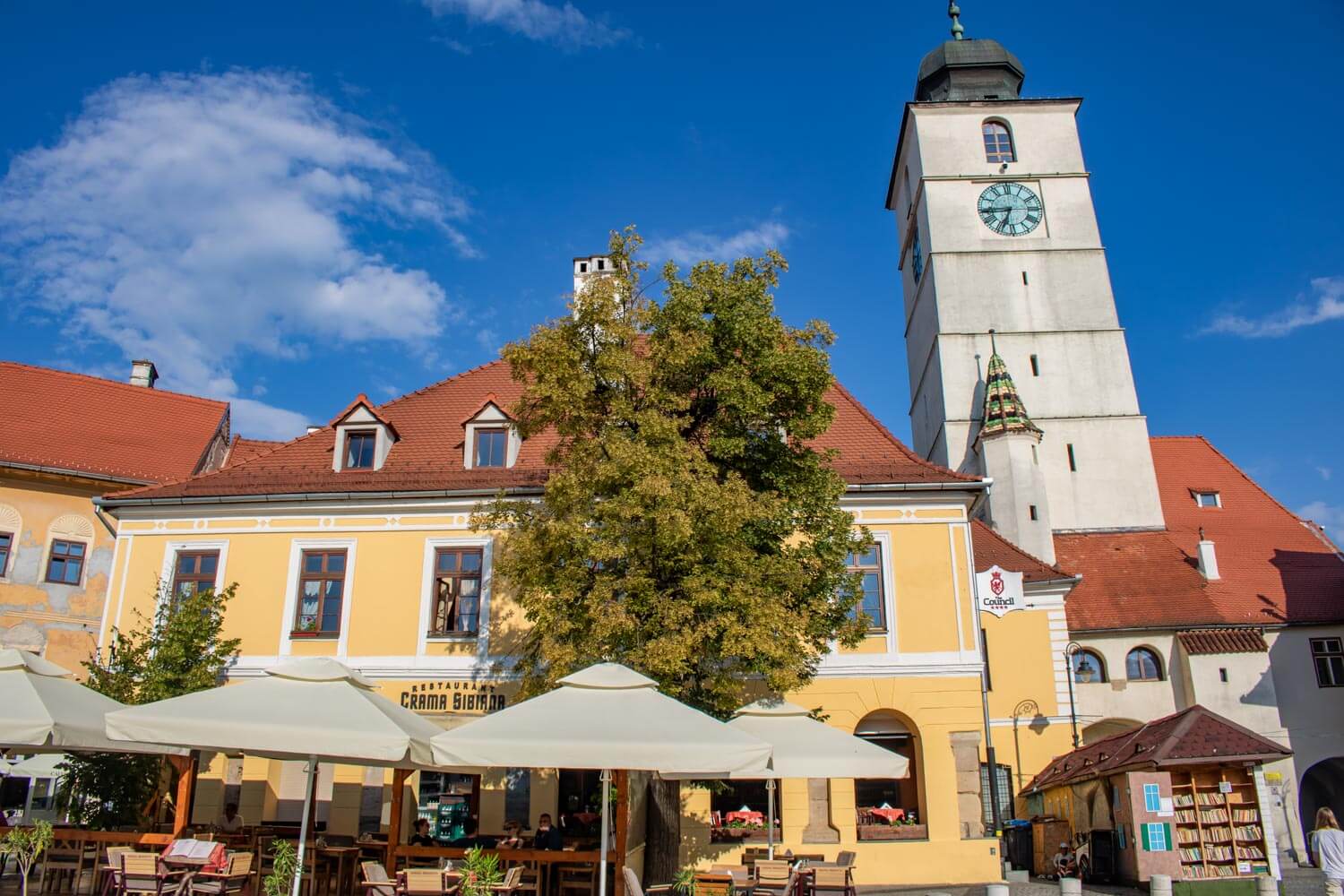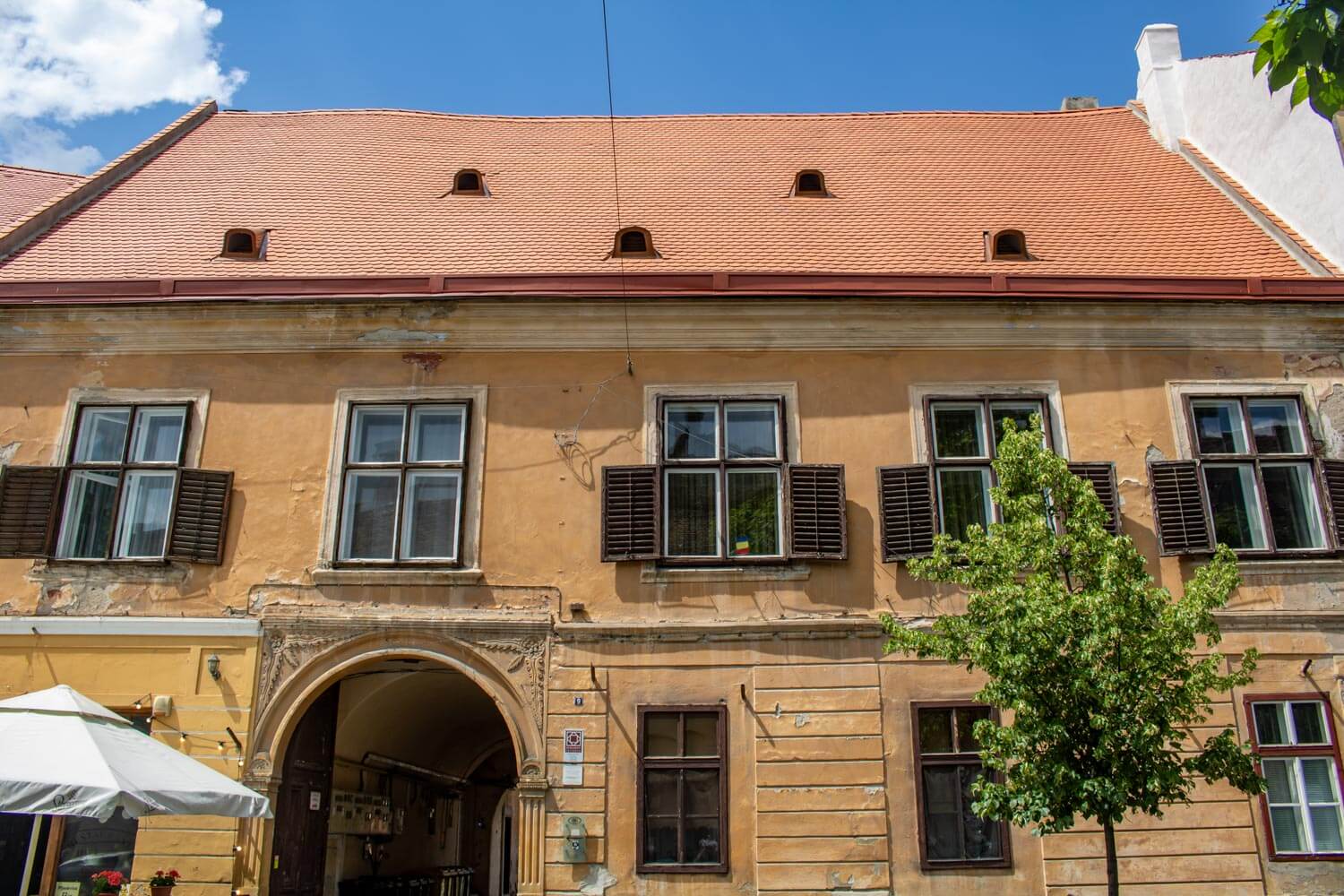
The Weidner House (Casa Weidner) is a late-15th-century historic house on Avram Iancu Street in the historic center of Sibiu. The building is arranged around a rectangular courtyard, with four wings extending from the street frontage toward the former medieval city wall.
The street-facing part of the house already existed by the end of the 15th century, and its vaulted cellars survive from this early phase. After a major fire swept through Sibiu in 1570, the property was rebuilt the following year, leaving one of its most distinctive historic details inside the entrance passage: a stone frame dated 1571 and marked with the initials J.W., referring to the Weidner family from whom the house takes its name. Before World War II, a German inscription could still be read above it: “Know much and say little; do not answer every question.”
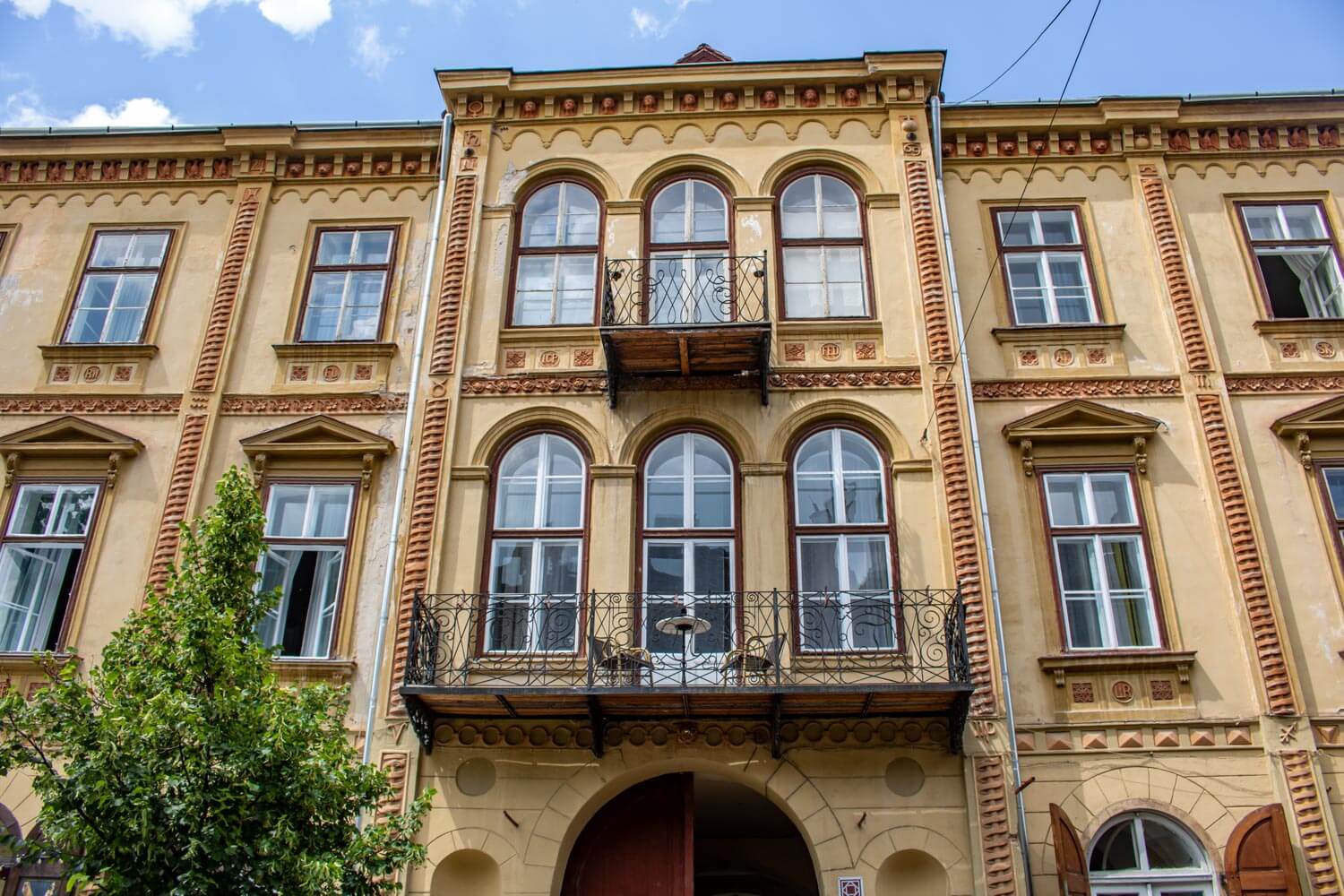
From Avram Iancu Street, the house has a relatively restrained five-bay upper façade beneath a high pitched roof, while the entrance preserves a more elaborate Renaissance stone portal with fluted pilasters and vegetal decoration. At the rear of the courtyard, one of the wings incorporates an octagonal 14th-century defensive tower from Sibiu’s third fortified enclosure. The tower was later adapted for residential use, making it an unusual surviving part of the medieval defenses within a domestic building.
New uses appeared during the 19th century, beginning with the Sibiu Law Academy, which moved here from Piața Mică in 1851. Later in the century the house was purchased by tribunal judge Ioan Bădilă, and commercial premises occupied parts of the ground floor. The Sibiu Electric Power Company kept its offices here from 1896 to 1902, while restaurants also operated in the building from the late 19th century onward. Ownership later passed to local councilor Ioan Moldovan, and during the interwar period the property belonged to the ASTRA Association. Restaurant use continued until nationalization.
The house also formed part of the childhood surroundings of Károly Kós, who lived here with his family between 1889 and 1893. Kós later became an important Hungarian architect and writer, and he recalled Sibiu’s medieval architecture as an influence on his later work. His family lived in the converted defensive tower at the rear of the property rather than in the street-facing part of the house.