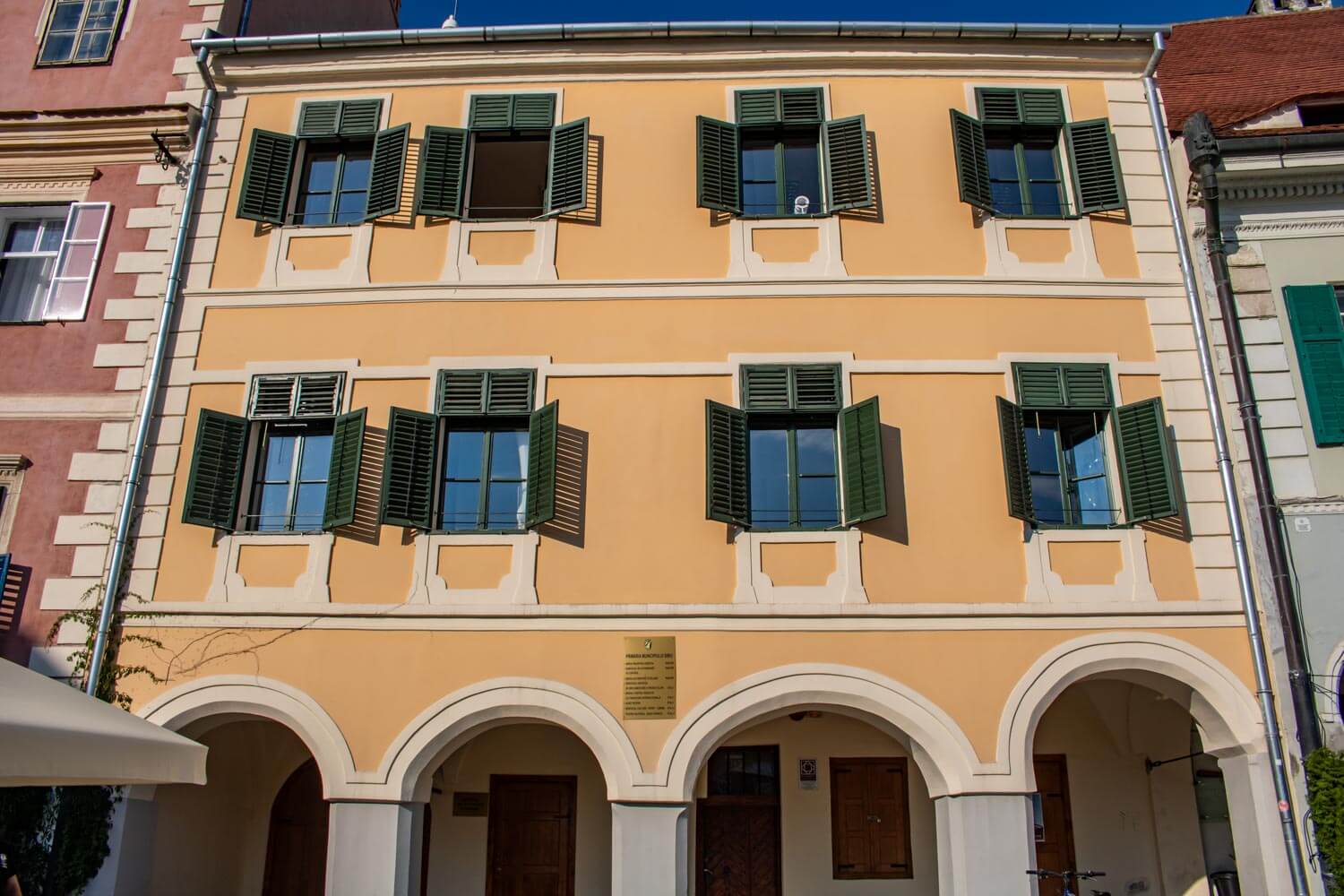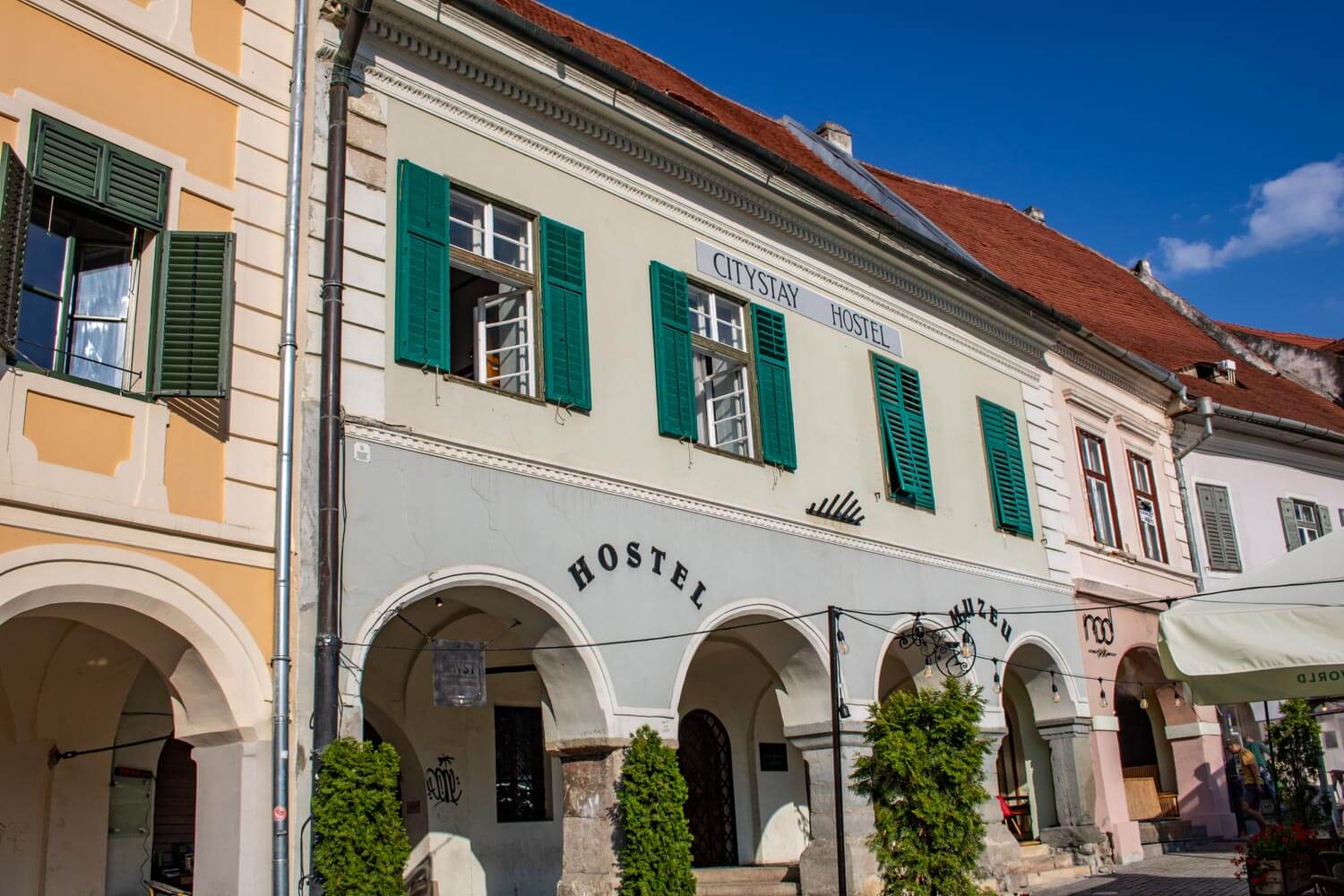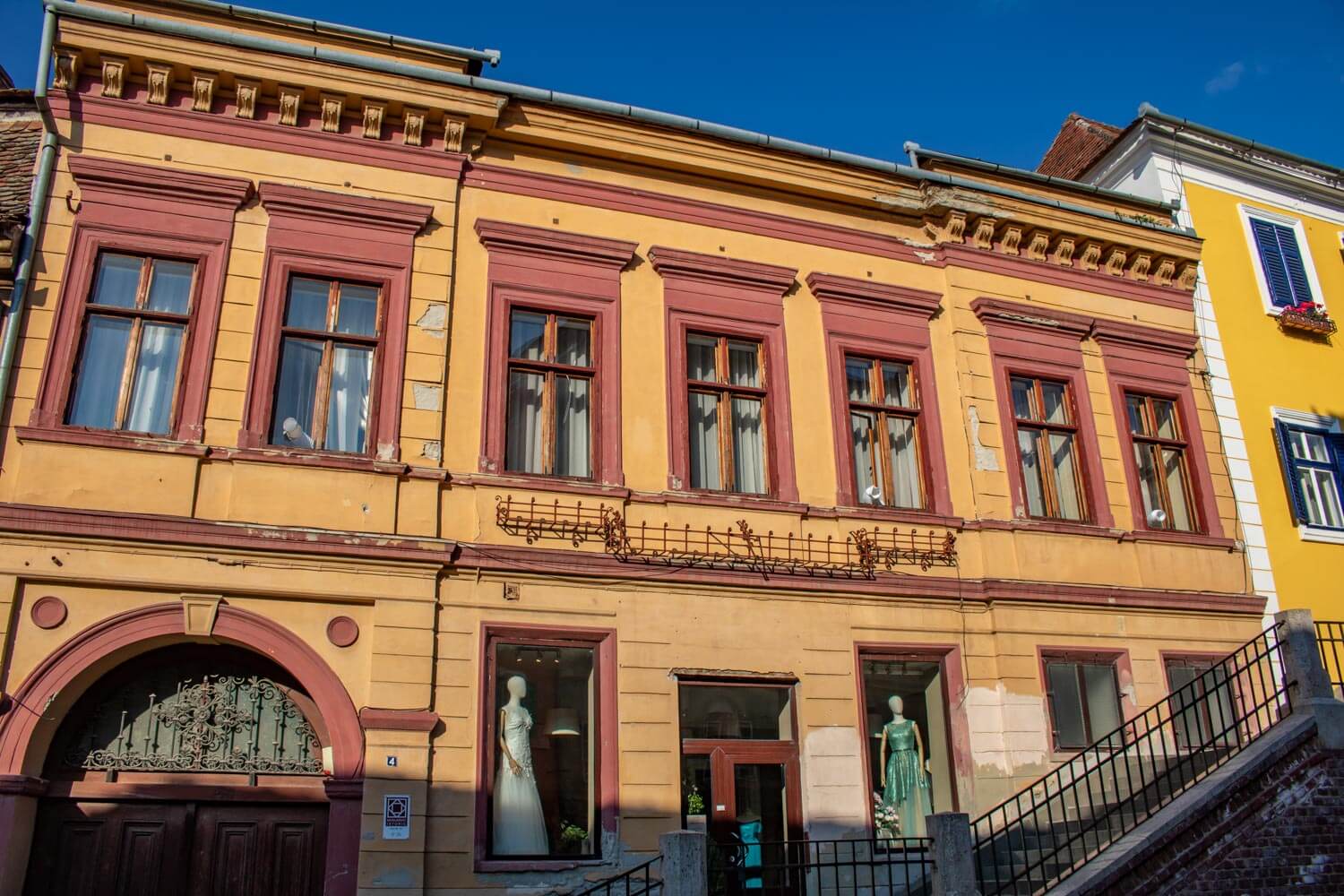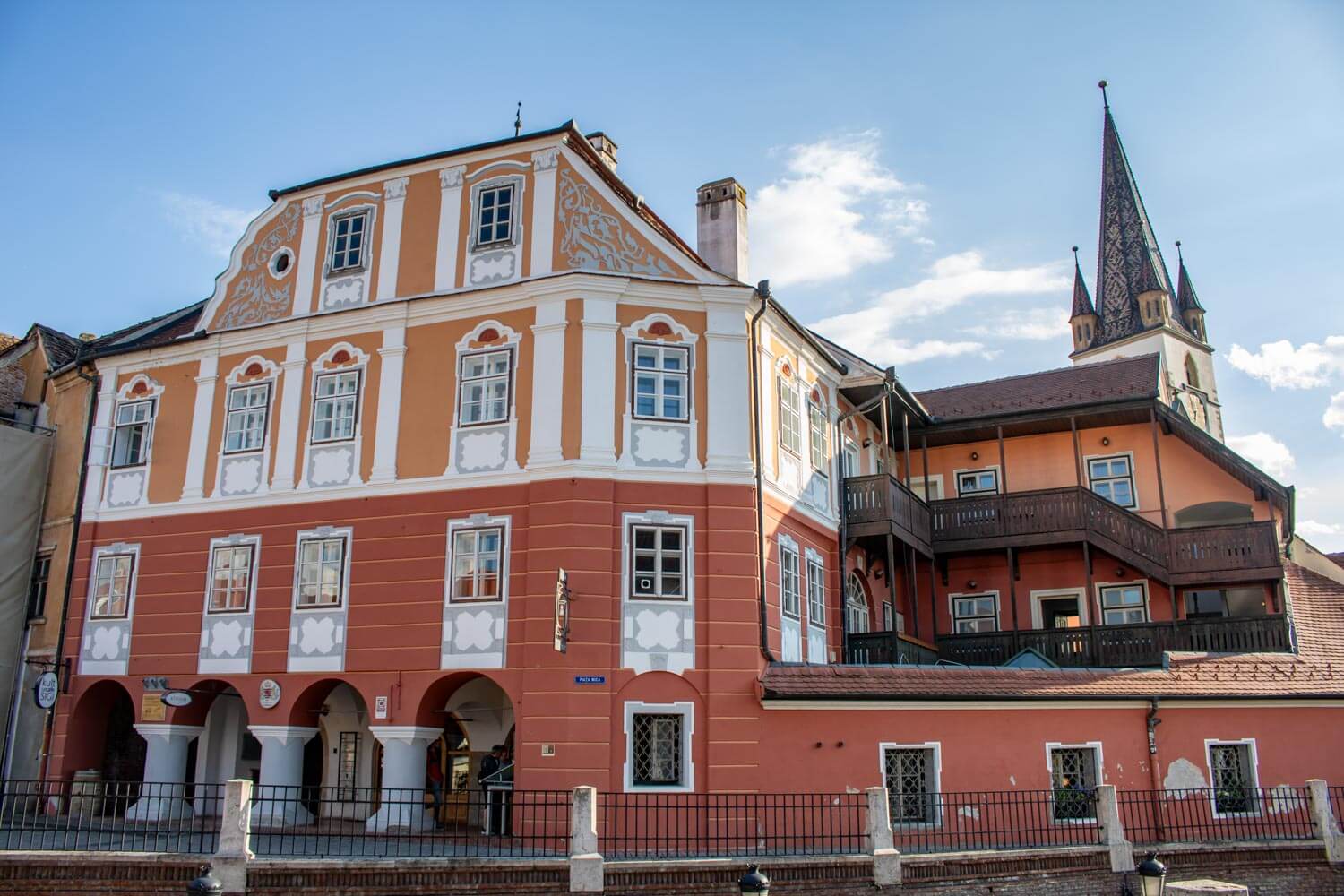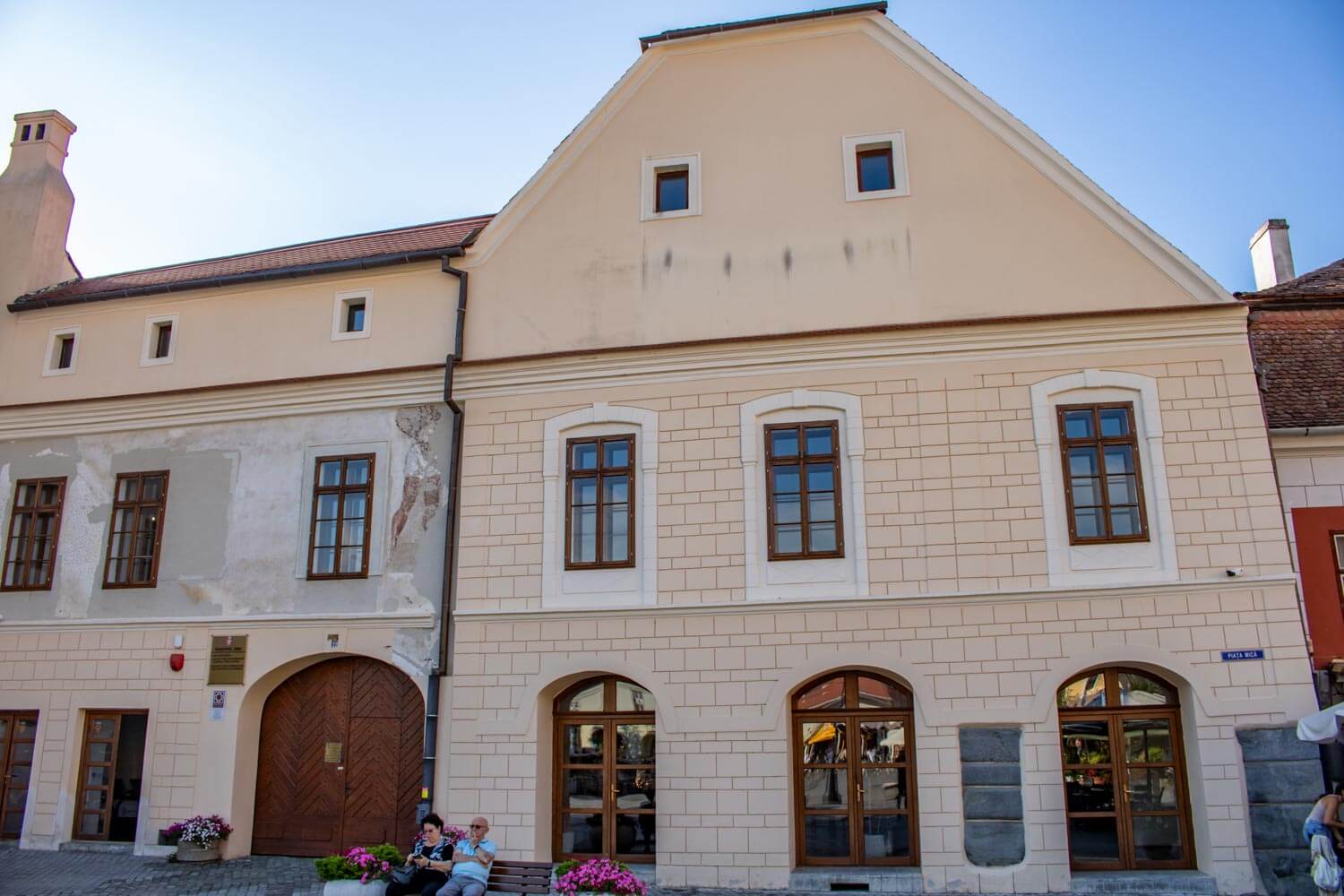
The Haupt House (Casa Haupt) is a historic townhouse on the Small Square in Sibiu, with origins in the 15th and 16th centuries. Although its street façade was altered considerably in later periods, the property still preserves medieval walls, vaulted interiors and an exceptional room of 17th-century secular paintings.
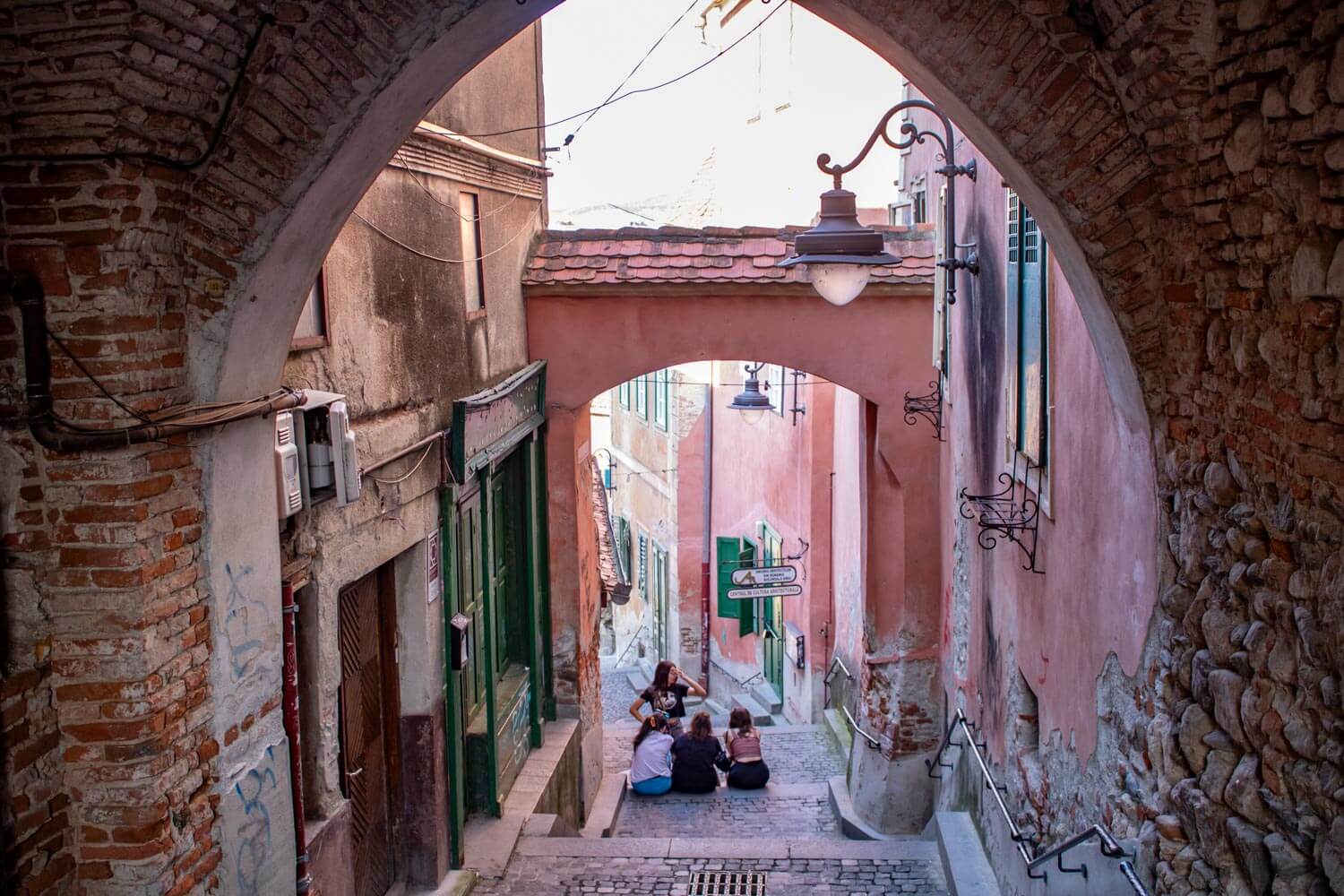
The house developed gradually around an inner courtyard, incorporating parts of Sibiu’s first and second fortified enclosures into its cellars and garden. Sections of the medieval defensive walls still cross the property, while later construction was fitted around them rather than removing them completely. An 18th-century passage and wooden staircase were inserted through one of these older walls, showing how the house continued to evolve within the medieval structure.
The most important surviving interior is a vaulted room on the ground floor decorated with wall paintings dated 1631. The scenes include a judgment, a biblical subject, an allegorical composition and a hunting scene, while a polychrome stucco coat of arms was added in 1694. Its presence points to a wealthy patrician household, although the identity of the owner responsible for the decoration has not been established with certainty. The paintings were rediscovered in 1957, when the room was being used as a greengrocer’s shop, and are considered among the earliest known 17th-century secular murals in Transylvania.
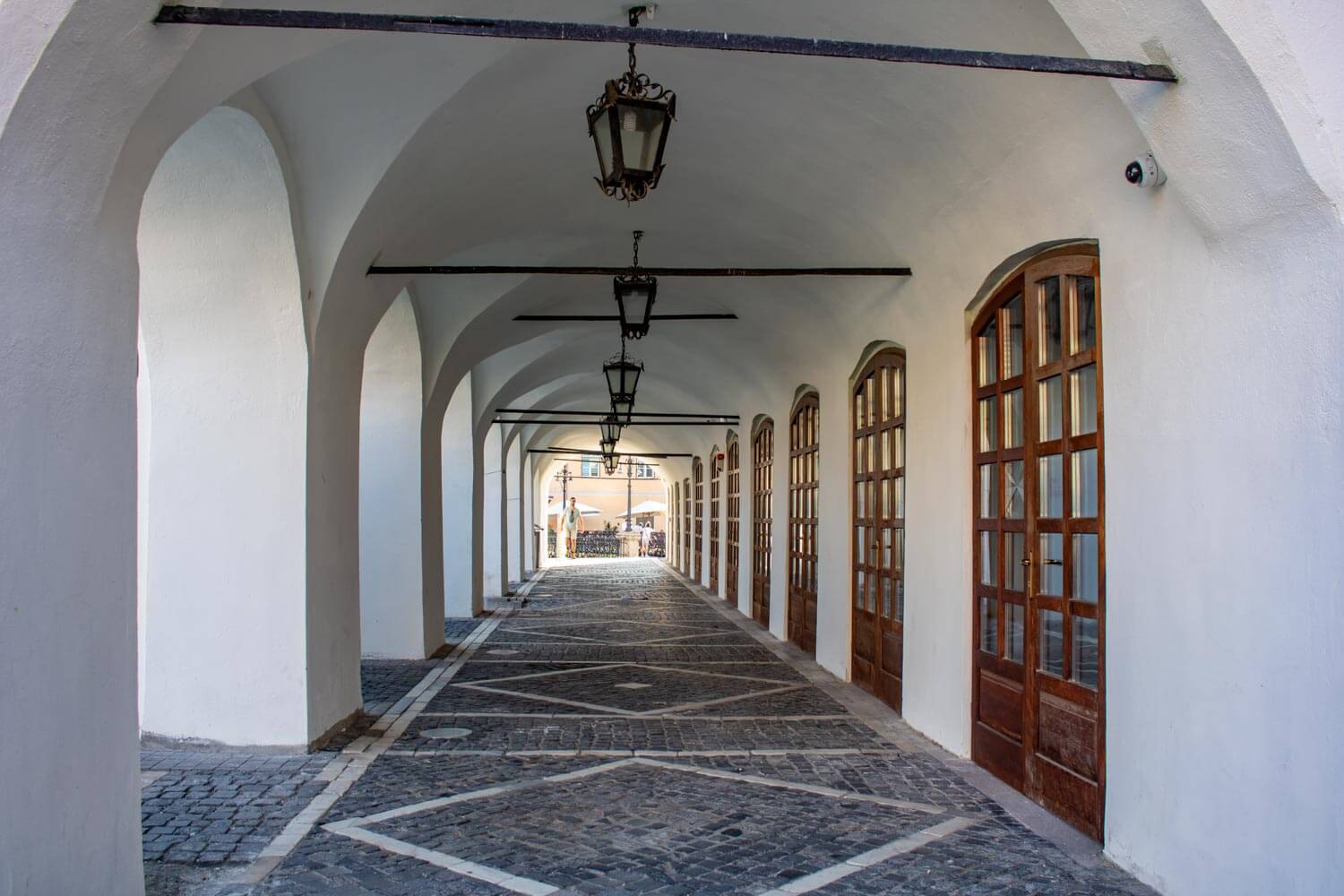
By the 19th century, the building had taken on a mixture of residential, military and commercial functions. Austrian military staff used it during the Revolution of 1848-1849, while shops later occupied much of the ground floor, including businesses selling household goods, paint and food. These changing uses gradually altered the frontage, and an open loggia facing the Small Square was eventually enclosed.
Restoration between 2017 and 2019 brought renewed attention to the older structure hidden behind the later façade. The surviving fortification walls, fresco room and Baroque additions make Haupt House a particularly layered example of how Sibiu’s medieval townhouses were repeatedly adapted without losing all traces of their earlier form.