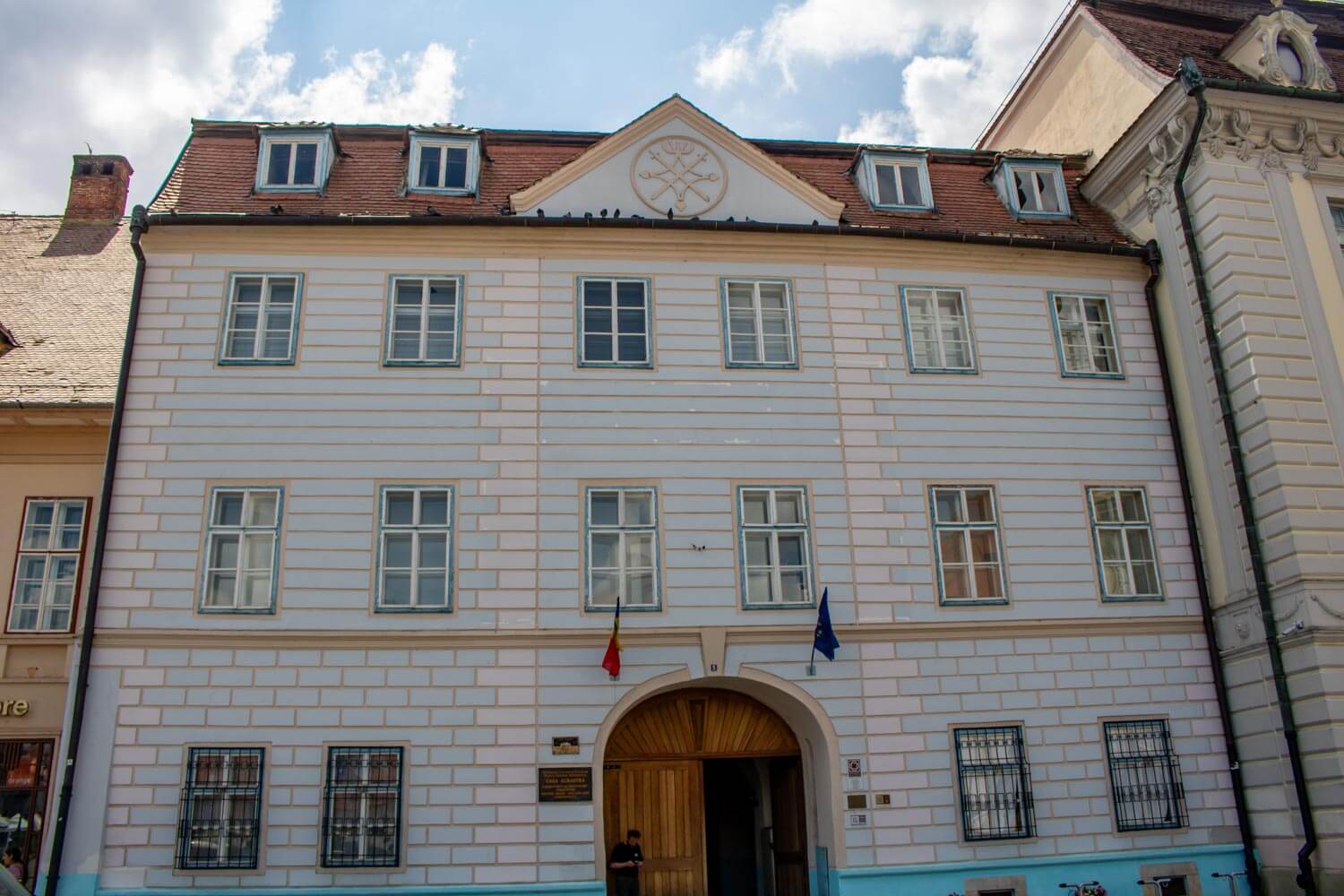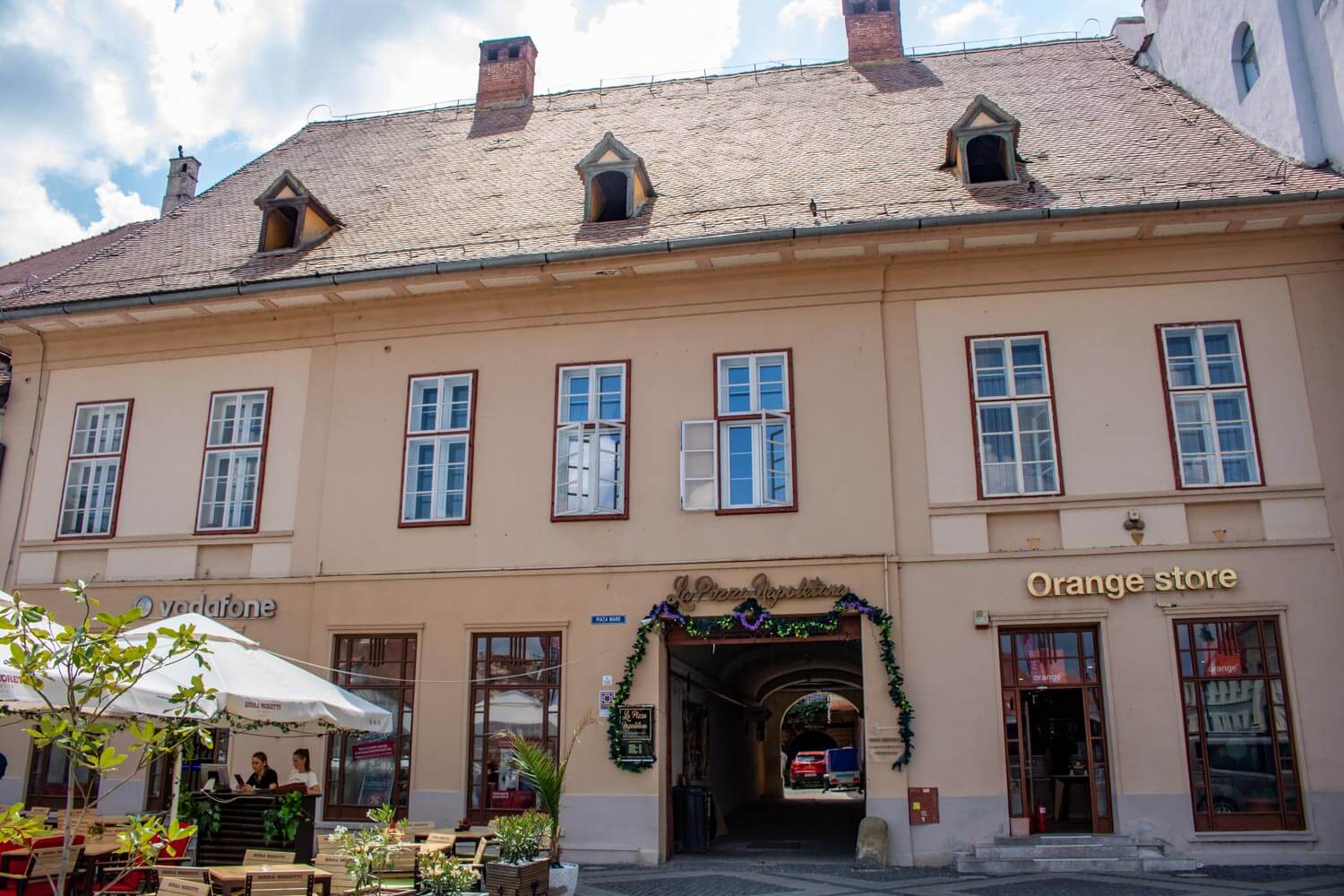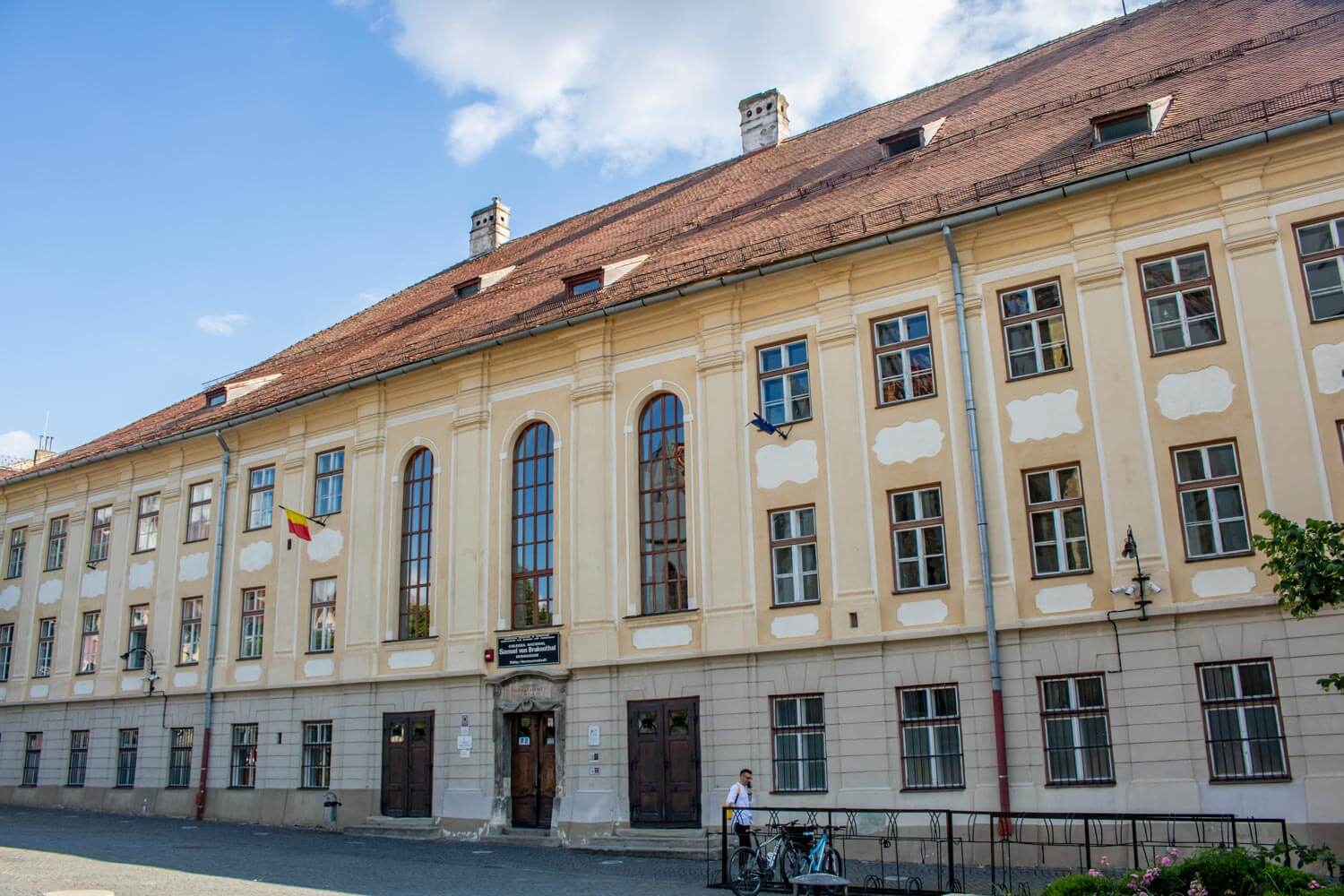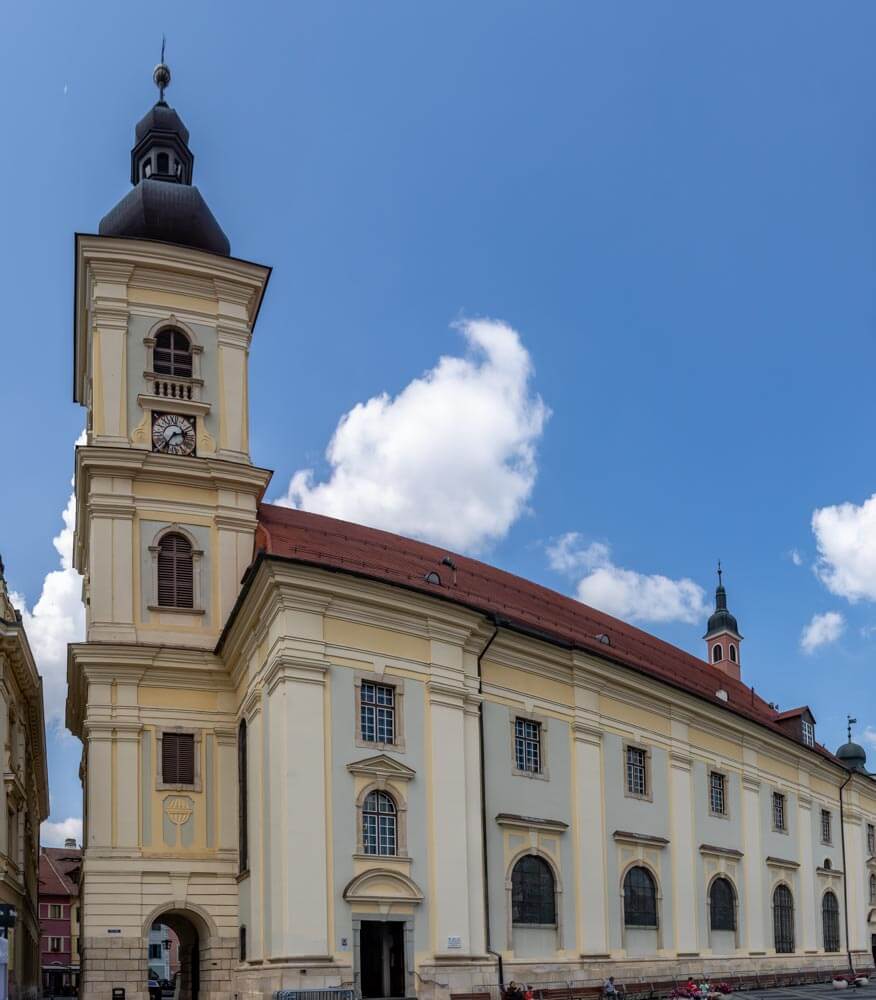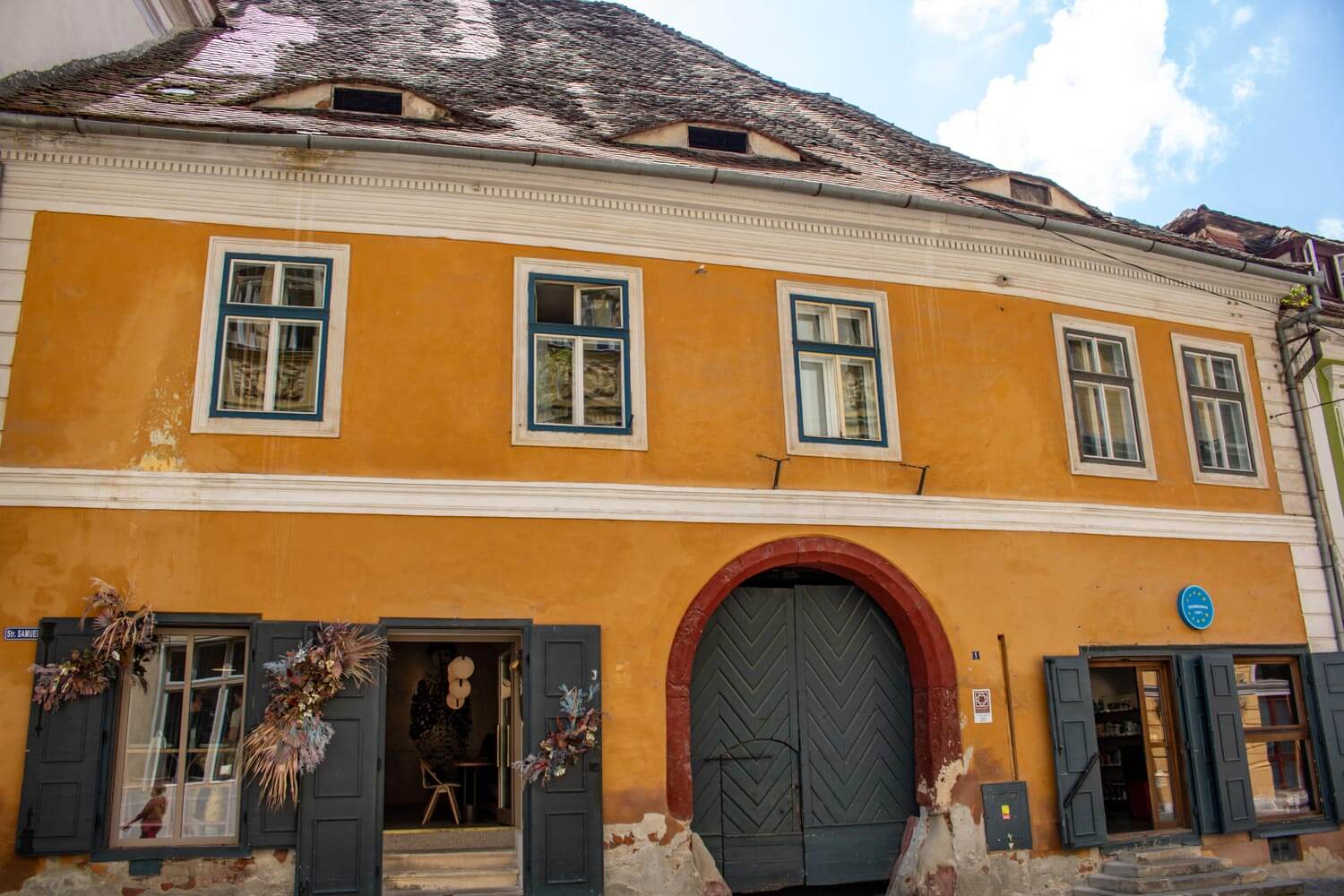
Mövert House (Casa Mövert) is a medieval townhouse in the historic center of Sibiu, immediately beside the Brukenthal Palace. Its oldest surviving parts date from the 15th century, although centuries of rebuilding have left the property with elements from the Gothic, Renaissance and Baroque periods.
The house developed gradually around two courtyards, with the street-facing wing preserving some of its earliest architecture. A semicircular Gothic stone portal opens into a passage paved with river stones and covered by cross vaults, while nearby stone doorframes show the transition from Gothic to Renaissance design. Other wings were added or rebuilt during the 16th and 18th centuries, giving the house the irregular arrangement that survives today.
The entrance passage preserves one of the house’s most striking historical details: a polychrome stone coat of arms belonging to Gabriel Báthory, prince of Transylvania, who seized control of Sibiu in 1610 and ruled the city for the next three years. His occupation also lies behind one of the darker stories attached to the house. Johanna Balk, the daughter of Sibiu official Daniel Melmer and wife of pharmacist Wilhelm Balk, is said to have lived here and to have taken her own life rather than submit to Báthory during his rule of the city.
By 1795 the property belonged to the Reissenberger family, whose name appears on one of the courtyard wings and again in an 1845 renovation inscription. The family retained the house until nationalization, while the ground floor increasingly took on commercial uses. Friedrich Connerth opened a hat shop here in 1884, followed by textile and fashion businesses, and in 1940 Scandia Română opened the Visarion Roman meat and delicatessen shop, described at the time as one of Sibiu’s most modern food stores because of its refrigeration and sanitary installations.