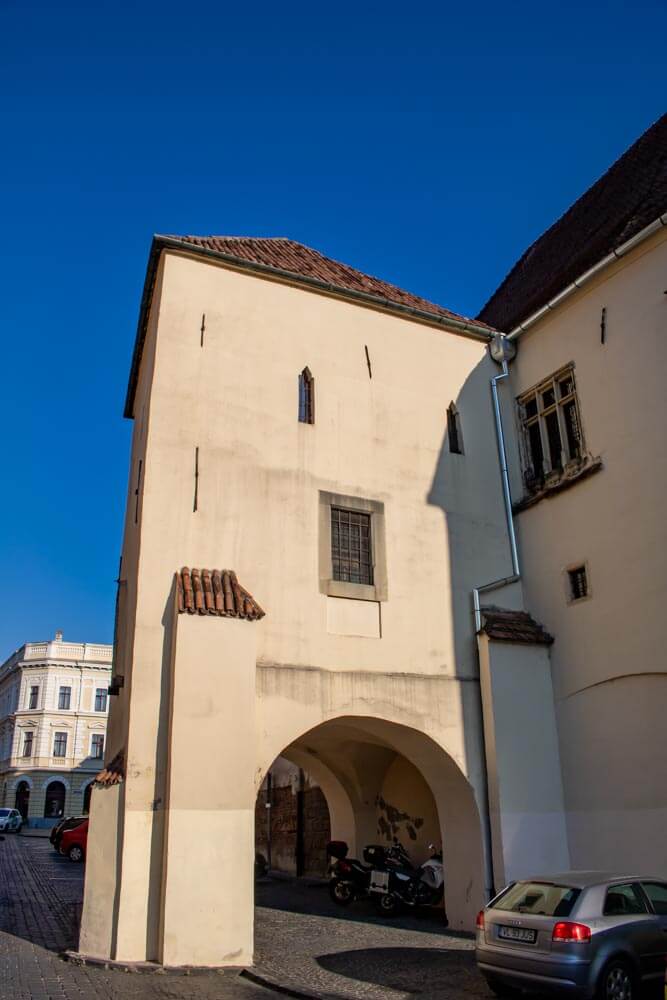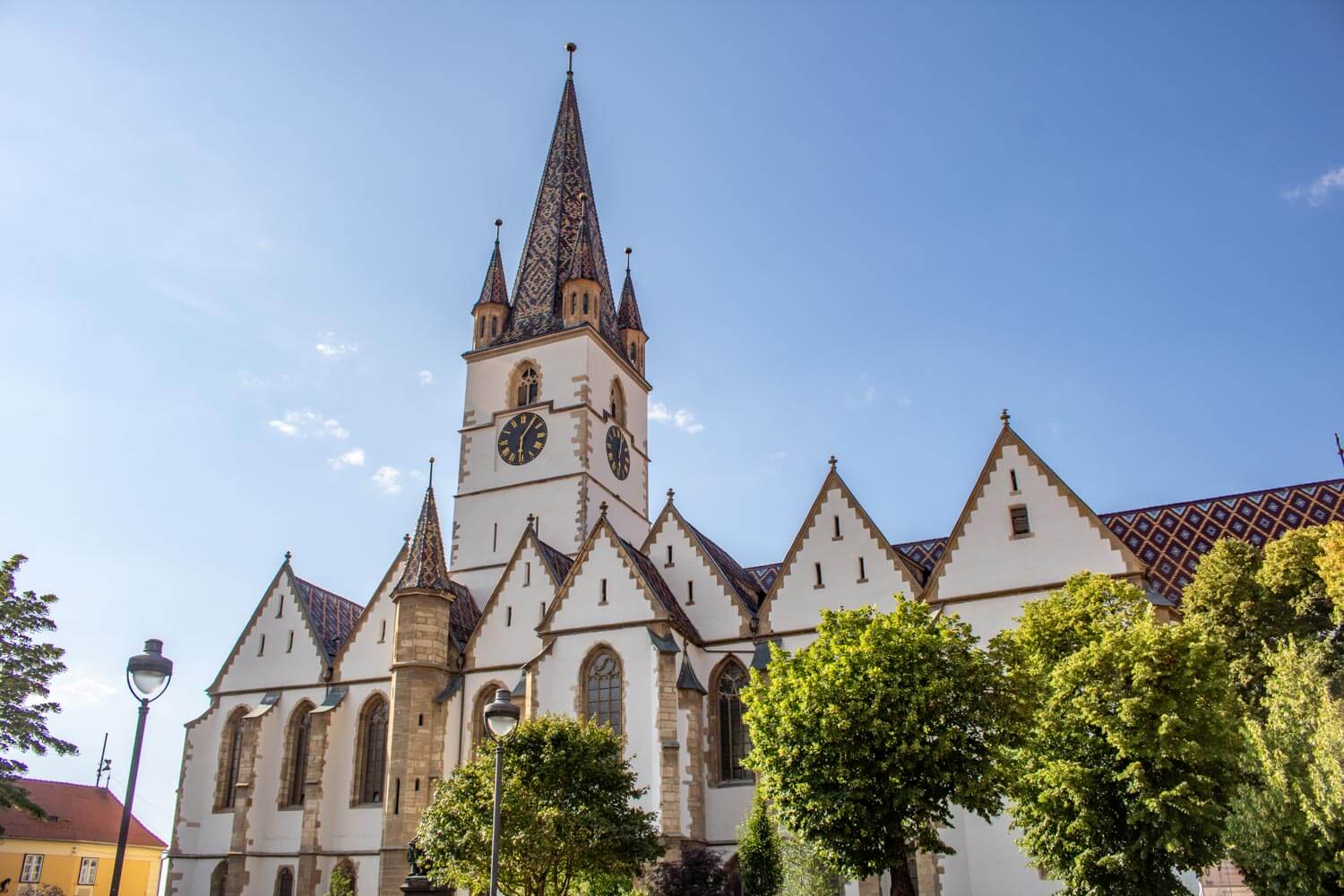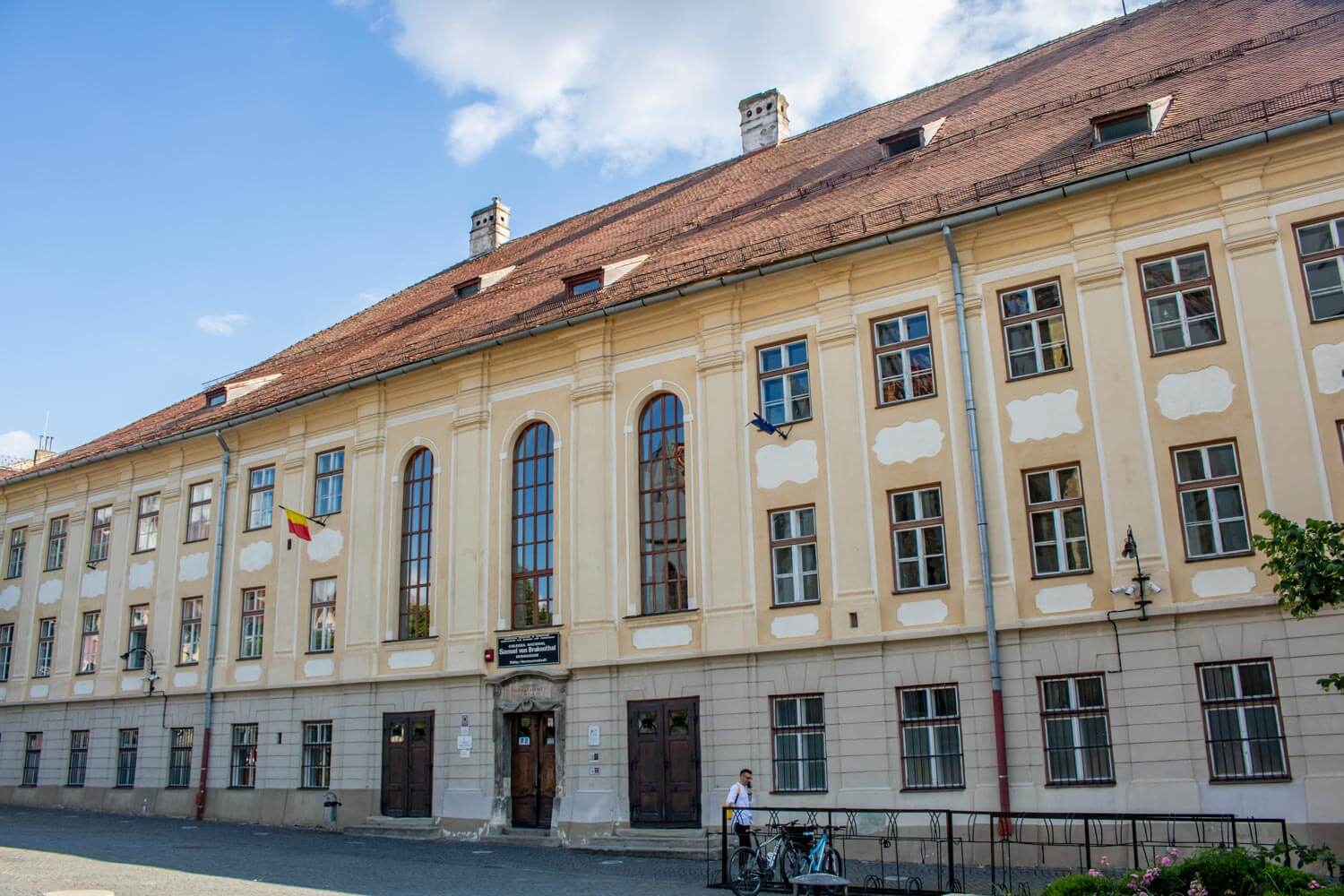
The Samuel von Brukenthal National College (Colegiul Național Samuel von Brukenthal) is a historic German-language school on Albert Huet Square in Sibiu, occupying a Baroque building completed in the late 18th century on the site of a much older medieval school. Education has taken place here since at least 1380, making it one of the oldest continuously documented school sites in Romania.
The medieval school was rebuilt several times as the institution developed, with a new building erected in 1545 and the school becoming a gymnasium in 1555. From 1578 it operated as a Gymnasium Academicum, reflecting its growing importance within the Transylvanian Saxon community. By the 18th century it had become one of the leading Saxon schools in Transylvania, serving a city that had also become the political center of the Saxons.
The present building was constructed between 1779 and 1781 by master builder Franz Burger, with finishing work continuing until 1786. Parts of the earlier school were retained in the basement and ground floor, where medieval and cross vaults still survive. The new Baroque school was arranged over three levels around a central entrance, with classrooms opening from long corridors and a large ceremonial hall rising through two floors.
Inside, the monumental staircase and ceremonial spaces preserve some of the finest details of the 18th-century school. The stone entrance portal carries a Latin inscription dedicated to education and virtue, while the central hall includes another inscription welcoming the patrons of learning. The assembly hall is decorated with stucco and wooden galleries, and the ground-floor corridor retains its natural-stone paving and barrel vaults.
Samuel von Brukenthal himself had studied at the school before becoming governor of Transylvania, and his later support helped secure its future. In his 1802 testament he left a substantial part of his estate to the school and the Evangelical Church, and in 1921 the institution received the name Brukenthalgymnasium in his memory. The school also educated many other notable figures from Sibiu and Transylvania over the centuries, including Stephan Ludwig Roth, Eduard Albert Bielz, Friedrich Krasser, Emil Sigerus and Oskar Pastior.
The building itself also witnessed several unusual episodes outside normal school life. Emperor Joseph II visited in 1783, the formal opening ceremony of the Brukenthal Museum was held in the assembly hall in 1817, and the Red Army used the school as a military hospital between 1944 and 1946. After several reorganizations during the communist period, the school continued as a German-language institution and received its present title, Samuel von Brukenthal National College, in 2001.