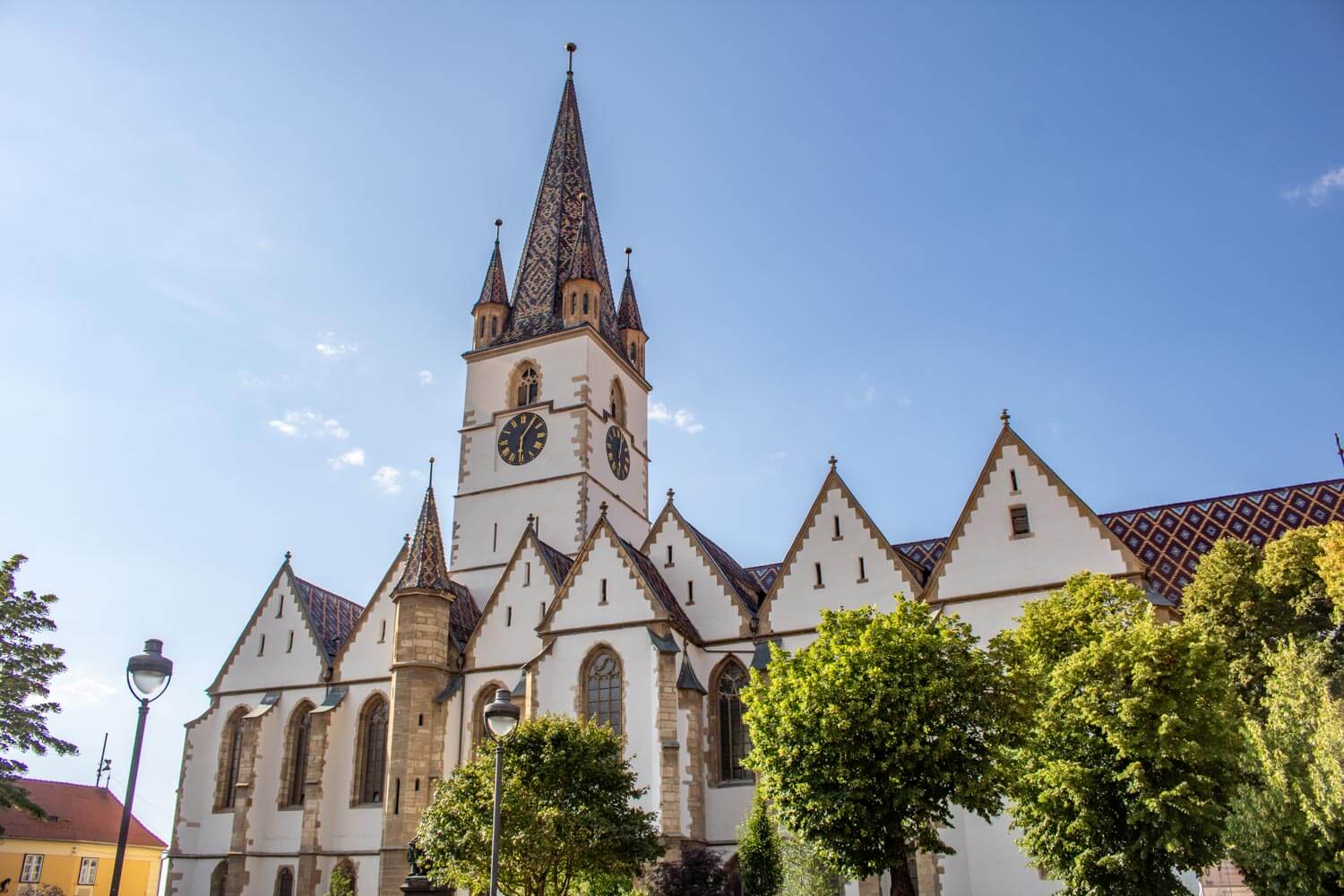
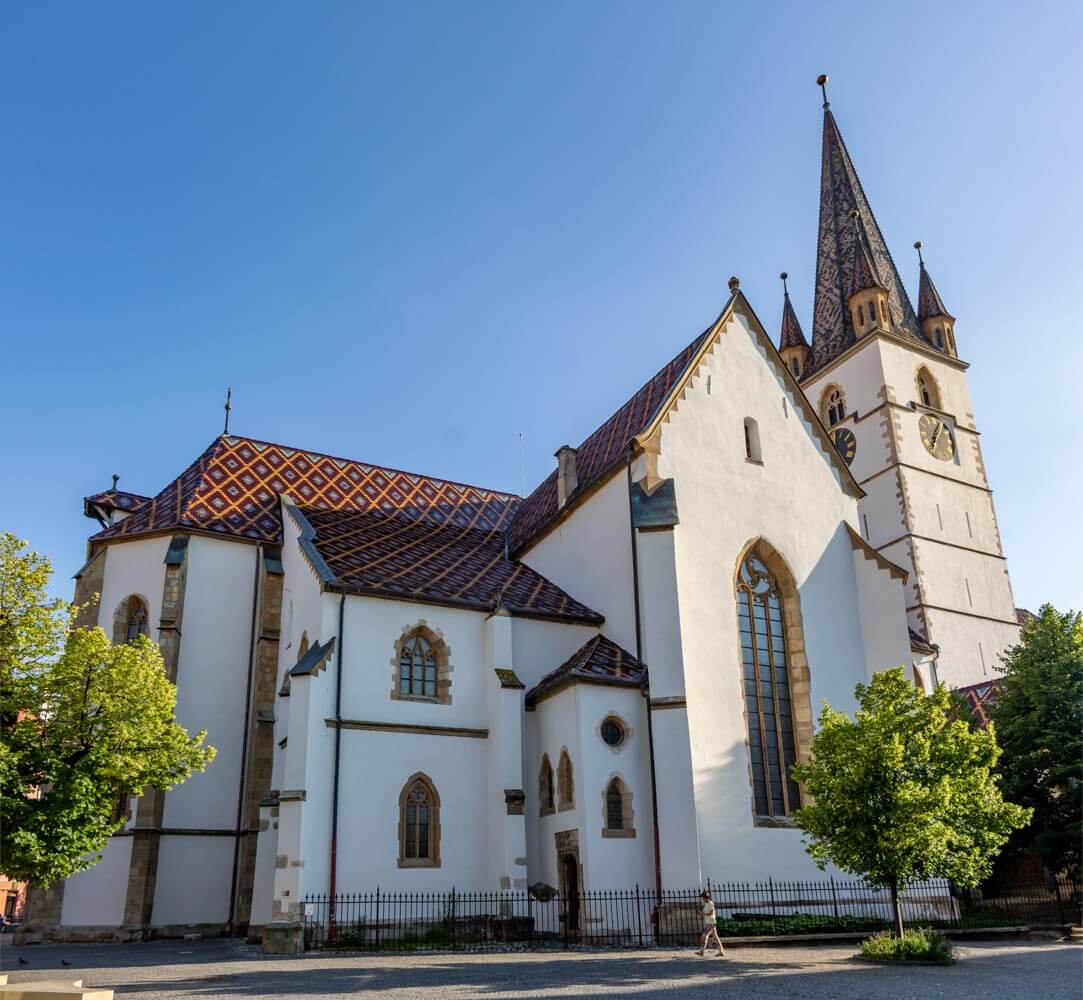
The Saint Mary Evangelical Cathedral (Catedrala Evanghelică Sfânta Maria) is the great Gothic church of Sibiu’s historic center, rising above Albert Huet Square with a 73.34-meter bell tower that dominates the skyline of the old city. Built gradually between the 14th and early 16th centuries on the site of an earlier Romanesque basilica, it became the principal church of Sibiu’s Transylvanian Saxon community and one of the most important Gothic monuments in Transylvania.
History And Architecture
A church already stood here by the 12th century, when Sibiu was developing around the earliest fortified settlement on the hill. As the town grew, the Romanesque basilica became too small, and construction of a much larger Gothic church began during the 14th century. Rather than being completed in a single campaign, the building expanded over several generations as the choir, nave, side aisles, western Ferula and tower were successively enlarged and rebuilt. The tower gained additional levels during the late 15th century, while the southern entrance and stair tower were added around the beginning of the 16th century, bringing the long medieval building campaign to an end around 1520.
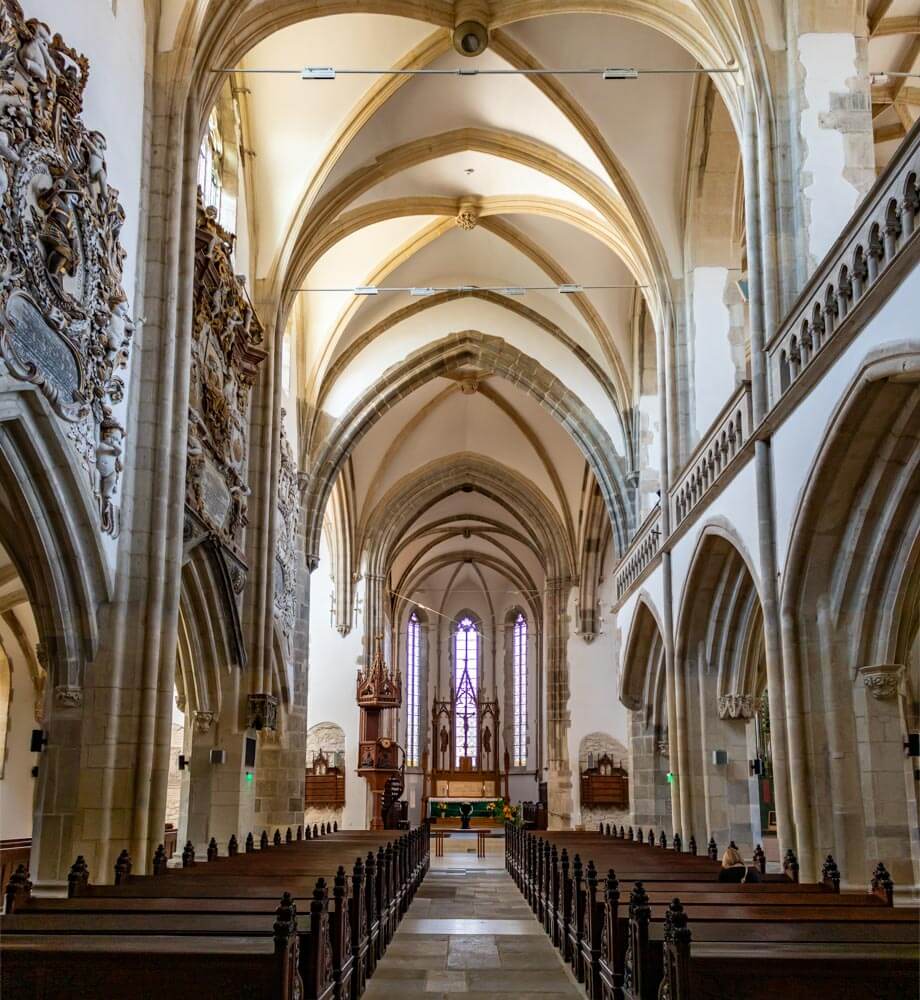
The church was originally Roman Catholic and dedicated to Saint Mary, but Sibiu became one of the leading centers of the Lutheran Reformation among the Transylvanian Saxons during the 16th century. By 1545, the city and its Saxon community had formally adopted Lutheranism, and the former Catholic parish church became the Evangelical church it remains today. Many medieval features survived the change, so the interior still combines Catholic-period art with later Lutheran furnishings and memorials.
The exterior is dominated by the seven-level tower and its four small corner turrets. These corner turrets traditionally signaled that Sibiu possessed the ius gladii, the right of its magistrates to impose capital punishment. Gothic portals survive on both the northern and southern sides, while the irregular mass of the nave and later additions reflects the many construction phases through which the church developed.
Inside The Cathedral
One of the oldest surviving works inside is the bronze baptismal font made by Master Leonhardus in 1438. Its surface is covered with 228 relief plaques, many with figurative decoration influenced by Byzantine art. The bronze was said to have been cast from Ottoman cannons captured near Sibiu in 1437, although there’s no historic evidence of this.
On the north wall of the choir is the monumental Crucifixion fresco painted by Johannes of Rosenau in 1445, framed by architectural and figurative decoration that includes the canonized Hungarian kings Stephen and Ladislaus. Other medieval elements survive throughout the church, including sculpted keystones, Gothic portals, fragments of older altars and the former pulpit of 1520.
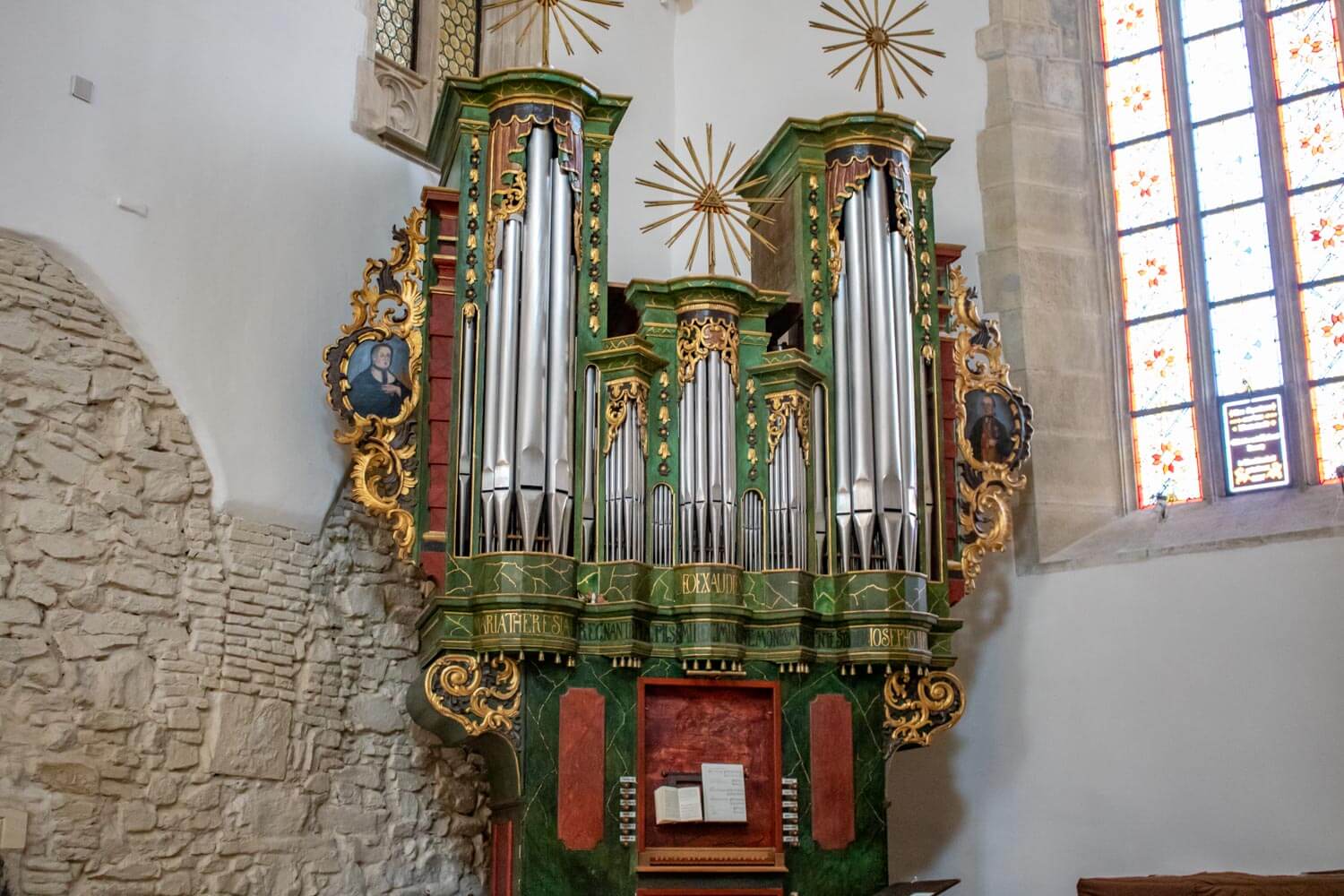
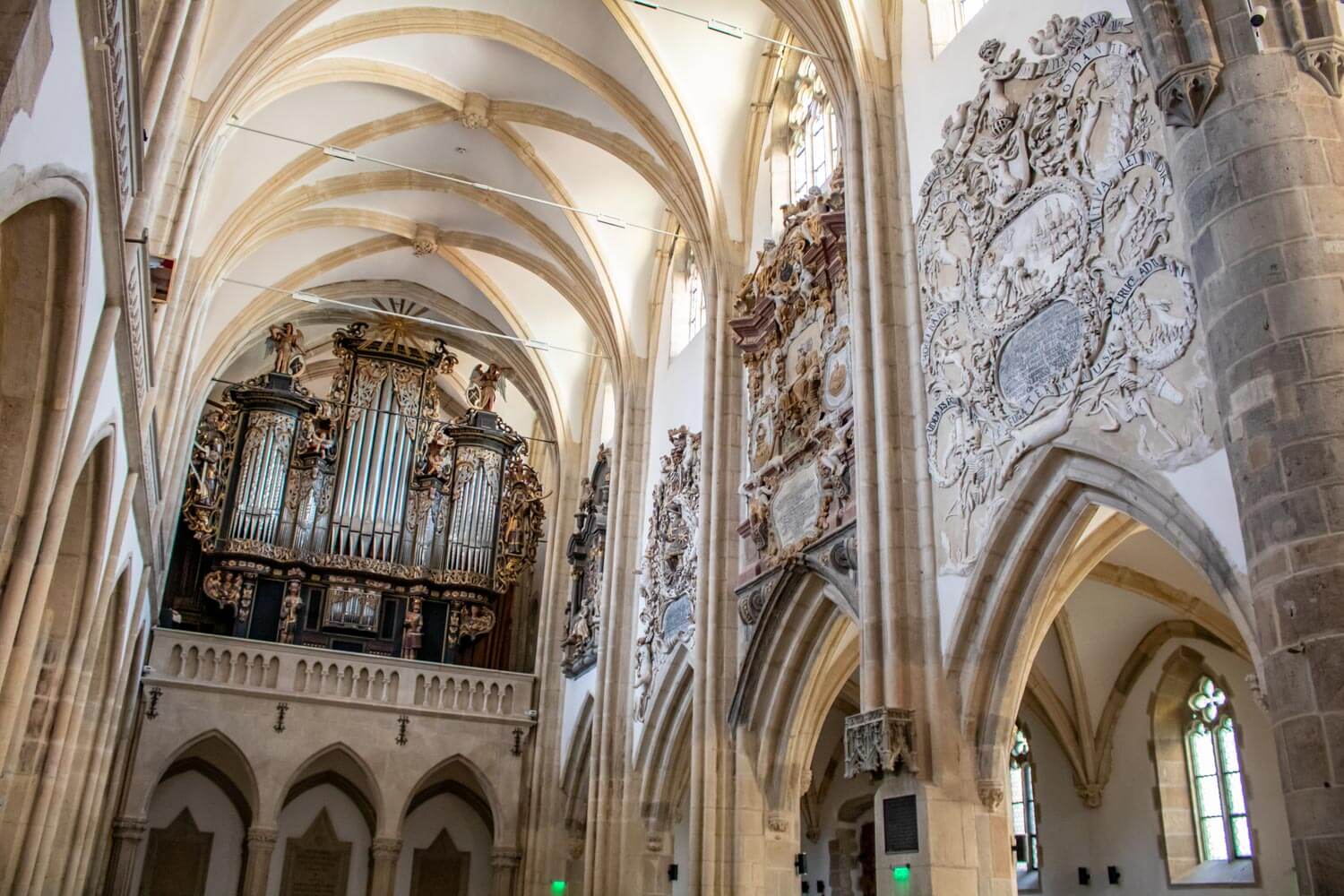
The large organ is another dominant feature of the interior. Its Baroque case dates from the 17th century, while the present instrument was built by the Wilhelm Sauer company of Frankfurt an der Oder and installed in 1915. The church continues to be an important concert venue, particularly for organ music, although concert schedules vary throughout the year.
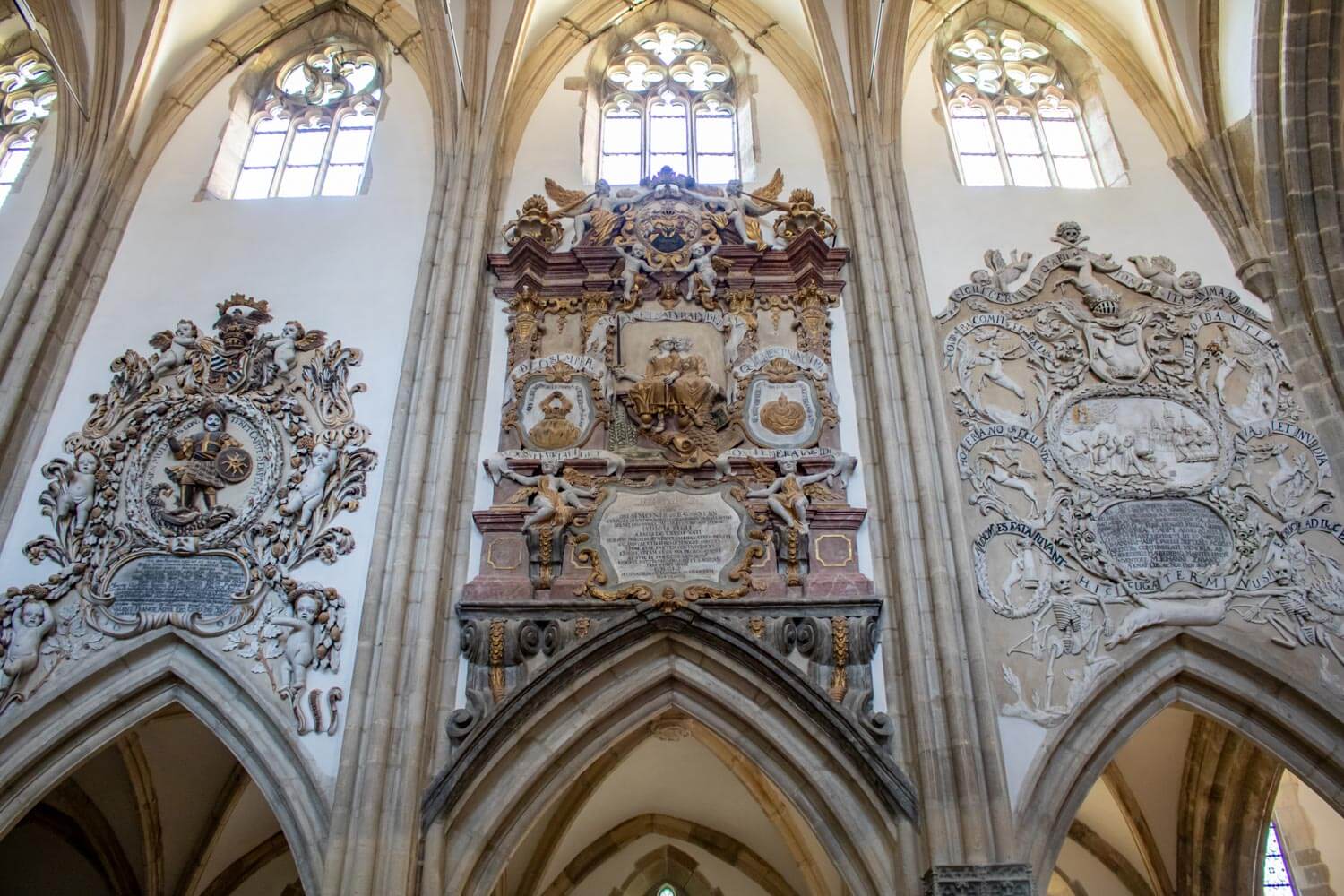
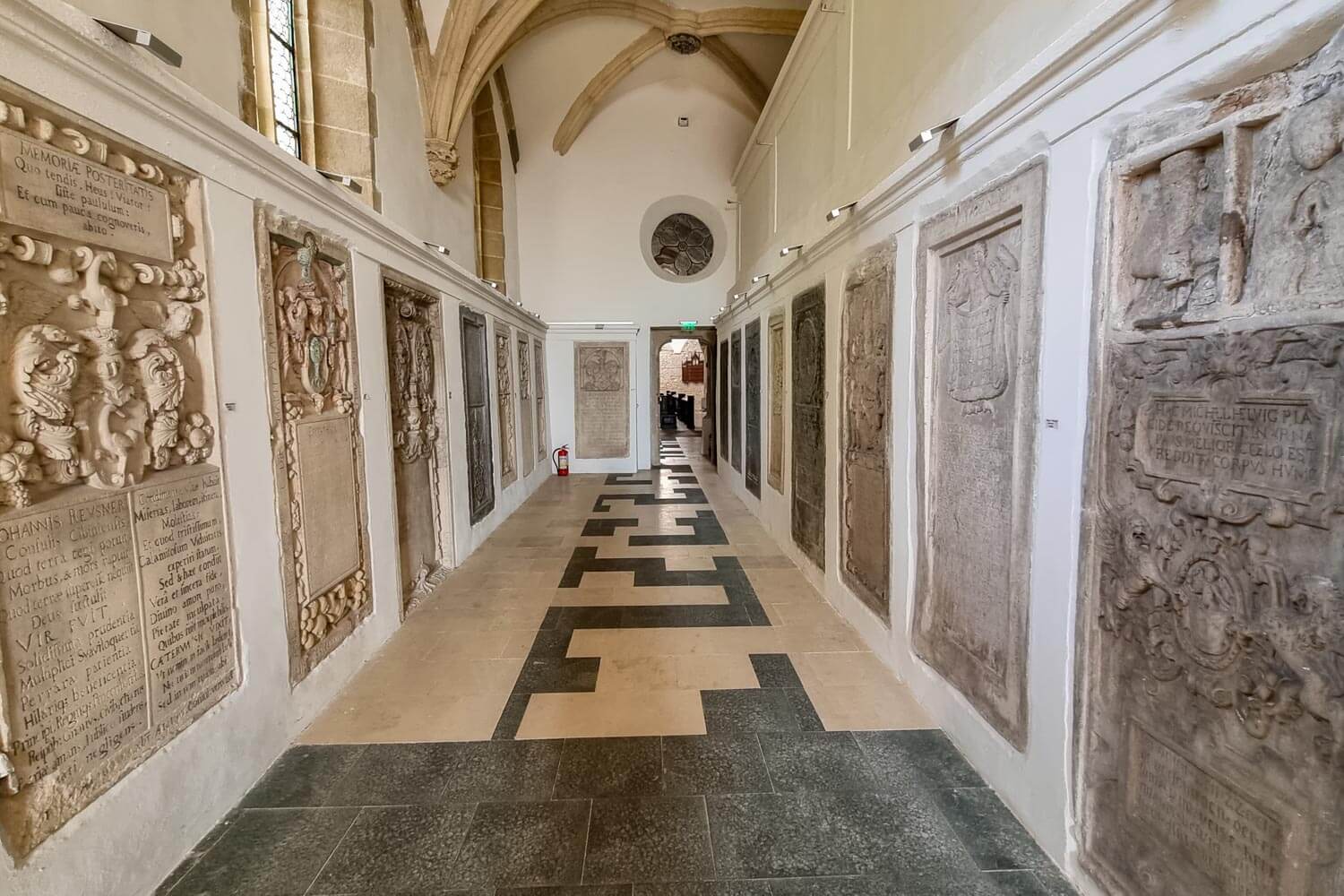
At the western end is the Ferula, where 67 historic tombstones were placed along the walls in 1853 after burials beneath the church floor were covered over. From 1496 onward, mayors, Saxon officials and other prominent citizens were buried inside the church, a practice prohibited in 1796. Samuel von Brukenthal received a rare exception and was buried here in 1803. Among the memorials is also the tombstone of Mihnea cel Rău, prince of Wallachia and son of Vlad the Impaler, who was killed in Sibiu in 1510. The collection includes richly carved Renaissance and Baroque monuments and is one of the most distinctive parts of the visit.
Climbing The Tower
Visitors can choose between admission to the cathedral, the tower, or a combined ticket. The tower climb is separate from the main church visit and leads upward through several levels of the 73-meter structure before reaching the viewing level.
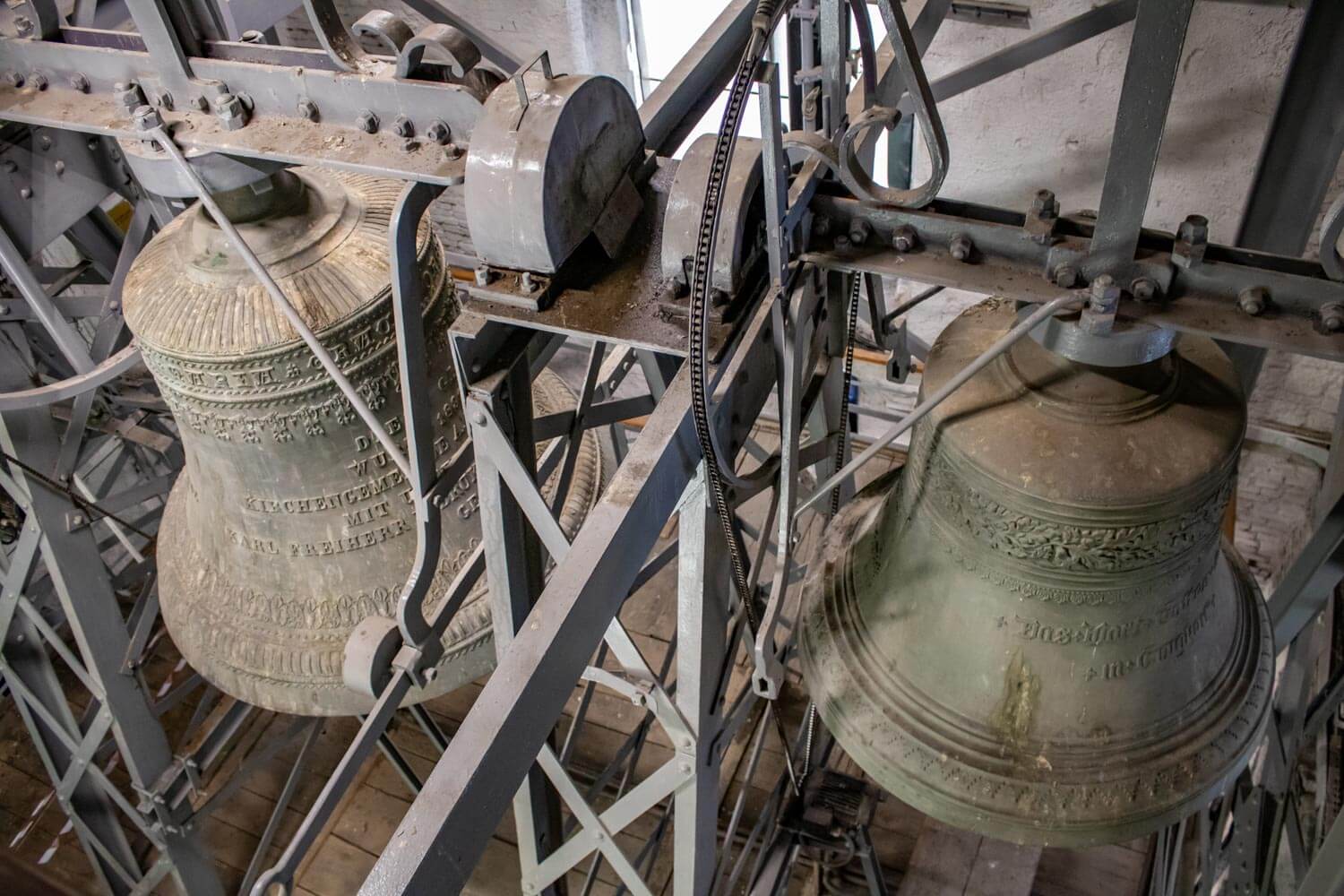
The route passes through the bell tower, where several historic bells are still preserved. The oldest surviving bell is the Night Bell, cast in 1411, while the large Hour Bell originated around 1395 but was recast after cracking in 1890. Other bells were replaced or recast over the centuries as they cracked or were requisitioned during wartime.
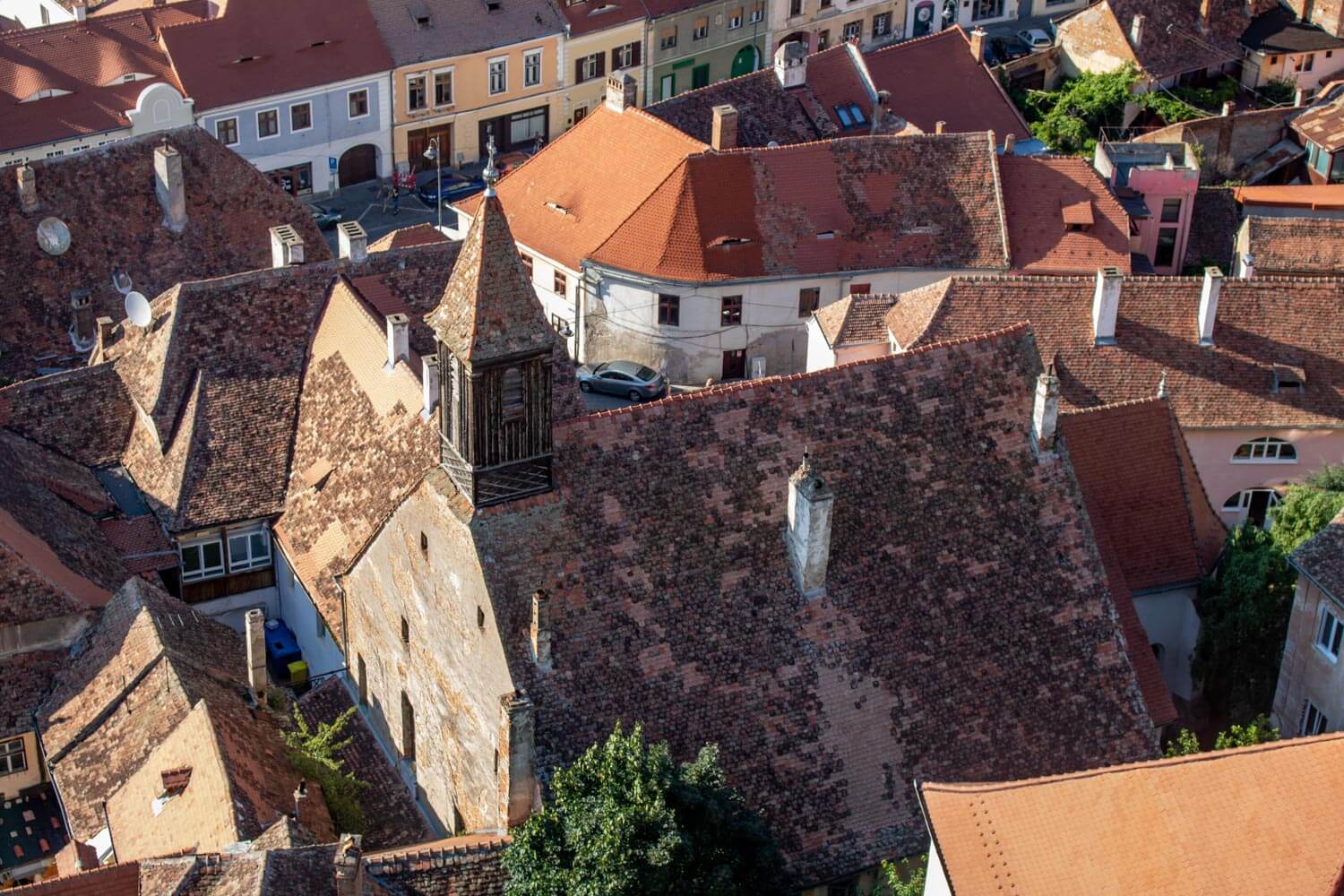
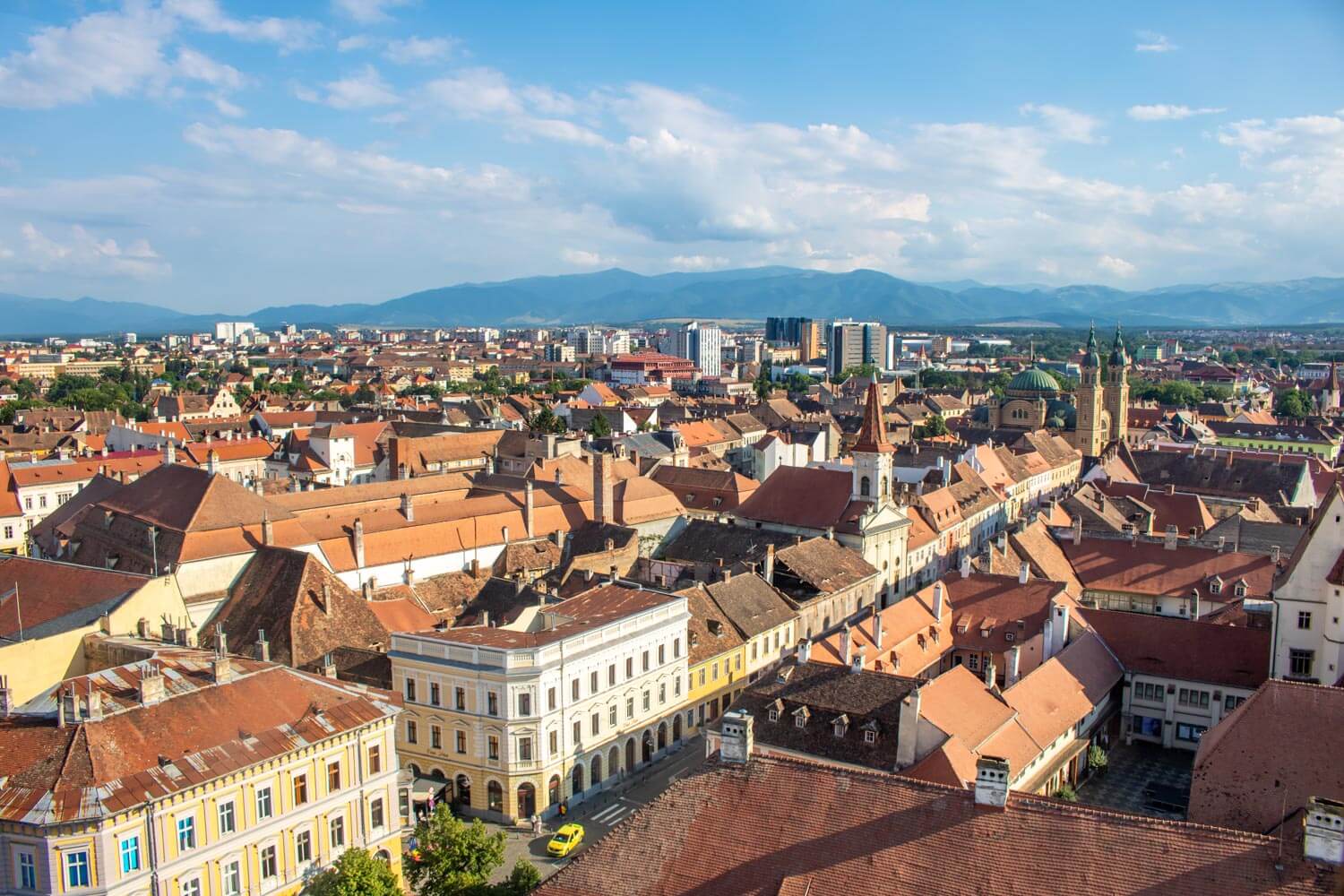
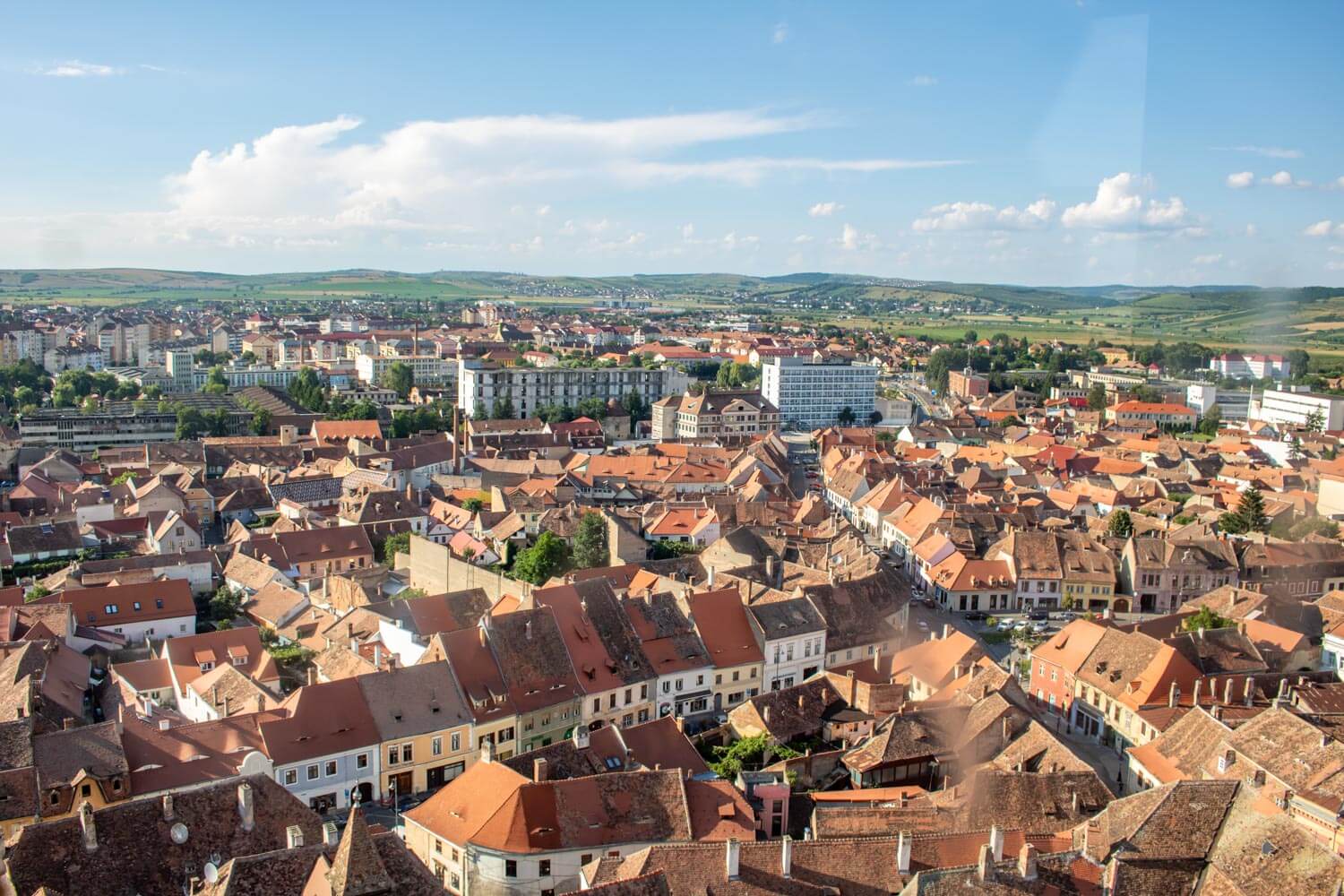
At the top, openings on all four sides provide views across the tiled roofs and narrow streets of the historic center, with the Large Square, Small Square, Council Tower and surrounding church towers immediately below. In clear weather, the panorama extends beyond Sibiu toward the mountains on the southern horizon, making the tower one of the best viewpoints over the old city.