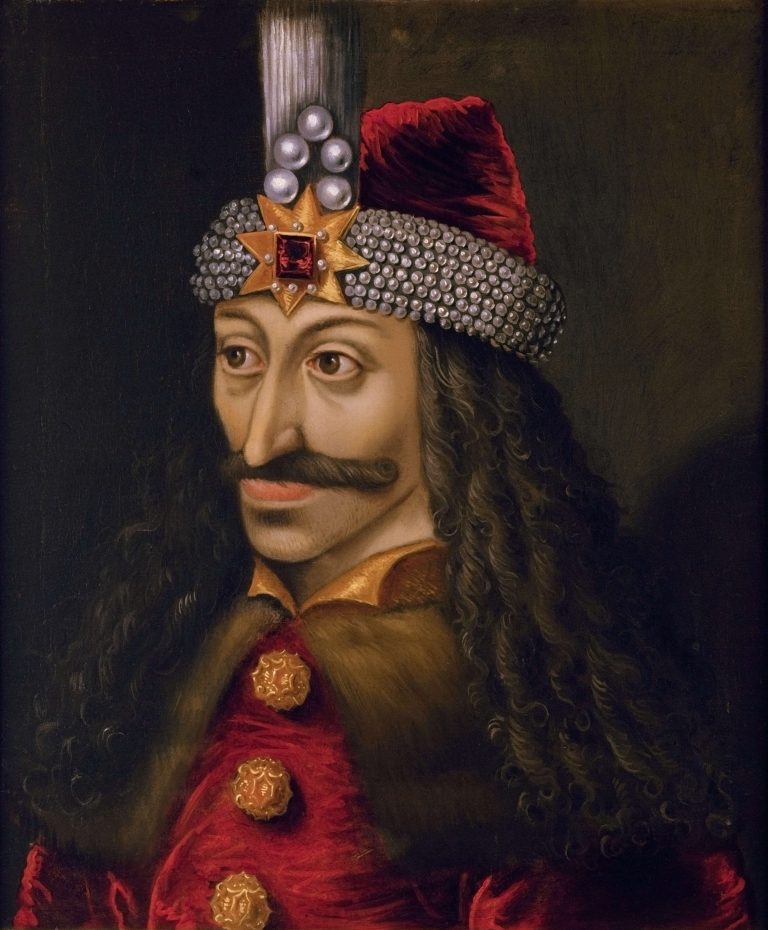
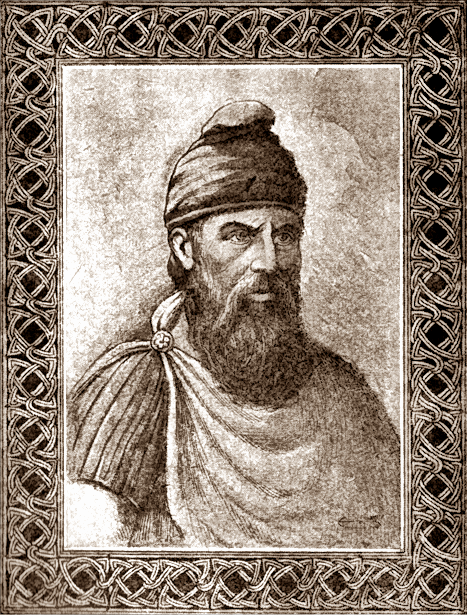
Vlad III (1428/1431), commonly known as Vlad the Impaler (Vlad Țepeș), was the Prince of Wallachia on three separate occasions and one of the most famous rulers in Romanian history. His reputation was shaped by two very different legacies: the brutal methods he used to impose authority in a deeply unstable medieval principality, and his resistance to the expanding Ottoman Empire. Centuries later, his name became entwined with Bram Stoker’s fictional Count Dracula, giving him a global fame that now extends far beyond the history of Wallachia.
Vlad was a son of Vlad II Dracul and a grandson of Mircea the Elder. His father belonged to the Order of the Dragon, which gave rise to the name Dracula as a form meaning “son of Dracul.” Vlad grew up in a political world where Wallachian princes depended on shifting alliances with Hungary and the Ottoman Empire, while rival branches of the ruling family repeatedly fought for the throne. As a boy, he and his younger brother Radu were sent as hostages to the Ottoman court, an experience that placed them close to the power that would dominate much of their later lives.
Vlad first gained the Wallachian throne briefly in 1448, but his main reign began in 1456. He inherited a principality in which powerful boyar families could make and remove rulers and where political betrayal was common. Vlad responded with extreme force. Impalement became his most infamous punishment and eventually gave him the nickname Țepeș, but executions, mutilation, and public terror formed part of a broader attempt to crush opposition and strengthen princely authority.
His violence quickly became famous outside Wallachia as well. Vlad came into conflict with the Saxon merchants of Transylvania, particularly around Brașov, while rival claimants to the Wallachian throne found support north of the mountains. German pamphlets began circulating stories of his cruelty, often portraying him as a monstrous tyrant. Many of these accounts became increasingly sensational as they were copied and retold, but they grew from a very real reputation for using spectacular punishment as a political weapon.
The greatest threat to Vlad’s rule came from the Ottoman Empire. Wallachia had long paid tribute to the sultan, but Vlad eventually broke with Ottoman demands and launched attacks south of the Danube. His actions brought him into direct conflict with Sultan Mehmed II, the conqueror of Constantinople.
In 1462 Mehmed invaded Wallachia with a large army. Vlad avoided a conventional battle and instead relied on raids, scorched-earth tactics, ambushes, and repeated attempts to wear down the invading force. The campaign reached its most famous moment during the Night Attack near Târgoviște, when Vlad led his men into the Ottoman camp in an attempt to reach the sultan himself. Mehmed survived, but the attack became one of the defining episodes of Vlad’s reign.
Târgoviște was one of the main centers of Wallachian government during Vlad’s reign, but he also increasingly used Bucharest as a princely residence. A charter issued by his chancery there on September 20, 1459, contains the oldest surviving documentary mention of Bucharest by name. His court helped establish the settlement as an important princely center, beginning a development that would eventually turn Bucharest into the principal seat of Wallachian government.
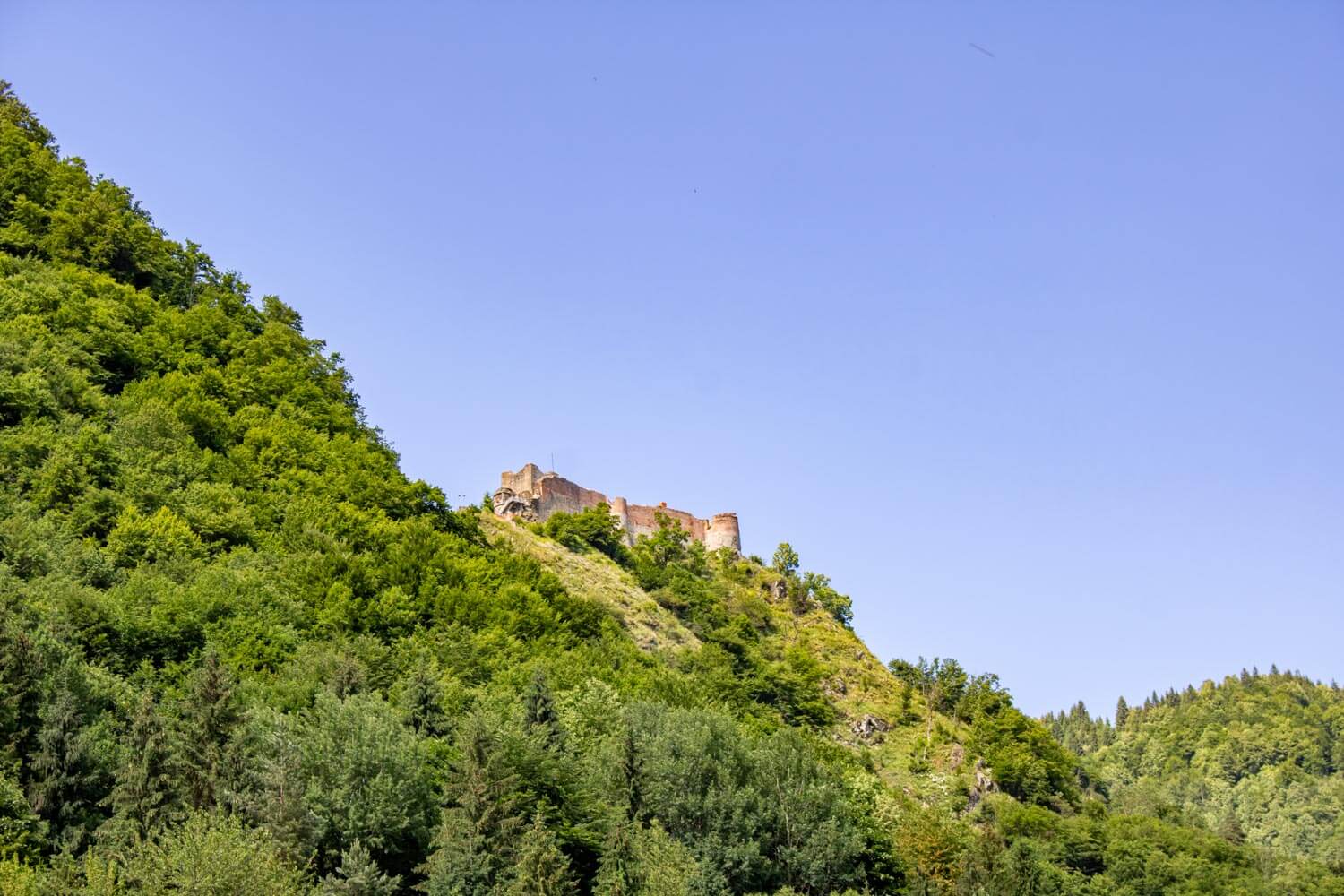
Poenari Castle, high above the Argeș Valley, also became part of Vlad’s defensive system. The fortress already existed, but it was strengthened during his reign and occupied a commanding position over one of the routes through the Carpathians. Its remote mountain setting and direct connection with Vlad’s rule later made it one of the strongest surviving places through which visitors can encounter the historical prince rather than the fictional Dracula.
Despite his resistance in 1462, Vlad lost the throne to his younger brother Radu the Handsome, who had Ottoman backing and gained support from parts of the Wallachian nobility. Vlad fled toward Transylvania and was subsequently detained on the orders of King Matthias Corvinus of Hungary. After many years away from power, he eventually returned with support from Hungary and Moldavia and regained the Wallachian throne in 1476. His third reign lasted only briefly before he was killed during renewed fighting.
The name Dracula took on a completely different life centuries after Vlad’s death. Bram Stoker used the name for the vampire count in his 1897 novel, although his fictional character was not written as a biography of Vlad III. Over time, however, the shared name encouraged the medieval ruler and the fictional vampire to merge in popular culture.
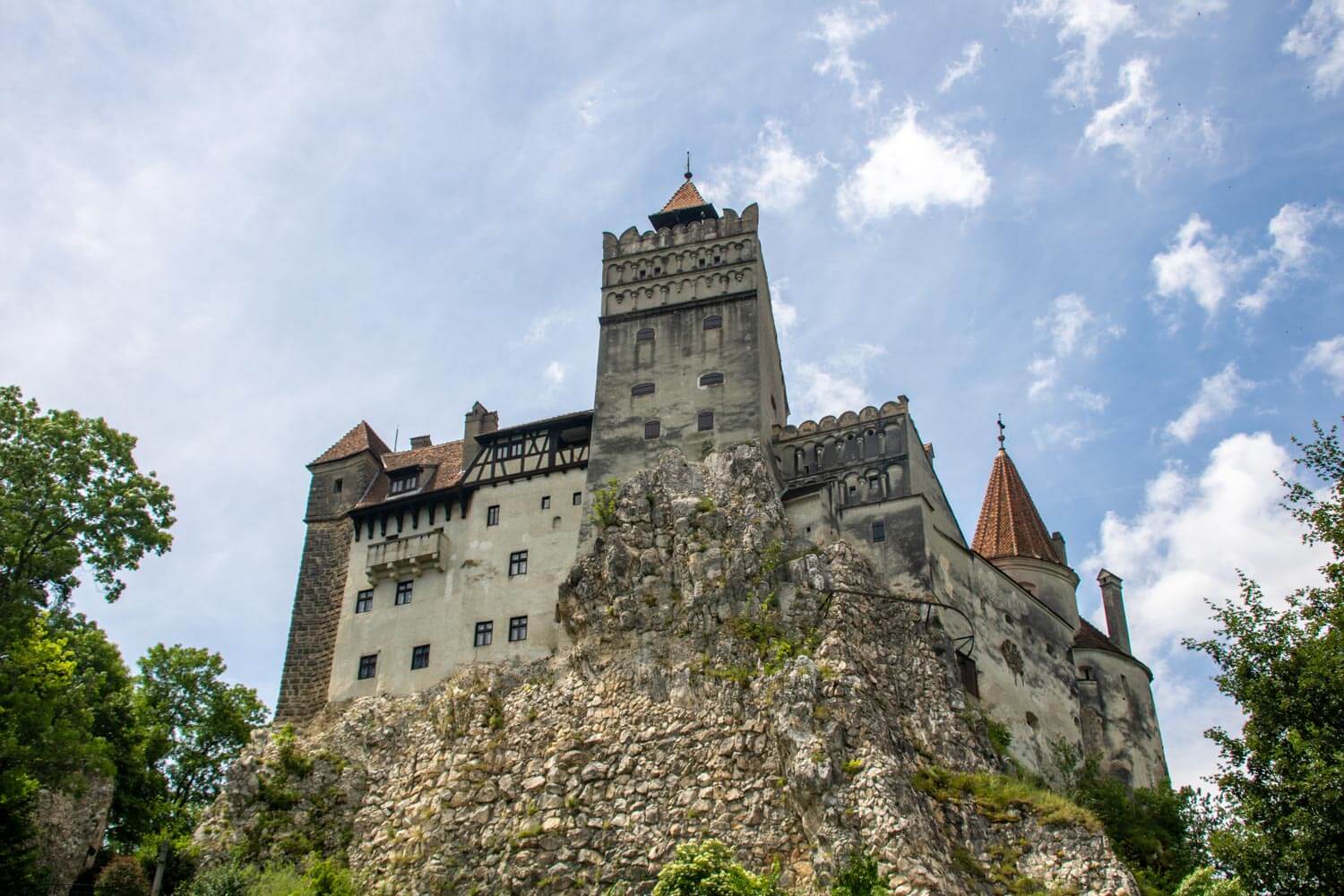
That same process brought Bran Castle into Vlad’s modern story. Historically, Bran was a strategically important fortress guarding the pass between Transylvania and Wallachia, and Vlad moved through this frontier region during his conflicts with Brașov and during his return toward Wallachia in 1476. The castle was never his royal residence, but its dramatic position and medieval appearance came to match the popular image of Dracula’s Transylvanian castle. As the historical Vlad and the fictional Dracula increasingly blended together in tourism and popular culture, Bran became internationally known as “Dracula’s Castle.”
This modern image exists alongside a very different Romanian memory of Vlad. Statues and monuments generally present him not as a vampire, but as a formidable Wallachian prince who imposed harsh order and confronted Ottoman expansion. His reputation remains complex because the same actions that made him a symbol of resistance also made him notorious for extreme cruelty.
Vlad the Impaler’s enduring fame therefore comes from the unusual combination of history and legend surrounding him. The medieval ruler fought for control of a vulnerable Wallachian state, used terror as an instrument of government, and challenged one of the most powerful empires of his time. The later Dracula story transformed that already formidable reputation into something entirely new, ensuring that Vlad III remains one of the Romanian historical figures whose name is recognized far beyond the country itself.