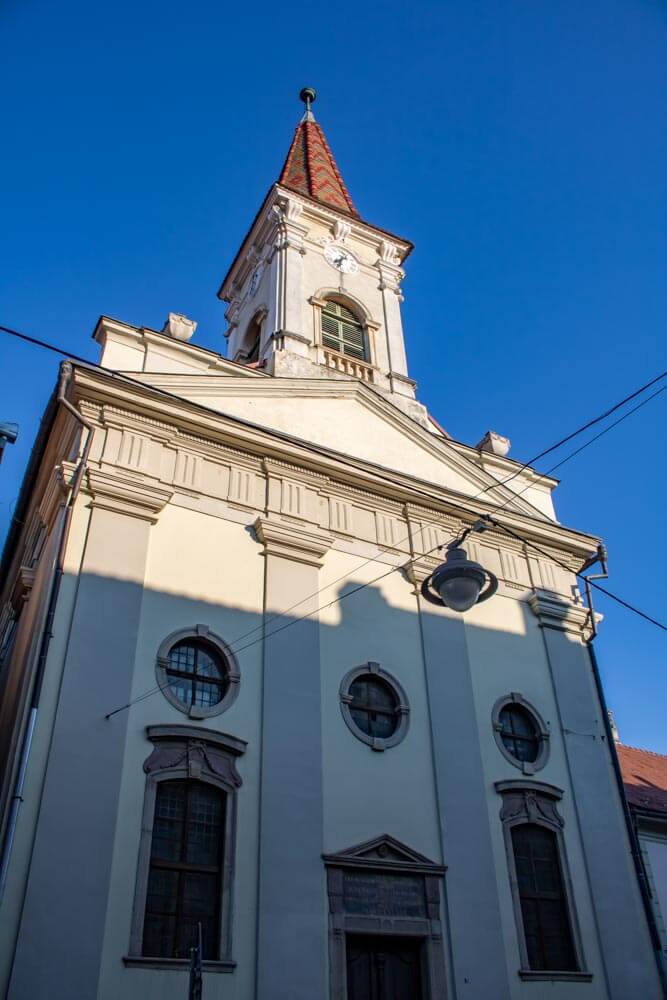
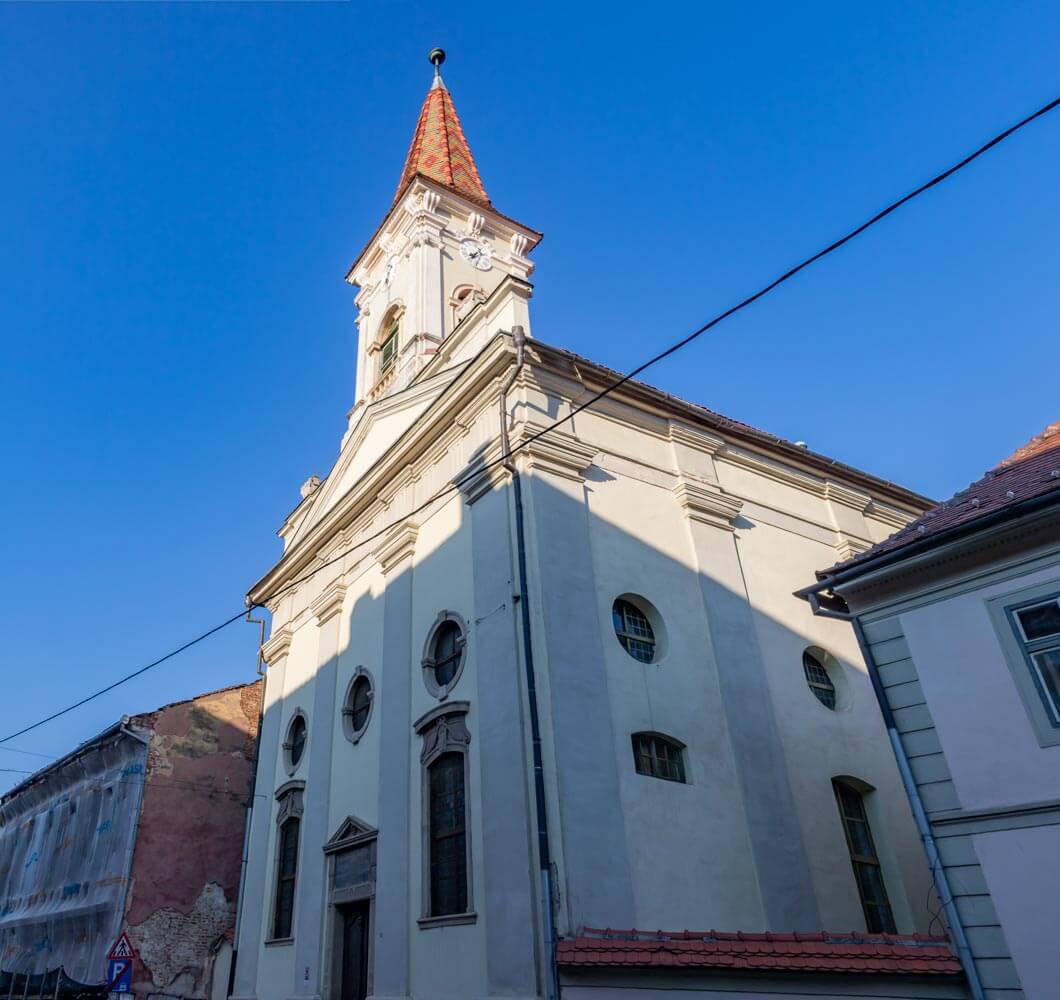
The Reformed Church of Sibiu (Biserica Reformată din Sibiu) is a late-18th-century Calvinist church in the historic center of Sibiu, recognizable by its narrow Baroque façade and slender clock tower.
The church was built after reforms under Emperor Joseph II made it easier for Transylvania’s Reformed community to establish itself inside the fortified city. In Sibiu, where the Hungarian Calvinist population was much smaller than the Saxon Lutheran community, several influential members of the provincial administration helped secure land for a permanent church. Two existing houses were purchased and demolished, and construction began in the 1780s under master builder Samuel Krempels and carpenter Johannes Schneider. The completed church was inaugurated on November 26, 1786.
Its restrained appearance reflects Calvinist worship, which favored a clear, uncluttered interior over elaborate decoration. From the street, the façade is dominated by a simple stone-framed entrance and the square tower rising directly above it, while the clock faces and steep pyramidal roof make the church easy to pick out among the surrounding houses. Inside, a single broad hall leads toward a semicircular apse, with paired pilasters and a barrel vault giving the space a formal rhythm without overwhelming it with ornament.
Most of the visual interest is concentrated around the pulpit and organ. The pulpit, completed in 1790, has a canopy decorated with gilded motifs and rose garlands, while the Lord’s Table dates from the original construction period. At the opposite end of the church, the present organ from 1858 stands on a gallery supported by two massive columns, replacing the instrument installed when the church first opened.
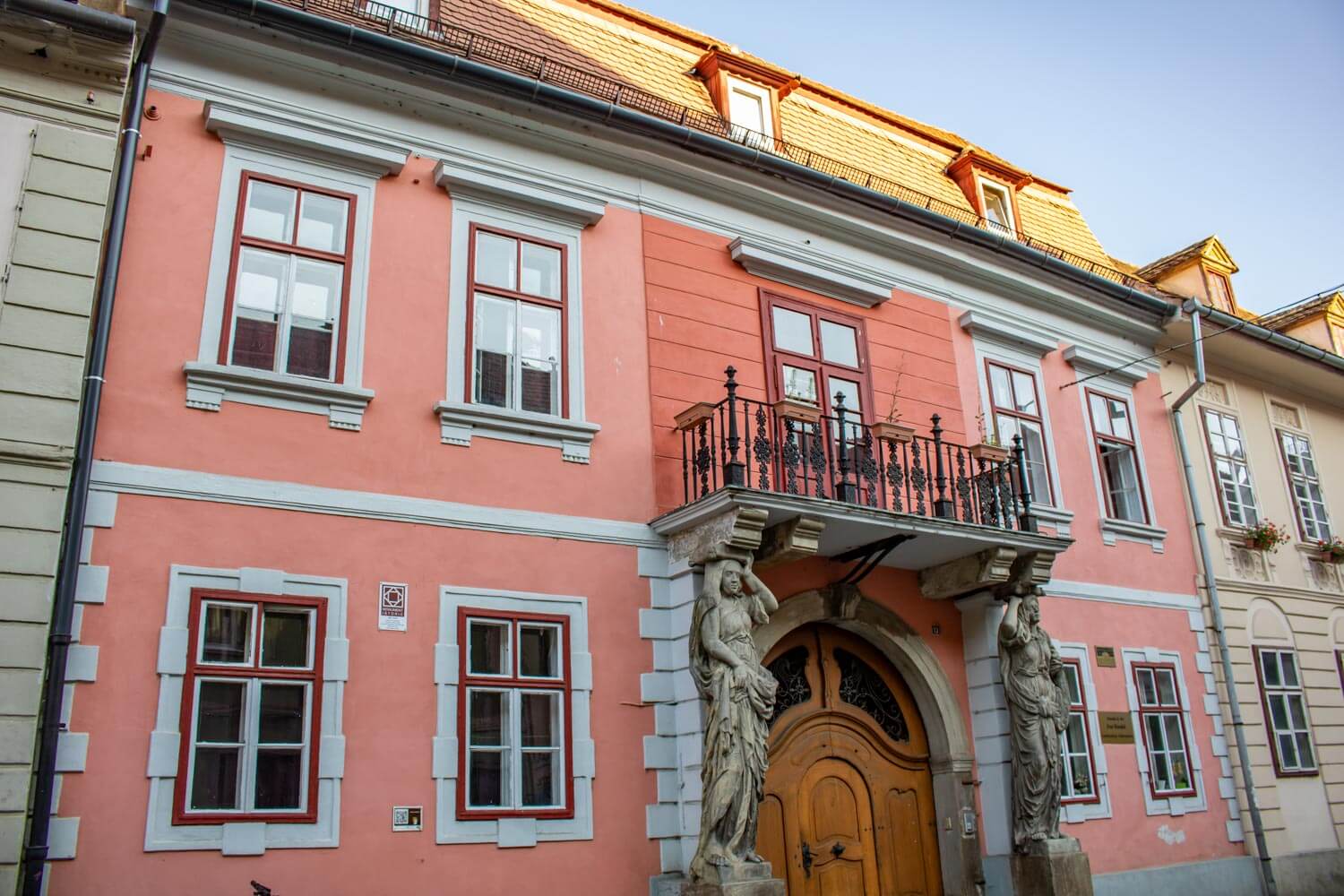
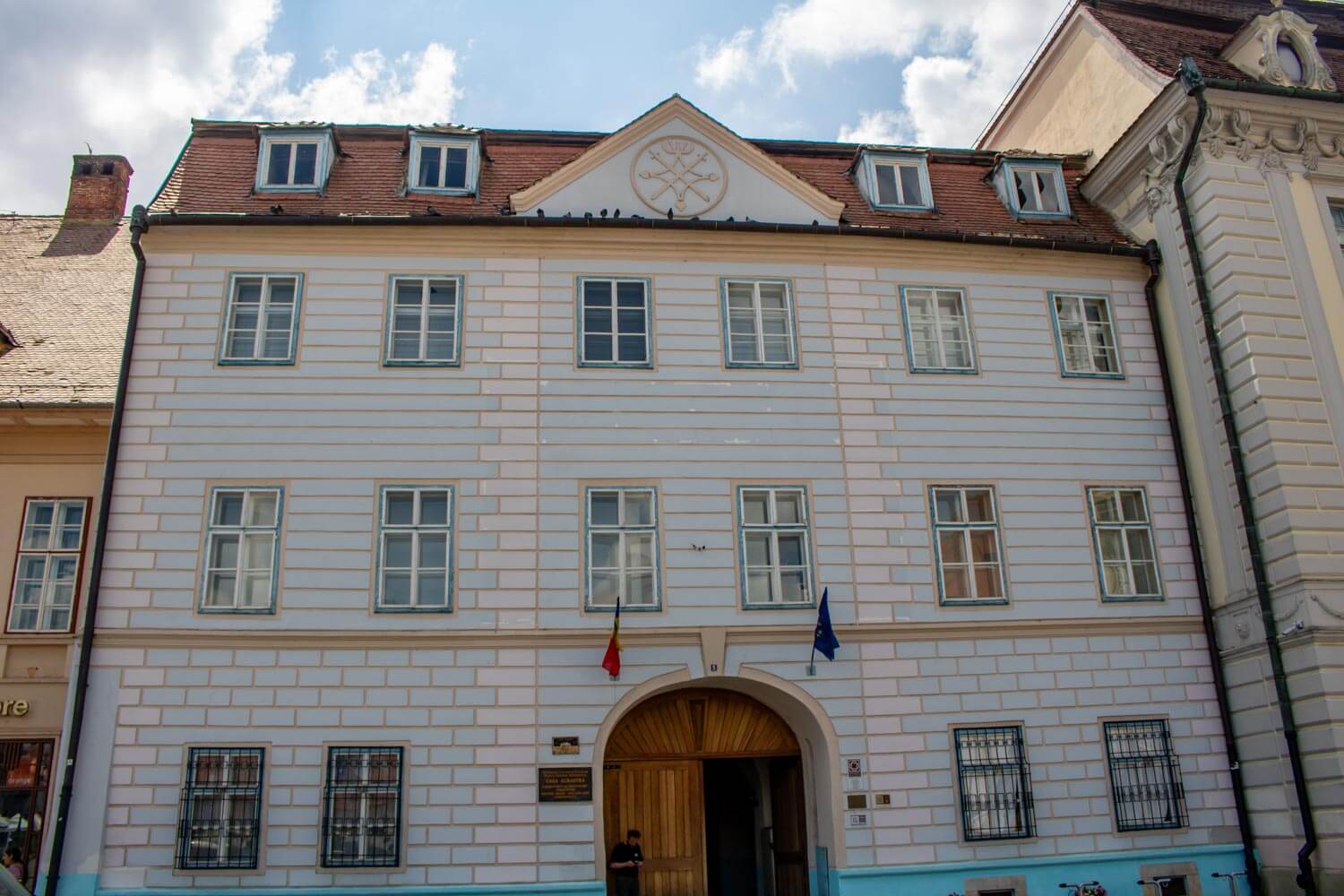
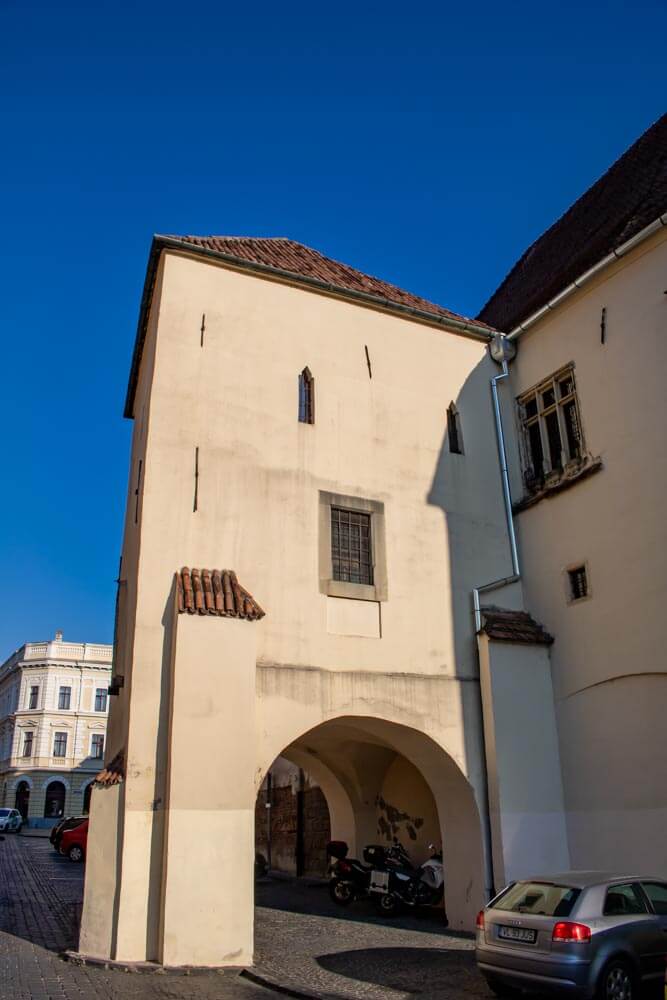
The neighboring Reformed parish house was acquired in 1784 and altered at roughly the same time as the church, creating a small ecclesiastical complex along this part of Strada Mitropoliei. A passage beneath the parish house connects the street with Strada Alexandru Dimitrie Xenopol behind it, following the line of an older alley that was incorporated into the building.