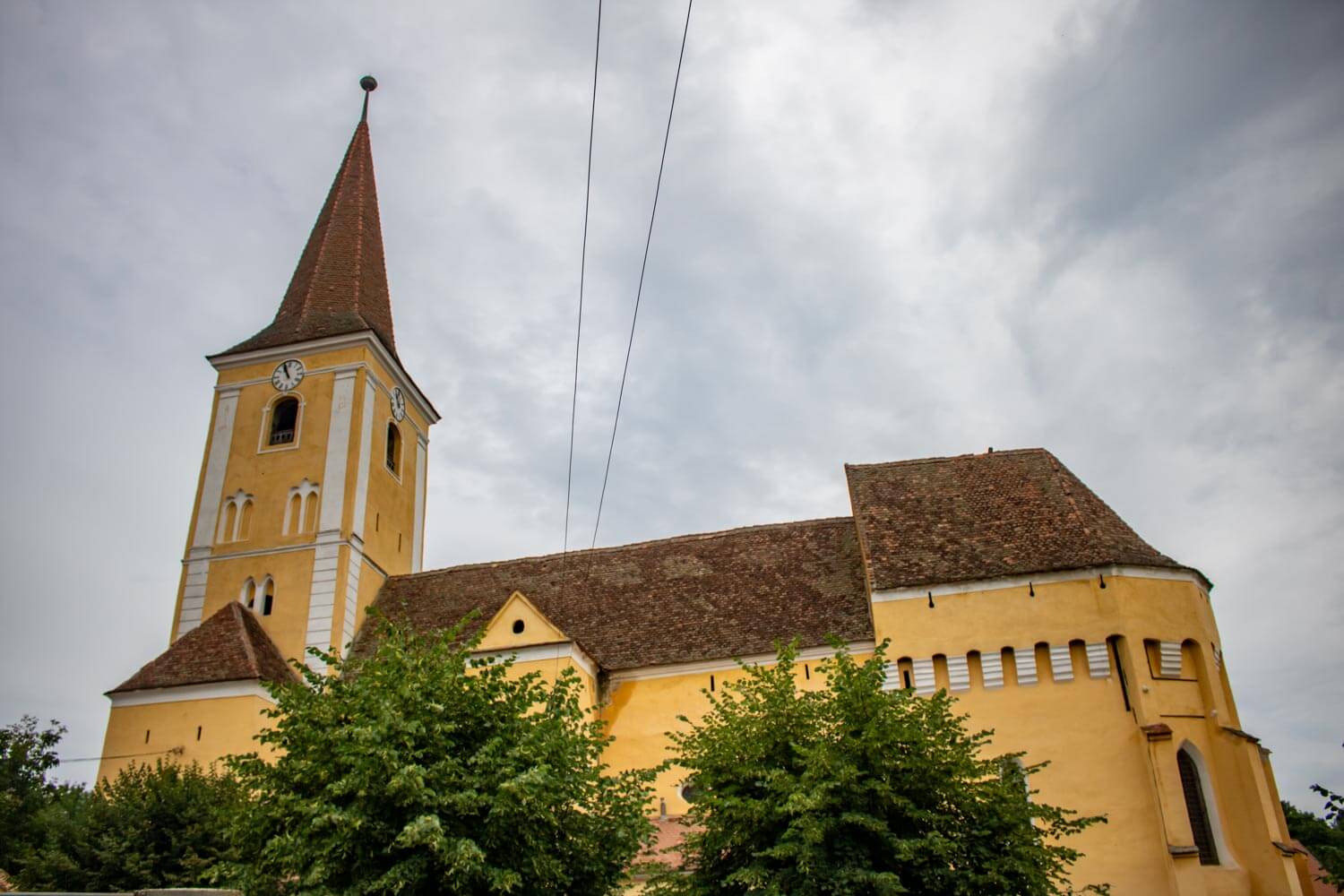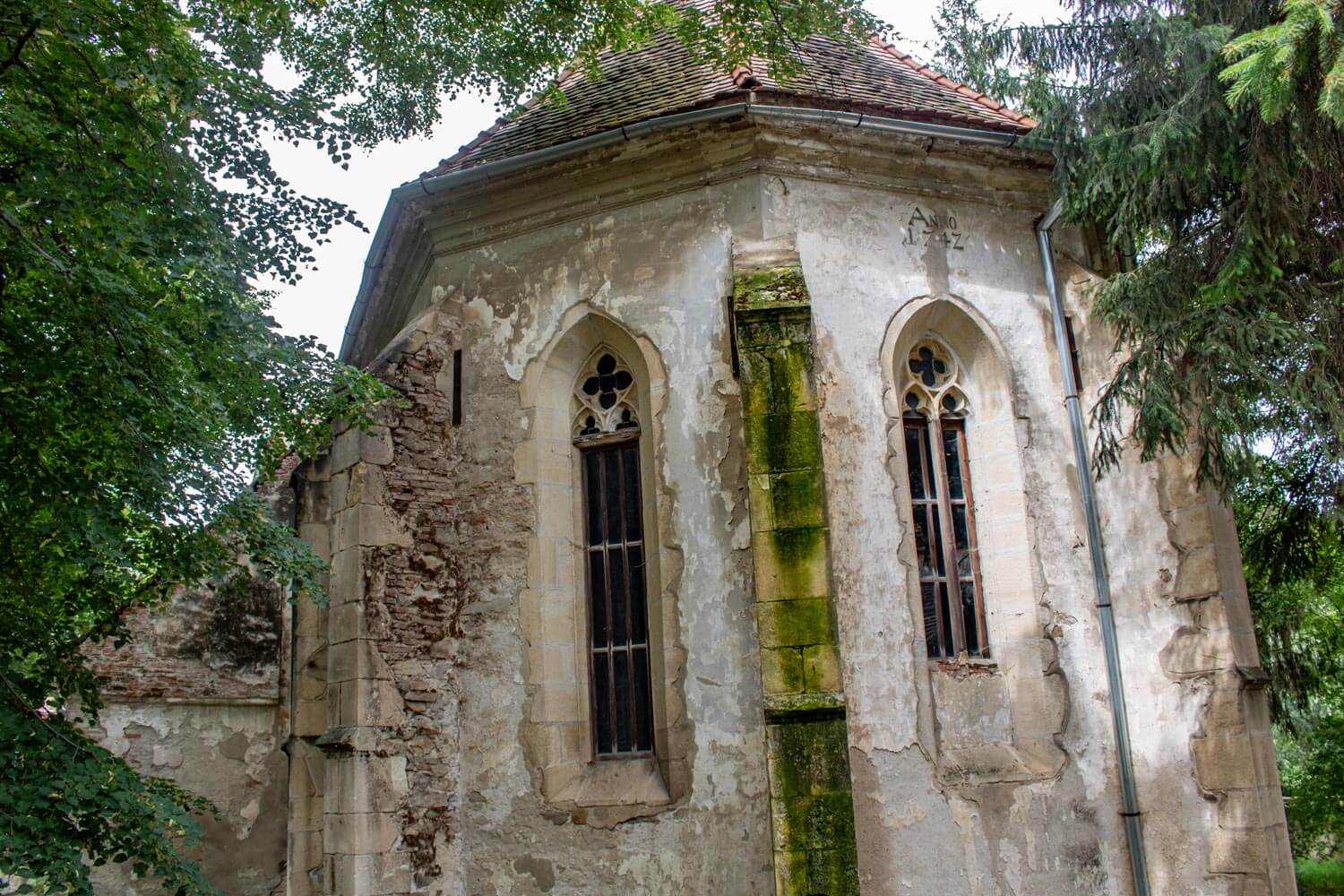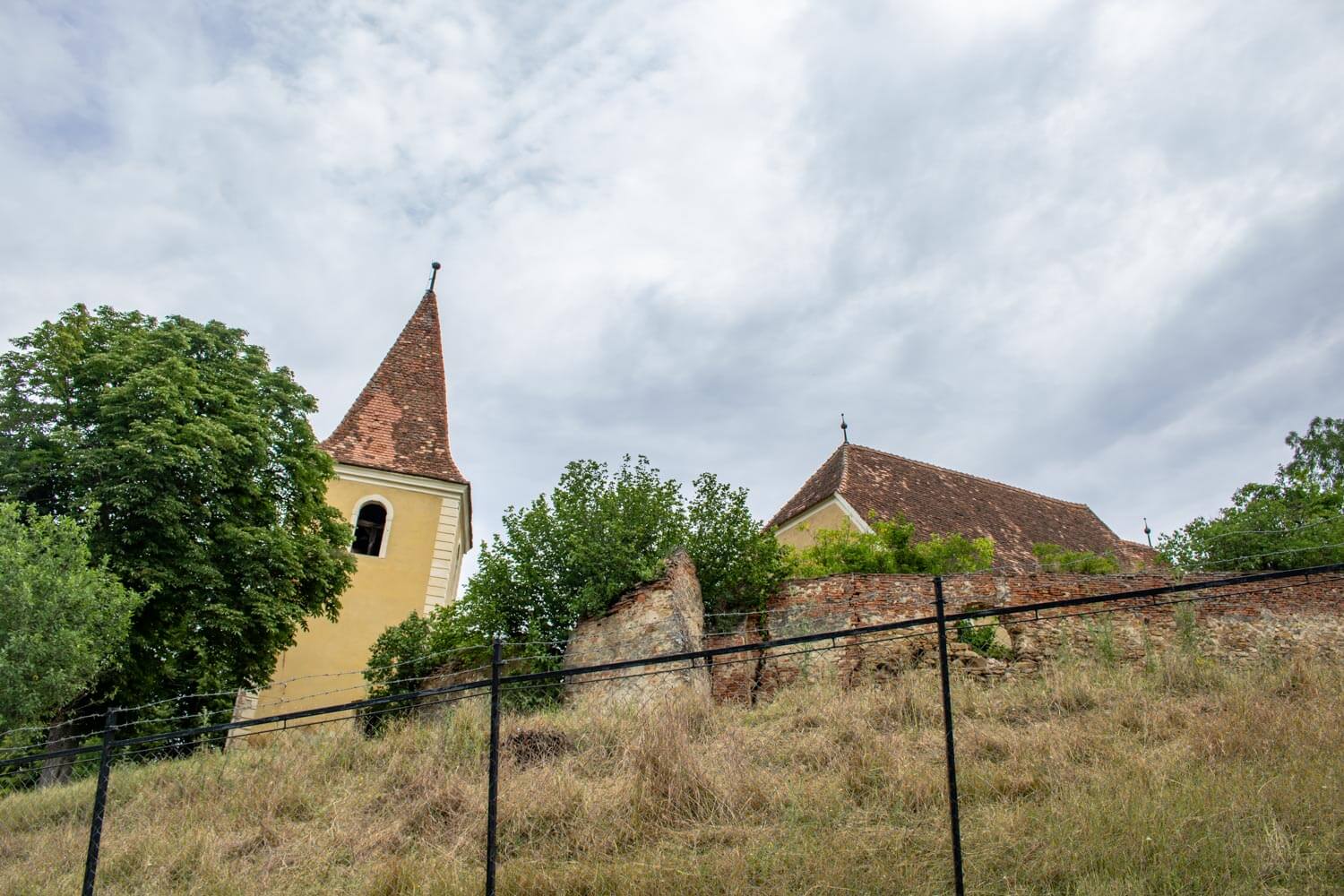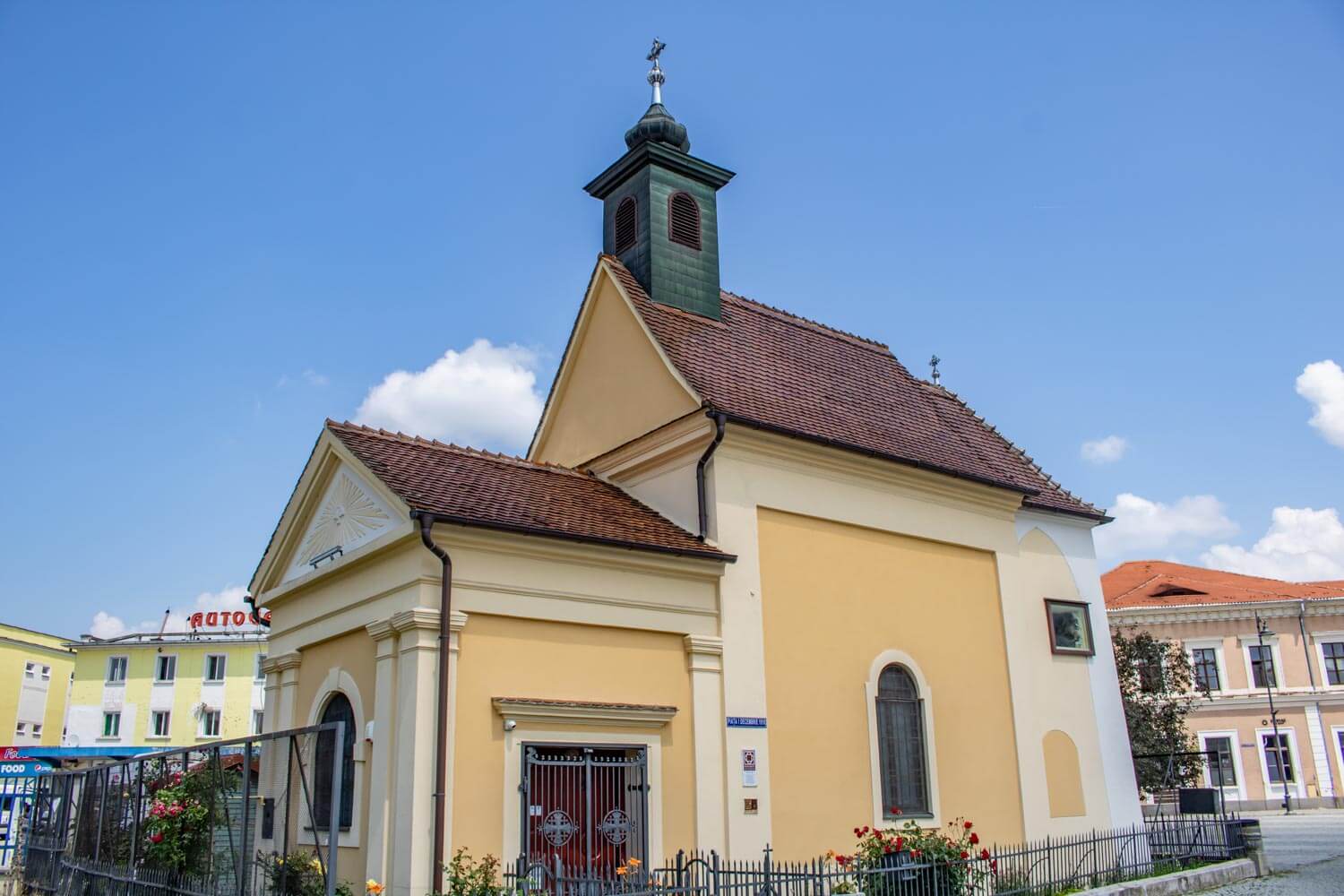


The Fortified Church of Vurpăr (Biserica Fortificată din Vurpăr) is a historic Lutheran church in the village of Vurpăr, east of Sibiu. At its core is a Romanesque basilica built in the first half of the 13th century, with much of the original structure still recognizable despite later alterations.
The earliest church was a short three-aisled basilica without a tower, with a square choir and semicircular apse. One of its most distinctive surviving details is the north portal, where the tympanum is carved with a tree-of-life motif flanked by fantastic creatures. Romanesque windows from the same phase also survive, although some are now hidden above the later ceiling.
A bell tower was added after the original church was built, but it collapsed in 1602 and was not replaced until 1750. The interior changed again during the 18th and 19th centuries, when galleries were installed along the sides and the present flat ceiling was introduced. The church also received a new organ in 1805, while its clock was replaced at the end of the 19th century.
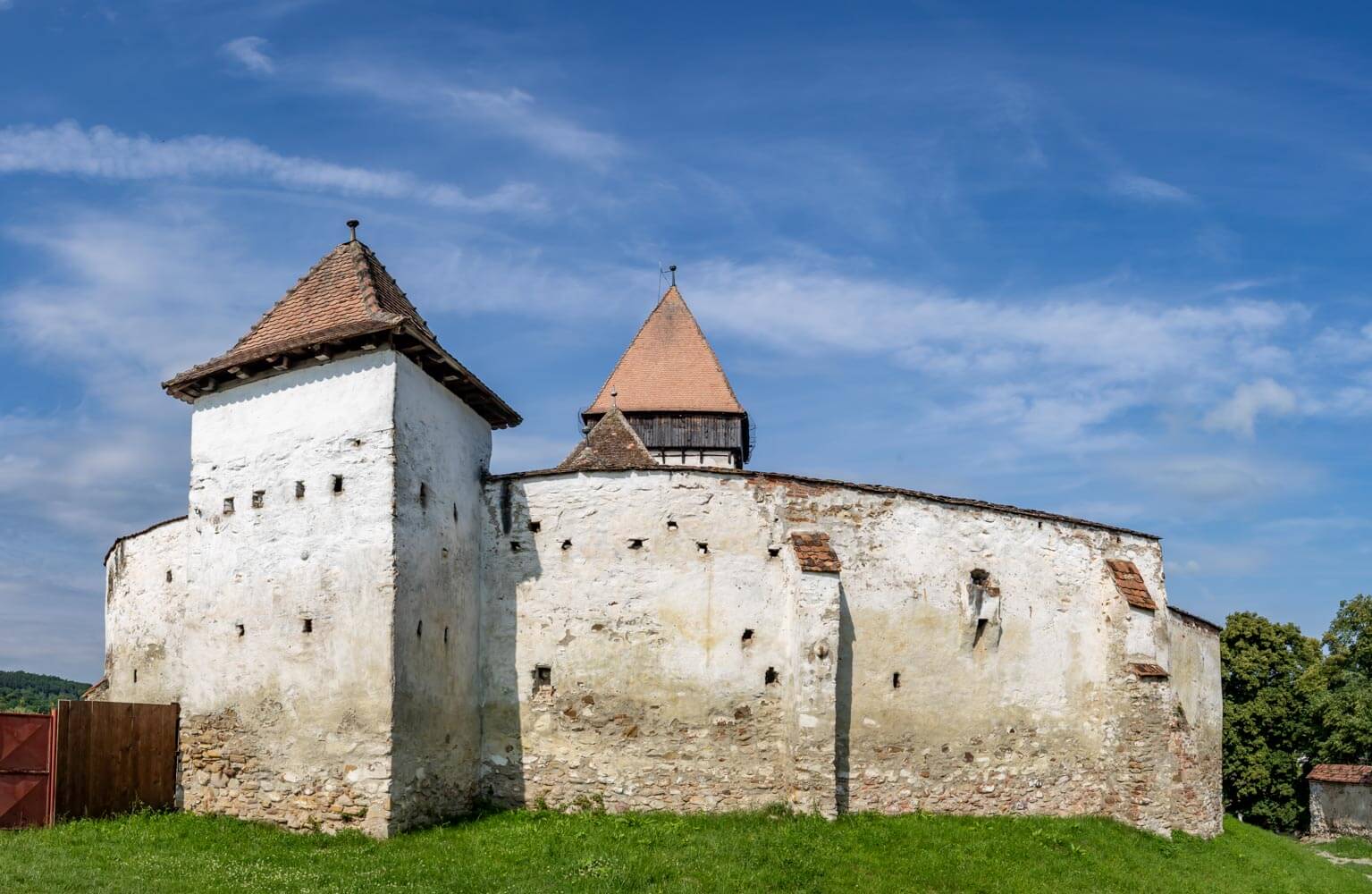
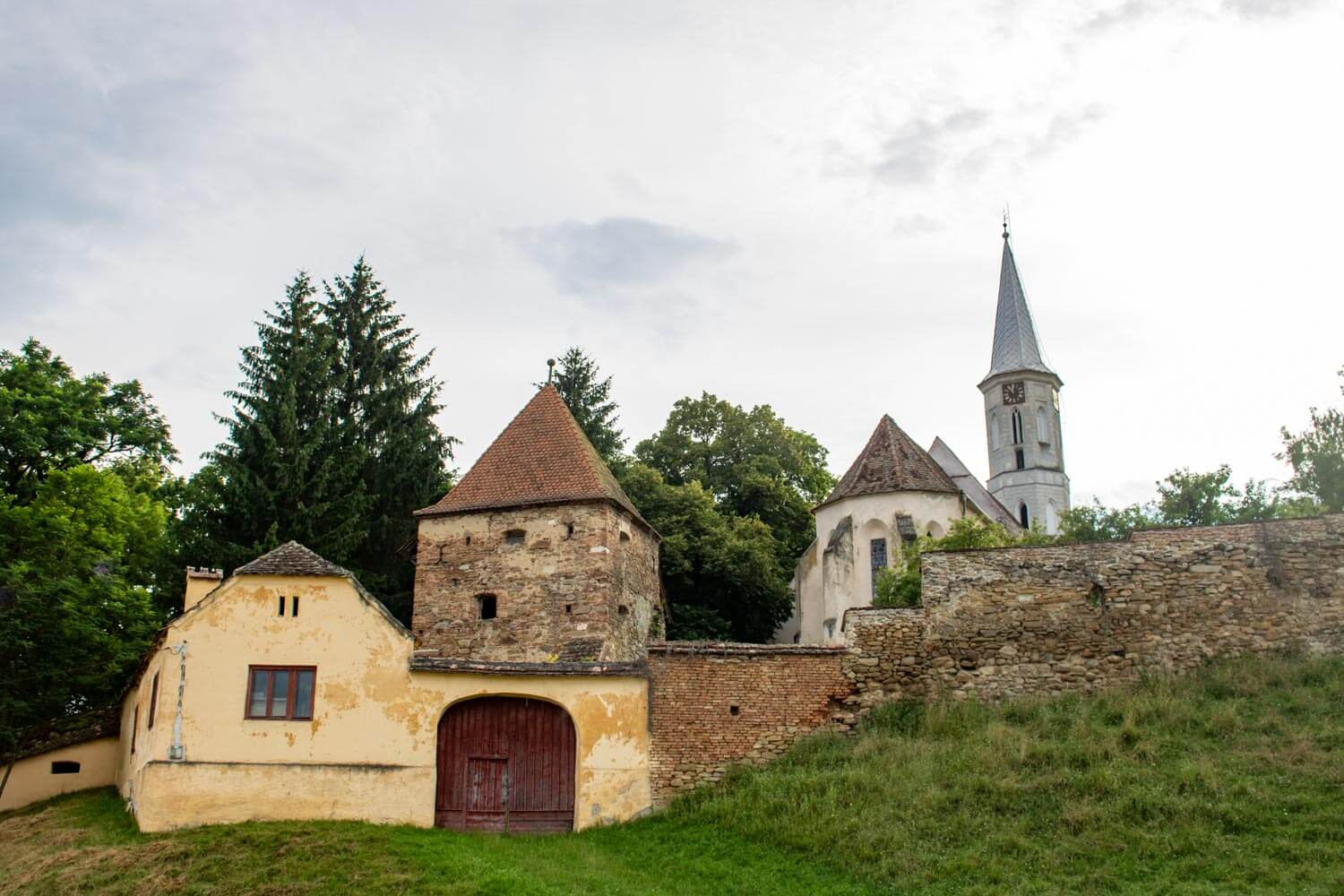
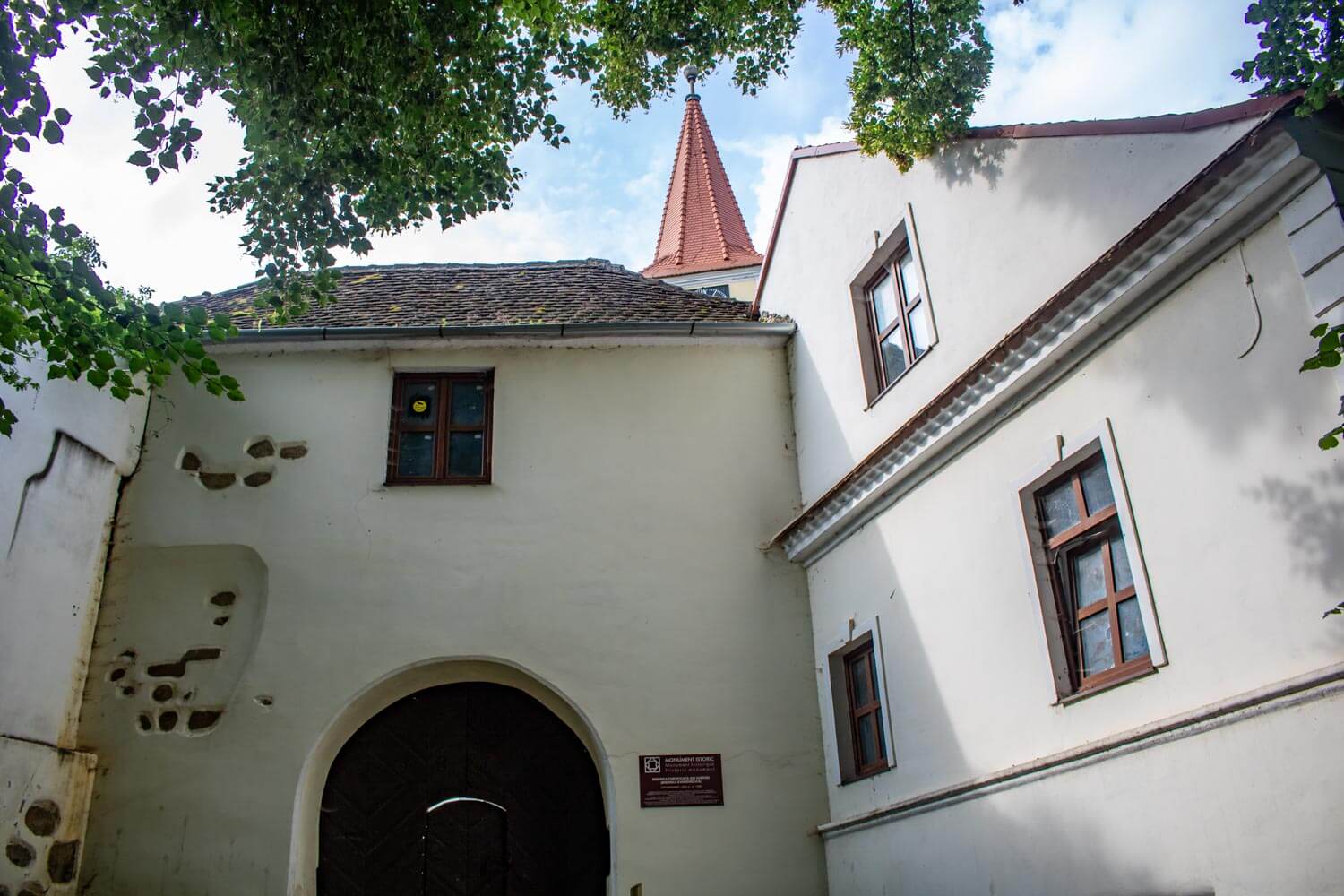
The church had already been surrounded by a fortified enclosure by the 14th century, reflecting the need for protection in the Saxon settlement. Most of the defensive structures have since disappeared, leaving mainly the oval curtain wall around the church. On the western side, the former castle keeper’s house was built into the enclosure in 1720, while the old school followed nearby in 1845.
Today the complex is defined less by massive surviving towers than by the contrast between the relatively modest enclosure and the much older Romanesque church at its center. The surviving portal sculpture, early basilica plan and later additions make the building a particularly clear example of how a medieval Saxon village church could evolve over many centuries without losing its earliest architectural core.