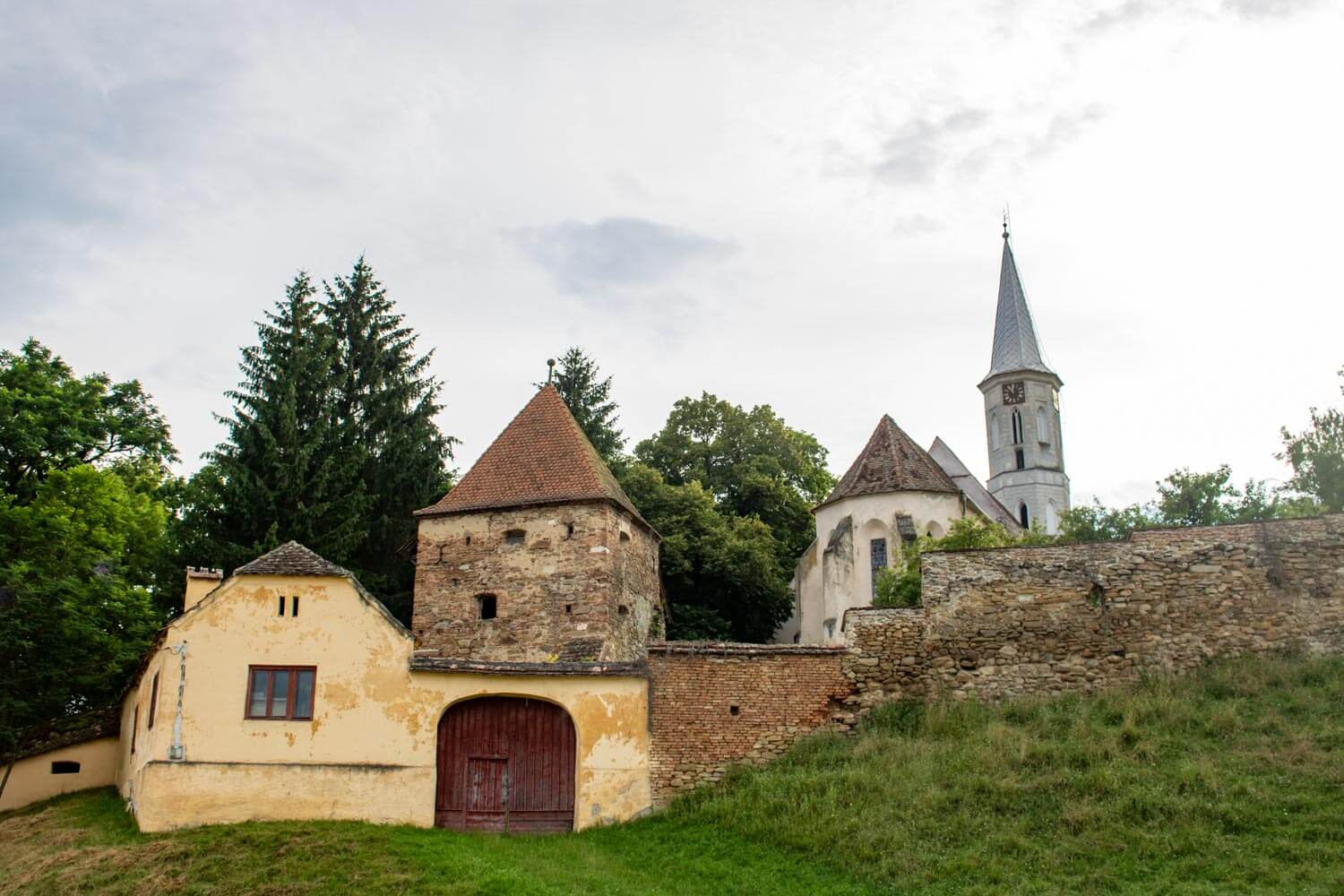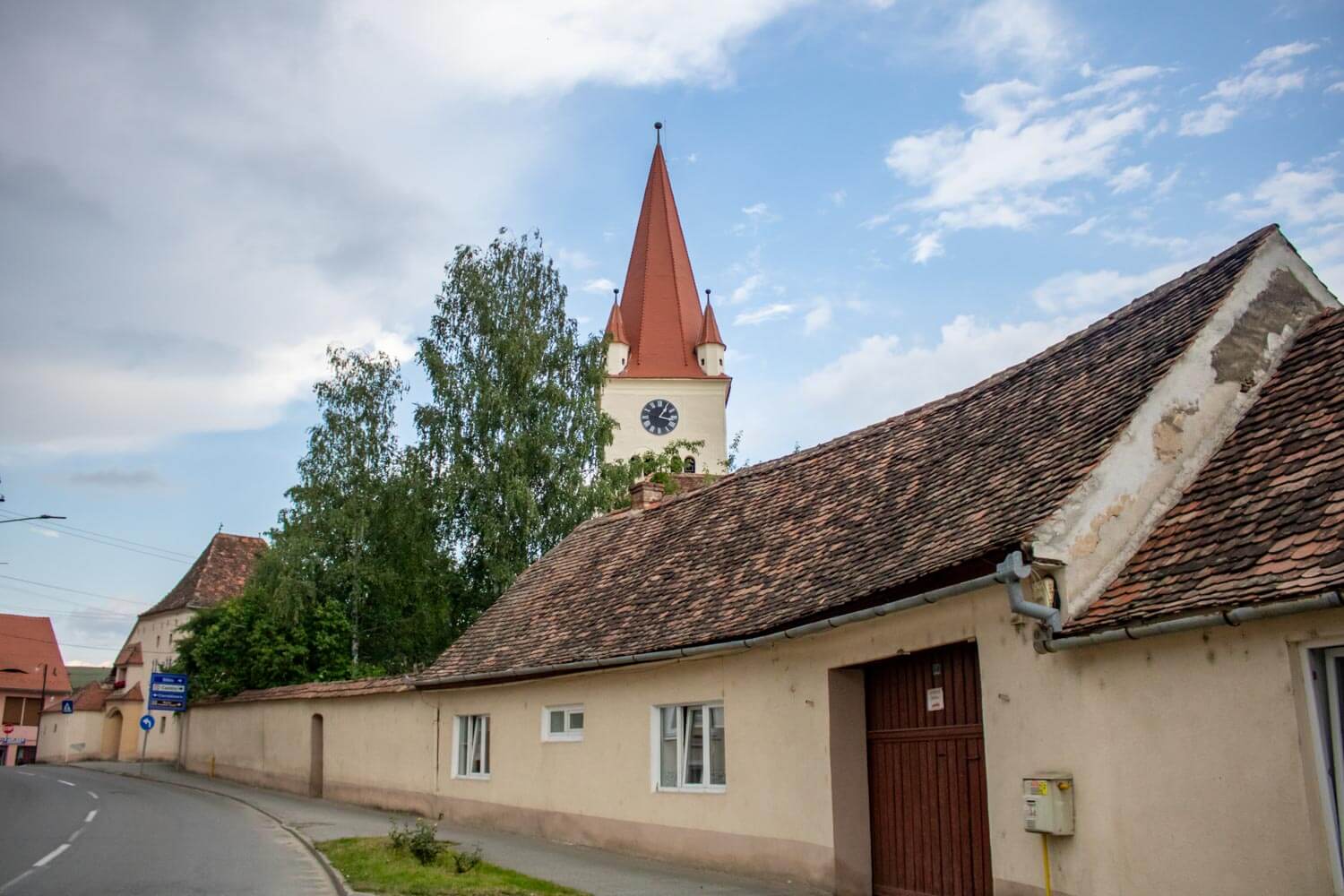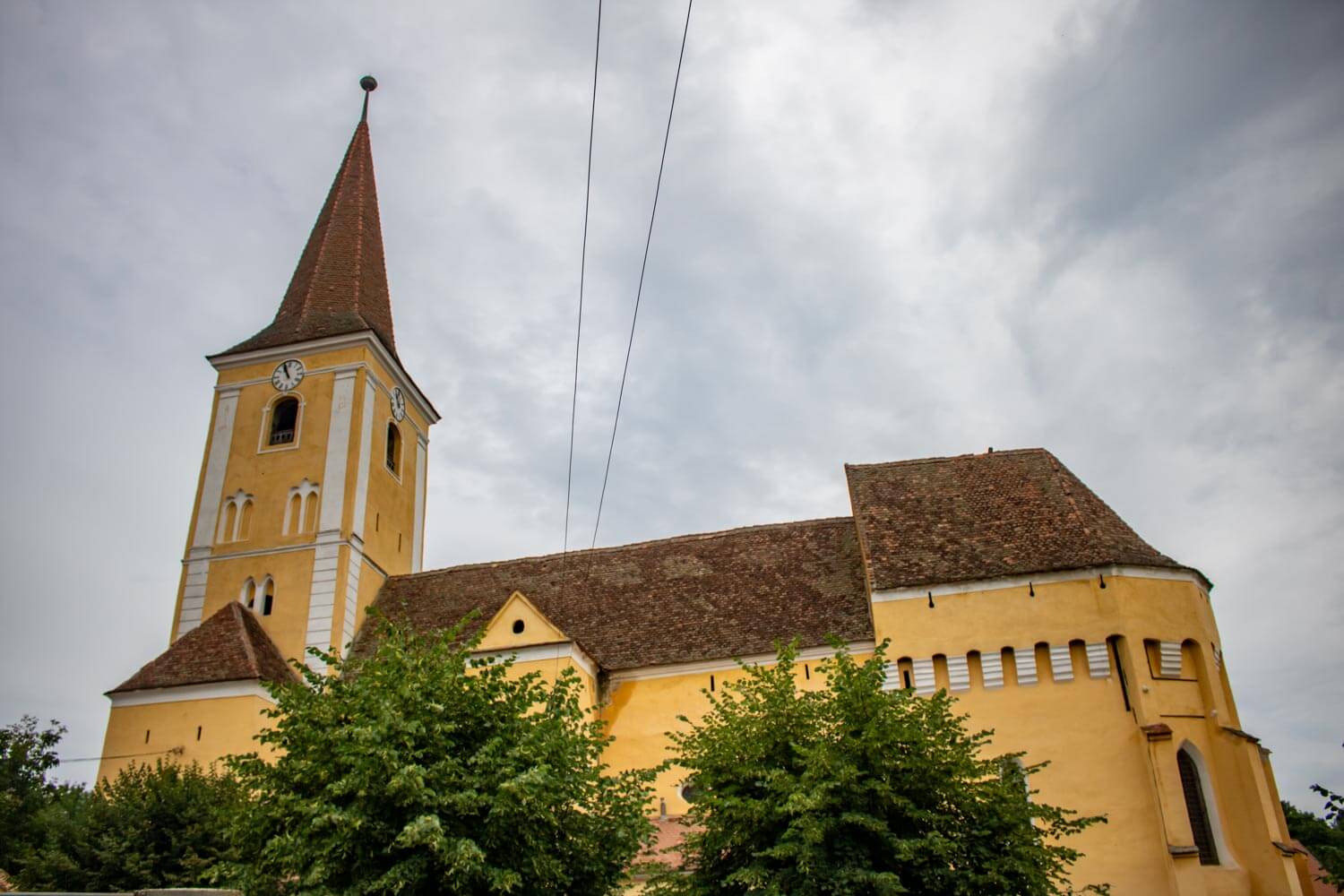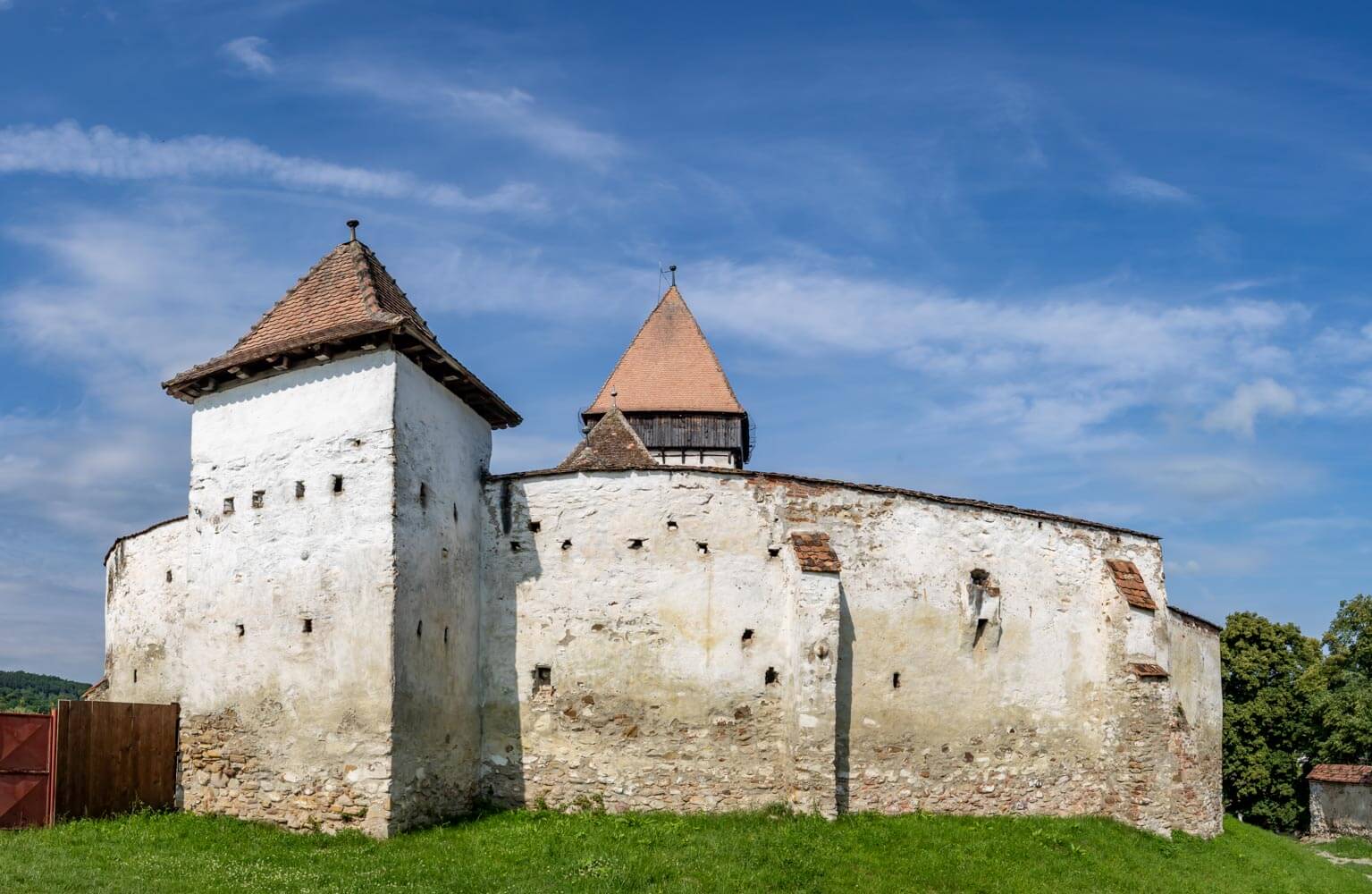


The Fortified Church of Hosman (Biserica Fortificată din Hosman) is a historic Lutheran church and fortified enclosure in Hosman, part of Nocrich commune in Sibiu County. Built around a 13th-century Romanesque basilica, the complex is dominated by a massive tower and a double ring of defensive walls that still give it the appearance of a compact village fortress.
The church dates from the later 13th century, when Hosman was developing as a Transylvanian Saxon settlement in the Hârtibaciu Valley. Its original three-aisled Romanesque plan was altered repeatedly over the following centuries, but the western entrance still preserves important elements of the medieval building. The portal is particularly distinctive, with carved fantastic animals and figures that have been compared with sculpture at Saint Stephen’s Cathedral in Vienna.
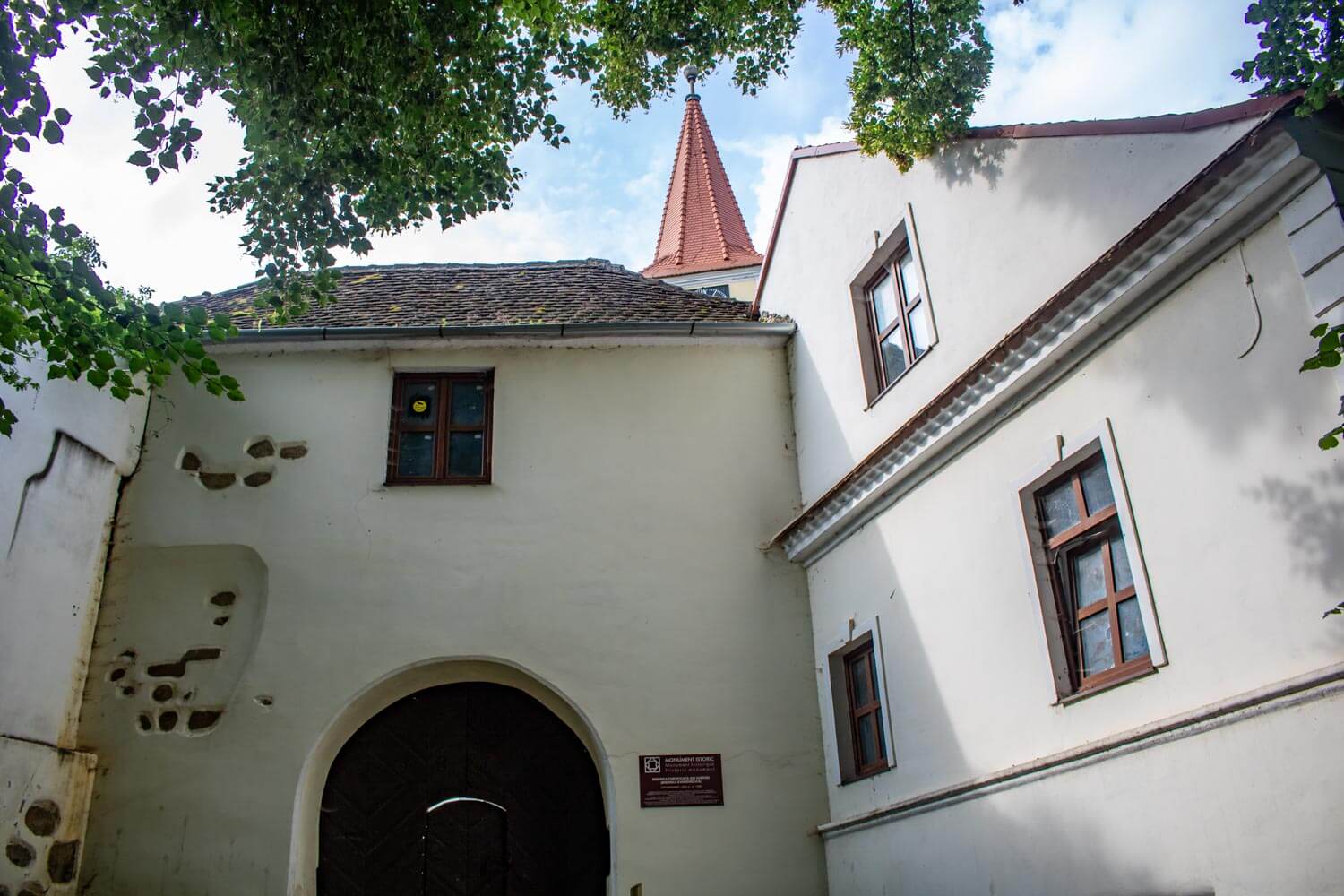
The church was fortified during the 15th and early 16th centuries with two concentric defensive walls, towers and bastions. The gate tower connects the two enclosures and still preserves its wooden portcullis, with the year 1502 visible above it. Hosman was nevertheless attacked and burned in 1456 by the army of Vlad the Impaler, and stone cannon projectiles from the fighting were later incorporated into the enclosure walls.
The tall western tower was also strengthened for defense and eventually took on the character of a keep, giving the church its unusually powerful silhouette. Inside, later alterations changed the medieval basilica considerably, while furnishings from the early 19th century include a Classical altar and pulpit. The organ dates from 1807, although Hosman had an organ as early as 1594, making it one of the earlier documented church organs in the region.
Hosman therefore preserves several layers of the village’s history within a relatively compact site: a Romanesque church, later Lutheran furnishings, and an unusually complete defensive entrance with its double walls and surviving portcullis. The fortified church still stands at the center of the village, with the tower rising prominently above the surrounding houses and the Făgăraș Mountains visible in the distance.