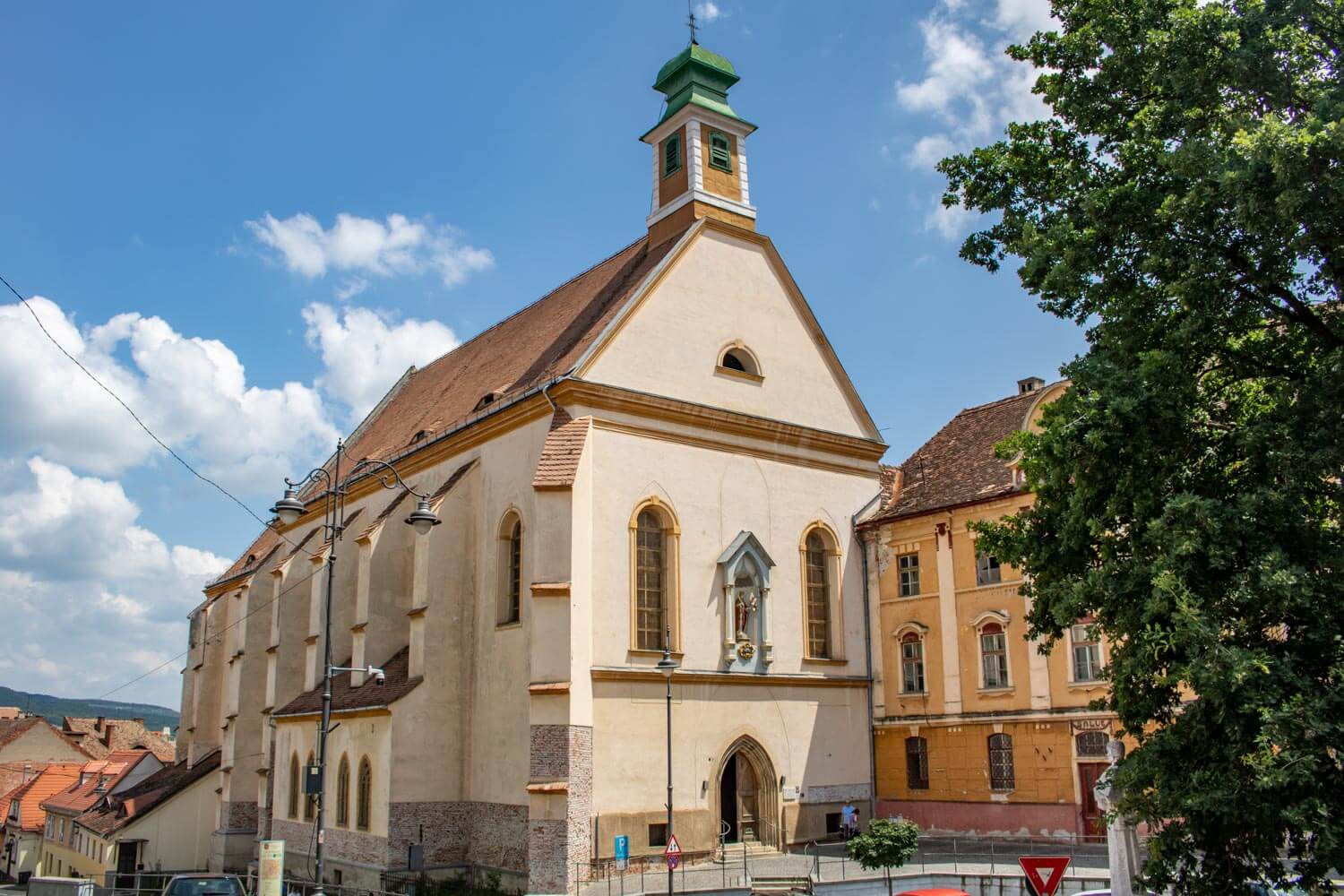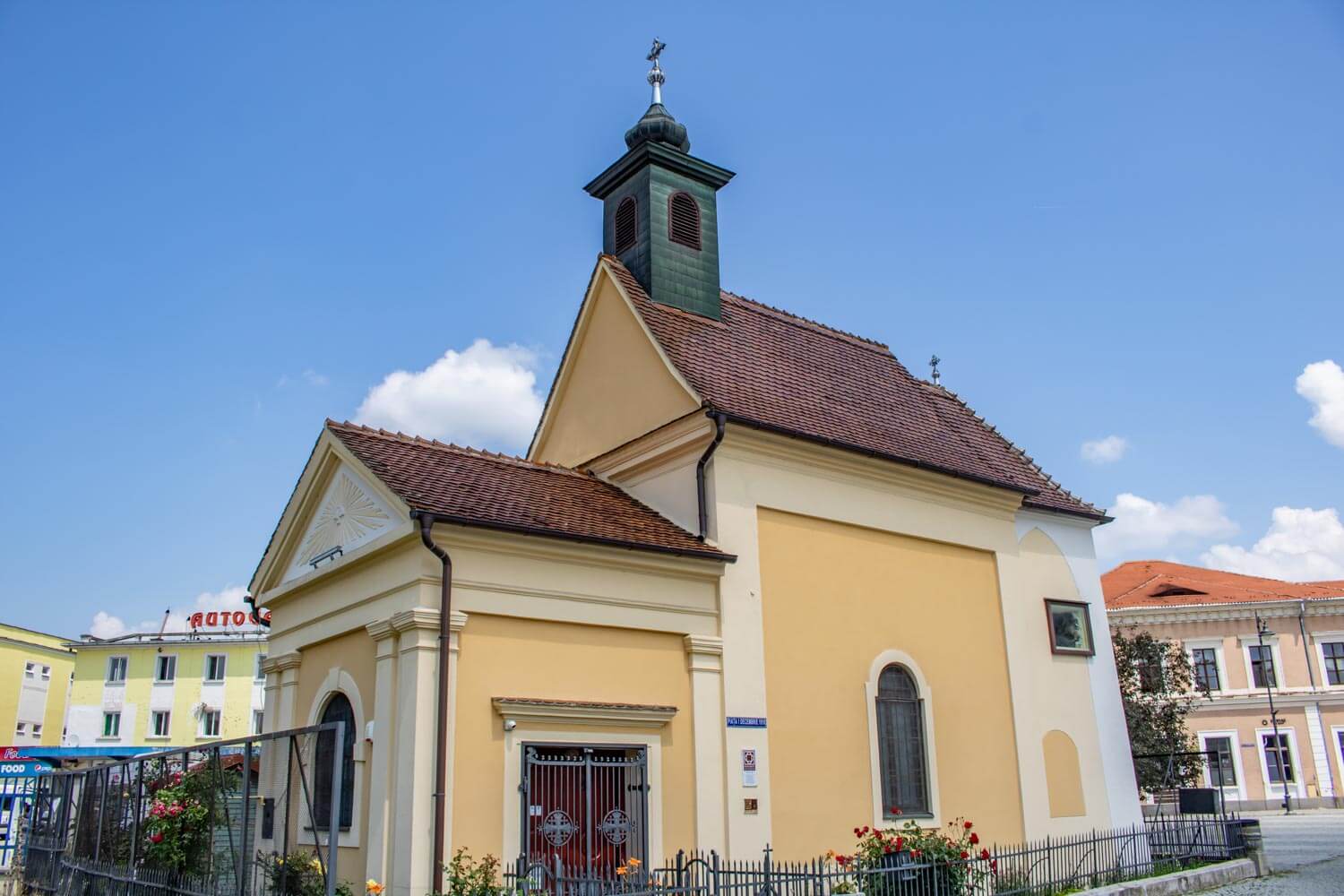
The Holy Cross Chapel (Capela Sfintei Cruci) is a Roman Catholic chapel near the Sibiu Train Station, built around a monumental Gothic crucifix that survives from a much older Dominican church once standing outside the medieval city walls.
A Dominican monastery occupied this site from the 13th century, but the religious community eventually moved inside the fortified city after repeated attacks left the complex vulnerable. Before that move, the monastery church had received its most remarkable work of art: a monumental stone Calvary carved in 1417 by the Austrian sculptor Petrus Lantregen. Cut from a single block of stone and rising about 7.3 meters, it depicts the crucified Christ flanked by the Virgin Mary and Saint John.
The abandoned Dominican complex later served as a refuge for the sick and poor, becoming known as the Church of the Suffering. During the siege of Sibiu in 1659, the city authorities demolished the old church so it could not be used by attackers, leaving the great crucifix buried beneath rubble and mud. It remained there for 24 years before being uncovered in 1683.
The recovered sculpture was initially protected on the site before a permanent chapel gradually developed around it, with the present building inaugurated in 1755. The enormous crucifix still dominates the interior today, filling much of the space behind the altar and making the chapel one of Sibiu’s most unusual surviving medieval religious monuments.