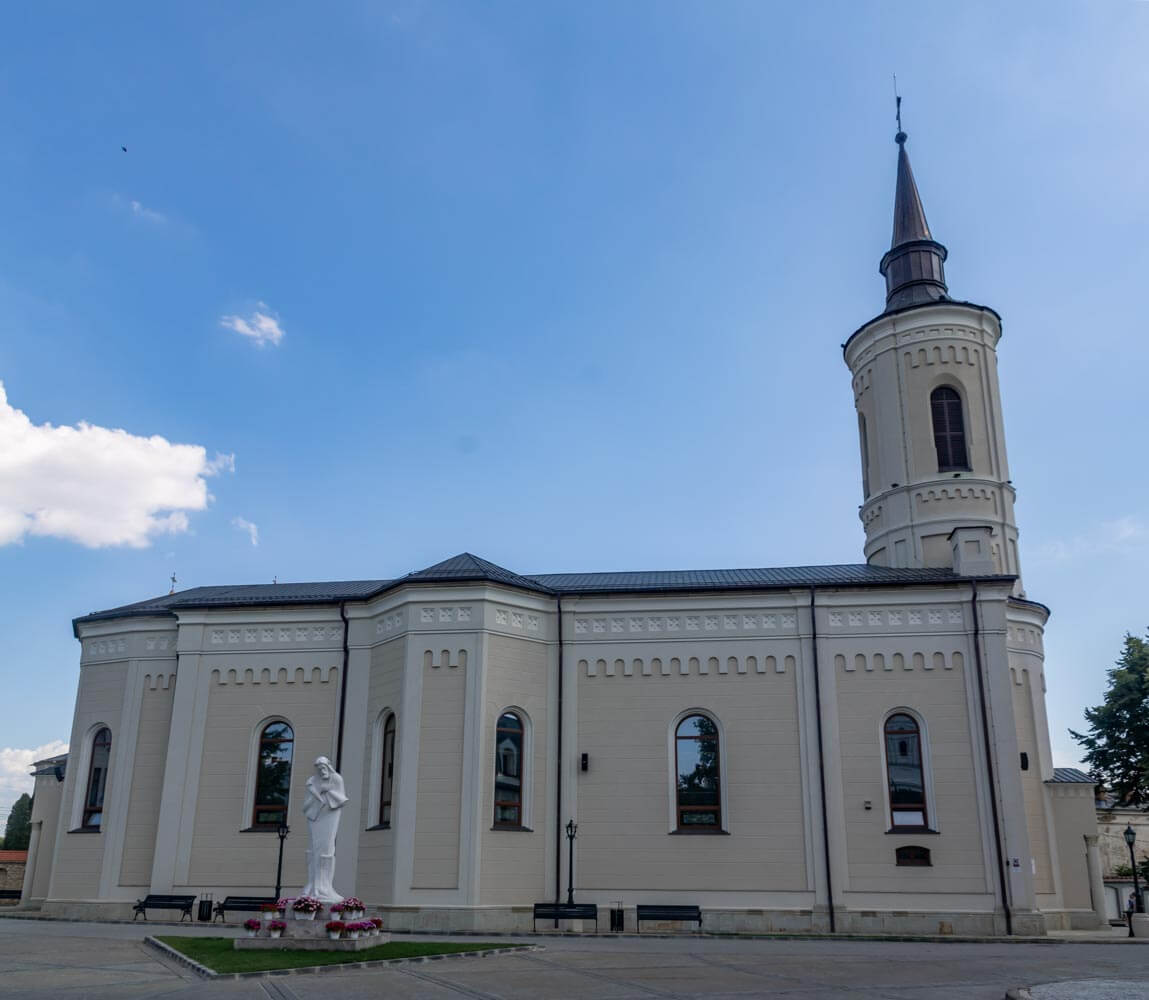
The Old Metropolitan Cathedral of Saint George (Catedrala Mitropolitană Veche „Sfântul Gheorghe”) is an 18th-century Orthodox church within the Metropolitan Complex of Iași. It served as the metropolitan cathedral of Moldavia for more than a century, until the completion of the present Metropolitan Cathedral in 1887.
The church was founded by Metropolitan Gavriil Calimachi, who began its construction in 1761. By then, Iași had been the seat of the Moldavian metropolitan for almost a century, with the older Stratenia Church serving as its cathedral on the site of the present Metropolitan Cathedral. Calimachi’s new foundation provided a larger church dedicated to Saint George, restoring the patron saint of the former metropolitan cathedral in Suceava. Completed around 1769, it took over the cathedral’s religious functions, becoming the setting for episcopal ordinations and important ceremonies of the Moldavian Orthodox Church.
Throughout its history, the cathedral underwent several repairs and alterations, particularly after fires in 1785 and 1827. Metropolitan Iacov Stamate oversaw repairs following the first fire, while Metropolitan Veniamin Costachi initiated further reconstruction after the second, including the restoration of the iconostasis in 1830-1831. Despite these changes, the church retained its position as the metropolitan cathedral until 1887, when its functions passed to the much larger cathedral nearby.
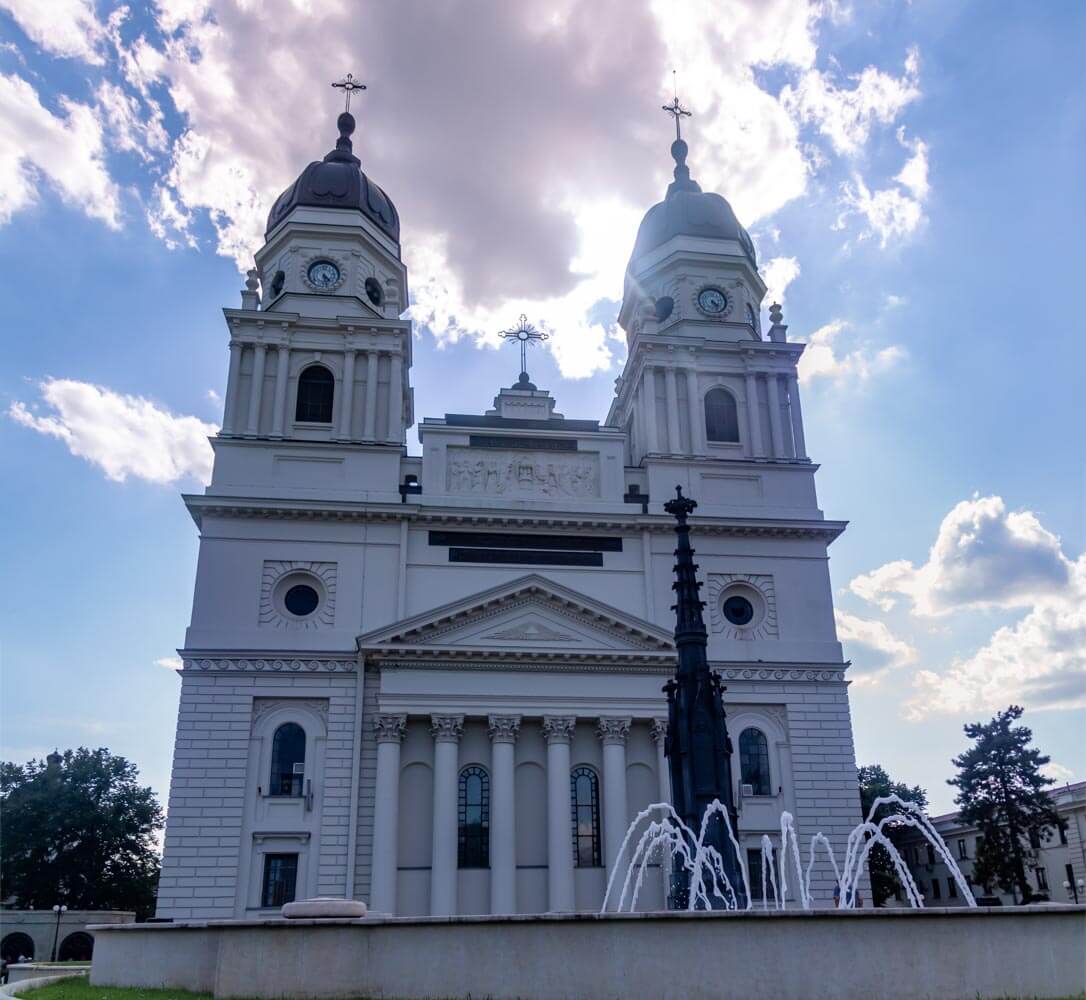
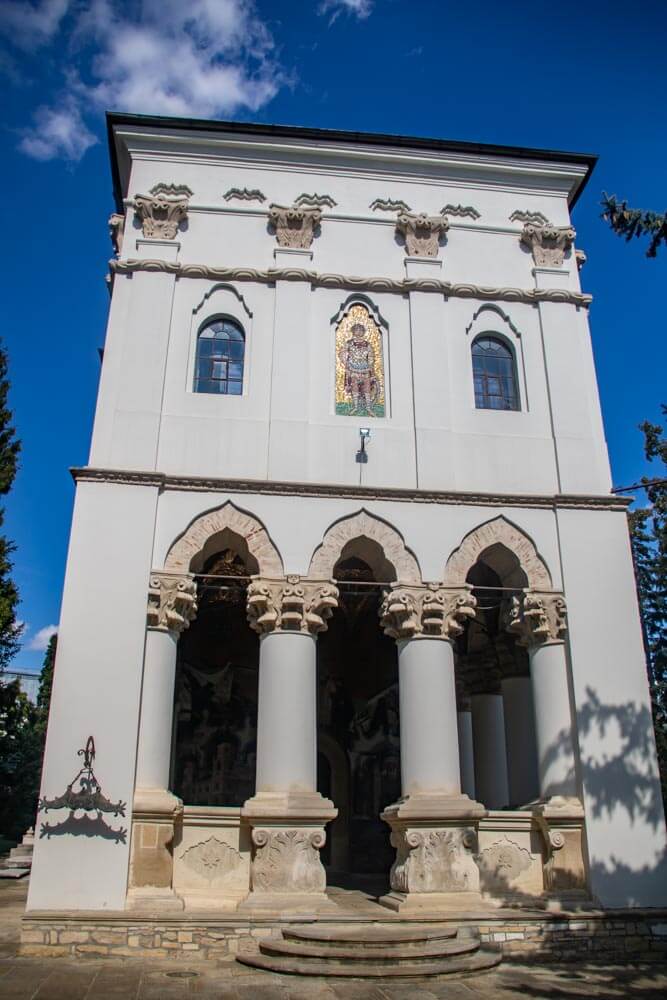
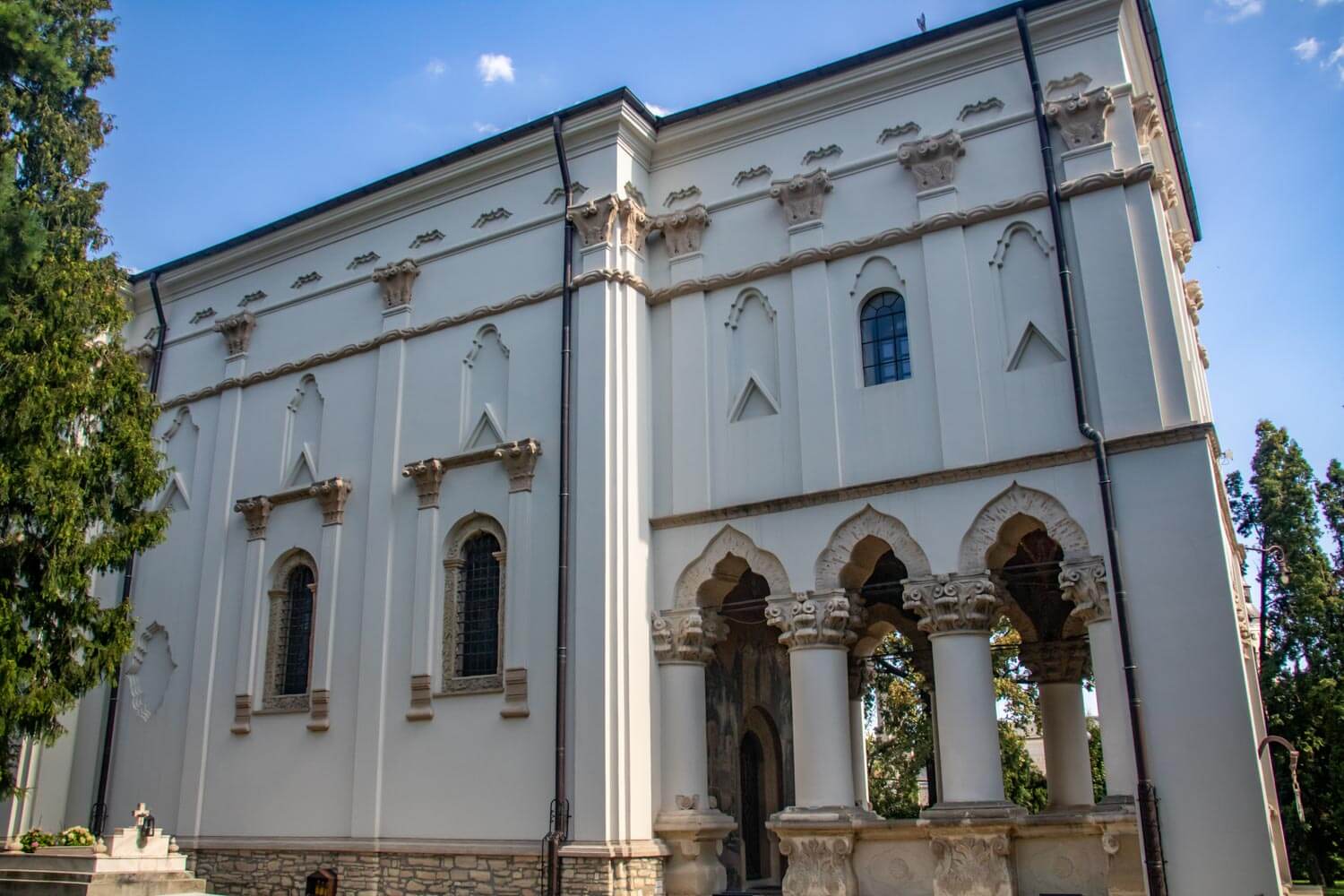
The building is distinguished by its Constantinopolitan Baroque architecture, combining traditional Moldavian church forms with elaborate decorative influences from the Ottoman capital. Its relatively low, elongated structure has shallow lateral apses and richly ornamented white façades, divided by pilasters with Corinthian capitals. Pointed and multilobed decorative arches, together with a continuous twisted band running around the walls, give the exterior its distinctive appearance. The entrance features a monumental portico with large columns, which were concealed when the spaces between them were enclosed and subsequently revealed during restoration work.
Inside, the most remarkable historical feature is the Baroque iconostasis, made from gilded limewood with elaborate stucco decoration. Its dense carvings combine intertwining vines, leaves, flowers, and animals, including lions, griffins, and the double-headed eagle. Several icons survive from earlier periods, among them representations of Christ and Saint George painted by Eustatie Altini in 1805. The iconostasis also incorporates the coat of arms of Moldavia above its central doors.
The interior walls are covered with Neo-Byzantine frescoes painted between 1997 and 1999 by Vasile Buzuloiu and his collaborators. The entrance portico contains mosaics, including a composition commemorating the arrival of Saint Andrew’s relics in Iași in 1996, as well as several historical tombstones. Among those buried in and around the church are Metropolitan Gavriil Calimachi, its founder, and his successors Leon Gheucă, Iacov Stamate, Meletie Lefter, and Sebastian Rusan.
Following a period during which it accommodated the Metropolitan Museum, the church underwent extensive restoration and returned to religious use in 1999. It was reconsecrated in 2000, with Saint Theodora of Sihla added as its second patron saint. Today, it functions as a chapel for the monastic community of the metropolitan residence.