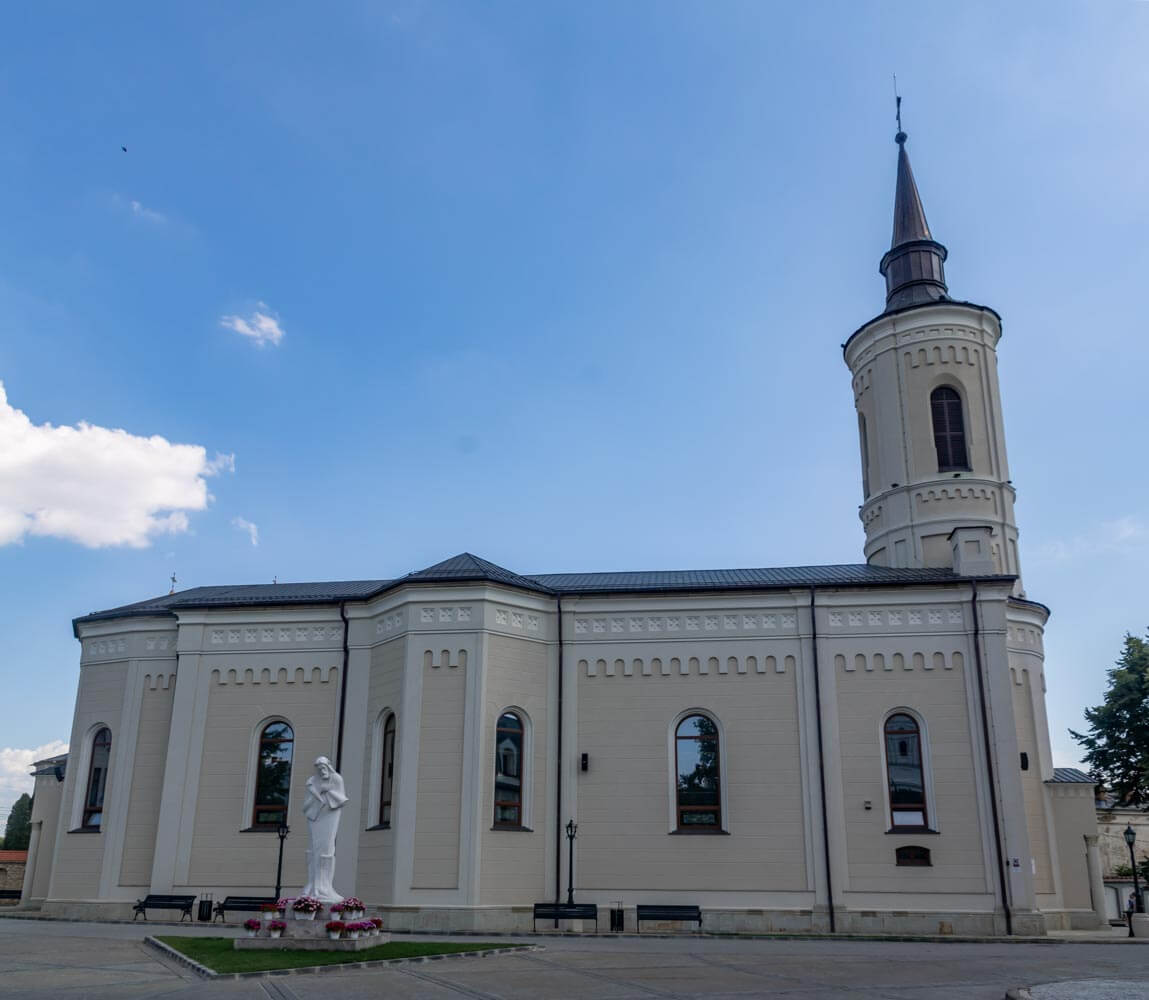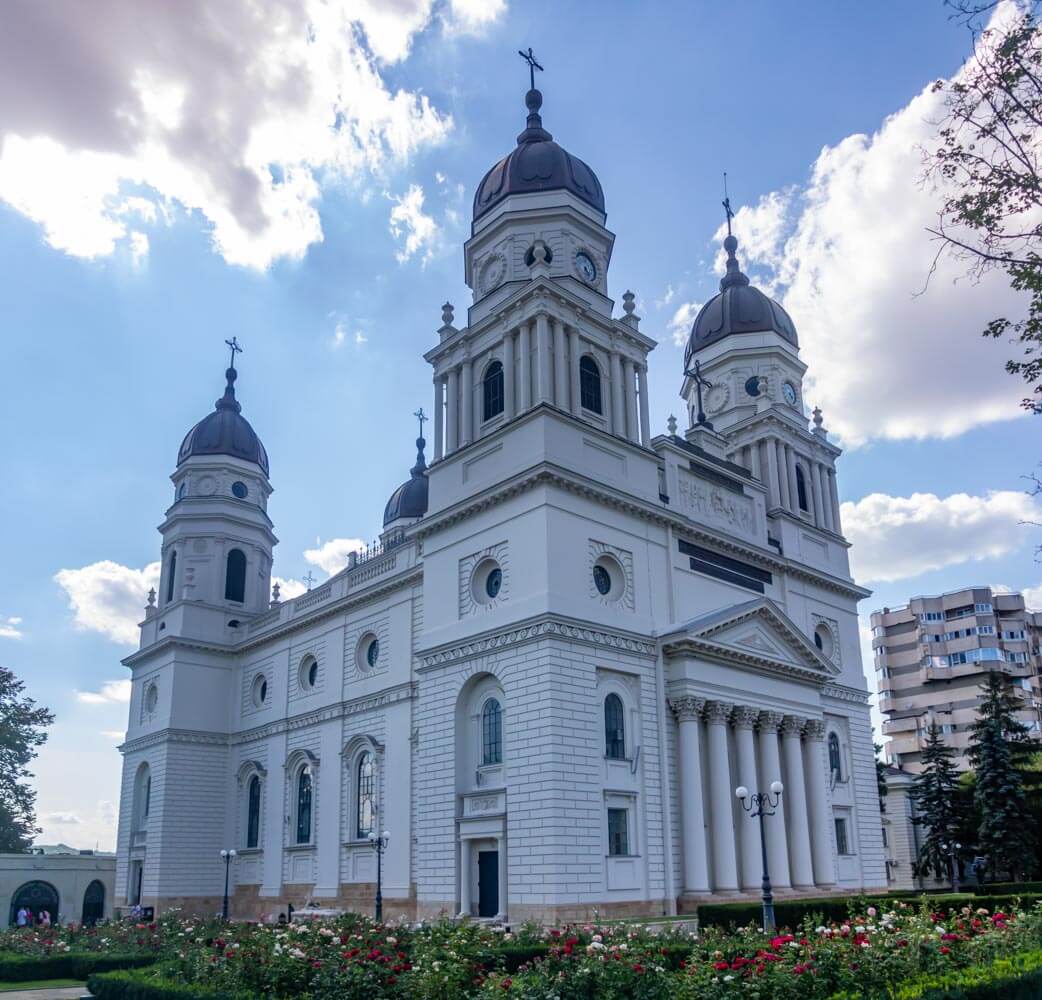
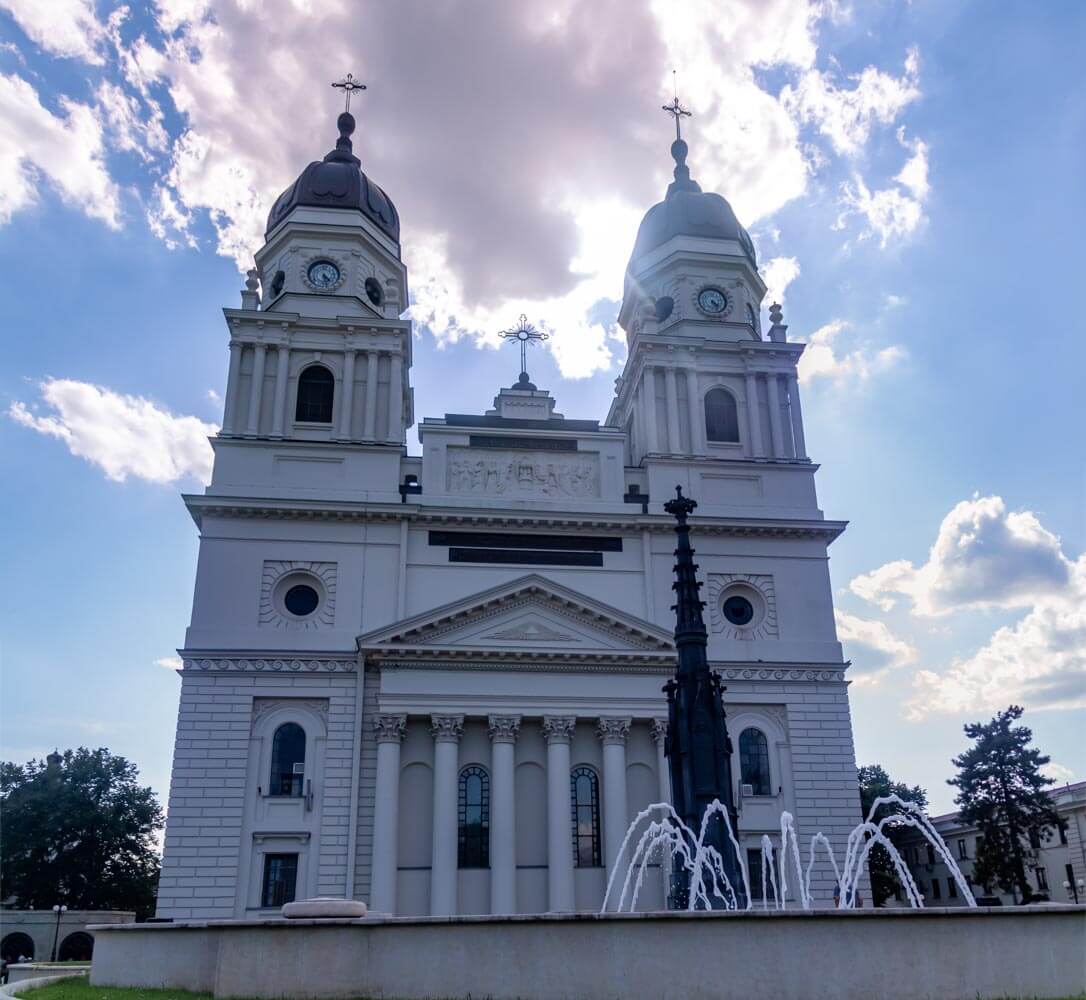
The Metropolitan Cathedral of Iași (Catedrala Mitropolitană din Iași) is a monumental 19th-century Orthodox cathedral at the heart of the Metropolitan Complex of Iași. Dedicated to Saint Paraskeva, the Presentation of the Lord, and Saint George, it is distinguished by its imposing Neoclassical architecture, richly decorated interior, and its role as one of Romania’s major Orthodox pilgrimage destinations.
The cathedral stands on the site of two earlier churches: the 15th-century White Church and the 17th-century Stratenia Church, which had served as the metropolitan cathedral before this function passed to the nearby Church of Saint George in the 18th century. Plans to replace Stratenia with a much larger cathedral emerged under Metropolitan Veniamin Costachi, who obtained approval for the project from Prince Ioan Sandu Sturdza in 1826. The old church was eventually demolished to clear the site for the monumental new building, whose construction began in 1833.
The project followed designs by Viennese architects Johann and Gustav Freiwald, who envisioned a monumental church with four corner towers and a large central dome. However, the ambitious design encountered serious structural problems, with the enormous weight of the central dome causing cracks in the walls and eventually leading to its collapse. Following Veniamin Costachi’s departure in 1842, construction remained suspended for almost four decades, leaving the unfinished cathedral standing in the center of Iași.
Work finally resumed in 1880 through the efforts of Metropolitan Iosif Naniescu, with architect Alexandru Orăscu undertaking a substantial redesign. He abandoned the central dome, introduced two rows of massive interior supports, and replaced the original roof structure with four vaulted sections separated by transverse arches. The cathedral was completed in 1886 and consecrated on April 23, 1887, in the presence of King Carol I and Queen Elisabeth, who had contributed to its completion and furnishings. Its dedications to the Presentation of the Lord and Saint George were inherited from the earlier metropolitan churches.
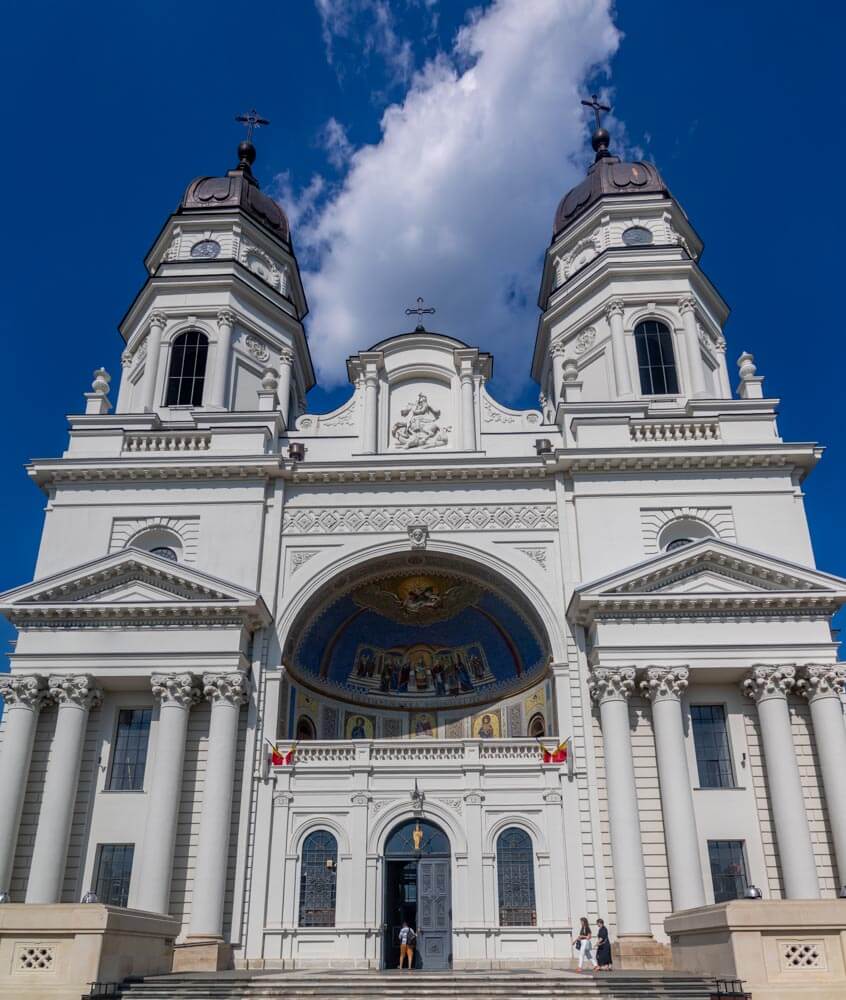
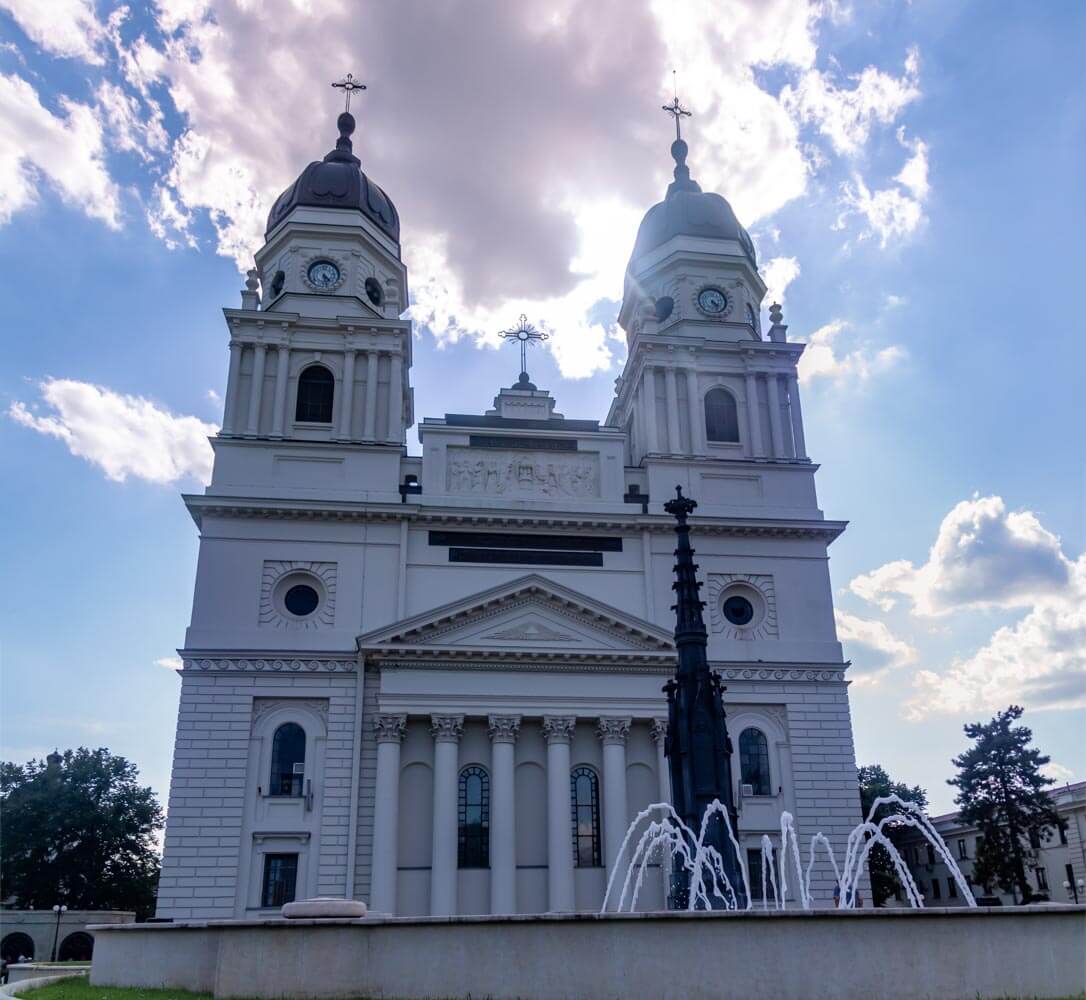
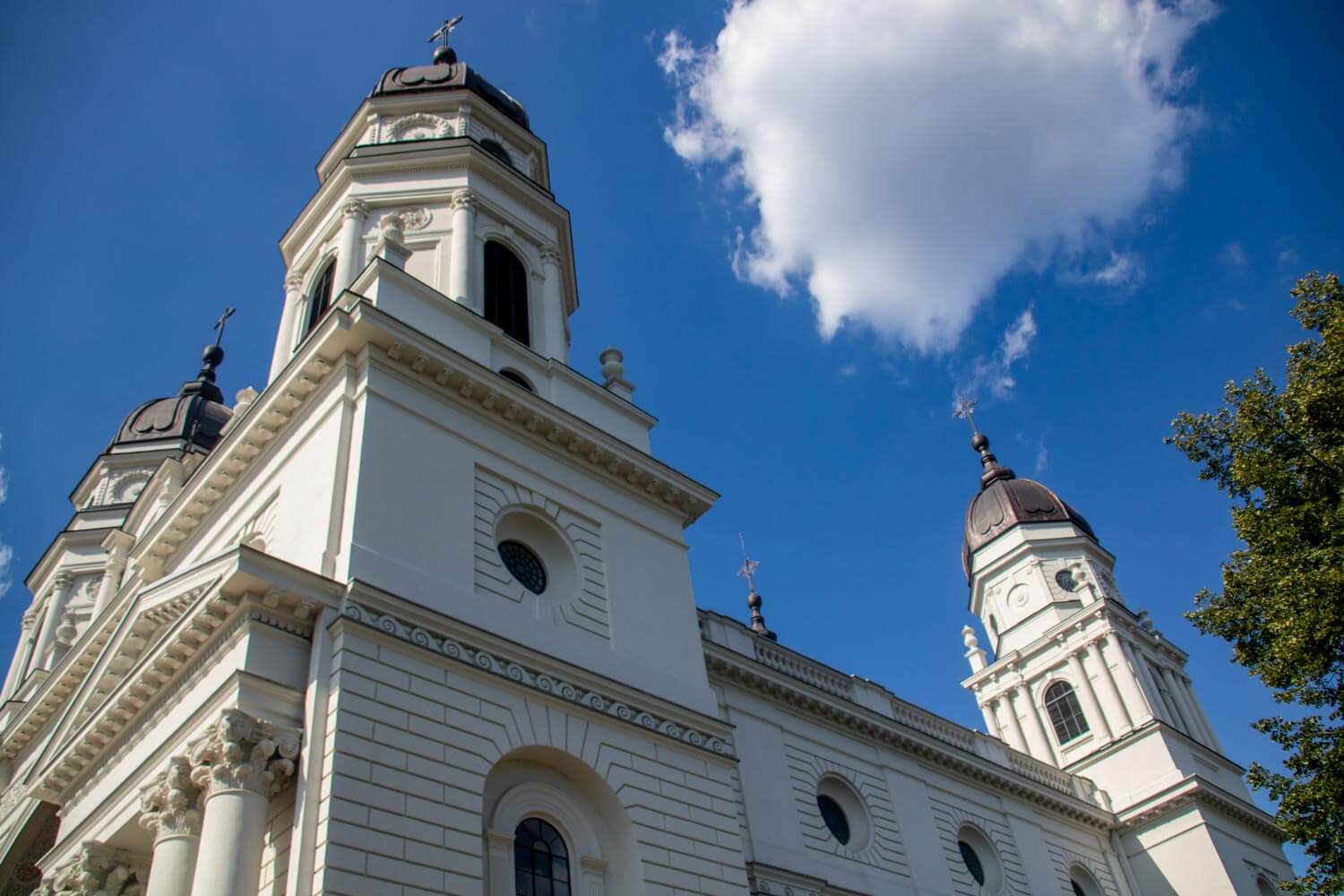
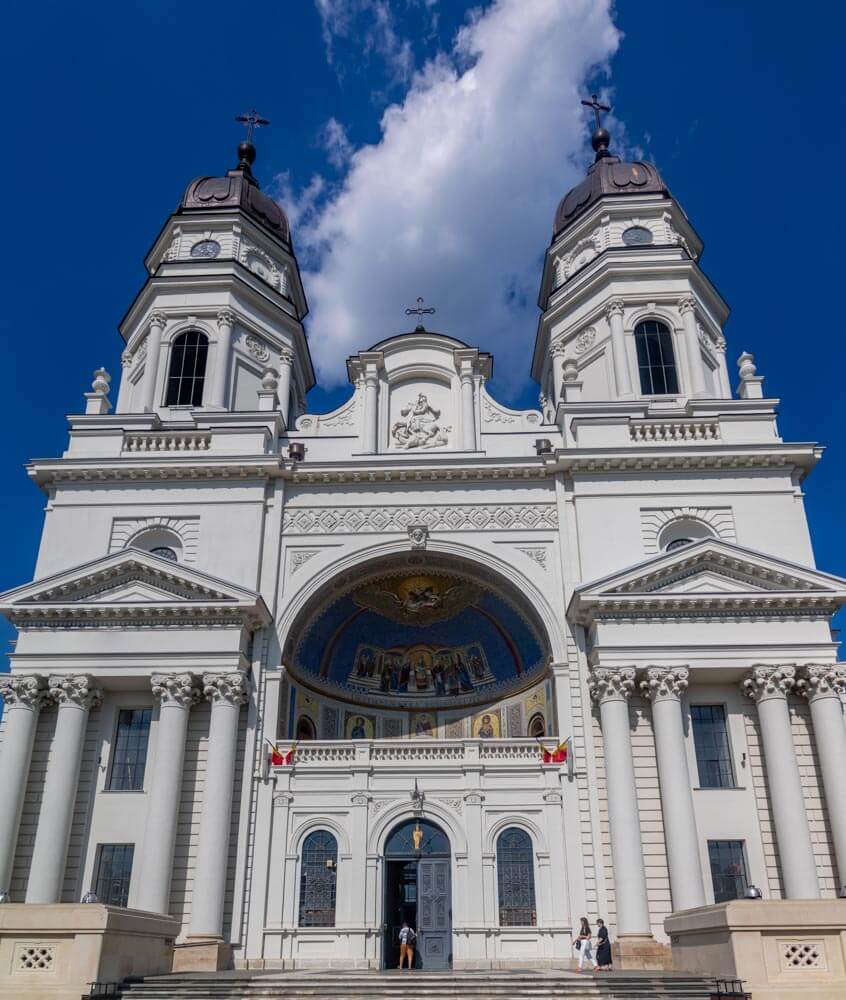
The cathedral’s monumental exterior combines Neoclassical architecture with influences from the Italian Renaissance and Baroque. Its rectangular structure is crowned by four domed corner towers, while the principal façade features a large recessed arch above the entrance, flanked by classical porticoes and columns. A mosaic depicting the Presentation of Jesus at the Temple decorates the entrance, with a relief of Saint George above it.
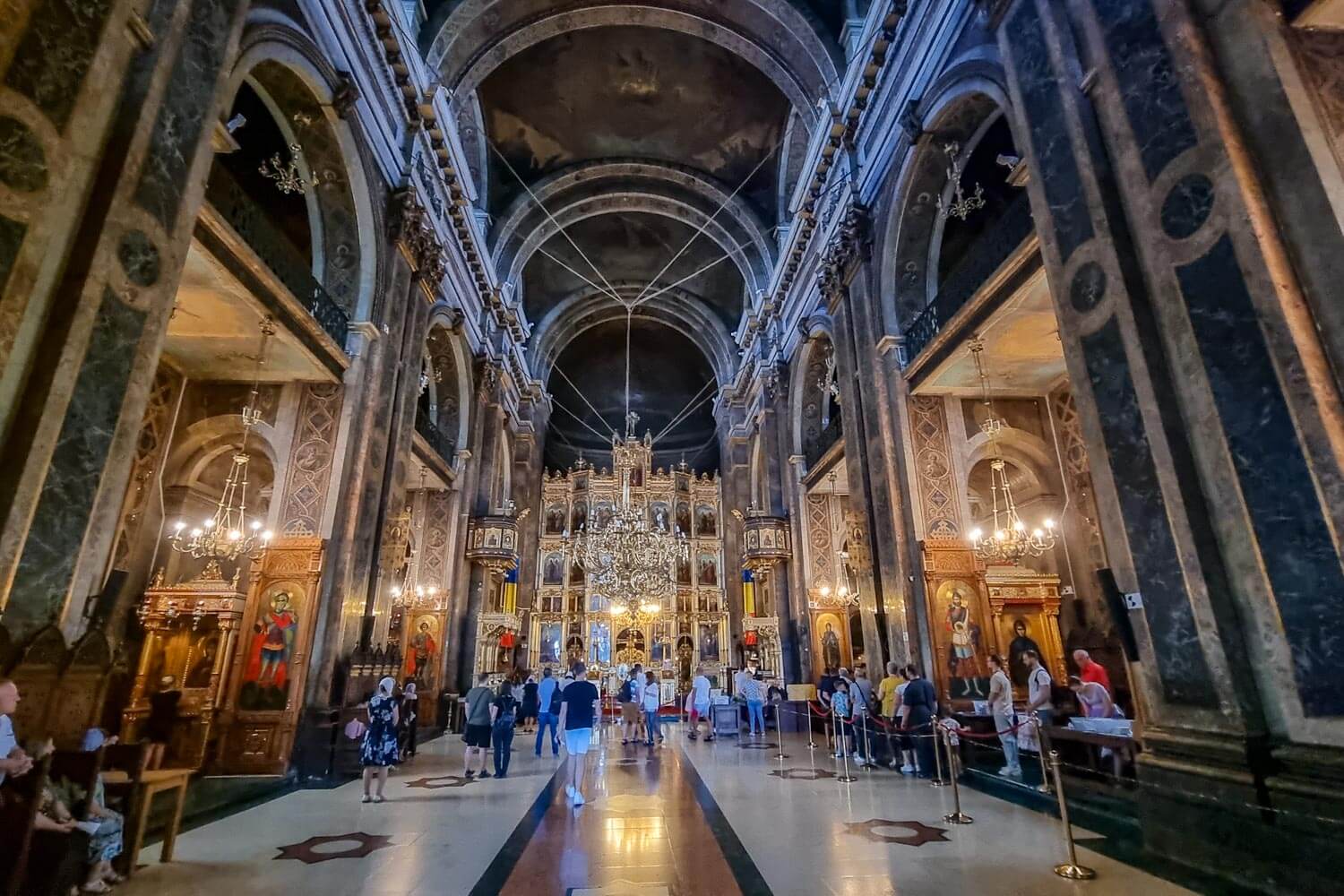
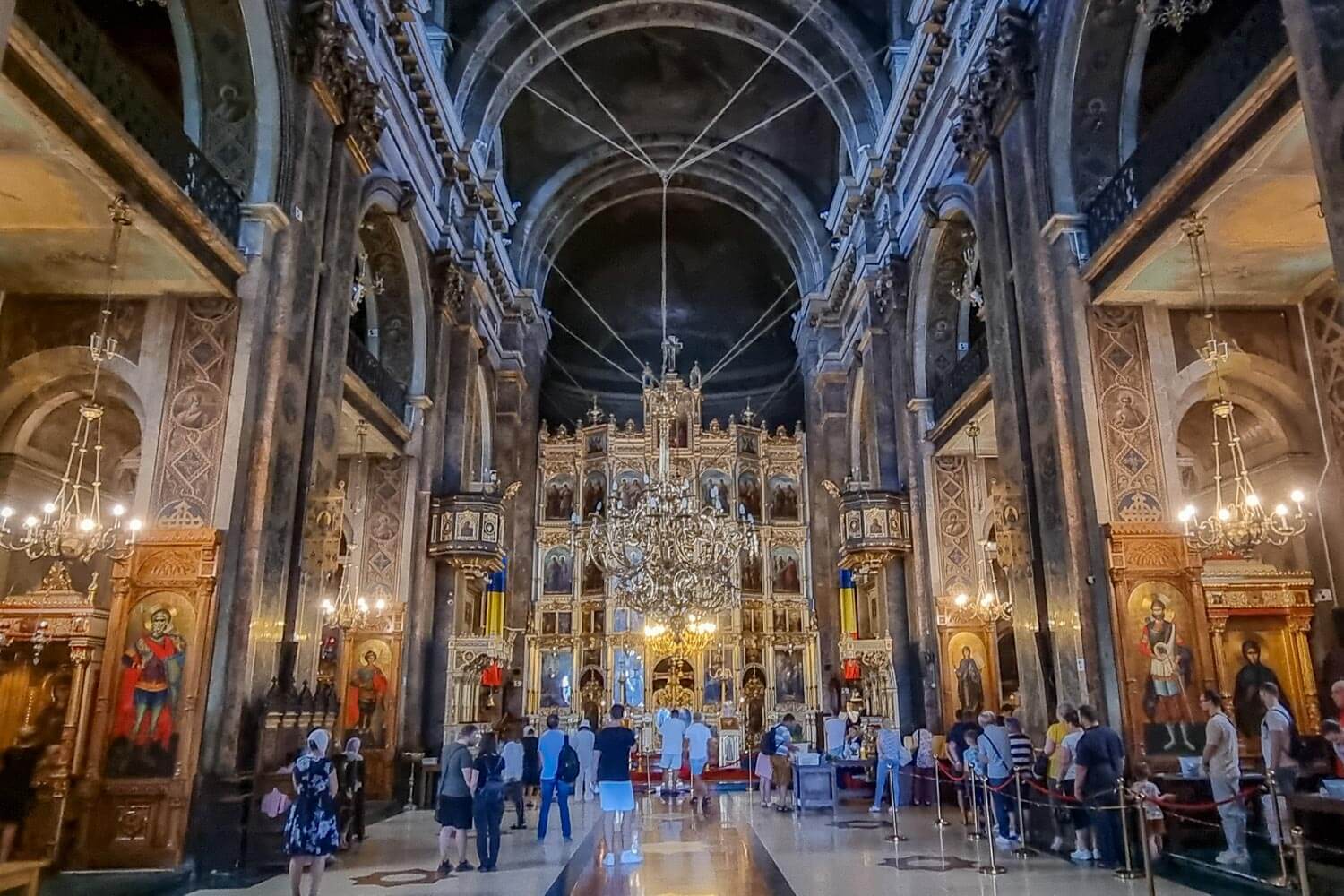
Inside, the spacious central nave is separated from two narrower side aisles by imposing marble-clad supports and rounded arches. The walls and four broad vaults are covered with more than 250 painted compositions by Gheorghe Tăttărăscu, who combined traditional Orthodox religious subjects with the academic painting techniques he had studied in Italy. Near the entrance are portraits of King Carol I and Queen Elisabeth, alongside Metropolitans Veniamin Costachi and Iosif Naniescu, commemorating those who contributed to the cathedral’s construction. Light enters through ten large stained-glass windows donated by the royal family.
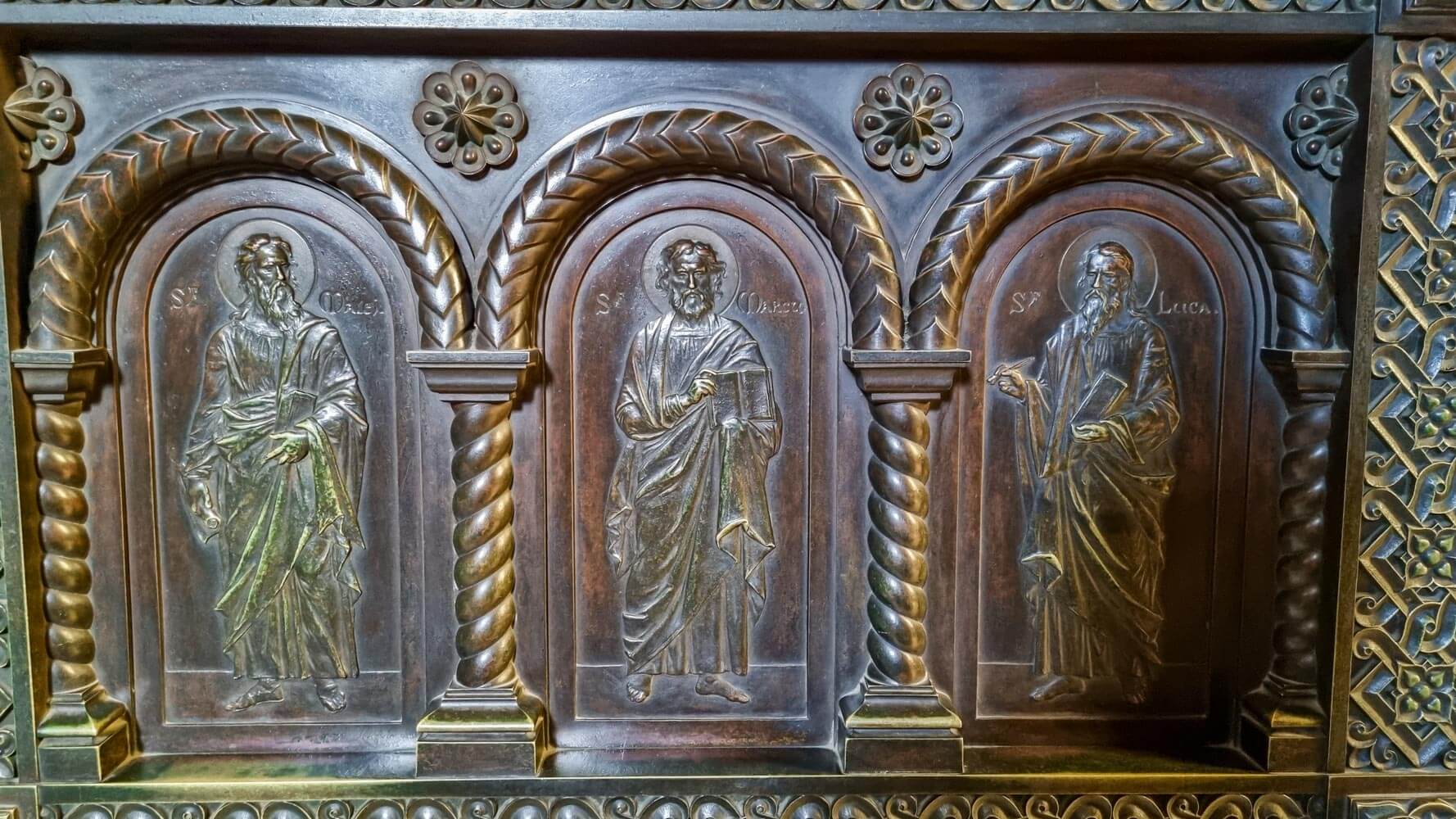
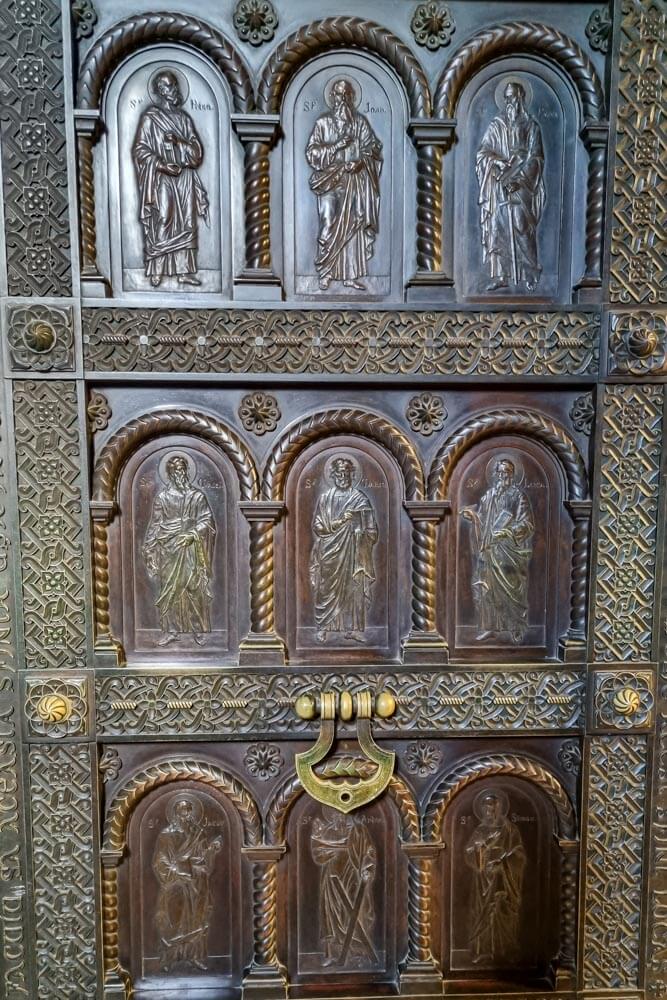
The monumental gilded iconostasis is another distinctive feature of the interior. Measuring approximately 13.5 meters high, it was carved from limewood by sculptor D. Babic and decorated with elaborate floral and vegetal motifs. Its painted icons, also executed by Tăttărăscu, form part of the cathedral’s extensive 19th-century artistic decoration. The interior also contains richly ornamented royal and episcopal thrones, chandeliers, and numerous religious artworks.
The cathedral’s most important religious treasure is the silver reliquary containing the relics of Saint Paraskeva, the patron saint of Moldavia. Originally brought to Iași in 1641 by Prince Vasile Lupu and kept at the Holy Three Hierarchs Monastery, the relics were transferred to the cathedral in 1889 and placed on the southern side of the nave. They attract pilgrims throughout the year, particularly around the saint’s feast day on October 14, when extensive religious celebrations take place in Iași. The cathedral also houses part of the relics of Saint George.
Beneath the cathedral and the surrounding western terrace is the Metropolitan Museum, which presents the religious and artistic heritage of the metropolitan institution through a series of underground exhibition halls.