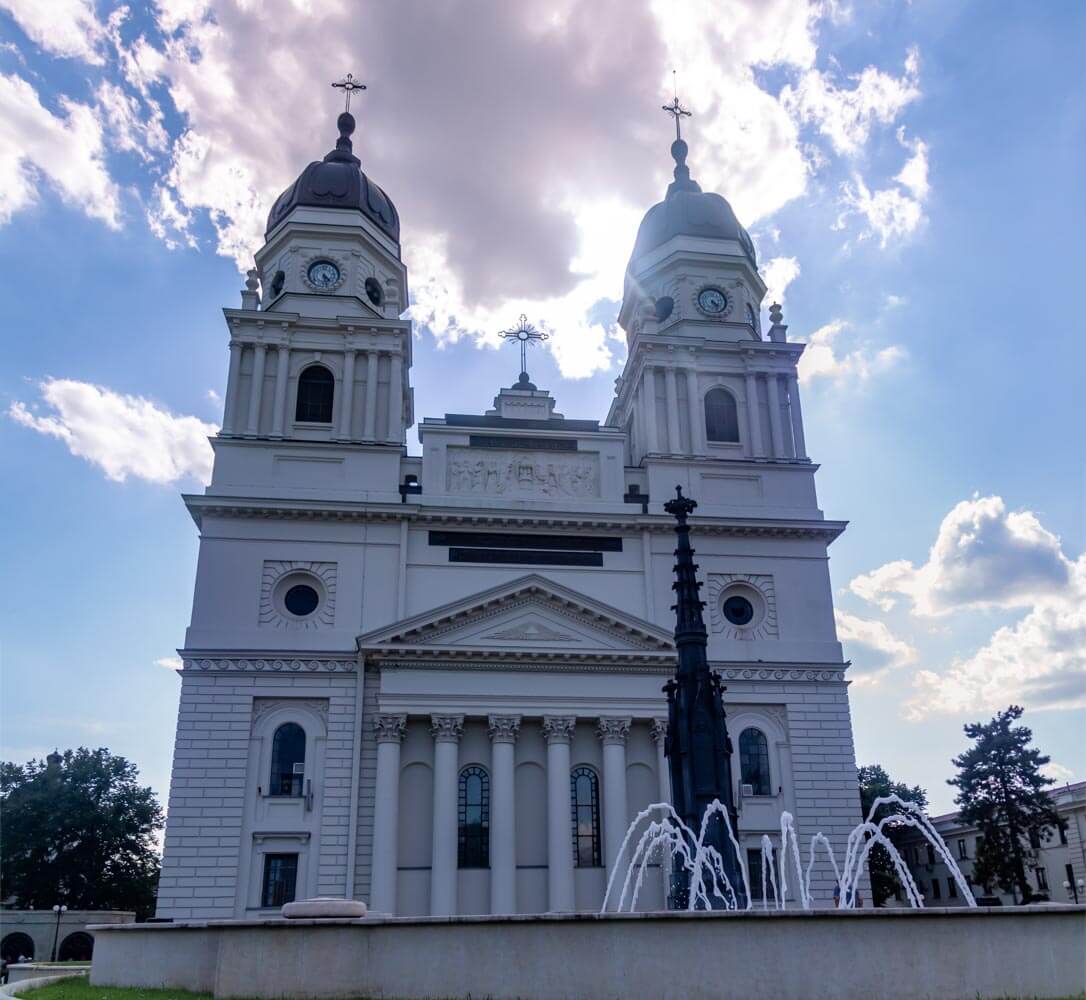
The Fountain of Mihail de Hodocin (Fântâna lui Mihail de Hodocin) is a decorative 19th-century fountain within the Metropolitan Complex of Iași, in front of the Metropolitan Cathedral. Built in 1851, it combines a practical origin in the modernization of the city’s water supply with an unusually elaborate Gothic-inspired iron design.
The fountain was created during the reign of Grigore Alexandru Ghica, when Iași began developing a more modern water-supply system under the direction of Mihail de Hodocin, an engineer from Moravia. Hodocin also designed this fountain, which was cast in a foundry in Moravia and installed as part of the wider improvements to the city’s water infrastructure. Although it later lost its original function, it remained in place as one of the distinctive smaller monuments of the metropolitan ensemble.
Its design is very different from a conventional stone fountain. A low circular basin surrounds a tall wrought-iron structure that rises in several narrowing stages, with pointed Gothic forms and dense openwork decoration giving it the appearance of a small ornamental spire. The use of iron reflects a broader 19th-century European interest in the material for architecture, monuments, and decorative objects, while the Gothic styling gives the fountain a particularly vertical and delicate appearance beside the much heavier masonry of the surrounding buildings.
The fountain also has an unusual relationship with the Metropolitan Museum created beneath the complex. Directly below it is the museum’s circular Baptistery Hall, whose central skylight opens toward the fountain above. This alignment links the historic courtyard monument with one of the newer underground spaces added during the restoration of the Metropolitan Complex.