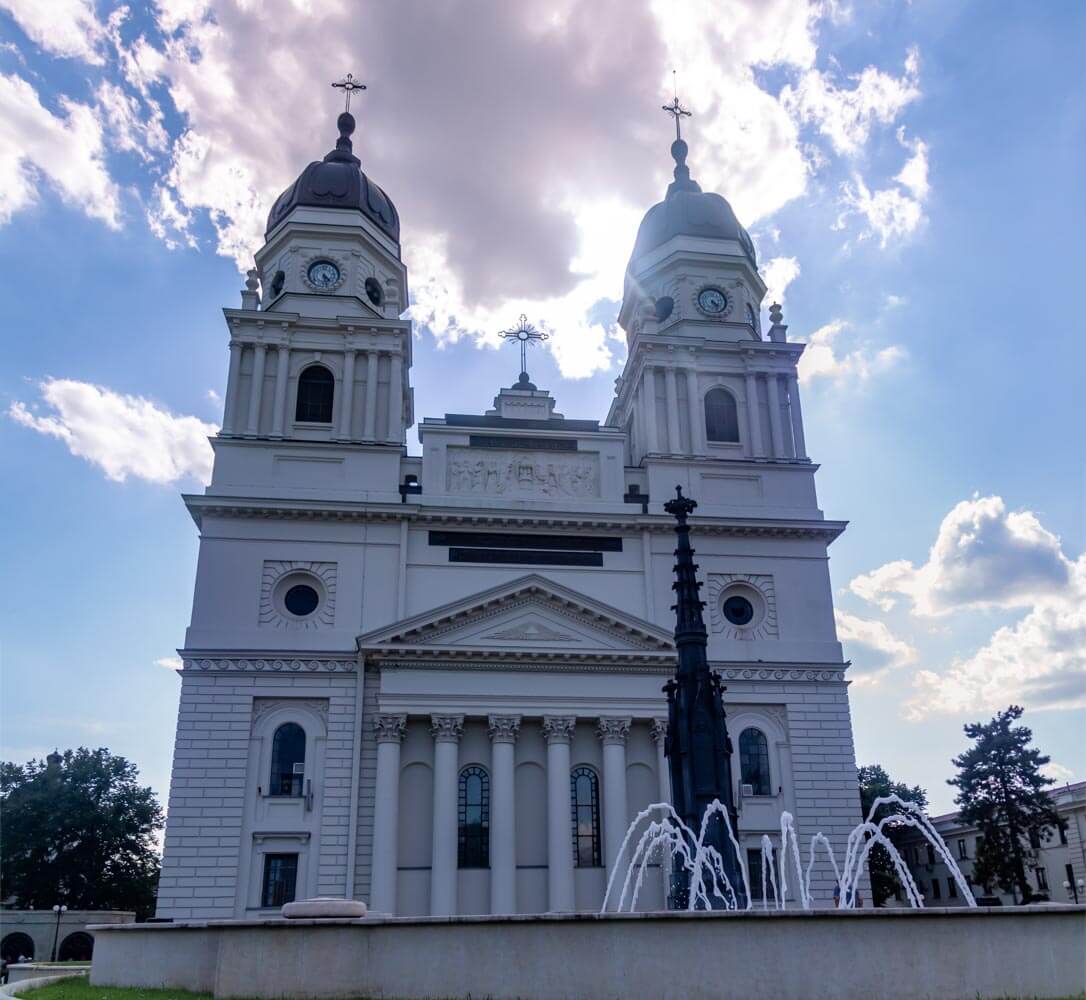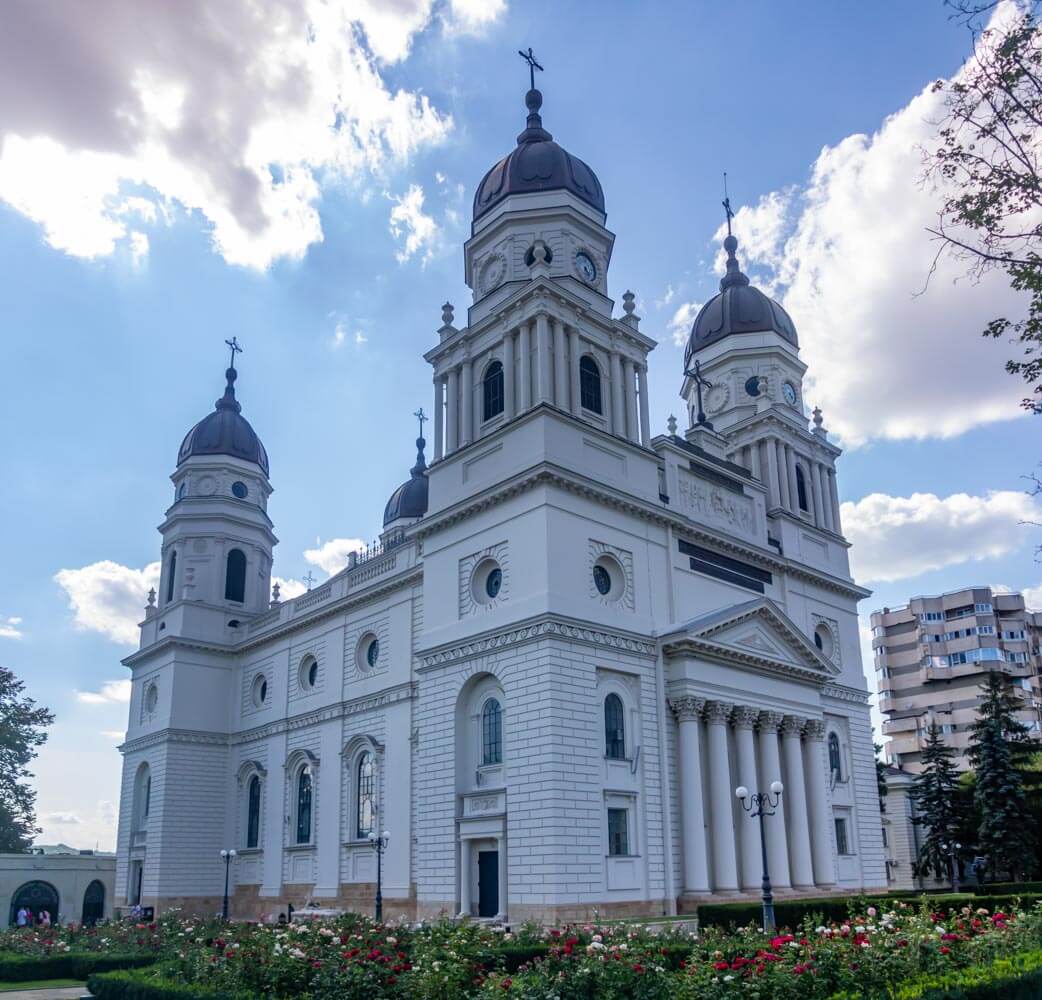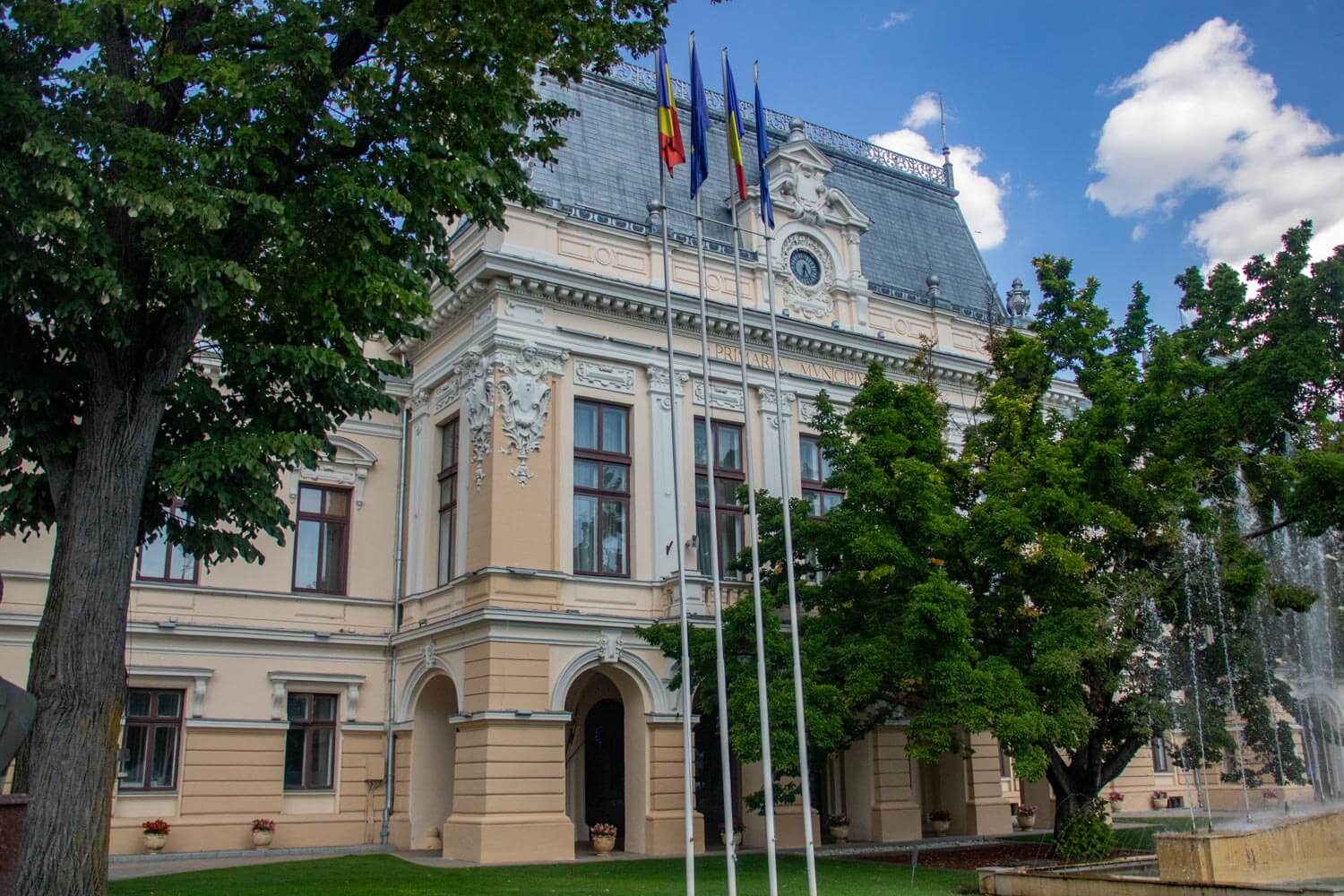
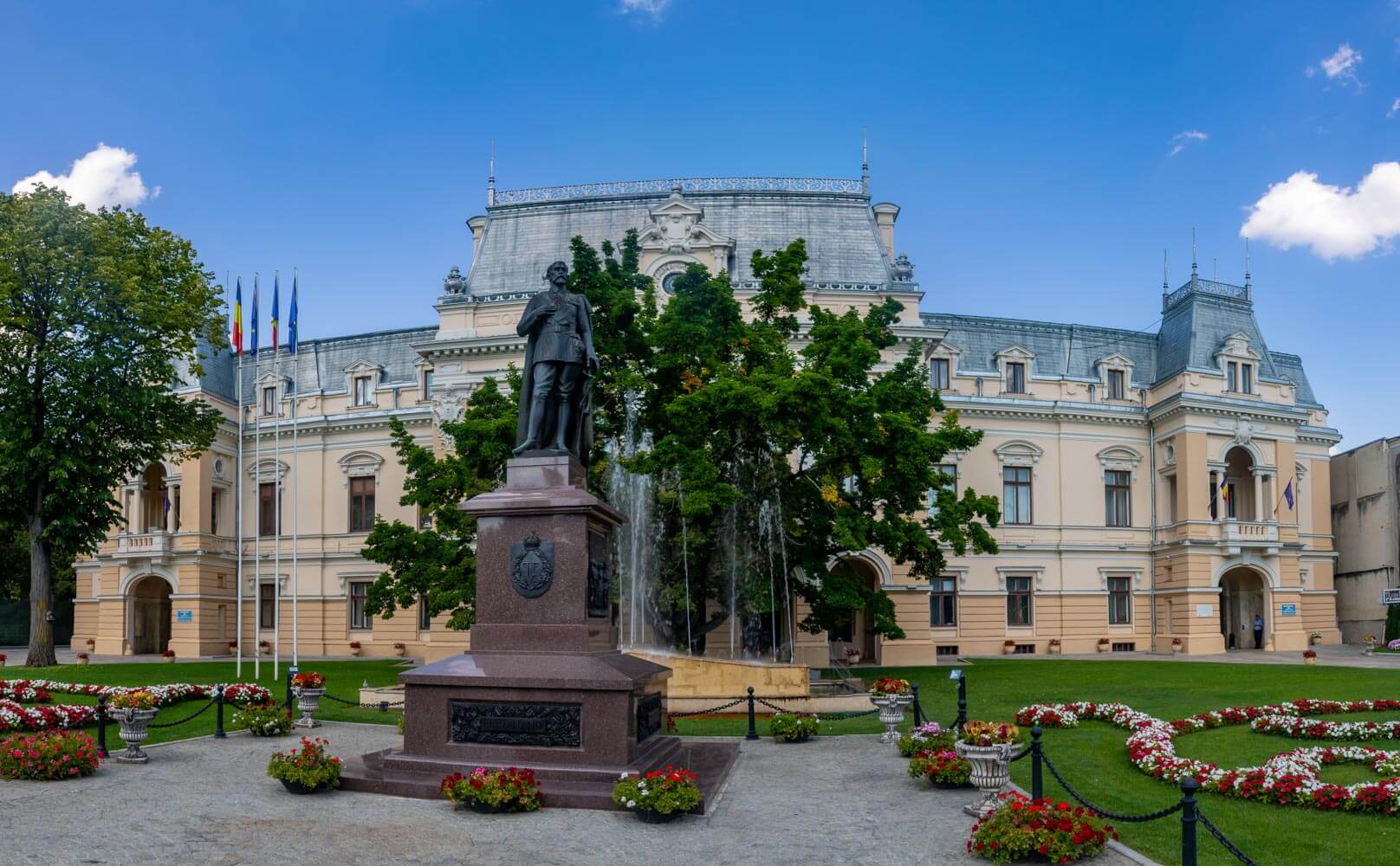
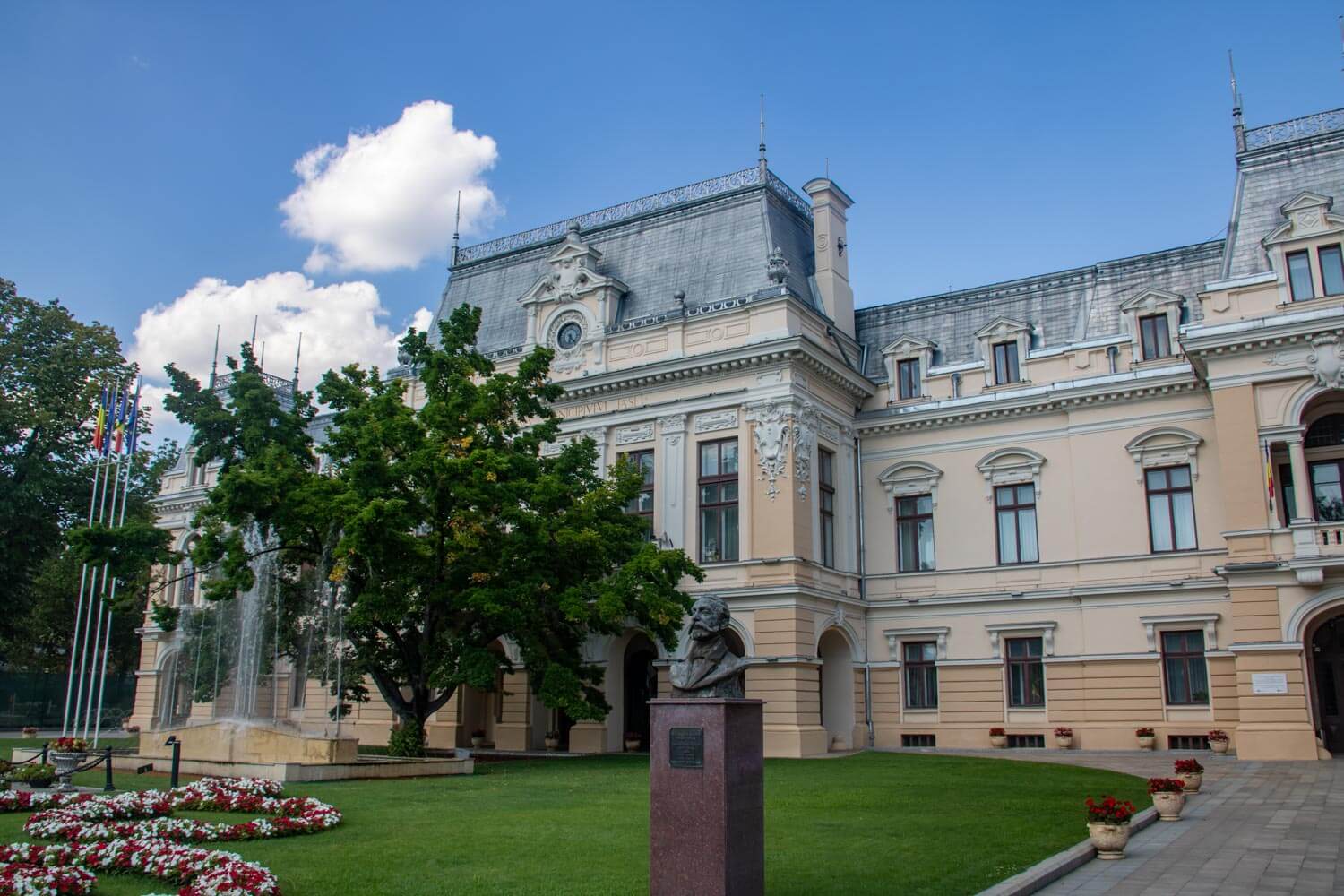
The Iași City Hall (Primăria Municipiului Iași) is the municipal headquarters of Iași, housed in the historic Roznovanu Palace on Stephen the Great and Saint Boulevard. Standing opposite the Metropolitan Complex, the palace combines a Neoclassical core with the more elaborate French-inspired decoration added during later rebuilding.
The residence developed in several stages during the late 18th and early 19th centuries. Johann Freywald worked on an earlier palace here in the first decades of the 1800s, but the great fire of 1827 caused extensive damage. The building was then substantially rebuilt between 1830 and 1832 by his son Gustav Freywald, creating the large Neoclassical residence that formed the basis of the present palace.
During the 19th century, the palace became an important social and political address in Iași. The Rosetti-Roznovanu family hosted prominent guests here, while Russian diplomatic representatives also used the building during the period of the Organic Regulations. In April 1866, the palace courtyard became the center of a short-lived separatist movement following the abdication of Alexandru Ioan Cuza, when supporters of Neculai Rosetti-Roznovanu attempted to promote him as ruler of a restored independent Moldavia.
The city acquired the palace under mayor Vasile Pogor in 1891, after which it underwent another major transformation. French architect Paul Gottereau adapted the building for royal use, adding an upper floor and introducing much of the French eclectic character visible today. The long façade is organized around projecting sections, tall windows with sculpted surrounds, decorative pediments, steep mansard roofs, and ornamental ironwork, while a clock above the central entrance provides the main visual focus.
The palace gained national importance during World War I, when Bucharest was occupied and the Romanian government and royal court moved to Iași. State institutions and military services used the building, and several important government functions were transferred here during the wartime period.
After several later administrative uses, the palace became the headquarters of Iași City Hall in 1969. Inside, the former ceremonial character survives most clearly in the Honor Hall, with its marble Corinthian columns, and in the large Vasile Pogor Hall, while portraits of former mayors line parts of the interior.