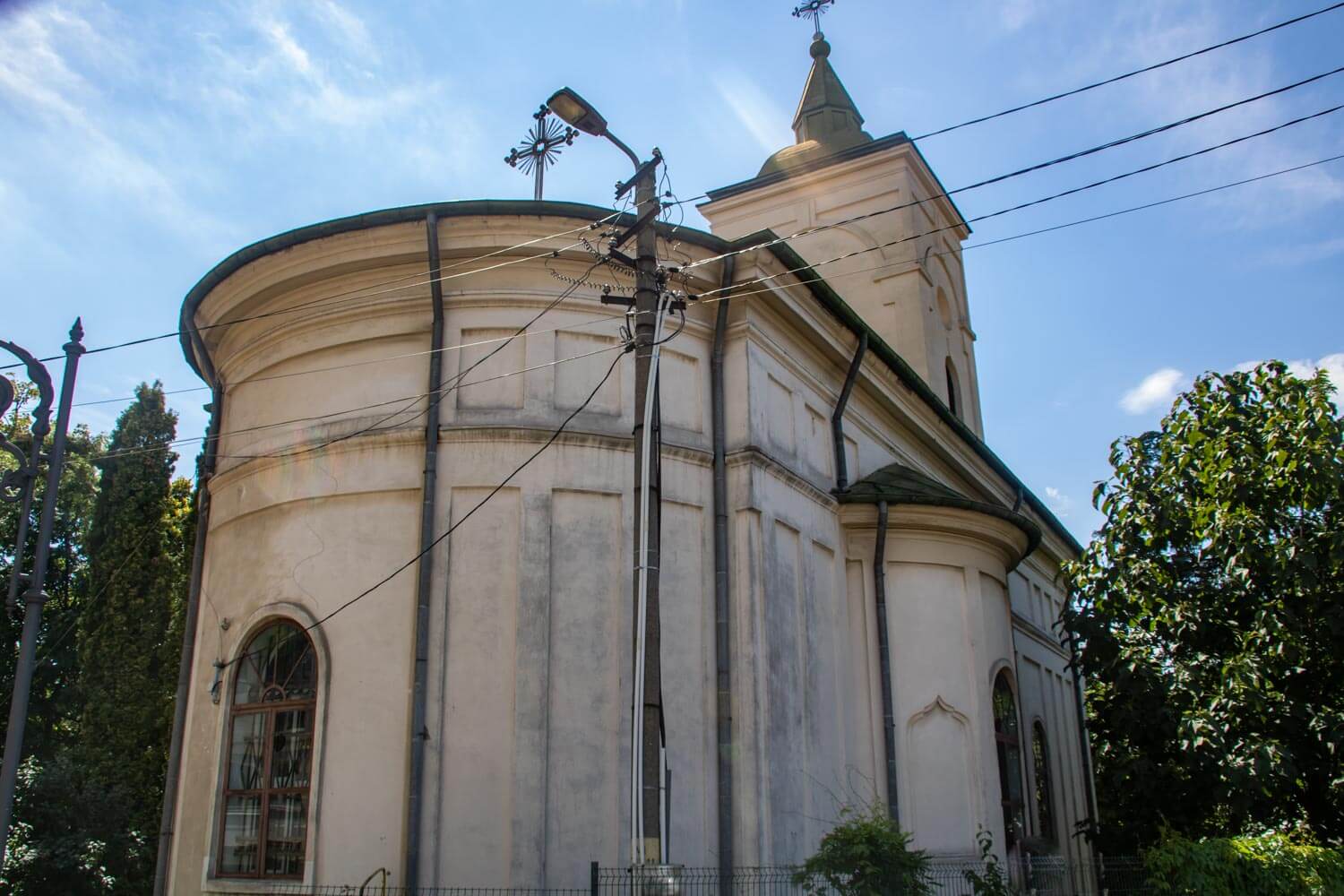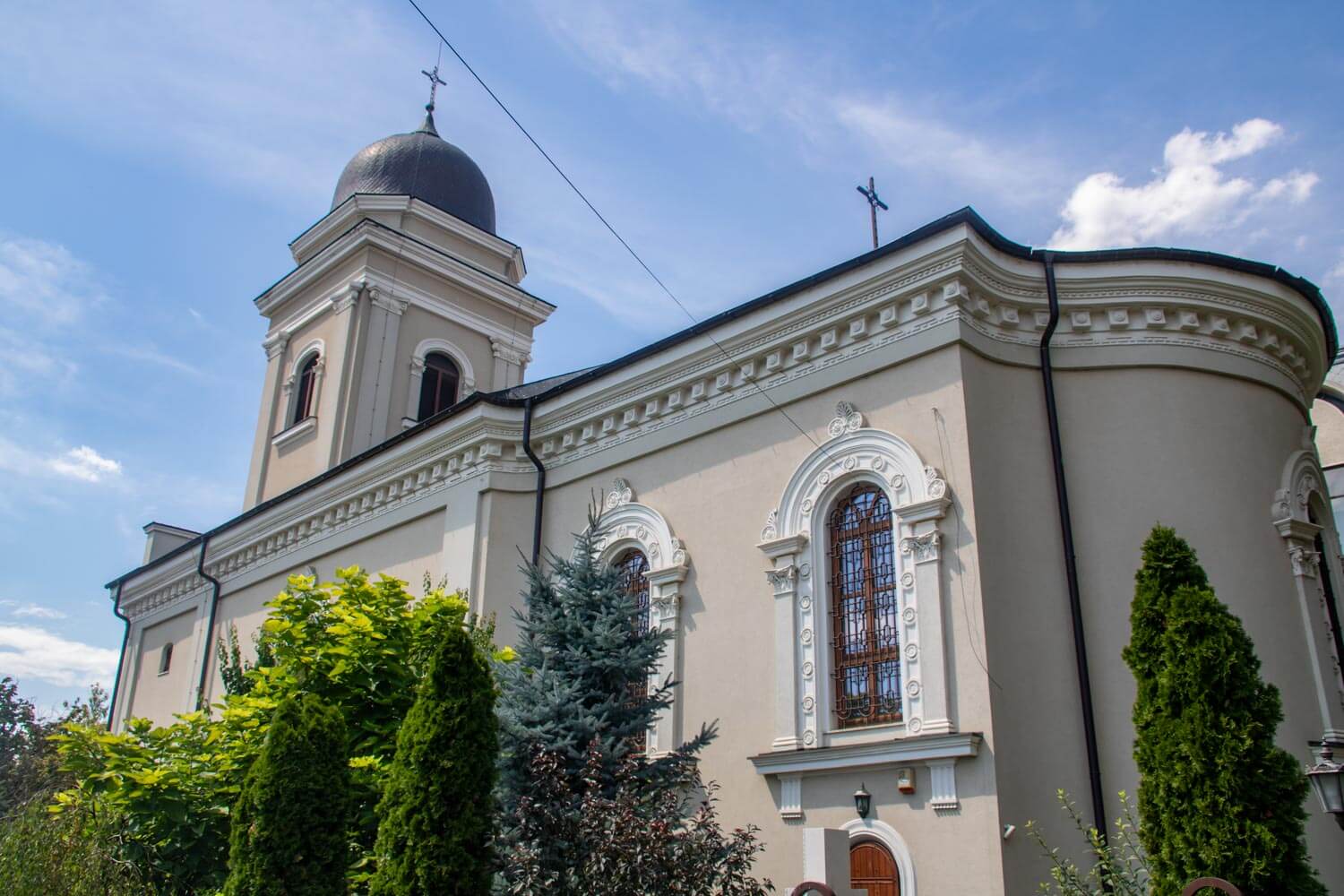
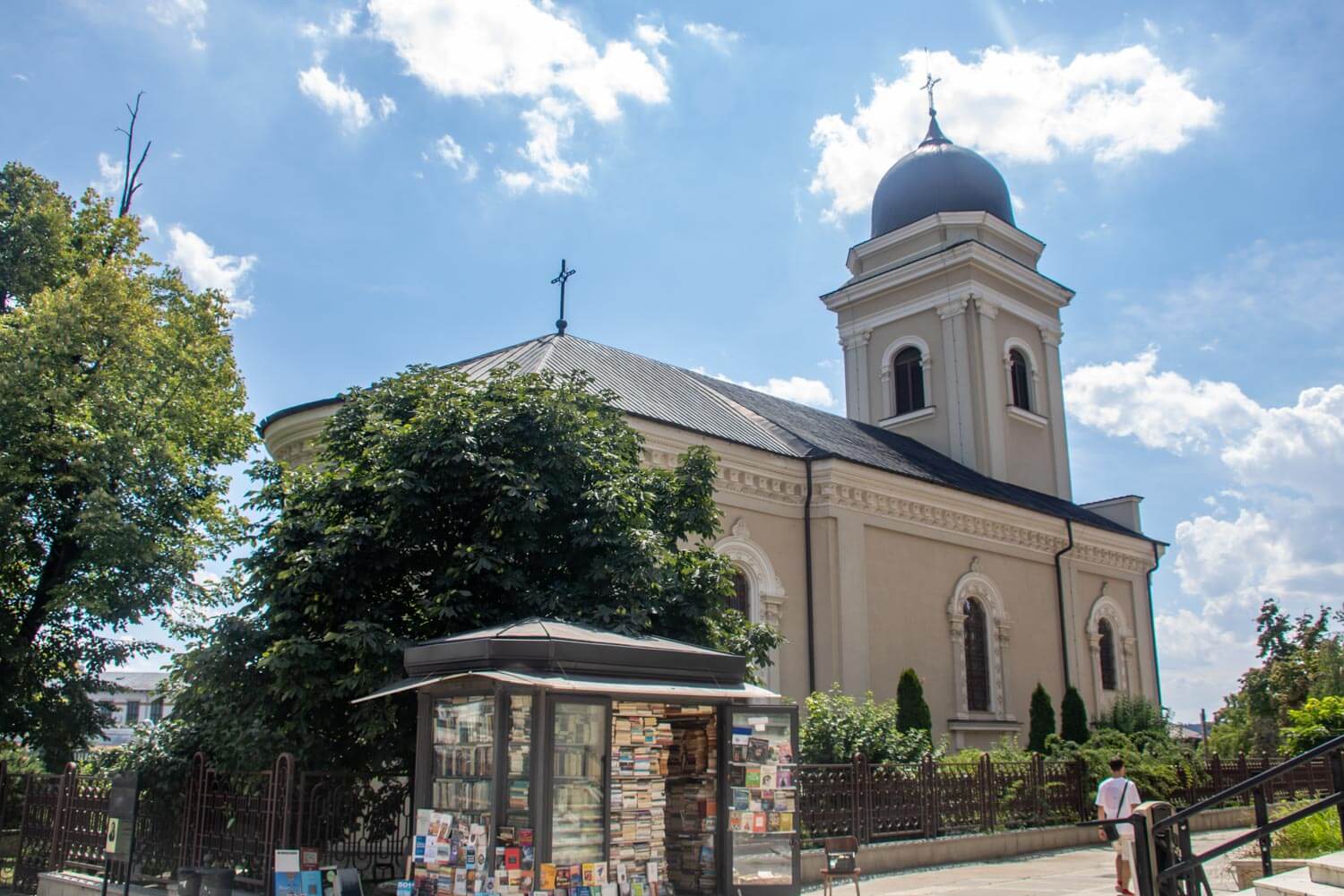
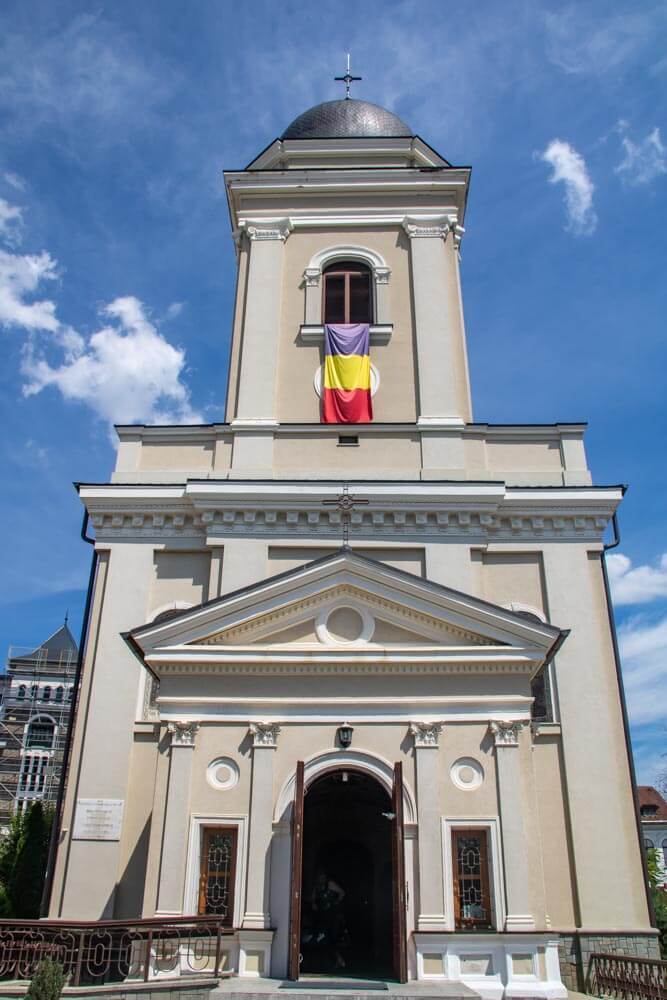
The Banu Church (Biserica Banu) is a historic Orthodox church in central Iași, dedicated to All Saints’ Sunday. Its name comes from Savin Smucilă, a mare ban who founded the first church on the site in the early 18th century, while the present stone building dates mainly from the beginning of the 19th century.
Savin Smucilă built a wooden church here in 1704-1706, in what was then a poorer district near the edge of the city. The foundation included charitable functions as well as worship, with an almshouse providing shelter for the poor, sick, and travelers. As Iași expanded toward the northwest, the congregation grew and the wooden church gradually became too small and deteriorated.
Around 1800, Metropolitan Iacob Stamati supported the construction of a much larger stone church on the same site. The project was designed and supervised by an architect identified in the inscription as Herr Leopold, probably from Transylvania, and the new building was completed around 1802-1803. At this point the dedication changed from the Dormition of the Mother of God to All Saints’ Sunday, which it retains today.
The present church is an important example of the transition from late Baroque to Neoclassical architecture in Moldavia. Its interior decoration was created by Eustatie Altini, one of the first major Moldavian painters to move away from traditional Byzantine formulas toward Neoclassicism. He painted the iconostasis and the altar area, while the iconostasis itself was carved in limewood and remains one of the most distinctive elements inside the church.
The Banu Church also preserves a number of older liturgical objects that connect the present building with the earlier foundation. These include 17th-century Romanian religious books, a silver tabernacle from 1802, a silver diskos from 1709, and an icon of the Mother of God brought from Cyprus by the first founder.