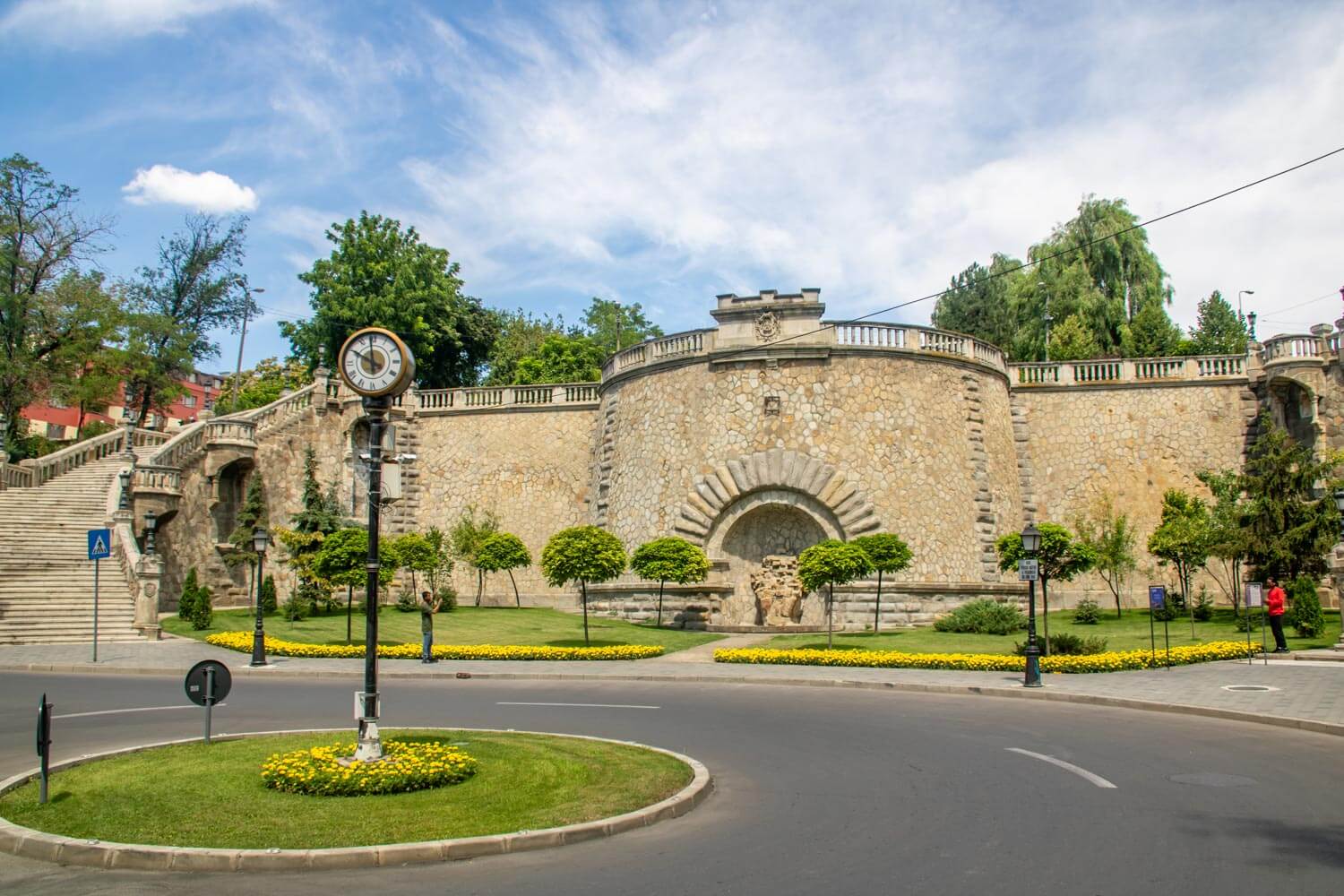
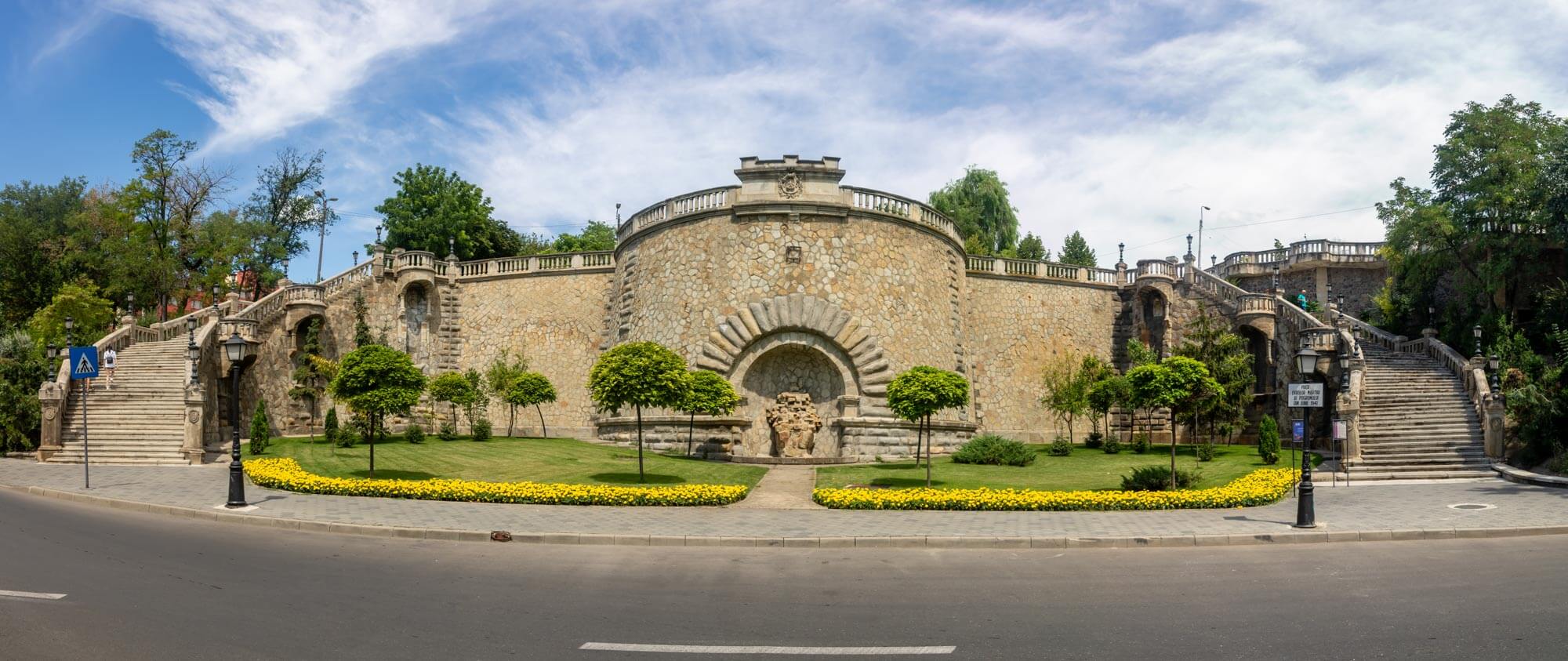
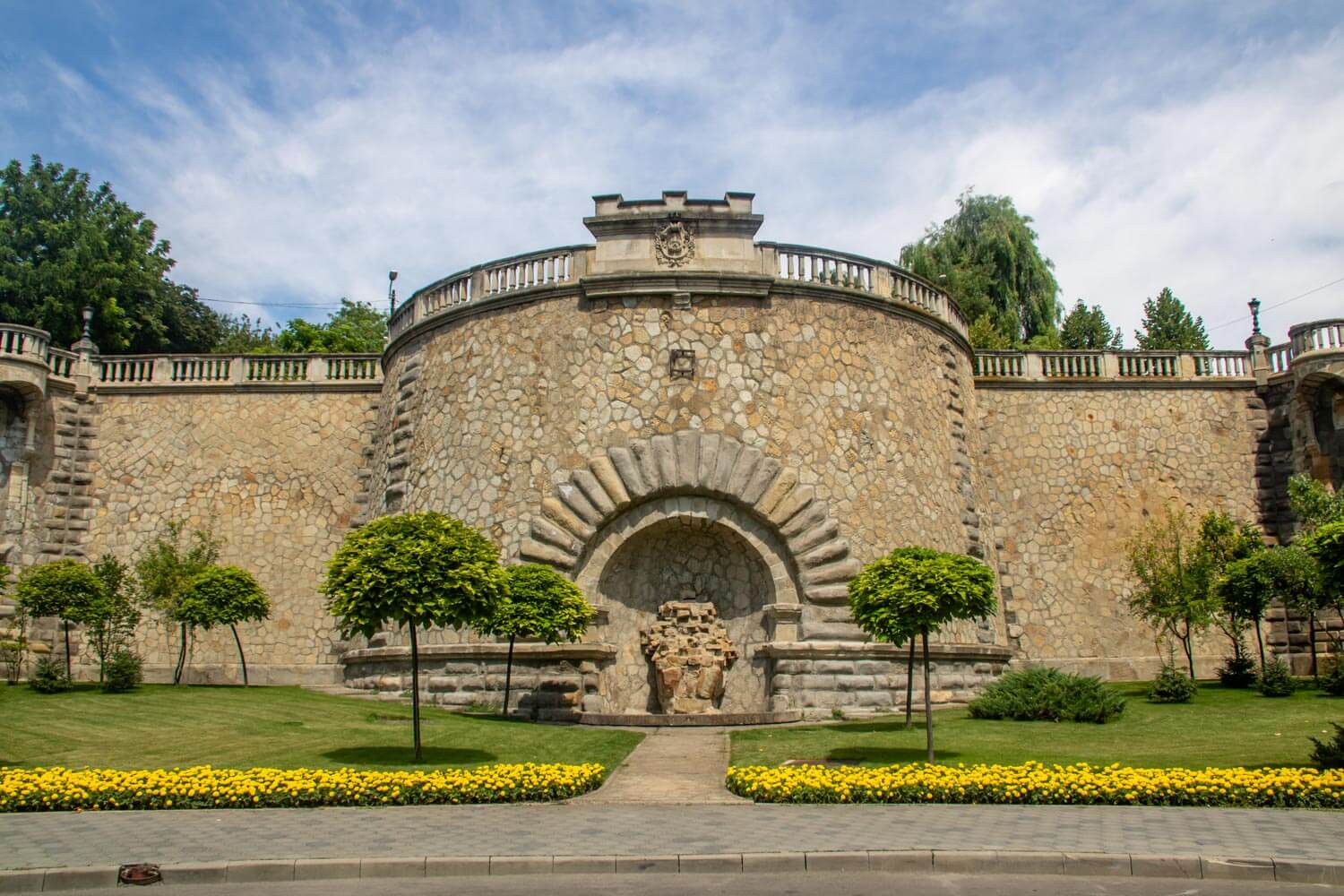
The Elisabeth Esplanade (Esplanada Elisabeta) is a monumental public stairway and terrace at the base of Copou Hill in Iași, built around the turn of the 20th century to improve the route between the railway station and the upper city. It crosses the area historically known as Râpa Galbenă, or the Yellow Ravine, named after the yellow clay once extracted from the slope.
The project arose from a long-standing problem with the steep and unstable ground, where springs and rainwater repeatedly caused erosion and landslides. Mayor Nicolae Gane proposed a major redevelopment of the area in 1897, combining drainage works with a new pedestrian route across the slope. Chief engineer Charles Chaugneau prepared the drainage system, while architect Iginio Vignali designed the esplanade itself. Work began in 1898, the main walls and stairways were largely completed by 1900, and the finished structure was formally accepted in March 1902.
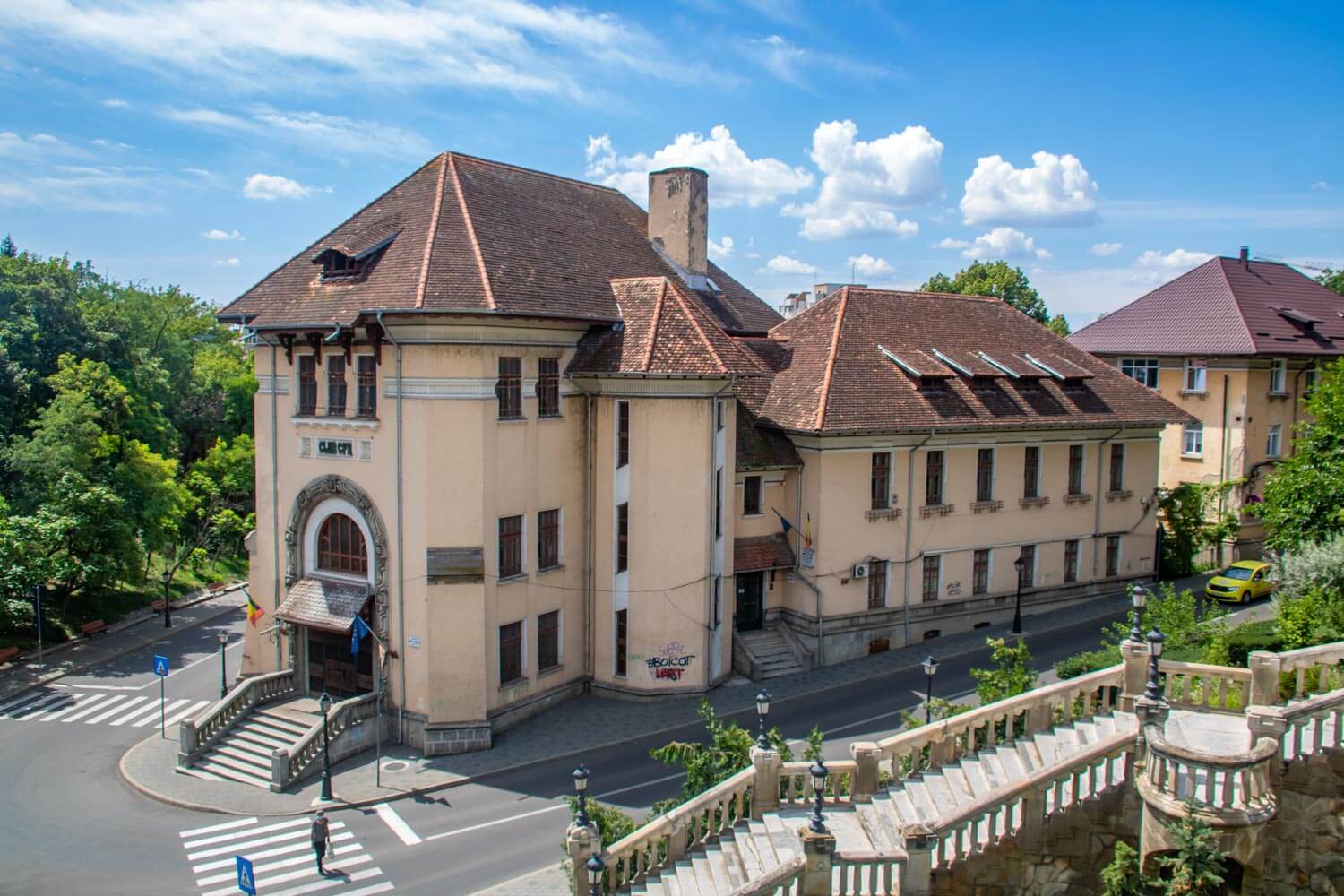
Vignali arranged the esplanade around a broad semicircular central terrace with sweeping staircases curving down on either side. Small projecting balconies break up the stairs and open views across the lower city, while the massive retaining walls reflect the practical need to hold back the hillside as much as the desire to create an imposing civic monument. At the time of its completion, the esplanade also opened a direct and much easier route between the Iași railway station and the historic center above.
The slope remained unstable even after the esplanade was finished, and cracks soon appeared in the structure. Further consolidation became necessary over the following decades, with a more lasting solution arriving in the 1920s when the CFR Pavilions were built on the lower part of the slope. Their foundations and associated works helped stabilize the ground around the esplanade and preserved the structure from further deterioration.