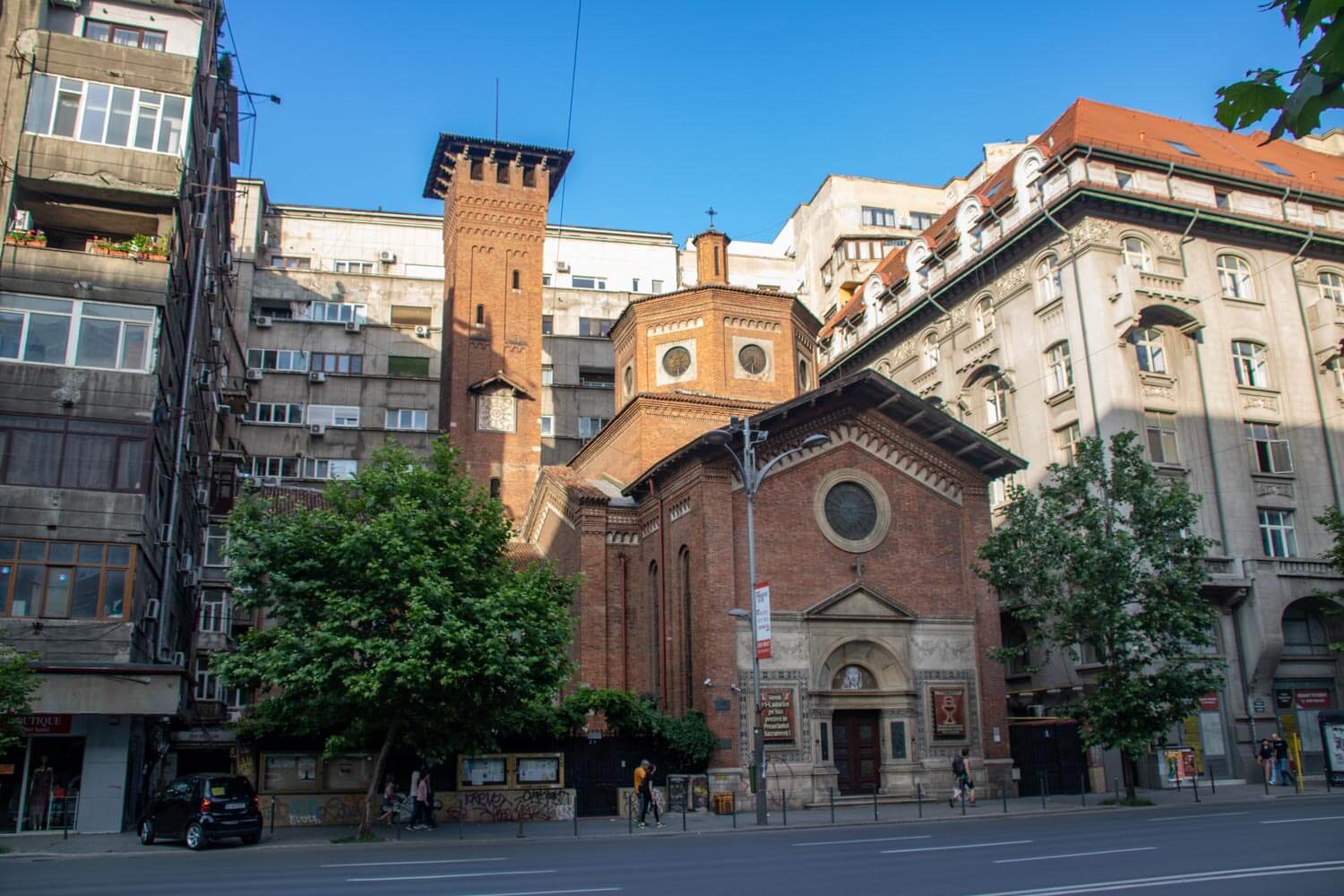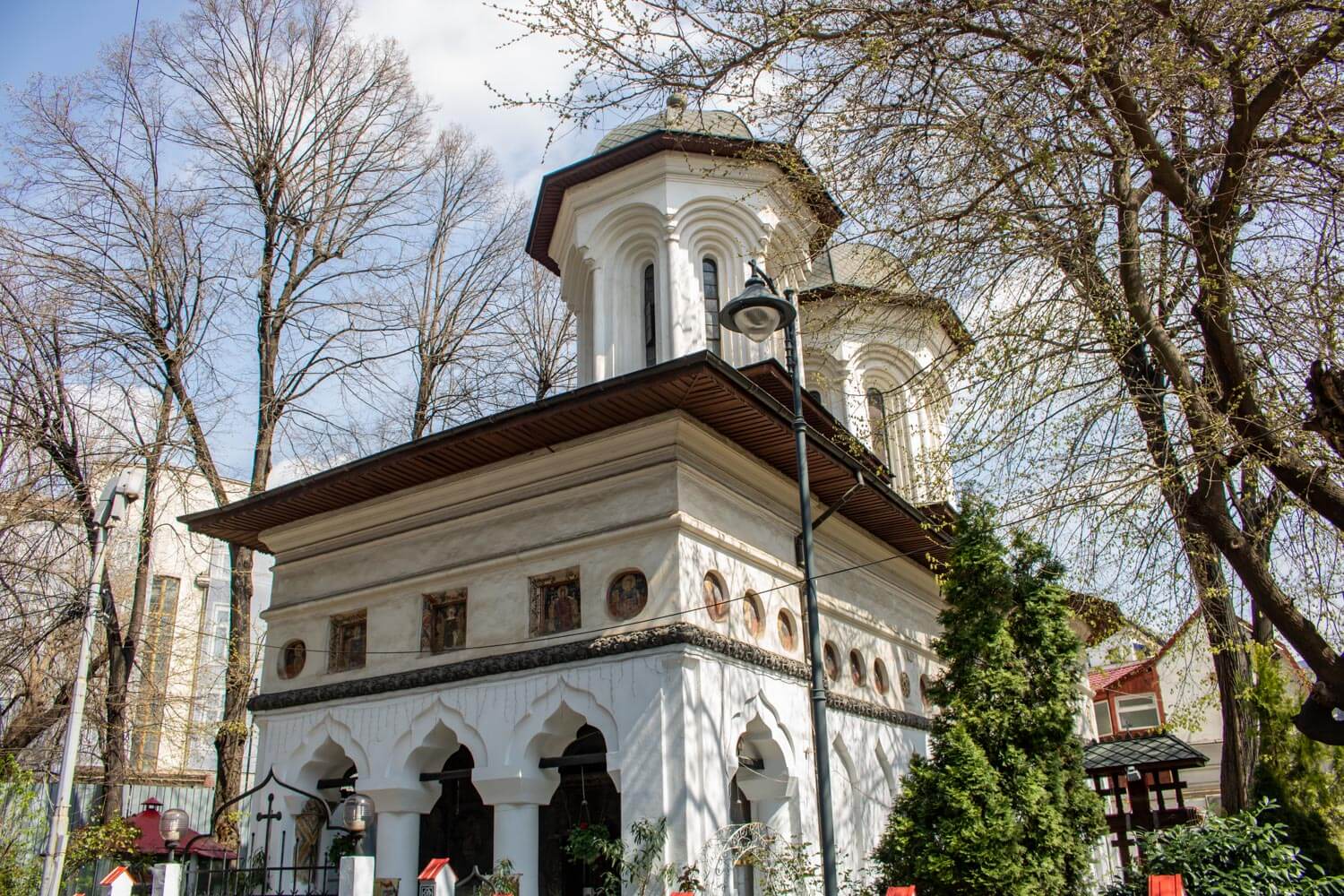
The Batiștei Church (Biserica Batiștei) is a Romanian Orthodox church on Strada Batiștei in central Bucharest. The church is dedicated to the Saints Ann, Paraskevi of Rome, and Paraskevi of the Balkans.
It’s not known when the first church in its location was exactly built, but it was probably during the reign of Matei Basarab (1632-1654). The oldest document mentioning the church dates from 1660. It was probably founded by an influential advisor of Radu Mihnea called Baptista Vevelli, whose Romanized name Batiște was given to the church. The church might have been damaged or even destroyed by the earthquake of 1738 or the fire of 1739.
According to the inscription in the pisanie above the entrance of the current church, the new stone church was built in 1763 with the help of Manciu, the leader of the butchers’ guild. After his death, Manciu was buried in the vestibule of the church.
In 1838, Bucharest was hit by an earthquake, which must have weakened the church’s structure. In the following decades some works were carried out to maintain the church, but it was only in 1929-1930 that more fundamental restoration works took place, which included the rebuilding of the domes. During another renovation in 1938, older elements were found that were covered by mortar.
The architecture of the Batiștei Church is typical of 18th-century Romania. Its facades are horizontally divided by a stone border with arches below and painted icons above it. The entrance is preceded by a portico with three frontal arches and a single arch on each side, resting on stone columns. Both the iconostasis and the large entrance door are carved in wood.