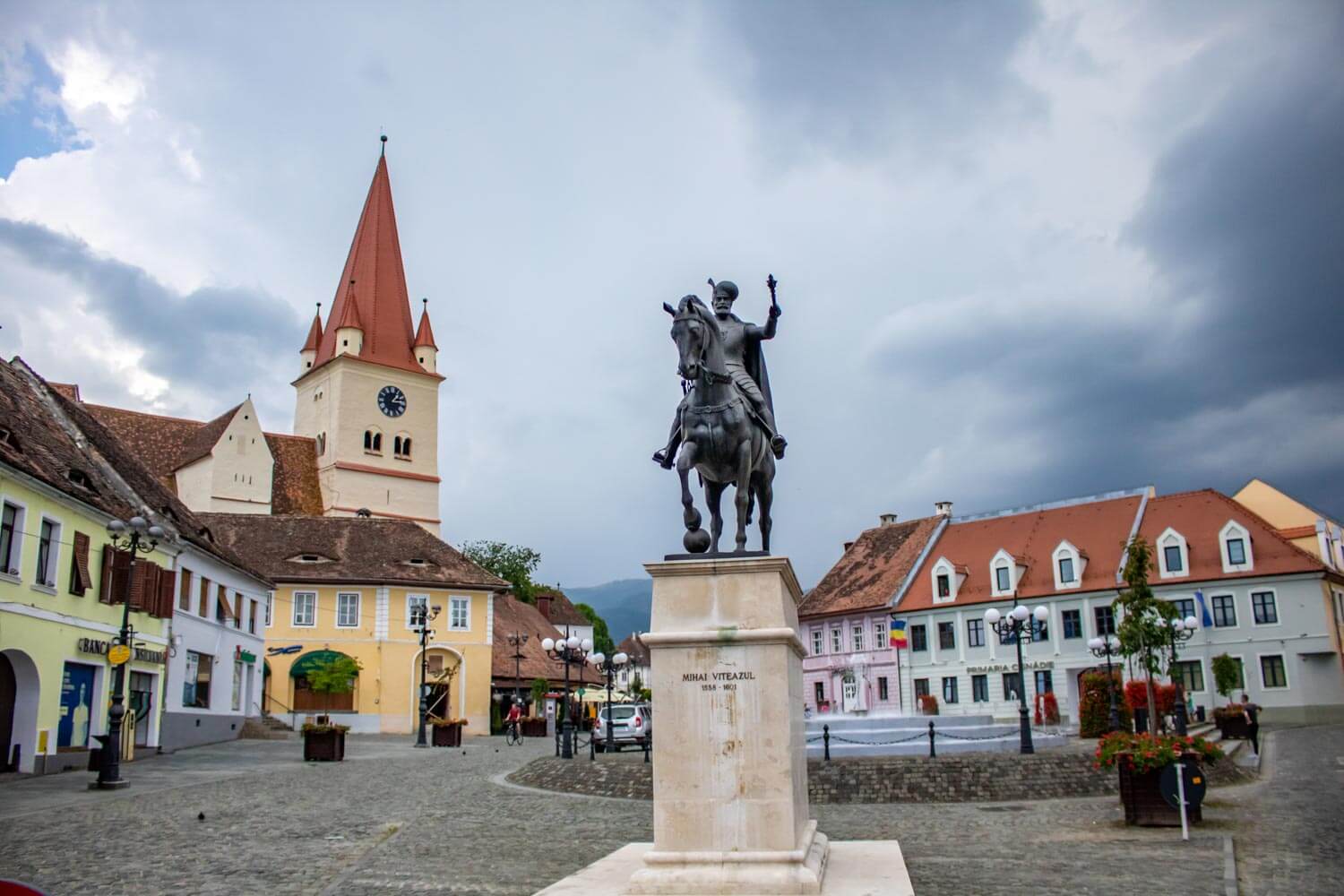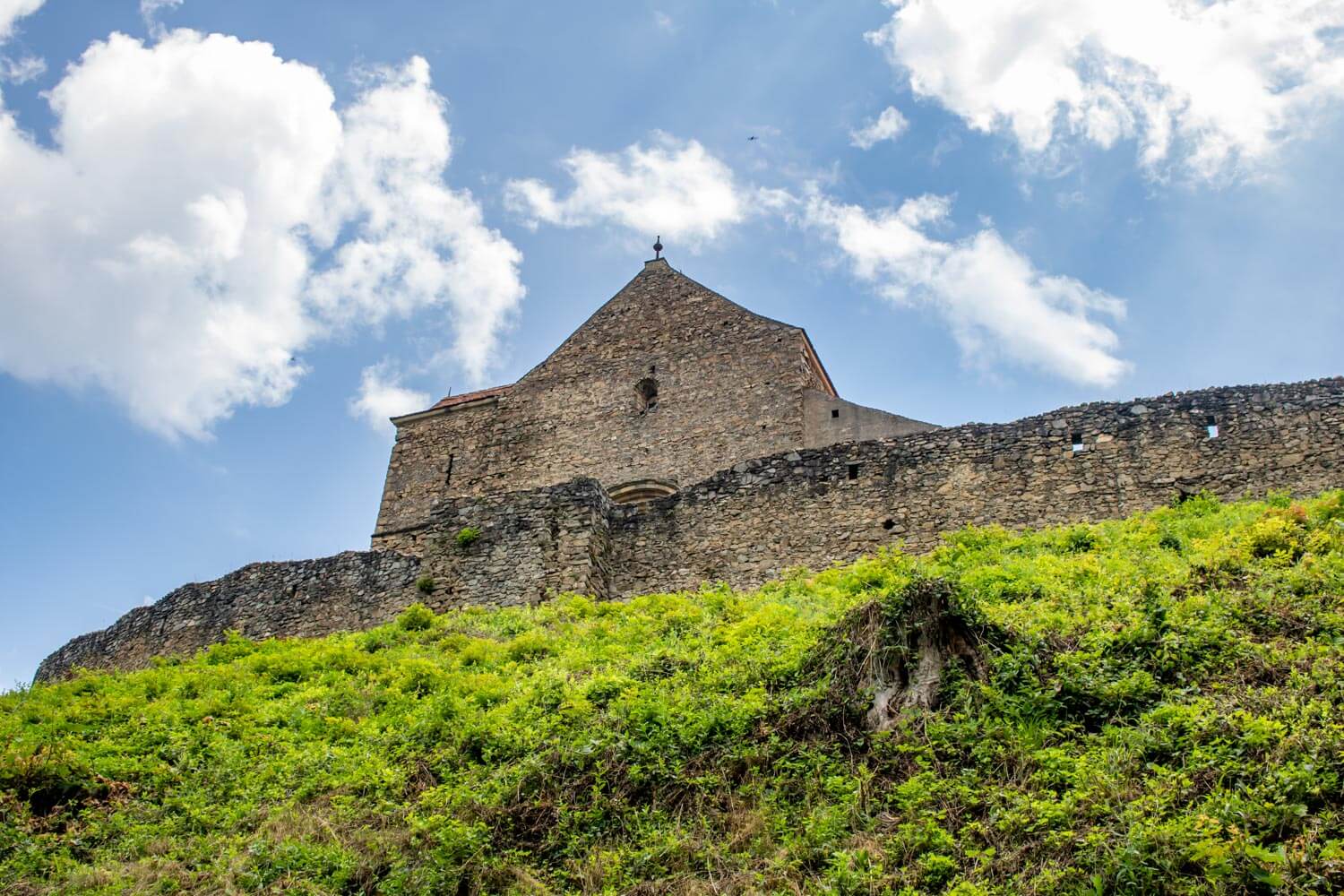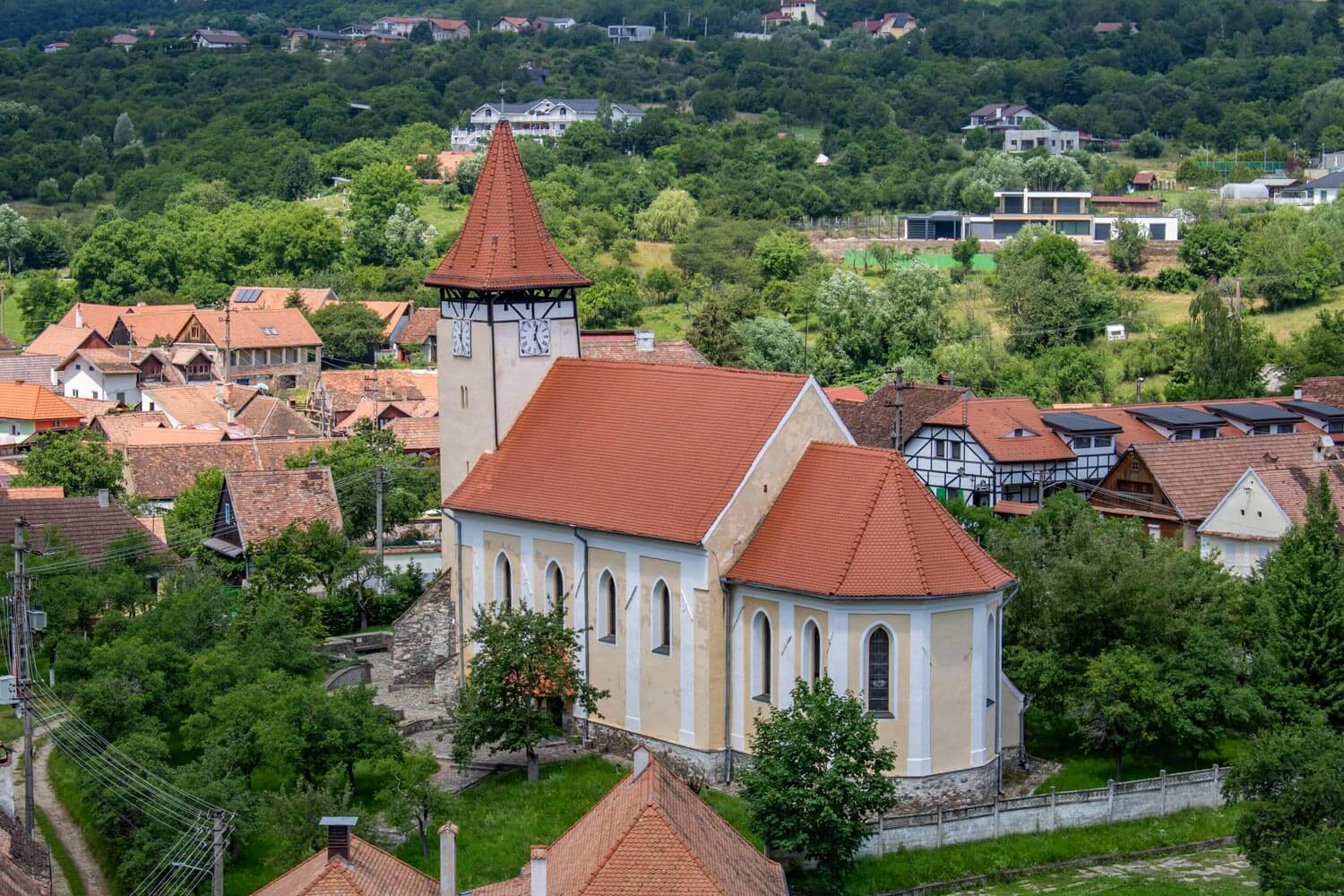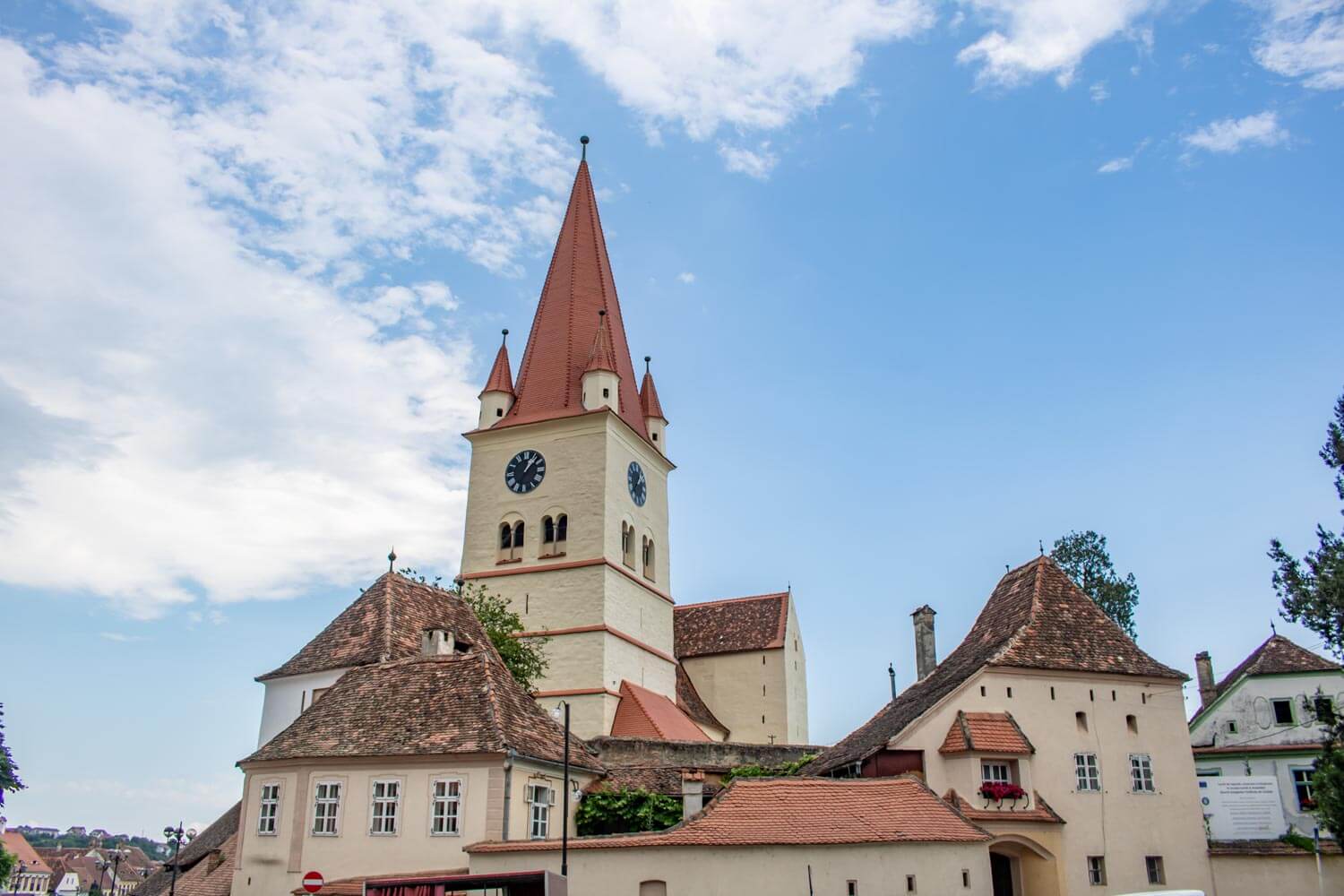
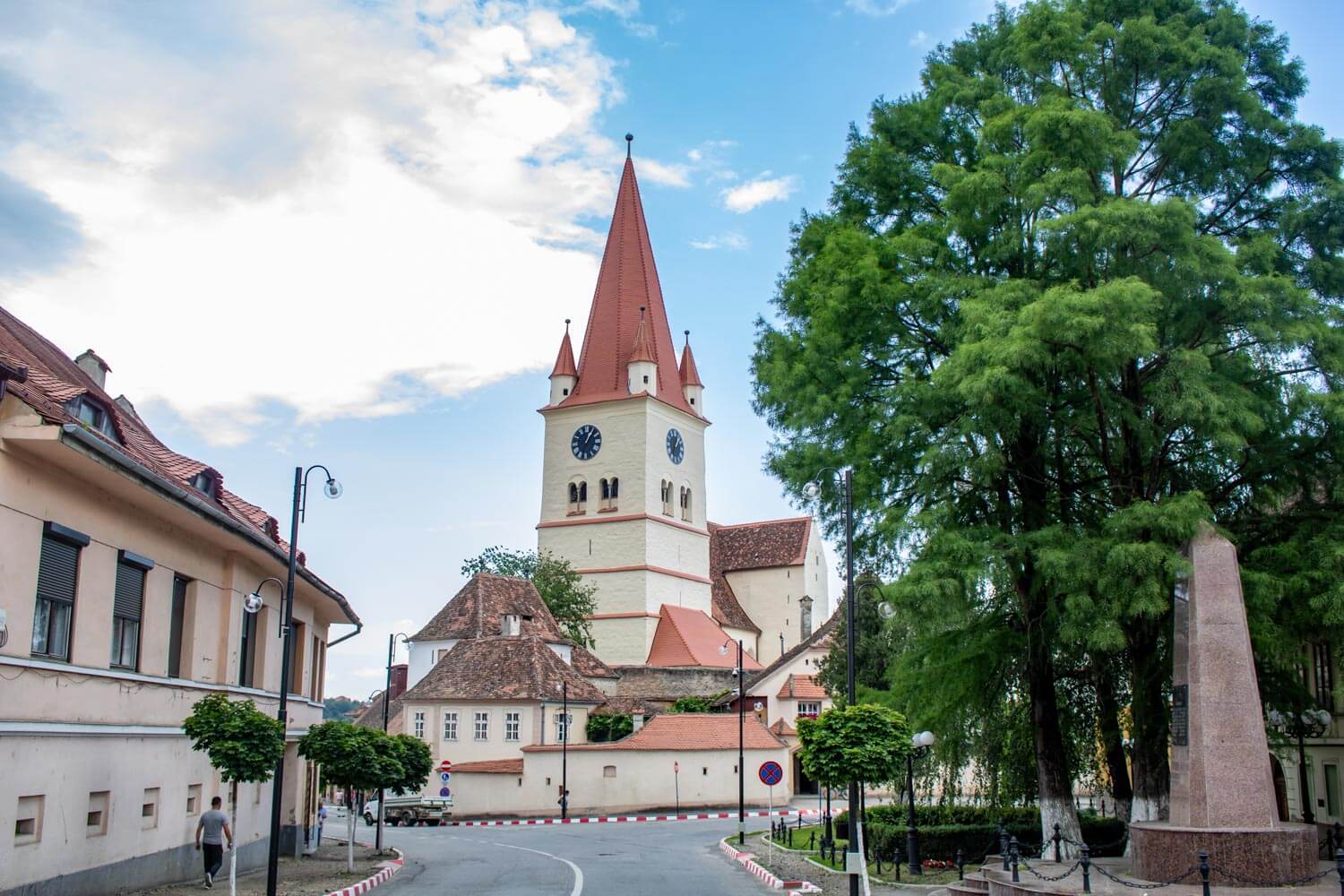
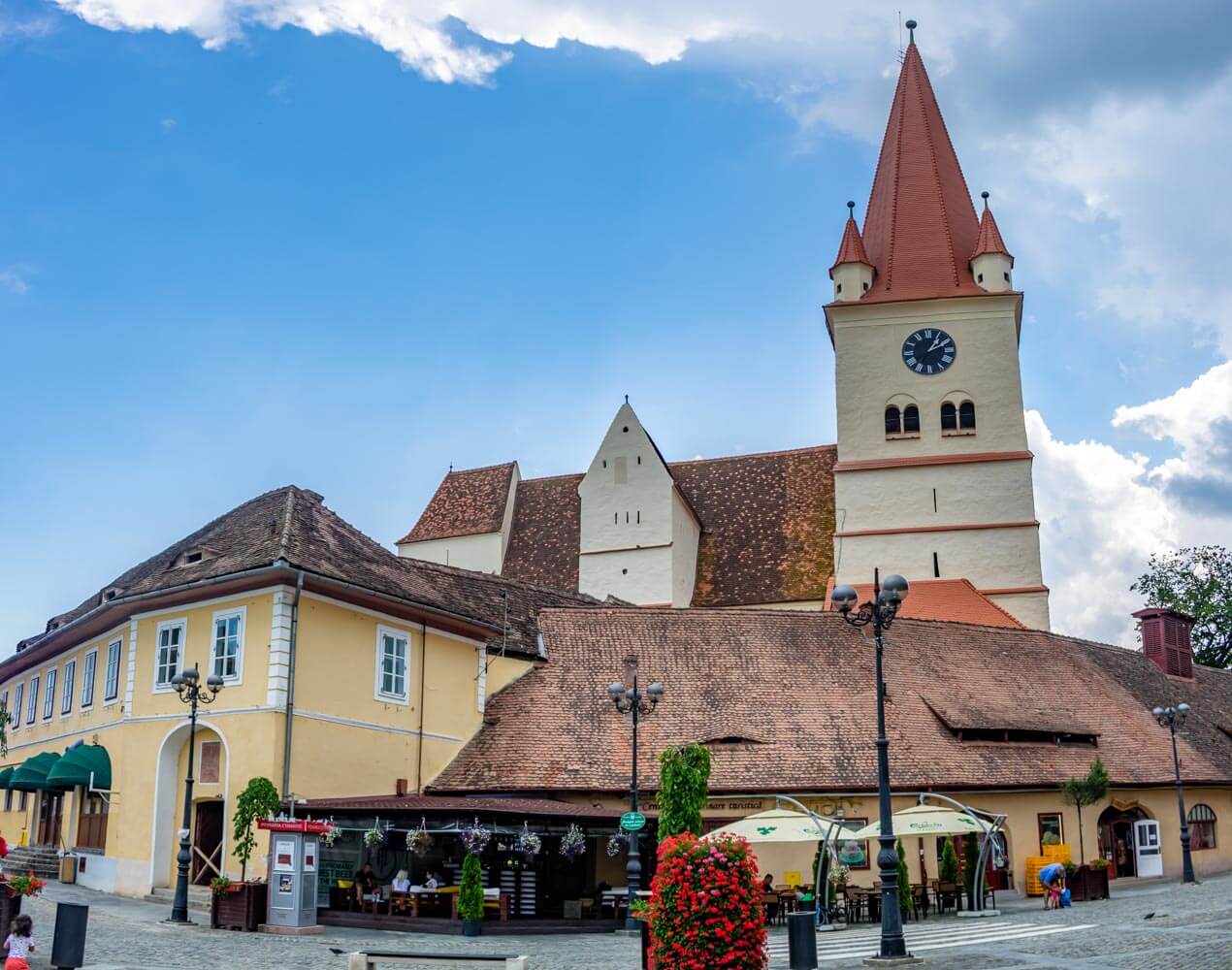
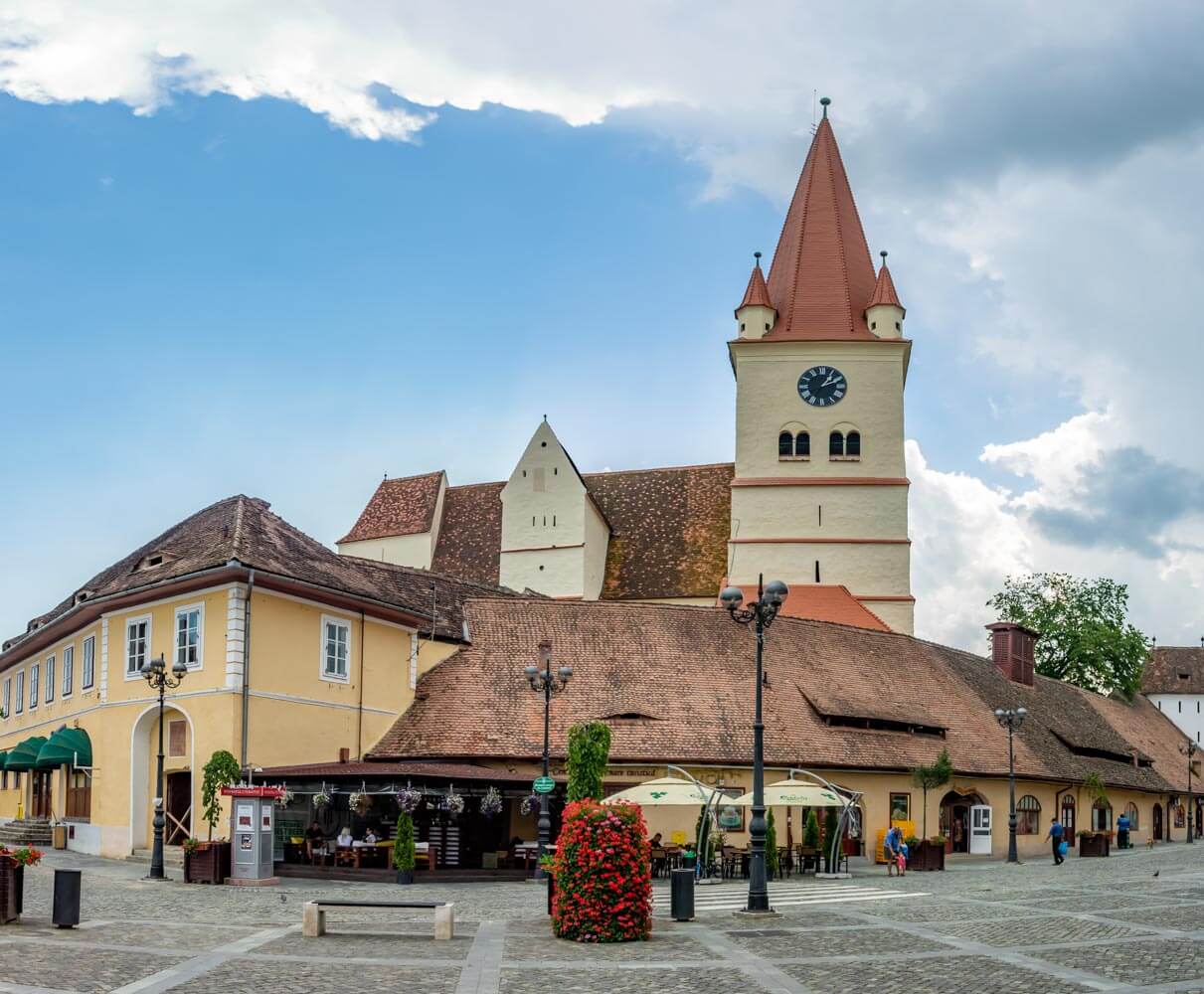
The Fortified Church of Cisnădie (Biserica Fortificată din Cisnădie) is a historic Lutheran church and fortified enclosure in the center of Cisnădie, Sibiu County. The complex developed around a Romanesque basilica and was transformed during the late Middle Ages into a substantial defensive stronghold with a double wall, towers and a moat.
The original church was built as a three-aisled Romanesque basilica with a six-level western tower. Its western portal still preserves Romanesque stone carving with interlaced ornament, while later Gothic rebuilding altered much of the rest of the structure.
Fortification intensified from around 1430 as Ottoman attacks became a growing threat. A second defensive wall, several towers and a water-filled moat were added around the church, while the building itself was strengthened as well. Defensive towers rose above the choir, apse and side entrances, turning the church into an active part of the fortification rather than simply the protected building at its center.
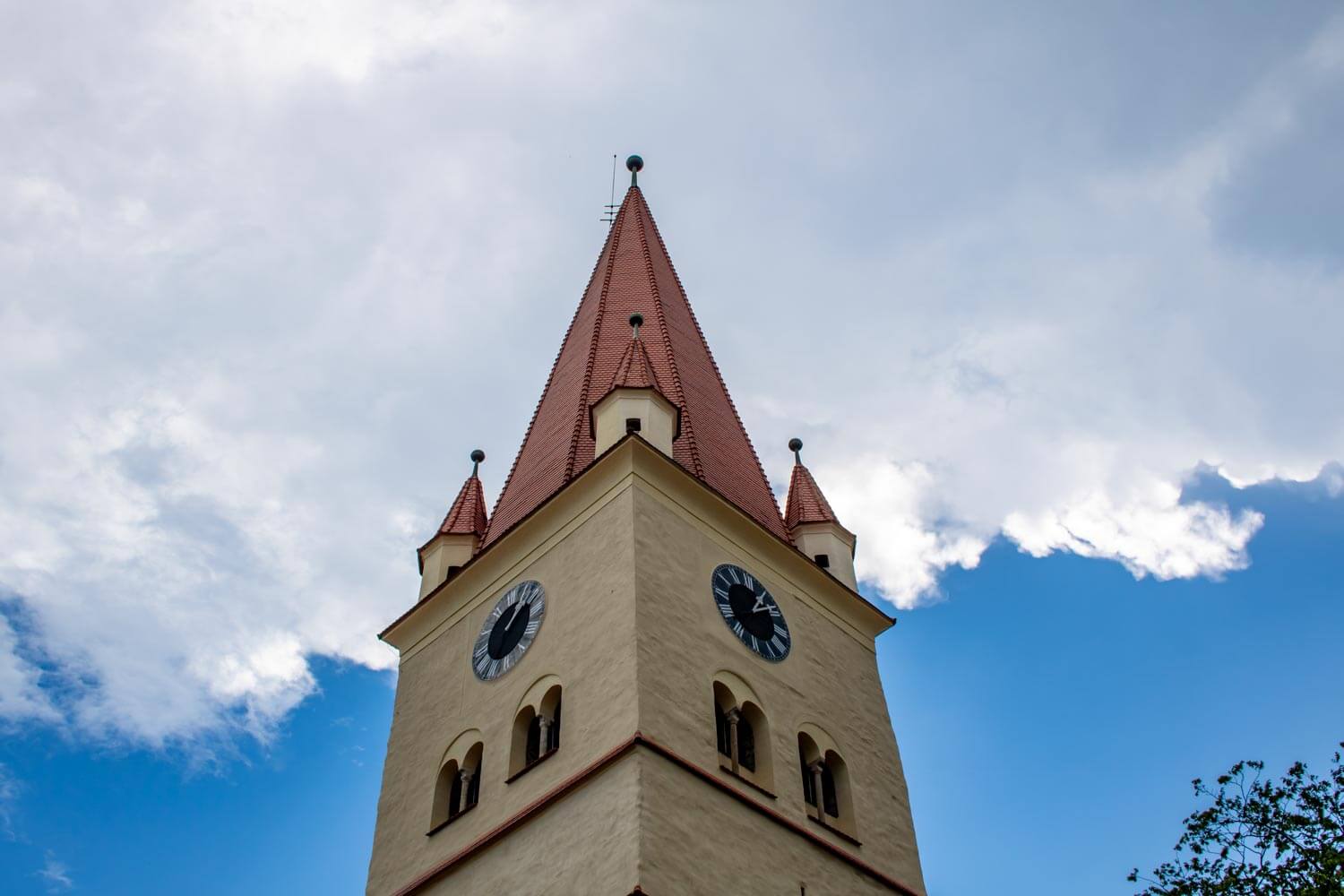
The western tower became the dominant feature of the complex and received its steep roof with four corner turrets in 1591. Cisnădie also claims two notable technical firsts in Transylvania: a tower clock operating from 1425 and a lightning rod installed in 1795.
Inside, the church preserves furnishings from several periods, together with a collection of valuable altars brought here from other Transylvanian Saxon churches for safekeeping. These rescued pieces give the interior an additional museum-like character while also preserving objects from communities where the original churches could no longer protect or maintain them.
The fortified enclosure remains unusually substantial, with surviving towers and walls still making the defensive layout easy to understand. Together with the tall western tower, the Romanesque portal and the collection of historic altars, the church reflects several very different stages of Cisnădie’s religious and defensive history within one complex.