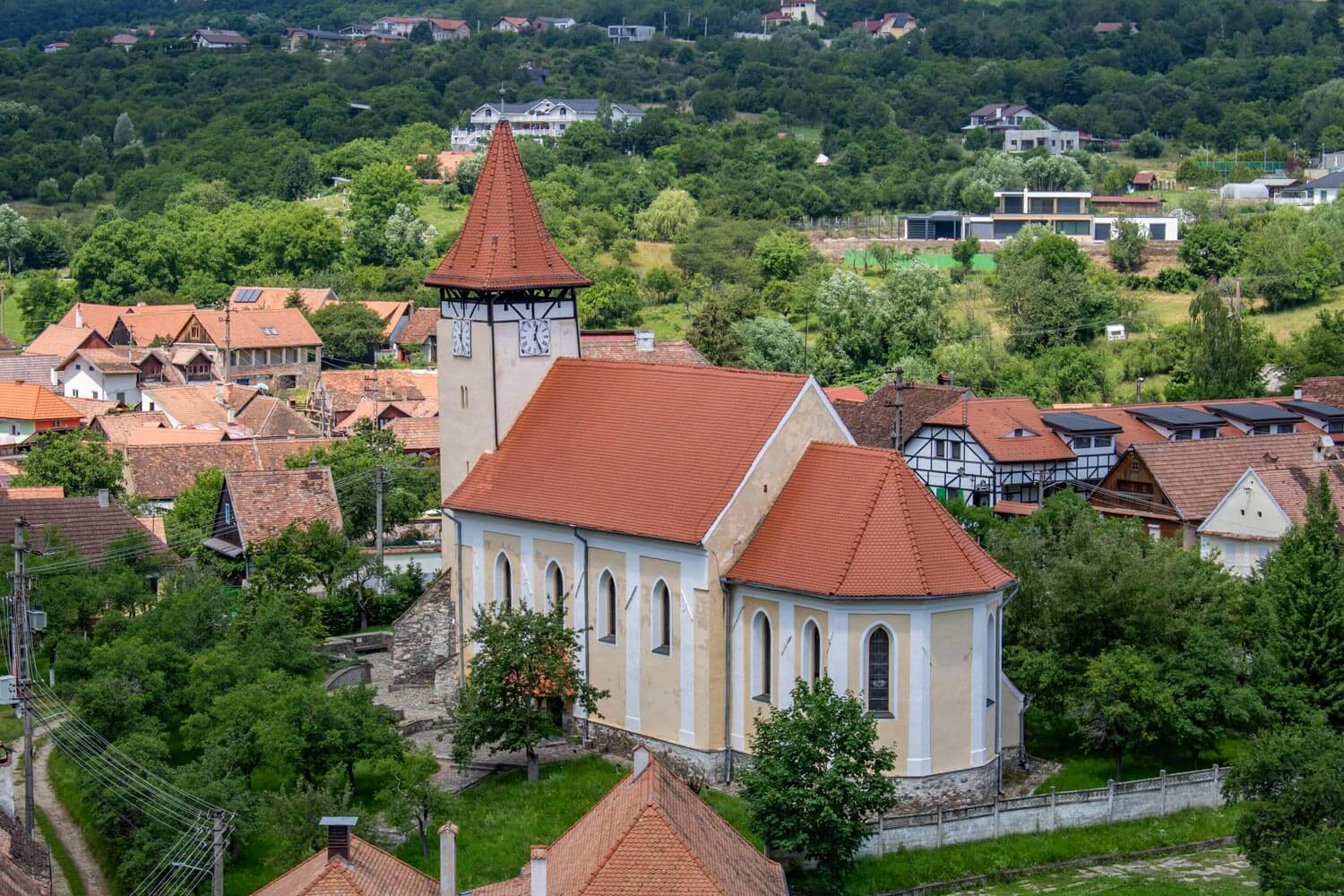
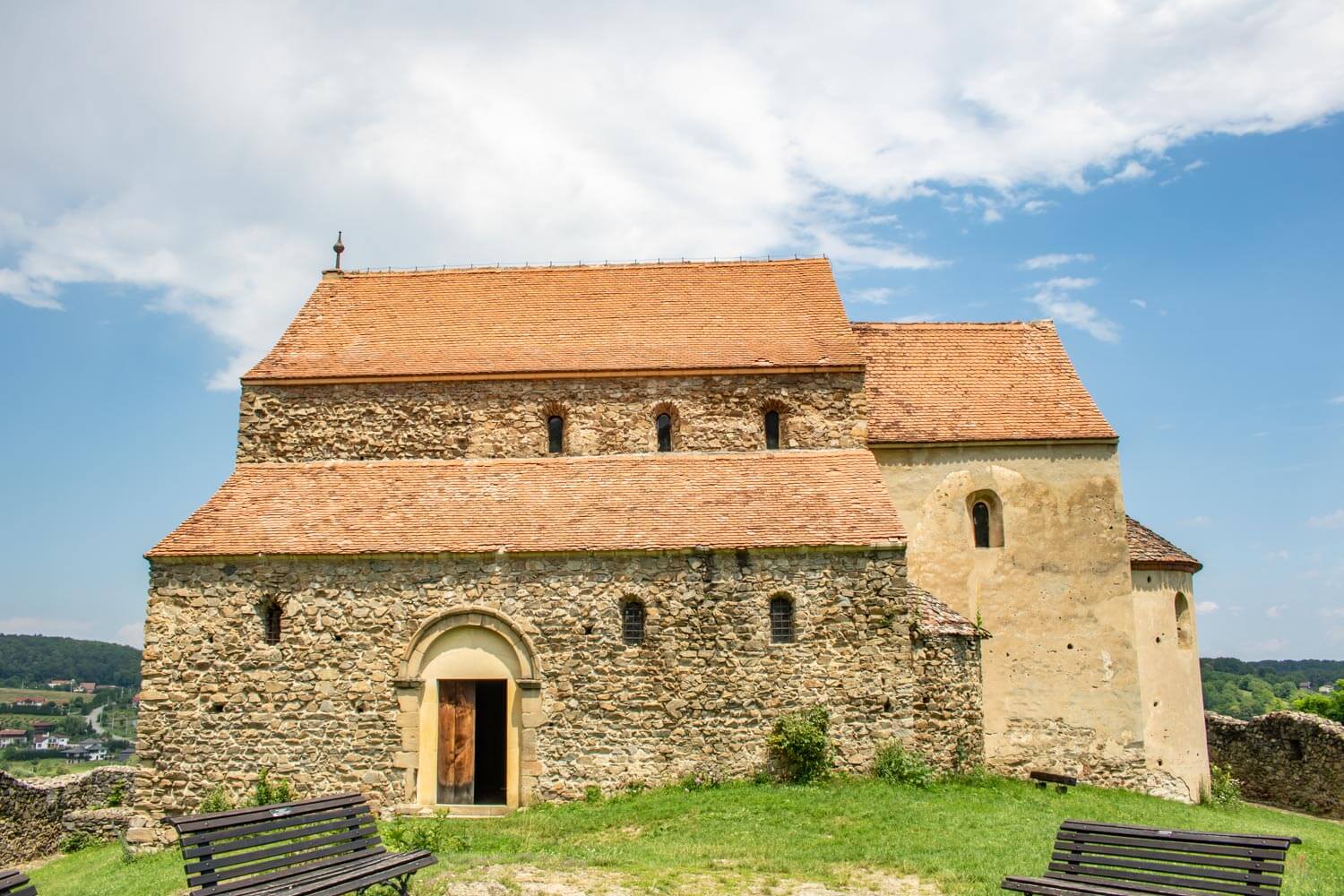
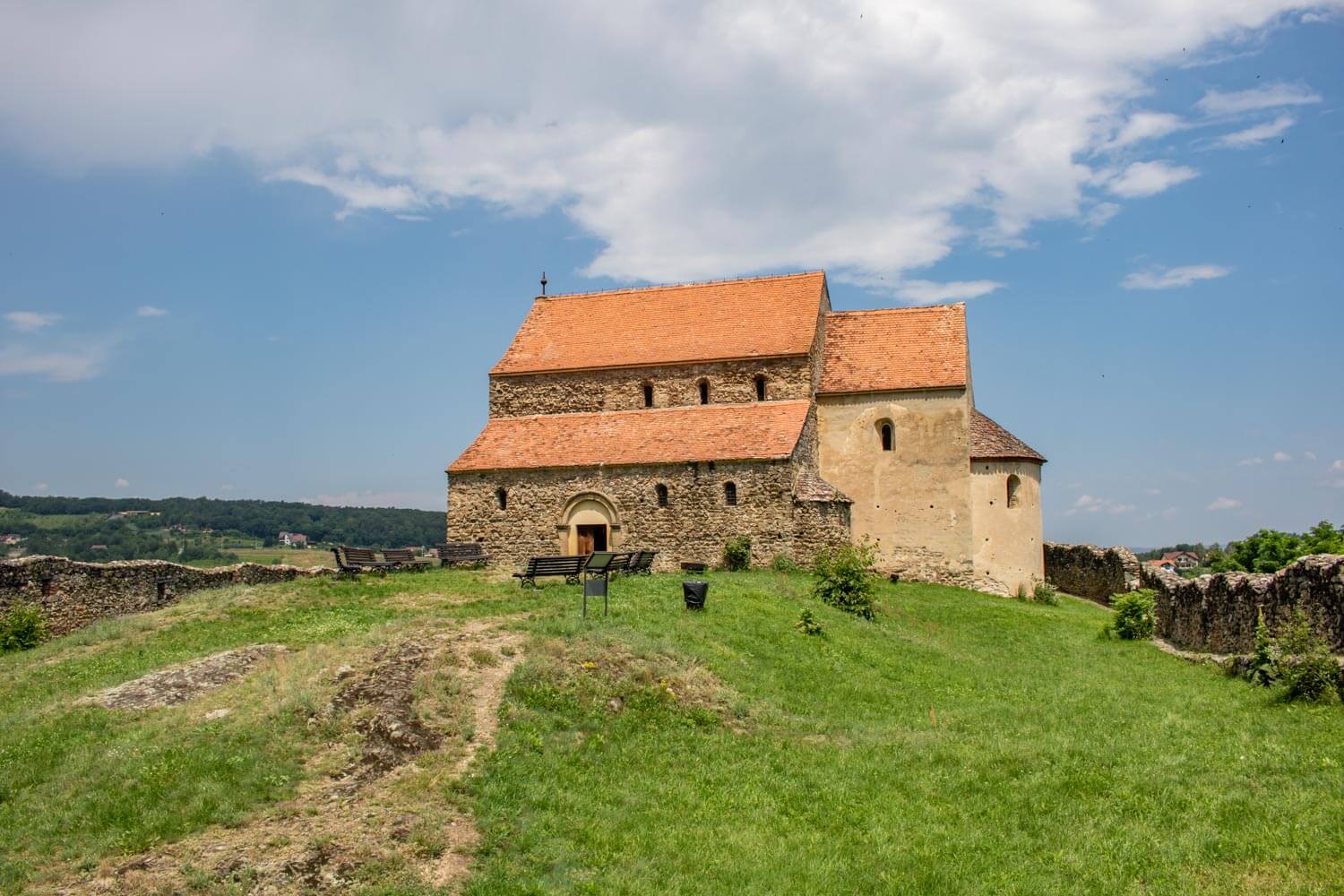
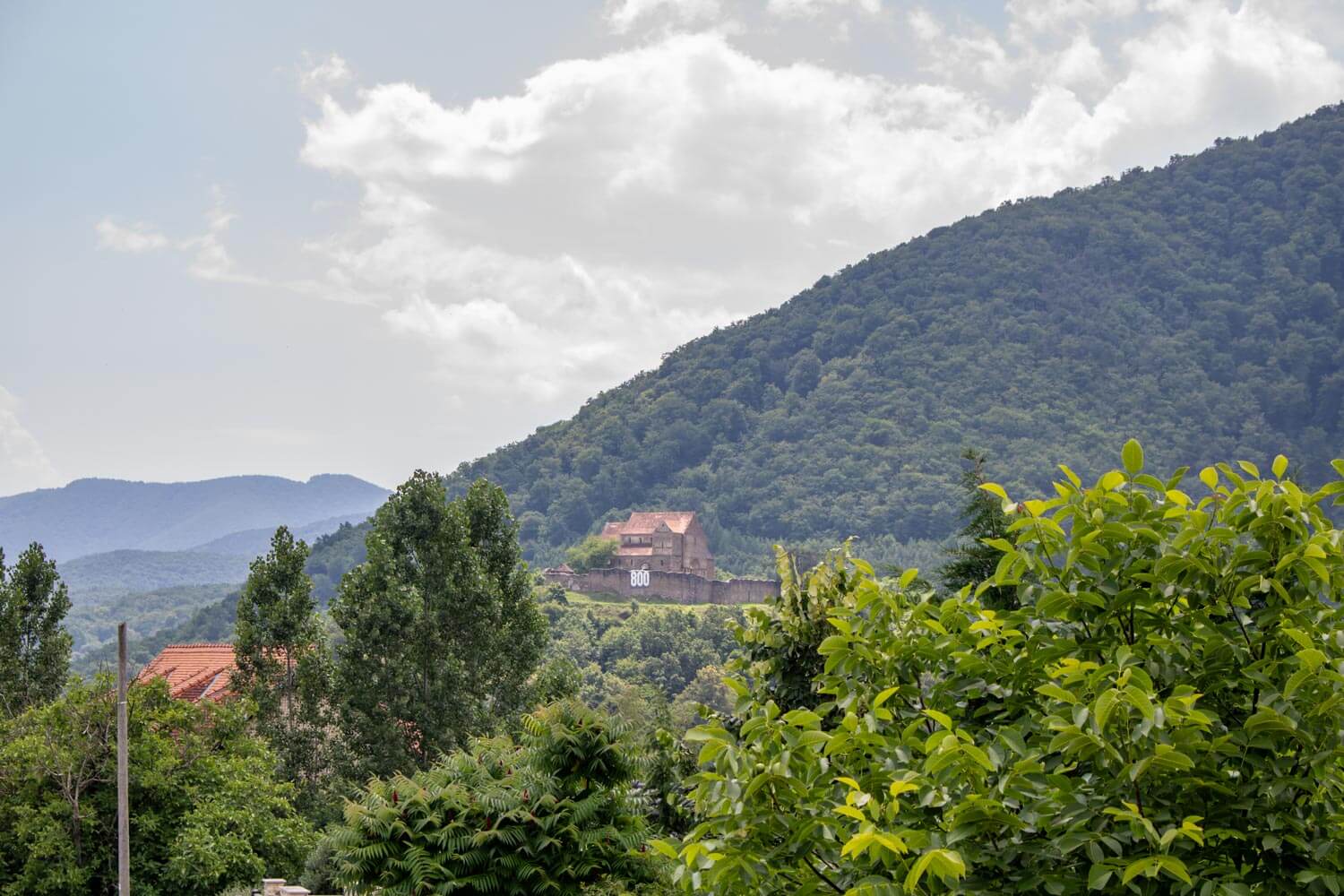
The Fortified Church of Cisnădioara (Biserica Fortificată din Cisnădioara) is a historic Lutheran church and fortified enclosure on the hill above the village of Cisnădioara, Sibiu County. Dedicated to Saint Michael, the small three-aisled Romanesque basilica was built before 1223 and has survived with remarkably few structural changes.
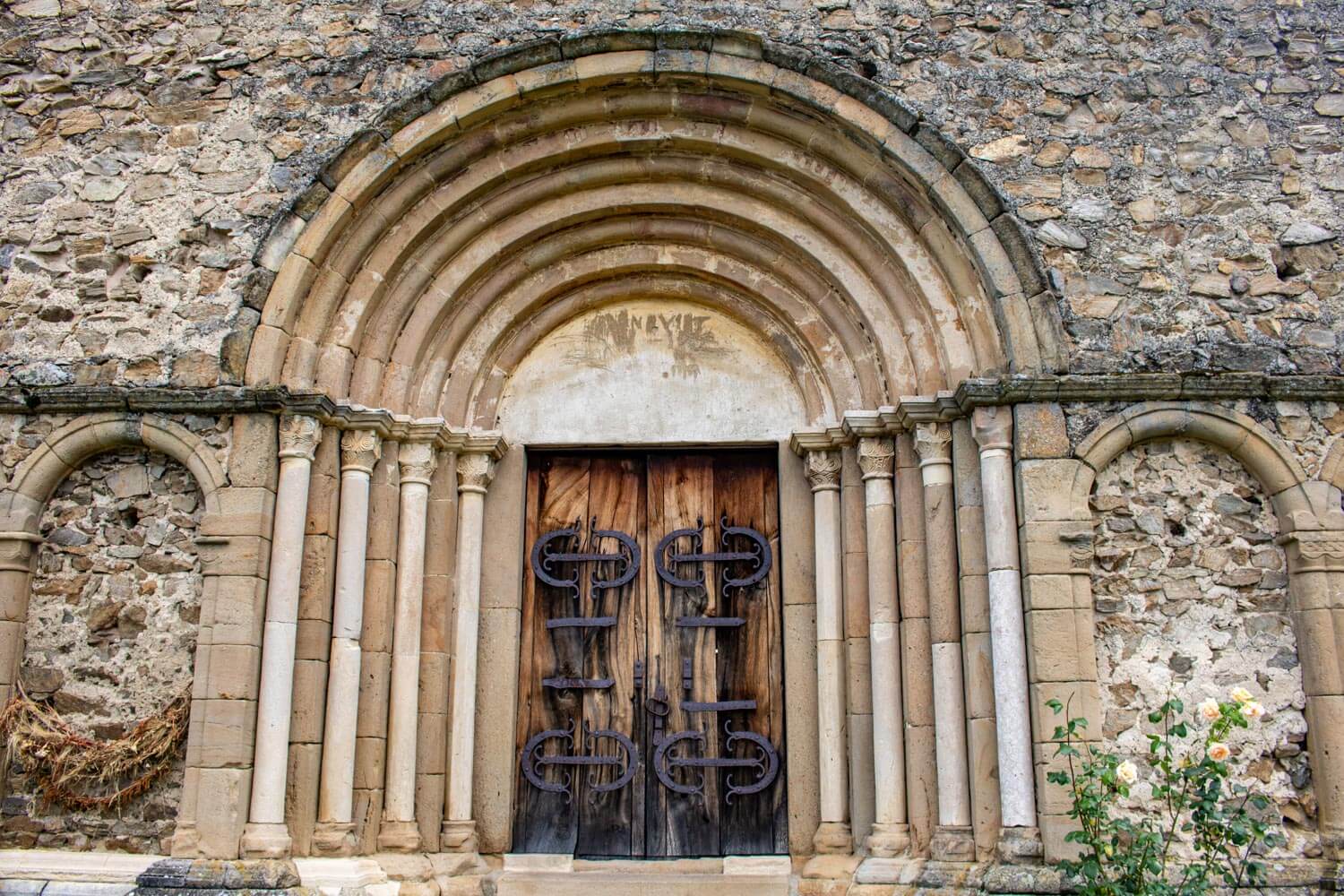
The church was already standing when it was donated in 1223 to the Cistercian Abbey of Cârța. Its compact stone construction reflects the earliest phase of Saxon church building around Sibiu, while the western portal is one of its most distinctive features. Deeply recessed arches frame carved stone decoration influenced by Romanesque architecture from the Rhineland.
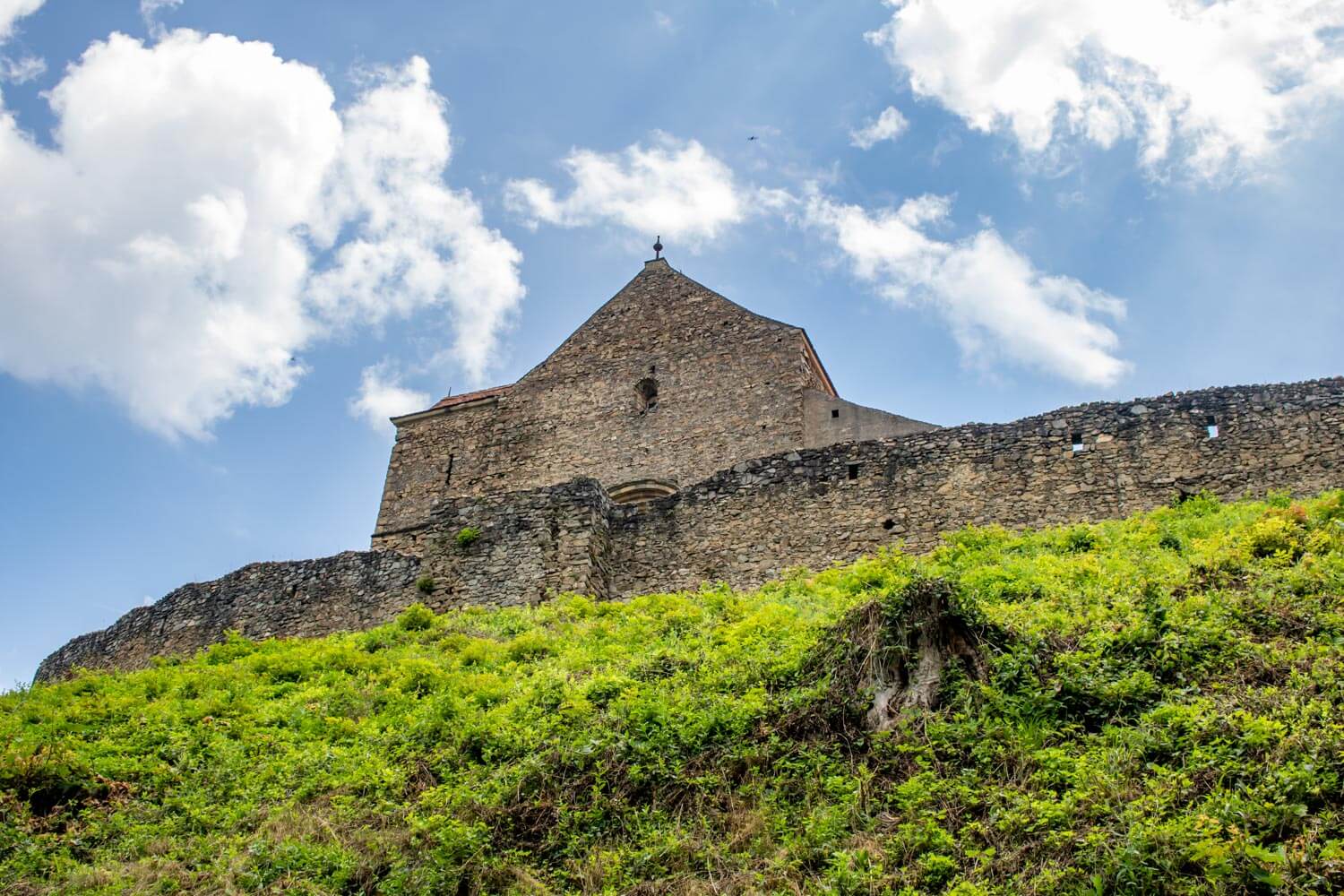
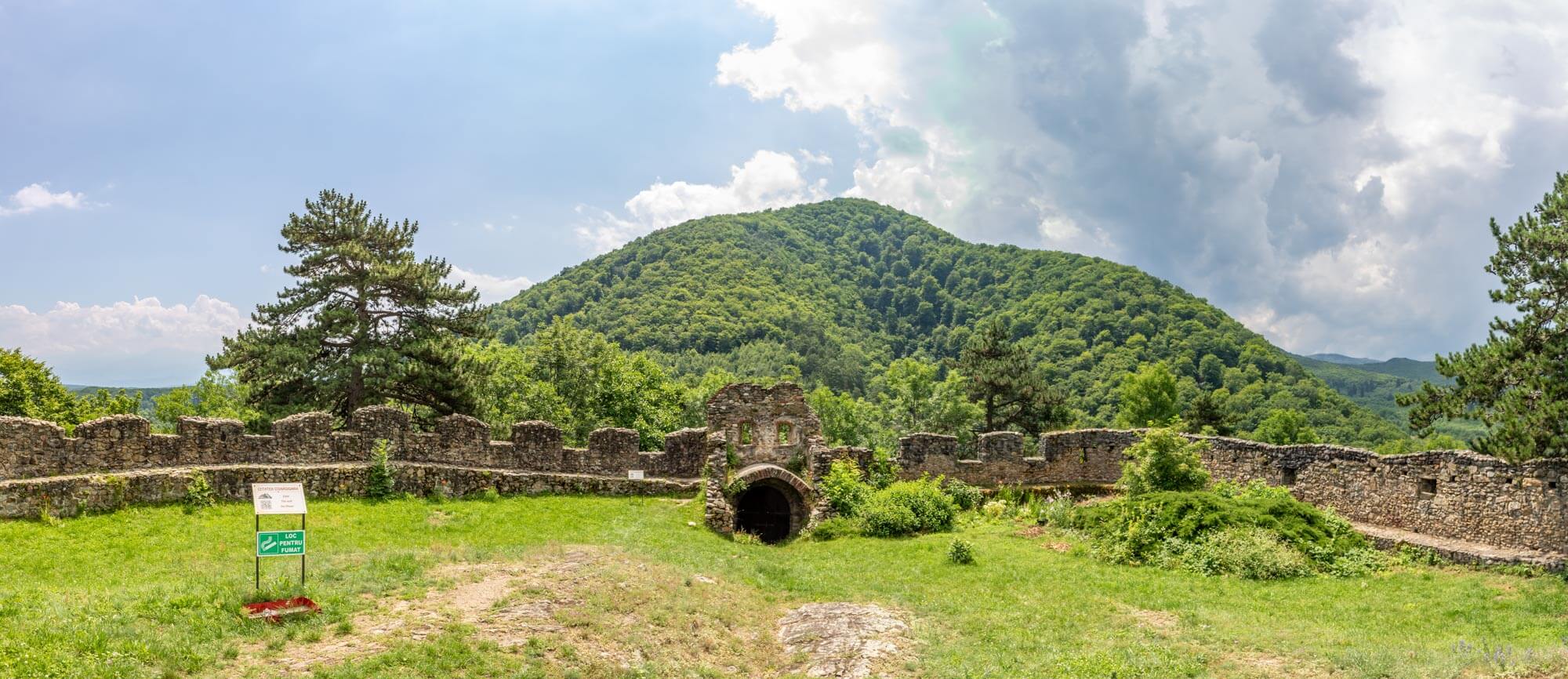
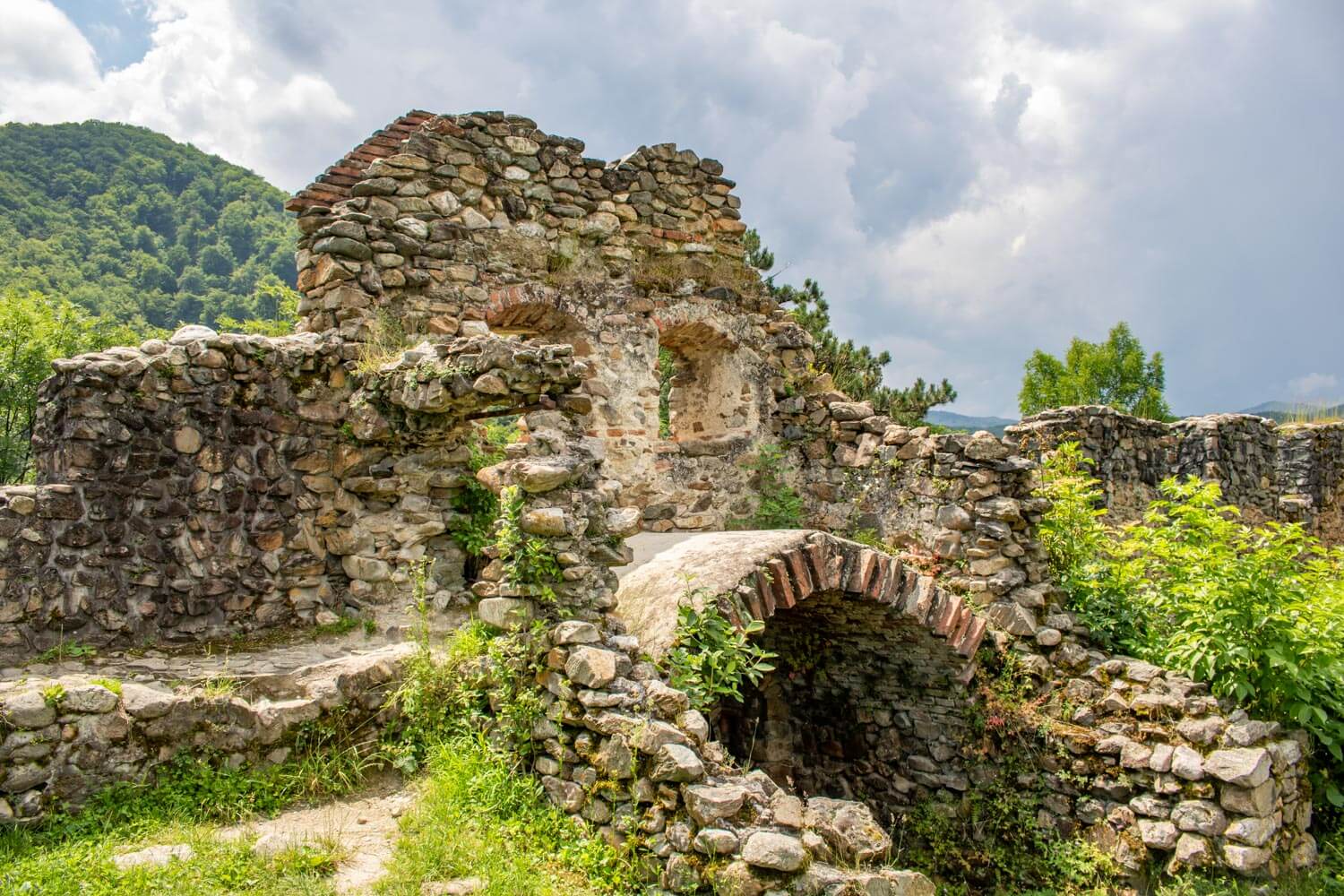
The hilltop was also fortified early, with a stone enclosure following the edge of the summit. The walls were equipped with a wall walk and defensive openings, while towers strengthened the perimeter. Only parts of this system survive today, but the remaining walls still clearly define the protected churchyard around the basilica.
Large rounded stones preserved inside the enclosure are connected with the defensive use of the site. They were kept as projectiles that could be thrown from the walls during an attack, while a local custom later developed around them: young men were expected to carry one of the heavy stones uphill before marriage as a demonstration of strength.
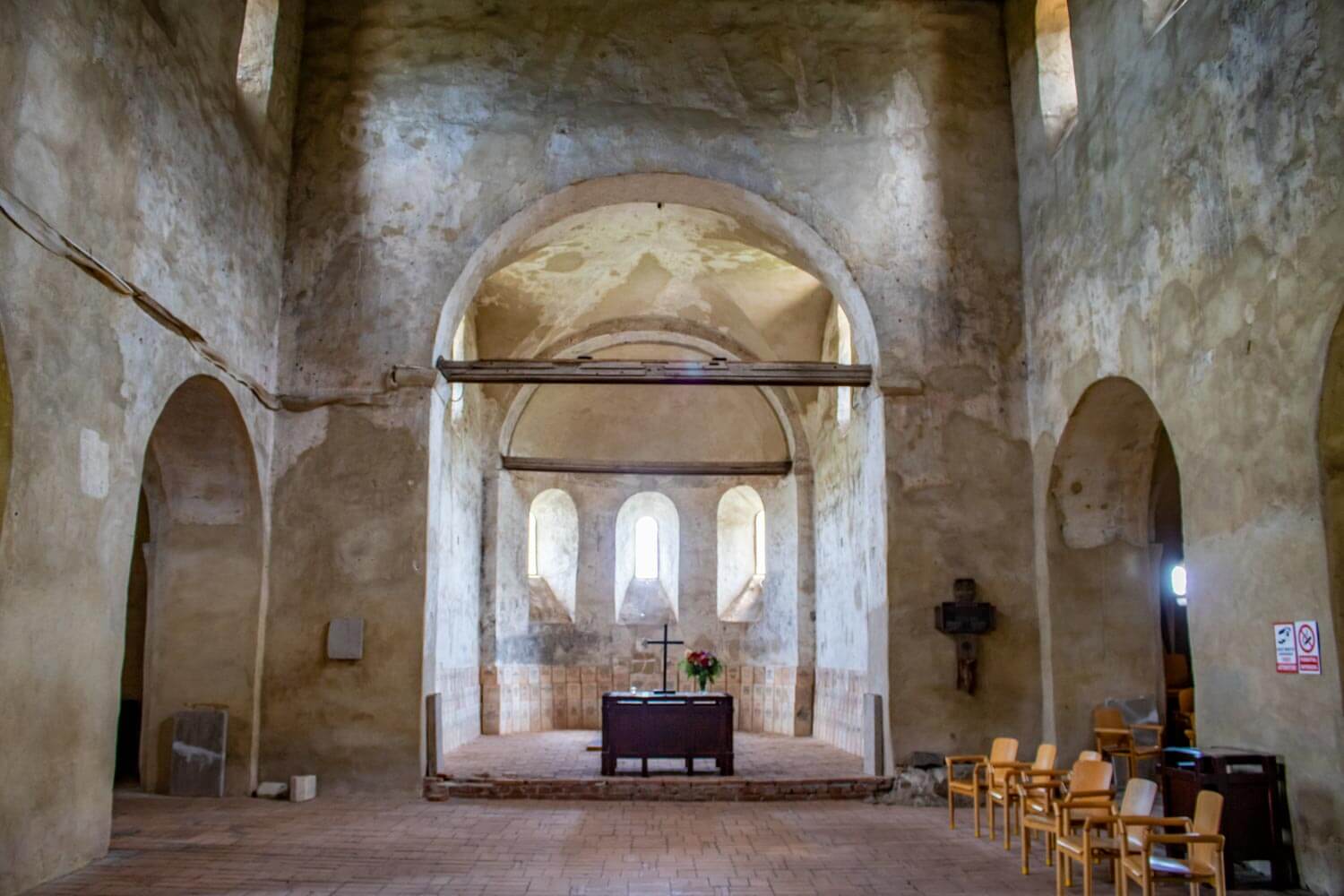
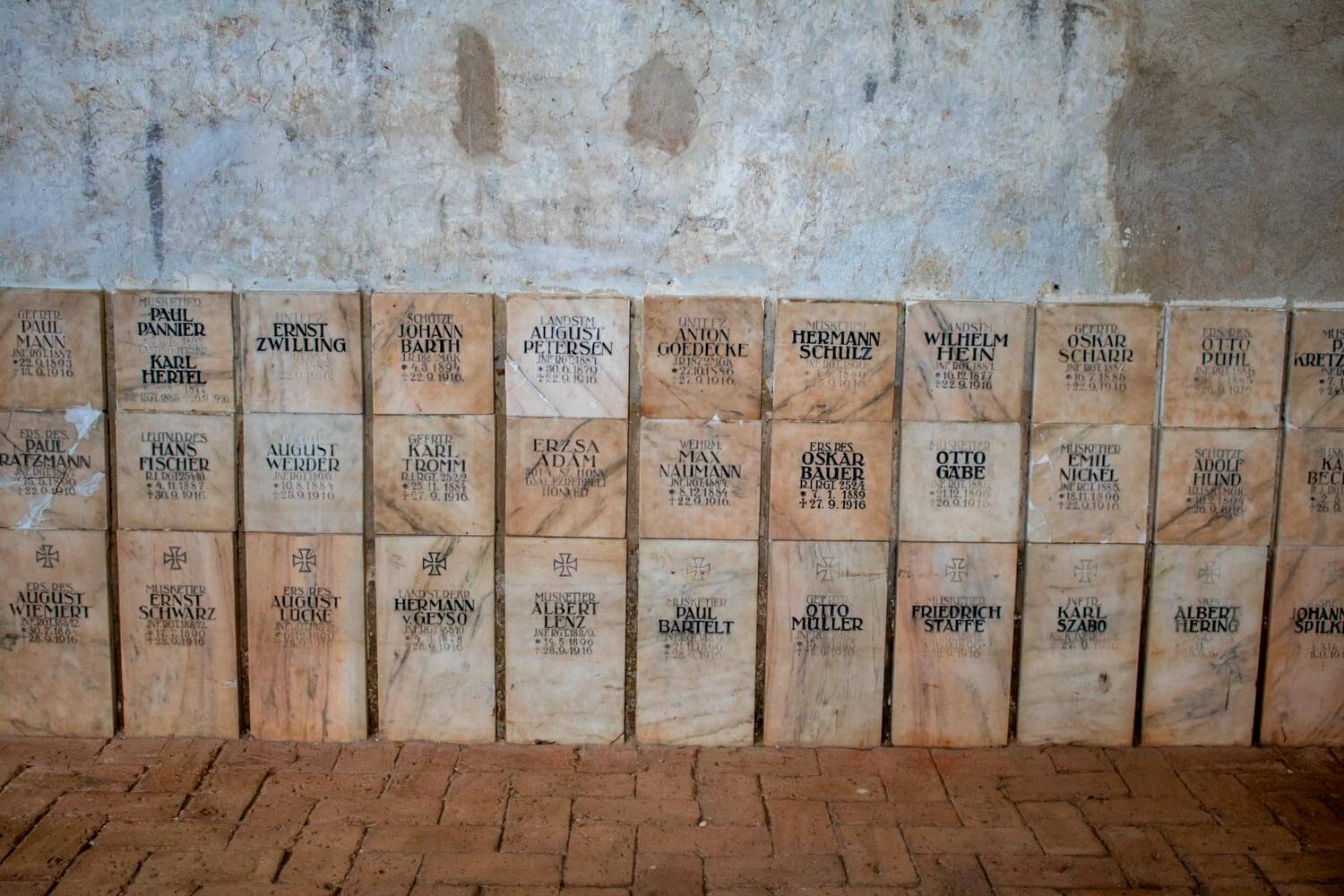
The church interior is unusually austere today, with much of its former liturgical furnishing gone. Memorial plaques and commemorative objects connected with soldiers killed in the First World War now occupy the space, leaving the simple Romanesque columns, arches and proportions of the building especially visible.
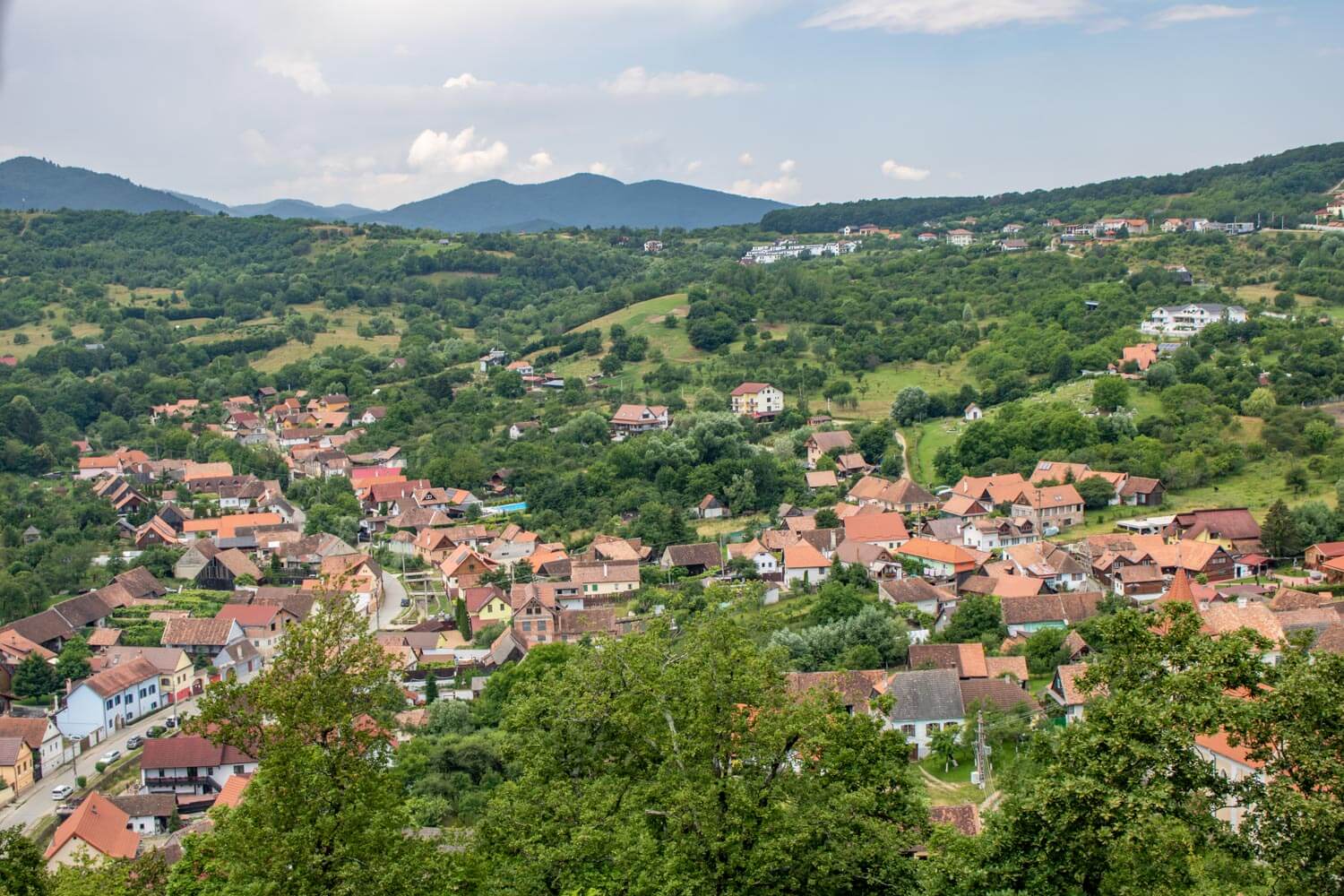
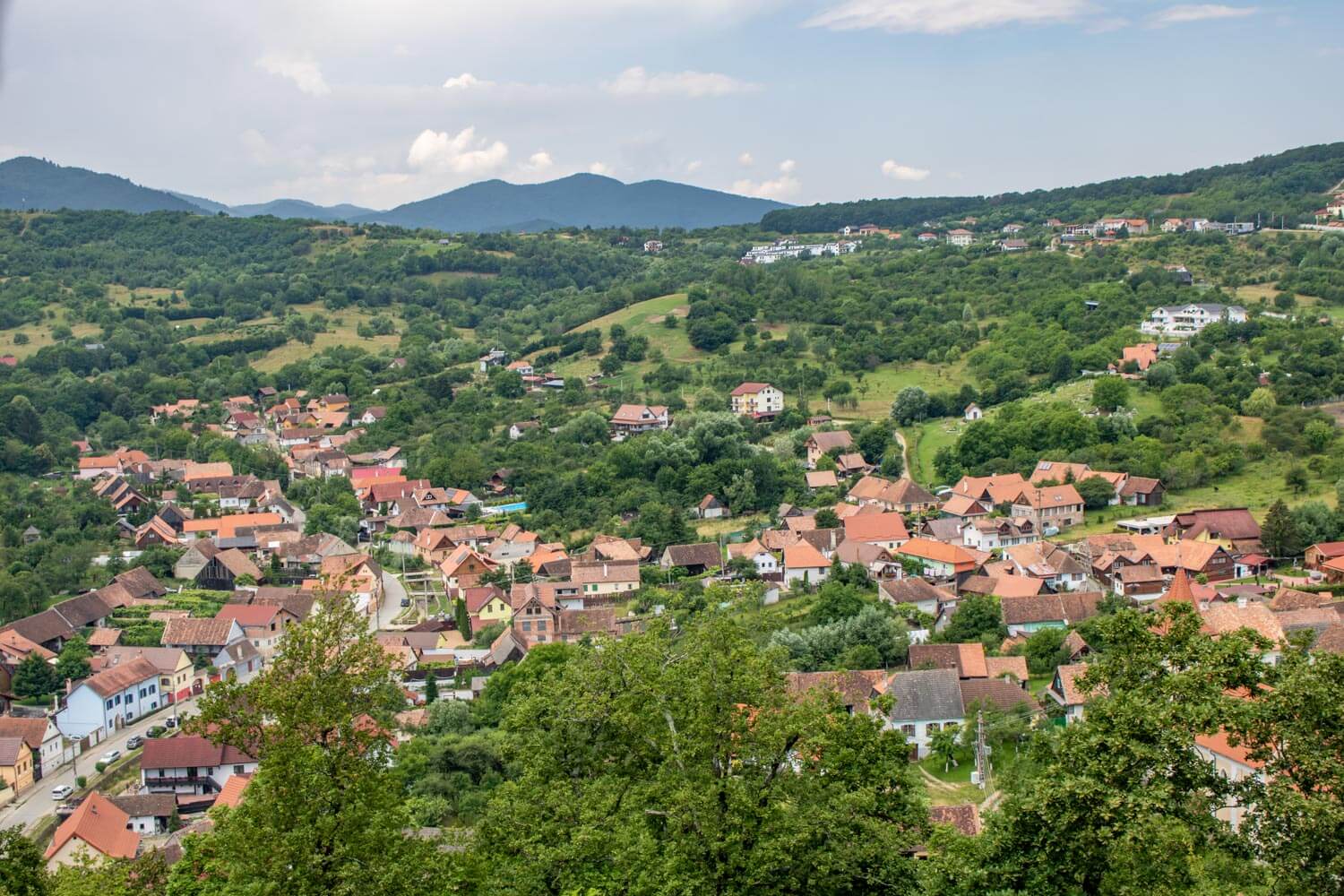
The climb to the church is part of the experience, with the fortified enclosure standing high above Cisnădioara and broad views opening across the village and surrounding landscape from the hilltop.