ASTRA Museum (Muzeul ASTRA) is a vast open-air ethnographic museum in the Dumbrava Sibiului Natural Park on the southern edge of Sibiu, presenting traditional rural life, architecture and technology from across Romania.
Spread across 96 hectares and connected by around 10 kilometers of paths, the museum contains more than 400 houses, farm buildings, workshops and technical installations. Rather than arranging these objects inside exhibition halls, ASTRA has reconstructed entire buildings within a landscape of woodland, meadows, streams and a large lake, creating something closer to a collection of villages than a conventional museum.
History
The origins of ASTRA reach back to the Transylvanian Association for Romanian Literature and the Culture of the Romanian People, founded in Sibiu in 1861 to promote Romanian culture and education in Transylvania. The association began collecting ethnographic material and opened its own museum in 1905 in the building now occupied by the ASTRA County Library. That museum was dissolved by the communist authorities in 1950 and its collections transferred to the Brukenthal National Museum.
The idea of an open-air museum was revived in the 1950s by ethnographer Cornel Irimie, initially with a particular focus on traditional technology. Land in Dumbrava Sibiului was obtained in 1960, work on the new museum began in 1963, and the Museum of Folk Technology opened to the public in 1967. Its original purpose was unusually ambitious: to document how rural communities throughout Romania used water, wind, animal and human power for agriculture, food production, mining, textiles, woodworking and other crafts.
That concept gradually broadened. From 1971, complete farmsteads and craft households were added alongside mills and machinery, allowing the museum to show not only how people worked but also how they lived. A further expansion from 1990 introduced buildings used by whole communities, including churches, a school, inns and other public structures. The museum regained the ASTRA name that same year, formally reconnecting it with the institution founded at the beginning of the 20th century. In 2001 it became part of the present ASTRA National Museum Complex.
What To See
The scale and variety of the collection are what distinguish ASTRA. Traditional houses have been brought here from different regions of Romania and reconstructed with their barns, stables, workshops, fences and household objects, showing how architecture changed according to landscape, climate, materials and occupation. Interiors contain furniture, textiles, ceramics, religious objects and everyday tools, so many of the buildings can be understood as complete households rather than empty architectural exhibits.
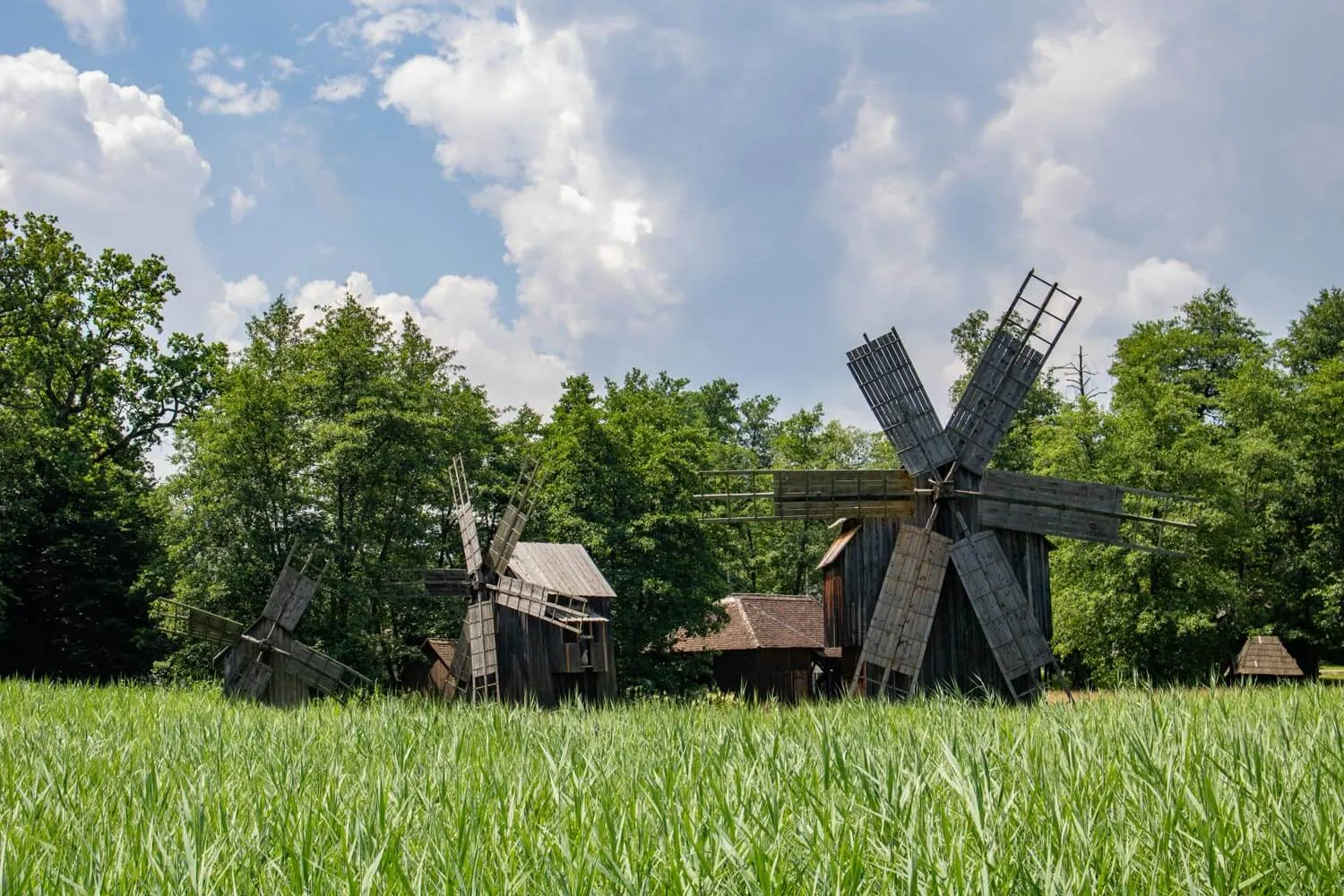
Some of the most striking exhibits are the structures built around traditional industries. Watermills, fulling mills, hydraulic saws, presses and other machinery demonstrate how flowing water was put to work, while the windmills from Dobrogea are among the museum’s most recognizable landmarks. Around the lake are buildings connected with fishing communities of the Danube Delta, together with floating mills and bridges that use the water itself as part of the exhibition. Elsewhere, workshops illustrate occupations ranging from pottery, weaving and leatherworking to blacksmithing, woodworking, beekeeping and the making of musical instruments.
ASTRA also goes well beyond Romanian village houses alone. Buildings connected with Saxon, Hungarian, Lipovan Russian, Serbian, Turkish-Tatar and other communities help show the ethnic diversity of traditional life in Romania. A dedicated route through the museum links a selection of these monuments, including Saxon presses and mills, a Lipovan fishing household and fishery, Serbian water-powered machinery and Dobrogean windmills belonging to Turkish-Tatar communities.
The later public-building collection adds another dimension to the reconstructed rural landscape. Churches, a school, inns and other communal structures show where people worshipped, learned, met and traveled, while some buildings have returned to practical use within the museum. Traditional food, craft demonstrations and seasonal events are therefore part of the experience as well as the historic structures themselves.
Visiting
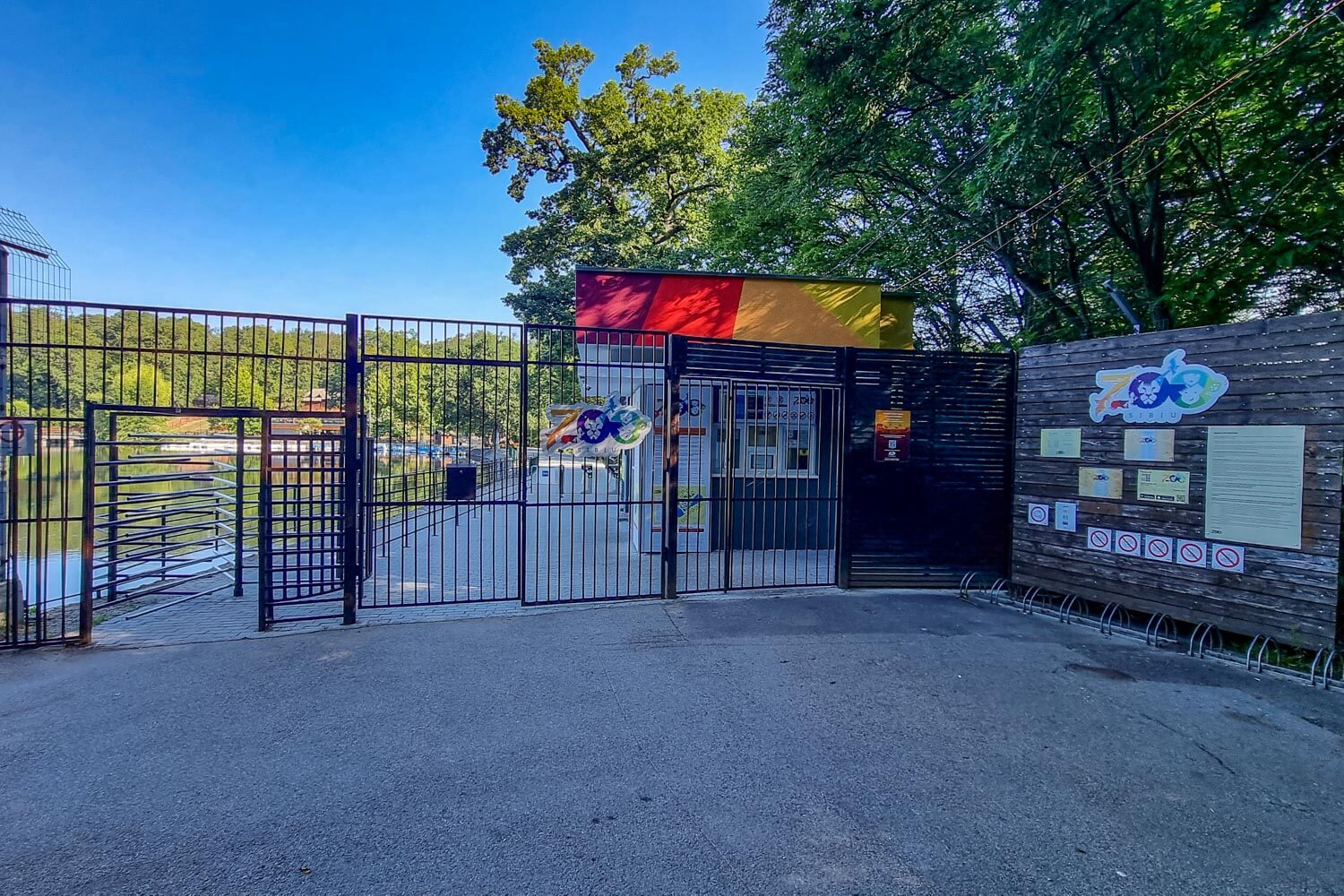
Because of its size, ASTRA is best approached as an outdoor landscape rather than a museum where every exhibit needs to be seen in sequence. Paths branch through the forest and around the lake, and different routes can concentrate on architecture, traditional industries, ethnic communities or simply a selection of the most interesting buildings.
Several places inside the grounds provide food and refreshments, including traditional-style inns and taverns, a café near the main entrance and seasonal food activities at the Country Fair. The museum also regularly hosts craft demonstrations, workshops, fairs, music and dance performances and larger cultural festivals, bringing traditional skills back into the buildings and landscapes where they would once have been practiced.
Even without an event taking place, the setting is an important part of the visit. Houses and workshops appear between wooded paths and open meadows, mills line the waterways, and the large lake forms the center of one of the most distinctive sections. With hundreds of structures spread across such a large area, visitors can explore only part of the collection or continue much farther into the museum depending on how much they want to see.