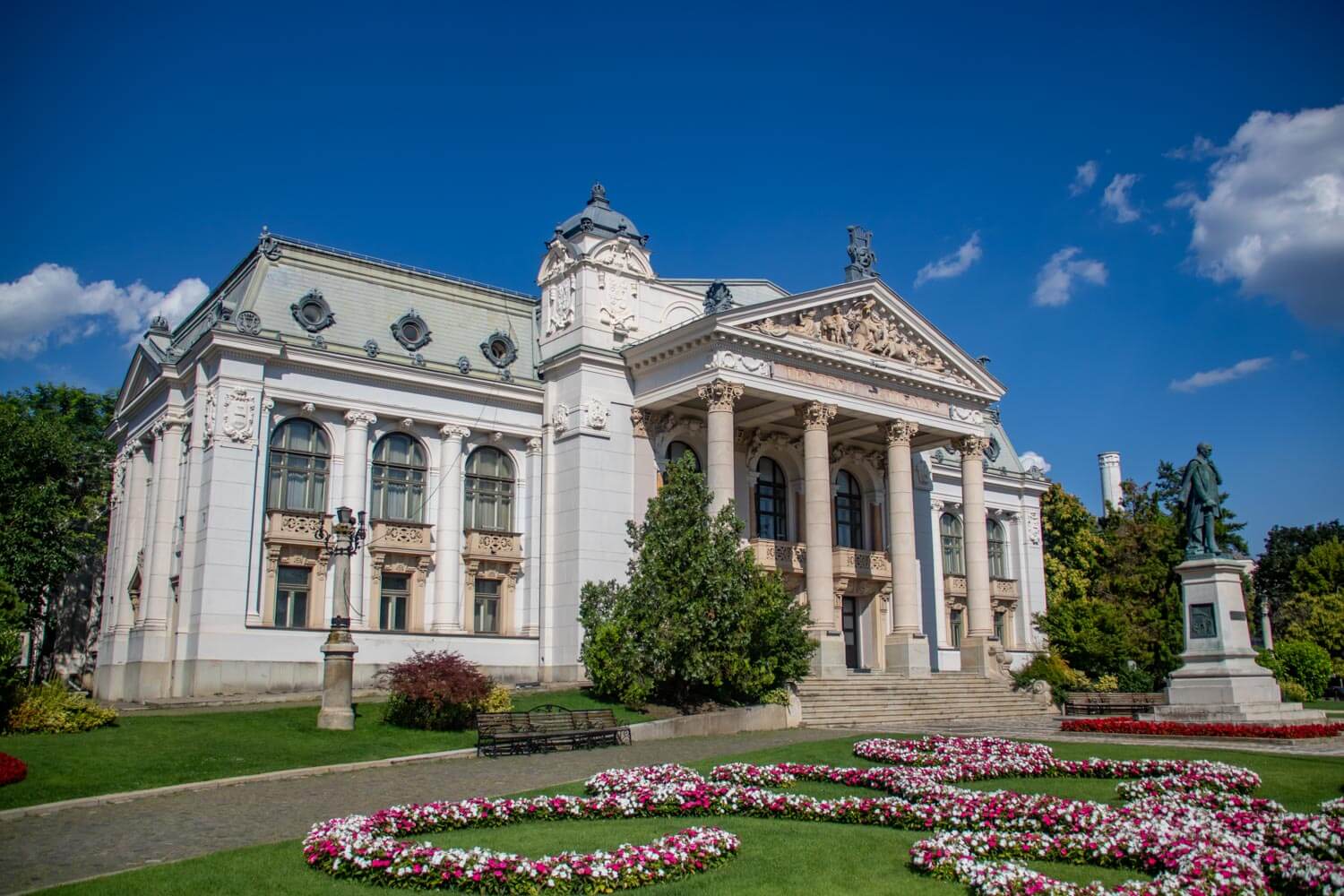
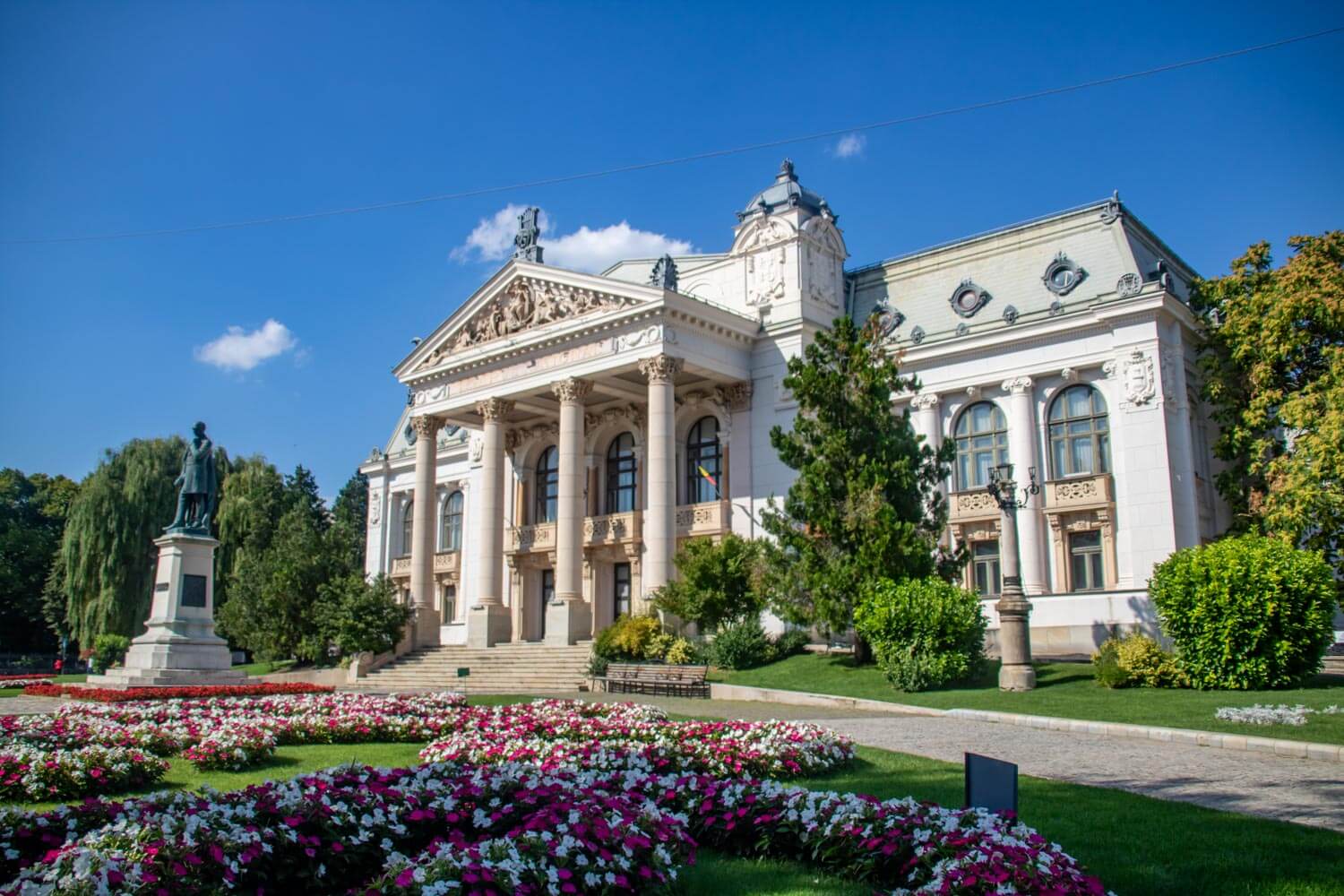
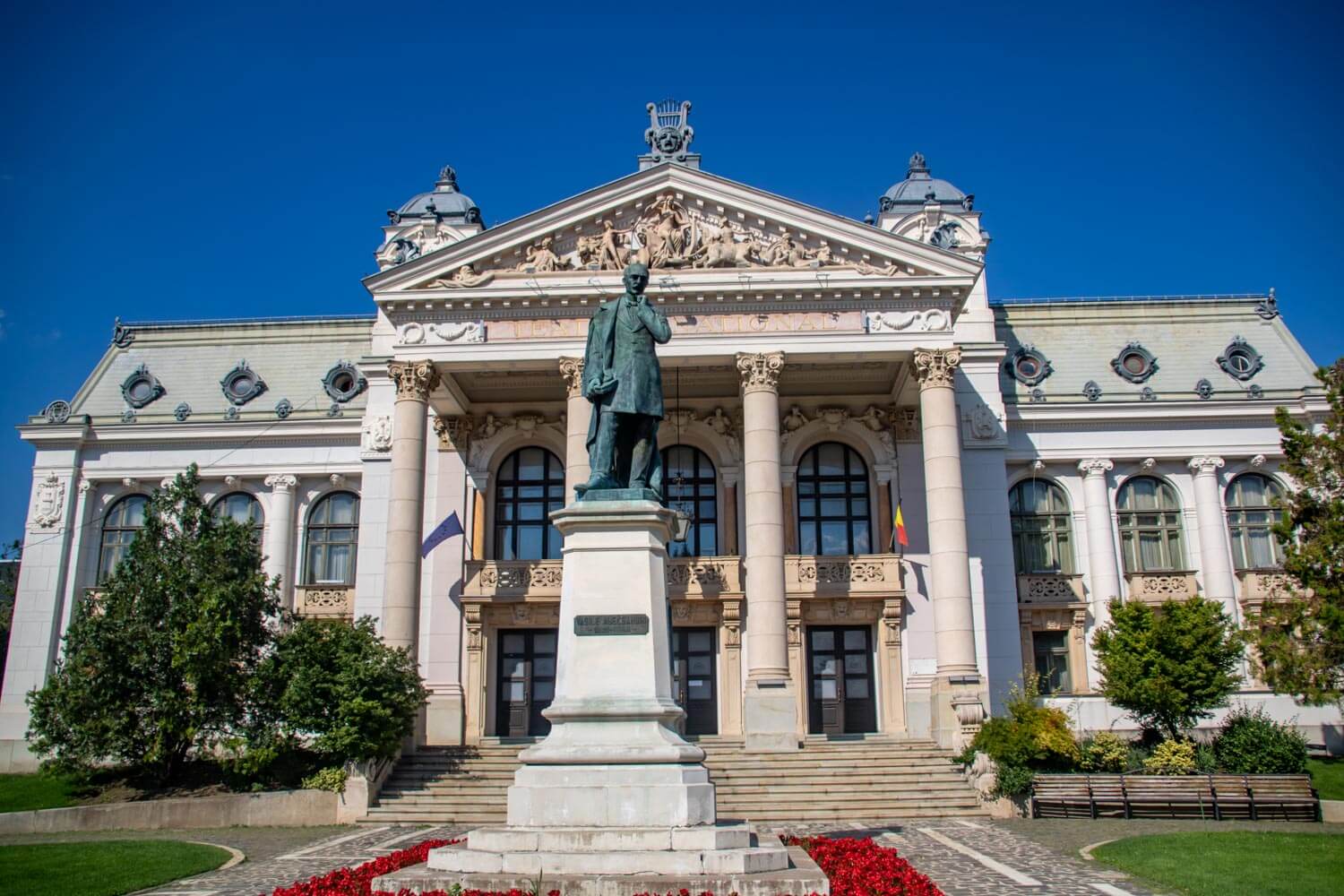
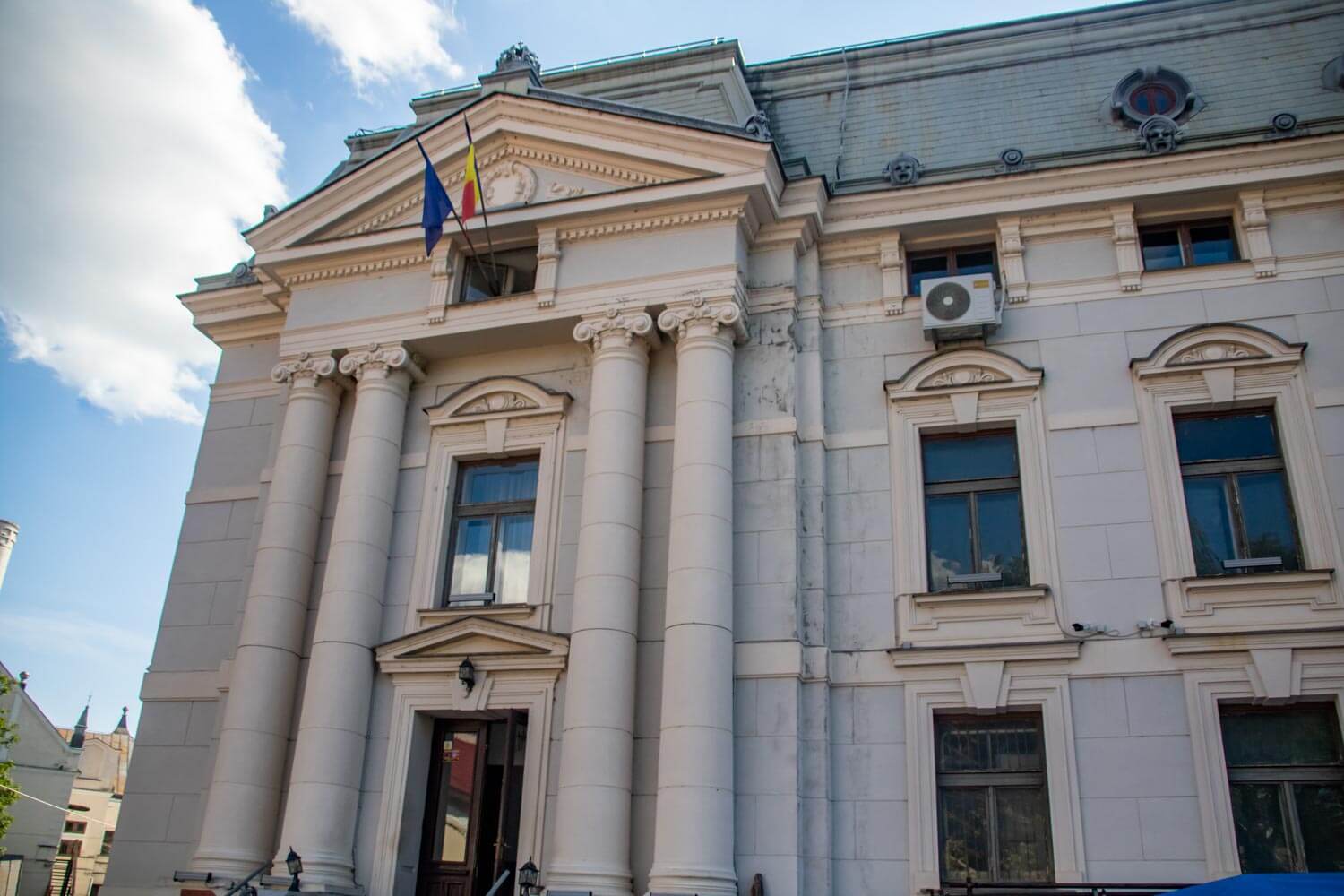
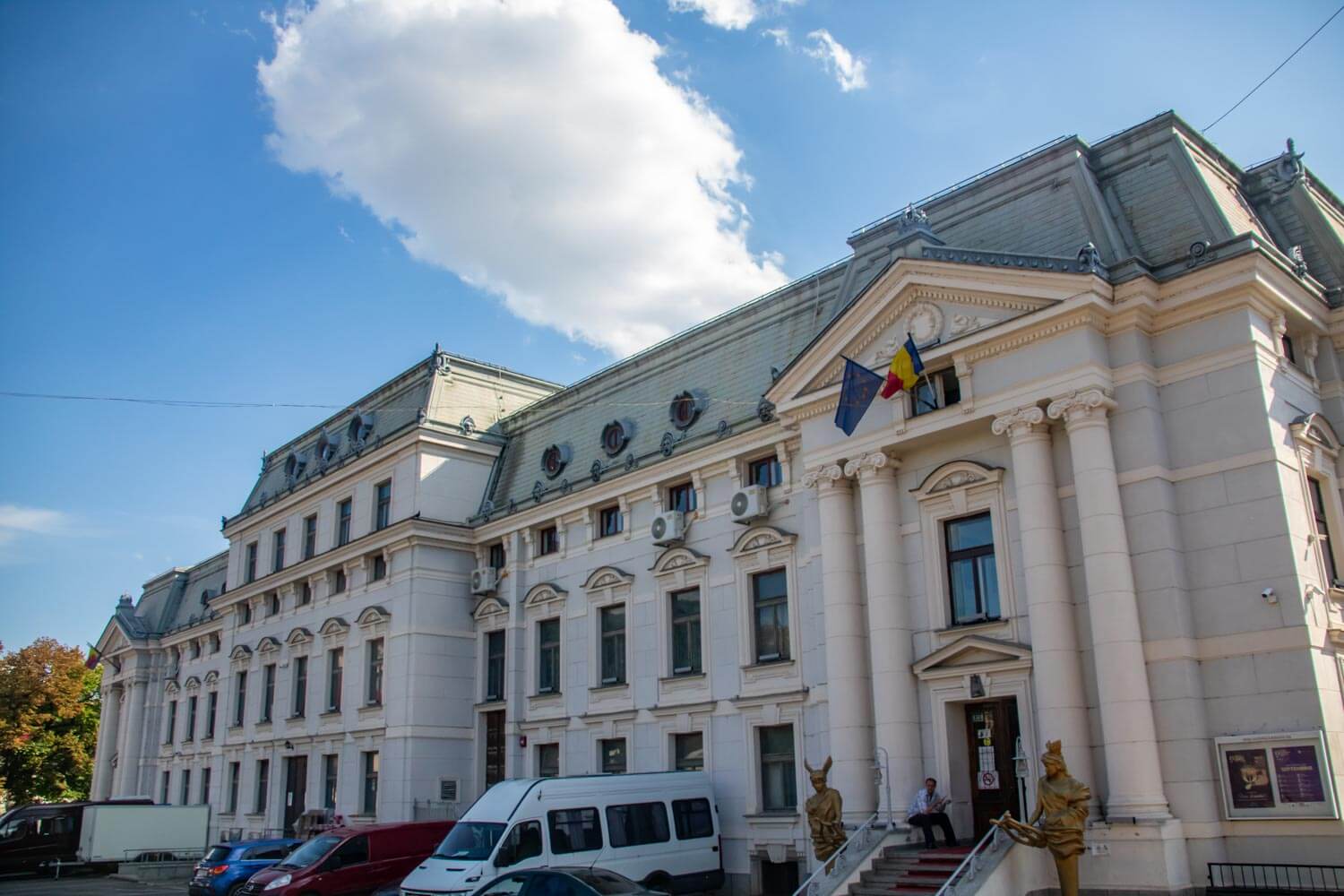
The Vasile Alecsandri National Theater (Teatrul Național Vasile Alecsandri) is a monumental late 19th-century theater in central Iași and the home of Romania’s oldest national theater institution. Built between 1894 and 1896 to designs by Viennese architects Ferdinand Fellner and Hermann Helmer, the building is especially known for its richly decorated auditorium, painted curtain and ceiling, gilded Rococo ornament, and large Venetian crystal chandelier.
The National Theater of Iași was established in 1840 under the direction of Costache Negruzzi, Vasile Alecsandri, and Mihail Kogălniceanu. Its early performances took place in several venues before the institution moved into the Great Theater at Copou in 1846. That building was destroyed by fire in February 1888, leaving Iași without a permanent national theater and prompting plans for a new venue in the city center.
The municipality eventually chose the site of the former city hall, which had moved into Roznovanu Palace. Fellner and Helmer, one of the most prolific theater-design partnerships in Central Europe, were commissioned for the project, and construction began in 1894. Their design combined a monumental historicist exterior with modern theater planning, including improved circulation, fire protection, ventilation, heating, and electric lighting. A separate power plant was built behind the theater to supply the new building, and when the theater opened on December 1, 1896, it also powered 12 arc lamps in the surrounding square.
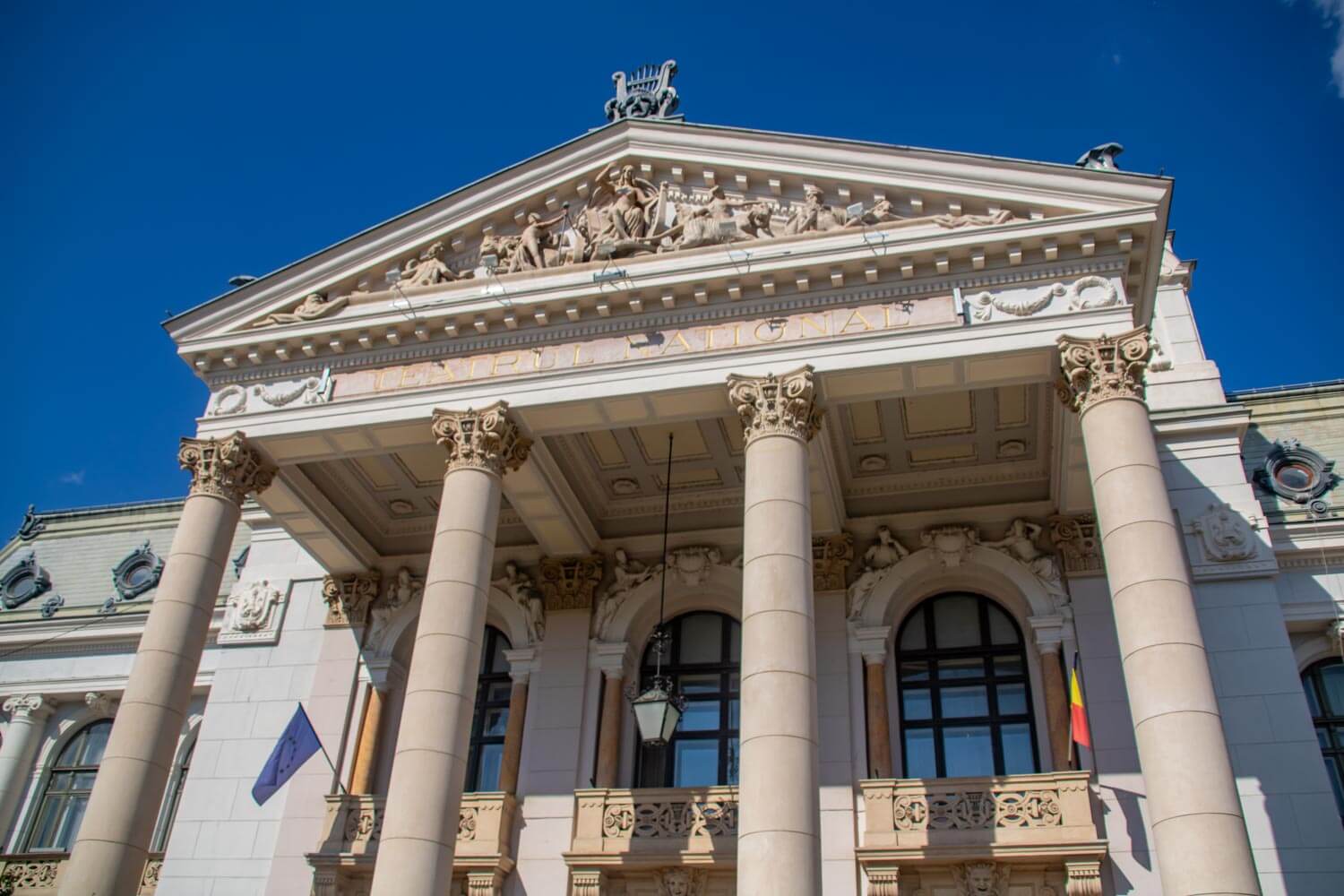
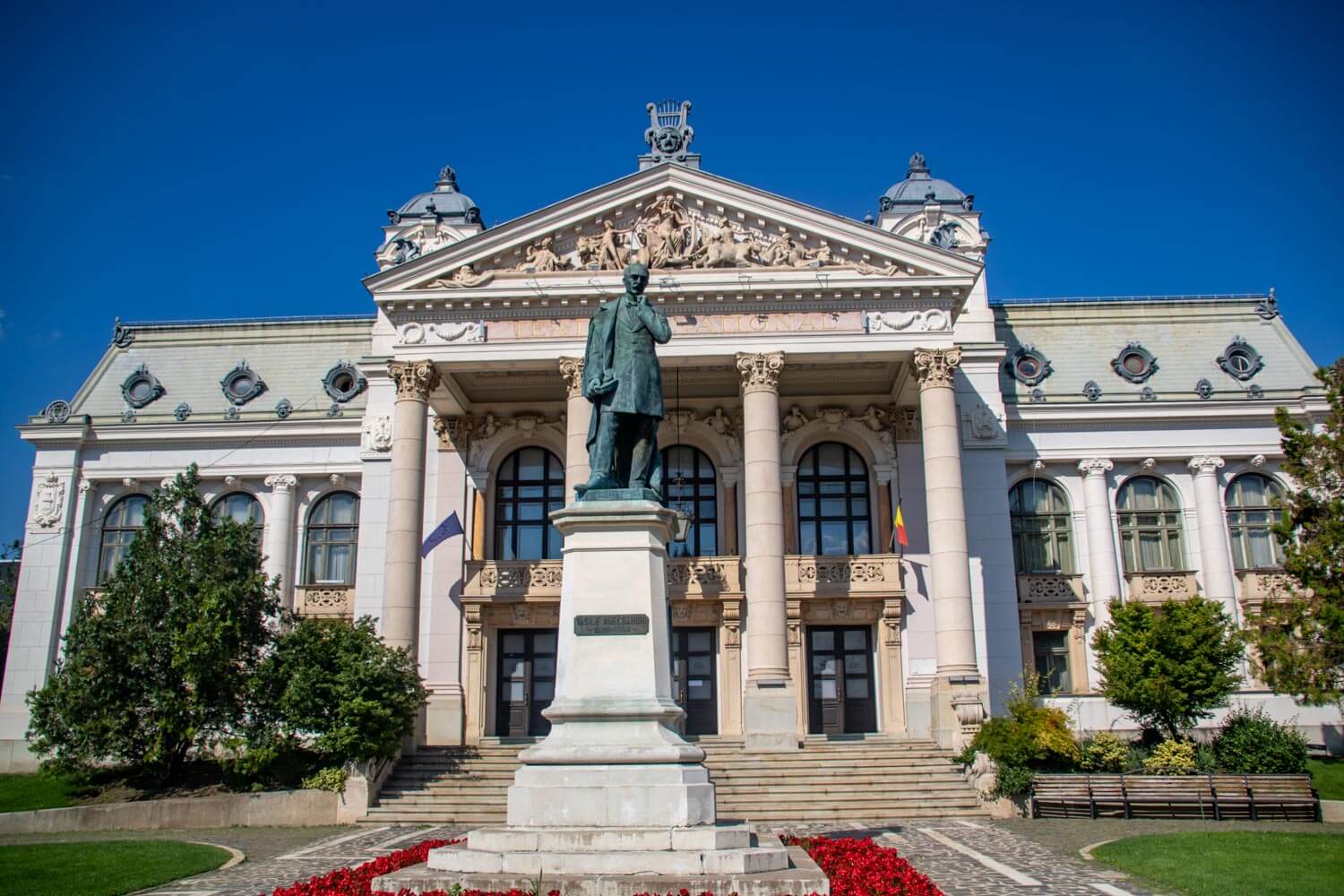
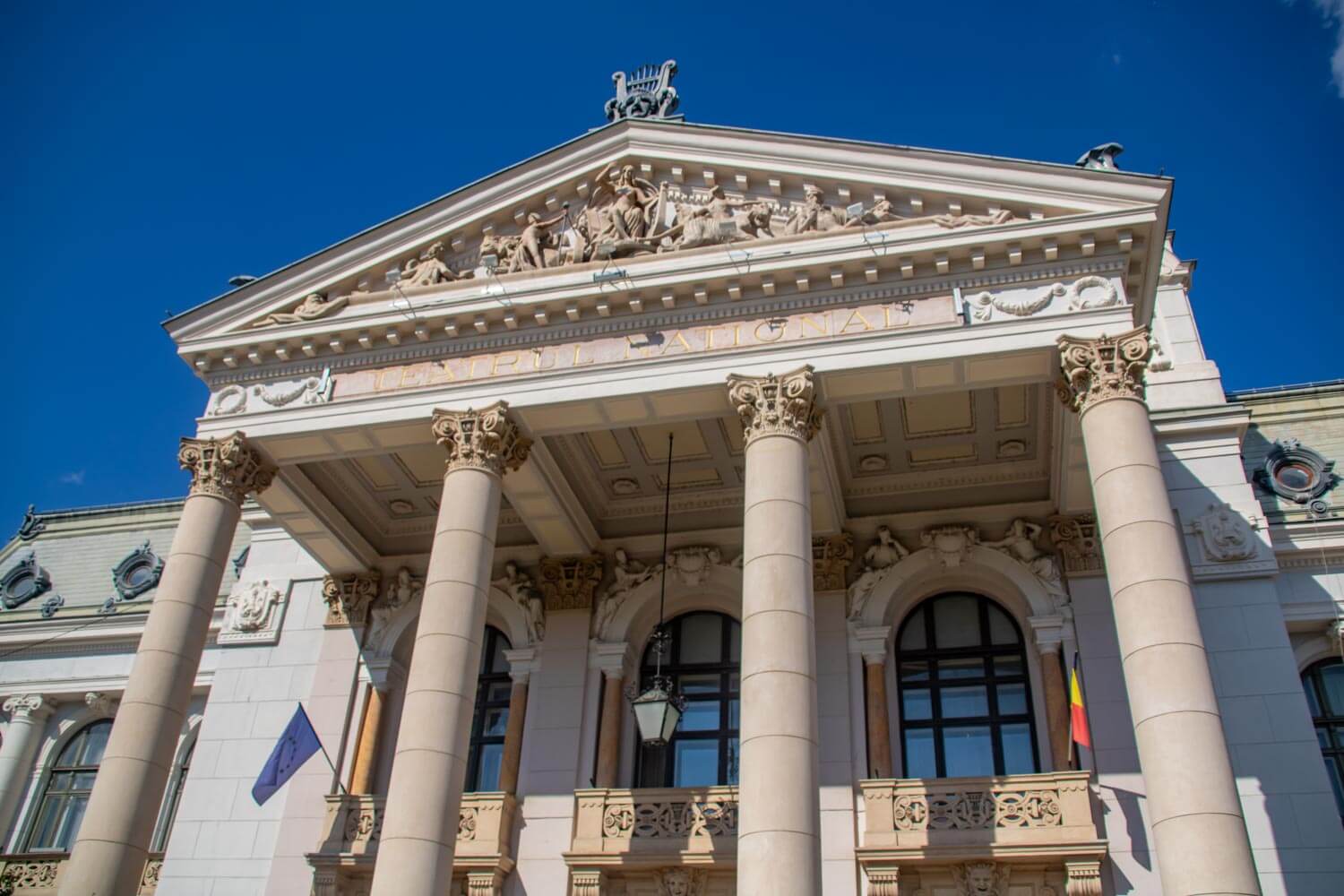
The main façade is centered on a classical portico with tall columns supporting a triangular pediment filled with sculptural decoration. Reliefs and ornamental details refer to drama, poetry, and music, while the balanced wings and arched windows give the building the formal symmetry typical of Fellner and Helmer’s theater architecture.
Inside, the Main Hall has around 740 seats arranged across the stalls, boxes, and balcony, with deep red upholstery set against white and gold Rococo decoration. A large Venetian crystal chandelier hangs beneath the painted ceiling by Alexander Goltz, where mythological and allegorical figures appear among pastel-colored clouds and elaborate stucco. Almost seven kilograms of gold leaf were used on the decorative work throughout the auditorium.
Around the stage, the original decoration is complemented by two historic curtains. The main painted curtain, created in Vienna by Maximilian Lenz and completed by one of his pupils, presents an allegory of the three ages of life together with a scene referring to the Union of the Romanian Principalities. Behind it is an iron safety curtain painted by Alexander Goltz, introduced as part of the theater’s fire-protection system. The auditorium also retains the royal box and a corresponding box decorated with the coat of arms of Iași.
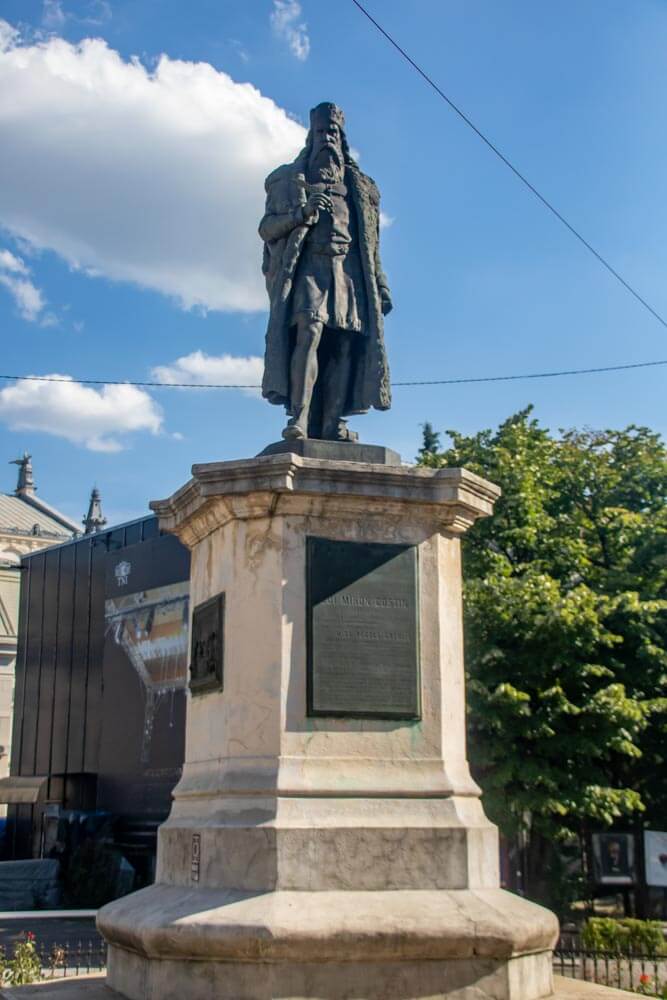
Vasile Alecsandri’s role in founding the institution was commemorated in 1906 with a statue by Wladimir C. Hegel in front of the theater, and in 1956 the National Theater itself received his name. The same year saw the establishment of the State Opera of Iași, which began performing in the Main Hall. Now known as the Romanian National Opera Iași, it remains a separate institution but continues to share the historic auditorium.
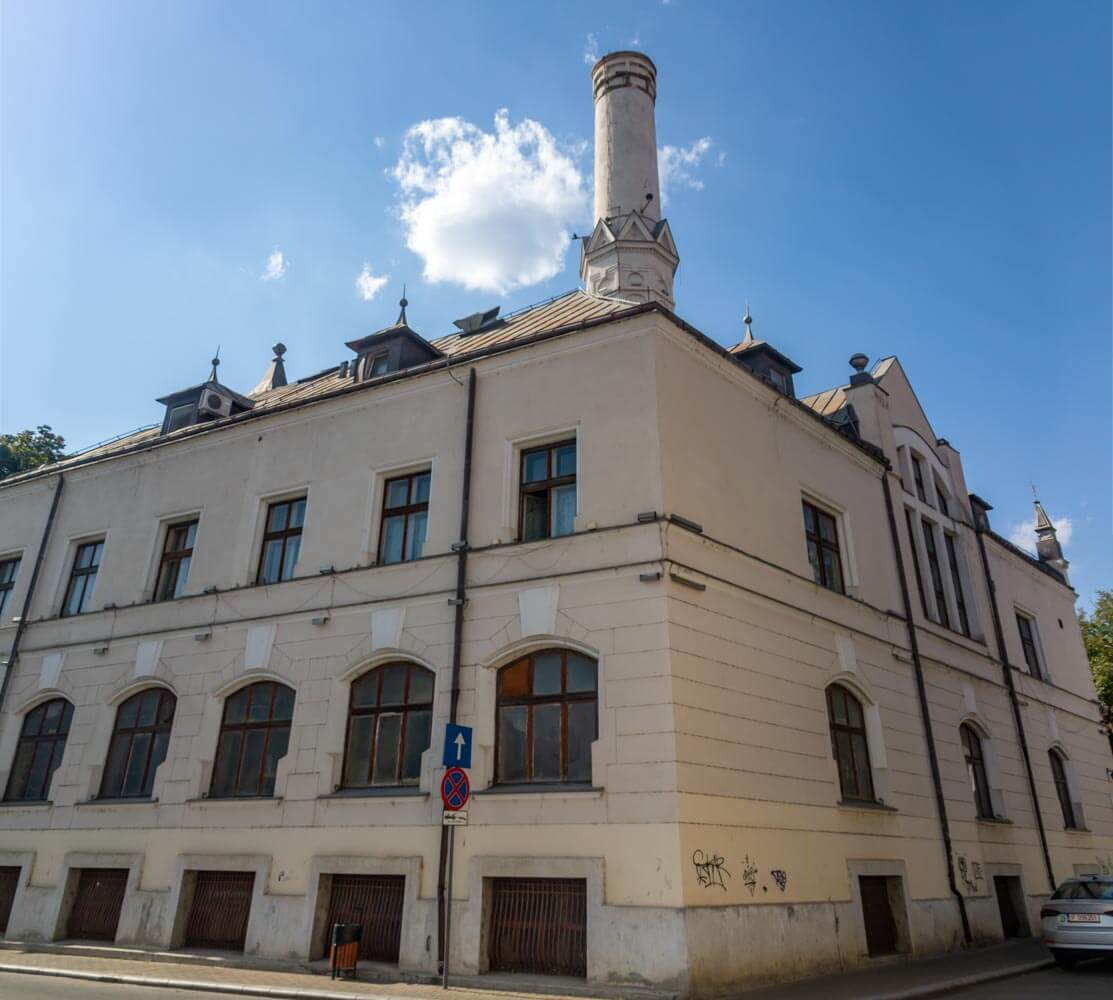
As the National Theater developed during the late 20th and early 21st centuries, additional spaces were created for smaller productions. The Teofil Vâlcu Studio Hall opened inside the historic building in 1980, followed in 2007 by Uzina cu Teatru in part of the former power plant behind the theater. A year later, Teatru³, also known as Teatru la CUB, opened in a separate building beside the theater and became another regular performance venue.
A major restoration completed in 2012 consolidated the historic building and restored its decorative interiors after several years of closure. The Main Hall continues to host both National Theater and Romanian National Opera performances, while the smaller spaces allow the institution to stage productions in a range of different settings.