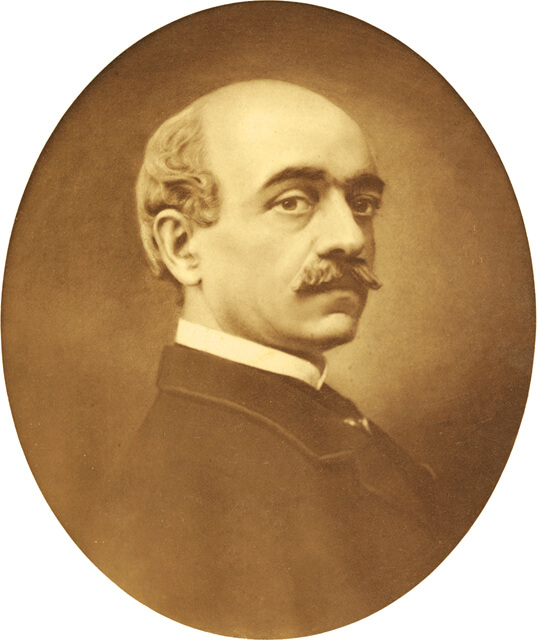
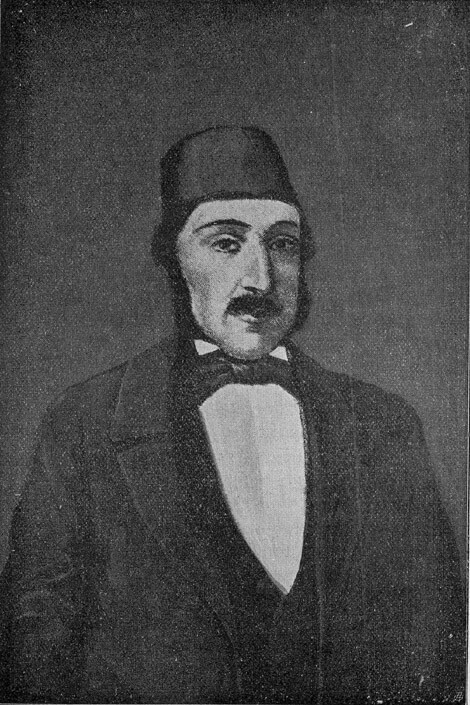
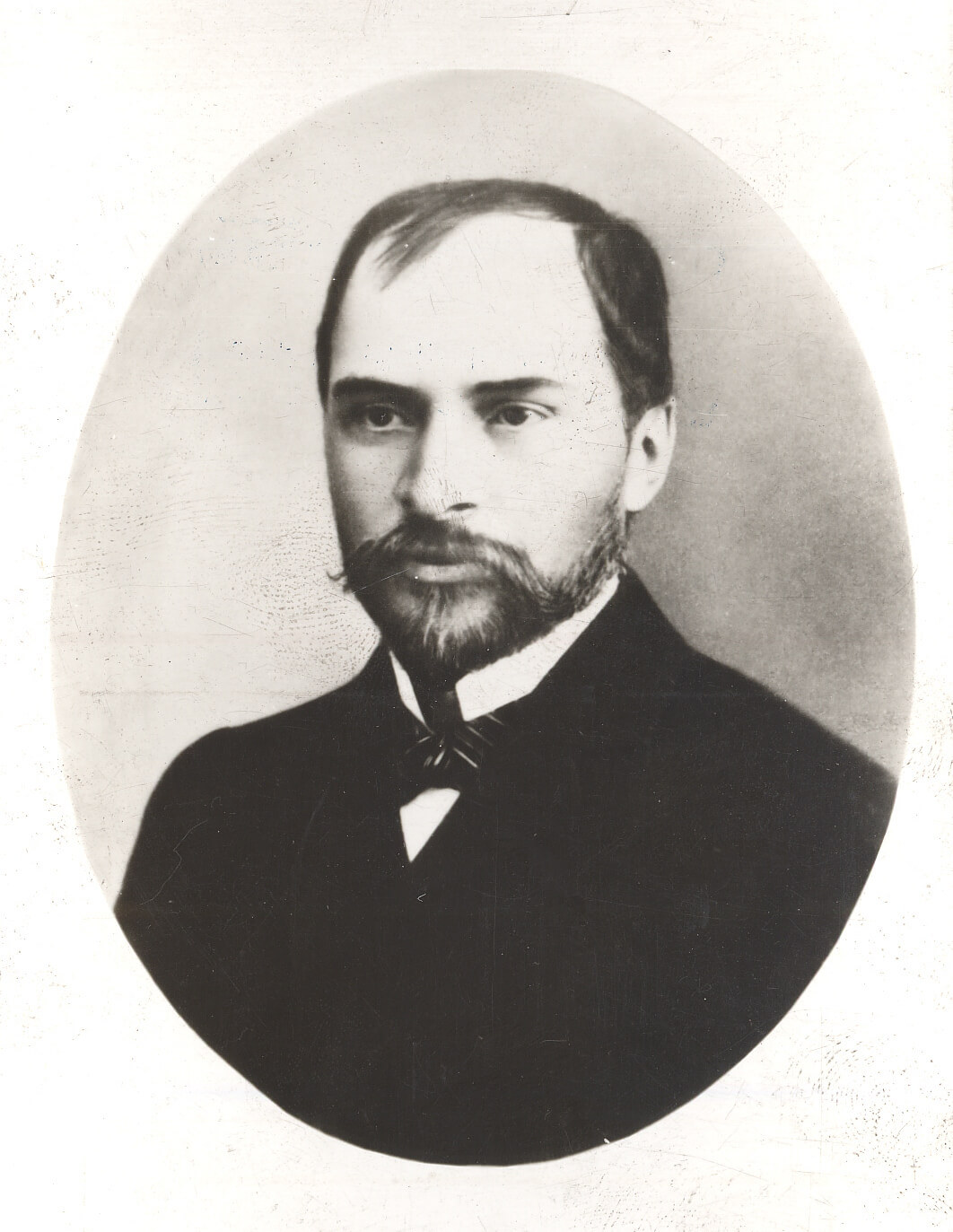
Vasile Alecsandri (1821-1890) was a Romanian poet, playwright, folklorist, diplomat, and politician who became one of the leading cultural figures of the nineteenth century. He played an important role in the Revolution of 1848 and the movement for the union of Moldavia and Wallachia, while his literary work helped shape modern Romanian poetry, theater, and national culture.
Alecsandri was born in Bacău into a boyar family and received part of his education in Paris, where he came into contact with other young Romanians who would later become prominent in politics and culture. After returning to Moldavia, he became deeply involved in the emerging literary life of Iași. Together with Mihail Kogălniceanu and Costache Negruzzi, he helped develop the Romanian-language theater in the city and contributed to publications such as Dacia literară and Propășirea.
His literary work was unusually varied. Alecsandri wrote poetry, prose, comedies, historical dramas, travel writing, and political verse, while also collecting and publishing Romanian folk songs and ballads. His plays helped establish a national theatrical repertoire, and characters such as Chirița became enduring figures in Romanian comedy. Later works such as the Pasteluri cycle showed a different side of his writing, turning rural landscapes and the changing seasons into some of the best-known poetry of the period.
Alecsandri was also part of the revolutionary generation of 1848. In Moldavia he helped draft political texts calling for reform, but the movement was quickly suppressed and he went into exile in France. He returned the following year and soon became one of the strongest advocates for the union of Moldavia and Wallachia. His political writing and poetry increasingly reflected that cause.
One of his most famous works from this period was “Hora Unirii”, written in support of the union movement. Its verses were set to music by Alexandru Flechtenmacher and became a popular public expression of support for the unification of the principalities. The song is still performed today, especially around celebrations of the 1859 Union.
Alecsandri also took a direct political role in the process. He was elected to the Moldavian ad hoc assembly and joined the Central Union Committee in Iași. His own name was considered as a possible candidate for the Moldavian throne, but he withdrew and supported Alexandru Ioan Cuza, whose election in both Moldavia and Wallachia in 1859 created the political union of the two principalities.
After Cuza’s election, Alecsandri became one of the new state’s most important diplomats. He served as foreign minister and traveled to Paris, London, and Turin to gain international acceptance for Cuza’s double election and the new political arrangement. His familiarity with Western European culture and his contacts abroad made him particularly suited to this role. Later in life he returned to diplomacy as Romania’s minister plenipotentiary in France.
Literature remained central throughout his political career. Alecsandri continued writing and publishing while serving in public life, and his work increasingly blended cultural and national themes. In 1867 he became a founding member of the Romanian Literary Society, which later developed into the Romanian Academy, reflecting his position at the center of the country’s emerging literary and cultural institutions.
A large part of Alecsandri’s later life was spent at his estate in Mircești, near Roman. He lived there for more than two decades and wrote many of his best-known later works in the house built on the estate between 1861 and 1867. The property is now preserved as the Vasile Alecsandri Memorial House, where visitors can see the setting in which much of his mature writing took shape.
Alecsandri died at Mircești in 1890 and was buried there. His grave remains on the estate, making Mircești both his most personal surviving residence and the place where his life ended.
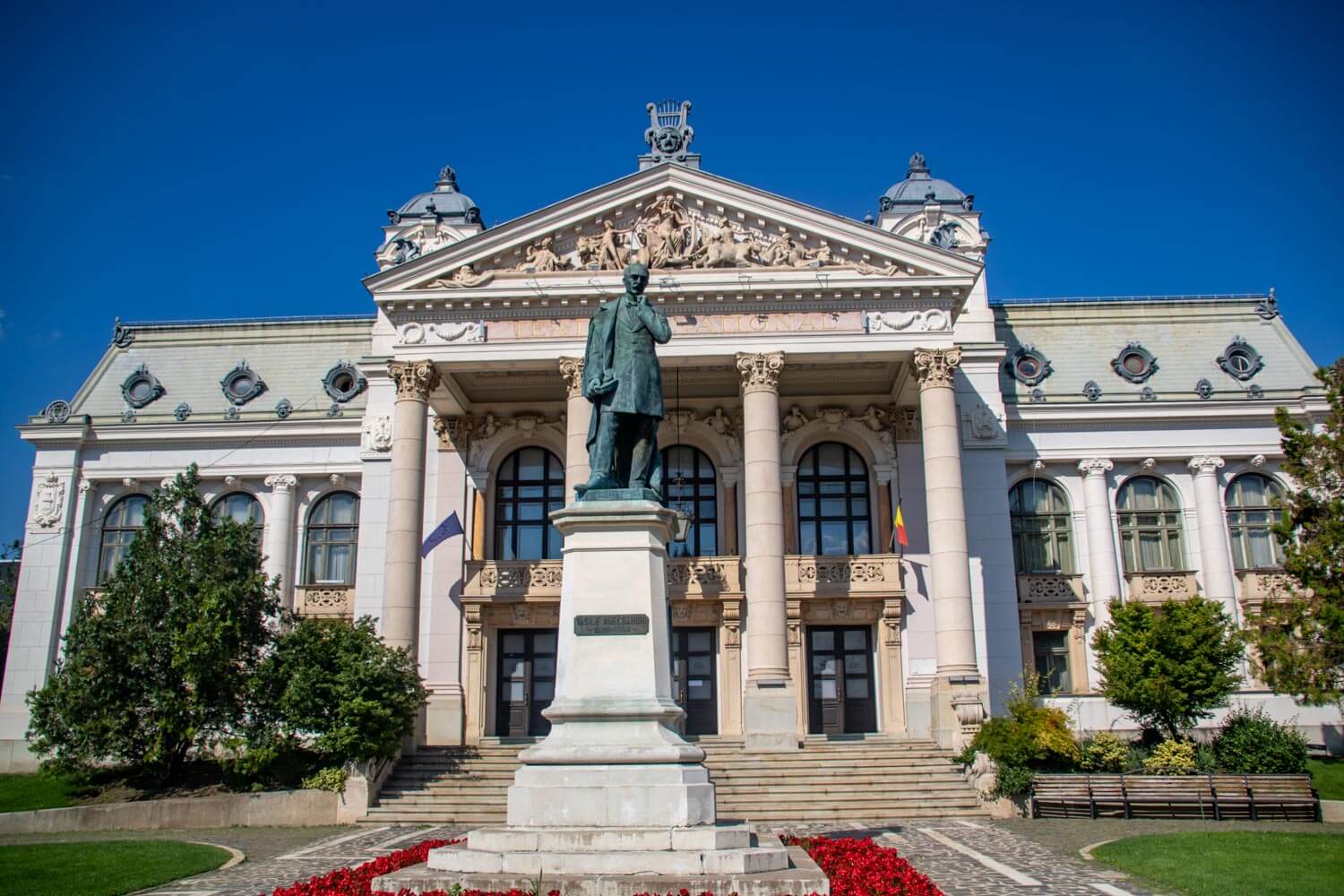
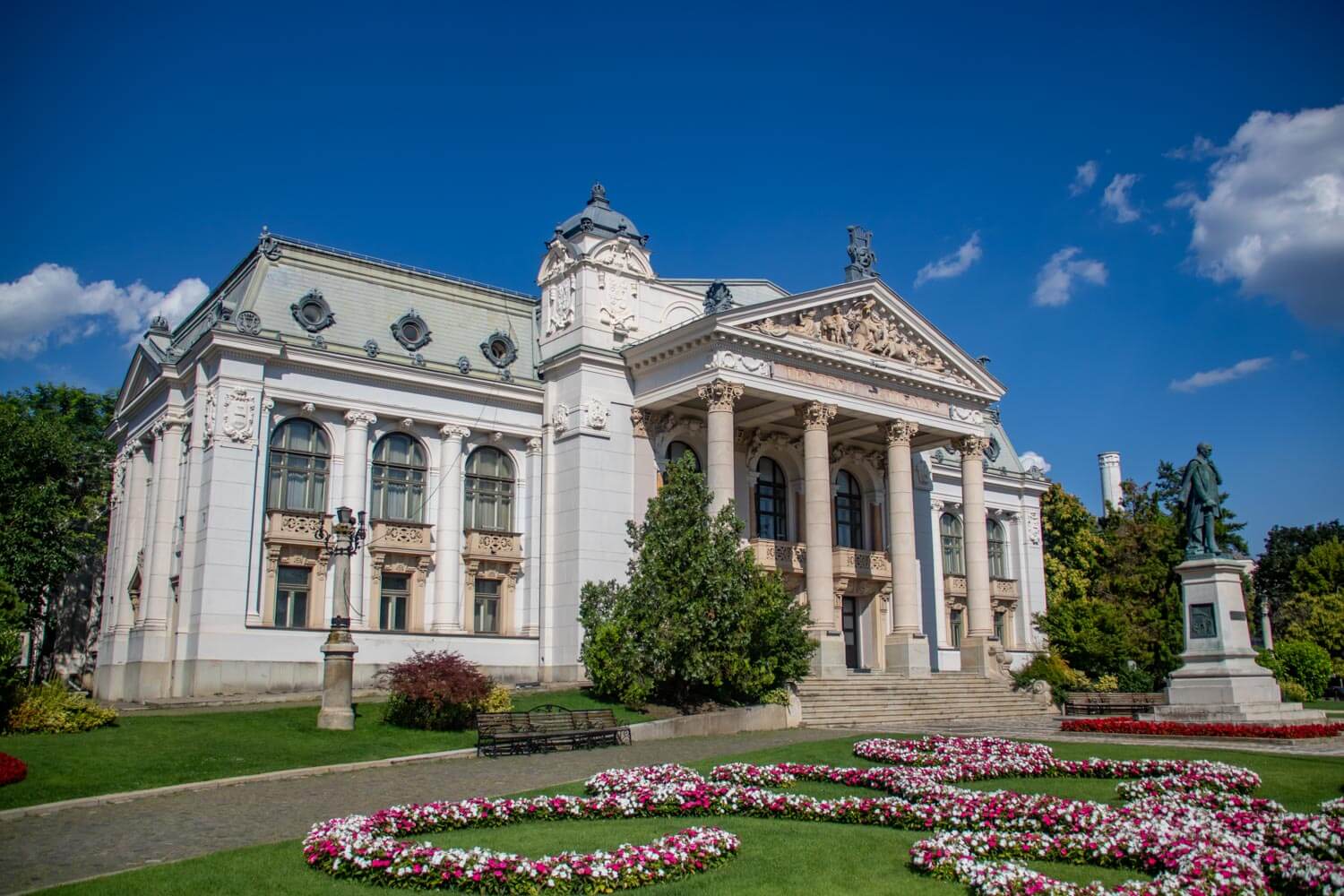
His name remains highly visible across Romania today, carried by theaters, schools, streets, monuments, and cultural institutions. More importantly, his work still connects several of the major themes of nineteenth-century Romanian history: the growth of a modern national literature, the Revolution of 1848, the union of the principalities, and the development of the cultural institutions of the new state. Few figures of his generation moved as naturally between literature, politics, diplomacy, and public life as Vasile Alecsandri.