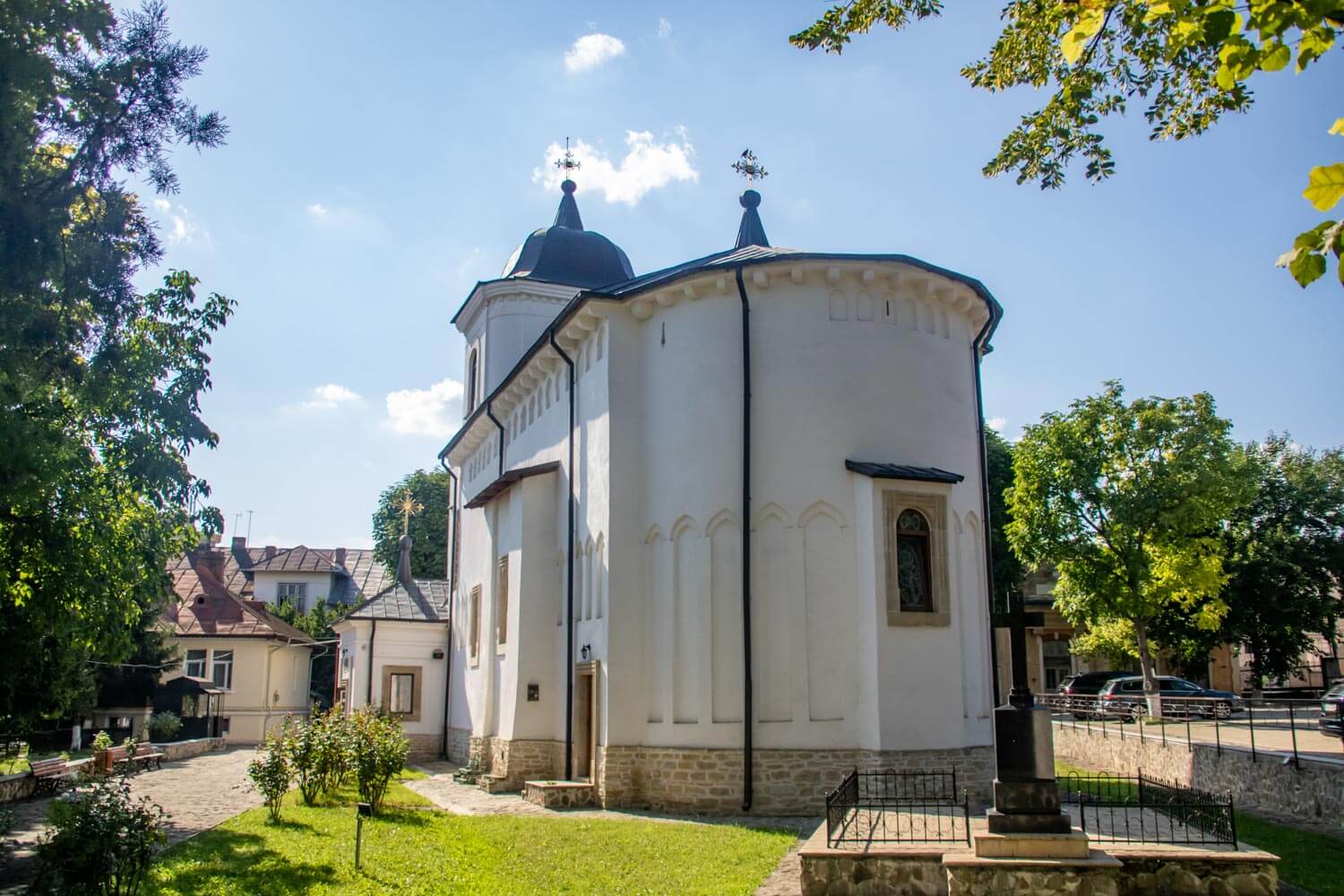
The Church of Saint John the Baptist (Biserica Sfântul Ioan Botezătorul) is a 17th-century Orthodox church in central Iași, dedicated to the Beheading of Saint John the Baptist. Begun under Prince Miron Barnovschi in the 1620s and completed under Vasile Lupu, it is particularly notable for the defensive spaces concealed beneath its roof.
The present stone church replaced an earlier wooden church recorded in this part of the old Târgul de Sus district in 1610. Miron Barnovschi began the new building in 1626, with his mother Elisafta also involved in the foundation, but he did not live to see it completed. After Barnovschi’s execution in 1633, Vasile Lupu continued the construction from above the level of the windows and finished the church, which was consecrated on November 9, 1634. An inscription above the entrance records both rulers and the completion of the building.
Architecturally, the church belongs to the group of Moldavian foundations built during Barnovschi’s reign, alongside Barnovschi Church in Iași and the church of Bârnova Monastery. Its rectangular body is built from stone and brick, with a semicircular altar apse and side apses that appear rectangular on the exterior. Rows of blind arches and small niches decorate the walls, while the bell tower rises above the western porch.
The most unusual feature is hidden above the vaults. Instead of an ordinary attic, the church contains a fortified upper level with narrow firing openings and wall passages from which defenders could move around the building. The system formed a concealed defensive space beneath the roof and reflects the insecurity of early 17th-century Moldavia, when churches could also serve as places of refuge during attacks.
Inside, the church is divided into a porch, pronaos, nave, and altar, with the bell tower reached through a stairway from the western part of the building. The carved limewood iconostasis contains several older icons, including works dating from the 17th century, while a silver chalice and a Greek Gospel printed in 1693 are among the historic liturgical objects preserved by the church. Later repairs altered parts of the interior and added the small southwest porch in 1875, but the basic 17th-century structure and its defensive character remain clearly recognizable.