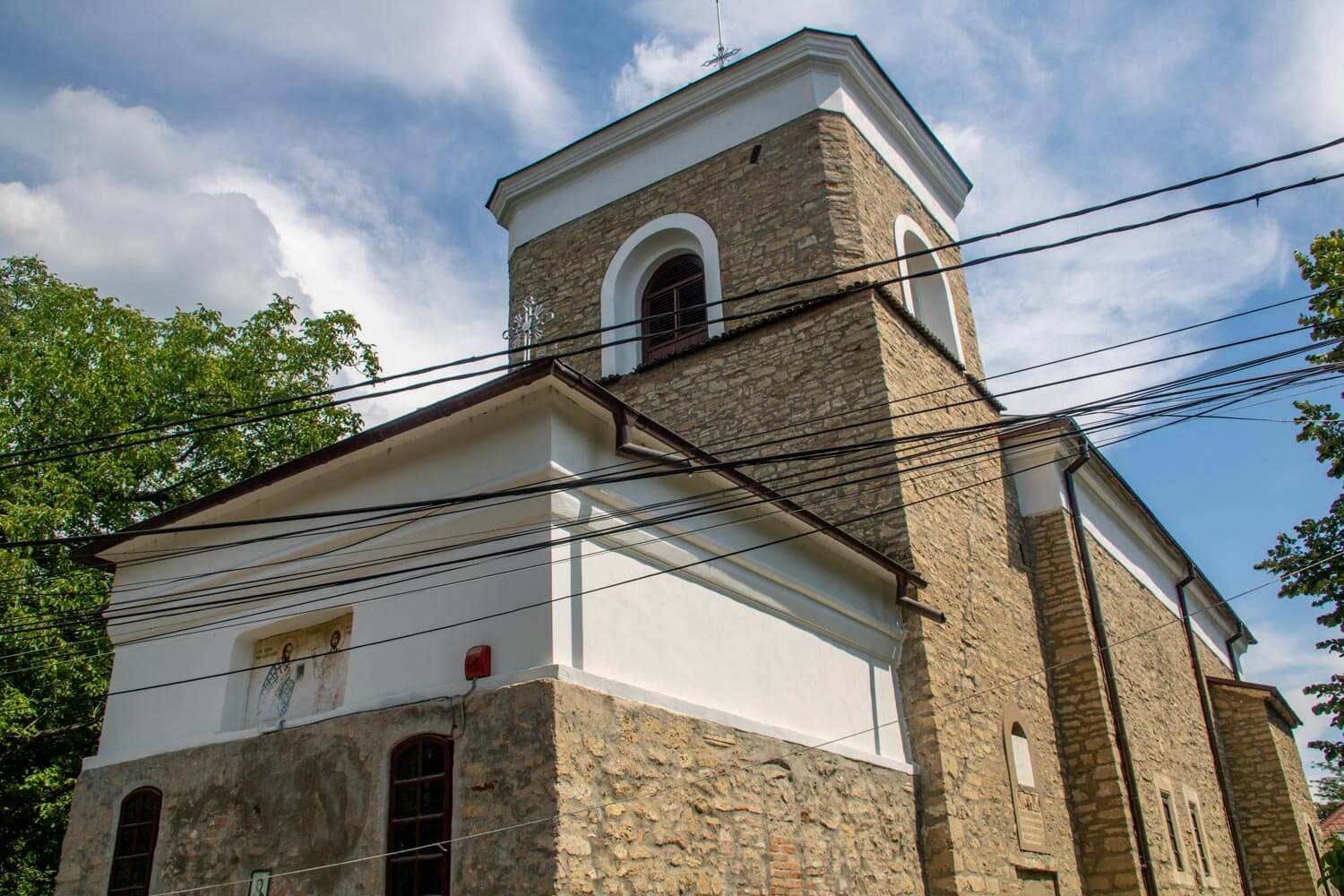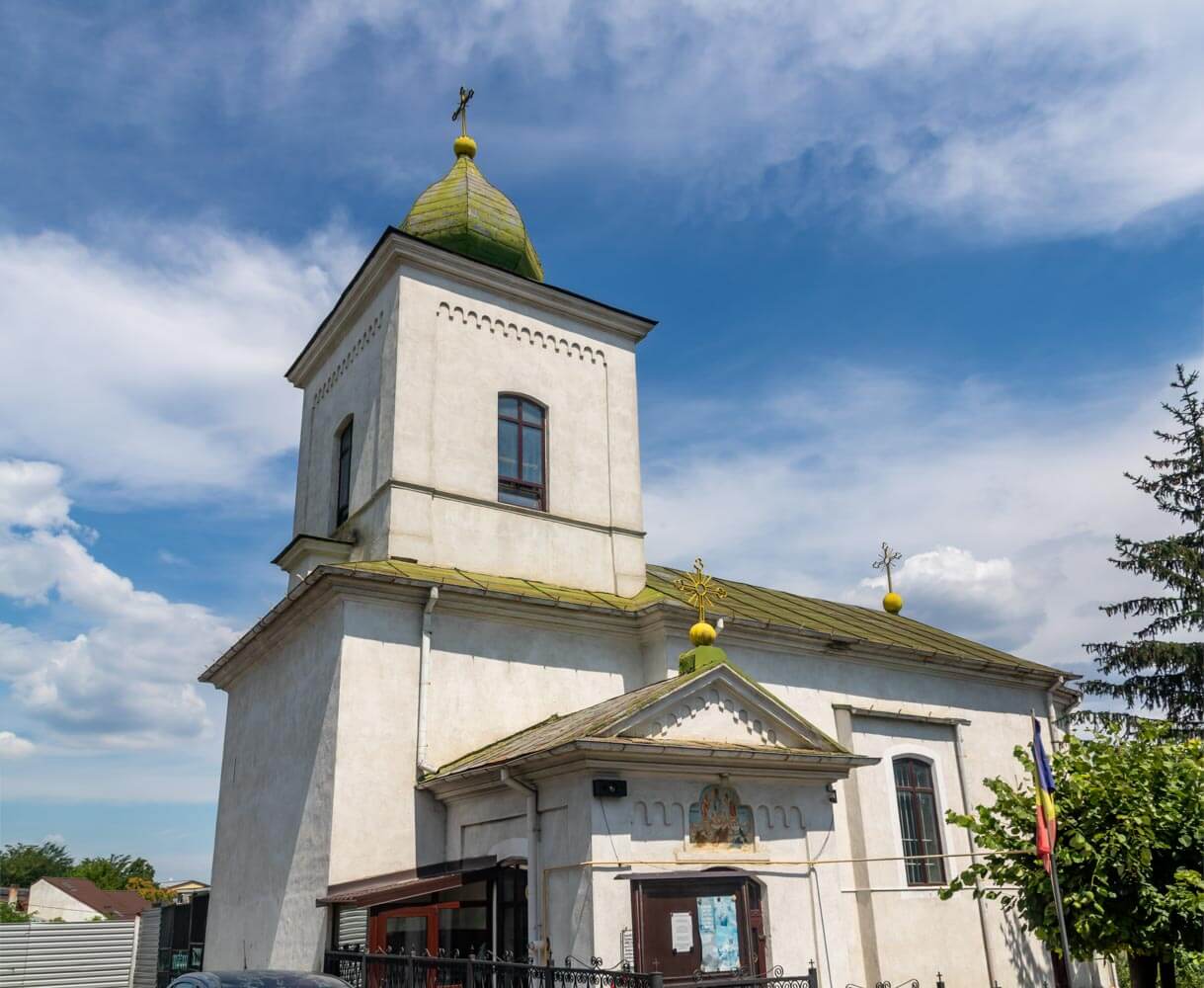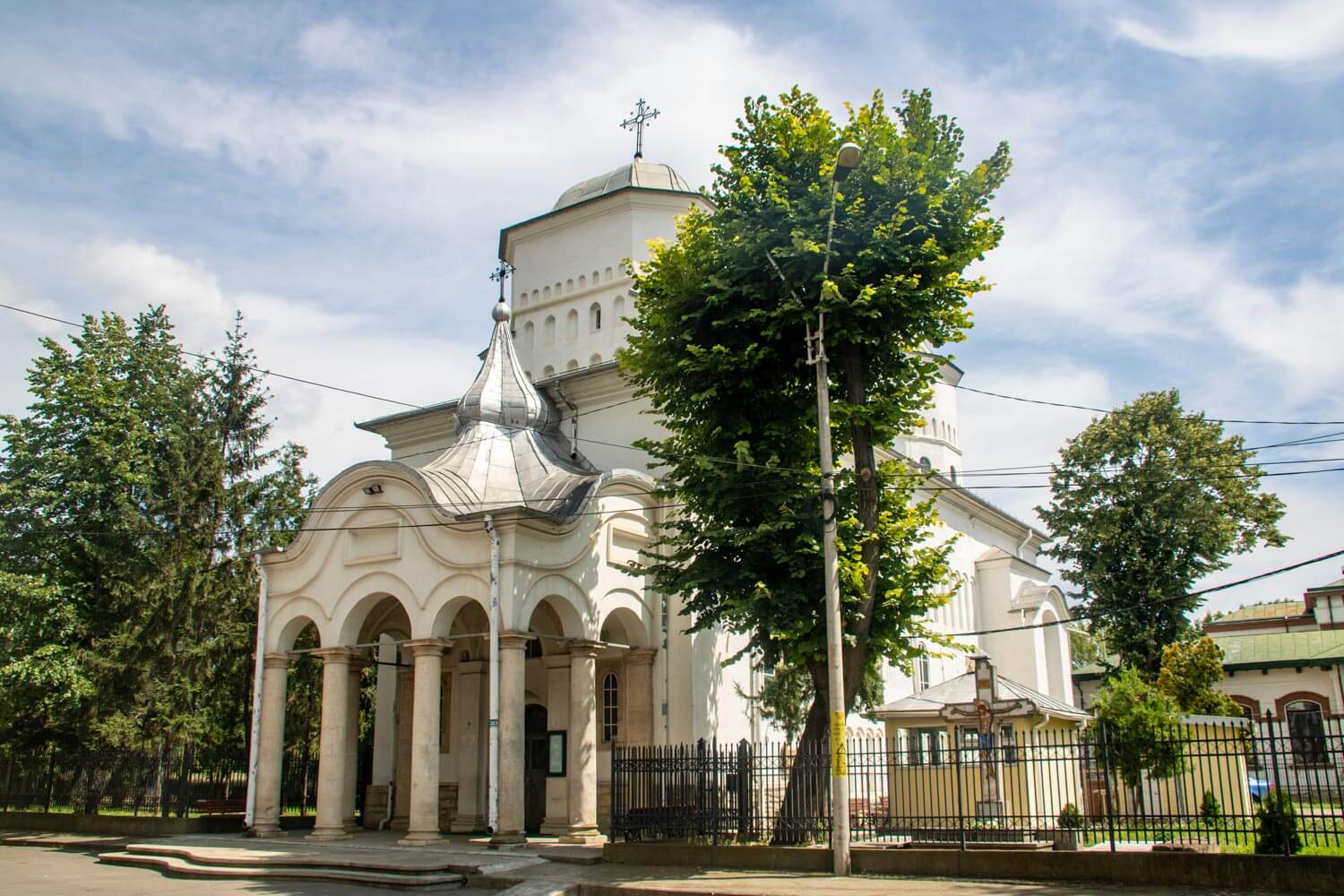
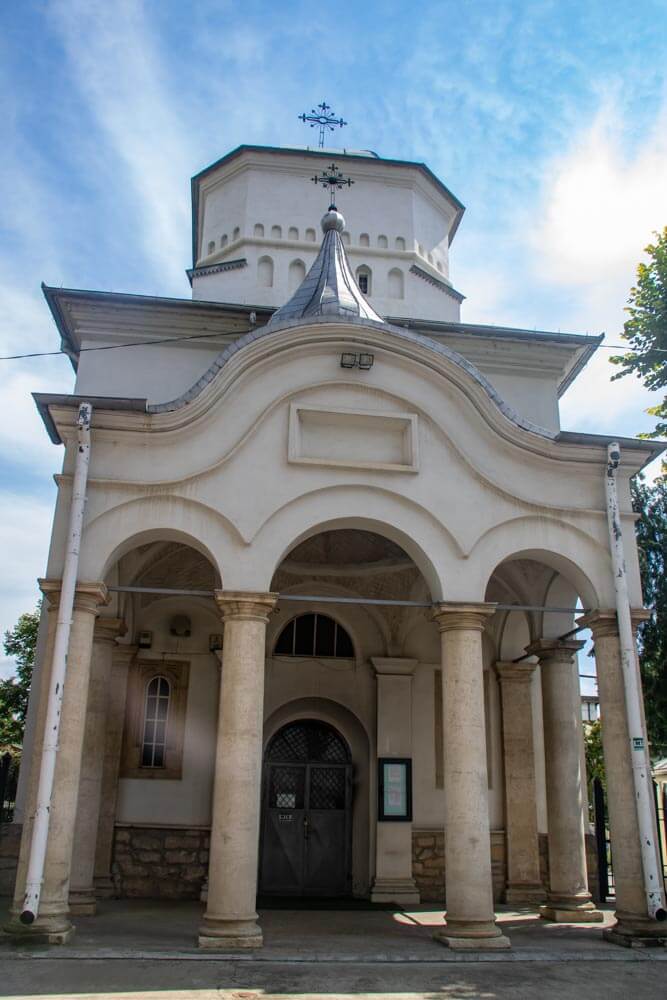
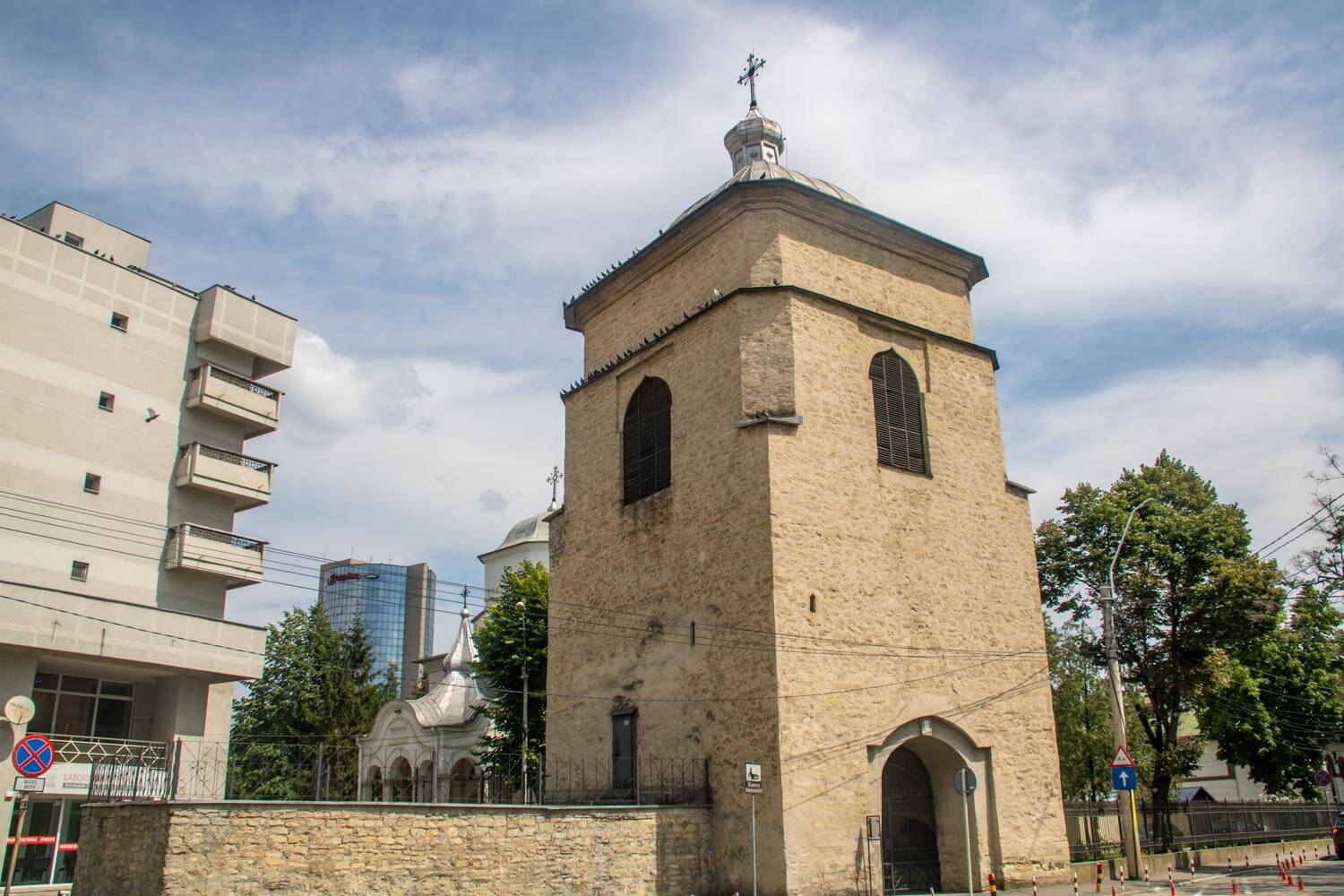
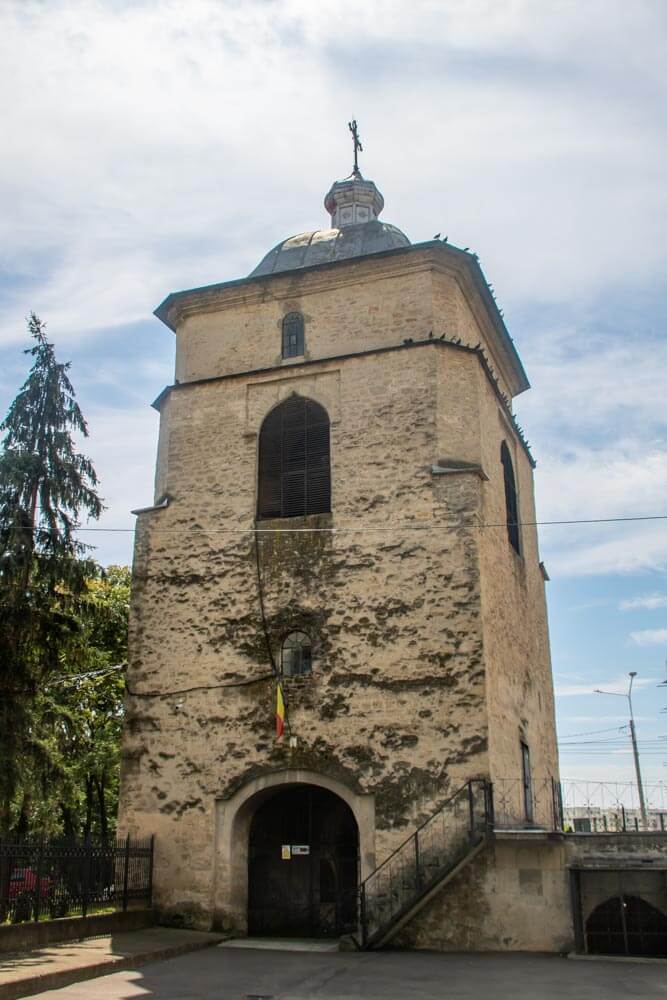
The Barnovschi Church (Biserica Barnovschi) is a historic Orthodox church and former monastery in central Iași, founded in the 17th century by Moldavian ruler Miron Barnovschi-Movilă. Dedicated to the Dormition of the Mother of God and Saints Joachim and Anna, the complex preserves its original fortified bell tower alongside the church and remains of several monastic buildings.
Construction began in 1627, during Barnovschi’s reign, with his mother Elena, who had entered monastic life under the name Elisabeta, also named as a founder. The prince dedicated the monastery to the Church of the Holy Sepulchre in Jerusalem, but was forced to leave Moldavia in 1629 before the work was finished. When he returned briefly in 1633, he was summoned to Constantinople, where Sultan Murad IV ordered his execution. In his final instructions, Barnovschi asked his executors, Iancu Costin and Matei Gavrilaș, to sell his properties in Poland and use the proceeds to complete the monastery.
Its dedication to Jerusalem gave the Barnovschi Monastery an important role in Orthodox religious life, providing accommodation for patriarchs and other church dignitaries traveling through Moldavia. Nineteen patriarchs reportedly stayed here, including Dositheos II Notaras, Patriarch of Jerusalem, who spent considerable time in Iași. The monastery gradually acquired monks’ quarters, an abbot’s residence, a Greek school, and other buildings around the church.
The church underwent several alterations over the following centuries, including the addition of an open Baroque-style porch supported by six stone columns. Its exterior has two towers decorated with narrow niches, while the interior retains an iconostasis carved from linden wood in 1788. The paintings have suffered considerable damage, but an older votive portrait of Miron Barnovschi and his mother survives. Among its religious treasures is an icon of Saint Anne holding the Virgin Mary, dating from 1626.
Barnovschi had requested that his body be returned to Moldavia for burial, although its final resting place was never securely documented. During archaeological excavations in 1998, a vaulted brick crypt containing human remains was discovered beneath the church floor. The remains have been tentatively identified as those of the founder.
Much of the former monastery disappeared during the redevelopment of central Iași in the 1980s, when its annexes were demolished to make way for apartment buildings. The church and its separate bell tower survived, followed by a major restoration between 1994 and 2004. The tower is particularly noteworthy for its original defensive features, including a concealed chamber, a narrow staircase within the walls, and an arched entrance that once led into the monastery courtyard. It also houses a large bell cast in Lviv in 1628 and donated by Miron Barnovschi. Near the tower, visitors can see the ruins of the former monks’ quarters and the surviving cellar of the abbot’s residence.