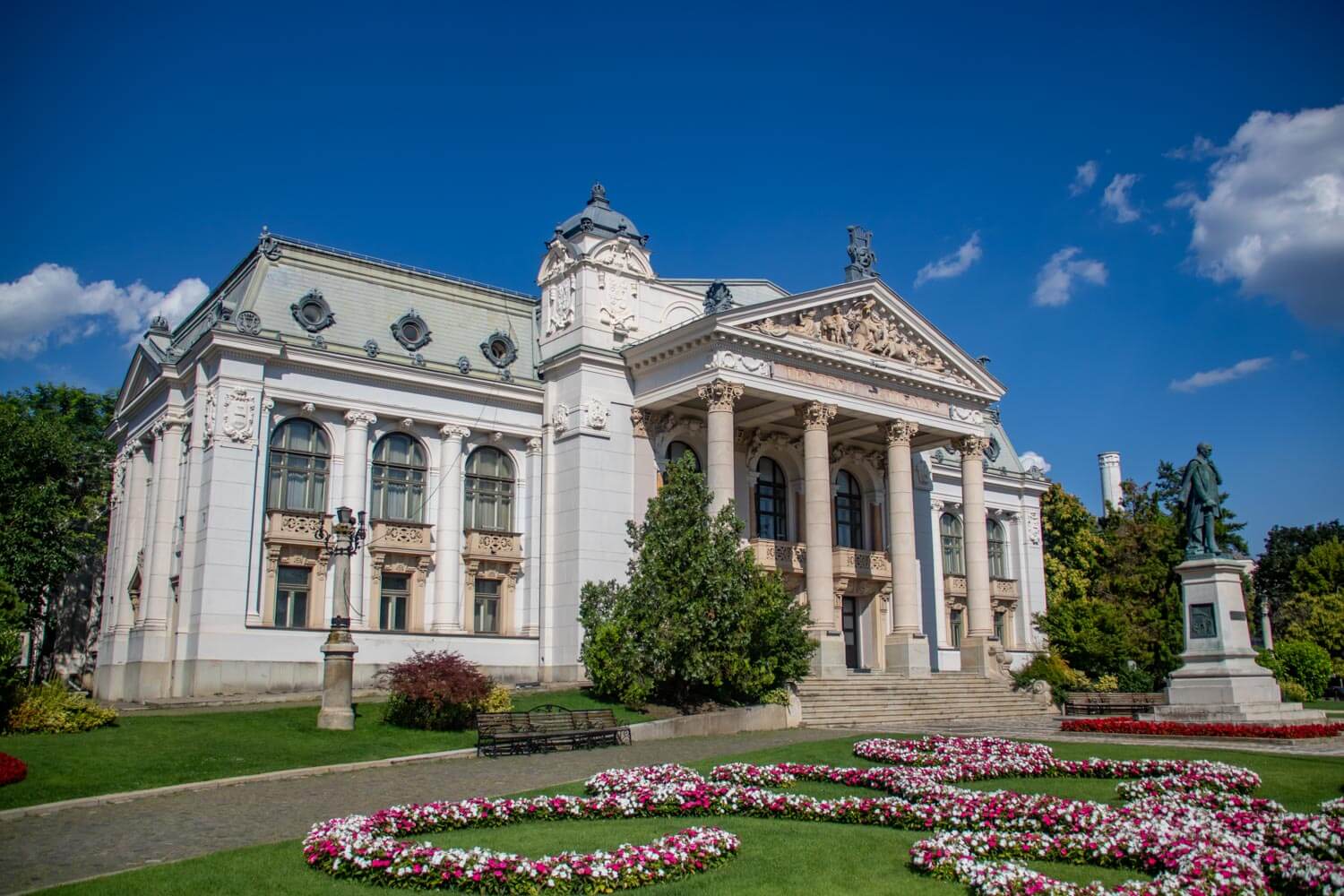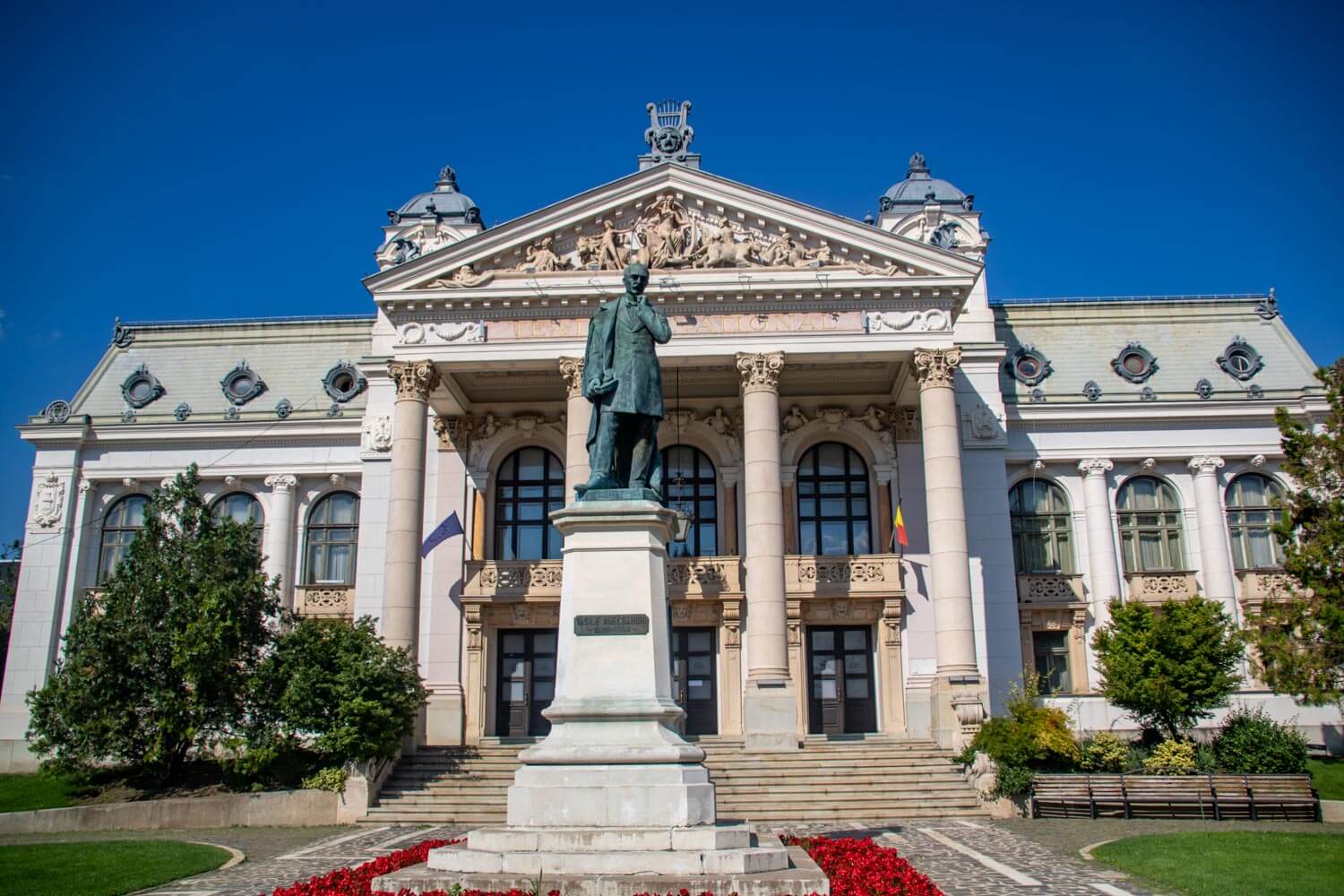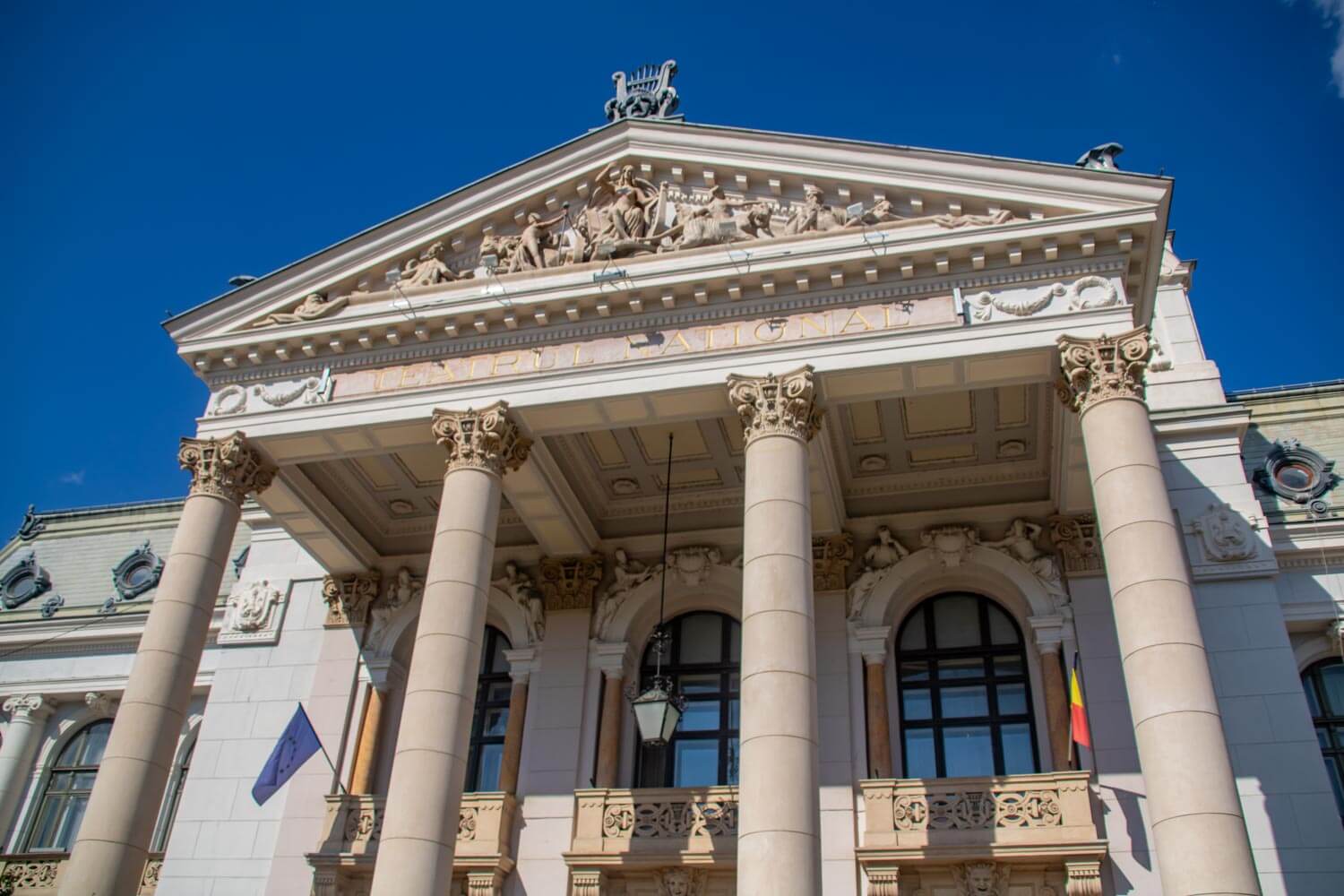
The Romanian National Opera Iași (Opera Națională Română Iași) is the principal opera institution in Iași, presenting opera, operetta, ballet, concerts, and other musical productions in the Main Hall of the Vasile Alecsandri National Theater. Founded in 1956, it continues a tradition of lyrical theater in the city that reaches back well into the 19th century.
Iași saw its first documented opera performance in 1833, when a visiting French company staged François-Adrien Boieldieu’s La dame blanche at the Variety Theater in Copou. Musical theater developed further through the Philharmonic-Dramatic Conservatory, founded in 1836, touring European companies, and productions at the Great Theater of Copou. By the later 19th century the city was staging works by composers such as Verdi and Gounod alongside Romanian operettas and operas, while musicians including Eduard Caudella promoted the idea of a permanent lyrical theater. When the present National Theater opened in 1896, its stage became the setting for many of Iași’s major opera performances.
Several attempts to establish a permanent opera company followed during the 20th century. A Romanian Opera of Moldavia was organized in 1941–1942 through cooperation between the Conservatory and National Theater, presenting works including La bohème and The Barber of Seville. Further initiatives produced La traviata in 1944 and Lakmé in 1948, but none developed into a lasting institution. That finally changed on January 1, 1956, when the State Opera of Iași was formally established as the first public opera institution in the Moldavia region.
Its first season opened on November 3, 1956 with Puccini’s Tosca, conducted by Radu Botez, directed by Hero Lupescu, and designed by Zoltan Gerzanich. Musician and professor Ioan Goia became the first director, while Botez remained the institution’s principal conductor for more than two decades. The orchestra and choir were created in the same year, drawing initially on musicians already active in Iași, particularly from the Moldova Philharmonic and the George Enescu Conservatory. A ballet company followed in 1957, adding another branch that would become a permanent part of the Opera’s repertoire.
Successive generations of singers, conductors, directors, and dancers broadened the repertoire and brought Romanian and international artists to the Iași stage. Early figures included soprano Florica Mărieș, tenor Ion Iorgulescu, ballerina Natalia Vronski-Gastel, conductor Radu Botez, and director Dimitrie Tăbăcaru, while later guest performers included singers such as Virginia Zeani, Nicolae Herlea, Viorica Cortez, and Irina Arkhipova. Opera, operetta, ballet, and vocal-symphonic works consequently developed side by side rather than as separate strands of the institution.
After almost five decades as the State Opera of Iași, the institution received national status in 2003 and adopted its present name, Romanian National Opera Iași. Its seasonal program continues to range from major works of the international opera repertoire to ballet, operetta, concerts, and occasional musical-theater productions, with the historic auditorium of the National Theater providing the setting for performances.