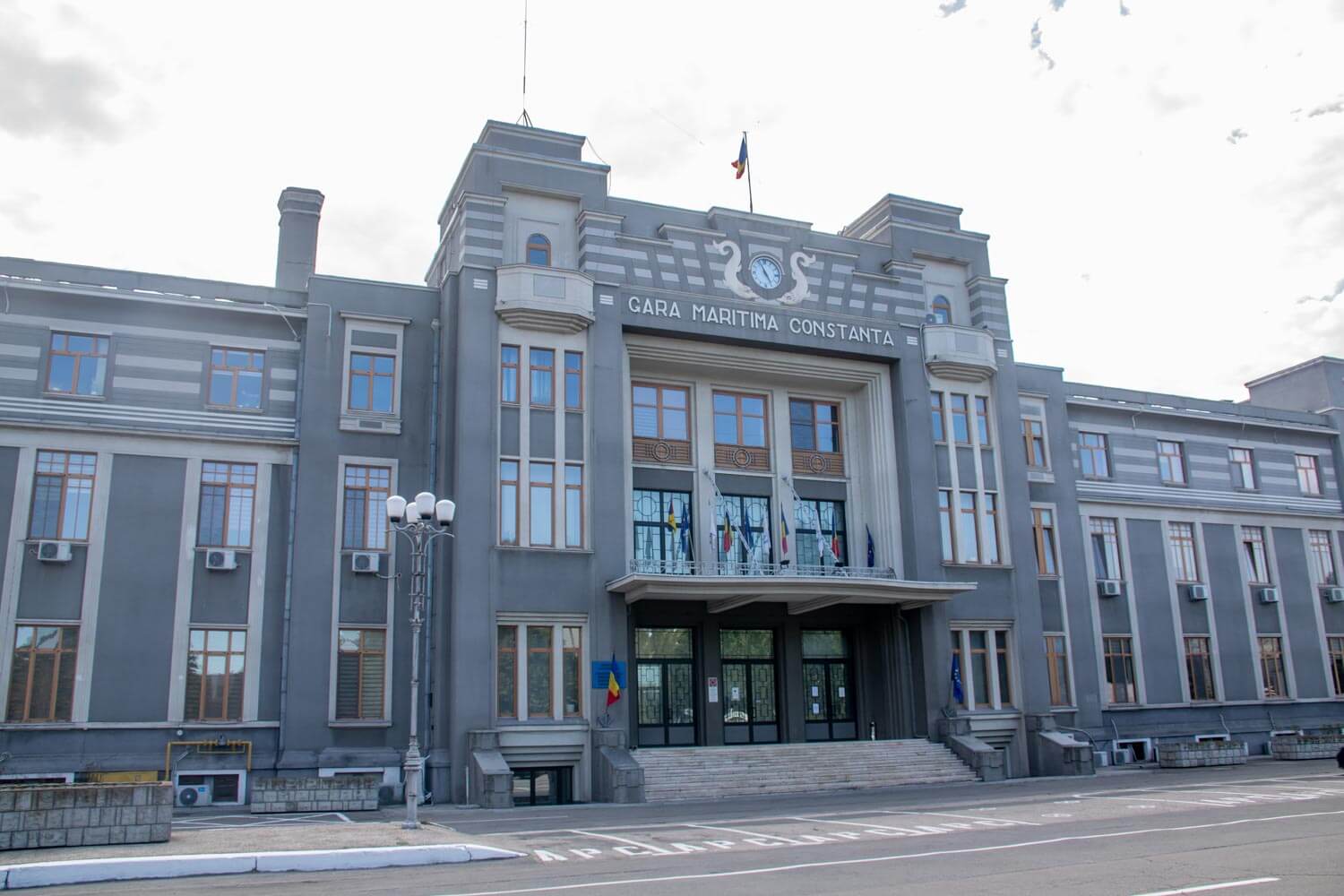
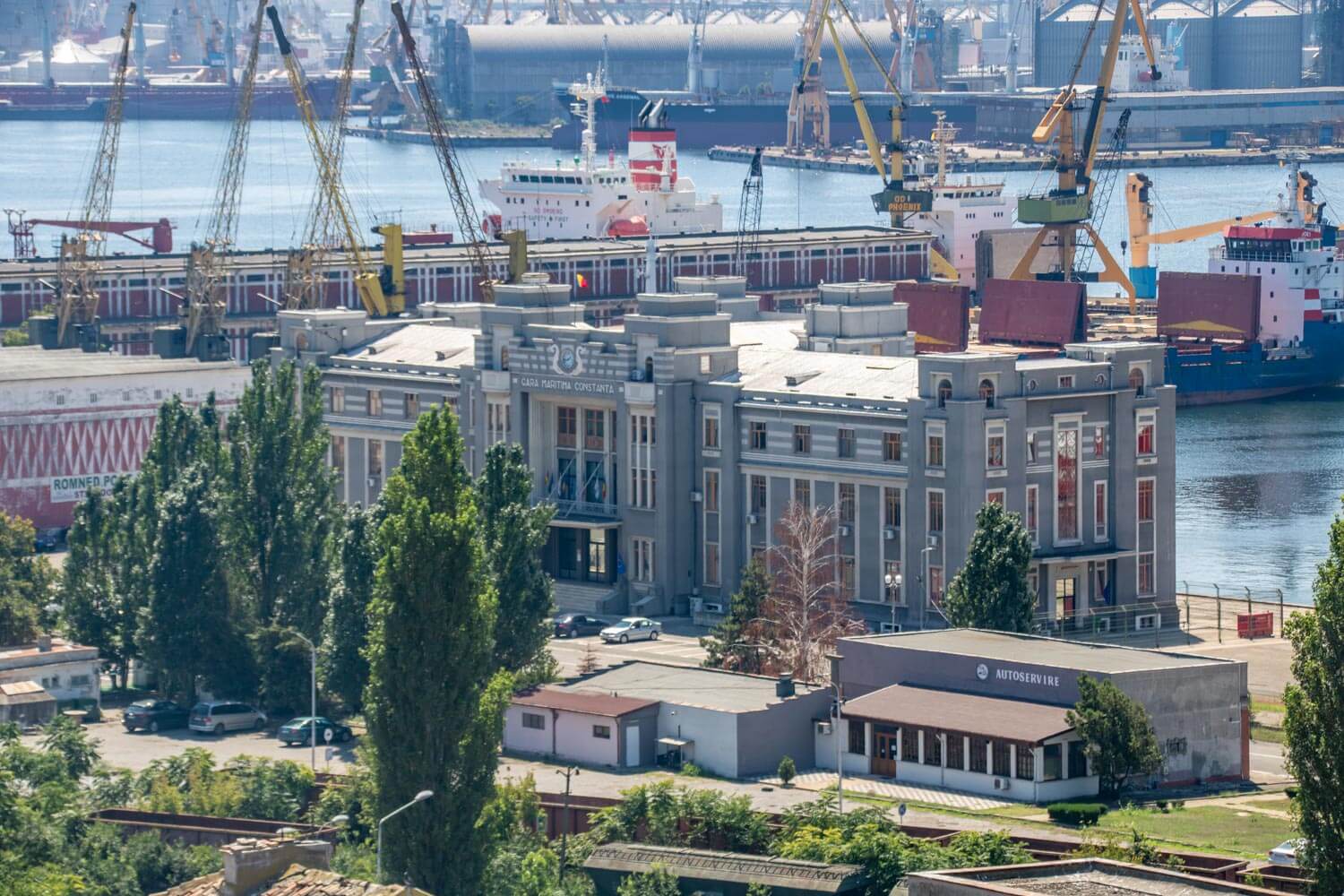
The Former Constanța Maritime Railway Station (Fosta Gară Maritimă Constanța) is a former passenger terminal in the Port of Constanța, where trains once brought travelers directly to the ships departing from Romania’s main Black Sea port. Built between 1931 and 1934, the large Art Deco building stands beside Docks 11 and 12 and now serves as the headquarters of the Constanța Maritime Ports Administration.
The station was created during a period when Constanța was developing into a major international transport hub. Passenger trains entered the port and stopped directly in front of the building, allowing travelers to transfer between the railway and the ships of the Romanian Maritime Service. Inside were waiting and reception halls, ticket offices, customs and postal services, the harbor master’s office, restaurants and administrative rooms. Passenger ships connected Constanța with ports around the Mediterranean and eastern Mediterranean, including Istanbul, Piraeus, Haifa and Alexandria, while longer routes extended as far as Western Europe and New York.
Designed by architect Gheorghe Brătescu, the station was officially inaugurated on 15 August 1934 during Romanian Navy Day, in the presence of King Carol II and the future King Michael I. Its modernist architecture deliberately incorporates maritime details, giving the building something of the appearance of a large passenger ship. The long horizontal façades are balanced by a taller central section, while the main front is marked by a large clock flanked by two stylized dolphins. Porthole-like windows, railings and other nautical motifs reinforce the connection with the ships that once berthed alongside it. Constructing the basement below sea level also required an unusual hydraulic-concrete solution to protect the building against water infiltration.
Passenger use declined after World War II and the former station gradually became offices for authorities operating within the port. The railway tracks in front of the building are no longer used for passenger trains, but parts of them survive and still show how closely the station was once integrated with the railway network. The building itself is not a visitor attraction inside, as it remains the working headquarters of the port administration, but its exterior can be seen within the historic northern section of the Port of Constanța.
The Former Constanța Maritime Railway Station (Fosta Gară Maritimă Constanța) is a former interwar passenger terminal in the Port of Constanța, built where railway and maritime transport came together at the edge of the Black Sea.
Constanța had already handled railway passengers and ships within the port for decades, but growing passenger traffic led to the construction of a much larger purpose-built terminal in the early 1930s. Designed by architect Gheorghe Brătescu and completed in 1933, it was officially inaugurated during Navy Day in August 1934 in the presence of King Carol II. Railway lines ran directly to the building, allowing passengers arriving by train to continue their journeys aboard ships departing from the adjoining quays.
Brătescu carried that connection with the sea into the building itself, giving it long horizontal lines and rounded forms reminiscent of a passenger liner. Porthole-like windows, metal railings and maritime decorative motifs continue the nautical theme, while a large clock above the central façade is flanked by two stylized dolphins. Building so close to the water also created practical challenges, particularly below ground, where special construction measures were needed to protect the basement from water infiltration.
The terminal continued to serve passenger traffic until its role diminished after the Second World War, when the building was gradually taken over by institutions operating within the port. It was used by border and waterway authorities before becoming part of the Constanța Maritime Ports Administration. Sections of railway track still remain beside the former station, preserving part of the arrangement from the period when trains arrived directly at the maritime terminal.