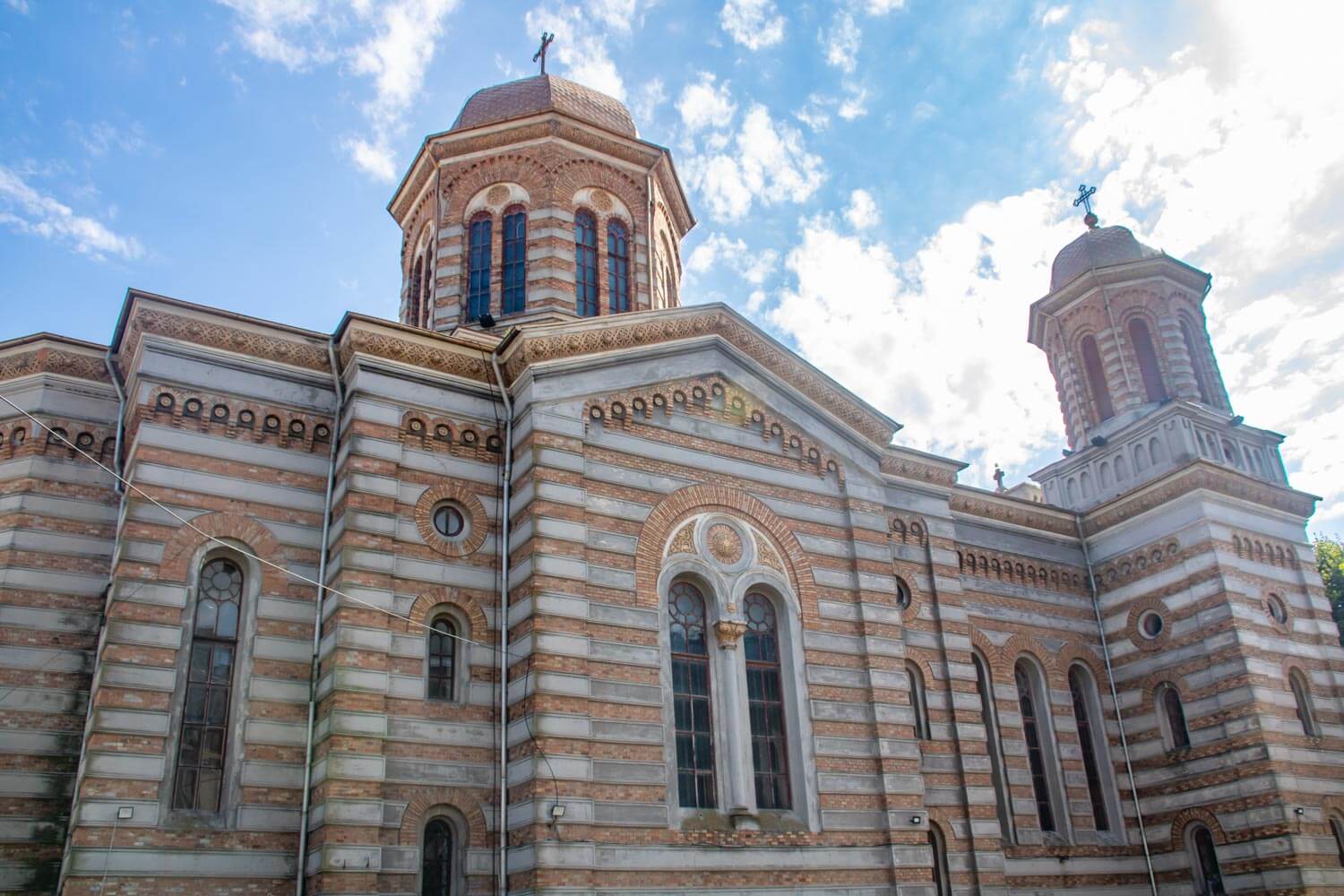
The Cathedral Archaeological Park of Tomis (Parcul Arheologic al Catedralei) is an open-air archaeological site beside the Cathedral of Saints Peter and Paul in Constanța, preserving part of a residential quarter of ancient Tomis. The exposed remains include sections of streets, house foundations, paving and drainage from a district that developed over many centuries from the Greek period into Roman and early Byzantine times.
Excavations carried out between 1971 and 1974 revealed that the neighborhood was organized around two streets crossing at right angles. This regular street plan appears to have taken shape during the Hellenistic period and continued to influence the layout of this part of Tomis for centuries. The streets divided the quarter into blocks occupied mainly by houses, which were repeatedly rebuilt and altered as the city developed.
Beneath these later structures, archaeologists found evidence reaching back much further. Greek pottery from the second half of the 6th century BC, together with amphora fragments, everyday vessels and bronze arrowheads used as pre-monetary objects, provided important evidence for settlement and trade during the earliest centuries of Tomis. These discoveries make the site particularly valuable because they connect the visible urban remains with some of the oldest known occupation on the Constanța peninsula.
The exposed ruins themselves belong mainly to the long-lived residential quarter that followed. Visitors can trace the lines of the ancient streets between low foundations and surviving sections of paving, while fragments of drains show how basic infrastructure was integrated into the neighborhood. The remains are modest in height, but the surviving street grid makes the layout of the ancient city easier to understand than at many of the more isolated archaeological fragments scattered around modern Constanța.
The park was created after the excavated structures were conserved in place, leaving part of the ancient neighborhood visible beside the cathedral. Although the uppermost late Roman and early Byzantine layers had already been disturbed before the excavations, the site preserves a sequence extending from the Hellenistic city through the Roman period and into the 5th century AD.