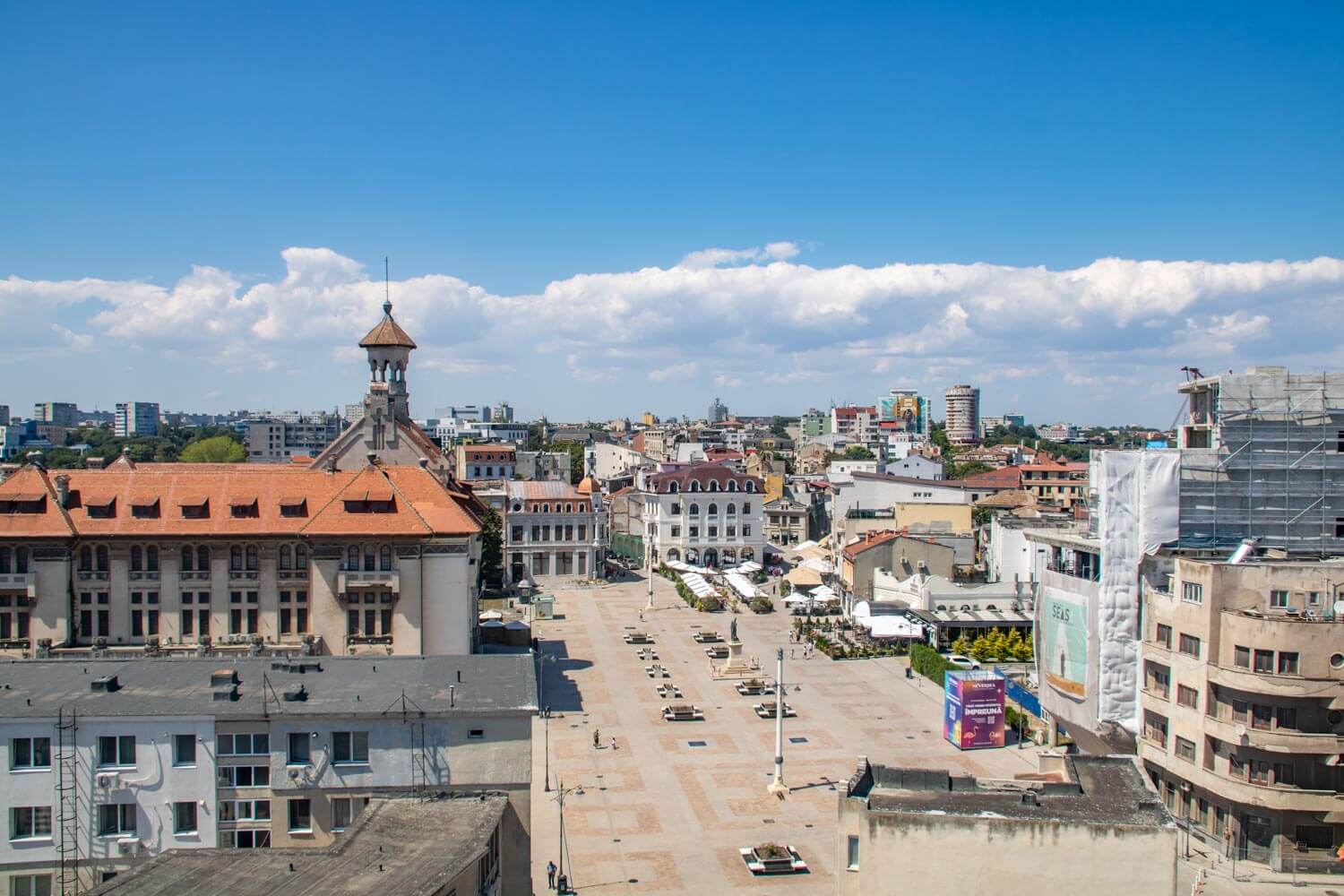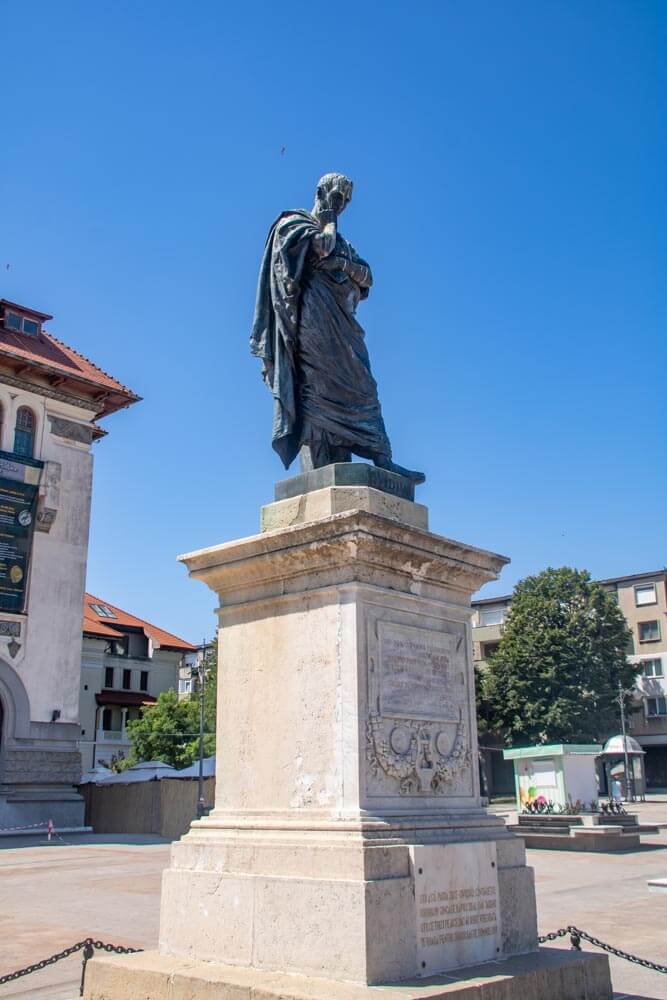
The Statue of Ovid (Statuia lui Ovidiu) is a bronze monument in the center of Ovid Square in Constanța, created by Italian sculptor Ettore Ferrari and unveiled in 1887. It commemorates the Roman poet Publius Ovidius Naso, who spent the final years of his life in exile at ancient Tomis, the city that developed into modern Constanța.
Ovid was banished from Rome by Emperor Augustus in AD 8 and sent to Tomis on the western shore of the Black Sea. He remained there until his death around AD 17, writing extensively about exile, separation from Rome and life in the distant provincial city. His works became an important literary source for ancient Tomis and helped make the poet one of the historical figures most strongly identified with Constanța.
The monument was commissioned in the decade after Dobrogea became part of Romania following the War of Independence. A committee led by prefect Remus Opreanu promoted the project, and Ferrari portrayed Ovid standing in a long robe with his head slightly bowed in a contemplative pose. The statue was inaugurated on August 30, 1887, during a large public ceremony attended by officials and residents of the city.
During the German-Bulgarian occupation of Constanța in World War I, Bulgarian troops removed the statue from its pedestal with the intention of taking it away as war booty. German officers intervened and prevented its removal from the city, and the sculpture was stored until Romanian administration returned in 1918.
The statue originally stood in a slightly different position and orientation within the square. Construction of the new Communal Palace, now the Museum of National History and Archaeology, led to its relocation in 1921 to the position it occupies today. The white marble pedestal carries a Romanian translation of verses from Ovid’s Tristia, written in the voice of the poet imagining his own grave.
A replica of Ferrari’s statue was installed in 1925 in Sulmona, Ovid’s birthplace in Italy, creating a direct visual connection between the city where the poet was born and the city where he spent his final years.