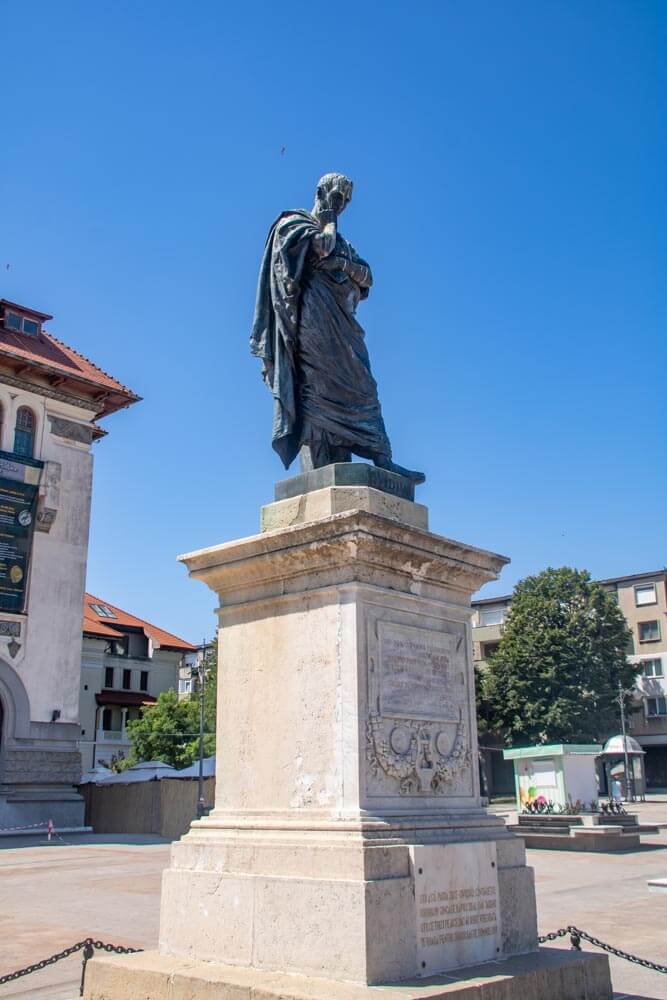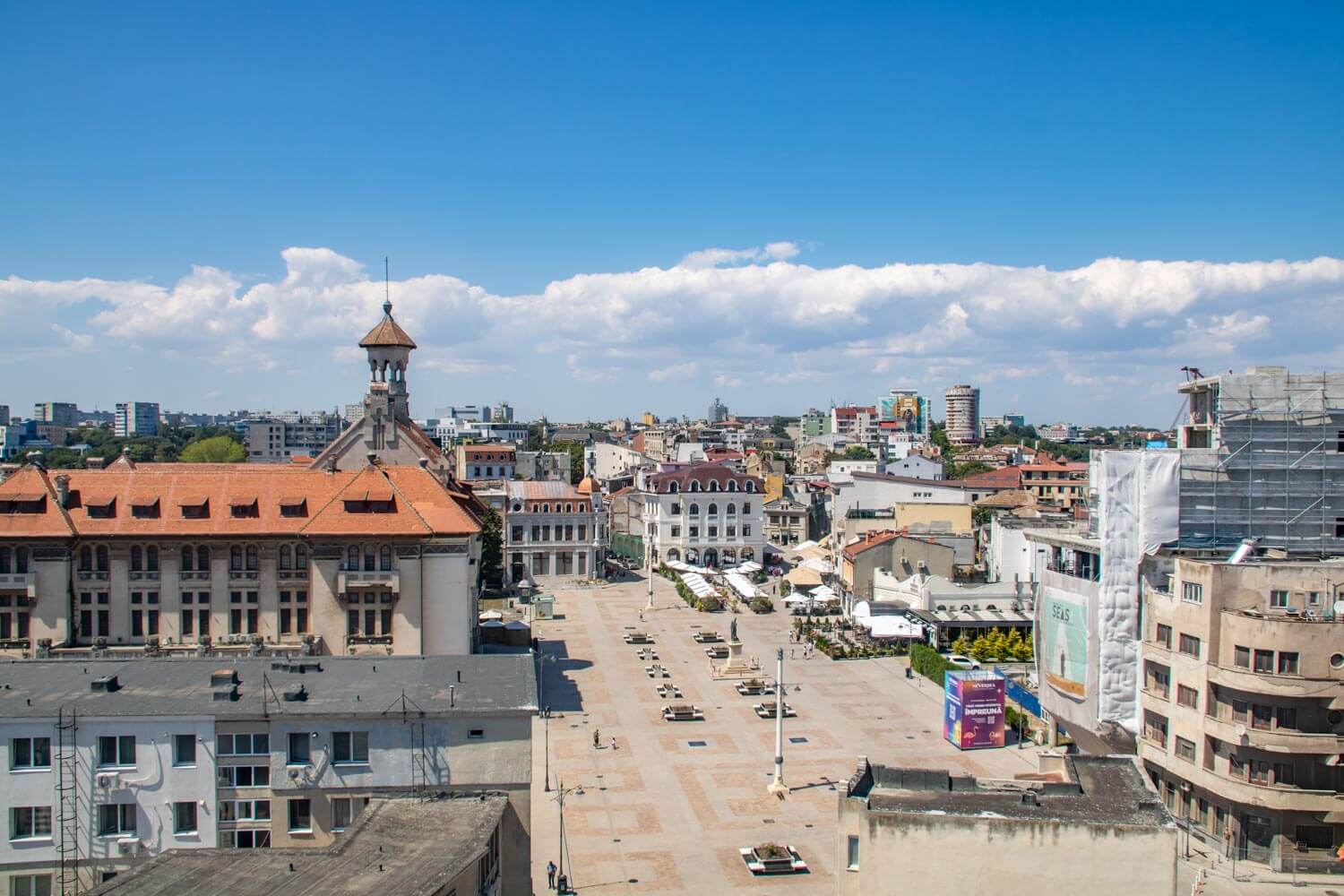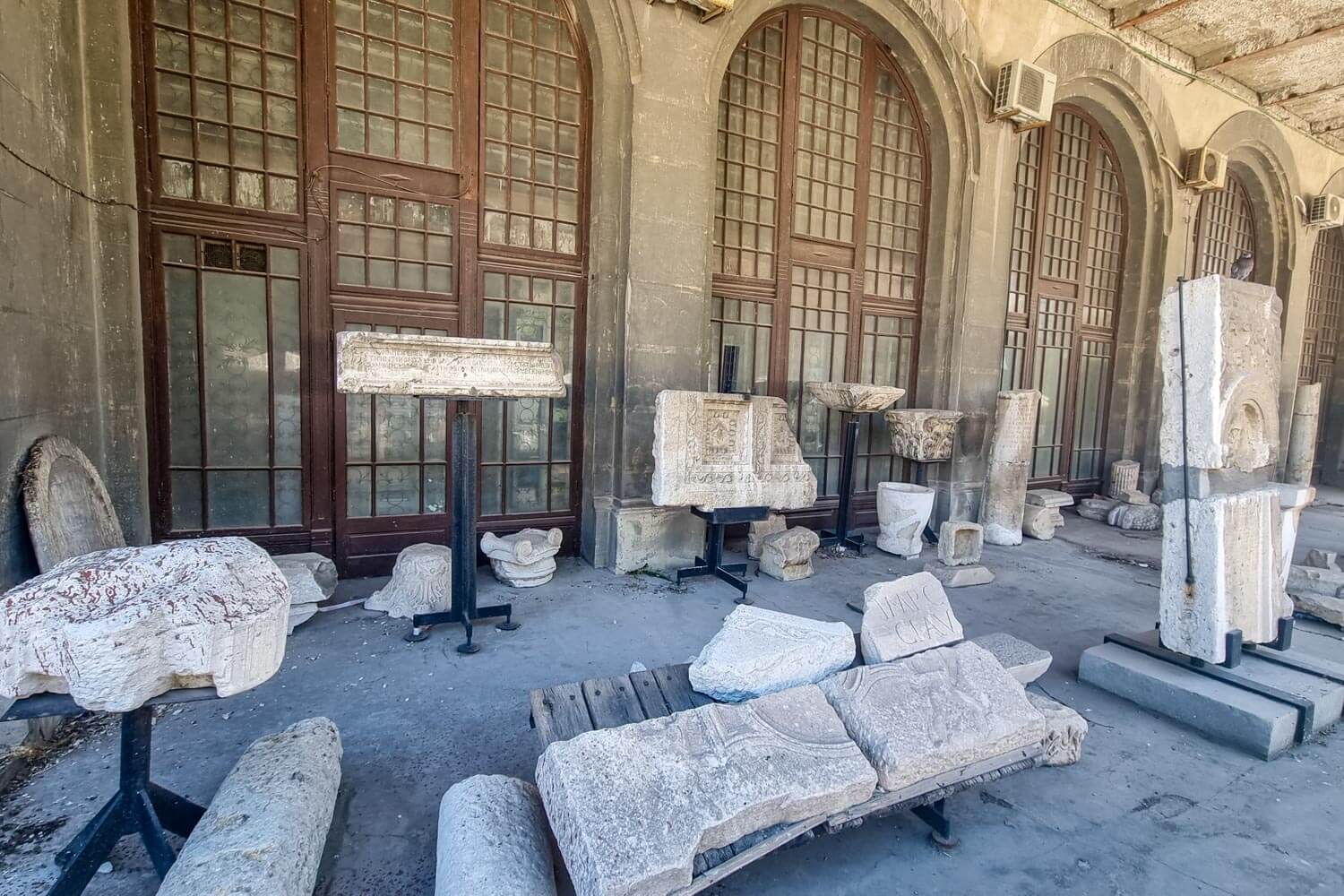
The Constanța Lapidarium is an open-air archaeological collection beside the Museum of National History and Archaeology in Ovid Square. It displays stone monuments recovered from ancient Tomis and archaeological excavations in Constanța, including funerary stelae, inscriptions, sarcophagi, columns, reliefs and architectural fragments.
The collection is spread through the small landscaped area beside the museum and beneath the covered arcade along the building, where larger pieces can be viewed freely from the square. Many of the monuments come from the Roman cemeteries and public buildings of Tomis and preserve inscriptions in Greek or Latin, decorative reliefs and architectural details that would otherwise survive only as isolated finds.
Several pieces preserve unusually personal stories from the ancient city. A funerary altar commemorates Caecilia Artemisia, a woman from a wealthy Tomitan family who died at the age of 30 following childbirth. Another inscription records Epifania, a woman of Greek origin whose father and first husband were shipowners and who later became known in Tomis for charitable work. A 4th-century funerary stele dedicated to a boy named Lilas takes the form of a dialogue between the deceased child and his grieving father.
Among the largest monuments is the Sarcophagus with Symbols, discovered in Constanța in 1931. The massive marble coffin is decorated with a series of relief symbols and was initially surrounded by speculation that it might be the tomb of the poet Ovid. Archaeological study later showed that it dated several centuries after Ovid’s death, probably to the 3rd or 4th century AD, and it has instead been connected with the cult of Cybele.
Nearby stands the Sarcophagus of Alexandros, found on Cuza Vodă Street in 1959 and dated to the late 2nd or early 3rd century AD. Its Greek inscription identifies Alexandros, son of Zmaragdos, as a benefactor of Tomis and states that he commissioned the sarcophagus for himself and his wife Kyrilla. The surviving decoration includes a portrait relief of Alexandros and an image of Medusa.
Because the collection is displayed outside the museum building, the lapidarium can be explored independently while walking through Ovid Square. The combination of monumental stonework and personal inscriptions makes it a particularly direct way to encounter the people, beliefs and public architecture of ancient Tomis without entering the main museum galleries.