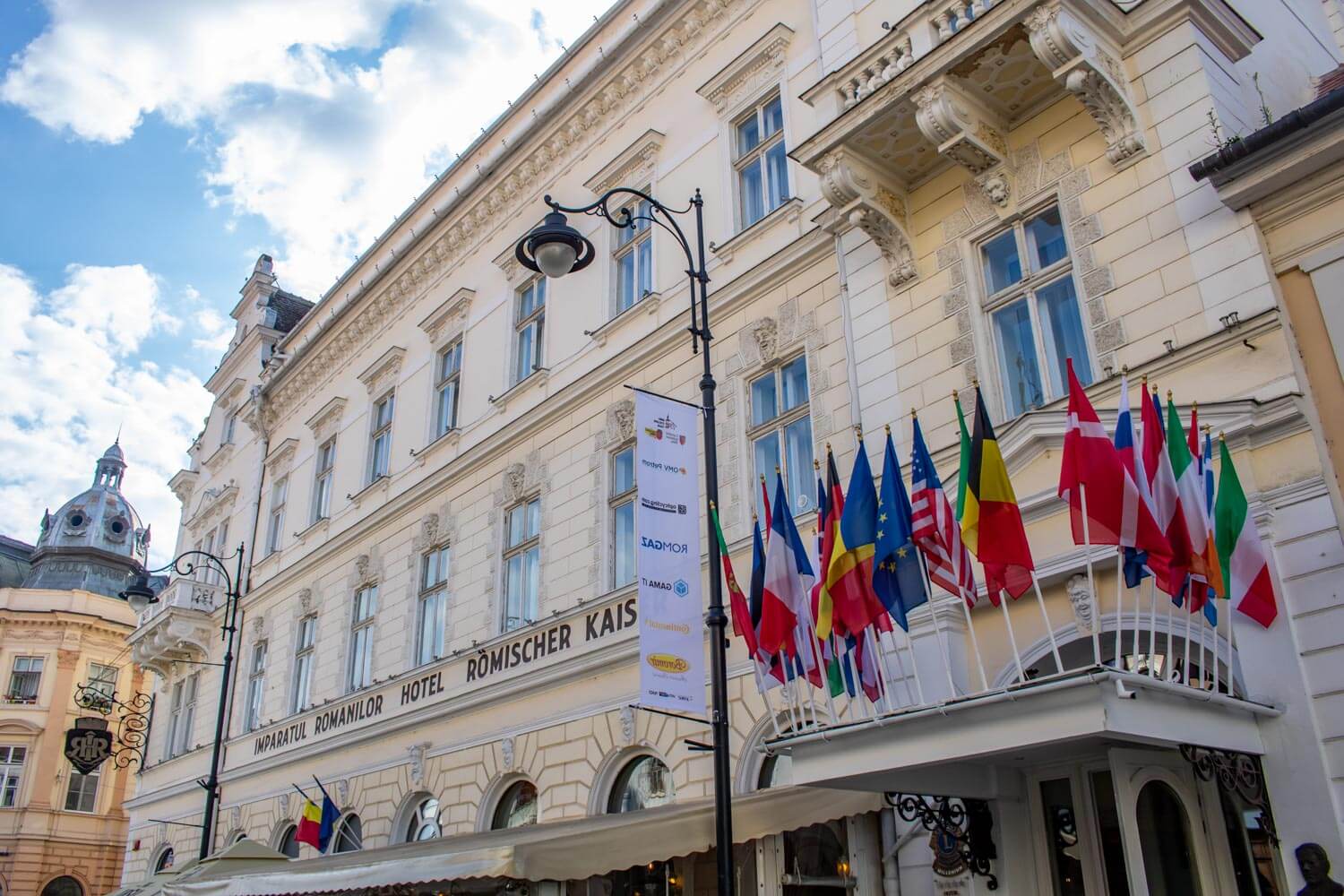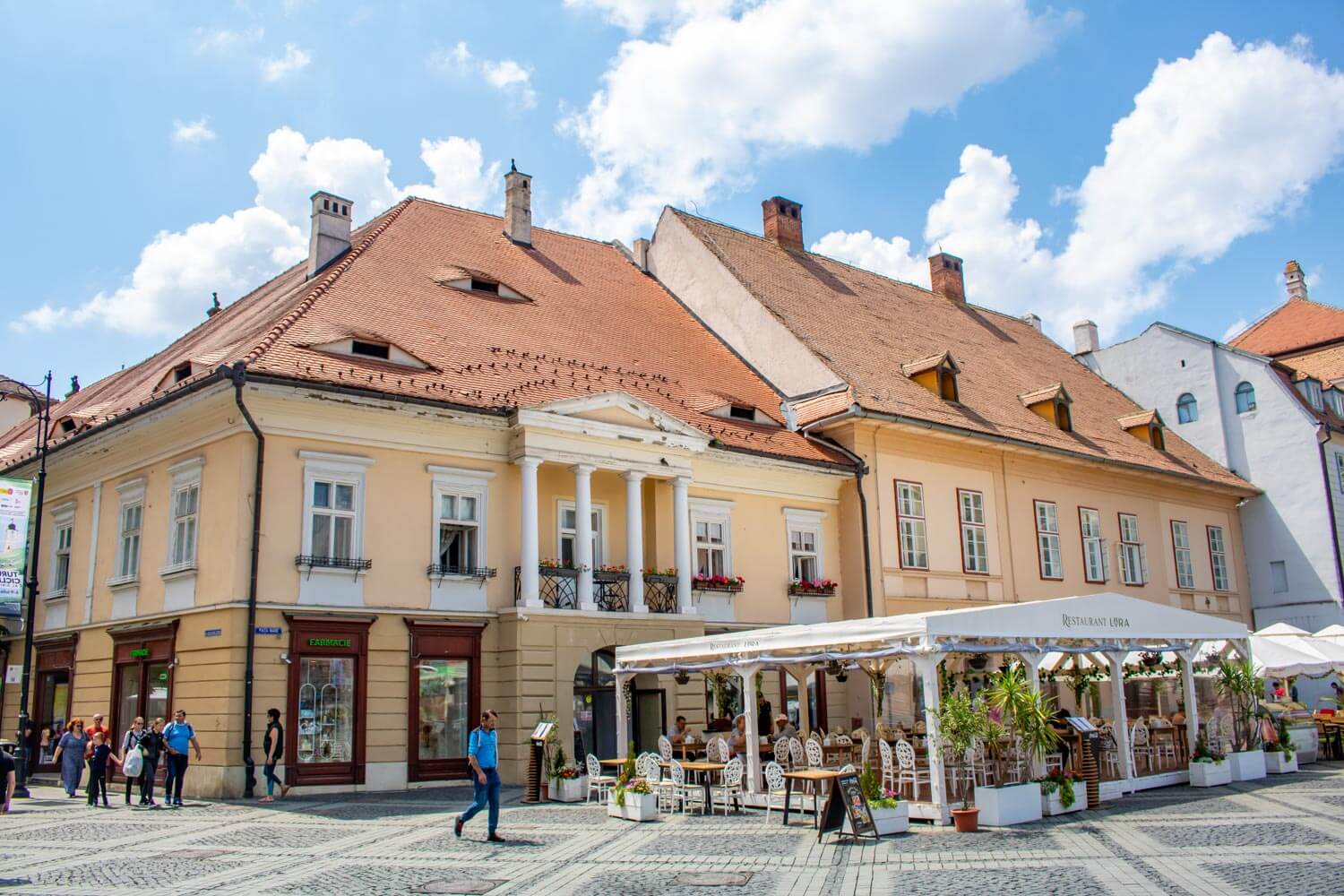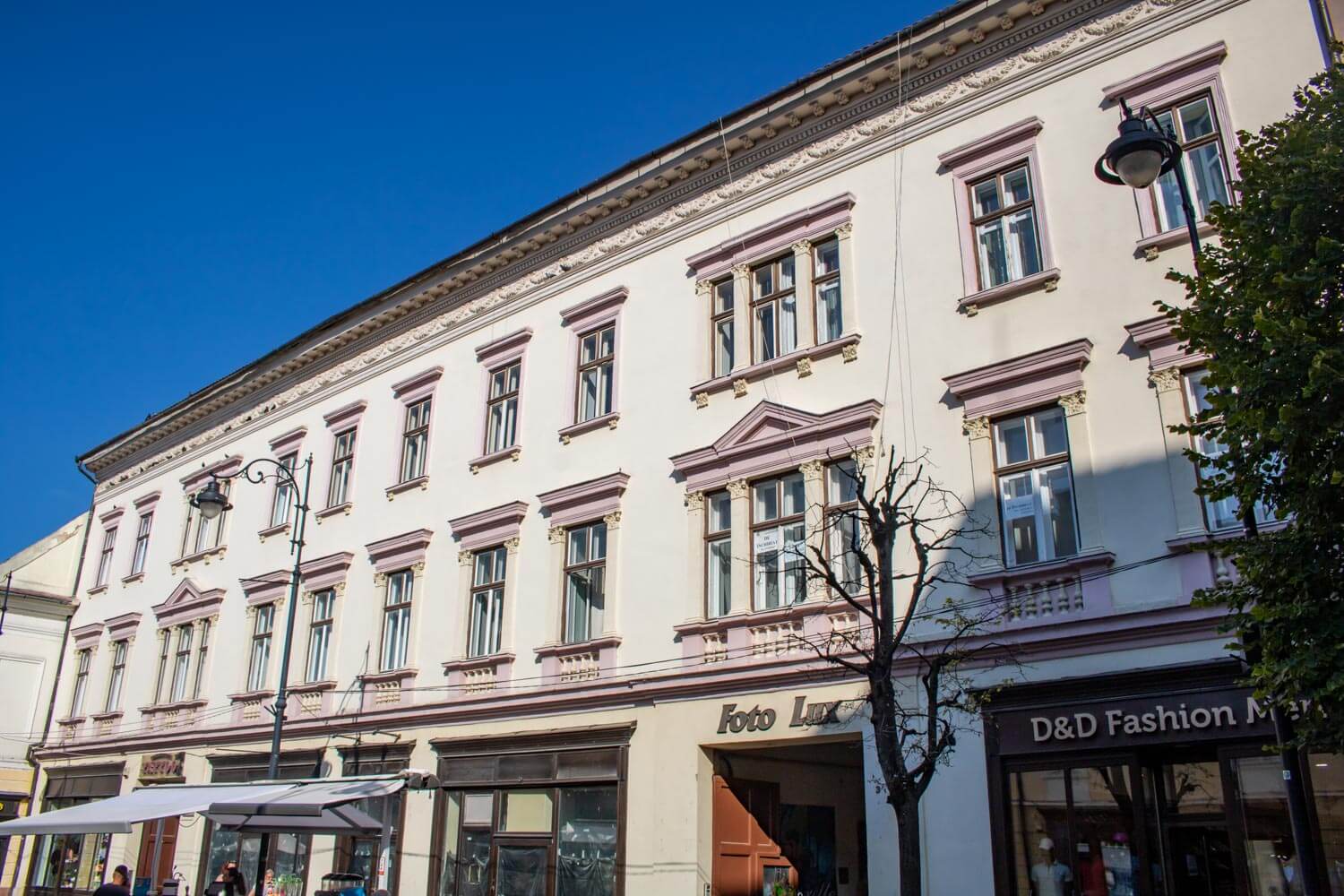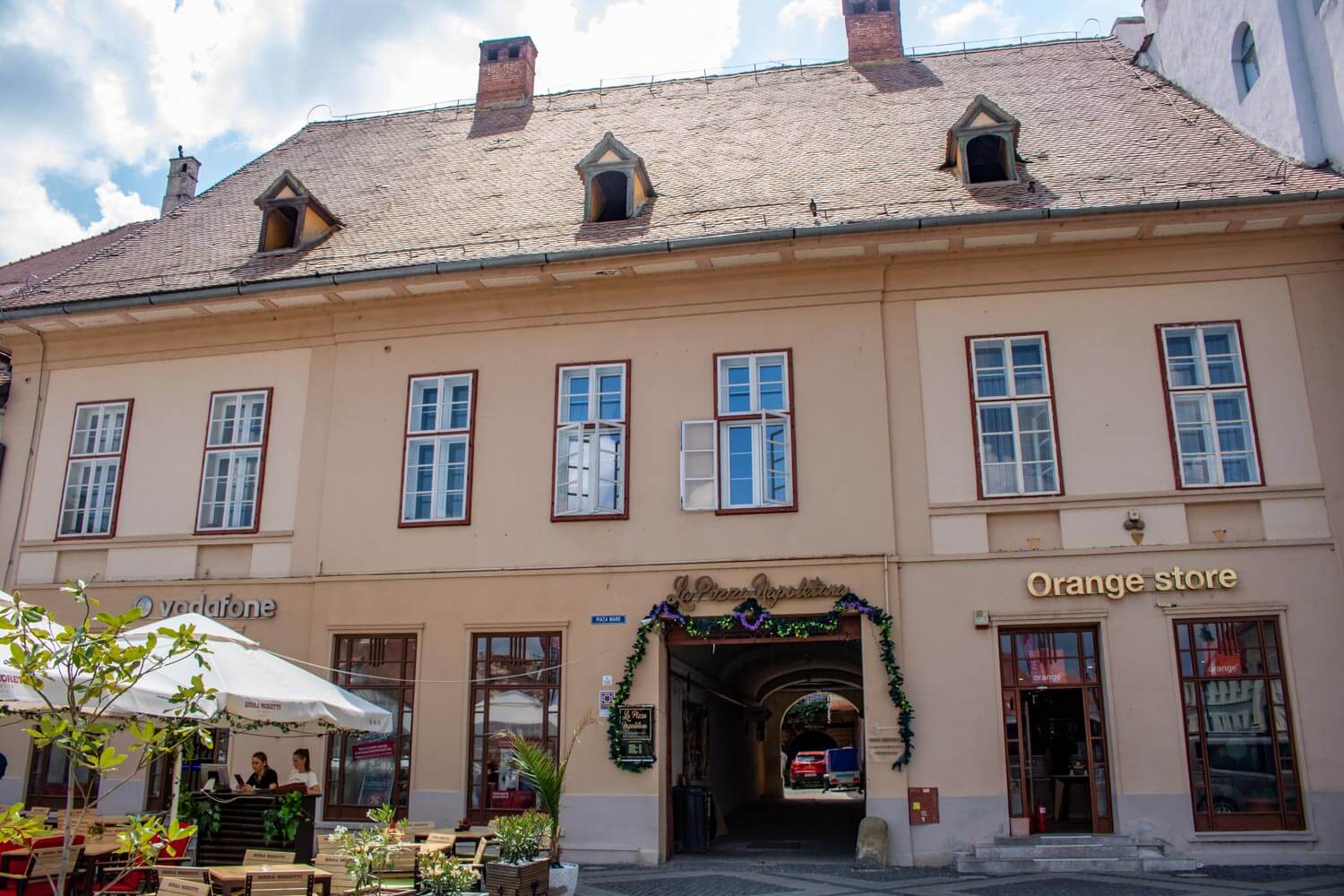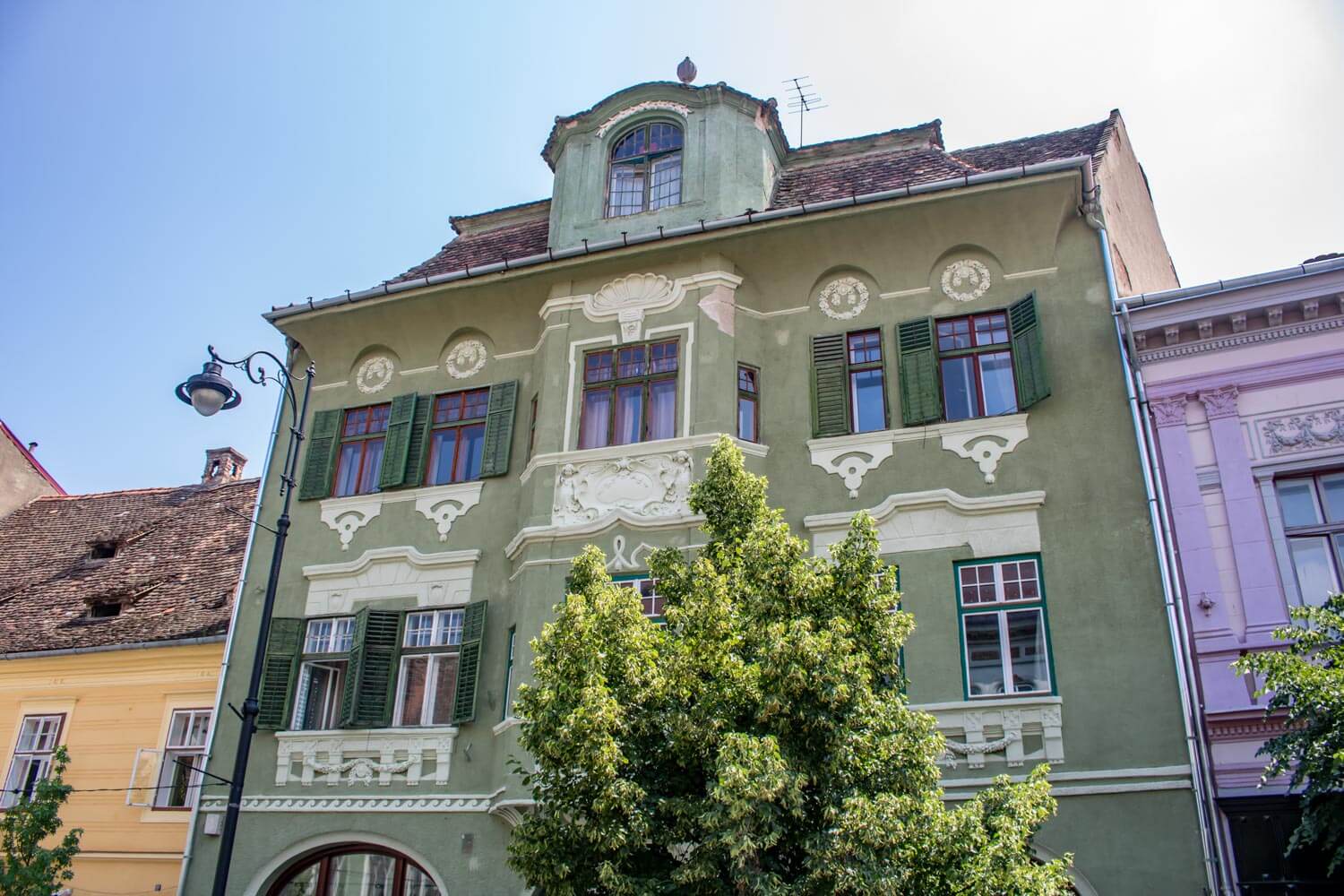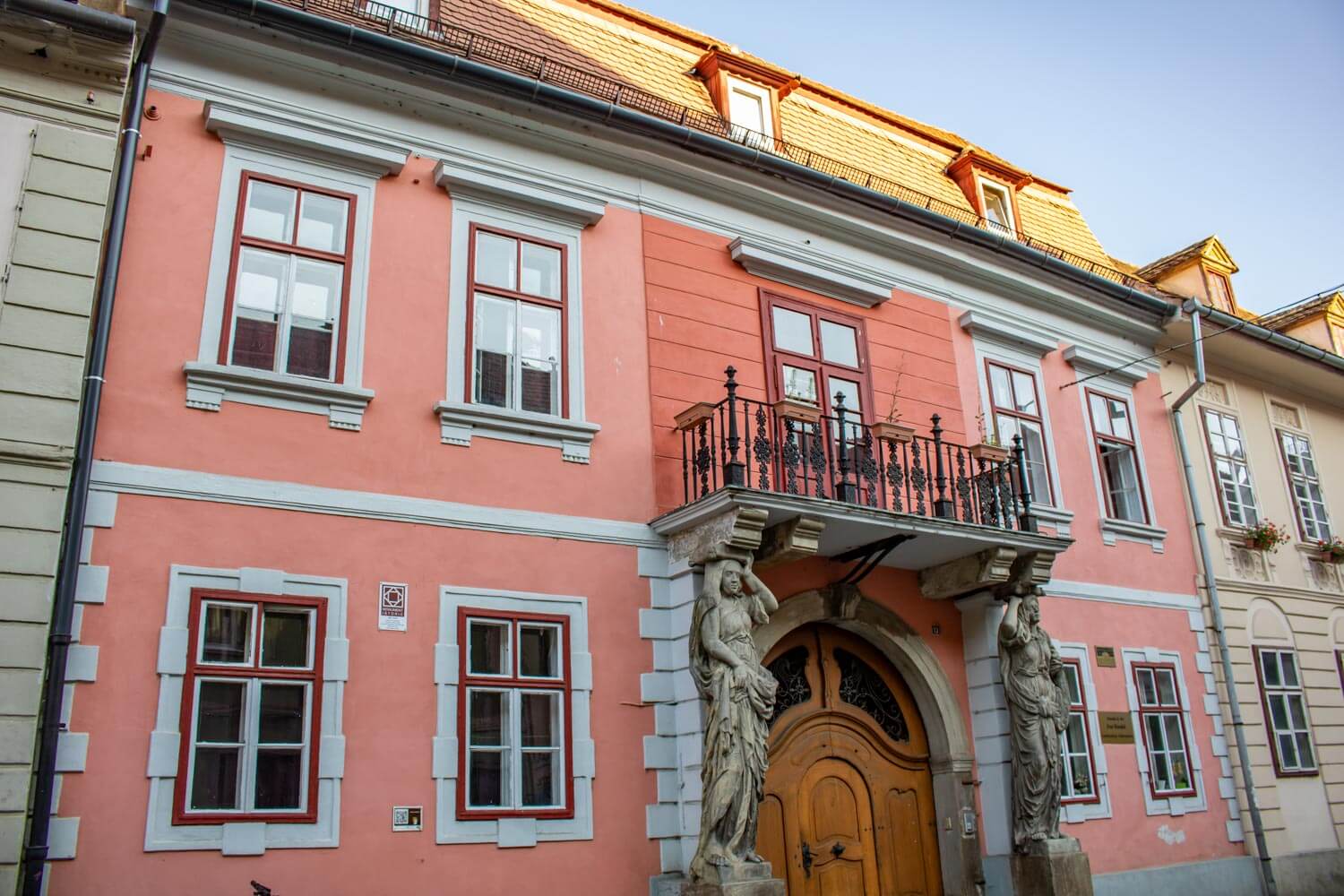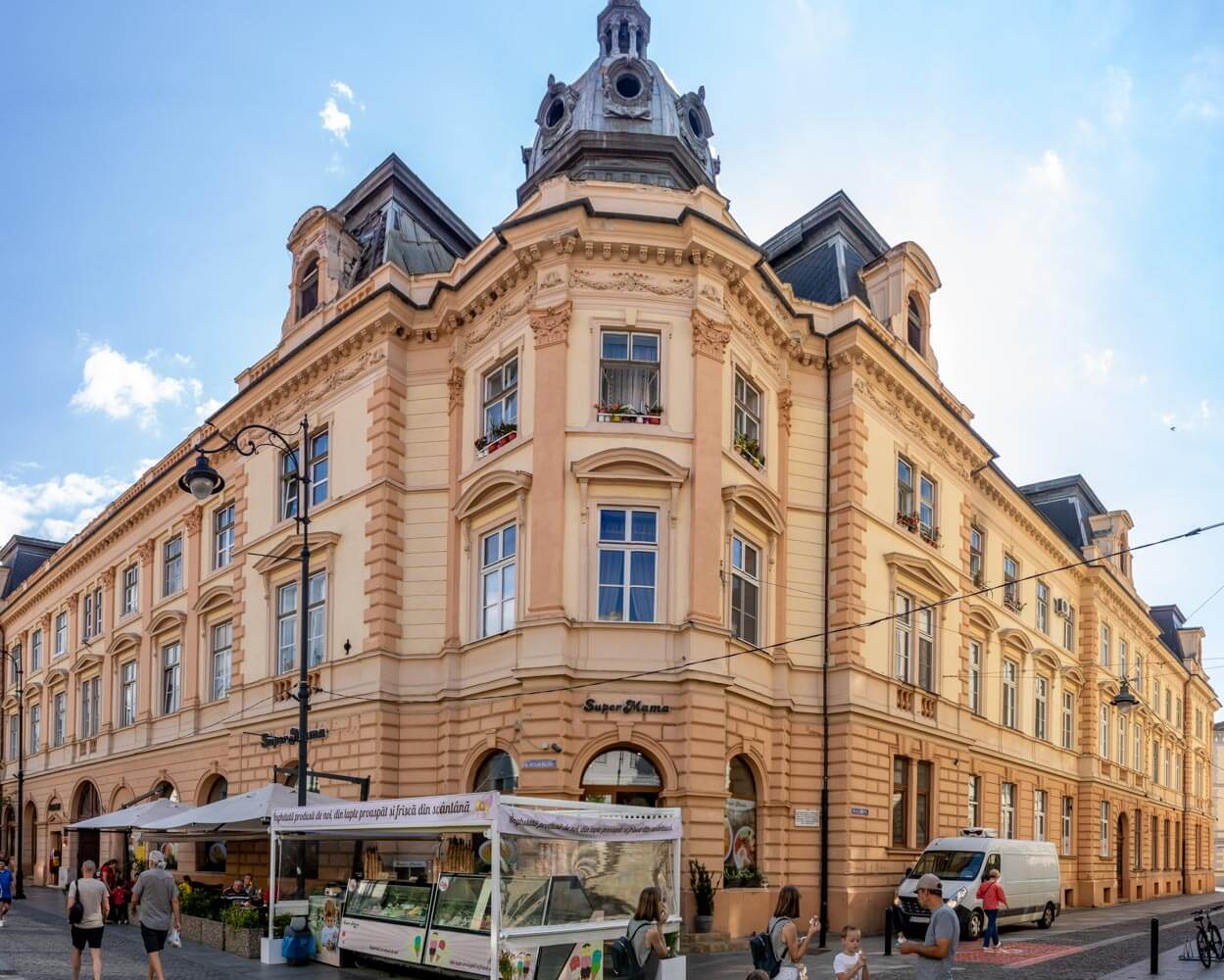
The Military Command Palace (Palatul Comandamentului Militar) is a late-19th-century administrative building on Nicolae Bălcescu Street in the historic center of Sibiu. Completed in 1892 at the corner with Alexandru Dimitrie Xenopol Street, it was built as the headquarters of the XII Army Corps of the Austro-Hungarian military and replaced the historic Împăratul Romanilor inn that had occupied the site for centuries.
The earlier inn was documented here from 1555 and became one of Sibiu’s best-known places of accommodation. Originally known as La Sultanul Turcilor and later La Steaua Albastră, it received the name Împăratul Romanilor in 1773 after the Luxembourg-born innkeeper Philipp Collignon took over its lease. A ballroom was added on the Xenopol Street side in 1775, but the old complex was eventually demolished when the military command decided to establish its new headquarters on the site.
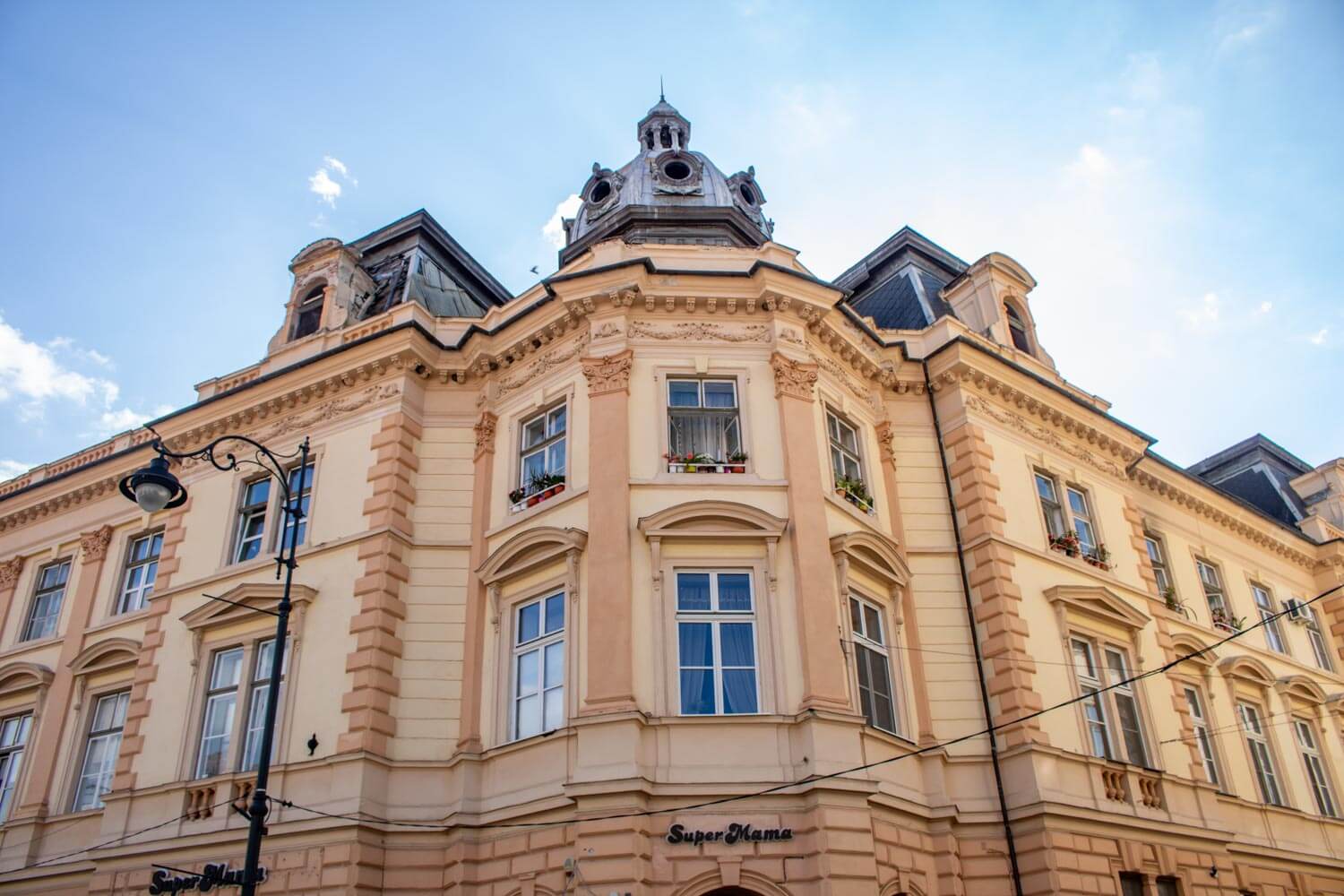
The palace was designed on a much larger scale than the surrounding historic houses, with a basement, ground floor, two upper stories and 97 rooms arranged in three wings. Its façades combine a formal late-19th-century composition with pronounced classical decoration, including rustication at ground level, Corinthian pilasters across the upper floors, window pediments, floral garlands and a broad projecting cornice. Two domed corner sections mark the ends of the building, while the main entrance opens into a passage lined with Corinthian pilasters and leads toward a monumental double-flight staircase.
The XII Army Corps remained here until November 1918, when the command moved to Cluj as Austro-Hungarian rule in Transylvania collapsed at the end of World War I. Only weeks later the building became the seat of the Governing Council of Transylvania (Consiliul Dirigent), elected after the Great National Assembly at Alba Iulia. From December 1918 until November 1919, the council coordinated the administration of Transylvania during its incorporation into Romania, while its official newspaper, internal secretariat and several administrative departments also worked from the palace.
Military and governmental uses continued after the council left, although parts of the ground floor were also occupied by shops, including the perfume and soap business of Gustav Meltzer. A fire damaged the building in August 1937, after which it was repaired, and in 1945 the Sibiu Garrison Military Court opened in the wing facing Xenopol Street.