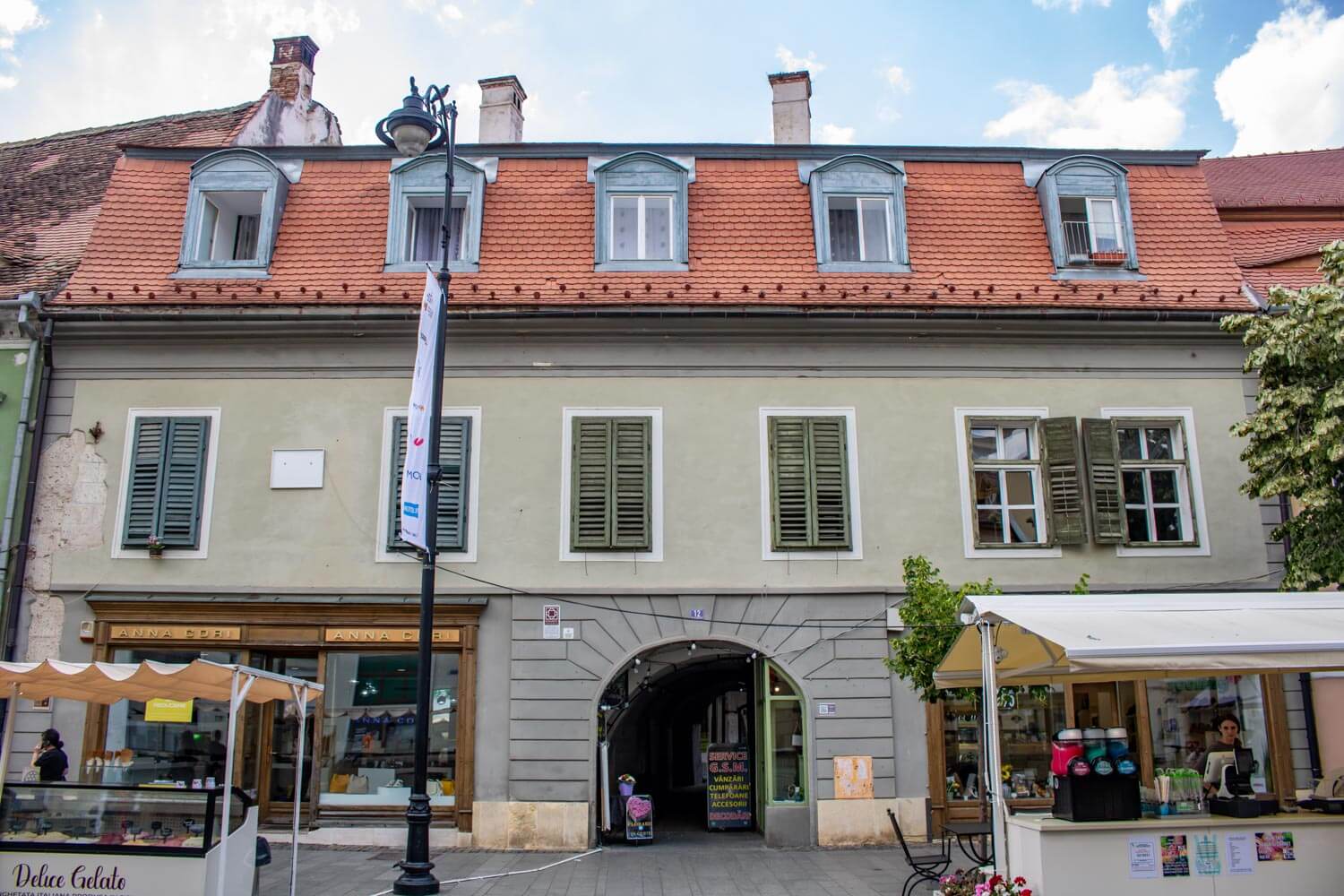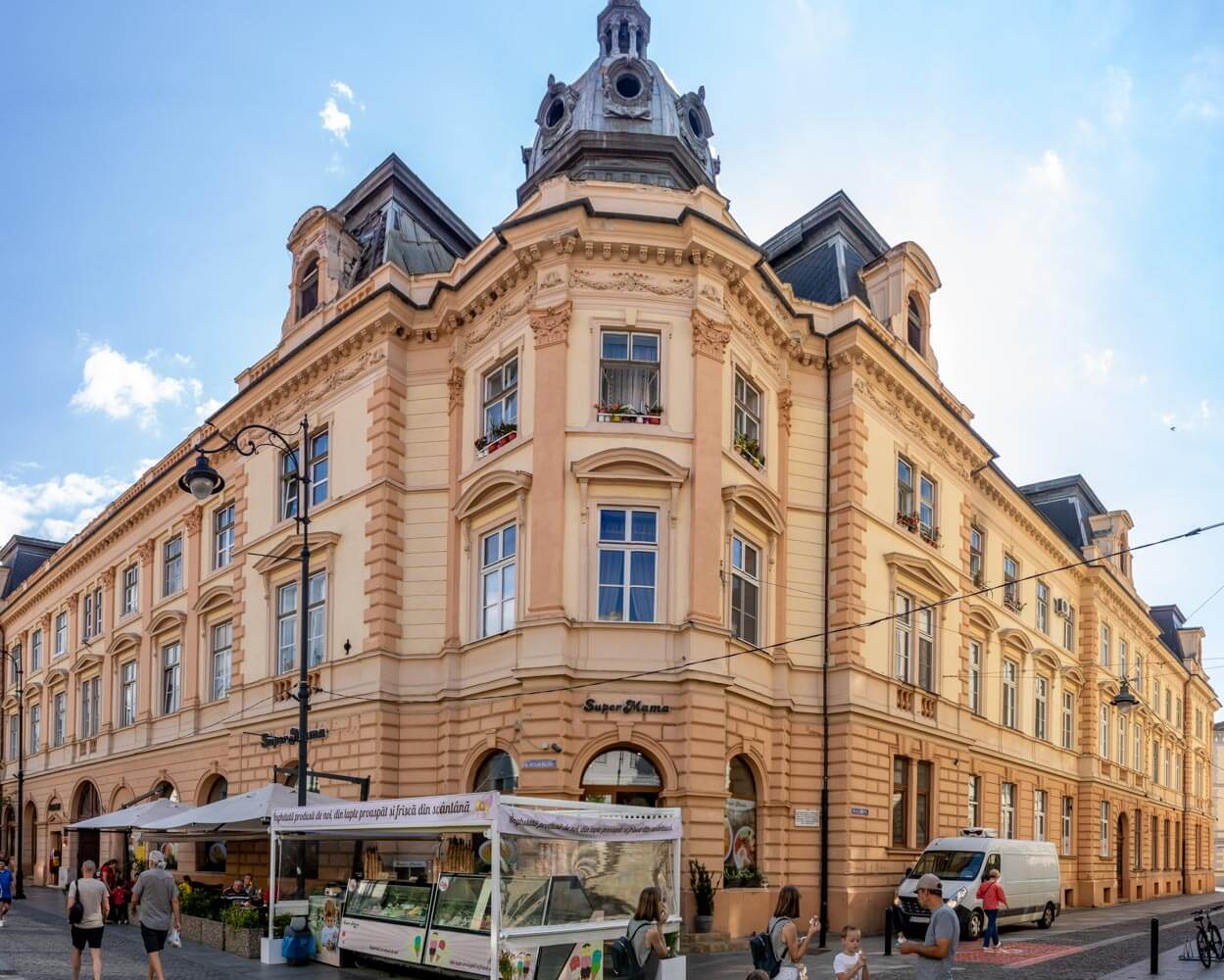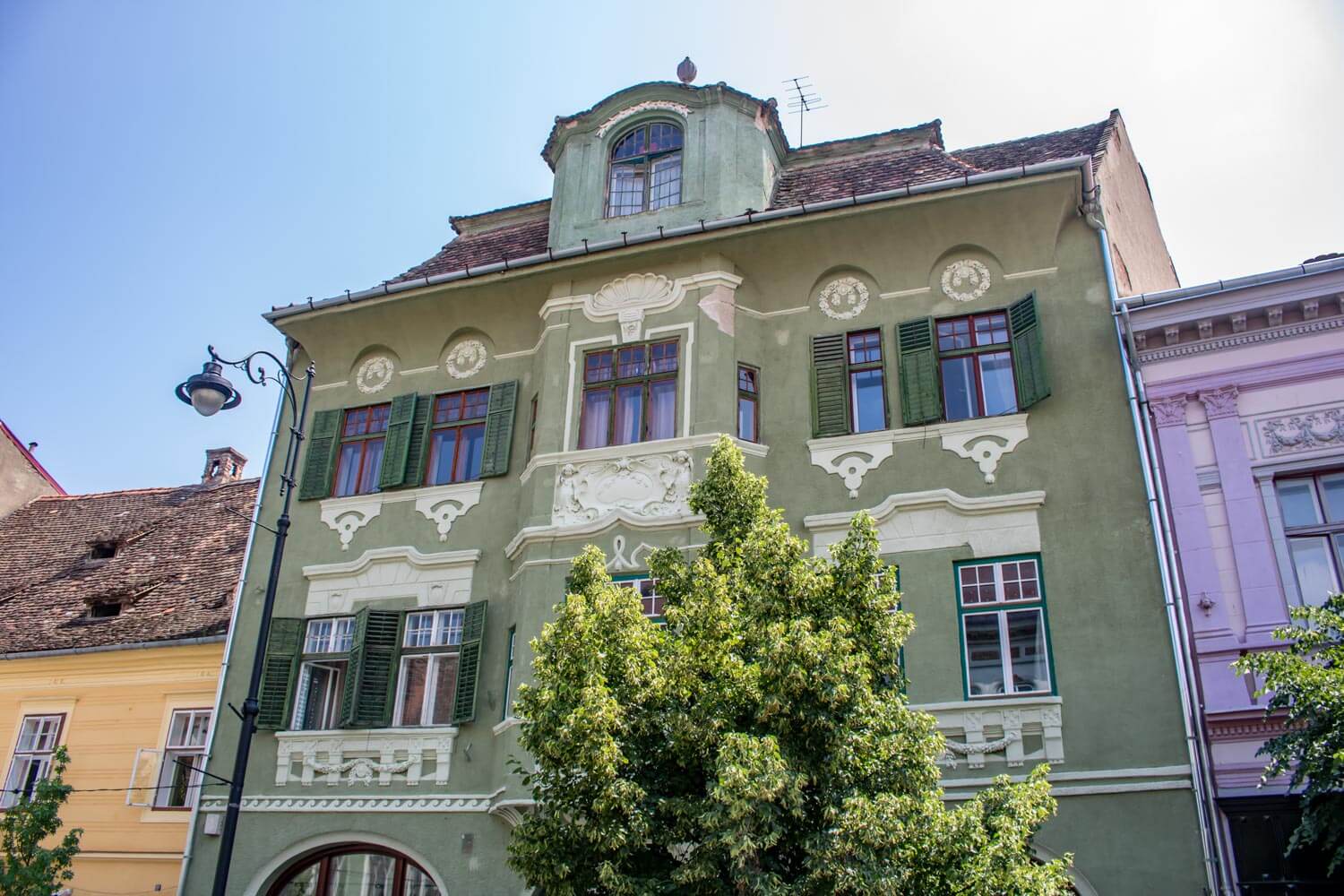
The Bielz House (Casa Bielz) is a historic house on Nicolae Bălcescu Street in the historic center of Sibiu. Although parts of the property survive from the 15th and 16th centuries, the building visitors see today largely reflects a major reconstruction carried out in 1906-1908 by Dr. Julius Bielz, whose family had occupied the house for several generations.
The Bielz connection began in the 19th century with Michael Bielz, who established Sibiu’s first lithographic institute here in 1822. His son Eduard Albert Bielz grew up in the same house and became one of Transylvania’s prominent naturalists, working across fields including botany, geology and zoology while assembling important scientific collections. The property eventually passed to Eduard Albert’s son Julius, who transformed the older residence at the beginning of the 20th century by raising its height, adding another floor and completing it with a mansard roof.
That reconstruction created the imposing street façade that now distinguishes the house, with a projecting bay rising through the upper floors and a large dormer incorporated into the mansard roof above. The rebuilding did not erase the earlier structure completely, as the entrance passage still retains a cross vault and an 18th-century wing survives around the courtyard behind the street frontage, preserving visible traces of the house’s longer history.
The house was also important in the development of women’s education in Sibiu through Josefine Bielz, who founded the Sibiu Women’s Association here in 1875. Created to support the Evangelical girls’ school and expand educational opportunities for girls, the association later helped establish a dedicated girls’ secondary school in the city, giving the family home a role that extended beyond its residential and scientific history.
Commercial activity increasingly shared the building with these other uses as Nicolae Bălcescu Street developed into one of Sibiu’s principal shopping streets. An electrical-goods business was based here around the turn of the 20th century, followed after World War I by several fashion retailers, including Friedrich Binder, Modemüller and Iulian Pfaltz, which continued using the ground-floor premises until nationalization.