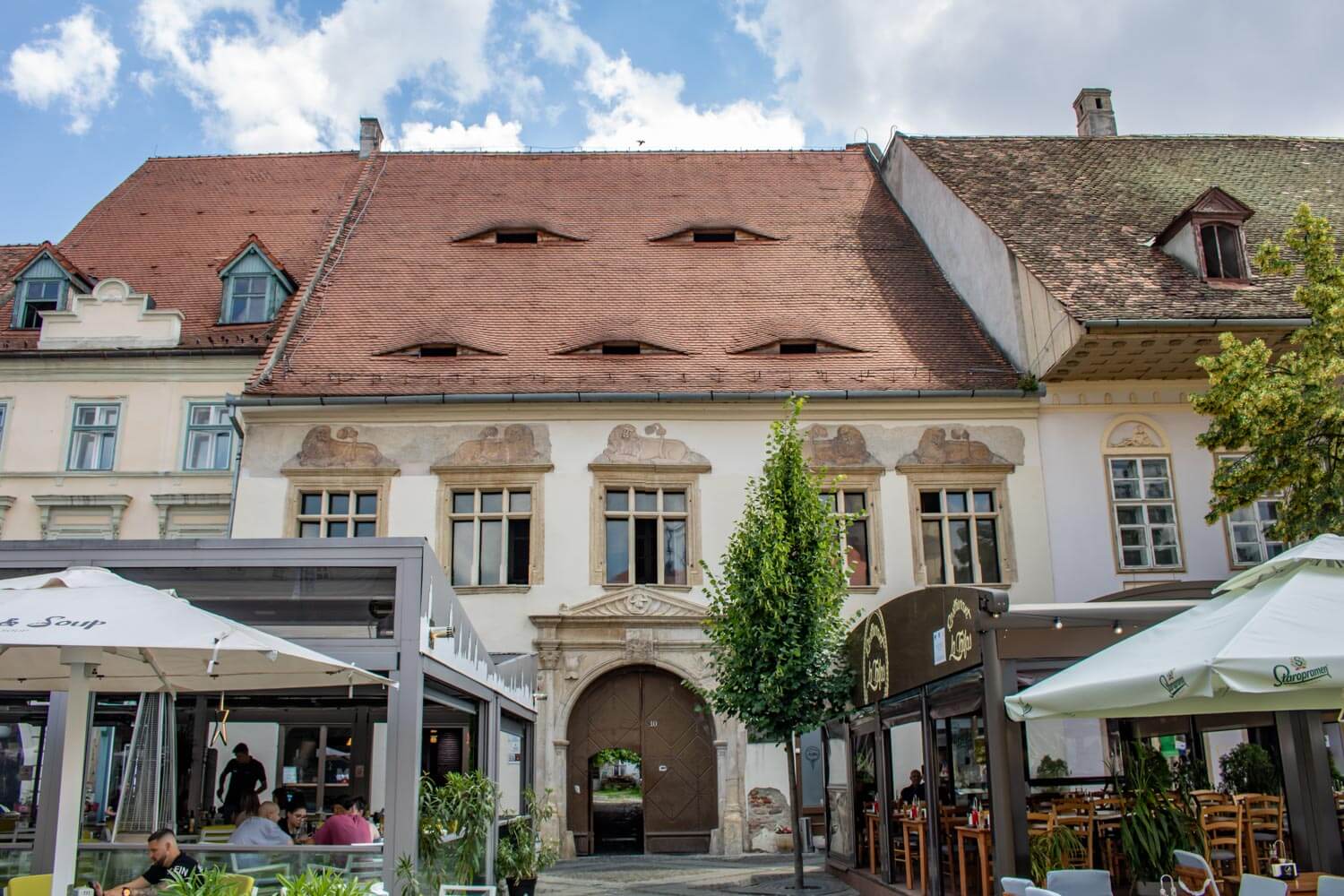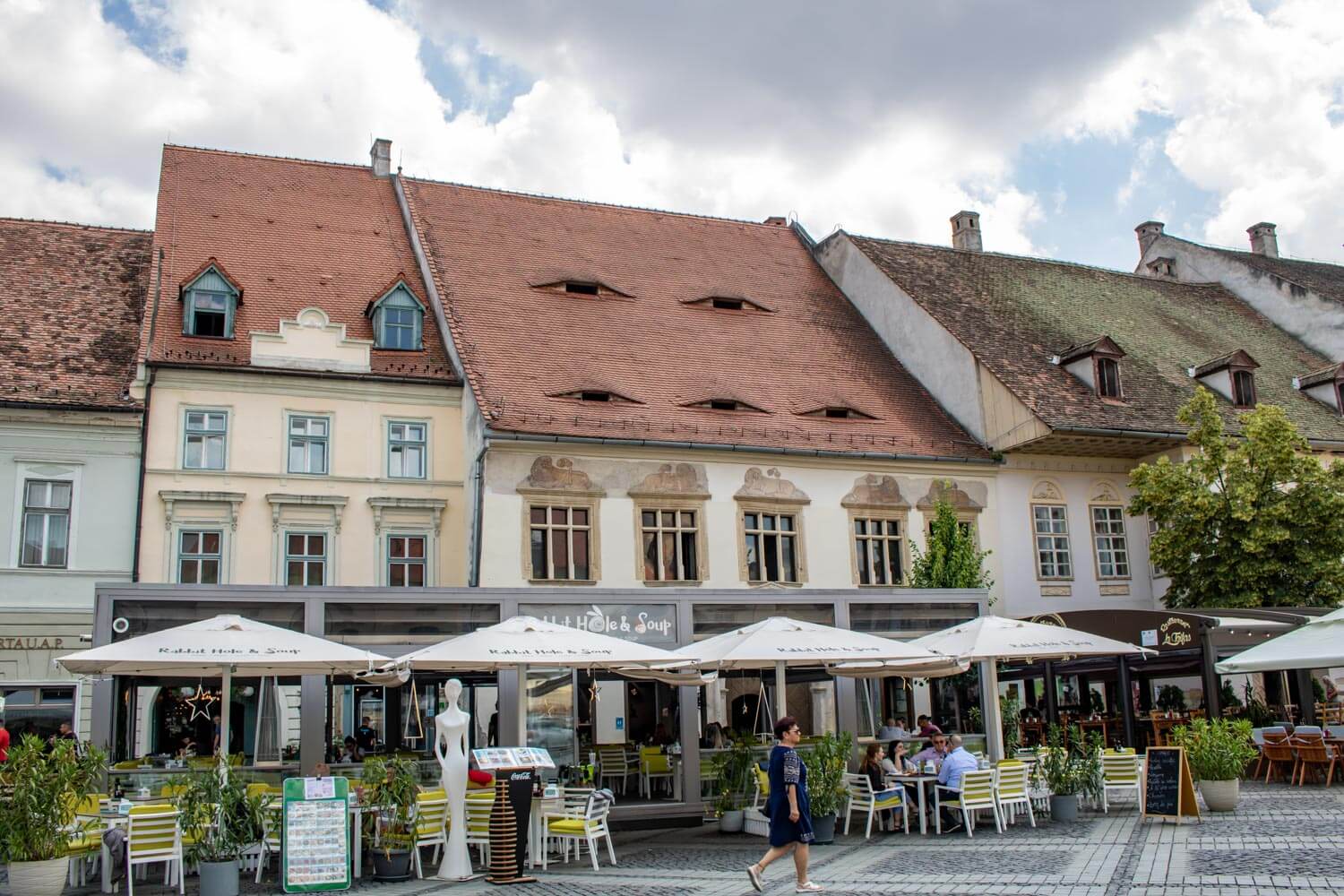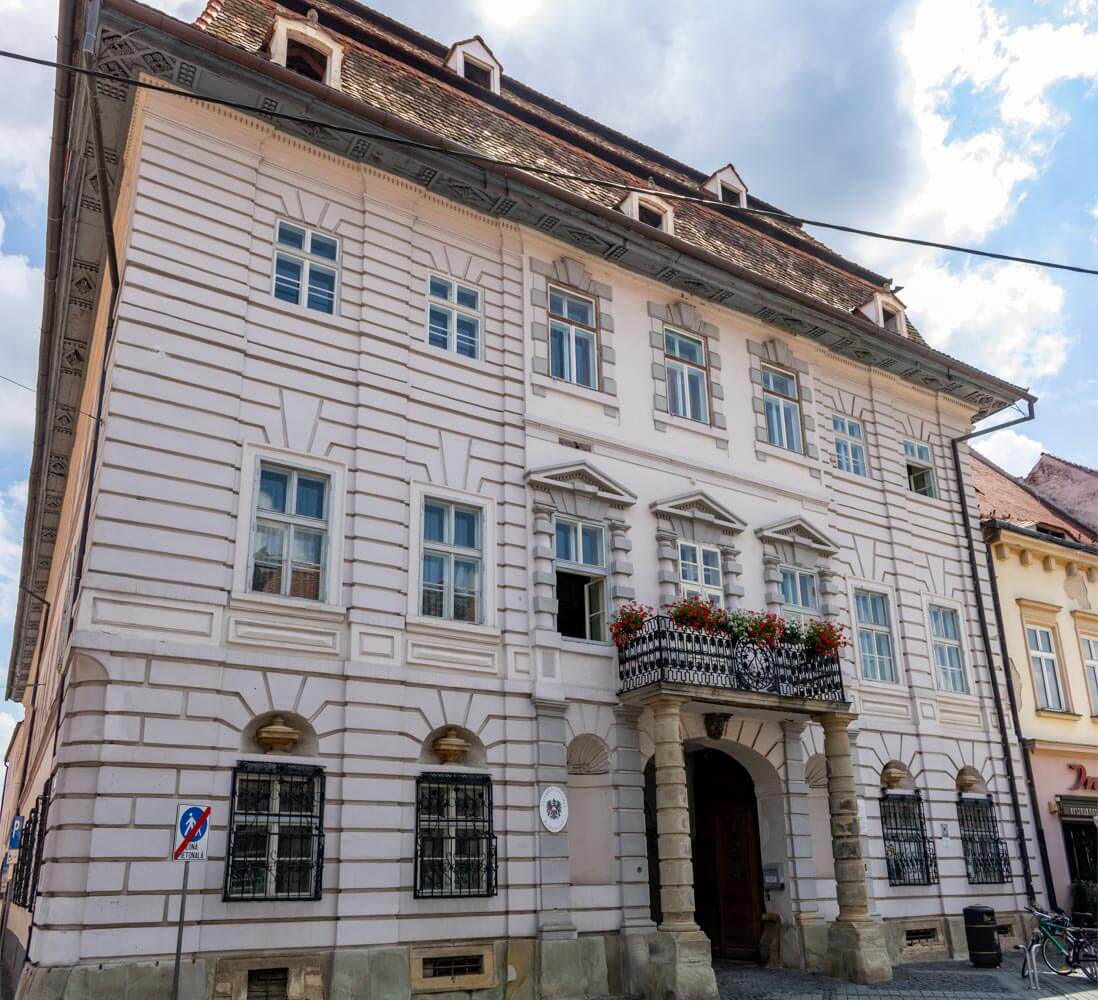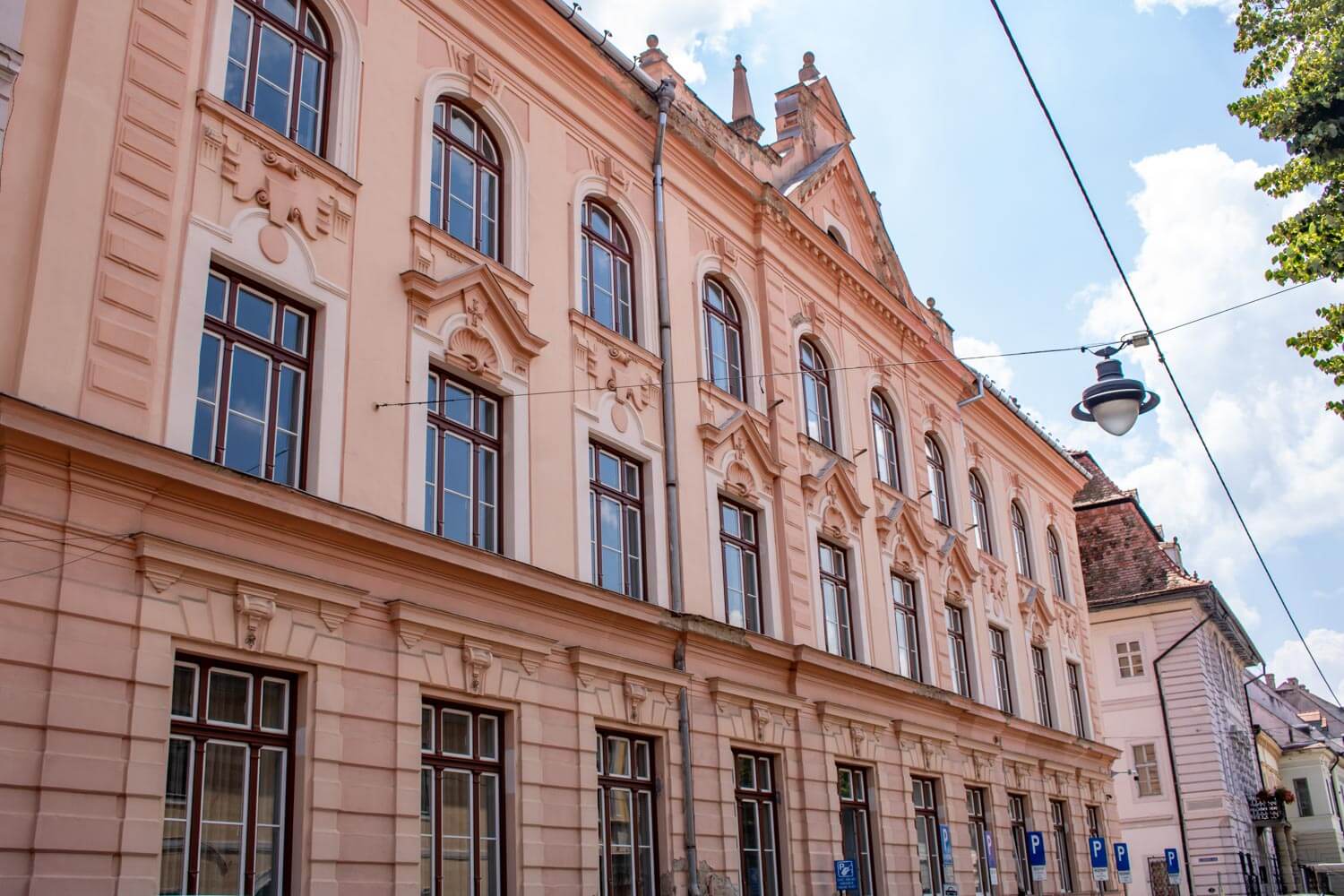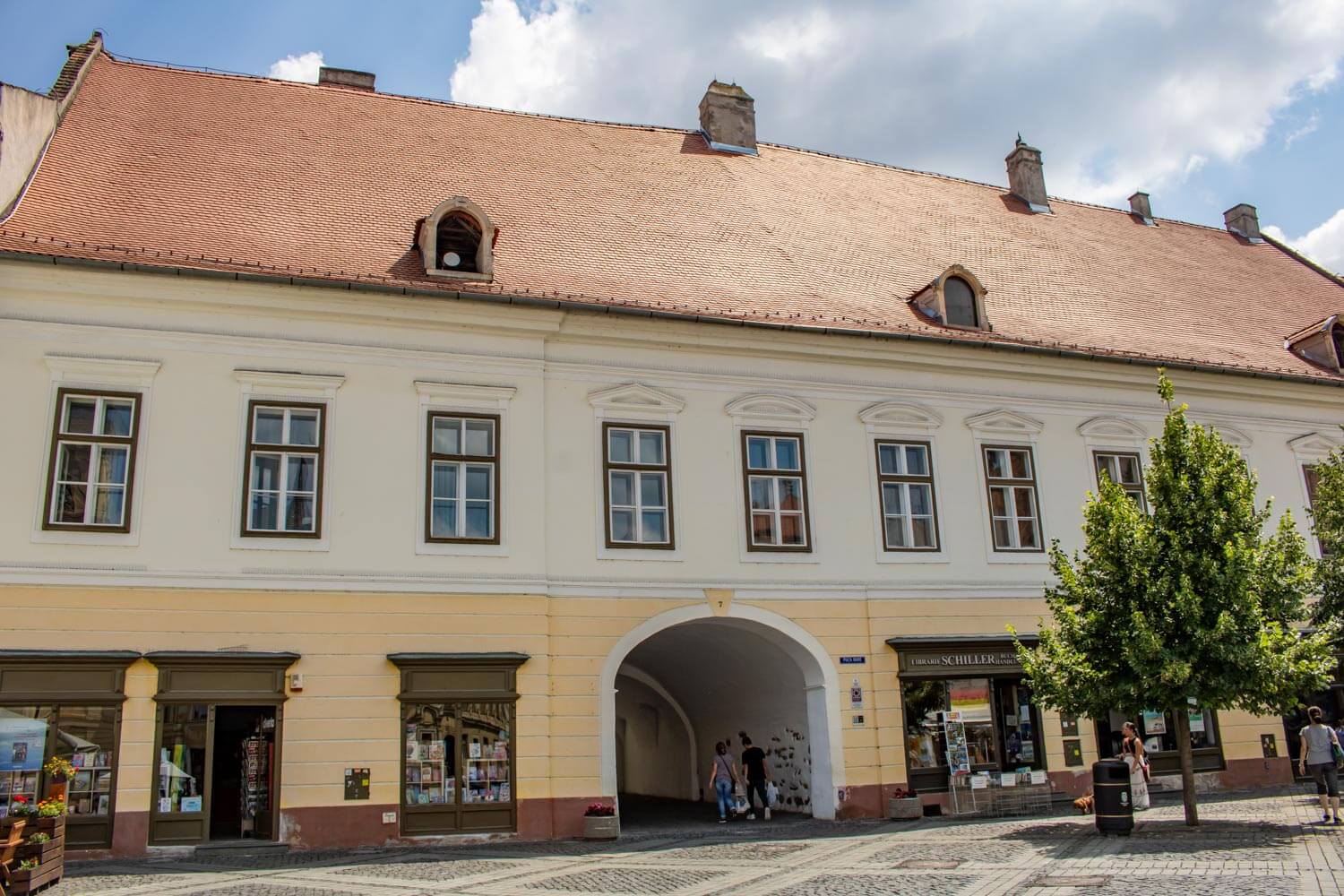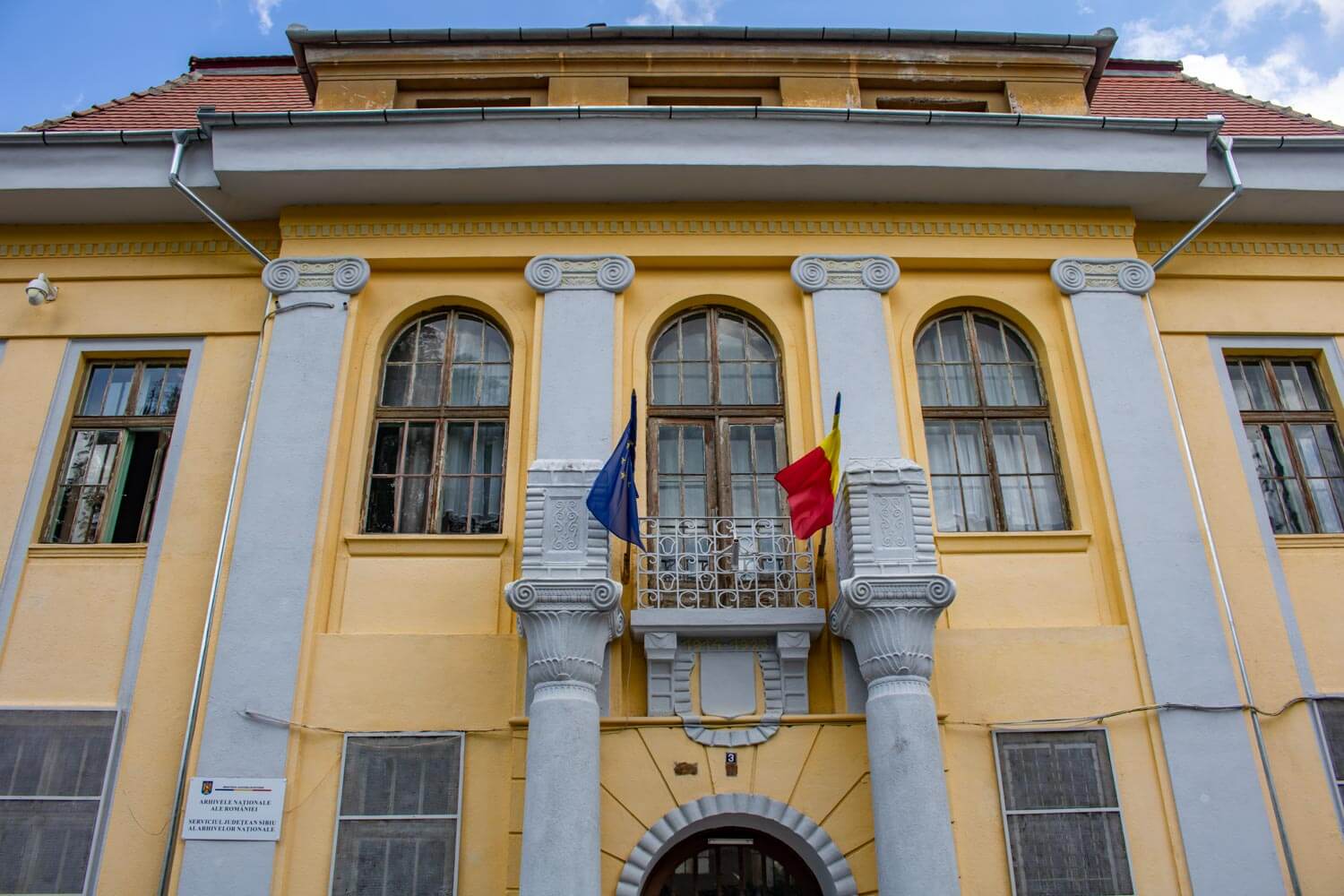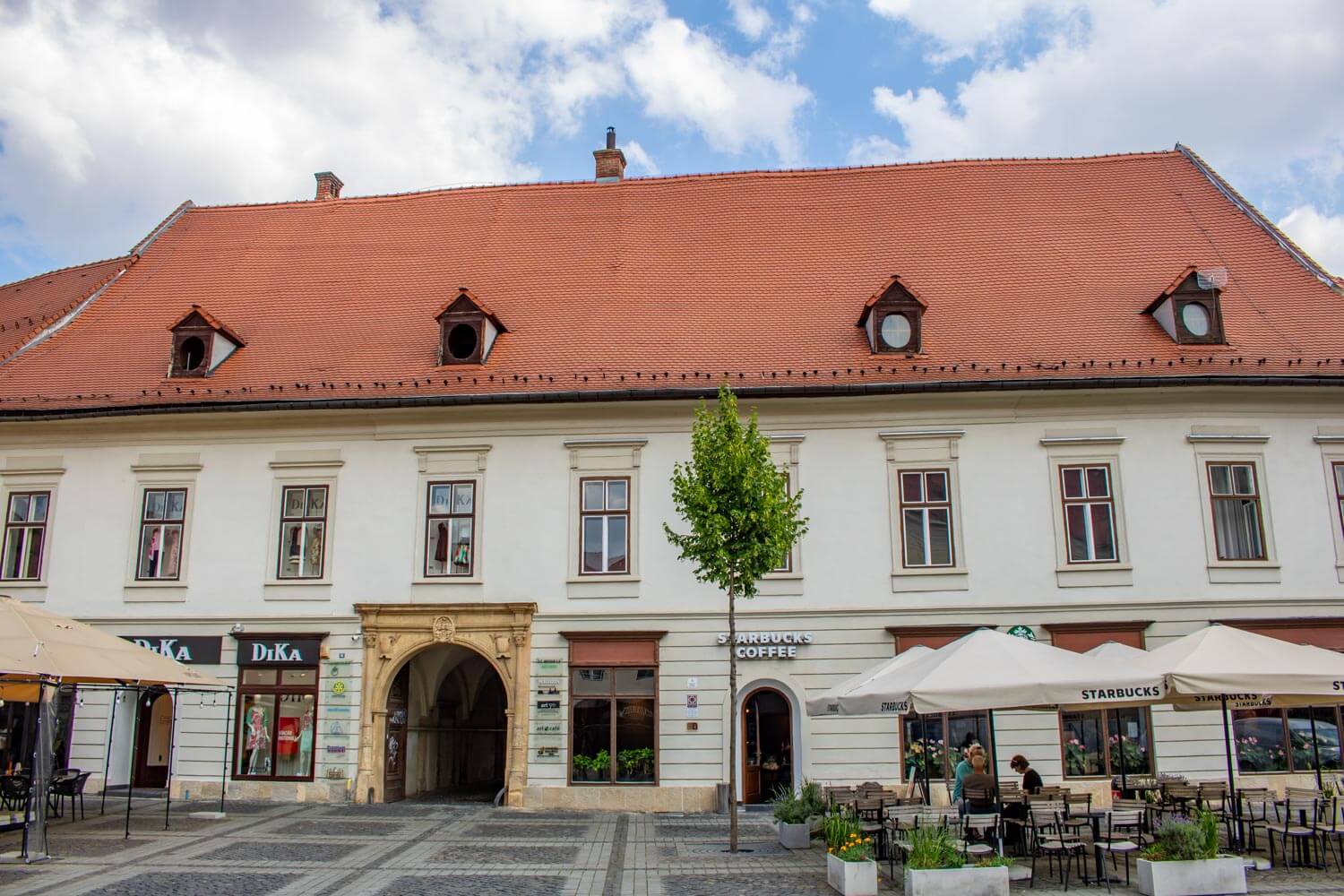
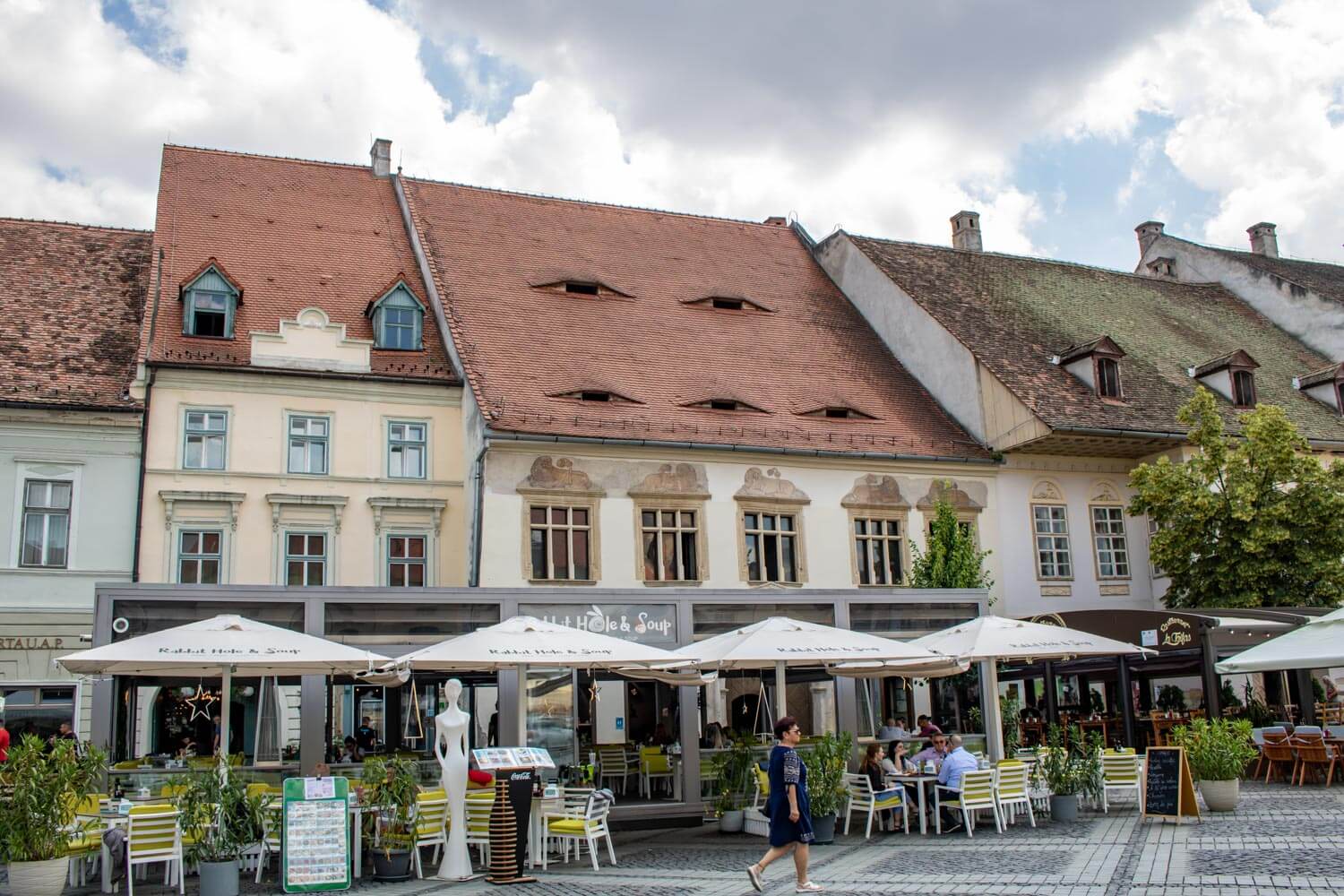
The Hans Wal House (Casa Hans Wal) is a historic townhouse on the Large Square in Sibiu, with origins in the 15th century and substantial alterations at the end of the 19th century. The house takes its name from Hans Wal, one of the patrician merchants who owned the property between 1475 and 1525.
The earliest known owner was the craftsman Simon Salter, recorded here after 1450, before the house passed to Hans Wal and Anton Wal. Over the following centuries it belonged to a succession of prominent local families and officials, including mayors Tobias Sifft and Georg Reussner. Despite these changes, parts of the older building survived beneath later remodeling, especially in the vaulted passage, staircase and upper rooms.
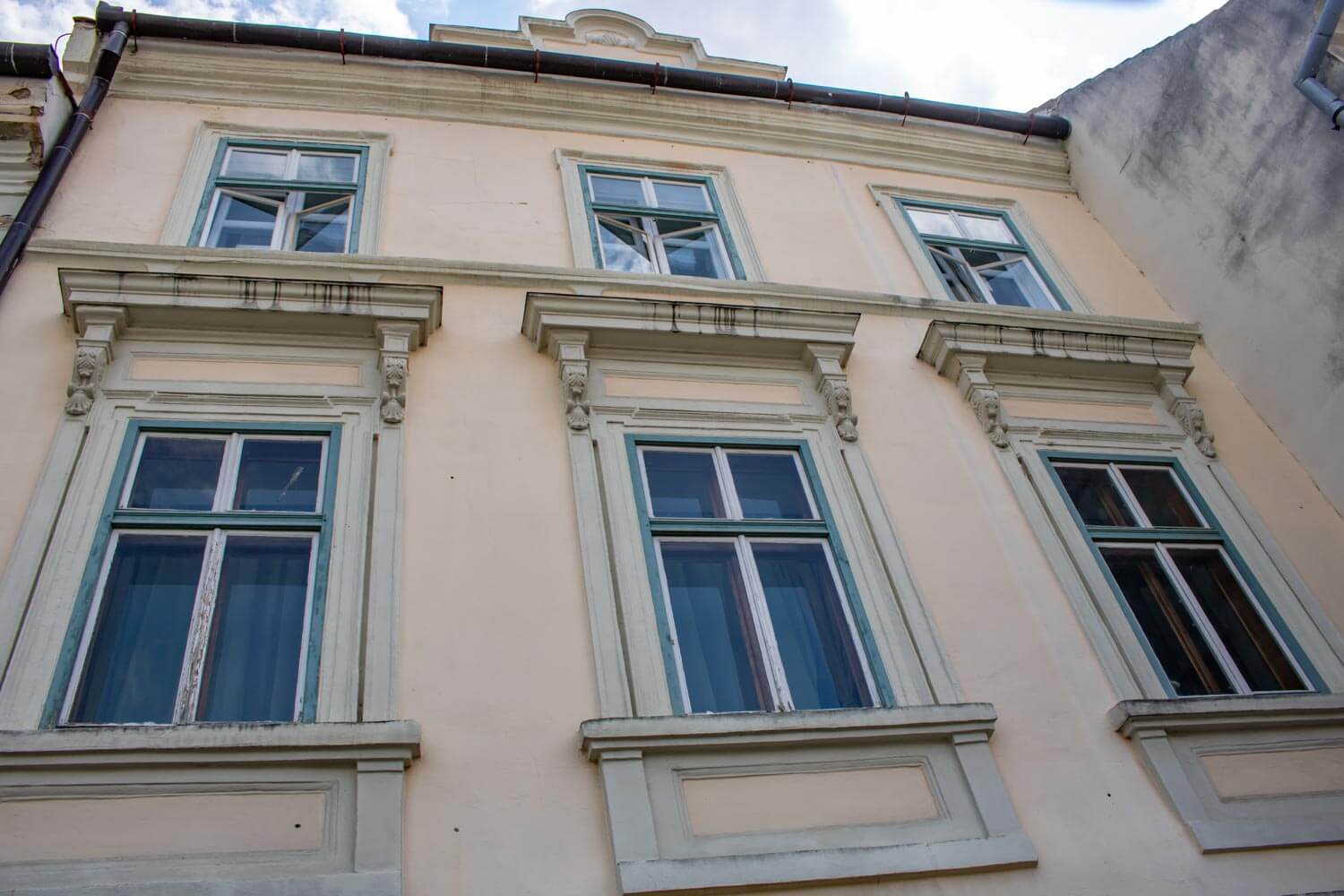
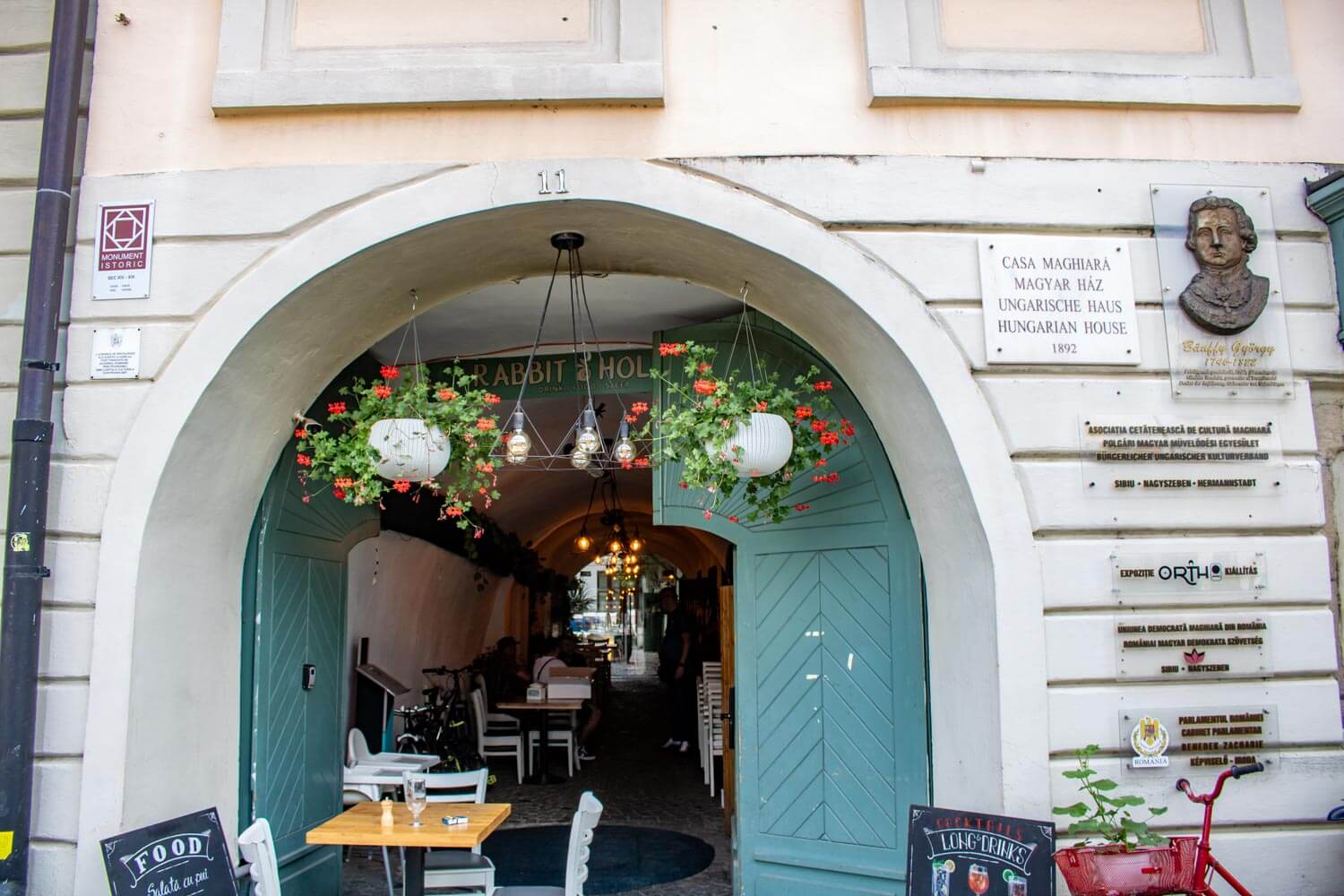
A major transformation came in 1898, when the Magyar Bürger-Leserverein association acquired the property and rebuilt the street-facing section. The façade received its present historicist appearance, with Renaissance-inspired window surrounds and a stepped central pediment decorated with a relief of two clasped hands. Inside, older features were retained, including an 18th-century staircase and floral plaster ceilings from the 16th and 17th centuries.
The association used the building as a Hungarian casino until World War I, with a pub on the ground floor facing the square. After the war, the commercial spaces were taken over by textile shops including Billes & Co. and M. Weltmann, while during the communist period the ground floor became the Cravata shop.
The building also carries a commemorative plaque for György Bánffy, the Enlightenment-era governor of Transylvania, and was home in 1920-1921 to Andreo Cseh, one of the early pioneers of the Esperanto movement.