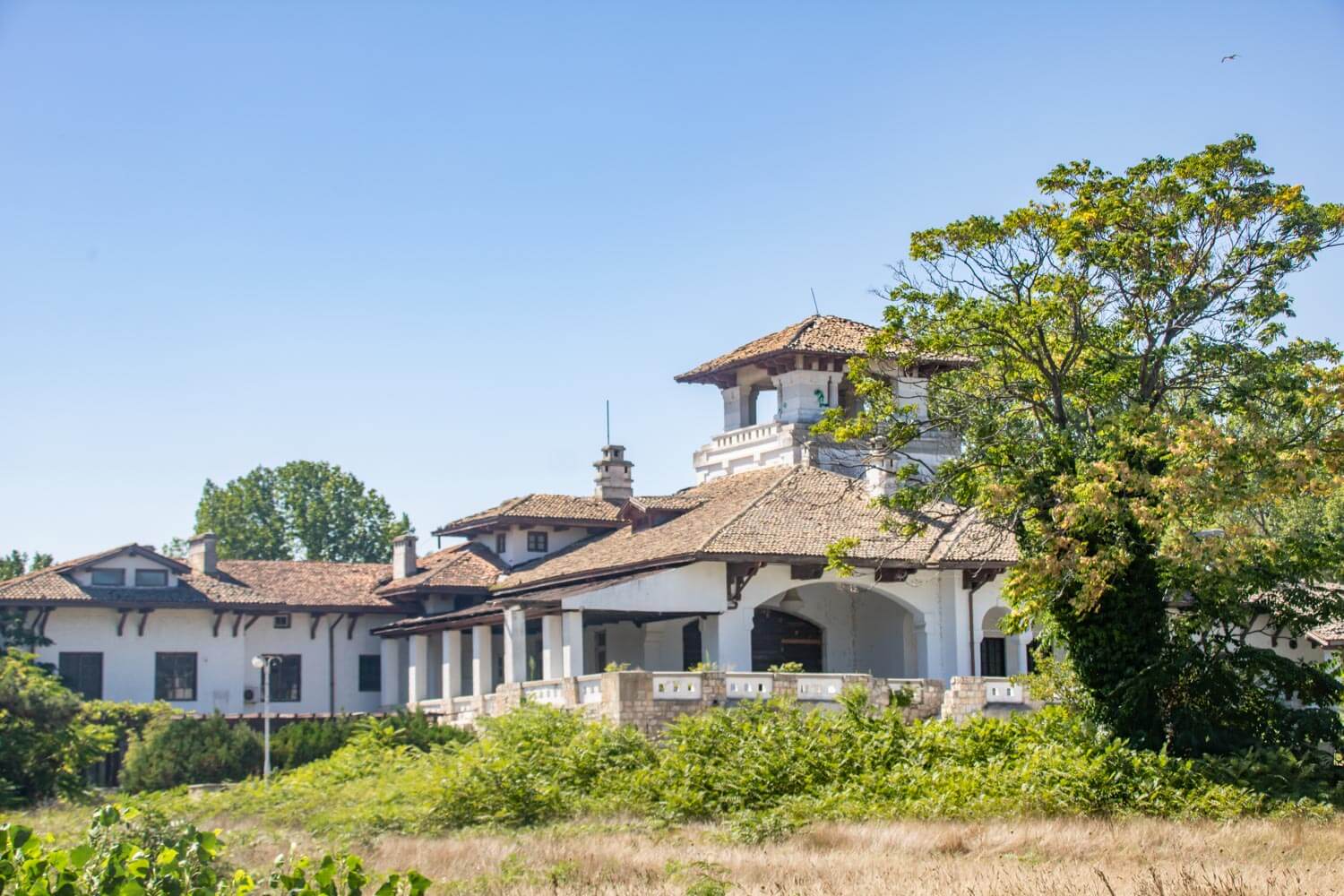
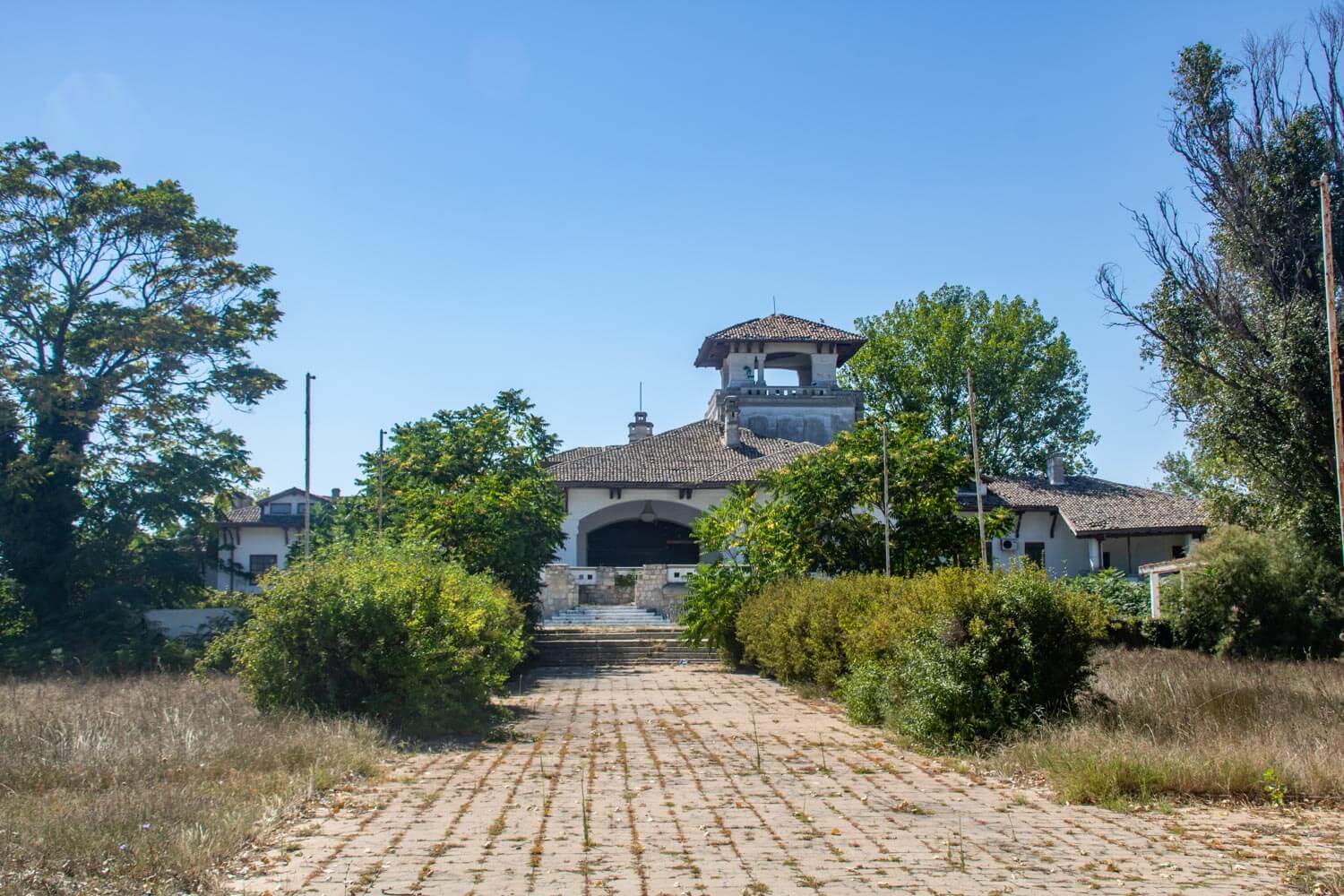
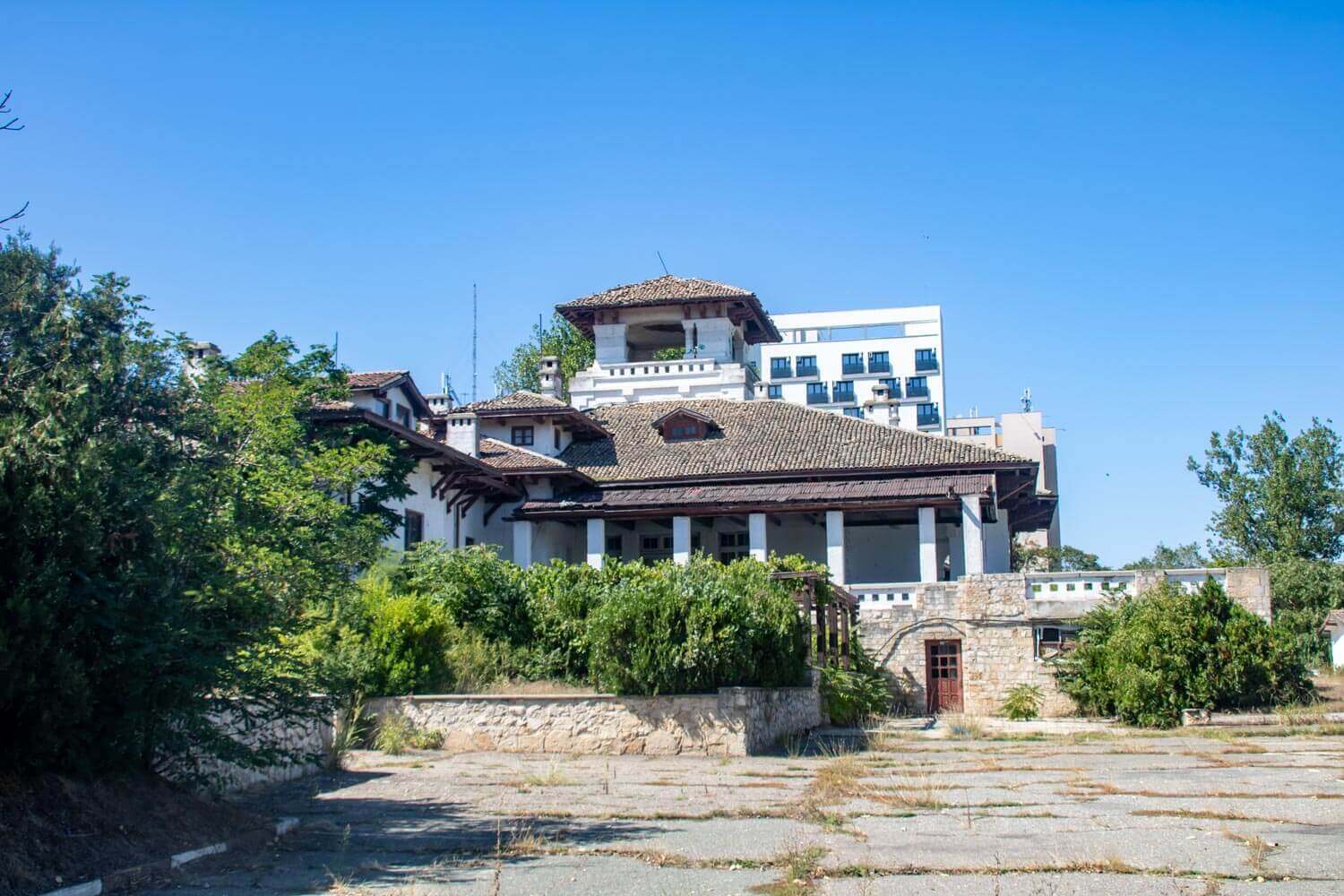
The Royal Palace of Mamaia (Palatul Regal din Mamaia), also known as the Black Wave (Kara Dalga), is a former royal residence in Mamaia, part of Constanța. Built between 1924 and 1926 for Queen Marie of Romania, it stands between the Black Sea and Lake Siutghiol and was designed by Italian architect Mario Stoppa.
The palace formed part of a larger royal estate created after the municipality of Constanța gave King Ferdinand I and Queen Marie several hectares of land in Mamaia. Queen Marie commissioned the residence as a summer retreat for the royal family, with the main palace accompanied by a smaller pavilion intended for the young Michael. Ferdinand visited the nearly completed residence with Marie in 1926 but died the following year before the palace was ready for use.
The finished residence had 35 rooms arranged across the basement, ground floor and attic, including reception rooms, bedrooms, service spaces and an attic apartment prepared for Michael. Venetian porcelain, Dutch terracotta stoves and simple Italian furniture decorated the interiors, while the large dining room opened onto a balcony facing the sea. Outside, the gardens included lawns, rose beds, stone paths, a fountain and a freshwater basin supplied from Lake Siutghiol, with the landscaping designed by Antonio Moraldo and Carlo Actis.
The palace was inaugurated on 22 August 1927 in the presence of the six-year-old King Michael I, who stayed there with his mother, Princess Helen. At the end of that year the residence passed from Queen Marie to Helen, and during the following years it hosted members of the Romanian royal family and foreign guests.
Its royal use ended in 1932, when King Carol II transferred the property to the Naval Aviation Flotilla based on Lake Siutghiol. The palace was converted into an officers’ club and remained in military use until nationalization in 1948. During the communist period it was later adapted as a restaurant and club for foreign tourists.
After 1989 the property passed through several changes of ownership and deteriorated significantly. A 2003 privatization was later ruled illegal, and the Romanian state recovered ownership of the historic building in 2022.