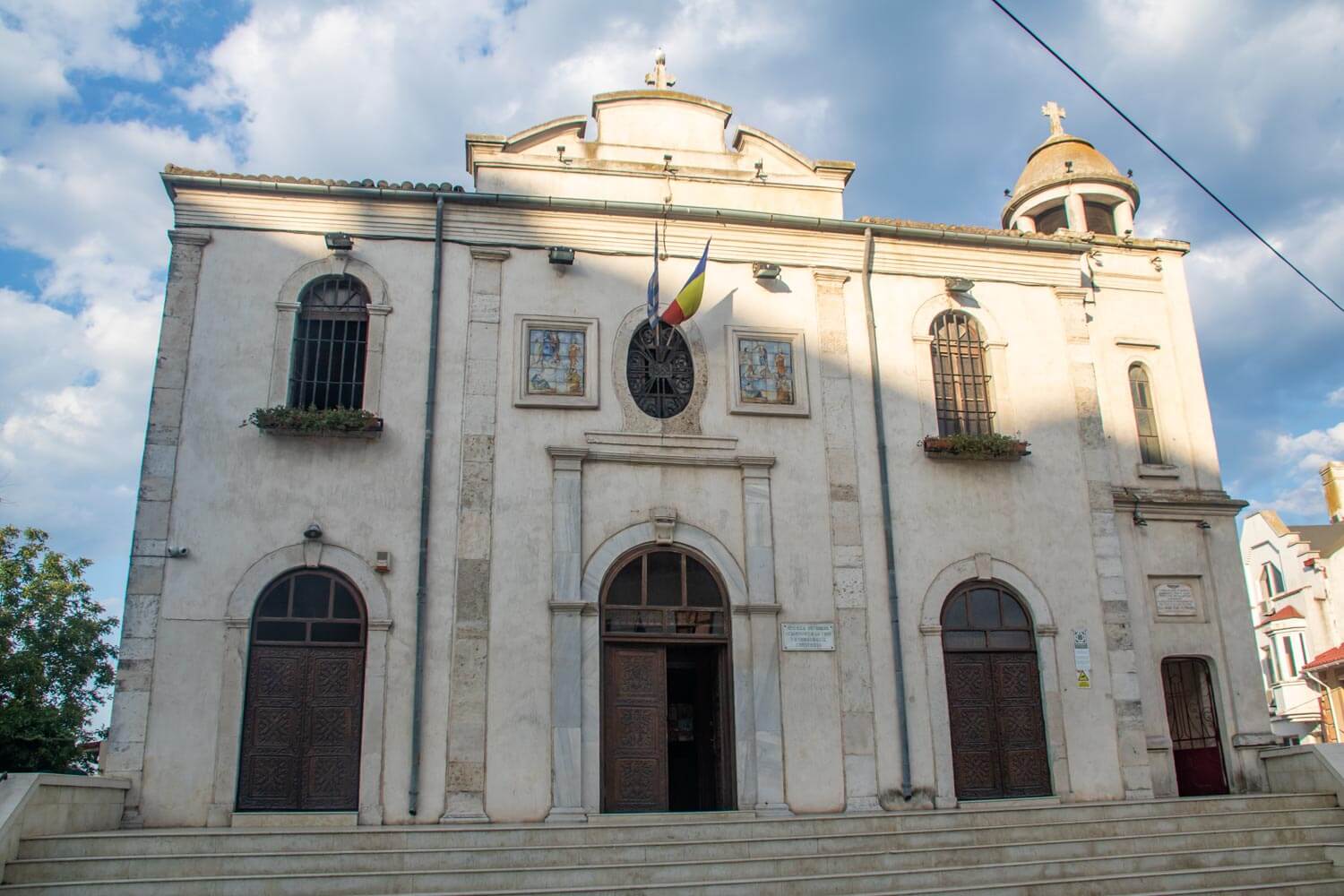
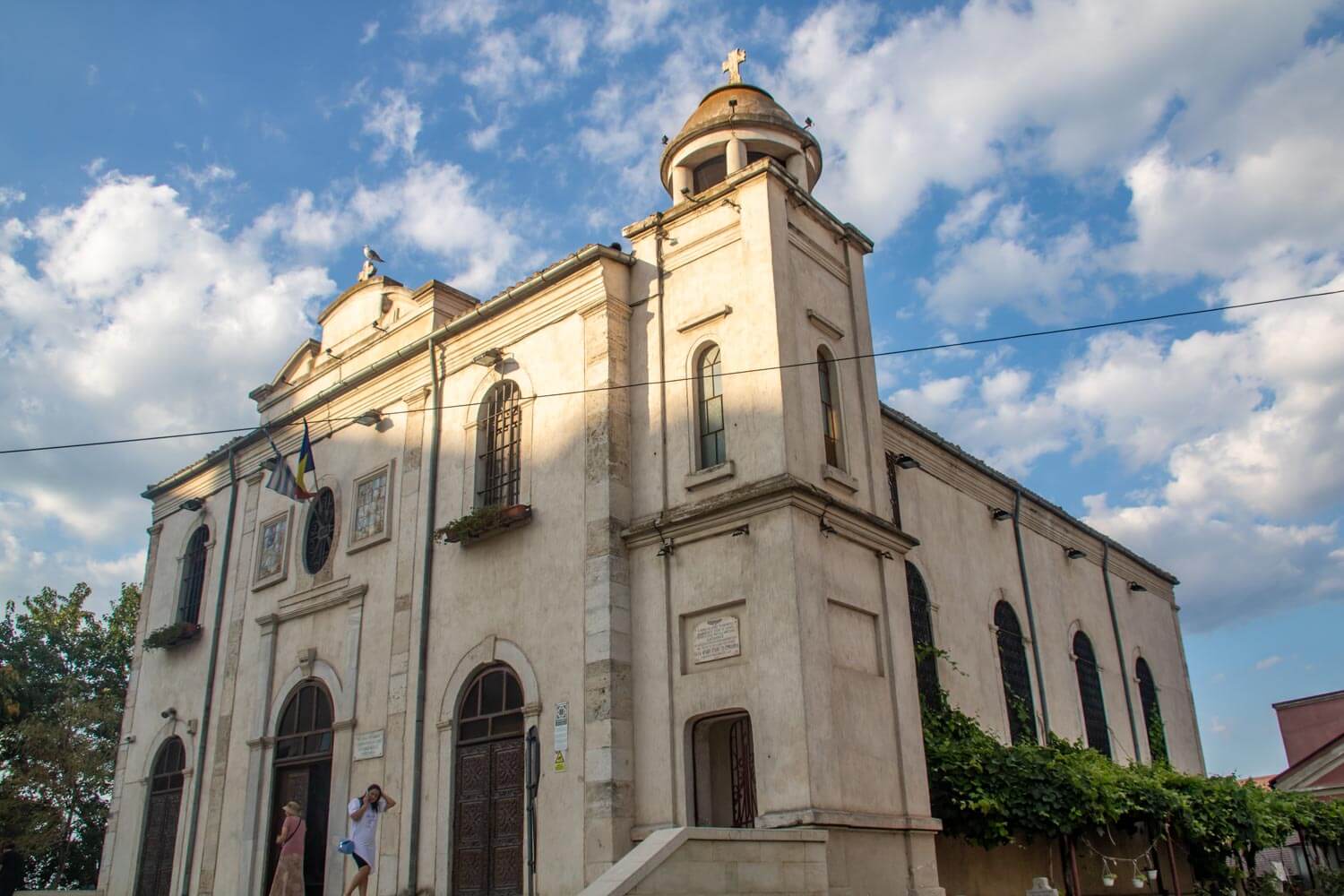
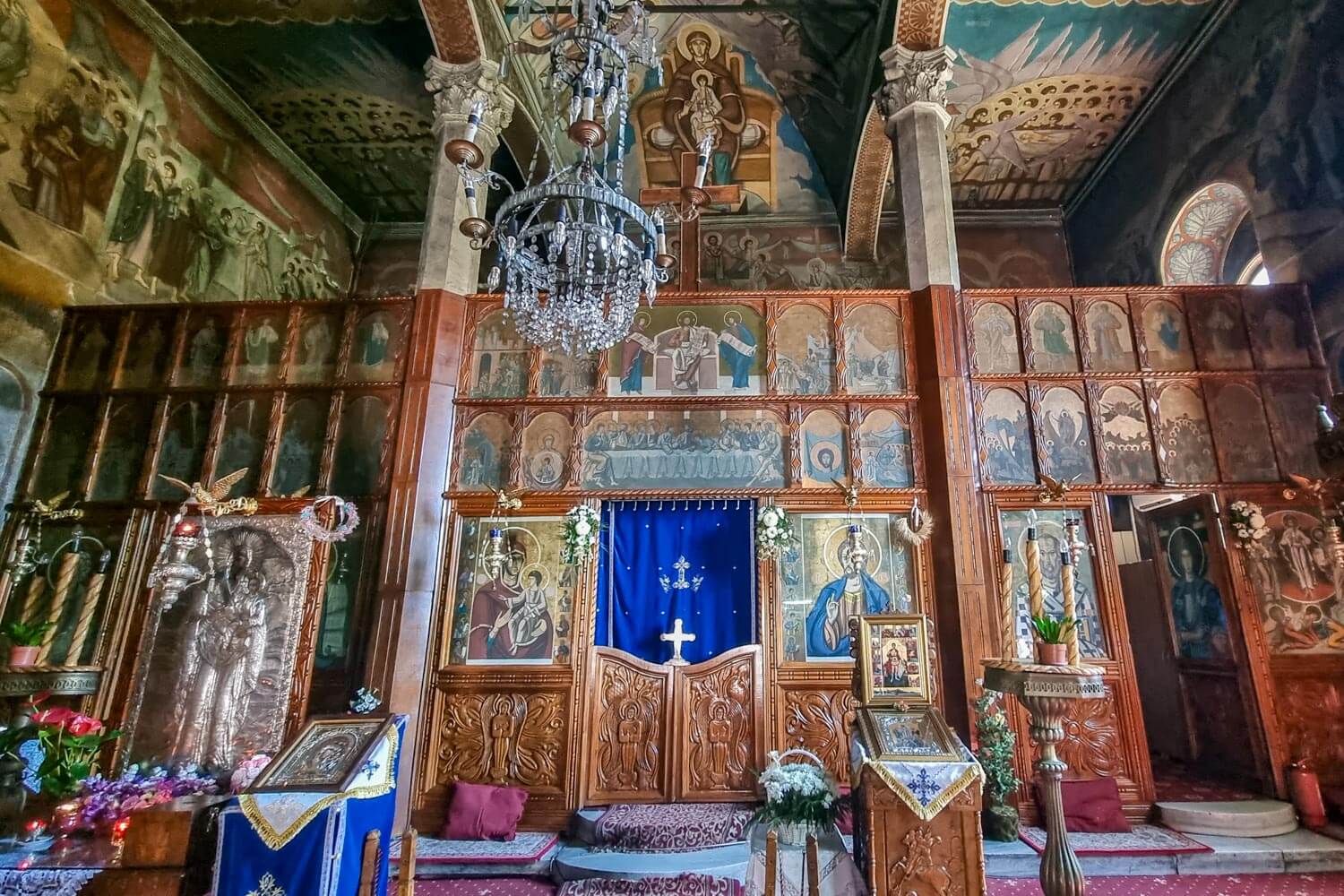
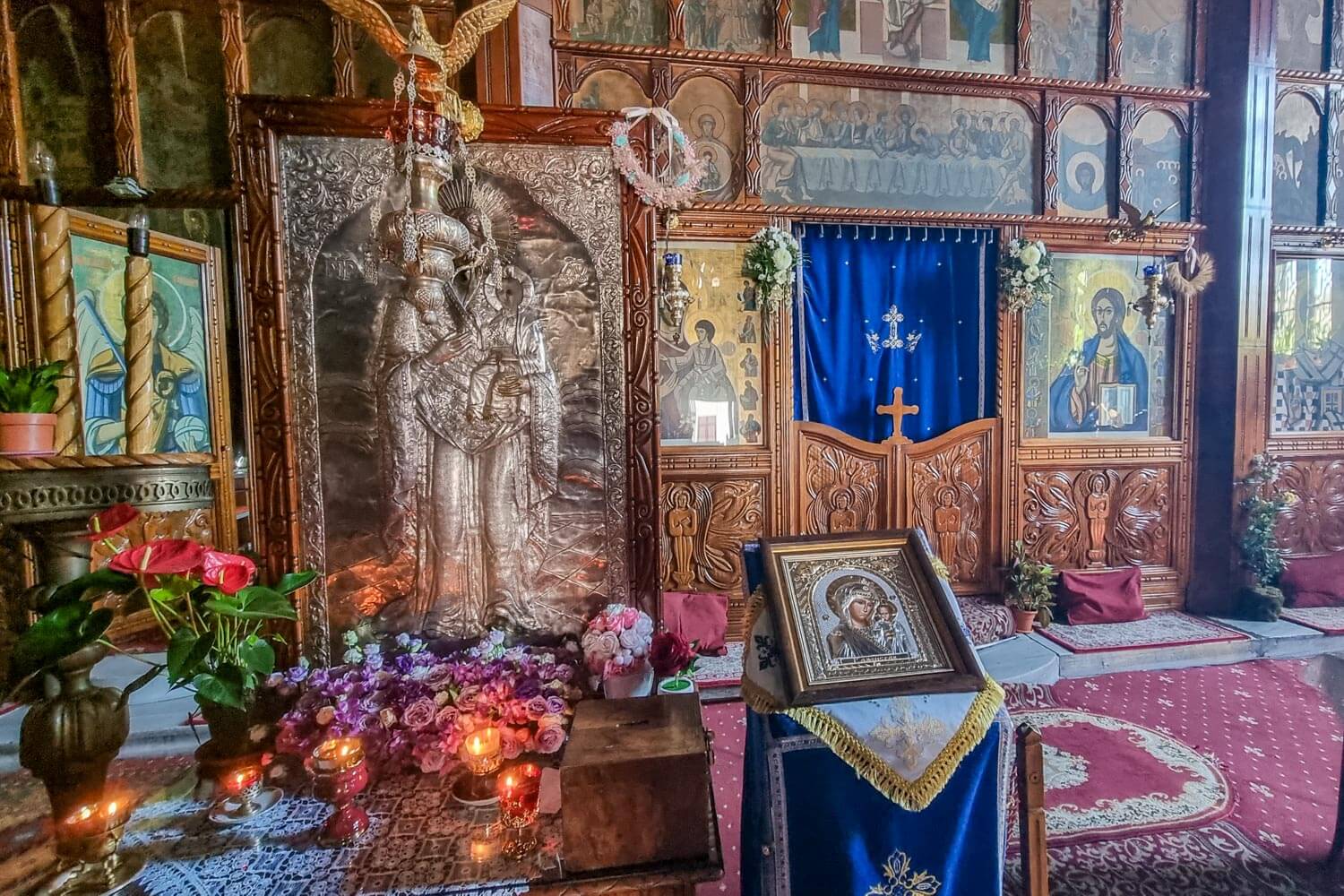
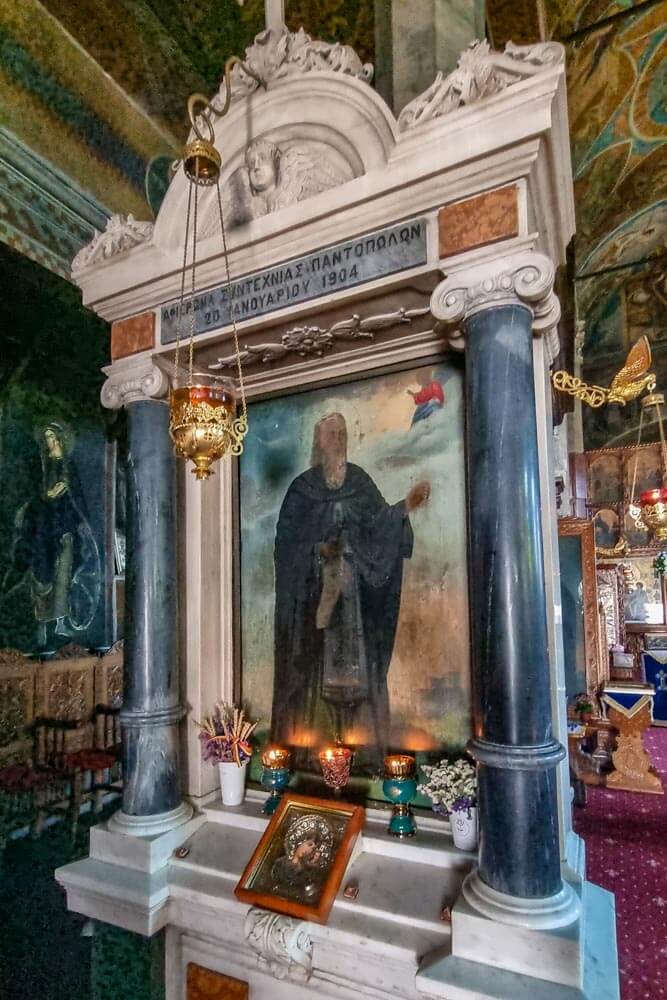
The Greek Church of the Transfiguration (Biserica Greacă Schimbarea la Față) is a historic Eastern Orthodox church in Constanța, built in the 1860s by the city’s Greek community while Dobrogea was still part of the Ottoman Empire. It is the oldest surviving Orthodox church in the city.
Construction began in the 1860s after the Greek community received permission from the Ottoman authorities, with the church completed by 1867 and consecrated the following year. Greek architect Ioannis Teoharidi designed the building within strict limits imposed on its dimensions and height, ensuring that it would not rival the city’s mosques. This explains its unusually low, rectangular form and the absence of towers from the original design.
The church has a restrained classical Greek appearance, built from natural stone and brick. Inside, the basilica-like space is divided by columns with decorative capitals, while galleries extend along three sides. Marble used for the floor and steps was brought from Greece, and members of the congregation donated religious objects acquired in Constantinople and Venice. The original interior was painted by an icon painter brought from Mount Athos, although much of the painting was later replaced.
A bell tower was finally added to the right side of the façade in 1947, long after Ottoman rule had ended. The church also played a notable role when Romanian administration took control of Dobogea in November 1878, when a Te Deum service attended by the new authorities was held here shortly after their arrival in Constanța.