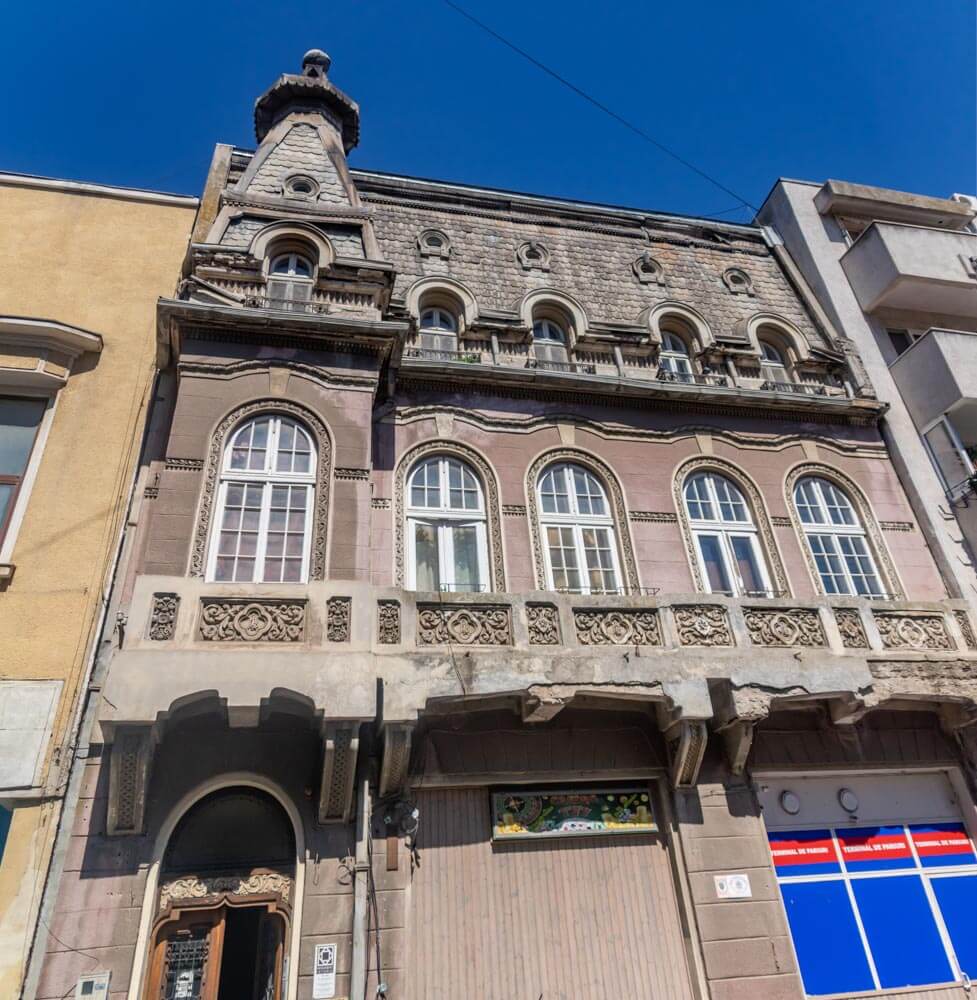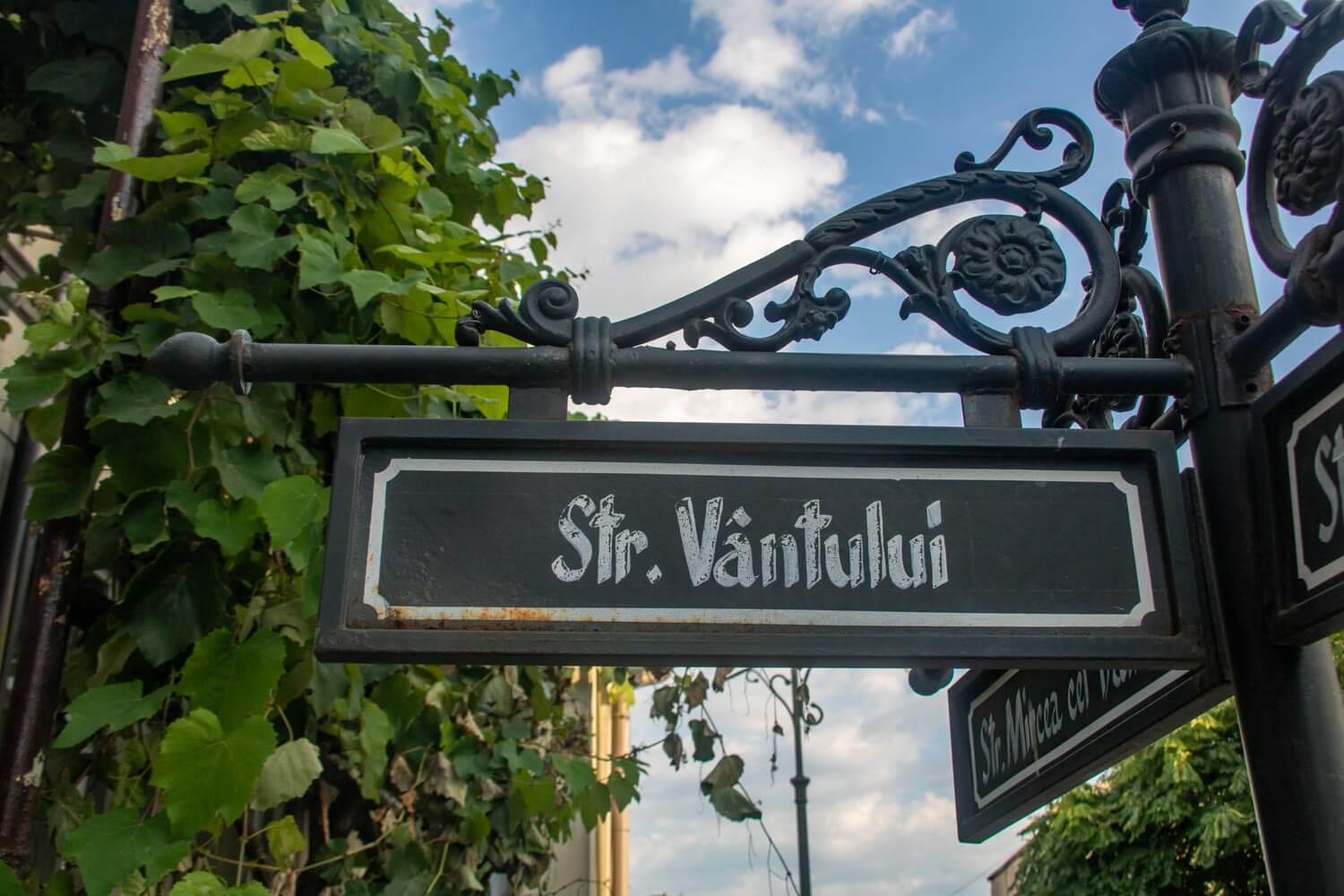
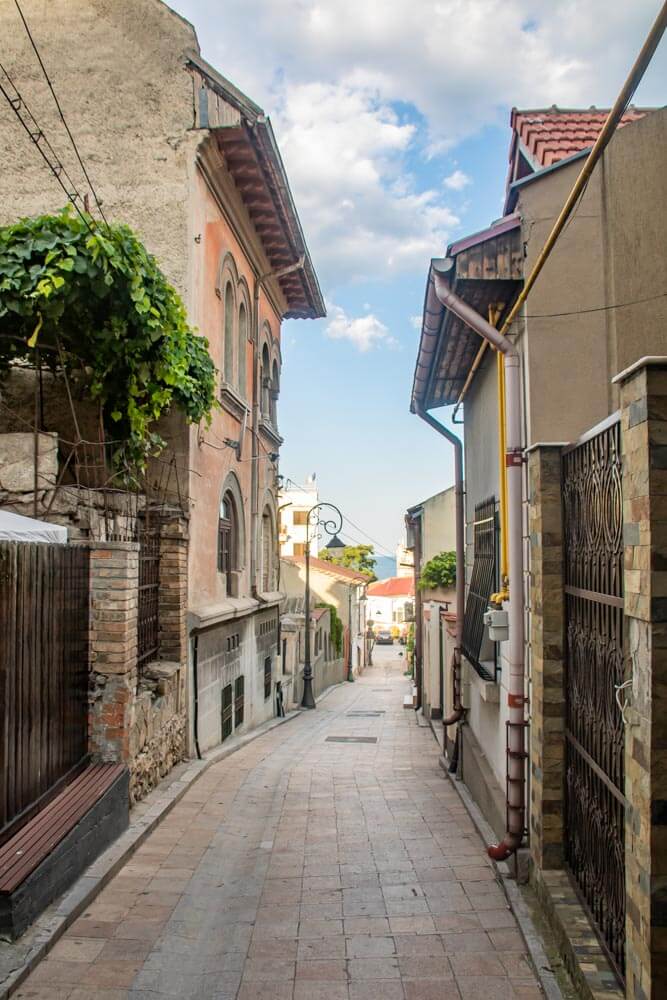
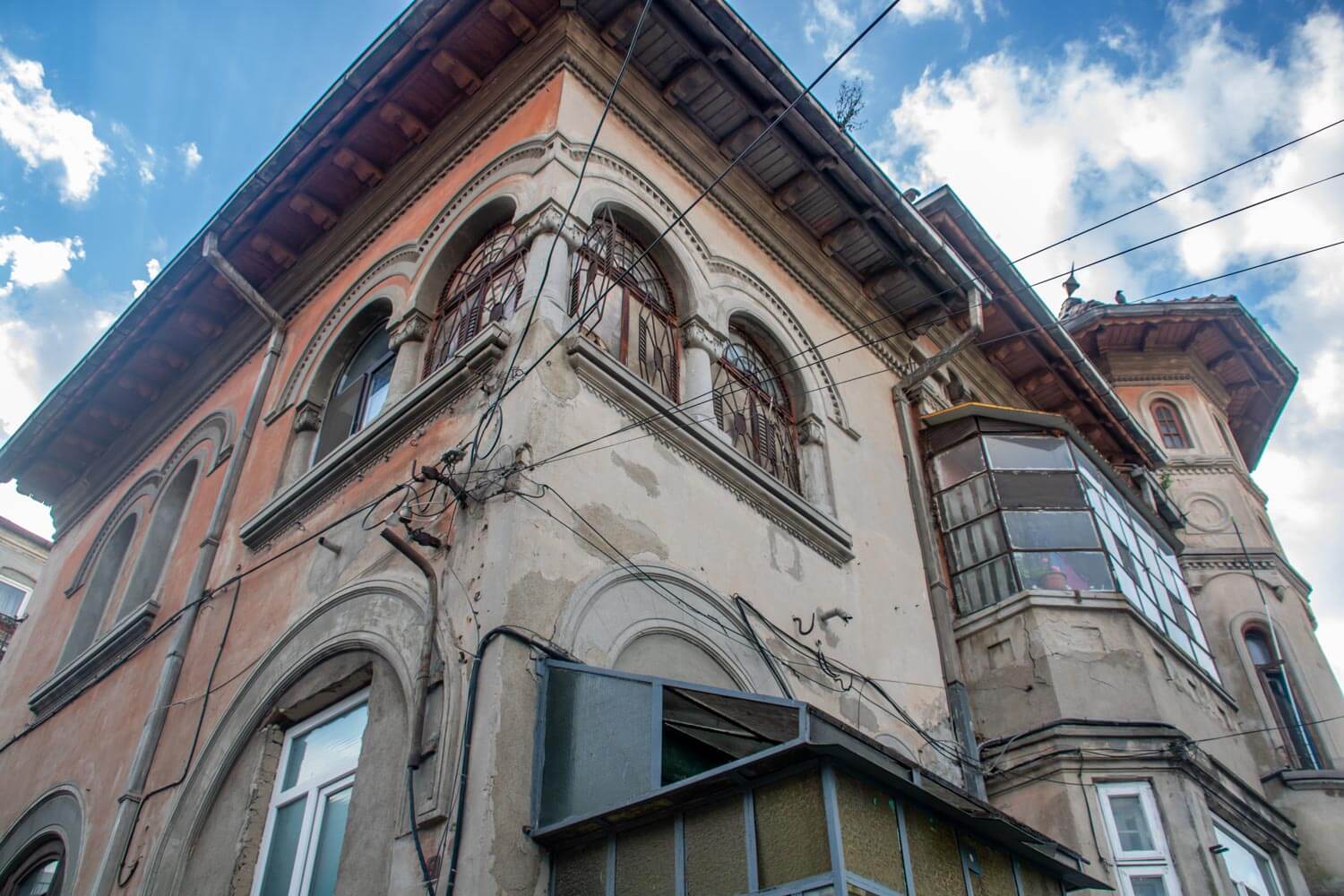
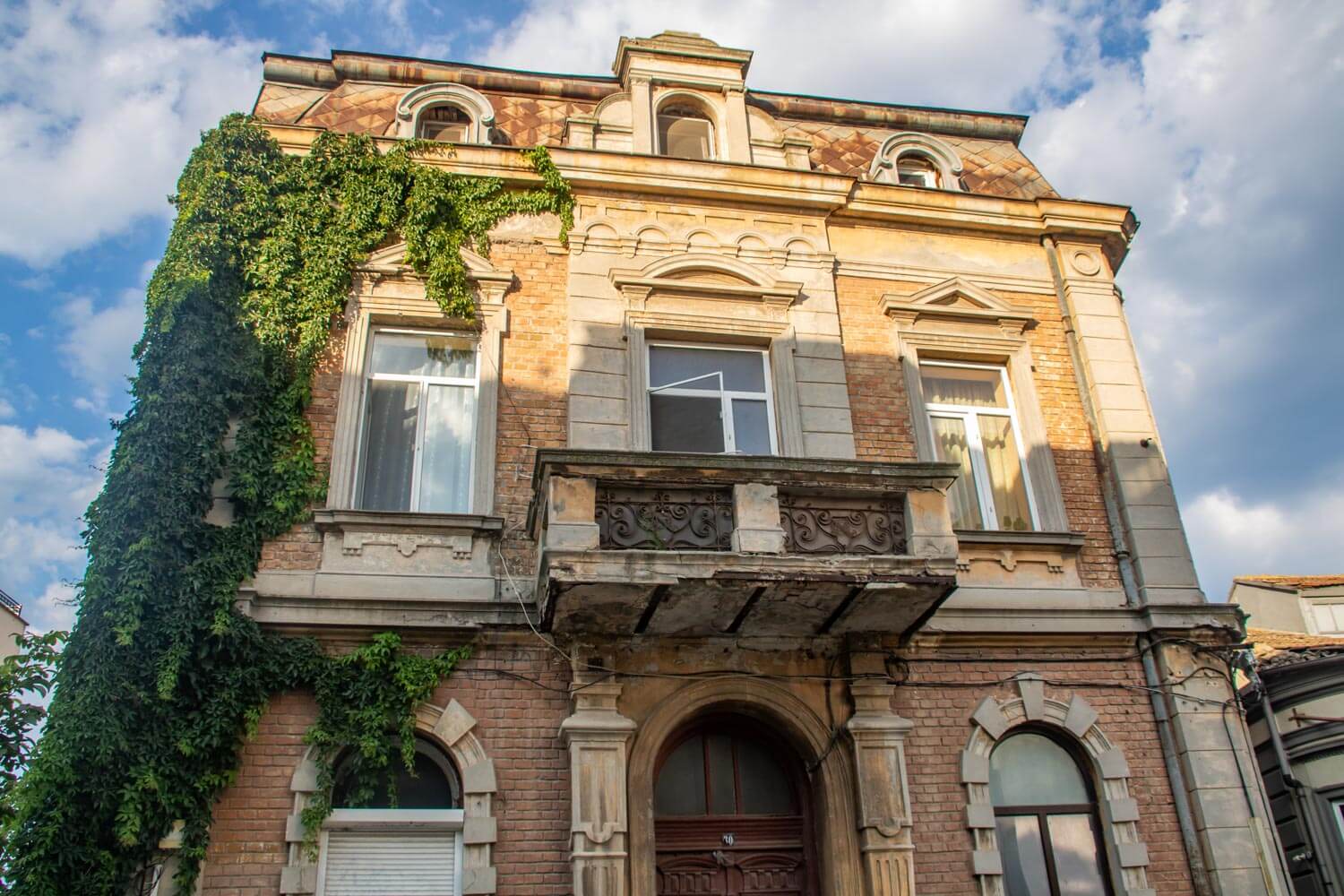
Wind Alley (Stradela Vântului) is a narrow historic passage in the peninsula of Constanța, measuring only about two meters across at its tightest sections. Running steeply between older houses in the historic center, it is generally described as the narrowest street in the city, and the second narrowest in the country, after Rope Street in Brașov.
The alley appears in Constanța municipal records from 1912 and 1913 and is also marked on city maps from 1921 and 1936. Historian Doina Păuleanu explains that it developed between the former Armenian and Greek neighborhoods, where a narrow passage was cut between existing properties to allow further construction. Its steep gradient and confined width meant that it functioned more as a pedestrian passage than a conventional street.
A popular local story links Wind Alley with Hans Christian Andersen, who visited Ottoman-era Constanța, then known as Küstendje, in 1841 and later described the town in his travel book A Poet’s Bazaar. In Andersen’s original Danish account, the dilapidated houses he saw lined a rather broad main street. Yet by 1936, Romanian writer Tudor Șoimaru was reproducing the same passage with a strikingly different description: a street “as wide as a palm.” That mistranslation or reinterpretation was later attached to Stradela Vântului, whose exceptionally narrow width made it an irresistible match for the story. So what began with a genuine visit by Andersen thus developed into one of Constanța’s more enduring pieces of local folklore.