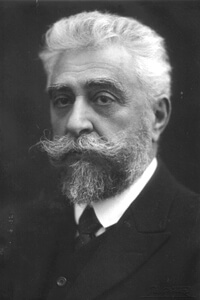
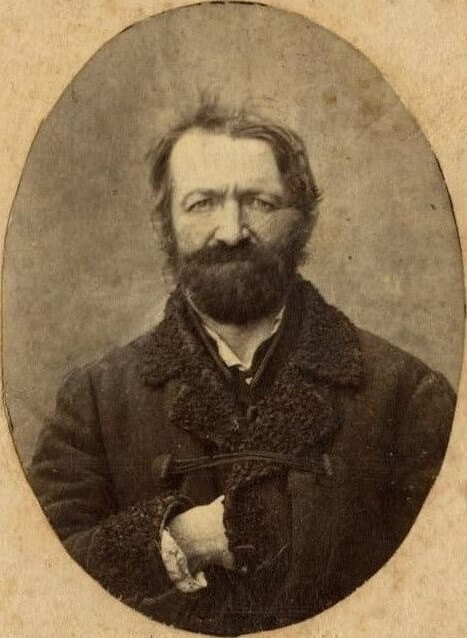
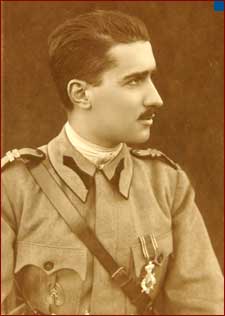
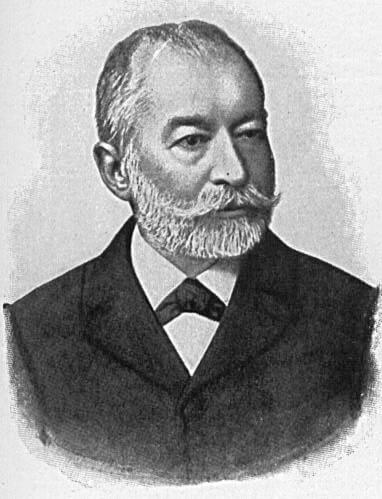
Ion I. C. Brătianu (1864-1927), commonly known as Ionel Brătianu, was a Romanian politician who dominated Liberal politics during the first decades of the twentieth century and played a central role in Romania’s entry into the First World War, the creation of Greater Romania, and the political settlement that followed. The son of former prime minister Ion C. Brătianu, he led the National Liberal Party for nearly two decades and served several times as prime minister, becoming one of the most powerful Romanian statesmen of his generation.
Brătianu was born at the family estate of Florica, near Ștefănești in Argeș County, and initially followed a very different path from politics. After studying at Saint Sava College in Bucharest, he trained as an engineer in Paris and returned to Romania to work on railway construction. His technical background remained visible when he entered government, particularly during his early terms as minister of public works, but by the 1890s politics had become the center of his career.
That career unfolded within a Liberal Party already strongly shaped by his family. Brătianu entered parliament in 1895, held several ministerial posts, and gradually emerged as the party’s leading figure before taking over its presidency in 1909. By then Romania was facing growing pressure for electoral and agrarian reform, while Brătianu was also trying to preserve the Liberal Party’s dominant role within the constitutional monarchy.
The outbreak of the First World War in 1914 transformed his premiership into the defining phase of his political life. Romania initially remained neutral while Brătianu negotiated with the Entente powers over the conditions under which the country might enter the war. In 1916 his government finally joined the conflict against Austria-Hungary, with the expectation that Romanian-populated territories in Transylvania and neighboring regions would be united with the kingdom if the Entente won.
The decision was followed by military disaster. Central Powers forces occupied Bucharest, the government and royal court withdrew to Iași, and much of Romania remained under occupation until the final year of the war. Brătianu nevertheless remained one of the leading advocates of continuing the alliance with the Entente, and the collapse of the Russian front and the temporary peace imposed on Romania in 1918 did not end the larger political process he had helped set in motion.
By the end of that year the situation had changed completely. The collapse of the Russian and Austro-Hungarian empires allowed Bessarabia, Bucovina, and Transylvania to unite with Romania, producing the greatly enlarged state remembered as Greater Romania. Brătianu did not create these unions single-handedly, but his wartime policy and his position at the head of government placed him at the center of the political effort to secure their international recognition.
He personally led the Romanian delegation to the Paris Peace Conference in 1919, where he argued for recognition of the new borders and for the territorial commitments made to Romania in 1916. Relations with the major Allied powers became increasingly difficult, particularly over the division of the Banat and the proposed treaty requiring international guarantees for minority rights. Brătianu regarded some of those conditions as unacceptable limits on Romanian sovereignty and left the conference in July 1919 before resigning as prime minister later that year.
His political influence quickly recovered, and when the Liberals returned to government in 1922 Brătianu turned from creating the enlarged state to consolidating it. His governments worked to unify administrative and legal systems inherited from the former Romanian kingdom, Transylvania, Bucovina, and Bessarabia, while postwar land reform and universal male suffrage reshaped political life. The Constitution of 1923 provided the principal constitutional framework for Greater Romania and became one of the defining measures of his final period in power.
Brătianu’s dominance also made him a deeply controversial figure. Supporters saw him as the statesman who guided Romania through war, territorial enlargement, and postwar reconstruction, while opponents criticized the concentration of power around the National Liberal Party and the influence of the Brătianu family within political and economic life. By the mid-1920s, however, there was little doubt that he had become one of the central architects of Romania’s interwar political order.
That influence continued almost until his death. Brătianu returned once more as prime minister in June 1927, but died unexpectedly in Bucharest in November of the same year. He was buried in the Brătianu family necropolis at Florica, the estate where he had been born and where several generations of the family had shaped Romanian Liberal politics.
Florica, now home to the Brătianu National Museum, remains the clearest physical link with both Ion I. C. Brătianu and the wider political dynasty to which he belonged. His own historical significance, however, rests above all on the period from 1914 to the mid-1920s: Romania’s entry into the First World War, the emergence of Greater Romania, the struggle for international recognition, and the difficult task of turning territories with different institutions and histories into a single state.