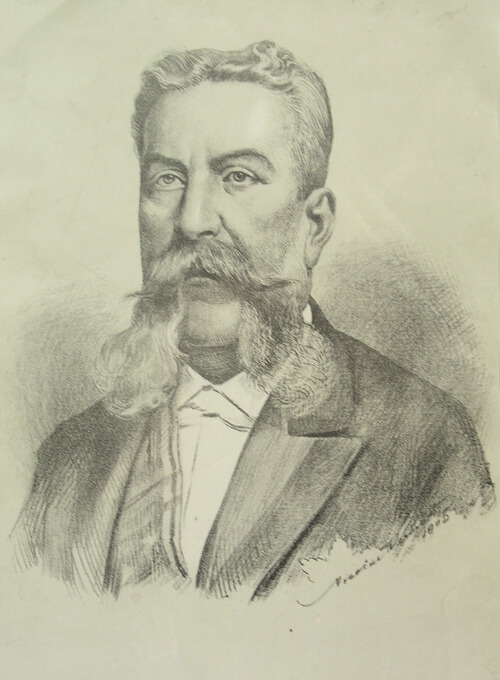
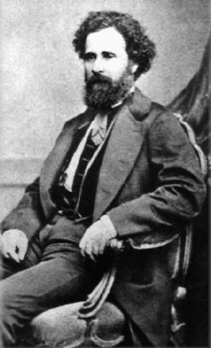
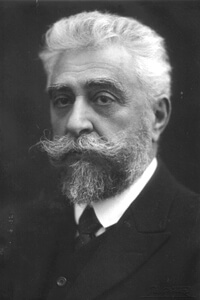
Constantin Alexandru Rosetti (1816-1885), commonly known as C.A. Rosetti, was a Romanian politician, journalist, and revolutionary who became one of the leading figures of the 1848 movement in Wallachia and later one of the founders of modern Romanian liberalism. He supported the union of Wallachia and Moldavia, helped shape public opinion through the press, and remained politically active through the creation of the Romanian state and the declaration of independence in 1877.
Rosetti was born in Bucharest into a boyar family and studied at Saint Sava College before briefly entering the army and later holding several administrative positions. In the 1840s he spent time in Paris, where he attended courses at the Collège de France and came into contact with the liberal and nationalist ideas circulating among Romanian students and intellectuals there.
In 1847 he married Mary Grant, a Scottish-born woman who became known in Romania as Maria Rosetti. She shared his political convictions and later became an important journalist and supporter of the revolutionary movement in her own right. Their home and social circle brought together writers, artists, and political activists during a period when demands for reform were growing across Wallachia.
Rosetti emerged as one of the most active organizers of the Wallachian Revolution of 1848. He helped prepare the revolutionary movement in Bucharest, served on its executive bodies, and became prefect of the capital’s police before joining the provisional government. He also understood the importance of the press in mobilizing public support and published the revolutionary newspaper Pruncul român together with Eric Winterhalder.
The revolution survived only a few months before Ottoman intervention restored the old political order. Rosetti was arrested and forced into exile, but he continued campaigning from abroad for political reform and for the union of the Romanian principalities. In Paris he maintained contacts with French political and cultural figures and used newspapers and pamphlets to keep the Romanian cause visible in Western Europe.
He returned to Wallachia in 1857 and immediately became deeply involved in the movement for union with Moldavia. That same year he founded the newspaper Românul, which became one of the most influential political publications in nineteenth-century Romania. Through its pages, Rosetti argued for union, constitutional government, civil liberties, and a broader democratic political system.
Rosetti was elected to the ad hoc assembly that debated the future of the principalities and supported the election of Alexandru Ioan Cuza as ruler of Wallachia in 1859, after Cuza had already been elected in Moldavia. The double election created the personal union that became the foundation of modern Romania. Rosetti initially supported Cuza’s reforms, but relations between them deteriorated as Cuza increasingly concentrated power in his own hands. By 1866, Rosetti had joined the coalition that forced him to abdicate.
The same period also saw Rosetti become involved in one of the new country’s most important cultural institutions. In 1867 he joined the Romanian Literary Society, the organization that later developed into the Romanian Academy, as one of its founding members representing Wallachia. The institution was created to promote Romanian language and culture across the different territories inhabited by Romanians, making it a natural extension of the cultural and political ideas that had shaped Rosetti’s career.
Under Carol I, Rosetti remained one of the leading figures of the radical liberal movement. His long political partnership with Ion C. Brătianu helped shape Romanian liberalism, and in 1875 the two were among the founders of the National Liberal Party. Rosetti served several times as president of the Chamber of Deputies and also held ministerial office.
One of the most important moments of his later career came during the Romanian War of Independence. As president of the Chamber of Deputies, Rosetti formally proclaimed Romania’s independence in parliament in May 1877, giving him a direct role in one of the defining political moments of the new state.
His partnership with Brătianu eventually broke down in the 1880s. Rosetti remained committed to a more radical interpretation of liberalism and opposed political changes that he considered too restrictive. He died in Bucharest in 1885 after a career that had stretched from underground revolutionary politics to the institutions of an independent Romanian kingdom.
Rosetti was buried at Bellu Cemetery in Bucharest, where members of his family had already been interred. His connection with Bellu reaches back to the cemetery’s early years: in 1859 he purchased a burial plot there for his daughter Elena, one of the first people buried in the new cemetery, and other members of the family later joined her. Rosetti himself was eventually buried in the same family plot.
Elsewhere in the capital, C.A. Rosetti Square on Carol I Boulevard carries the abbreviated form of his name and is dominated by the monument erected to him in 1903. Together with Bellu Cemetery and his role in the creation of the institution that became the Romanian Academy, these places reflect the different sides of a career that stretched from revolutionary activism and journalism to parliamentary politics and the building of the modern Romanian state.